How to Choose the Right Dart Board Mount for Your Space
To choose the right dartboard mount for your space, you need to consider several important factors to optimize your setup.
First, check the height and distance regulations. The bullseye should be 5 feet 8 inches from the floor, while the throw line for steel tip darts is set at 7 feet 9.25 inches.
Next, evaluate your wall material. Solid walls like brick are ideal for mounting, while plasterboard will require strong anchors to ensure stability.
Then, decide between U-shaped brackets for easy access or cabinets for added protection.
Lastly, if you value flexibility, a portable dartboard stand might be the perfect solution for you.
There’s plenty more to explore about creating the best dart-playing environment!
Key Takeaways
- Assess your wall material to determine if you need U-shaped brackets or a cabinet for proper support and installation.
- Ensure the dartboard is mounted at the official height of 5 feet 8 inches from the floor to the bullseye center.
- Consider the available space; cabinets require more room while U-shaped brackets offer flexibility and easier dart retrieval.
- Check the weight of your dartboard and use appropriate mounting hardware based on wall type to ensure stability.
- Explore dartboard stands for a portable option that requires no wall mounting and offers flexibility in placement.
Understanding Dartboard Height and Distance Regulations
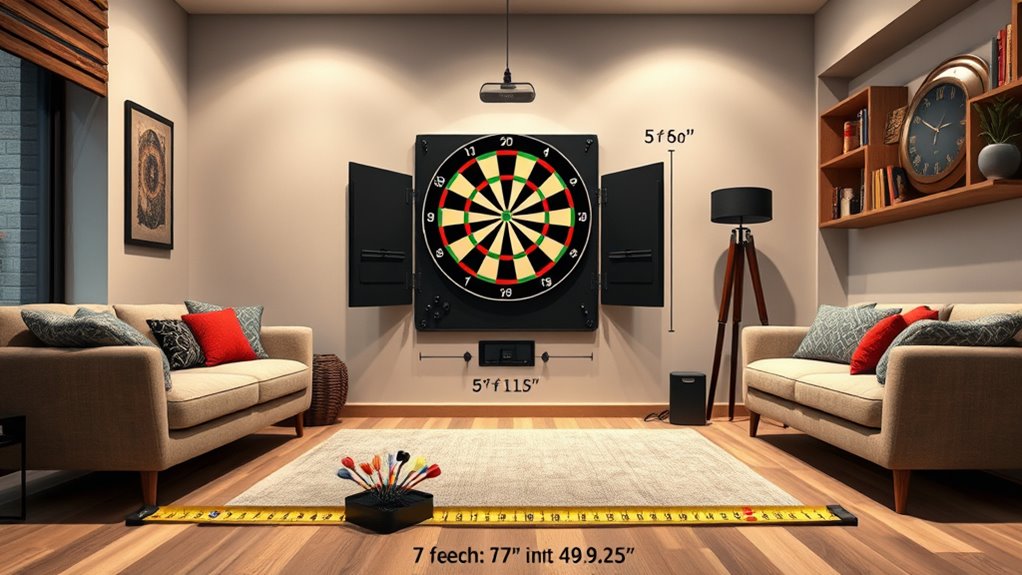
When you set up your dartboard, it’s essential to follow the height and distance regulations to guarantee a fair game.
The official dartboard height is 5 feet 8 inches from the floor to the center of the bullseye.
For steel tip dartboards, position the throw line 7 feet 9.25 inches from the board’s face; for soft tip and electronic boards, it should be 8 feet.
When measuring the diagonal distance from the bullseye to the throw line, it’s 9 feet 7.375 inches for steel tip and 9 feet 9.5 inches for soft tip.
Make sure you have enough clearance behind the dartboard for safety and easy dart retrieval.
Also, double-check that the board is level and securely mounted.
Evaluating Wall Material for Mounting Options
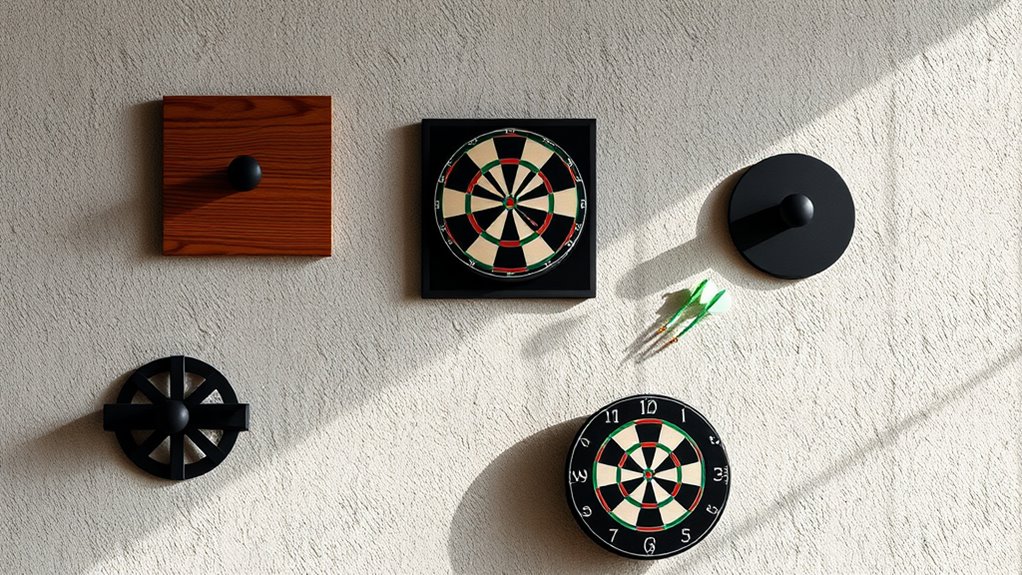
When you’re choosing a spot for your dartboard, the wall material really matters. Solid walls like brick or concrete can handle the weight without issue, while plasterboard may need extra support. Make sure the mounting hardware you choose fits your wall type to keep everything stable during play.
Wall Type Compatibility
Choosing the right wall type for your dartboard mount is essential for ensuring stability and safety during gameplay.
First, consider your wall material. If you have drywall or plasterboard, remember these surfaces require additional support because they can’t handle heavy loads well.
For concrete or brick walls, use masonry screws or anchors to securely fasten the bracket, providing a solid foundation.
If you’re mounting on wood, locate the studs to anchor the bracket properly; this gives you the necessary stability.
Avoid damaged walls, as they can compromise the integrity of your mount and create safety hazards.
Finally, take the wall’s surface finish into account, as it might impact the mounting process.
Use appropriate tools to address any complications.
Weight Support Considerations
To guarantee your dartboard stays securely mounted, it’s essential to evaluate the weight support of your wall material.
Most steel tip dartboards weigh between 15 to 20 pounds, so you’ll need a sturdy wall material like brick or concrete for ideal support.
If you’re dealing with plasterboard or drywall, consider using toggle bolts or heavy-duty anchors to help distribute the weight evenly.
Always verify that your mounting bracket is compatible with your wall type to avoid damage and maintain stability during play.
Regularly inspect both the wall and mounting hardware for any signs of wear or damage to maintain safety and support over time.
Choosing Between U-shaped Brackets and Cabinets
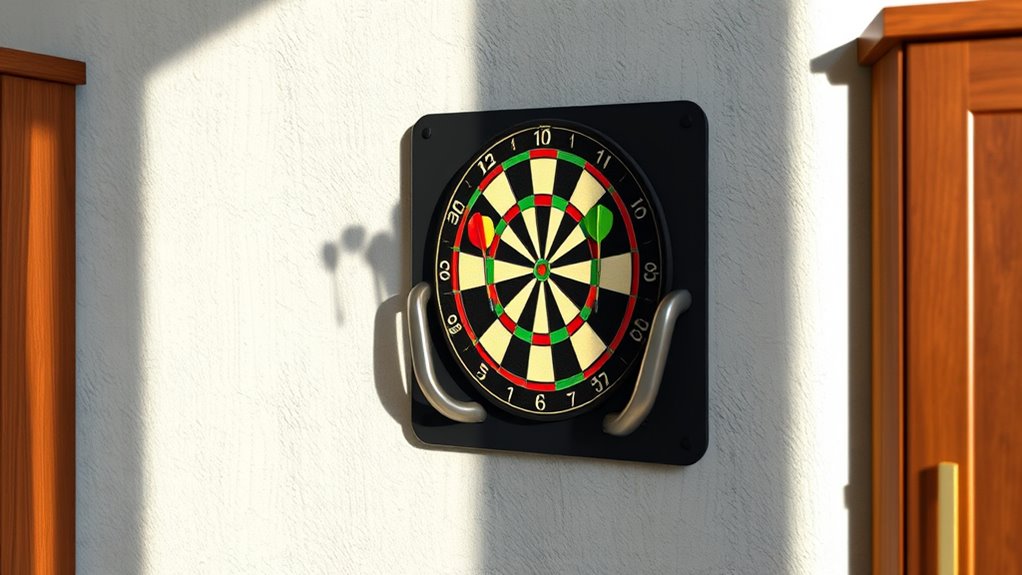
While both U-shaped brackets and cabinets serve the purpose of mounting your dartboard, each has unique advantages that cater to different needs and spaces.
U-shaped brackets offer a straightforward and adjustable mounting solution. They allow easy access for dart retrieval while minimizing wall damage.
If your room has limited wall space, they’re often more flexible in placement.
On the other hand, cabinets provide a protective enclosure for your dartboard. They keep darts organized and prevent wear and tear.
However, cabinets require more wall space and precise measurements to guarantee proper height alignment.
Ultimately, consider your available space and how you want to balance accessibility with protection when choosing between U-shaped brackets and cabinets.
Benefits of Using a Dartboard Stand
If wall space is at a premium or you prefer more versatility in your setup, consider using a dartboard stand.
These stands are incredibly portable, allowing you to play in various environments, including outdoor areas when the weather’s nice.
You won’t have to worry about finding a wall to mount your board; many stands offer excellent stability when leaned against a surface.
Popular models like the Gorilla stand and Winmau Vertex are known for their quick assembly and durability, ensuring they’ll last through countless games.
Plus, using a stand accommodates different skill levels and playing styles, enhancing your overall experience.
For personalized setups and flexibility, a dartboard stand offers great benefits.
Take this Darts Advice to elevate your game!
Installation Tips for a Secure Mount
When mounting your dartboard, proper installation is essential to confirm a stable and enjoyable playing experience.
Follow these tips to ensure a secure mount every time you play:
- Mount the dartboard at 5 feet 8 inches from the floor to the center of the bullseye.
- Use a U-shaped bracket, placing it below the marked height and confirming it’s level before attaching the board.
- Verify that your wall material suits the mount and use appropriate screws and anchors for stability.
After installation, check that your dartboard doesn’t wobble by sliding it into the bracket and making adjustments as necessary.
Regularly inspect your setup for wear and replace any loose hardware to maintain safety.
You’ll want to come back for more fun every time!
Community Recommendations and Insights on Dartboard Mounts
Have you ever wondered which dartboard mount might be the best for your setup?
The Koto stand often comes highly recommended for its affordability and stability, costing half as much as premium options like the Winmau stand.
Community discussions emphasize the significance of selecting a sturdy mount, considering your wall material and the dartboard’s weight for ideal support.
Many players share tips on installation, noting that using proper tools and leveling the board can improve accuracy.
Regular maintenance checks are essential too; keeping an eye on stability and replacing worn components helps guarantee longevity.
Ultimately, personal preference plays a big role—different mounts cater to various space constraints and playing styles, so find what works best for you!
Frequently Asked Questions
What Is the Ideal Dartboard Weight for Mounting?
The ideal dartboard weight for mounting is typically around 1.5 to 2.5 pounds. This weight guarantees stability and durability, allowing you to enjoy your games without worrying about the board sagging or falling.
Can I Use Adhesive Mounts for My Dartboard?
You can’t always judge a book by its cover. While adhesive mounts might seem convenient, they typically won’t provide the necessary stability for your dartboard. It’s better to opt for a more secure mounting solution.
How Do I Prevent Wall Damage From Mounting?
To prevent wall damage from mounting, use wall protectors or adhesive hooks designed for easy removal. You can also consider mounting your dartboard on a dedicated board or using a foam backing to cushion impacts.
Are There Specific Brands Recommended for Dartboard Mounts?
You can’t go wrong with brands like Winmau or Viper. They’ve got solid mounts that fit most boards. Just make sure you check reviews to find the best option for your setup, alright?
What Tools Are Necessary for Installing a Dartboard Mount?
You’ll need a drill, screws, a level, and a measuring tape for installing your dartboard mount. A stud finder can help guarantee it’s securely attached to the wall, providing stability for your games.
Conclusion
When it comes to choosing the right dartboard mount for your space, remember that a properly mounted dartboard can improve your game.
Did you know that players with a well-mounted board score, on average, 15% higher than those with poorly mounted boards?
By considering height, wall material, and your mounting options, you can create an ideal setup.
As you immerse yourself in the world of darts, make sure your board is securely mounted for the best experience possible!
In conclusion, selecting the right dartboard mount is crucial for enhancing your gameplay.
A well-mounted dartboard not only boosts your scores but also adds to the overall enjoyment of the game.
So, take the time to consider your space, height preferences, and mounting options to ensure you have the perfect setup for your dart-playing adventures!