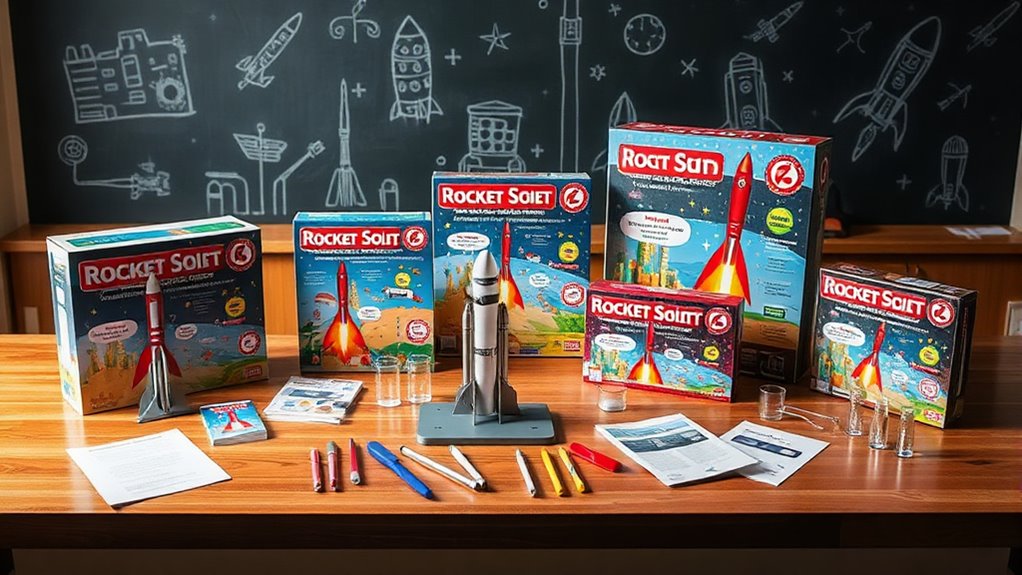
10 Best Rocket Science Kits for Young Engineers
When searching for the best rocket science kits for young engineers, it’s essential to prioritize hands-on experiences that boost critical thinking and problem-solving skills.
Kits like the Apogee X-15 and Badboy Rocketry Fat Boy are excellent beginner options, providing a smooth introduction to rocketry.
As young engineers gain confidence and skill, they can explore mid-power kits for a more advanced experience.
Safety is crucial in any rocket project, so make sure to choose kits that come with clear instructions and are compatible with engines.
Taking the time to discover unique features in each kit can lead you to the perfect match for your budding engineer!
Key Takeaways
- Beginner-friendly kits like Apogee Components X-15 and Badboy Rocketry Fat Boy are great for introducing young engineers to rocketry.
- Mid-power kits such as LOC Precision models expand skills and offer more complex builds for aspiring rocketeers.
- Look for kits with molded fins and baffle systems for enhanced performance and easier assembly.
- Online resources and community forums provide valuable insights and support for first-time builders and experienced hobbyists alike.
- Always prioritize safety by launching in open areas and following manufacturer instructions for assembly and launch procedures.
Understanding Rocket Science: The Basics

Understanding rocket science might seem intimidating, but it’s really about grasping a few key principles.
At the heart of rocket design are concepts like thrust, propulsion, and aerodynamics.
Key concepts in rocket design include thrust, propulsion, and aerodynamics, crucial for understanding how rockets operate.
When you build model rockets using rocket kits, you engage with these ideas firsthand.
One essential principle you’ll encounter is Newton’s Third Law of Motion, which explains that for every action, there’s an equal and opposite reaction.
This law is what allows rockets to lift off the ground.
As you assemble your rocket kits, you’ll notice components such as the airframe, propulsion system, and fins for stability.
Importance of Hands-On Learning in Engineering

Hands-on learning in engineering lets you tackle real-world challenges, making concepts come alive. By engaging in practical experiments, you sharpen your problem-solving skills and learn to think critically. This experiential approach not only reinforces your understanding but also inspires creativity and innovation.
Engaging With Real-World Applications
While you might think of engineering as a purely theoretical field, engaging with real-world applications makes learning both fun and impactful.
By building model rockets, you not only grasp scientific concepts but also understand the engineering design process.
This hands-on approach enhances your creativity and problem-solving skills.
Research shows that when you actively participate in engineering projects, you’re more likely to retain STEM knowledge.
Launching rockets gives you practical experience with vital physics principles like thrust and aerodynamics.
Plus, collaborative projects foster teamwork and communication skills, which are essential in a professional engineering environment.
Fostering Problem-Solving Skills
As you immerse yourself in building rocket science kits, you’ll quickly realize how this hands-on experience sharpens your problem-solving skills.
You’ll apply theoretical concepts in physics and engineering, deepening your understanding of aerodynamics and propulsion.
As you encounter design challenges, you’ll need to troubleshoot and adapt, honing your critical thinking abilities.
This process also sparks creativity, encouraging you to experiment with unique designs and modifications.
Working on rocketry projects often means collaborating with peers, which enhances your communication and teamwork skills.
Engaging in these hands-on STEM activities not only boosts your interest in engineering but also fosters a proactive mindset, preparing you for real-world challenges.
Embrace the journey; each rocket launch is a lesson in innovation and resilience.
Top Features to Look for in Rocket Kits
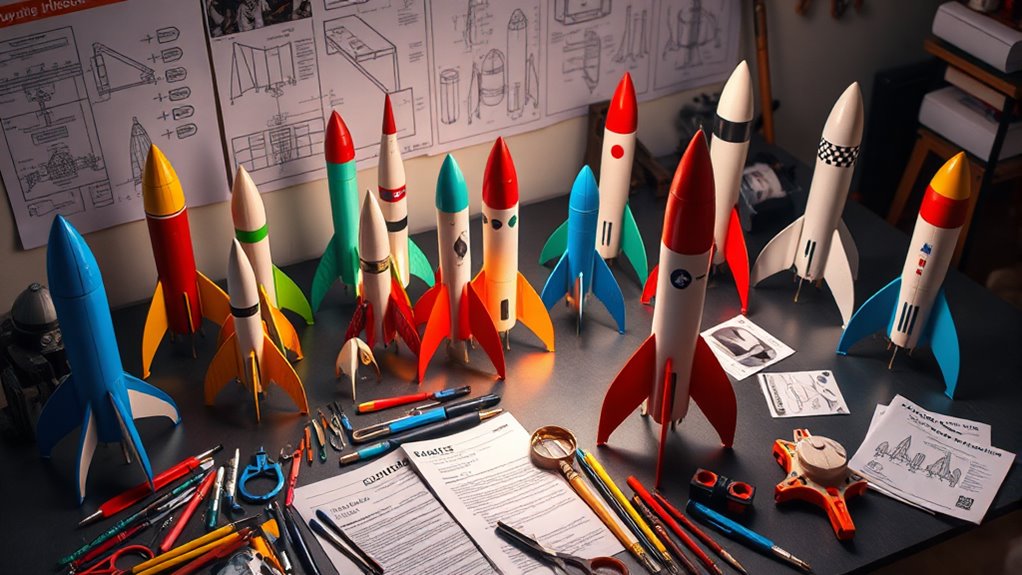
When choosing a rocket kit, you want to take into account engine compatibility to guarantee it can work with various low to mid-power engines. It’s also important to look for kits that are easy to assemble and come with clear instructions for safety. These features will make the building process enjoyable and accessible for young engineers.
Engine Compatibility Considerations
Selecting the right rocket kit isn’t just about aesthetics; it’s crucial to evaluate engine compatibility to guarantee a successful launch. Here are key considerations to keep in mind:
- Confirm compatibility with low to mid-power engines (C, D, E) for educational value.
- Check that the kit specifies engine compatibility in the instructions for peak performance.
- Look for molded interlocking fins and a baffle system to enhance engine efficiency.
- Note the recommended maximum engine size, as it impacts flight performance and stability.
- Always follow the manufacturer’s guidelines for engine selection to maintain safety and success.
Assembly Ease and Safety
After ensuring your rocket kit is compatible with the right engines, it’s time to focus on assembly ease and safety.
Look for kits featuring molded interlocking fins; they simplify assembly and improve structural integrity.
A baffle system is another great feature, as it boosts efficiency by minimizing the need for recovery wadding.
Make sure the assembly process matches your skill level; kits requiring CA glue can be tricky for younger builders.
Always follow the manufacturer’s instructions closely to maintain safety during both assembly and launching.
Finally, consider the rocket’s size and engine compatibility, as these factors greatly influence how easy it is to assemble your rocket and its overall performance.
Choose wisely, and enjoy building!
Recommended Beginner Rocket Kits for Young Engineers
For young engineers enthusiastic to explore rocketry, several beginner rocket kits stand out as excellent choices.
These kits provide a fantastic way to learn the basics while enjoying impressive flight capabilities. Here are some you should consider:
- Apogee Components, Inc. X-15: Known for its ease of assembly and performance potential.
- Badboy Rocketry Fat Boy: Simple assembly process, perfect for novices.
- Upscale Alpha III: A classic option that’s easy to build and fly.
- Aerotech kits: Feature molded interlocking fins and an efficient baffle system for enhanced performance.
- Engagement with the rocketry community: Gain insights and recommendations from fellow enthusiasts.
Selecting one of these kits can kickstart your journey into the exciting world of rocketry!
Advancing to Mid-Power Rocket Kits
As you shift into mid-power rocket kits, you’ll find an exciting opportunity to expand your skills beyond low-power rocketry.
These kits allow you to build on your experience with C, D, and E engines, enhancing your understanding of aerodynamics and propulsion.
Recommended options include the Apogee Components X-15, LOC Precision kits, and Aerotech models, all praised for their ease of assembly and performance potential.
Explore the Apogee Components X-15, LOC Precision kits, and Aerotech models for easy assembly and impressive performance.
Aerotech kits, in particular, often feature molded interlocking fins and a baffle system, making the building process smoother for beginners.
When choosing a mid-power rocket, consider the size and engine compatibility to guarantee a successful launch.
This change opens new avenues for exploration and creativity in your rocketry journey.
Community Engagement and Shared Experiences
When you connect with other builders, you’ll find a wealth of shared experiences that can guide your rocket science journey. Peers often recommend kits and techniques that can make your projects more exciting and successful. Engaging in discussions can spark new ideas and boost your confidence as you launch your own creations.
Builder Experiences Shared
How can sharing personal experiences enhance your rocket building journey?
Engaging with fellow builders can greatly improve your skills and confidence.
When community members share their challenges and successes, you gain valuable insights that can guide your own projects.
Here are some benefits of community engagement:
- Learn best practices for assembly and safety.
- Discover tips for troubleshooting common issues.
- Receive recommendations on the most suitable kits for your skill level.
- Exchange ideas on innovative designs and techniques.
- Build a supportive network that encourages experimentation and creativity.
Recommendations From Peers
Connecting with fellow builders not only fosters a sense of community but also opens the door to invaluable recommendations that can elevate your rocket-building experience.
Many enthusiasts rave about the Apogee Components, Inc. X-15 for its educational value and ease of assembly. Builders often suggest LOC Precision and Boyce Aerospace kits for a seamless introduction to mid-power rocketry.
Aerotech kits, featuring molded interlocking fins, enhance performance and simplify the building process. Always remember to follow manufacturer instructions and community advice for safe launches.
Engaging in online forums helps new builders access shared experiences and trusted recommendations.
| Kit Brand | Key Features | Community Feedback |
|---|---|---|
| Apogee X-15 | Educational, easy assembly | Highly recommended for beginners |
| LOC Precision | Straightforward assembly | Great for mid-power rocketry |
| Boyce Aerospace | User-friendly kits | Ideal for young engineers |
| Aerotech | Molded fins, baffle system | Enhances performance |
| Community Insights | Safety and successful launches | Valuable shared experiences |
Safety Considerations When Building Rockets
Building rockets can be an exciting adventure, but safety should always come first.
To guarantee a successful and secure launch, keep these safety considerations in mind:
- Always follow the manufacturer’s instructions for assembly and launch.
- Use appropriate safety gear, like goggles, to protect yourself from debris.
- Choose engines that are compatible with your rocket kit to avoid malfunctions.
- Launch rockets in open areas away from people, buildings, and flammable materials.
- Maintain a safe distance during the launch and wait for the rocket to fully descend before approaching it.
Online Resources for Purchasing Rocket Kits
Where can you find the best rocket kits for your next project?
Online marketplaces like eBay are great for discovering a variety of model rocket kits from brands like Bad Boy Rocketry at competitive prices.
For mid-power rocket kits, check out websites such as Apogee Components, Inc. and LOC Precision.
You’ll find detailed product listings, specifications, and assembly instructions there.
Don’t forget to explore community forums and social media groups! Experienced builders often share valuable reviews and recommendations on rocket kits.
Researching product reviews on platforms like Amazon or dedicated rocketry sites can help guarantee you select high-quality kits.
Plus, many online retailers offer customer support and resources to guide first-time builders through assembly and safety tips.
Tips for Successful Rocket Launches
To guarantee a successful rocket launch, it’s essential to follow the manufacturer’s assembly instructions closely. Even small mistakes can lead to flight failures.
Here are some tips to enhance your launch experience:
- Choose the right engine size based on your rocket’s specifications and weight for peak performance.
- Perform a thorough pre-launch check to verify all components, like fins and recovery systems, are secure.
- Launch in an open area, away from buildings, trees, and crowds to maintain safety.
- Monitor weather conditions closely; avoid launching in high winds or rain, as they can ruin the flight.
- Keep safety regulations in mind to ensure compliance and prevent accidents.
Following these guidelines will help ensure your launch goes off without a hitch!
Inspiring Future Engineers Through Rocketry
Rocketry not only sparks curiosity but also cultivates essential skills in young engineers, making it a perfect gateway into the world of science and technology.
By engaging in rocketry projects, you’ll develop critical thinking and problem-solving skills as you design, build, and test your rockets.
Engaging in rocketry fosters critical thinking and problem-solving as you design, build, and test your rockets.
Model rocket kits from brands like Apogee Components and LOC Precision give you hands-on experience with important concepts like aerodynamics and propulsion.
Joining rocketry programs or clubs encourages teamwork and builds a sense of community among aspiring engineers.
The thrill of launching a rocket serves as a powerful motivator, inspiring you to dive deeper into STEM fields.
Plus, online resources and forums offer valuable guidance, helping you learn from experienced builders and improve your skills.
Frequently Asked Questions
What Age Group Is Suitable for Rocket Science Kits?
Rocket science kits are generally suitable for ages 8 and up. Younger kids might enjoy simpler projects, but as they grow, these kits spark curiosity and build skills. You’ll find options for various age ranges.
How Much Do Rocket Science Kits Typically Cost?
Rocket science kits typically range from around $20 to $200, depending on complexity and features. You’ll find options that ignite curiosity and creativity without burning a hole in your wallet. Happy exploring!
Are Rocket Science Kits Reusable After Launch?
Yes, many rocket science kits are reusable after launch. You can often recover and rebuild them for multiple launches. Just check the kit’s instructions for specific details on reusability and maintenance to guarantee peak performance.
Can Rocket Kits Be Used Indoors?
Yes, you can use some rocket kits indoors, but make certain you check the manufacturer’s guidelines. Indoor launches often require smaller, safer models to prevent damage or injury. Always prioritize safety and follow recommended practices.
What Materials Are Commonly Used in Rocket Kits?
When you’re reaching for the stars, you’ll find materials like cardboard, plastic, foam, and lightweight metals in rocket kits. These components work together, helping you launch your imagination and explore the wonders of rocket science!
Conclusion
As you plunge into the exciting world of rocketry, you’ll discover that the journey of building and launching rockets isn’t just about science—it’s about sparking curiosity and creativity.
Every launch you undertake could inspire a future engineer in your life.
With the right kit and a bit of imagination, you might just ignite a passion for STEM that lasts a lifetime.
So grab a rocket kit, and let the sky be your limit!
In conclusion, exploring rocketry can be a thrilling adventure that fosters both learning and creativity.
The right rocket science kits will not only teach essential engineering concepts but also inspire young minds to pursue STEM fields.
Start your journey today and watch as curiosity takes flight!