10 Best Toys for Social Development Expert Picks and Buying Guide
Many parents and caregivers want to support children’s social growth through play but aren’t sure which toys actually help. Finding the right tools to encourage sharing, cooperation, and communication can be challenging.
Best toys for social development focus on encouraging interaction in fun and meaningful ways. These toys are designed for young children who are learning to build social skills and connect with others. In this review, you will learn about a selection of products that promote social engagement and teamwork.
Each toy is explained with key benefits and how it supports children’s social development. This guide aims to help you choose thoughtful options that encourage positive social experiences during playtime.
Unlock Endless Playful Connections with These Top Picks for Growing Social Skills
| Image | Product | Price |
|---|---|---|
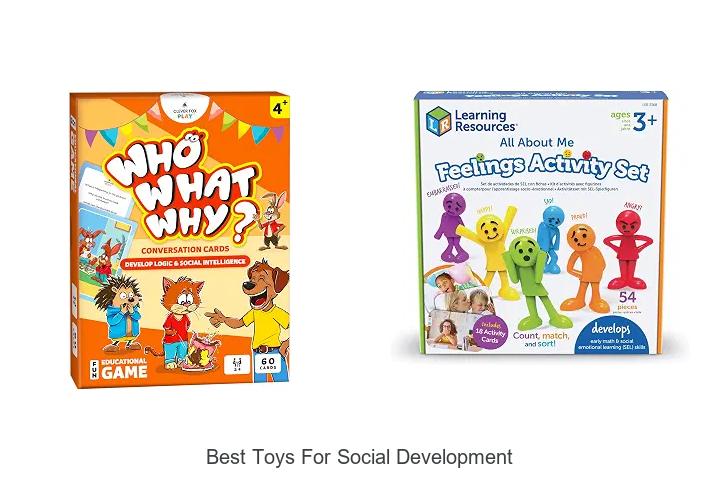
Pick 1  | Who What Why Conversation Cards for Kids | Check Price On Amazon |
Pick 2  | Learning Resources All About Me Feelings Activity Set | Check Price On Amazon |
Pick 3  | hand2mind See My Feelings Mirror | Check Price On Amazon |
1. Who What Why Conversation Cards for Kids
Helping children develop emotional intelligence can be both fun and educational. Who What Why Conversation Cards for Kids uses lovable animal characters to engage young minds in meaningful social scenarios. This card game presents realistic, everyday situations paired with thoughtful questions that encourage empathy and communication skills.
Each card offers visual clues like emotions and setting details, fostering critical thinking as kids interpret the scenes. The set includes 60 cards suitable for children aged 4 and up.
Parents, teachers, and therapists will find it a versatile tool for speech therapy and social learning. The cardstock material feels sturdy and durable enough for repeated use. Setup and play are simple and manual, needing no batteries or screens.
It’s a great resource for encouraging conversation and gaining social insight, making it well suited for home, classroom, or therapy sessions. This educational game balances learning with play, offering strong value for families focused on social growth.
Pros
- Engaging and relatable animal character design
- Promotes empathy and critical thinking
- Useful for parents, teachers, and therapists
Cons
- Limited to English language use
- Some scenarios may require adult guidance
- Not designed for solo play
Who Should Buy It?
Ideal for parents and educators seeking to improve children’s social skills. Also beneficial for speech therapists working with kids ages 4 and up. Perfect for small groups and family activities that promote emotional intelligence.
Key Specifications
| Specification | Details |
|---|---|
| Age Range Description | Kid |
| Brand Name | Clever Fox Play |
| Included Components | Cards |
| Unit Count | 1 Count |
| Set Name | Logic & Social Intelligence |
| Item Highlight | Educational game, social skills flash cards, emotional regulation tool, sequencing activity, therapy toy, learning resource |
| Number of Players | 2 |
| Item Type Name | card game |
| Educational Objective | Social Skills |
| Model Number | WhoWhatWhy? |
The specifications highlight a card game designed for kids, specifically those focused on developing social skills. With included components limited to cards, it emphasizes a hands-on and low-tech approach to learning. The recommended age range and number of players indicate suitability for small group or paired interactions. The game’s construction from cardstock offers durability for repeated handling. These elements together create an easy-to-use activity that encourages meaningful conversations and social understanding in educational or home settings.
The Logic & Social Intelligence theme reinforces the product’s focus on emotional and social learning. The moderate size and lightweight design ensure it is portable and comfortable for young users. The manual operation mode means no technology is required, thus avoiding screen time and making it accessible anywhere. This simplicity benefits parents and teachers looking for engaging tools that promote critical thinking and empathy in children, while speech therapists can effectively incorporate the cards into therapy sessions.
2. Learning Resources All About Me Feelings Activity Set
Helping children understand and express their emotions is a fundamental part of early learning. The Learning Resources All About Me Feelings Activity Set supports this by offering an interactive way to engage kids with emotional vocabulary and recognition.
This set includes 36 colorful figurines representing six key emotions: happy, sad, angry, surprised, proud, and embarrassed. Alongside, 18 activity cards display real photographs of children showing these emotions, making it easy to play matching games or create storytelling sessions.
The storage box cleverly converts into a mini-theater stage, encouraging kids to act out feeling-based scenarios and deepen their emotional awareness. Made of durable plastic, the medium-sized set is designed for indoor use and is ideal for 1-4 players.
Its manual operation allows hands-on involvement without batteries. This toy works well for children learning social skills, emotional regulation, or preparing for kindergarten. Its approachable design and versatile activities provide lasting value for families and educators aiming to build emotional intelligence in young learners.
Pros
- Helps children recognize and express emotions clearly
- Includes diverse activities with figurines and photo cards
- Storage box converts into interactive mini-theater
Cons
- Limited to six basic emotions only
- Some children may need adult guidance to use fully
- Not ideal for outdoor play due to small pieces
Who Should Buy It?
Ideal for parents and teachers focused on emotional learning and social skills. Perfect for preschoolers who benefit from hands-on activities that develop self-awareness and communication. Also great for small groups or classroom use.
Key Specifications
| Specification | Details |
|---|---|
| Age Range Description | Kid |
| Brand Name | Learning Resources |
| Included Components | 36 emotion counters, 1 emotion cards |
| Unit Count | 1 Count |
| Set Name | All About Me Feelings Activity Set |
| Item Highlight | Emotional Regulation Tools for Kids, Preschool Classroom Must Haves, Toddler Social Skills Activities |
| Number of Players | 1-4 |
| Item Type Name | Feelings Friends Activity Set |
| Educational Objective | Communication Games for Kids |
| Model Number | LER3368 |
| Global Trade Identification Number | 00765023033687 |
The set is designed specifically for children described as ‘kid’ age range, making it suited to early childhood development stages. It includes 36 emotion counters representing six emotions and one set of emotion cards. These components deliver a hands-on approach to learning about emotions through touch and sight. The pack contains one count of all parts combined, ensuring everything needed for a complete activity set is ready to use right out of the box. The product’s model number LER3368 and barcode facilitate easy identification or replacement if lost.
These specifications contribute to the set’s overall performance by making the activities engaging and accessible. The compact size and manual operation increase durability and ease of setup. Suitable for 1 to 4 players, it supports small group interaction or solo learning. Its focus on communication games promotes social skills and emotional intelligence, essential for preschool and kindergarten readiness. Teachers and caregivers will find this resource efficient for classrooms or home environments, emphasizing emotional regulation and social learning.
3. hand2mind See My Feelings Mirror
Helping children recognize and manage emotions is key to social growth. The hand2mind See My Feelings Mirror offers a hands-on way for kids to explore six core emotions using a kid-safe mirror and snap-in slides.
Children can compare their own expressions to photos, supporting healthy emotional labeling during lessons or calm-down moments. Featuring diverse pictures and emoji cues, it enhances language skills along with social understanding. Crafted from shatterproof plastic, it suits everyday use in home and school environments.
The chunky grip ensures little hands easily operate the mirror independently. This tool supports emotional regulation through role-play, social stories, and emotion check-ins, encouraging empathy and mindfulness.
It includes six slides portraying happy, angry, surprised, silly, scared, and sad feelings. A handy Getting Started guide makes it easy for caregivers and educators to integrate the mirror into social emotional learning activities.
Compact and manual, it requires no batteries. Ideal for early learners and therapy settings, it is a premium sensory toy that encourages positive self-talk and coping strategies.
Pros
- Durable shatterproof plastic construction
- Includes diverse, child-friendly emotion photos
- Easy for young children to use independently
Cons
- Limited to six core emotions
- Manual operation may limit dynamic interaction
- Not suitable for outdoor use
Who Should Buy It?
Parents, teachers, and therapists seeking to help children identify and manage emotions will find this mirror useful. It is well-suited for preschoolers and early learners needing support with social skills and emotional regulation at home or school.
Key Specifications
| Specification | Details |
|---|---|
| Age Range Description | Kid |
| Brand Name | hand2mind |
| Included Components | 1 See My Feelings Mirror and 1 Getting Started Guide |
| Unit Count | 2 Count |
| Set Name | Set of 1 |
| Item Highlight | Play Therapy Toys, Mindfulness for Kids, Emotional Regulation for Kids, Social Emotional Learning Activities, Calming Corner |
| Number of Players | 1 |
| Item Type Name | vanity-mirrors |
| Educational Objective | Social Emotional Learning |
| Model Number | 91294 |
The age range indicates this toy is designed specifically for kids, ideal for early learners exploring emotions. The included components such as the mirror and a Getting Started Guide provide a straightforward setup with tools for both children and caregivers. Its single-player design focuses on personal emotional awareness, suited for quiet reflection or therapy work. The toy’s lightweight plastic and safe mirror enhance usability while the product dimensions make it manageable for small hands and storage alike.
The focus on social emotional learning means the toy is built for lessons in empathy, mindfulness, and communication. Its shatterproof design supports frequent use in busy classrooms or calm corners. Manual operation allows for hands-on interaction, fostering engagement without distractions from batteries or electronics. Overall, it benefits children needing to develop coping strategies and emotional vocabulary while facilitating easy incorporation into varied learning settings by educators and therapists.
4. Learning Resources Big Feelings Nesting Fruit Friends

Brightly colored fruit toys help toddlers learn about emotions while playing. These nesting fruit friends combine fun with important social-emotional lessons. This set includes nine stackable fruit pieces, each displaying two different emotions on double-sided faces.
Designed for children aged 18 months and up, the fruits encourage understanding and expression of feelings. Their texture, vibrant colors, and various shapes also promote curiosity and sensory stimulation. Sized perfectly for little hands, the toys help build fine motor skills such as stacking, opening, and closing.
Made of durable plastic, they hold up well during active play sessions. The set includes a helpful activity guide to support imaginative and problem-solving play as children grow.
Easy to use and clean, this toy offers hours of engaging, multi-sensory learning. It works well in both home and classroom settings, supporting emotional regulation and dexterity development. This is a wonderful choice for toddlers who benefit from hands-on social and emotional learning opportunities.
Pros
- Encourages emotional expression and recognition
- Helps develop fine motor skills
- Durable and child-safe materials
Cons
- Limited number of fruit pieces
- Single-player focus only
- Some children may prefer larger pieces
Who Should Buy It?
Ideal for parents and educators wanting to develop toddlers’ emotional understanding and fine motor skills. Perfect for children from 18 months who enjoy hands-on play with bright, engaging toys. Great addition to early learning classrooms and playrooms focused on sensory and social development.
Key Specifications
| Specification | Details |
|---|---|
| Age Range Description | Kid |
| Brand Name | Learning Resources |
| Included Components | Big Feelings Nesting Fruit Friends |
| Unit Count | 1 Count |
| Set Name | Big Feelings Nesting Fruit Friends |
| Item Highlight | Fine Motor Toys, Social Emotional Skills Regulation Tools for Kids, Gifts for Boys and Girls, Classroom Must Haves |
| Number of Players | 1 |
| Item Type Name | Big Feelings Nesting Fruit Friends |
| Educational Objective | Color Recognition |
| Model Number | LER6376 |
| Global Trade Identification Number | 00765023063769 |
The age range ‘‘Kid’’ describes a toy suitable for young children, specifically toddlers around 18 months and older. Being a single unit set with nine colorful fruit pieces helps children recognize colors and shapes while encouraging emotional learning. The model number LER6376 identifies this exact product from Learning Resources, a respected brand known for educational toys. The included components consist solely of the nesting fruit friends, providing a simple yet meaningful play experience. Designed mainly for one player, this set supports quiet, focused activities that promote fine motor skill development and emotional recognition.
The toy’s manual operation means no batteries are required, offering hassle-free playtime. Its plastic construction ensures durability, suitable for frequent indoor use by toddlers. The compact size, at approximately 8.5 by 6 by 5 inches, makes it easy for small hands to handle the pieces comfortably. This size and sturdiness benefit both children learning to stack and open toys and caregivers who want durable educational materials. The design encourages problem-solving and imaginative play, making it a versatile tool for emotional and cognitive growth in early childhood settings.
5. hand2mind Phoneme Phone Speech Therapy Toy

Learning speech sounds can be both fun and effective with a phoneme phone designed for young learners. This tool helps children hear and correct their own pronunciation by amplifying their voice directly into their ear. The hand2mind Phoneme Phone is tailored for speech therapy, ESL learning, and early literacy development.
It offers a unique experience where children speak softly into the toy and listen closely to their speech sound production. The device supports phonemic awareness through a multisensory approach that pairs listening with speech practice. The design is lightweight, portable, and easy to handle for toddlers and older kids alike.
It encourages engagement through pretend play and speech-focused activities. Its small size and simple structure mean it can fit conveniently in classroom or home settings. This phoneme phone suits children with speech delays, ESL learners, and those working on dyslexia-related skills.
The overall build quality is durable enough for regular use, promoting repeated practice without wear. It presents a valuable addition to speech therapy and homeschooling supplies for literacy. The clear educational objective helps build foundational skills for reading and communication while providing an enjoyable learning tool.
Pros
- Amplifies voice for better phonemic awareness
- Lightweight and easy to hold
- Supports ESL and speech therapy needs
Cons
- Limited to phonemic practice only
- No electronic features or feedback
- Best for quiet environments
Who Should Buy It?
Ideal for speech therapists, ESL educators, and parents homeschooling children with speech or reading challenges. Also useful for kids with autism or dyslexia working on phonemic skills.
Key Specifications
| Specification | Details |
|---|---|
| Age Range Description | Toddlers and older children |
| Brand Name | hand2mind |
| Included Components | Phoneme Phone device |
| Unit Count | 1 |
| Item Highlight | Speech therapy, phonemic awareness, ESL teaching |
| Number of Players | Single player |
| Item Type Name | Speech therapy toy |
| Educational Objective | Speech development and phonemic awareness |
| Model Number | Phoneme Phone |
| Global Trade Identification Number | 883570200461 |
The phoneme phone measures 7.5 x 5 x 1.63 inches and weighs just over two ounces, making it easy to hold for children during speech exercises. Its compact size fits comfortably in small hands, and the lightweight construction ensures children can manage it without fatigue. The device includes a single unit that functions as a listening tool, helping users focus on their voice by amplifying sound directly to the ear. These specifications highlight its suitability for educational uses in quiet, controlled settings such as therapy rooms or homeschool classrooms.
Due to its simple and sturdy plastic design, the phone offers durability for daily repetitive use. The straightforward single-player design aligns with focused individual speech practice, while the device’s portability adds convenience for speech therapists conducting sessions in different locations. Its phonemic focus supports children with various learning needs by providing clear audio feedback, promoting improved speech clarity and phonemic skills. The phone benefits parents, educators, and therapists seeking a hands-on, low-tech tool for developing speech and literacy foundations.
6. hahaland Montessori Fishing Game Toy

The Montessori-inspired fishing game offers an engaging, hands-on activity that encourages toddlers to explore and learn through play. It provides a playful introduction to early math skills with bright, soft fish to catch and sort.
This set includes 22 pieces: a fishing pole, 15 colorful fish, 5 stackable fish buckets, and an ocean mat that doubles as storage. The use of Velcro and felt creates a safe and tactile fishing experience, perfect for little hands.
The soft fabrics ensure safety while promoting sensory development and imaginative play. Toddlers can develop color recognition, counting skills, size differentiation, and hand-eye coordination.
It’s easy to set up and clean, designed for indoor use, and brings a realistic fishing adventure to everyday playtime. This toy’s durable fabric and stackable buckets add value by supporting multiple learning activities in one set.
Ideal for toddlers just starting to engage in sorting and counting games, it encourages active engagement and cognitive growth in a fun way.
Pros
- Soft, toddler-friendly materials
- Encourages counting and color sorting
- Includes stackable fish buckets
Cons
- Velcro may wear over time
- Indoor use only
- Limited to one player
Who Should Buy It?
Parents and caregivers looking for a safe, educational toy to develop early math and cognitive skills should consider this set. It suits toddlers aged 1 to 2 years who enjoy interactive, hands-on activities. Ideal for quiet indoor play and fostering independent focus.
Key Specifications
| Specification | Details |
|---|---|
| Age Range Description | Toddler |
| Brand Name | hahaland |
| Included Components | Fishing pole, 15 fish, 5 stackable fish buckets, ocean mat/storage bag |
| Unit Count | 22 Count |
| Set Name | Little Fishing Toys Set |
| Item Highlight | 10 in 1 Cloth Fishing Toys Toddler Toys with Stacking Cups-Number Counting, Color Sorting Learning Gifts Christmas Birthday |
| Number of Players | 1 |
| Item Type Name | Fishing Game Toy |
| Educational Objective | Cognitive Development |
| Model Number | PL002V |
The specifications highlight a toy designed specifically for toddlers, providing 22 pieces that include a fishing pole, fish in various colors and sizes, and stackable buckets. This combination encourages multiple play styles such as counting, sorting by color, and size comparison. The inclusion of an ocean mat that doubles as storage makes cleanup and organization easy for parents. The single-player mode suits early independent play, while the compact size is ideal for small indoor spaces.
These features directly impact play experience and learning. The cloth and felt materials ensure the toy is safe and gentle on young hands, promoting sensory comfort and reducing injury risks. Velcro fishing hooks give a secure yet easy way to catch fish, fostering hand-eye coordination and persistence. Stackable buckets add an element of sorting and spatial awareness, enhancing cognitive growth. This toy is perfect for toddlers developing fine motor skills and early math, offering durable use and straightforward setup.
7. Learning Resources Feelings & Emotions Puzzle Cards

Helping young children recognize and understand emotions is both rewarding and vital. These puzzle cards skillfully blend engaging gameplay with emotional learning to keep kids interested and gaining social-emotional skills.
The set includes 24 double-sided puzzles featuring colorful, kid-friendly images that depict a variety of feelings. Each puzzle piece matches a real-life emotion to its corresponding facial expression, creating an effective hands-on learning experience. The unique shapes ensure only one correct match, which encourages critical thinking and problem-solving skills alongside emotional recognition.
Made from durable cardboard, the pieces are sized perfectly for little hands to handle. This makes the cards ideal for repeated use at home, in classrooms, or during counseling sessions. Parents, teachers, and therapists will find these tools helpful to support emotional growth and regulation in children aged three and older.
Overall, the combination of bright illustrations, thoughtful design, and educational value makes these puzzle cards a strong addition to early learning resources.
Pros
- Encourages emotional awareness and recognition
- Unique puzzle shapes for one correct match
- Durable and sized for small hands
Cons
- Limited number of emotion cards
- May require adult guidance to maximize learning
- Not suitable for older children
Who Should Buy It?
Ideal for parents, preschool teachers, and counselors seeking to help young children understand emotions. Great for kids aged 3 and above who benefit from hands-on learning and emotional development activities.
Key Specifications
| Specification | Details |
|---|---|
| Age Range Description | Kid |
| Brand Name | Learning Resources |
| Included Components | 24 double sided puzzles on 48 cards |
| Unit Count | 1 Count |
| Set Name | Feelings & Emotions Puzzle Cards |
| Item Highlight | SEL, Emotional Regulation Tools for Kids, Toddlers Calming Corners, Montessori Essentials, Matching Games, Flash Cards |
| Item Type Name | Feelings & Emotions Puzzle Cards |
| Educational Objective | Social Skills |
| Model Number | LER6091 |
| Global Trade Identification Number | 00765023060911 |
The cards are designed for kids and offer a hands-on approach to emotional learning. The package includes 24 double-sided puzzles that combine into 48 learning pieces. This makes it easy for young children to grasp feelings by matching expressions to situations. The size and material are chosen for ease of handling and durability, ensuring the set can be used repeatedly in various settings such as homes or classrooms. The brand Learning Resources is known for creating educational tools that support social-emotional learning and critical thinking.
These specifications enhance the playing experience by providing sturdy, medium-sized puzzle cards that little hands can manipulate comfortably. The double-sided nature doubles the learning opportunities, encouraging repeated use without wear. The unique puzzle shapes eliminate trial and error, promoting focused thinking and skill-building. These features make the product particularly suitable for preschoolers and early learners, supporting emotional growth with consistent practice in a fun, interactive manner.
8. Junior Learning Social Skills Board Games Set

Enjoy interactive family time with games that teach essential social skills. These board games encourage empathy, friendship, and good manners through fun activities. The set includes four different games designed for children aged 5 to 8, aligned with educational objectives for grades 1 and 2.
Players engage in action and sentence-building games that promote emotional understanding and cooperation. The package offers everything needed for play: six counters, a spinner, a die, and an answer sheet. It works well both at home and in classrooms, supporting children in developing interpersonal skills while having a good time.
The cardboard pieces and game components are sturdy and easy to handle, ensuring durability through multiple uses. Directions are clear and simple, making setup and gameplay straightforward.
It delivers engaging moments with educational value, making it a worthwhile addition for families and educators aiming to nurture social growth.
Pros
- Promotes empathy and manners effectively
- Includes versatile gameplay options
- Complete set with counters and spinner
Cons
- Small parts may pose a choking hazard
- Limited to indoor use only
- May require adult supervision for younger players
Who Should Buy It?
Ideal for families and classrooms with children aged 5 to 8. Great for parents and teachers seeking to enhance social skills through engaging play. Suitable for kids in early elementary grades who are learning about emotions and cooperation.
Key Specifications
| Specification | Details |
|---|---|
| Age Range Description | 5 years |
| Brand Name | Junior Learning |
| Included Components | INSTRUCTIONAL SOLUTIONS.RESOURCES.CHARACTER EDUCATION/CURRICULUM.CHAR ED GAMES |
| Unit Count | 1 Count |
| Set Name | 4-in-1 |
| Item Highlight | Set for grades 1-2 develops empathy and manners; includes 6 counters, spinner, die, and answer sheet for school or home |
| Number of Players | 2+ |
| Item Type Name | Educational Activity |
| Educational Objective | Social Skills |
| Model Number | JRL426 |
| Global Trade Identification Number | 00858426007888 |
These specifications highlight this board game set’s suitability for children aged 5 and above, targeting social skills relevant to early education standards. The included components fully support diverse interactive activities that teach empathy, manners, and emotional understanding. The number of players starting from two allows for meaningful social interaction among kids and adults. Its multi-component design including counters, spinner, and die provides variety and keeps children engaged through different game mechanics like action and sentence building. The included answer sheet aids in learning evaluation and guidance.
The sturdy cardboard materials and manual gameplay mode ensure durability and ease of setup in both classroom and home environments. No batteries are required, making it simple and safe to use. These features benefit educators and parents by providing a ready-to-play tool that encourages multiple children to interact positively. The game’s size and packaging support convenient storage and portability. Overall, this set suits users seeking an effective and accessible way to encourage social skill development in young children.
9. My First Learn-to-Talk Book

Bright and engaging, this book encourages early language skills in toddlers. Its simple approach helps babies and young children build vocabulary through colorful pictures and easy words.
The My First Learn-to-Talk Book focuses on early speech and language development. It features sturdy pages sized perfectly for little hands to hold and explore.
With only 20 pages, it is concise but packed with useful content appropriate for babies up to age two. The vivid illustrations make learning fun and interactive, helping children connect words with images. The book is lightweight, easy to carry on the go for quick learning sessions anywhere.
Durable construction stands up to repeated handling by toddlers eager to learn. Caregivers will find the book simple to read aloud, promoting shared reading time.
The book suits early learners beginning to speak, making it a helpful tool for families wanting to nurture communication skills from infancy. Its compact size fits neatly into backpacks or diaper bags.
Pros
- Bright, engaging pictures attract children’s attention
- Simple and clear language for toddlers
- Sturdy pages resist wear and tear
Cons
- Short length may limit long-term use
- Limited content variety for advanced speakers
- Not interactive beyond reading
Who Should Buy It?
Ideal for parents or caregivers with babies and toddlers starting to speak. Great for small group settings like daycare or preschool. Best suited for those aiming to support early speech milestones through shared reading.
Key Specifications
| Specification | Details |
|---|---|
| Age Range Description | Baby – 2 years |
| Brand Name | Sourcebooks Explore |
| Included Components | Early Learn-to-Talk Book |
| Unit Count | 1 |
| Set Name | My First Learn-to-Talk Books |
| Item Highlight | Early Speech and Language Development Made Fun |
| Number of Players | 1 |
| Item Type Name | Board Book |
| Educational Objective | Early Language Building |
| Model Number | 1728248108 |
| Global Trade Identification Number | 9781728248103 |
The Age Range Description indicates the book is designed for babies and toddlers up to 2 years old. This means the content focuses on basic vocabulary ideal for children just beginning to speak. The included component is a single book that is part of the My First Learn-to-Talk series. The short length of 20 pages with sturdy board book construction ensures it can withstand repeated handling by young children. The compact dimensions allow for easy portability and storage in small bags.
These specifications support the book’s role in early language building by offering a simple, durable, and accessible learning tool. The lightweight design and clearly printed words make it easy for parents to engage children during reading time. The board book format adds durability that benefits active toddlers. This product suits families or early education settings wanting to introduce speech development in a durable form, making it perfect for frequent use.
10. hand2mind Express Your Feelings Sensory Bottles Secondary Emotions

Expressing and managing emotions can be challenging for children, and these sensory bottles make it easier. The hand2mind Express Your Feelings Sensory Bottles focus on secondary emotions like Excited, Impatient, Lonely, and Nervous, helping kids identify and cope with subtle feelings.
Each bottle features a unique color, facial expression, and calming motion, making emotions visible and tangible for better understanding. They are quiet, easy to hold, and designed for independent use, perfect for classrooms, therapy sessions, or calm-down corners.
The durable plastic bottles are mess-free and built to withstand frequent handling. Using them encourages mindfulness and social-emotional learning, making emotional check-ins engaging and supportive.
Kids can practice strategies to settle their feelings while visually connecting to them. With their compact size, they fit well into daily routines without causing distractions. These sensory bottles are ideal for educators, therapists, and parents supporting children from toddlers to early teens in emotional regulation and social awareness.
Pros
- Visually represents secondary emotions clearly
- Durable, mess-free design for frequent use
- Supports independent mindfulness and calm
Cons
- Requires adult guidance for best use
- Limited to four specific emotions
- Batteries required despite manual operation
Who Should Buy It?
Educators, therapists, and parents seeking tools to support emotional awareness and self-regulation will find this set valuable. It suits children aged 3 to 11 who benefit from visual and sensory input during emotional check-ins or mindful breaks.
Key Specifications
| Specification | Details |
|---|---|
| Age Range Description | 36-132 months |
| Brand Name | hand2mind |
| Included Components | 4 Express Your Feelings Sensory Bottles |
| Unit Count | 4 Count |
| Set Name | Express Your Feelings |
| Item Highlight | Toddler Sensory Toys, Quiet Fidgets for Classroom, Calm Down Corner Supplies, Social Emotional Learning, Mindfulness for Kids |
| Number of Players | 1 |
| Item Type Name | sensory |
| Educational Objective | sensory |
| Model Number | 96242 |
The sensory bottles set is designed for children aged 3 to 11 years, providing four bottles that represent different secondary emotions: Excited, Impatient, Lonely, and Nervous. Each bottle contains a distinct motion and color, paired with a facial expression that helps kids connect visual cues to feelings. This specification supports educational goals focused on sensory development and emotional recognition, ideal for classroom or therapy use. The set includes four bottles to provide a variety of emotional experiences to explore.
These specifications ensure the bottles are user-friendly, durable, and designed for repeated handling in educational environments. The quiet operation and easy-grip bottles support calm spaces without disruptions. The inclusion of four distinct emotional states makes the tool versatile for various social-emotional learning activities. Families, educators, and therapists benefit the most, as the product facilitates mindfulness and emotional self-regulation for young children through age-appropriate sensory play.
Unlock Joy and Connection: The Ultimate Guide to the Best Toys for Social Development
Age appropriateness
Games and tools designed for social growth often connect seamlessly with other playsets or digital apps, enhancing interactive experiences and fostering cooperative play. This interactivity allows children to engage with peers more effectively, encouraging communication and teamwork. Additionally, the ability to add new components or levels keeps the play experience fresh and stimulating, supporting continued interest and skill-building over time.
Such features also cater to diverse developmental milestones, helping children progress through key social skills at their own pace. The versatility in design ensures that the toy can grow alongside the child, offering challenges appropriate to their evolving abilities.
Safety is another crucial aspect, especially since toys aimed at social engagement are often shared among multiple children. Ensuring the product meets rigorous safety standards tailored to specific age groups protects young users from risks such as choking hazards or toxic materials. This focus on both interactive potential and safety ensures that the play experience is not only enjoyable but also secure and developmentally valuable.
Type of social skills encouraged
Devices that allow multiple users to interact or connect with one another foster communication and language development by encouraging verbal exchange and active listening. Incorporating features that support group play promotes cooperation and teamwork, helping children learn to share, take turns, and work towards common goals.
Additionally, options that introduce varied social scenarios can enhance emotional recognition and empathy, as children practice understanding different feelings and perspectives in dynamic, engaging ways.
Material and safety considerations
Ensuring that a toy can easily connect with other playsets or devices and allows room for additional features or accessories can dramatically enhance interactive experiences for children. Such flexibility encourages cooperative play and helps kids develop communication and teamwork skills as they engage with peers. Moreover, toys designed with options to expand their features grow alongside a child’s evolving interests, offering long-term value and continued opportunities for social interaction.
Moreover, toys designed with options to expand their features grow alongside a child’s evolving interests, offering long-term value and continued opportunities for social interaction.
Interactivity and engagement
Interactivity and engagement play a crucial role in how effectively a toy supports a child’s social growth. Toys that offer both open-ended play and structured activities provide a balanced experience—open-ended options encourage creativity and communication, while structured tasks help kids learn rules and cooperation in social settings. Additionally, toys designed to involve multiple children foster essential group play opportunities, allowing kids to practice sharing, negotiation, and teamwork.
Additionally, toys designed to involve multiple children foster essential group play opportunities, allowing kids to practice sharing, negotiation, and teamwork. It’s also important that these toys stimulate various senses, such as touch, sight, and hearing, to capture and hold a child’s attention while enhancing their social interactions through more immersive and dynamic experiences.
Educational value
Educational value plays a crucial role in how a toy can enhance a child’s social skills. Toys that offer ways to connect with others and grow their features over time encourage problem-solving and critical thinking by presenting evolving challenges. These interactive elements invite children to engage in imaginative scenarios and role play, deepening their ability to empathize and communicate.
These interactive elements invite children to engage in imaginative scenarios and role play, deepening their ability to empathize and communicate. Furthermore, products designed to accommodate multiple players help kids practice sharing and taking turns, which are essential skills for building healthy relationships and effective collaboration.
Price and durability
Devices that easily connect with other tools or allow added features often provide more value over time, enhancing interactive play and learning opportunities. Toys that support additional components or upgrades encourage continuous engagement and help children develop social skills in evolving ways as they grow. Before committing, it’s wise to evaluate how well a toy can integrate with existing items or expand its functions, ensuring it remains relevant and stimulating through different stages of a child’s development.
Before committing, it’s wise to evaluate how well a toy can integrate with existing items or expand its functions, ensuring it remains relevant and stimulating through different stages of a child’s development.
Avoid These Mistakes When Choosing Toys
Choosing toys for social development can be tricky. Some common errors may reduce their effectiveness. Avoiding these mistakes helps kids get the most from playtime.
One mistake is picking toys that are too advanced. If the toy is too complex, a child might feel frustrated and lose interest. On the other hand, toys that are too simple might not encourage social interaction.
Another error is focusing only on individual play. Social development often comes from playing with others. Toys meant for solo use might not build skills like sharing, taking turns, or cooperation.
Buyers sometimes overlook the value of versatility. Toys that allow different types of play or can be used in groups tend to promote social skills better. Look for toys that encourage communication and teamwork.
Also, avoid toys that have too many pieces or parts. Large numbers of small parts can make playtime stressful and limit natural interactions. Select toys with manageable complexity to keep play fun and social.
Lastly, consider the number of players the toy can support. A toy that only works for one or two children might not help larger groups practice social skills. Choosing options that accommodate more kids promotes wider social experiences.
- Pick age-appropriate toys
- Choose toys designed for group play
- Select versatile toys that encourage sharing
- Avoid toys with too many small parts
- Consider the number of children who can play together
A thoughtful choice helps children learn essential social skills in a fun and engaging way.
FAQ’s
What Are The Best Toys For Promoting Social Skills In Toddlers?
The best toys for promoting social skills in toddlers are interactive playsets, such as dollhouses or kitchen sets, that encourage cooperative play and role-playing. Additionally, board games designed for young children help develop turn-taking, sharing, and communication skills.
How Do Toys Help In The Social Development Of Preschool Children?
Toys encourage preschool children to engage in cooperative play, enhancing their communication and teamwork skills. They also provide opportunities for children to share, take turns, and understand social rules, fostering positive interactions.
Which Types Of Toys Encourage Cooperative Play Among Kids?
Toys that encourage cooperative play among kids include building sets, board games, and role-playing kits, as they require teamwork and communication. These toys promote sharing, problem-solving, and collaborative creativity.
What Features Should Parents Look For In Toys That Support Social Interaction?
Parents should look for toys that encourage cooperative play and communication, such as board games or building sets that require teamwork. Additionally, toys that promote sharing, turn-taking, and role-playing help develop essential social skills.
Can Interactive Toys Improve Communication And Teamwork In Children?
Yes, interactive toys can improve communication and teamwork in children by encouraging them to engage, share ideas, and collaborate during play. These toys often require cooperation and problem-solving, helping children develop social skills and effective communication.
Final Verdict
The Who What Why Conversation Cards for Kids are an excellent choice for those wanting to develop overall social skills through engaging dialogues. They are suitable for a wide age range and help children practice communication in various settings. For buyers looking for emotional learning on a budget, the Learning Resources All About Me Feelings Activity Set offers great value by helping children identify and express their emotions effectively.
The hand2mind See My Feelings Mirror stands out as a premium sensory toy, ideal for families seeking quality materials and a more interactive way to explore emotions. Finally, the Learning Resources Big Feelings Nesting Fruit Friends combines emotional and fine motor skill development, making it well-suited for younger children who benefit from tactile play. Each option addresses different aspects of social growth, making these selections some of the best toys for social development available today.
Choose the toy that best matches your child’s current developmental needs and social learning goals.