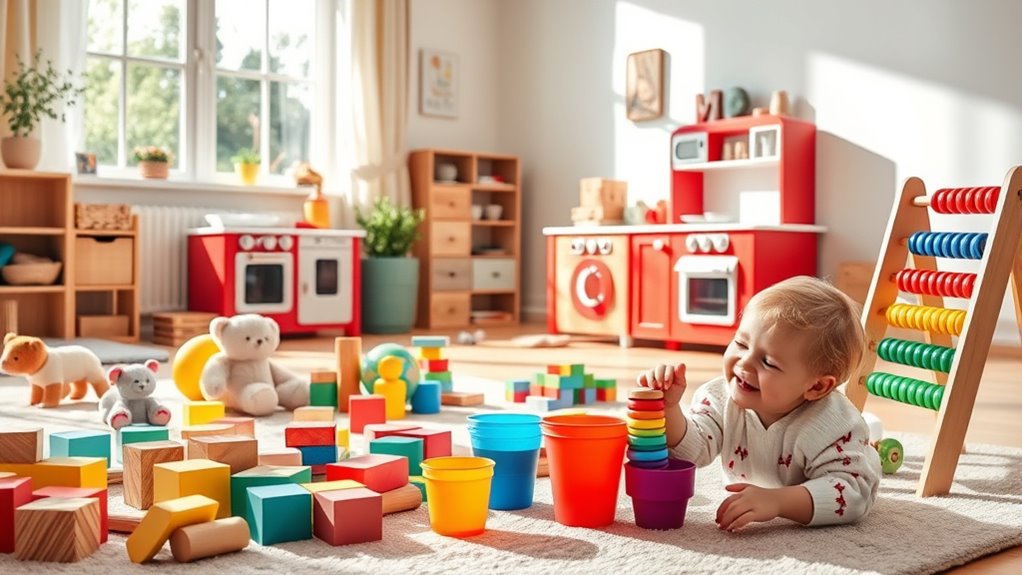
Best Preschool Learning Toys for Early Development
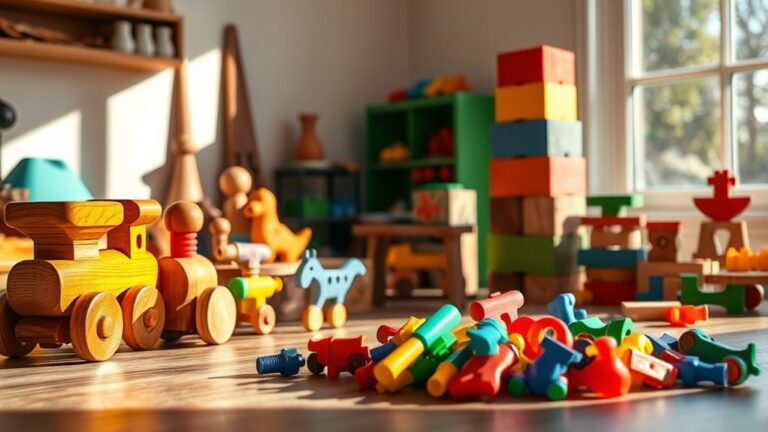
Choosing the best preschool learning toys for early development is essential for nurturing your child’s growth.
Focus on toys that enhance fine motor skills, cognitive abilities, and social-emotional growth.
Look for high-quality, open-ended toys like stacking cups and puzzles. These types of toys promote creativity and problem-solving, making playtime both fun and educational.
Safety and durability are key factors to consider. Always opt for non-toxic materials with clear age labels to ensure your child’s safety.
By prioritizing versatile toys, you’ll make playtime engaging and effective for your little one.
Keep exploring to discover a balanced mix of toys that will support your child’s development. There’s a world of learning waiting to be uncovered through play!
Key Takeaways
- Look for toys that enhance fine motor skills, such as stacking cups and chunky puzzles, to prepare children for writing.
- Choose open-ended toys that encourage creativity and problem-solving, allowing for varied play experiences and exploration.
- Select high-quality, durable toys that are made from non-toxic materials and have clear age labels for safety.
- Incorporate STEM kits and building blocks to introduce early learning concepts and promote cognitive development through hands-on activities.
- Rotate toys regularly to maintain engagement and ensure they align with children’s evolving developmental milestones.
What Preschool Learning Toys Should Support
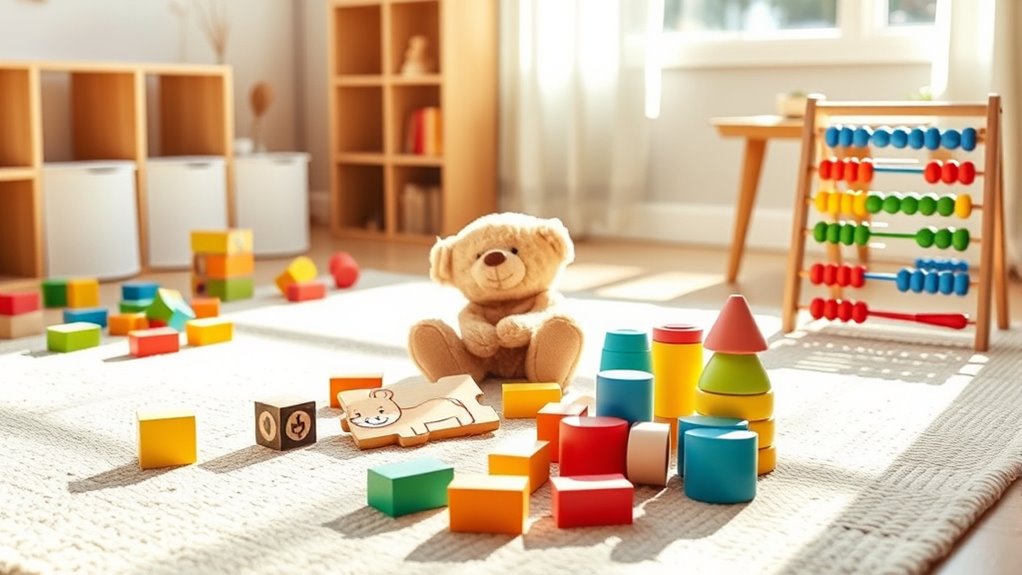
When choosing preschool learning toys, it’s essential to select ones that support various areas of development.
Look for toys that strengthen fine motor skills, like stacking cups and puzzles, which enhance dexterity and hand-eye coordination.
Toys that enhance fine motor skills, like stacking cups and puzzles, are perfect for developing dexterity and hand-eye coordination.
Opt for those that spark cognitive development by encouraging problem-solving and critical thinking through engaging games and sorting activities.
Consider toys that promote social and emotional growth, such as dolls and role-play sets, which foster sharing and cooperative play.
Additionally, choose educational toys that provide opportunities for open-ended exploration, allowing your child to experiment and express creativity.
Successful completion of tasks with these toys builds their confidence, reinforcing their willingness to take on new challenges and learn in a fun, engaging way.
How to Choose Preschool Learning Toys
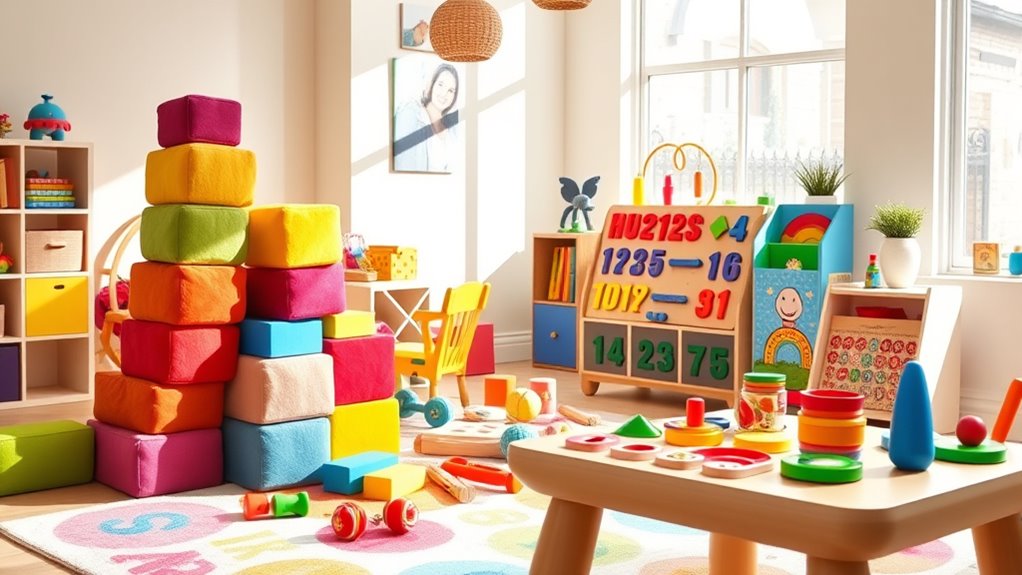
Choosing preschool learning toys can feel overwhelming, but focusing on your child’s developmental stage and interests can simplify the process.
Look for toys that match their developmental milestones and attention spans. This way, you can guarantee they provide a slight challenge to promote skill development without causing frustration.
Opt for open-ended toys that encourage problem-solving and creativity. These toys allow for varied play experiences as your child grows.
Prioritize quality over quantity by selecting a smaller collection of versatile, high-quality toys. Rotating these toys can help maintain interest.
Ascertain these toys support essential skills like fine motor, cognitive, and social-emotional growth.
And don’t forget to check for safety and durability! Using non-toxic materials and clear age labels can help you avoid hazards.
Best Preschool Learning Toys by Skill Area
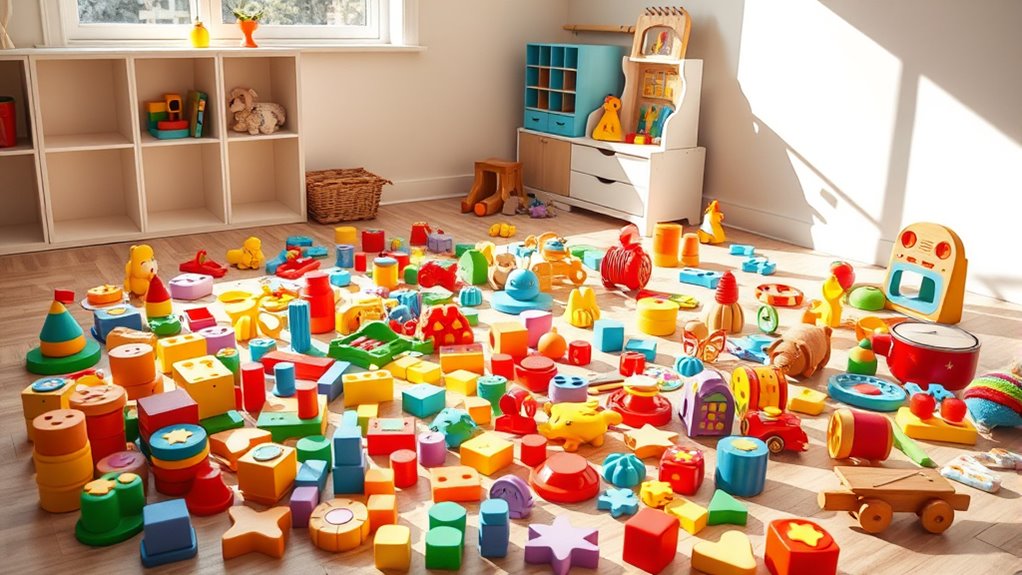
When it comes to choosing the best preschool learning toys, focusing on fine motor skills and cognitive development is key. Toys like stacking cups and puzzles help strengthen your child’s grasp while enhancing their readiness for writing. Similarly, sorting games can boost early math skills and memory, offering varied challenges to keep their minds engaged.
Fine Motor Skill Toys
Fine motor skill toys play an essential role in your child’s development, as they help strengthen grasping and pinching abilities important for tasks like writing.
By engaging in fun learning activities, your children can build vital skills.
Here are three types of fine motor toys to take into account:
- Stacking cups: These enhance hand-eye coordination and problem-solving as children figure out how to balance and nest them.
- Chunky puzzles: They promote dexterity and encourage independent play while developing spatial awareness.
- Threading beads: These fine motor toys help improve manipulation skills, turning practicing into a creative activity.
Incorporating these toys into playtime will support your child’s growth in essential skills while keeping them entertained!
Cognitive Development Toys
Cognitive development toys are essential for nurturing your preschooler’s intellectual growth.
They actively engage young minds in hands-on learning experiences.
Toys that encourage cognitive development, like sorting games and shape matchers, enhance early math skills while reinforcing concepts through repeated play.
These toys often focus on colors, shapes, and patterns, helping your child develop critical thinking and problem-solving abilities.
You can select slightly complex toys for children who thrive on challenges, keeping them engaged and stretching their cognitive capabilities.
Additionally, many cognitive development toys suit varying attention spans.
There are simpler options for younger preschoolers and more intricate designs for those ready for advanced tasks.
Regular interaction with these toys strengthens understanding and enhances learning through practice.
10 Best Preschool Learning Toys to Consider
When choosing the best preschool learning toys, you want to focus on essential skill development, engaging play experiences, and versatile toy options. These factors not only spark your child’s curiosity but also support their growth across various areas. Let’s explore some top picks that check all these boxes.
Essential Skill Development
As you explore the world of preschool learning toys, you’ll find that they play a crucial role in essential skill development across various domains.
Here are three types of toys to evaluate for your toddlers:
- Shape Sorters and Stacking Toys: These promote fine motor control, enhancing hand dexterity and coordination.
- Pretend Play Sets: Items like play kitchens and dolls foster social-emotional development, encouraging empathy and imaginative interactions.
- STEM Kits and Building Blocks: These introduce early engineering concepts, boosting cognitive skills and problem-solving abilities.
It’s exciting to see how each type of toy contributes to your child’s growth!
Engaging Play Experiences
While exploring engaging play experiences for your preschooler, you’ll discover a variety of toys that can spark their imagination and support their development.
STEM kits and building blocks introduce early learning concepts, fostering critical thinking and problem-solving skills through hands-on play.
Pretend play sets encourage creativity and social skills, allowing children to process emotions and engage in imaginative scenarios.
Balance bikes promote physical confidence and coordination, enhancing gross motor skills in a fun way.
Additionally, educational toys like wooden puzzles and musical instruments boost cognitive development, teaching shapes and colors while improving fine motor skills.
Rotating toys and mixing fine motor, cognitive, and pretend play options ensure that your child’s learning remains engaging and aligns with their developmental stages.
Versatile Toy Options
Choosing versatile toy options for your preschooler can greatly enhance their learning experience.
These toys not only entertain but also promote essential skills. Here are three versatile toy options to take into account:
- Stacking Toys: These help develop fine motor skills while teaching shape recognition and spatial awareness.
- Building Blocks and STEM Kits: These encourage problem-solving and critical thinking, which are vital for cognitive development.
- Art Supplies and Pretend Play Sets: These foster creativity and imaginative play, allowing your child to explore social interactions.
Investing in these learning toys will support your child’s growth and development while keeping them engaged and entertained.
Versatile toys provide endless opportunities for fun and learning!
Safety and Quality Factors to Check
When selecting preschool learning toys, it’s essential to prioritize safety and quality to guarantee your child’s playtime is both fun and secure.
Focus on toys made from durable materials and non-toxic finishes to assure safety. Always check for clear age labels to avoid small parts that might pose choking hazards.
Look for solid construction to withstand repeated use, assuring longevity. Additionally, choose toys that are easy to clean to maintain hygiene, especially in homes with multiple children.
Here’s a quick reference table to help you:
| Safety Feature | Importance |
|---|---|
| Non-toxic finishes | Assures safety during playtime |
| Clear age labels | Prevents choking hazards |
| Durable materials | Assures longevity of toys |
| Easy to clean | Maintains hygiene for multiple kids |
How to Build a Balanced Toy Mix
To build a balanced toy mix for your preschooler, it’s essential to include a variety of options that cater to different developmental areas.
Here are three key categories to take into account:
1. Fine Motor Skills: Choose toys that grow with your child, like stacking cups and chunky puzzles.
These help children develop hand-eye coordination and grasping skills.
2. Cognitive Development: Incorporate sorting games and shape matchers.
These enhance problem-solving and early math thinking, matching your child’s developmental stage.
3. Pretend Play: Include dolls and play kitchens to encourage creativity.
This type of play supports language development and social interaction through cooperative storytelling.
Frequently Asked Questions
What Age Range Is Best for Preschool Learning Toys?
The best age range for preschool learning toys is typically between 3 to 5 years old. During this time, children develop essential skills, and engaging toys can greatly enhance their learning and creativity.
How Do I Know if a Toy Is Age-Appropriate?
You can tell a toy’s age-appropriate by checking the packaging for recommended age ranges. Does it promote skills your child needs right now? Look for toys that spark interest and encourage development without overwhelming them.
Can Toys Be Both Educational and Fun?
Toys can be both educational and fun. When you choose engaging games that stimulate creativity and critical thinking, your child will learn while enjoying themselves. Look for toys that spark curiosity and exploration!
Are There Any Eco-Friendly Preschool Toy Options?
Yes, there are plenty of eco-friendly preschool toy options available. You’ll find wooden blocks, organic cotton stuffed animals, and recycled plastic playsets that not only nurture your child’s development but also protect the planet.
How Often Should I Rotate My Child’s Toys?
You should rotate your child’s toys every few weeks. This keeps playtime fresh and engaging, encouraging exploration and creativity. Regularly introducing new options sparks their interest and helps develop their skills effectively.
Conclusion
In selecting the right preschool learning toys, think of them as seeds in a garden.
Just as each seed needs the right conditions to flourish, your child’s development thrives with toys that nurture various skills.
Research shows that children who engage with diverse educational toys score higher in cognitive tests.
By carefully choosing toys that encourage creativity, problem-solving, and social skills, you’re cultivating a vibrant foundation for their future learning and growth.
So, as you embark on this journey of selecting toys, remember to look for those that spark joy and curiosity in your child.
Happy gardening!
In conclusion, choosing the right preschool learning toys is crucial for early development. These toys not only enhance cognitive skills but also foster creativity and social interaction. By making informed choices, you’re setting your child up for a successful learning journey. Aim for a diverse range of educational toys that inspire and engage. Happy nurturing!