What Is Inside Your Child’s Toy?
Your child’s toy might look harmless, but it can actually contain hazardous materials like lead or cadmium.
It’s important to remember that small parts can pose choking risks, especially for kids under three.
Long strings could also lead to strangulation.
To ensure your child’s safety, always look for safety certifications.
Regularly inspecting toys for sharp edges or small components is crucial, as these can pose risks to your little ones.
By staying informed about recalls and safety alerts, you can help protect your children from these hidden dangers.
Explore more tips to guarantee toy safety!
Key Takeaways
- Many children’s toys contain small parts that can pose choking hazards, especially for kids under three years old.
- Some toys may be made with toxic materials like lead or cadmium, which are harmful if ingested.
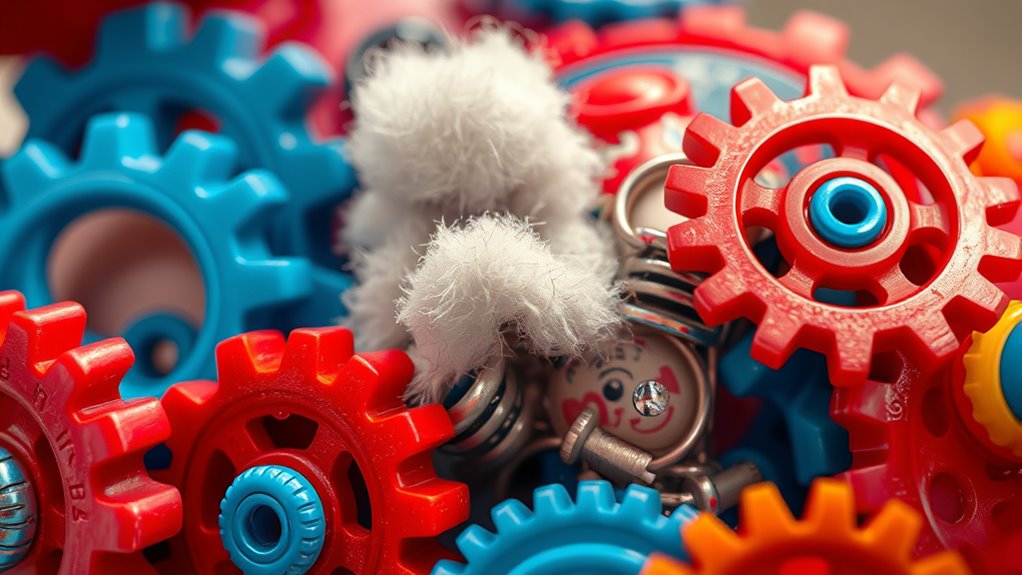
- Toys often include various components such as batteries, electronics, or plush stuffing that require safety checks for hazards.
- Safety certifications on toys indicate compliance with regulations, ensuring they are free from harmful substances and safe for children.
- Regular inspections for hidden hazards like sharp edges, pinch points, and long strings are crucial to ensuring toy safety.
Understanding Toy Safety Standards
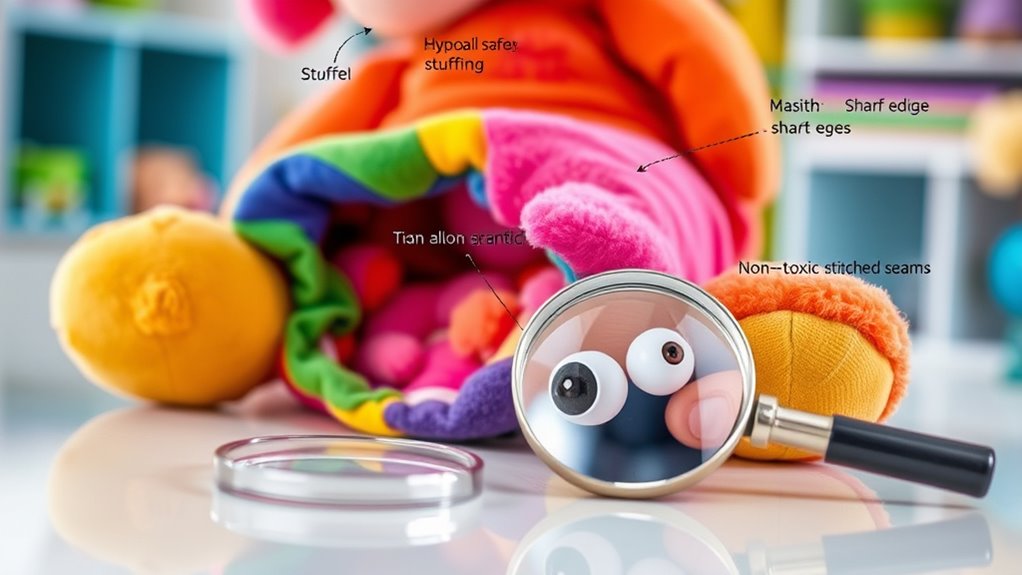
When it comes to choosing toys for your child, understanding toy safety standards is important.
Toys for kids under three must have age labels to warn you about choking hazards from small parts.
The Consumer Product Safety Commission (CPSC) enforces regulations ensuring toys are free from toxic substances like lead and cadmium, keeping your child safe.
Regular inspections and maintenance are essential, as wear and tear can create hidden hazards.
Manufacturers are encouraged to use sturdy materials and secure attachments to avoid sharp edges and injury risks.
For riding toys, safety gear like helmets and pads is critical, so make sure your child wears appropriate equipment consistently.
Prioritizing toy safety helps create a secure play environment for your little one.
Common Hazards in Children’s Toys
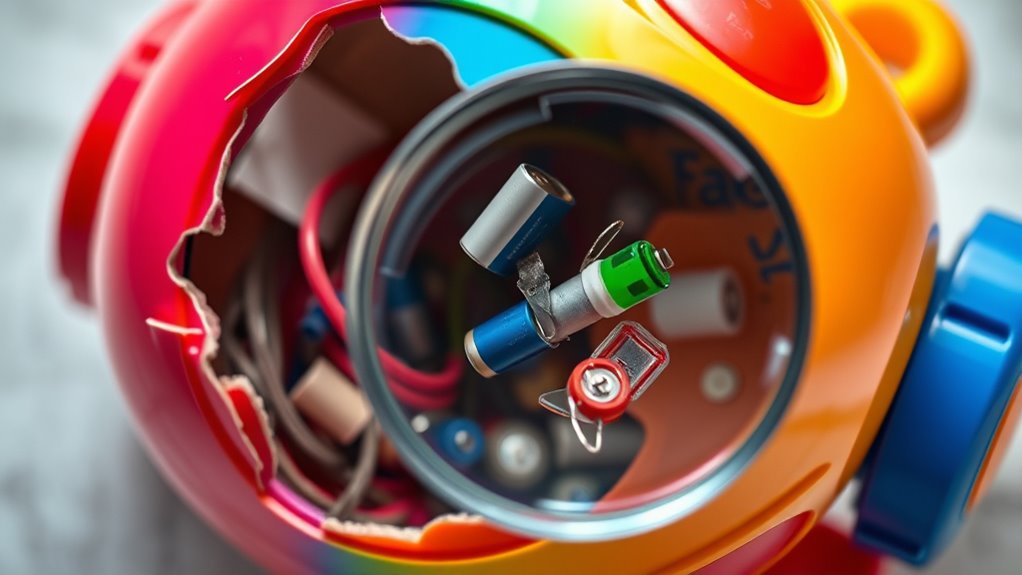
Toys can be a source of joy for children, but they also harbor potential hazards that parents must be aware of.
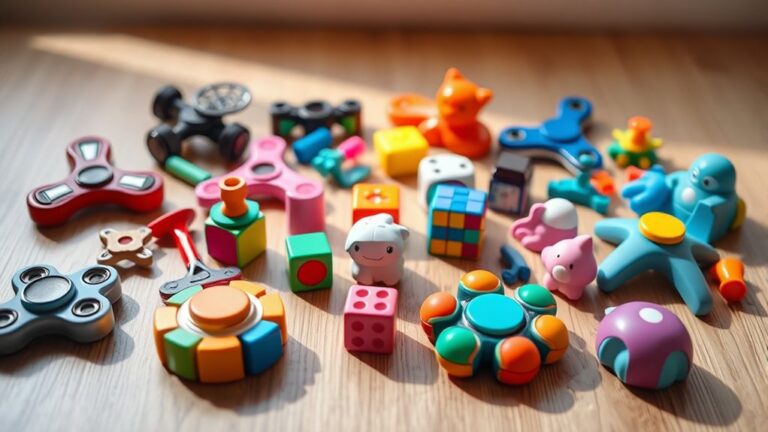
Many toys contain small parts that pose choking risks, especially for kids under 3. Always check for age labels and inspect for small components.
Additionally, some toys may be made from toxic materials like cadmium or lead, which can be harmful if ingested. Toys like squishy figures or those with water beads have been linked to serious ingestion hazards.
Long strings or cords can present strangulation risks, so be certain to examine these closely.
Regular safety checks of your child’s toys are crucial to guarantee they remain safe and free from wear and tear that could introduce new hazards.
Importance of Age-Appropriate Toys
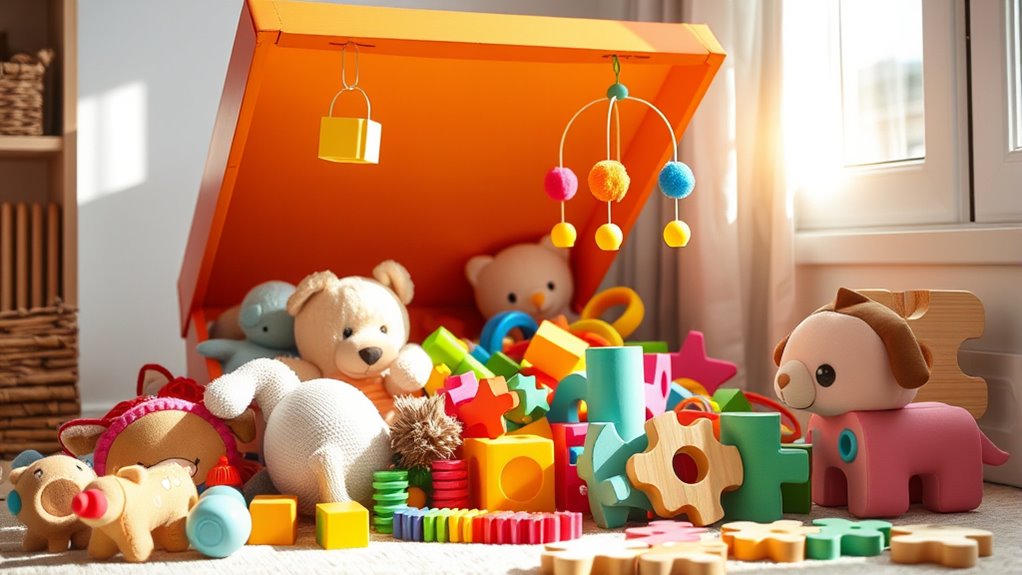
Selecting age-appropriate toys is essential for your child’s development.
These toys are specifically designed to match their growth stages. They enhance learning and play experiences effectively while ensuring safety.
For example, infants benefit from sensory stimulation, while toddlers engage in problem-solving and pretend play.
| Age Group | Toy Focus |
|---|---|
| Birth to 6 months | Sensory stimulation |
| 1-2 years | Problem-solving skills |
| 2 years and up | Pretend play and creativity |
The American Academy of Pediatrics emphasizes choosing toys that engage children’s interests and abilities.
Regularly checking toys for age suitability and safety certifications is vital.
This practice helps create a safe play environment, preventing hazards like choking.
How to Inspect Toys for Safety
Inspecting toys for safety is essential to protecting your child during playtime.
Start by checking for small parts, like small balls, that can be inhaled or inserted into your child’s nose, mouth, or ears.
Check for small parts, such as balls, that could be inhaled or inserted into your child’s nose, mouth, or ears.
Also, look out for deflated balloons and marbles, as these can pose serious risks.
Guarantee there aren’t long strings or cords that could lead to strangulation for younger kids.
Examine toys for sharp edges, straight pins, or pinch points that could cause injuries.
And don’t forget to confirm that all moving parts are securely attached to avoid choking hazards.
Finally, review the materials in stuffed toys to make sure they’re sturdy and filled with safe, non-toxic substances.
Your vigilance can help guarantee your child’s safety while they play.
Recommended Toys for Different Age Groups
Choosing age-appropriate toys is essential for your child’s development and safety. From soft rattles for infants to advanced puzzles for preschoolers, each stage requires toys that stimulate growth while keeping safety in mind. Let’s explore the best options for each age group to guarantee your little one plays safely and learns effectively.
Age-Appropriate Toy Selection
When it comes to finding the right toys for your child, understanding their developmental stage is crucial.
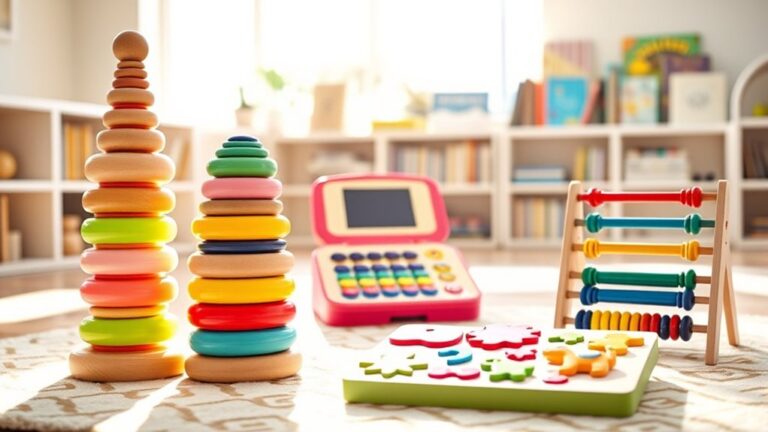
For infants (birth to 6 months), opt for safe toys like rattles and soft dolls that enhance sensory exploration.
Older infants (7 to 12 months) benefit from manipulative toys such as large beads and soft blocks to support cognitive growth.
One-year-olds should have simple board books and building toys to stimulate language development.
For toddlers (2 years), problem-solving toys like wooden puzzles are perfect for creativity.
Preschoolers and kindergarteners (3 to 6 years) thrive with advanced problem-solving toys and physical activity items that challenge their skills.
Always consider age-appropriate safety gear to guarantee your child’s playtime is safe and enjoyable.
Safety Considerations for Toys
While selecting toys for your child, it’s essential to prioritize safety alongside developmental benefits.
For infants (birth to 6 months), opt for soft dolls and rattles that encourage reaching and auditory stimulation.
Avoid any small parts that can pose choking hazards.
As they grow into older infants (7 to 12 months), large beads and nesting toys aid cognitive development.
But make sure they are free from inhalable parts.
One-year-olds benefit from non-toxic board books and washable markers.
For two-year-olds, choose problem-solving toys like wood puzzles that are safe for younger siblings.
Finally, preschoolers (3 to 6 years) can explore advanced puzzles and construction sets.
Just ensure all toys meet product safety standards and lack sharp edges or toxic materials.
Staying Informed on Toy Recalls and Safety Alerts
To keep your child safe, it’s essential to stay updated on recent toy recall alerts and safety certifications. If you come across any unsafe toys, report them to the CPSC to help protect other families. By being proactive, you can make informed choices and guarantee your child’s playtime remains safe and enjoyable.
Recent Recall Alerts
How can you guarantee the toys in your child’s playroom are safe?
Staying updated on recent recall alerts is vital.
The Consumer Product Safety Commission (CPSC) regularly issues updates about potentially hazardous toys.
For instance, Ivyapingdianpu’s squishy bun toys were recalled due to risks of kids ingesting water beads.
And Monkey Mania’s nuclear bubble beretta firework toys posed burn hazards.
It’s important to check these recall lists frequently to make sure your child’s toys don’t present choking, ingestion, or injury risks.
Don’t forget about common hazards like deflated balloons, which can also be dangerous.
Reporting Unsafe Toys
Keeping track of unsafe toys not only protects your child but also helps others stay informed.
To do this effectively, make sure you report any unsafe toys to the Consumer Product Safety Commission (CPSC) via SaferProducts.gov.
Staying updated on toy recalls and safety alerts is essential, so regularly check the CPSC website and subscribe to their alerts.
Sharing information about recalls within your community can raise awareness and encourage proactive safety measures among parents.
Participate in local discussions about toy safety to exchange insights and experiences, which can help identify potential hazards.
Utilize available resources for reporting unsafe toys, ensuring you’re always informed about recent recalls to keep your child safe from potential dangers.
Safety Certification Importance
While toys can bring joy and creativity to your child’s playtime, understanding the importance of safety certifications is essential for ensuring their well-being.
Safety certification guarantees that toys meet established guidelines, minimizing risks of injury and toxic exposure.
Staying informed about toy recalls is vital; it allows you to remove potentially hazardous products from your home before accidents can happen.
The Consumer Product Safety Commission (CPSC) offers SaferProducts.gov, a valuable resource for checking recalls and reporting unsafe toys.
By regularly reviewing recall lists, you can keep up with safety alerts and take proactive measures to protect your child.
Awareness of safety certifications and recalls empowers you to make informed decisions, prioritizing your child’s health and safety during play.
Frequently Asked Questions
What Materials Are Commonly Used in Children’s Toys?
Common materials used in children’s toys include plastic, wood, metal, and fabric. Each offers unique benefits, like durability and safety. Always check for harmful chemicals or toxic dyes to guarantee your child’s safety.
How Can I Identify Toxic Chemicals in Toys?
It’s ironic, isn’t it? Toys intended for joy might hide dangers. You can identify toxic chemicals by checking safety certifications, researching materials, and avoiding items with phthalates or BPA. Always prioritize natural alternatives for your child’s safety.
Are There Any Toys Specifically Designed for Children With Allergies?
Yes, there are toys specifically designed for children with allergies. Look for hypoallergenic options made from organic materials and free from common irritants. Always check labels for allergy-friendly certifications to guarantee safety for your child.
How Often Should I Replace My Child’s Toys?
Toys are like fleeting moments of joy; you should replace them every couple of years, or sooner if they’re worn or no longer spark your child’s imagination, ensuring safety and endless adventures in play.
What Should I Do if a Toy Breaks?
If a toy breaks, remove it from your child’s play area right away. Inspect it for repair options; if it’s beyond fixing, recycle or dispose of it responsibly. Report any hazardous incidents to the CPSC.
Conclusion
In the world of toys, safety should be your top priority, yet fun is equally important.
By understanding safety standards and inspecting toys, you can guarantee your child plays happily and safely.
Remember, age-appropriate toys spark imagination while minimizing risks.
Stay informed about recalls to protect your little ones.
So, embrace the joy of playtime, but always keep a watchful eye.
A safe toy is the best toy, and happy play leads to happy memories.
—
In the end, making informed choices about toys is key.
Keep your child’s safety in mind while ensuring they have fun.
By choosing age-appropriate and safe toys, you create a playful environment that nurtures their creativity.
Stay updated on safety standards and recalls to ensure peace of mind.
So, let’s celebrate playtime with safe toys that inspire joy and lead to wonderful memories!