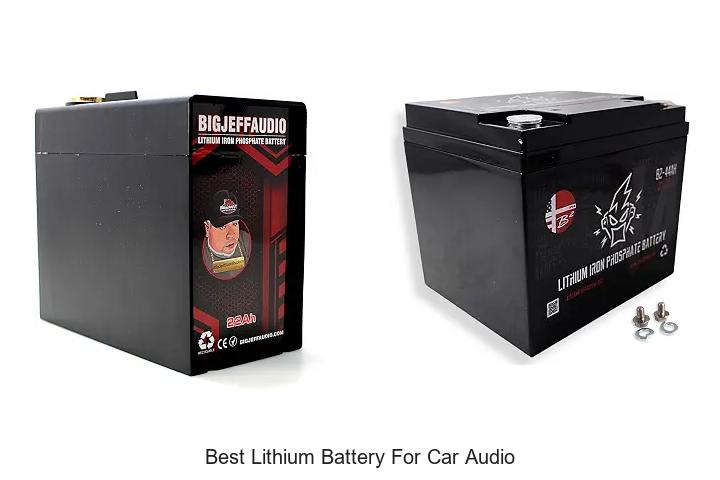
10 Best Lithium Battery for Car Audio: Best Options Compared
Car audio systems need steady power to perform well. Weak batteries can cause dim lights, lower output, and shutdowns during loud play. This review focuses on the best lithium battery for car audio and what makes it useful for daily drivers and sound system builds.
This review focuses on the best lithium battery for car audio and what makes it useful for daily drivers and sound system builds. It is for anyone who wants cleaner power, faster charging, and better support for amplifiers and accessories. A lithium battery can help reduce weight and hold voltage more steadily than many older battery types.
It may also improve how a system behaves during heavy bass use or long listening sessions. In this review, we will cover battery performance, size, power delivery, and value. We will also explain which users may benefit most from each model.
Best lithium batteries for powerful car audio systems
| Image | Product | Price |
|---|---|---|
Pick 1  | Big Jeff Audio BJ-LI-22AH Lithium Battery | Check Price On Amazon |
Pick 2  | B2 Audio 44Ah LiFePO4 Battery | Check Price On Amazon |
Pick 3  | XS Power PWR-S5-3400 Lithium Battery | Check Price On Amazon |
1. Big Jeff Audio BJ-LI-22AH Lithium Battery
Compact power is the main appeal here. Big Jeff Audio packs serious output into a small lithium battery case.
Built for car audio setups, it offers 6000 watts max power and 293 watt hours of stored energy. That combination suits systems that need strong bursts and steady support.
The 22 amp hour rating points to dependable capacity for longer listening sessions. It also supports up to 14.7 volts, which helps maintain stable power delivery.
The battery uses lithium LFP chemistry and includes built-in cell balancing. That feature helps support battery life and more even operation across cells. Its size, 3.61 x 7.09 x 6.4 inches, makes it a smart pick for tighter spaces.
The design targets users who want a compact 12V power source for audio gear. It suits smaller builds that still demand strong electrical performance.
The simple one-battery setup also keeps installation straightforward for many setups.
Pros
- Compact size for tight installation spaces
- 6000-watt max power rating
- Built-in cell balancing
Cons
- No peak cranking amps listed
- Weight information is not provided
- Terminal type is not specified
Who Should Buy It?
Drivers who need compact lithium power for car audio should consider it. The small footprint helps in vehicles with limited space. Its 12V output, 22Ah capacity, and 6000-watt max rating suit audio systems needing strong electrical support.
It also fits users who want a simple lithium battery with built-in cell balancing and stable voltage support up to 14.7 volts.
Key Specifications
| Specification | Details |
|---|---|
| Chemistry | Lithium LFP |
| Capacity | 22 Ah |
| Voltage | 12 V |
| Max Output | 6000 W |
| Dimensions | 3.61 x 7.09 x 6.4 inches |
| Warranty | Manufacturer |
The lithium LFP chemistry means the battery uses lithium iron phosphate cells. In everyday use, that points to a compact power source built for audio duty. The 22 amp hour capacity describes how much stored energy it can hold. The 12 volt rating matches common car audio setups. Together, these figures suggest a battery meant for steady support during extended listening sessions, while still fitting into tighter vehicle spaces with less installation hassle.
The 6000 watt max output matters for systems that draw strong bursts of power. A battery with this rating can support demanding audio equipment more comfortably than smaller units. The 3.61 x 7.09 x 6.4 inch size also helps when space is limited. Built-in cell balancing adds support for consistent cell operation over time. That combination suits users who want a smaller battery with serious audio capability and a simpler installation footprint.
2. B2 Audio 44Ah LiFePO4 Battery
Big bass systems need steady current, and this battery is built for that job. The B2 Audio 44Ah LiFePO4 Battery focuses on high-output car audio setups that demand strong electrical support. It is rated to support up to 10,000 watts, and its 4,100 amp output capability helps reduce voltage sag during heavy musical peaks.
The 44Ah capacity provides 594 watt-hours of reserve energy for stable amplifier performance. LiFePO4 chemistry brings lighter weight, faster charging, and longer service life than traditional AGM batteries. That makes it appealing for daily drivers and competition builds alike.
The maintenance-free design and shock resistance add practical value for hard-use installs. It suits serious audio systems that need dependable power without extra upkeep.
Pros
- High current output for demanding amplifier setups
- LiFePO4 design charges faster than AGM batteries
- Maintenance-free and shock resistant for hard use
Cons
- No dimensions listed in the product data
- No weight listed in the product data
- No warranty information provided
Who Should Buy It?
Buyers with high-output car audio systems should consider it. It fits competition builds and powerful daily setups that need strong voltage support. The 44Ah capacity and 4,100 amp output suit users who push amplifiers hard.
It also works well for drivers who want lighter battery weight and less maintenance. People upgrading from AGM batteries may appreciate the faster charging and longer lifespan.
Key Specifications
| Specification | Details |
|---|---|
| Chemistry | LiFePO4 |
| Capacity | 44Ah |
| Voltage | 12V |
| Max Output | Supports up to 10,000 watts |
| Peak Cranking Amps | 4,100 amps |
| Vehicle Fit | Universal fit |
The 44Ah capacity means the battery stores a useful amount of energy for audio demand. The listed 594 watt-hours help explain why it can hold voltage during longer sessions. At 12V, it matches standard car electrical systems and works with many passenger cars. LiFePO4 chemistry also changes the everyday feel of the setup. It charges faster than AGM, weighs less, and needs no maintenance. That mix suits drivers who want a cleaner power upgrade for serious sound systems.
The 4,100 amp output capability matters when bass hits hard and fast. It helps the system deliver current with less voltage sag during heavy peaks. Support for up to 10,000 watts points to use in powerful amplifier builds. The universal fit makes it adaptable for many passenger cars. Daily drivers benefit from the lighter weight and maintenance-free design. Competition vehicles gain from the high-output focus and dependable power delivery during hard sessions.
3. XS Power PWR-S5-3400 Lithium Battery
Premium car audio setups need strong power delivery, and the XS Power PWR-S5-3400 is built for that role. Its Group 34 size, 12-volt design, and 2000-amp rating make it aimed at serious electrical demands. XS Power positions it as a deep cycle LTO powercell for car audio, stereo, and performance racing cars.
The M6 terminal hardware adds a practical installation touch, and the universal fit broadens its appeal.
The battery uses lithium technology and offers a 20Ah capacity, which suits demanding audio and performance use. Its 1000CA rating points to fast starting support, while the deep cycle design helps it handle repeated discharge and recharge use.
The compact format makes it a good match for tighter battery locations. Build quality is geared toward performance vehicles, ATVs, and passenger cars.
It suits buyers who want a premium power cell with strong output and straightforward terminal hardware.
For sound systems that ask a lot from the electrical setup, it brings focused power support. The M6 terminal bolts are included, which simplifies installation for many users.
Its universal fit helps it work across different vehicle setups without a specialized layout. The battery’s lithium-based design also appeals to drivers who want a lighter, modern power source for audio and racing use.
It fits buyers who value output, packaging, and performance-oriented design over basic replacement needs.
Pros
- High output for demanding audio systems
- Included M6 terminal bolts simplify installation
- Universal fit suits multiple vehicle types
Cons
- Premium design may exceed casual needs
- Group 34 sizing may not fit every bay
- Lithium setup may require matching charging equipment
Who Should Buy It?
Buyers with serious car audio or performance electrical demands should consider it. It suits drivers who want a premium power cell for stereo upgrades, racing use, or compact high-output installations. The 12-volt design, lithium construction, and included M6 hardware make it appealing for people who value strong output and simple mounting.
It also fits ATV and passenger car applications.
Key Specifications
| Specification | Details |
|---|---|
| Chemistry | Lithium |
| Capacity | 20 amp_hours |
| Voltage | 12 volts |
| Max Output | 2000 Amp |
| Peak Cranking Amps | 1000CA |
| Dimensions | Group 34 |
| Weight | Not provided |
| Terminal | M6 |
| Vehicle Fit | ATV, Passenger Car |
| Warranty | Not provided |
The lithium chemistry gives this battery a modern power profile for vehicles that need strong electrical support. Its 20 amp hour capacity means it can store power for repeated use in audio or performance setups. The 12 volt rating matches standard automotive systems, while the M6 terminal format makes connections straightforward. Group 34 sizing also helps users understand the physical footprint before installation, which matters when space is limited inside the vehicle.
The 2000 amp max output and 1000CA rating point to strong current delivery when loads spike. That matters most for car audio systems that ask for quick bursts of power and for vehicles that need reliable starting support. The deep cycle LTO design also fits repeated charging and discharging better than a simple starter battery. Drivers with ATVs or passenger cars benefit from the universal fit and included terminal bolts during setup.
4. 12V 100Ah Group 24 LiFePO4 Battery

Large systems need steady power, and this Group 24 LiFePO4 battery brings that in a compact case. Its 100Ah capacity and 1280Wh rating suit demanding audio setups that need extended runtime. Built as a two-pack listing, it also adds useful monitoring and cold-weather charging support.
The battery delivers 12V service with a 150A smart BMS, Bluetooth 5.4 monitoring, and self-heating for low-temperature charging. That makes setup easier for users who want strong capacity and modern protection features.
The case measures 10.20 x 6.61 x 8.23 inches and weighs about 22.7 pounds. It fits RV, marine, solar, and other universal 12.8V applications. Continuous discharge reaches 150A, with brief surge ratings for short peak loads.
IP65 housing adds outdoor durability, while expansion support allows future system growth. It suits buyers who need large lithium storage and practical battery management.
Pros
- High 100Ah capacity for longer runtime
- Bluetooth monitoring shows battery status clearly
- Self-heating helps cold-weather charging
Cons
- Size may not fit every battery compartment
- Not intended for engine cranking use
- Two-pack format may exceed single-battery needs
Who Should Buy It?
Buyers needing large lithium storage for car audio, RV, marine, or solar use should consider it. It suits users who want Bluetooth monitoring, cold-weather charging support, and a compact Group 24 size. The 150A continuous output also fits higher-demand systems that need steady deep-cycle power.
It works best for people planning organized installations and checking fit before purchase.
Key Specifications
| Specification | Details |
|---|---|
| Chemistry | LiFePO4 |
| Capacity | 100Ah |
| Voltage | 12.8 volts |
| Max Output | 150A continuous discharge, 1920W output |
| Peak Cranking Amps | Not provided |
| Dimensions | 10.20 x 6.61 x 8.23 in |
| Weight | 22.7 lb |
| Terminal | Not provided |
| Vehicle Fit | Universal Fit |
| Warranty | Not provided |
The LiFePO4 chemistry gives this battery a deep-cycle focus. Its 100Ah capacity means it can store a substantial amount of energy for longer runtimes. The 12.8-volt rating matches common auxiliary and mobile power systems. With 1280Wh of rated energy, it can support larger electrical loads for extended periods. The Group 24 case size also helps users plan installation space before buying. That matters when fitting a battery into limited compartments or custom mounting locations.
A 150A smart BMS helps manage charging and discharging safely during use. The battery can supply 1920W continuously, which supports higher-demand accessories and audio equipment. Bluetooth 5.4 gives phone-based access to voltage, current, temperature, and alerts. Self-heating also helps in cold conditions when charging current is at least 10A. IP65 housing improves protection for mobile use. These features favor buyers who want monitoring, weather support, and steady power delivery.
5. XS Power XP750 AGM Supplemental Battery

Compact power matters when audio systems need extra support. XS Power’s XP750 fits that role with a sealed AGM design and low internal resistance.
It uses absorbed glass mat construction, which keeps electrolyte suspended in fiberglass. That design helps resist vibration and allows mounting in almost any position. The battery delivers 12 volts, 22 amp hours, and 750 amps.
Its small size and 3.9-pound weight make placement easier in tight builds.
The XP750 is aimed at supplemental power, not main starting duty. Its 28-minute reserve capacity shows it is built for short support windows. The M6 terminal bolt helps with secure connections in custom setups.
Universal fit compatibility suits boats and passenger cars with space constraints. Build quality is practical, with a spill-proof, sealed, valve-regulated housing. For audio systems that need extra support without adding much bulk, it offers a focused and tidy solution.
Pros
- Very compact and easy to place
- Sealed AGM design resists vibration
- Low internal resistance supports quick power delivery
Cons
- Limited 22 amp hour capacity
- Not meant for long runtime use
- M6 terminals may need adapters
Who Should Buy It?
Buyers needing a small supplemental battery for car audio should consider it. It suits compact installs, lightweight builds, and vehicles with limited mounting space. The sealed AGM design works well in vibration-prone setups.
It also fits boats and passenger cars needing extra electrical support. Users wanting short-term backup power rather than a full-size battery will find the format practical.
Key Specifications
| Specification | Details |
|---|---|
| Chemistry | AGM lead-acid |
| Capacity | 22 amp hours |
| Voltage | 12 volts |
| Max Output | 750 amps |
| Peak Cranking Amps | 750 amps |
| Dimensions | 5″D x 10″W x 10″H |
| Weight | 3.9 pounds |
| Terminal | M6 |
| Vehicle Fit | Universal Fit |
The XP750 uses AGM lead-acid chemistry, so the electrolyte stays suspended in fiberglass mats. That construction supports spill resistance and valve-regulated operation. Its 12-volt rating matches common automotive electrical systems. A 22 amp hour capacity means it stores a modest amount of energy for supporting audio equipment. The 750 amp output gives it strong burst capability for a battery of this size. The 28-minute reserve capacity points to short-duration backup use.
At 5 by 10 by 10 inches and 3.9 pounds, it stays easy to place. That size helps in custom trunks, under-seat spots, and tight mounting areas. The M6 terminal bolt supports firm cable attachment in compact builds. Universal fit compatibility broadens its use across boats and passenger cars. Its sealed, vibration-resistant design benefits vehicles with heavy bass movement. Buyers wanting a light supplemental battery will appreciate the simple installation profile.
6. XS Power PS1200L AGM Car Audio Battery

Big audio setups need steady current, and this battery targets that need well. Its sealed AGM design helps support clean installation and strong vibration resistance.
The XS Power PS1200L is a 12-volt lead-acid AGM power cell built for car audio use. It uses ultra-thin lead plates and lead-tin AGM technology for fast discharge support. The sealed non-spillable case allows mounting in any orientation, including inside the cabin.
That flexibility helps with custom installs and tight OEM battery locations. The patent pending I-BAR design adds multiple terminal mounting options. At 35.3 pounds, it balances portable handling with solid construction.
It is rated for 1500W and 3000W audio setups, which suits many system upgrades. The M6 terminal setup keeps connections practical for common installs.
It fits passenger cars and works well for buyers wanting a budget AGM audio battery with flexible mounting.
Pros
- Sealed design allows flexible mounting positions
- AGM construction resists vibration well
- Multiple terminal mounting options help installs
Cons
- 35.3-pound weight may be awkward for some installs
- Single-battery capacity may not suit very large systems
- M6 terminals may need matching hardware
Who Should Buy It?
Buyers building a budget-minded AGM audio setup should consider this battery. It suits passenger cars, custom installs, and systems needing flexible mounting options. The sealed design helps where a spill-resistant battery matters.
People wanting a direct-fit replacement for many OEM locations may also like it. It fits users who want practical installation features and solid audio support without extra complexity.
Key Specifications
| Specification | Details |
|---|---|
| Chemistry | Lead-Acid, AGM |
| Capacity | Not provided |
| Voltage | 12 volts |
| Max Output | 1500W / 3000W |
| Peak Cranking Amps | 2600A |
| Dimensions | Not provided |
| Weight | 35.3 pounds |
| Terminal | M6 |
| Vehicle Fit | Passenger Car; Universal Fit |
| Warranty | Not provided |
The PS1200L uses AGM lead-acid chemistry, which suits car audio power delivery. Its 12-volt design matches common passenger car electrical systems. The listed 2600A peak cranking rating points to strong starting support. The 1500W and 3000W audio figures help buyers judge system fit. M6 terminals make the connection style clear for wiring plans. Since dimensions are not provided, fit checks still matter before installation.
These specifications point to a battery made for audio loads and flexible mounting. The sealed non-spillable design can help with cabin placement and custom layouts. Its 35.3-pound weight suggests solid internal construction, but installation may take care. Universal fit and direct-fit claims may help in many OEM locations. The lead-tin AGM technology and vibration-resistant build suit daily driving. Buyers with moderate audio upgrades and passenger-car installs should find the setup practical.
7. XS Power D3400 AGM Battery

Big power and proven output define the XS Power D3400. It suits car audio builds that need strong, steady electrical support. The XS Power D3400 is a 12-volt AGM battery with 3,300 amp output.
It also lists 1,000 CA and 65 Ah capacity, with an 80 amp-hour battery capacity rating. Its absorbed glass mat construction keeps the electrolyte suspended in fiberglass.
That design makes it spill proof, sealed, valve regulated, and vibration resistant. The ultra low internal resistance helps power delivery stay responsive. M6 terminal bolts offer a secure connection for installations.
Its 11 x 12 x 9 inch size and 48-pound weight fit many setups. The universal fit and mount-in-almost-any-position design add flexibility. It suits drivers who want strong audio support and dependable battery hardware.
Pros
- High 3,300 amp output for demanding audio systems
- Sealed AGM design resists spills and vibration
- Universal fit with flexible mounting positions
Cons
- Heavy at 48 pounds
- Terminal size may require matching hardware
- No size-specific vehicle fit listed
Who Should Buy It?
Buyers with demanding car audio systems should consider this battery. It suits drivers who want a sealed AGM design and strong output support. People needing flexible mounting options may also appreciate it.
The universal fit works well for many passenger cars and boat setups. It fits users who value proven performance and secure M6 terminals.
Key Specifications
| Specification | Details |
|---|---|
| Chemistry | AGM lead-acid |
| Capacity | 80 amp_hours |
| Voltage | 12 volts |
| Max Output | 3300 amps |
| Peak Cranking Amps | 1000 CA |
| Dimensions | 11″D x 12″W x 9″H |
| Weight | 48 pounds |
| Terminal | M6 |
| Vehicle Fit | Universal Fit |
The D3400 uses AGM lead-acid chemistry with a 12-volt design. Its 80 amp-hour capacity and 1,000 CA rating describe strong stored energy and starting support. The 3,300 amp output figure points to high current delivery for demanding systems. In everyday use, that means the battery is built for vehicles that need reliable electrical support. The sealed, spill proof construction also helps during mounting and regular handling.
Its 11 by 12 by 9 inch size and 48-pound weight matter during installation planning. The M6 terminal bolts can help create a firm connection for audio wiring. Universal fit and mount-in-almost-any-position design give more placement choices in passenger cars and boats. Users who need strong output and flexible installation benefit most from those traits. The vibration-resistant housing also suits setups that face rough road conditions.
8. XS Power D6500 AGM Battery

Strong audio systems need steady power, and the XS Power D6500 delivers that in a familiar AGM format. It pairs high output with sealed construction, giving car audio setups a solid power source. Designed for 12-volt systems, it uses absorbed glass mat chemistry and offers ultra low internal resistance for efficient delivery.
The battery lists 3,900 amps and 75Ah in the product title, with 86Ah in the specifications. That combination suits demanding electrical loads and vehicles that need dependable reserve power.
Build quality is a major part of its appeal. The spill proof, valve regulated design resists vibration and can mount in almost any position.
At 53.8 pounds, it feels substantial without being unusual for its class. The M6 terminal bolt supports secure connections for car audio installs, and the vehicle specific fit helps simplify placement in passenger cars or boats. It suits drivers who want strong midrange AGM performance, cleaner mounting flexibility, and dependable output for systems that ask more from the charging setup.
Pros
- High output suits demanding audio systems.
- Sealed AGM design resists spills and vibration.
- M6 terminal supports secure connections.
Cons
- Heavy compared with smaller battery options.
- Specifications list different capacity figures.
- Vehicle-specific fit may limit universal use.
Who Should Buy It?
Drivers running stronger car audio systems should consider it. It fits buyers who want AGM construction, secure mounting options, and dependable power delivery. Passenger car owners and boat users can also benefit from its sealed, vibration-resistant design.
People who prefer a battery with strong output and straightforward terminal connections will find it practical for upgrades or replacements.
Key Specifications
| Specification | Details |
|---|---|
| Chemistry | Lead-Acid, AGM |
| Capacity | 86 amp_hours |
| Voltage | 12 volts |
| Max Output | 3,900 amps |
| Peak Cranking Amps | 1070 CA |
| Weight | 53.8 pounds |
| Terminal | M6 |
| Vehicle Fit | Vehicle Specific Fit |
The battery uses AGM lead-acid chemistry, which keeps electrolyte suspended in fiberglass. That sealed design helps reduce spills and supports installation in different positions. It runs on 12 volts, which matches standard vehicle electrical systems. The listed 86 amp-hour capacity points to meaningful reserve power for audio demands and accessories. The M6 terminal also gives a secure connection point for clean wiring, especially in tighter custom installations where solid contact matters.
Its 3,900-amp output and 1070 CA rating show a battery built for heavy electrical loads. Those figures help support car audio systems that need stable power during strong playback. The 53.8-pound weight reflects the large internal structure needed for that output. Vehicle specific fit makes setup easier for compatible passenger cars and boats. Buyers who want vibration resistance, sealed construction, and flexible mounting will appreciate how these specs support daily use.
9. ENERGIE PR3600 Automotive Power Cell Battery

Power and simplicity meet in a compact automotive battery cell. It suits setups that need strong output and a straightforward fit.
The ENERGIE PR3600 is a 12-volt, 75 Ah power cell rated at 3600 watts. That makes it a practical match for car audio systems that demand steady electrical support. Its 50-pound weight suggests a solid build without becoming unmanageable for installation.
The 12 x 8 x 11 inch size also gives it a clear footprint for planning an upgrade.
The main appeal here is value through useful output and familiar fitment. A 12-volt platform works with many vehicle electrical systems. The 75 Ah capacity offers useful reserve for extended use.
The 3600-watt rating points to strong power delivery for demanding audio gear. Build quality appears aimed at everyday vehicle use, with dimensions that should fit many installations. The listed manufacturer warranty adds support from the maker.
It suits buyers wanting a power cell focused on function, size, and practical output without extra complexity.
Pros
- Strong 3600-watt output rating
- 12-volt, 75 Ah specification
- Compact size for many installs
Cons
- No chemistry listed in the data
- No peak cranking amps listed
- Terminal type is not specified
Who Should Buy It?
Buyers needing a straightforward power cell for car audio should consider it. It suits people who want a 12-volt, 75 Ah unit with a 3600-watt rating. The size and weight point to a practical installation choice for many vehicles.
It also fits users who value a simple, purpose-built battery with manufacturer support and no complicated feature set.
Key Specifications
| Specification | Details |
|---|---|
| Chemistry | Not listed |
| Capacity | 75 Ah |
| Voltage | 12 Volt |
| Max Output | 3600 Watts |
| Peak Cranking Amps | Not listed |
| Dimensions | 12 x 8 x 11 inches |
| Weight | 50 pounds |
| Terminal | Not listed |
| Vehicle Fit | Automotive vehicle |
| Warranty | Manufacturer warranty |
A 12-volt, 75 Ah power cell gives a familiar electrical foundation for vehicle audio. The voltage matches common automotive systems, so integration stays straightforward. The amp-hour rating points to stored energy that can support demanding accessories for longer periods. A 3600-watt output figure suggests the battery is aimed at heavier audio loads. The listed 12 x 8 x 11 inch size helps with fit planning before installation, while the 50-pound weight signals a substantial unit.
These numbers matter most when an audio setup needs steady support. Higher watt output can better serve amplifiers and other power-hungry equipment. The 75 Ah capacity helps when systems draw energy for extended listening sessions. A 12-volt design keeps compatibility broad across many cars and trucks. The weight may make handling a bit less convenient, but it also suggests a substantial power cell. Drivers who want practical output and a known vehicle fit will benefit most.
10. Mighty Max Battery MM-H5LI 12.8V Lithium Battery

Strong cranking power meets a lighter lithium build in a compact Group 47 size. The Mighty Max Battery MM-H5LI is aimed at drivers who want an entry lithium option with straightforward fitment.
It uses 12.8V LiFePO4 chemistry, 27Ah capacity, and 700 CCA for dependable starting power. The 62-minute reserve capacity adds support during longer electrical demand.
An integrated BMS helps manage power delivery, vibration resistance, and temperature range. The battery is also up to 60% lighter than comparable lead-acid units, which can help reduce vehicle weight. Mounting flexibility adds convenience, and the included nut and bolt hardware simplifies installation.
The positive terminal sits on the right, and the negative terminal sits on the left. Dimensions suit many vehicles needing a Group 47 replacement.
It fits car audio applications well for buyers wanting lithium performance without a complicated setup.
Pros
- Lightweight lithium design reduces vehicle battery weight.
- 700 CCA supports strong starting power.
- Integrated BMS adds stable power management.
Cons
- Wire harness and mounting accessories are not included.
- Mounting upside down is not supported.
- 27Ah capacity may limit longer accessory use.
Who Should Buy It?
Buyers wanting a simple first step into lithium power should consider it. It suits drivers needing a Group 47 replacement with lighter weight and solid starting output. Car audio users who want lithium benefits without advanced installation needs may also like it.
The included hardware helps with installation, while the terminal layout stays easy to plan around.
Key Specifications
| Specification | Details |
|---|---|
| Chemistry | LiFePO4 lithium |
| Capacity | 27Ah |
| Voltage | 12.8V |
| Max Output | 700 CCA |
| Peak Cranking Amps | 700 CCA |
| Dimensions | 9.50 x 7.00 x 7.50 inches |
| Weight | Up to 60% lighter than comparable lead-acid batteries |
| Terminal | Positive on right, negative on left |
| Vehicle Fit | Group Size 47, universal fit |
| Warranty | 5 Year Warranty |
The 12.8V LiFePO4 chemistry gives this battery a modern lithium profile. In everyday use, that means lighter weight and steady power delivery. The 27Ah capacity suits vehicles that need compact energy storage, while 700 CCA supports starting power in demanding conditions. A 62-minute reserve capacity helps keep power available when the engine is off. For drivers replacing a Group 47 battery, the size and terminal layout make planning much easier during installation.
The integrated BMS helps manage charging behavior, vibration resistance, and temperature handling. That matters for drivers who want cleaner installation and fewer compatibility worries. The battery can mount in multiple positions, except upside down, which helps in tighter spaces. Included nut and bolt hardware makes fitment simpler, while the lighter build can reduce added weight in the vehicle. It suits users who want lithium performance, easier handling, and a direct replacement format.
Best Lithium Battery for Car Audio: The Ultimate Buying Guide
Battery capacity and power output
A lithium battery with the right amp-hour rating can make a major difference in how reliably a car audio system performs, especially during heavy bass hits and long listening sessions. A higher Ah rating usually means more stored energy, which helps maintain voltage stability and reduces the risk of dimming lights or audio dropouts when the amplifiers demand extra current. It is also important to match the battery’s capacity to the amplifier load, since a system with multiple high-powered amps may need far more reserve power than a basic setup.
For setups with strong subwoofers and extended playtime, extra reserve energy helps keep the system consistent instead of forcing the battery to recover too often between peaks. A well-matched battery not only supports cleaner sound but also protects the electrical system from unnecessary strain.
- Ah rating: Indicates how much energy the battery can store for sustained use.
- Reserve power: Helps handle demanding audio systems with deep bass and high output.
- Amplifier load match: Ensures the battery can support the total current draw without performance loss.
Voltage and system compatibility
Voltage and system compatibility matter because a car audio system can pull heavy current in short bursts, especially during deep bass notes. A 12V lithium battery must match the vehicle’s electrical setup so amps, processors, and head units receive steady power without unwanted drops or shutdowns. Stable voltage under intense bass draw helps prevent distortion, dimming lights, and amplifier clipping, which directly affects sound quality and system reliability.
It is also important to confirm that the battery works well with multibattery layouts and the alternator, since the charging system must support the battery safely and recharge it at the correct rate. A mismatch can lead to poor performance or added stress on electrical components, while proper system alignment supports cleaner output and longer-lasting hardware.
Battery type and chemistry
Lithium iron phosphate (LiFePO4) batteries are often the preferred option for car audio systems because they balance strong power delivery with excellent safety and long service life. Compared with other lithium types, LiFePO4 is typically more stable under heat and heavy load, which matters in audio setups that can draw large bursts of current during deep bass playback. It also offers meaningful weight savings and a more compact footprint than traditional lead-acid batteries, making installation easier and freeing up valuable space in the vehicle.
Just as important, its thermal stability helps reduce the risk of overheating in demanding conditions, so the system stays reliable during extended use. For anyone upgrading a car audio setup, these traits make battery chemistry a critical factor, since the right choice affects not only performance but also durability, fitment, and everyday peace of mind.
Discharge rate and performance
Discharge rate and performance play a major role in how well an audio battery supports a car sound system, because the battery must supply steady power during normal playback and sudden bursts during demanding bass hits. A higher continuous discharge rating helps the system run smoothly for longer periods, while a strong peak rating gives it the reserve needed for short, intense transients without voltage sag. Just as important, a battery with fast recovery after heavy use can bounce back quickly between spikes, which helps keep amplifiers stable, protects sound quality, and reduces the risk of dimming lights or distorted output during hard-driving sessions.
Build quality and installation factors
Reliable terminal design and secure contacts play a major role in how well a car audio battery performs, because loose or poorly matched connections can cause voltage drop, added heat, and inconsistent power delivery during heavy bass playback. A strong battery setup should also include a tough outer case that can handle engine-bay heat, road vibration, and everyday movement without cracking or shifting, since physical stress can shorten service life over time.
- Terminal type and connection quality: Helps ensure a tight, low-resistance link for stable current flow.
- Case durability and vibration resistance: Protects internal cells from damage caused by rough roads and constant vibration.
- Fitment, mounting, and wiring considerations: Prevents installation issues and supports a safe, tidy setup.
Price, warranty, and longterm value
High-performance lithium batteries for car audio often cost more upfront, but the extra expense can pay off through stronger voltage stability, faster discharge recovery, and better support for power-hungry amplifiers. A longer warranty adds confidence by protecting the investment if the battery underperforms, while responsive customer support can save time if installation or compatibility issues arise.
| Factor | Why It Matters |
|---|---|
| Upfront cost vs. performance | A higher initial price may deliver better power output, steadier current flow, and improved overall sound system performance. |
| Warranty length and support | A strong warranty and helpful service team provide added protection and make problem-solving easier after installation. |
| Expected lifespan and maintenance needs | Longer service life and minimal upkeep lower long-term costs and reduce the hassle of frequent replacements. |
How Lithium Car Audio Batteries Work
A lithium battery for car audio stores power in a compact, efficient pack. It is built to feed amplifiers and other audio gear with steady voltage when the music gets loud.
Here is the basic flow:
- The car’s alternator charges the battery while the engine runs.
- The battery stores that energy for later use.
- When the stereo draws power, the battery sends it out fast.
- The battery management system helps control charging and discharging.
- Stable output helps reduce voltage drop during heavy bass hits.
That steady output is one reason many car audio setups use lithium. Compared with older battery types, lithium packs are usually lighter and can deliver power more quickly. That can help in systems that need strong bursts of current.
Most lithium car audio batteries work best when paired with the right charging setup. A healthy alternator, proper wiring, and correct fusing all matter. The battery is only one part of the system, not the whole fix.
Before buying, check the battery’s voltage, capacity, and discharge rating. A battery that is too small may run out of power too fast. One that is too large may take more space than your build allows.
Think of it as a power buffer. The alternator supplies energy, the battery stores it, and the audio system pulls from that reserve when needed. When the parts match well, the system can play louder and stay more stable.
FAQ’s
What Is The Best Lithium Battery For Car Audio Systems?
The best lithium battery for car audio systems is usually a **LiFePO4 (lithium iron phosphate)** battery because it delivers strong power, charges fast, and is safer and more durable than other lithium types. For the best results, choose one with enough **amp-hours and high discharge capability** to match your amplifier setup.
How Do I Choose The Right Lithium Battery For My Car Audio Setup?
Choose a lithium battery with the right voltage, enough capacity (Ah), and high enough current output to match your amplifier’s power demands. Also make sure it fits your vehicle, has a proper battery management system (BMS), and is compatible with your charging system.
Are Lithium Batteries Better Than Agm Batteries For Car Audio?
Yes, lithium batteries are generally better than AGM batteries for car audio because they deliver higher voltage stability, faster recharge, and more usable power. However, AGM batteries are usually cheaper and more practical for everyday use, so the better choice depends on your budget and system demands.
What Size Lithium Battery Do I Need For A Powerful Car Audio System?
For a powerful car audio system, a common choice is a 20Ah to 80Ah lithium battery, depending on how much amplifier power you’re running. If you have very high output or play the system loudly for long periods, you may need 100Ah or more and possibly an additional battery.
How Long Do Lithium Batteries Last In Car Audio Applications?
Lithium batteries in car audio applications typically last about 5 to 10 years, depending on usage, charging habits, and temperature. With proper care, some can last even longer.
Final Verdict
Big Jeff Audio BJ-LI-22AH is the best fit for compact lithium power, and it also takes the Best for Compact Lithium Builds spot. It suits drivers who want a small footprint without giving up the benefits of lithium support for car audio systems. XS Power XP750 AGM Supplemental Battery is the best value pick for buyers who want budget-friendly supplemental power and do not need a full lithium setup.
For shoppers wanting a premium cell, the XS Power PWR-S5-3400 Lithium Battery is the strongest premium option in this group. It is aimed at higher-end builds that want more advanced lithium performance and are willing to pay for it. For many buyers, the best lithium battery for car audio depends on space, budget, and how much extra power the system needs.
Choose Big Jeff for compact lithium builds, XS Power XP750 for budget supplemental power, and XS Power PWR-S5-3400 for premium lithium performance.