10 Best Value Car Battery: Best Models Compared Side by Side
A dead battery can stop your day fast. It can leave you late for work, school, or errands.
This review looks at the best value car battery for everyday use. It is for drivers who want solid performance without paying too much.
The focus is on practical choices for cars, SUVs, and light trucks. best value car battery options can help you get dependable starts, steady power, and fair pricing.
You will also see which models suit cold mornings, short trips, and daily driving. We will cover build quality, reserve power, warranty terms, and overall value. The goal is to help you choose a battery that fits your car and budget.
Best Value Car Batteries for Every Budget
| Image | Product | Price |
|---|---|---|
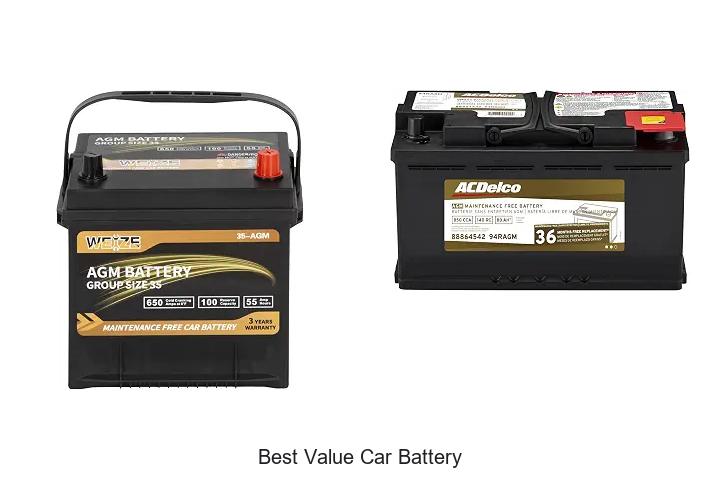
Pick 1  | Weize Platinum AGM Battery Group 35 | Check Price On Amazon |
Pick 2  | ACDelco Gold 94RAGM Automotive Battery | Check Price On Amazon |
Pick 3  | Mighty Max Battery MM-G35 AGM Car Battery | Check Price On Amazon |
1. Weize Platinum AGM Battery Group 35
Strong cold starts and AGM durability give this battery broad everyday appeal. It suits drivers wanting reliable power for passenger cars.
The Weize Platinum AGM Battery Group 35 offers 12V output, 55Ah capacity, and 650CCA. That combination supports dependable starting in colder weather. It also supports start-stop systems, which many modern vehicles use.
The AGM design offers up to twice the cycle life of conventional batteries. Its low self-discharge helps it hold charge during storage.
The battery measures 9.06 by 6.89 by 8.82 inches. Terminal placement is left negative and right positive.
That layout helps buyers match vehicle requirements before installation. The 37.7-pound weight reflects a substantial build without sounding excessive for its class.
For drivers needing an AGM replacement, it delivers solid everyday utility and long service life.
Pros
- 650CCA supports reliable cold-weather starts
- AGM design suits start-stop vehicles
- Low self-discharge helps during storage
Cons
- Fit depends on exact dimensions and terminal layout
- Heavier than some smaller batteries
- Only works as an AGM replacement
Who Should Buy It?
Drivers needing an AGM replacement for a passenger car should consider it. It suits vehicles with start-stop systems and those requiring Group 35 sizing. Buyers in hot or cold climates may value the temperature resistance and low self-discharge.
It also fits people who want dependable starting power without moving away from AGM specifications.
Key Specifications
| Specification | Details |
|---|---|
| Brand | WEIZE |
| Size | Group 35 |
| Voltage | 12 volts |
| Battery Capacity | 55Ah |
| Cold Cranking Amps | 650CCA |
| Reserve Capacity | 100RC |
| Battery Type | AGM |
| Terminal | Left negative (-), Right positive (+) |
| Vehicle Type | Passenger Car |
| Weight | 37.7 pounds |
| Dimensions | 9.06″ L x 6.89″ W x 8.82″ H |
The 55Ah capacity tells you how much stored energy the battery holds. The 650CCA rating shows how strongly it can start an engine in cold weather. Group 35 size and the listed dimensions matter for physical fit inside the battery tray. Left negative and right positive terminals help confirm cable alignment before installation. The 12-volt design matches common passenger-car electrical systems. Together, these numbers point to a replacement battery built for everyday starting use.
Reserve capacity of 100RC helps explain how long the battery can support electrical loads. AGM construction adds better heat resistance and lower self-discharge than flooded batteries. That matters for cars used in hot climates or parked for periods. Support for start-stop systems also makes it fit many newer vehicles. The 37.7-pound weight suggests a substantial internal build. Drivers needing steady starting power and AGM compatibility will benefit most from these specifications.
2. ACDelco Gold 94RAGM Automotive Battery
AGM confidence comes wrapped in a familiar GM-backed package. The ACDelco Gold 94RAGM is built for drivers who want dependable starting power and a direct-fit replacement. It uses advanced AGM construction, pressurized valve design, envelope separators, and high-density plate construction.
Those parts work together to support steady performance and leak-resistant operation.
Its Group 94R/H7 sizing suits select luxury vehicles and sports cars. That makes fit checking important before buying, especially for Audi, Buick, Cadillac, Mercedes-Benz, Chevrolet, Jeep, and GMC applications.
The 12-volt design, marine terminal, and 51.6-pound weight reflect a substantial battery meant for passenger cars, SUVs, trucks, and vans. It feels like a smart budget AGM pick for drivers who want trusted engineering without extra complexity.
Pros
- AGM design supports reliable starting power
- Leak-resistant construction helps long-term service
- Fits many select premium vehicles
Cons
- Fitment must be verified before purchase
- Heavy compared with smaller batteries
- No posted capacity or cranking specs
Who Should Buy It?
Buy this battery if you need a budget-minded AGM replacement for a compatible vehicle. It suits drivers of select luxury cars, sports cars, SUVs, trucks, and vans who want GM-backed engineering and vehicle-specific fitment. It also fits shoppers who value dependable starting power and straightforward replacement installation, provided they verify Group 94R/H7 compatibility before ordering.
Key Specifications
| Specification | Details |
|---|---|
| Brand | ACDelco |
| Size | Group 94R/H7 |
| Voltage | 12 volts |
| Battery Type | AGM |
| Terminal | Marine Terminal |
| Vehicle Type | Passenger Car, SUV/Crossover, Truck, Van |
| Weight | 51.6 pounds |
| Dimensions | 12.4″D x 6.9″W x 7.5″H |
The Group 94R/H7 size tells you where this battery fits. It is made for select vehicles that need that exact footprint and terminal layout. The 12-volt output matches standard automotive electrical systems. AGM construction means the electrolyte is absorbed inside the battery, not freely sloshing around. The marine terminal style also matters during installation, since it affects cable connection compatibility. Its 51.6-pound weight reflects a substantial battery built for larger vehicle applications.
These specifications point to a battery meant for steady daily use. AGM design helps support starting power in demanding conditions, while the leak-resistant valve system adds confidence during long service. The dimensions help confirm placement in the engine bay before purchase. Drivers of passenger cars, SUVs, trucks, and vans benefit most when they need a direct replacement that matches their vehicle requirements. The fit-focused design can also simplify installation when the size is correct.
3. Mighty Max Battery MM-G35 AGM Car Battery
Strong starting power and sealed AGM design make this Group 35 battery appealing for drivers who want dependable replacement performance. It offers steady cranking, solid reserve capacity, and a fit built for many passenger cars. The MM-G35 is a 12V, 55Ah AGM battery with 650 CCA, giving it the muscle for reliable starts in changing weather.
Its 100-minute reserve capacity supports longer running time. The sealed, spill-proof build helps reduce maintenance concerns.
Rugged construction resists shock and vibration, which suits daily driving and tougher road conditions. It also mounts in multiple positions, excluding upside down, which can make installation easier in some vehicles. Included mounting screws add convenience, while the right-side positive terminal helps with fit checks.
For drivers replacing a worn OEM battery, it offers practical features and useful everyday reliability.
Pros
- 650 CCA supports strong cold-weather starting
- Sealed AGM design resists spills and mess
- Multiple mounting positions add installation flexibility
Cons
- Wire harness and accessories are not included
- Only fits vehicles using Group 35 sizing
- Not designed for upside-down mounting
Who Should Buy It?
Drivers needing a premium replacement battery for a passenger car should consider this model. It suits vehicles that call for Group 35 fitment, 12 volts, and 650 CCA. People who want sealed AGM construction, spill resistance, and flexible mounting may also like it.
It fits daily use, mixed weather, and cars needing steady starting power without extra maintenance concerns.
Key Specifications
| Specification | Details |
|---|---|
| Brand | Mighty Max Battery |
| Size | Group 35 |
| Voltage | 12 volts |
| Battery Capacity | 55 amp_hours |
| Cold Cranking Amps | 650 CCA |
| Reserve Capacity | 100 minutes |
| Battery Type | AGM lead acid |
| Terminal | Positive right, negative left |
| Vehicle Type | Passenger Car |
| Weight | Not provided |
| Dimensions | 9.06 x 6.89 x 8.82 inches |
The 12-volt, 55Ah rating tells you how much power it stores. The 650 CCA figure shows strong starting output for cranking the engine. A 100-minute reserve capacity means the battery can support electrical loads for a longer period. Group 35 sizing helps confirm fit for vehicles built around that format. The right-side positive terminal also matters during installation, since cable placement must match the car’s layout.
In everyday use, these numbers point to reliable starting and practical endurance. The AGM lead acid design helps keep power steady and spill-free. That sealed setup suits drivers who want less maintenance and cleaner installation. The 9.06 x 6.89 x 8.82 inch size helps with fit checks before purchase. Passenger car compatibility and multiple mounting positions make it useful for many replacement jobs. Drivers needing steady starts and simple installation may benefit most.
4. Renogy 12V 70Ah AGM Car Battery H6

Start-stop vehicles need steady power, and Renogy aims squarely at that job. Its 12V 70Ah AGM design pairs strong starting output with sealed, low-leak construction. Built for Group 48 fitment, it suits drivers who want dependable cranking and steady electrical support.
The battery delivers 720 CCA and 120 minutes of reserve capacity, which helps during repeated starts and accessory use. Its sealed lead-acid design reduces corrosion risk and supports safer everyday operation. The wide operating range also helps in freezing winters and hot summers.
At 48 pounds, it is a substantial battery, but that weight reflects its capacity and construction. It fits compact cars, sedans, SUVs, light trucks, and marine starting needs. For drivers with start-stop systems, it offers practical performance and broad compatibility.
Pros
- Strong 720 CCA starting power
- Designed for start-stop cycling
- Sealed design helps reduce leaks
Cons
- Heavy at 48 pounds
- May be larger than smaller battery trays
- Not suited to vehicles outside Group 48 fitment
Who Should Buy It?
Drivers with start-stop systems should consider this battery first. It suits cars, SUVs, and light trucks needing Group 48 fitment. Buyers wanting strong winter starts and stable power output will appreciate the 720 CCA rating.
It also fits drivers who want a sealed AGM-style battery with broader temperature tolerance and dependable daily use.
Key Specifications
| Specification | Details |
|---|---|
| Brand | Renogy |
| Size | Group 48 / H6 |
| Voltage | 12 volts |
| Battery Capacity | 70Ah |
| Cold Cranking Amps | 720 CCA |
| Reserve Capacity | 120 minutes |
| Battery Type | AGM lead-acid |
| Vehicle Type | Cars, SUVs, trucks, marine starting |
| Weight | 48 pounds |
The 12V, 70Ah rating shows how much power the battery stores for starting and accessory use. Higher amp-hours help support repeated engine restarts in start-stop vehicles. The 720 CCA figure means it can deliver strong starting current in cold weather. A 120-minute reserve capacity also helps keep electrical systems running during short delays. Together, these numbers point to a battery built for steady everyday use in demanding driving patterns.
AGM lead-acid construction and Group 48 sizing shape both fit and performance. AGM design suits start-stop systems because it handles repeated cycling better than basic flooded designs. The sealed build also helps reduce acid leaks and corrosion around the battery area. Its wide temperature range supports use in cold winters and hot summers. Drivers with compatible compact cars, sedans, SUVs, or light trucks gain the most from that balance.
5. Lithium LiFePO4 Car Battery 12V 40Ah

Lithium power meets a compact footprint in a battery aimed at smaller vehicles. Its 12V 40Ah design brings lithium benefits to everyday replacement use.
ECIENWELL’s LiFePO4 battery is built for passenger cars with engines below 2.0L. It measures 9.5 by 6.9 by 8 inches and weighs 14.8 pounds.
The package includes M8 screws for threaded-terminal compatibility, which helps installation flexibility. IP66 waterproofing adds protection for harsh weather and splash exposure. The battery also includes BMS protection against over charge, over discharge, overload, over voltage, over current, overheating, and short circuit.
Performance specs list 660CCA and 100RC, which supports stronger starting power and reserve use. It suits drivers who want lithium construction, maintenance-free ownership, and a smaller-size replacement battery.
Pros
- Low-cost lithium option for smaller vehicles
- IP66 waterproof protection for wet conditions
- BMS protection covers multiple battery risks
Cons
- Only suited for engines below 2.0L
- Installed height can increase with M8 screw
- Requires compatibility checks before purchase
Who Should Buy It?
Drivers with smaller passenger cars who want a lithium replacement should consider it. It suits vehicles below 2.0L and owners needing a compact 12V option. The 40Ah capacity and 660CCA rating fit everyday starting needs.
It also works well for buyers who want maintenance-free operation and added protection features. Those needing a universal-fit replacement with threaded terminal support may find it especially practical.
Key Specifications
| Specification | Details |
|---|---|
| Brand | ECIENWELL |
| Size | H5 H6 H7 |
| Voltage | 12V |
| Battery Capacity | 40Ah |
| Cold Cranking Amps | 660CCA |
| Reserve Capacity | 100RC |
| Battery Type | LiFePO4 Lithium |
| Terminal | M8 Terminal |
| Vehicle Type | Passenger Car |
| Weight | 14.8 pounds |
| Dimensions | 9.5 x 6.9 x 8 inches |
The 12V rating matches standard automotive electrical systems. A 40Ah capacity means it stores a modest amount of energy for starting and accessory support. The 660CCA figure shows strong starting output for a compact battery. Reserve capacity at 100RC points to backup power during short idle periods. Its H5, H6, and H7 sizing labels help confirm fitment. The 14.8-pound weight keeps handling manageable during installation, especially for smaller passenger vehicles with limited battery space.
LiFePO4 chemistry gives this battery a lighter, maintenance-free design compared with lead-acid styles. The M8 terminal setup supports threaded connections, which can simplify matching certain vehicles. Its IP66 rating adds protection against dust and water exposure. The included BMS watches for charging and electrical issues, which helps protect the battery during daily use. Drivers with smaller engines and space-sensitive battery trays benefit most from these specifications, since fit and installation matter as much as power.
6. HQST 12V 60Ah AGM Car Battery

Cold mornings are where this AGM battery stands out most. Its 680 CCA rating gives compact vehicles strong starting power in harsh weather.
Built as a Group 47 H5 replacement, it suits many sedans and smaller SUVs that use start-stop systems. The sealed AGM design supports frequent engine restarts and faster energy recovery. It also offers maintenance-free use, which helps simplify ownership.
Vibration resistance adds peace of mind on rough roads. With 60Ah capacity and 100RC reserve capacity, it provides steady everyday power for daily driving.
The fitment is direct for compatible vehicles, and the standard top posts keep installation familiar. It suits drivers wanting dependable cold starts and solid all-around AGM performance.
Pros
- Strong 680 CCA cold-start performance
- AGM design suits start-stop vehicles
- Maintenance-free and vibration resistant
Cons
- Only fits specific Group 47 H5 applications
- Heavier than some smaller batteries
- No accessory hardware listed
Who Should Buy It?
Drivers with compact cars, sedans, or daily SUVs should consider it. It fits vehicles that need a Group 47 H5 AGM replacement and strong cold-start power. Start-stop systems also benefit from its higher charge acceptance and frequent restart support.
People in colder climates may like the 680 CCA rating most. It suits buyers who want maintenance-free operation and dependable everyday use without extra setup.
Key Specifications
| Specification | Details |
|---|---|
| Brand | HQST |
| Size | 47 H5 |
| Voltage | 12 volts |
| Battery Capacity | 60 amp_hours |
| Cold Cranking Amps | 680 CCA |
| Reserve Capacity | 100RC |
| Battery Type | AGM lead acid |
| Terminal | Standard SAE Top Post |
| Vehicle Type | Daily SUVs, Sedan |
| Weight | 39 pounds |
| Dimensions | 7.6″D x 9.5″W x 6.9″H |
The 12-volt system matches many modern passenger vehicles. Its 60Ah capacity points to steady stored power for normal driving needs. A 680 CCA rating means the battery can deliver strong starting current in cold weather. The 100RC reserve capacity gives a useful power buffer when the engine is off. Group 47 H5 sizing helps it fit many compact cars, sedans, and smaller SUVs that call for that format.
AGM lead acid construction supports start-stop driving and frequent engine restarts. The sealed design means no water refilling is needed during regular use. Standard SAE top post terminals keep installation familiar for many vehicles. At 39 pounds, it has solid build weight without being unusually heavy for its class. The listed dimensions help confirm fit before purchase, which matters for drivers replacing an OEM battery in daily-use vehicles.
7. Mighty Max Battery MM-G35 Group 35 Battery
Strong starting power and a clean AGM design make this Group 35 battery appealing for daily drivers. Its 650 CCA rating and 100-minute reserve capacity support steady starts and dependable accessory use. The Mighty Max Battery MM-G35 is a 12V, 55Ah replacement battery built for passenger cars.
Its sealed AGM construction helps reduce mess while supporting deep discharge recovery and steady output. The battery is built for shock and vibration resistance, which suits rough roads and changing weather. At 38.1 pounds, it stays manageable for installation, and the included mounting screws help simplify setup.
Terminal placement is straightforward, with positive on the right and negative on the left. It fits vehicles needing Group 35 sizing and measures 9.06 by 6.89 by 8.82 inches. Drivers wanting dependable cold starts and flexible mounting should find it a practical match.
Pros
- 650 CCA supports strong starts in varied weather.
- AGM design is sealed and spill-proof.
- Includes mounting screws for easier installation.
Cons
- Wire harness and mounting accessories are not included.
- Not designed for upside-down mounting.
- May not fit vehicles outside Group 35 sizing.
Who Should Buy It?
Drivers needing a Group 35 replacement battery should consider this model. It suits passenger cars that call for 12V, 55Ah power and strong starting performance. People who want a sealed AGM battery with steady output, simple terminal layout, and flexible mounting options may like it most.
It also fits buyers replacing an older Nissan Altima 2015 battery or similar applications.
Key Specifications
| Specification | Details |
|---|---|
| Brand | Mighty Max Battery |
| Size | Group 35 |
| Voltage | 12 volts |
| Battery Capacity | 55 amp_hours |
| Cold Cranking Amps | 650 CCA |
| Reserve Capacity | 100 minutes |
| Battery Type | AGM lead acid |
| Terminal | Positive right, negative left |
| Vehicle Type | Passenger Car |
| Weight | 38.1 pounds |
| Dimensions | 9.06 x 6.89 x 8.82 inches |
The 12-volt, 55 amp-hour rating shows how much steady power the battery stores. The 650 CCA figure points to strong starting ability in colder weather. A 100-minute reserve capacity means it can keep supporting electrical loads for a useful stretch. The Group 35 size and 9.06 by 6.89 by 8.82-inch dimensions help confirm fitment before installation. Positive-right, negative-left terminals also make cable placement easier during replacement.
AGM lead acid construction means the battery is sealed and spill-proof for cleaner mounting. That design also supports deeper discharge recovery and stable output during regular use. The 38.1-pound weight is reasonable for a passenger car battery of this type. Because it mounts in multiple positions, except upside down, it suits different layouts. Drivers who want dependable starts, weather resistance, and straightforward installation will benefit most from these specifications.
8. Group 34 AGM Car Battery

Affordable Group 34 sizing makes this AGM battery appealing for many passenger cars. It pairs maintenance-free convenience with start-stop support and steady 12-volt power. The MARXON Group 34 Car Battery uses a 55Ah capacity and 650CCA rating for dependable starting power.
Its AGM design helps with fast charging and improved discharge capability. The battery measures 10.87 by 6.61 by 6.89 inches, with an A1 terminal layout. A patented alloy improves corrosion resistance and leak protection.
That makes it a practical pick for drivers wanting a simple replacement battery. It suits cars needing a Group 34 fit and everyday reliability.
The 42-pound weight feels manageable during installation for a battery of this type. US-based support and replacement coverage add another layer of confidence.
Pros
- AGM design supports maintenance-free use
- 650CCA helps with dependable starting power
- Fits Group 34 applications with start-stop support
Cons
- Only suits vehicles needing Group 34 sizing
- 42-pound weight may be awkward for some installs
- No reserve capacity figure is provided
Who Should Buy It?
Drivers needing an affordable Group 34 AGM replacement should consider it. It suits passenger cars with start-stop systems and a need for 12-volt power. The 55Ah capacity and 650CCA rating fit everyday starting needs well.
Maintenance-free construction also appeals to owners who want simpler upkeep. It works best for people replacing a worn battery with similar size requirements.
Key Specifications
| Specification | Details |
|---|---|
| Brand | MARXON |
| Size | Group 34 / Group 24 |
| Voltage | 12 volts |
| Battery Capacity | 55Ah |
| Cold Cranking Amps | 650CCA |
| Battery Type | AGM |
| Terminal | A1 Terminal |
| Vehicle Type | Passenger Car |
| Weight | 42 pounds |
| Dimensions | 10.87″ x 6.61″ x 6.89″ |
The 12-volt system matches many passenger car electrical setups. A 55Ah capacity points to the amount of stored energy available for normal use. The 650CCA rating shows strong starting output in cold conditions. AGM construction means the battery is maintenance free and sealed. The A1 terminal layout helps confirm fit before installation. Its Group 34 sizing suits vehicles that call for that battery format. Those details matter most for drivers replacing an older car battery with similar requirements.
In daily use, the AGM design supports faster charging than SLA batteries. That can help drivers who make shorter trips or frequent starts. Start-stop compatibility makes it useful for cars with that feature. The patented alloy improves corrosion resistance and leak-proof performance. At 42 pounds, it is substantial but still typical for its class. The listed dimensions help verify clearance in the battery tray. Owners who want straightforward replacement fitment and maintenance-free operation will benefit most.
9. Group 48 H6 L3 AGM Car Battery

Strong starting power and start-stop support make this Group 48 AGM battery appealing for modern passenger cars. Its 12V, 70Ah setup adds solid capacity, while the 760CCA rating supports reliable cranking.
MARXON built it as a maintenance-free AGM replacement battery with A1 terminals and BCI 48 sizing. The case measures 10.95 by 6.89 by 7.48 inches, so fitment matters for compatible vehicles.
It also uses patented alloy materials for better corrosion resistance and leak resistance. Fast charging is another practical advantage, since the battery accepts charge faster than SLA types.
Drivers who want a high-power Group 48 option get a useful mix of size, performance, and convenience. The weight sits at 46.53 pounds, which reflects a substantial lead-acid AGM design.
It suits passenger cars that need start-stop capability and dependable everyday use.
Pros
- 760CCA supports strong cold-weather starting
- Maintenance-free AGM design simplifies ownership
- Fast charging helps reduce downtime
Cons
- Fitment depends on exact Group 48 sizing
- Heavier than smaller replacement batteries
- Terminal type may limit compatibility
Who Should Buy It?
Drivers with a compatible Group 48, H6, or BCI 48 fitment should consider it. It suits passenger cars needing start-stop support, maintenance-free operation, and strong cranking power. The 70Ah capacity and 760CCA rating make it a practical choice for daily use.
Buyers who want an AGM replacement battery with straightforward installation specs will find it a good match.
Key Specifications
| Specification | Details |
|---|---|
| Brand | MARXON |
| Size | BCI 48 |
| Voltage | 12 volts |
| Battery Capacity | 70Ah |
| Cold Cranking Amps | 760CCA |
| Battery Type | AGM, Lead-Acid |
| Terminal | A1 |
| Vehicle Type | Passenger Car |
| Weight | 46.53 lbs |
| Dimensions | 10.95 x 6.89 x 7.48 inches |
A 12-volt, 70Ah battery gives a passenger car steady electrical reserve. The 760CCA rating matters most during engine starts, especially in colder weather. AGM construction also means the battery is sealed and maintenance free. That removes the need to add water or acid. The BCI 48 size and A1 terminal describe the physical fit and connection style. Together, these figures help buyers match the battery to the correct vehicle bay and cable layout before installation.
In daily use, the 70Ah capacity supports accessories and repeated starts with confidence. The fast-charging design helps recover charge faster than SLA batteries. That can help drivers who make shorter trips or face frequent stop-and-go driving. At 46.53 pounds, the unit feels substantial and built for serious use. The dimensions also matter for tight engine compartments. Buyers with compatible start-stop passenger cars gain the most from its AGM design and high cranking output.
10. ACDelco Gold AUX14-200 Battery

Compact backup power can make a big difference in modern vehicles. ACDelco Gold AUX14-200 is built to support onboard electronics and accessory circuits with dependable secondary power. It uses AGM lead-acid construction, which suits select cars, SUVs, trucks, and vans that need a vehicle-specific auxiliary battery.
The design includes leak-resistant pressurized valve system parts, envelope separators, and high-density plates. Those features are aimed at steady performance and long service life.
With 200 CCA, it is focused on auxiliary use rather than starting duties. That makes it a practical choice for drivers replacing a matching backup battery. The compact size also helps it fit tightly packaged battery locations.
ACDelco’s GM-backed engineering adds confidence for buyers wanting a known replacement part. It suits owners who need dependable auxiliary support and verified fitment.
Pros
- Designed for auxiliary backup power
- AGM construction suits demanding electrical loads
- Compact size fits select applications
Cons
- Only fits select vehicle models
- 200 CCA is not for primary starting use
- Fitment must be checked carefully
Who Should Buy It?
Buyers needing a vehicle-specific auxiliary battery should consider this model. It suits drivers of select Mercedes-Benz, BMW, and Jeep applications with matched fitment. The compact AGM design works well for backup electronics and accessory circuits.
It is a sensible choice for anyone replacing an original auxiliary battery and wanting known GM-backed engineering.
Key Specifications
| Specification | Details |
|---|---|
| Brand | ACDelco |
| Size | Large |
| Voltage | 12 volts |
| Cold Cranking Amps | 200 CCA |
| Battery Type | Lead-Acid, AGM |
| Terminal | AGM terminal |
| Vehicle Type | Passenger Car, SUV/Crossover, Truck, Van |
| Dimensions | 5.91″D x 3.4″W x 5.7″H |
The 12-volt AGM design powers auxiliary systems in compatible vehicles. Its 200 cold cranking amps point to backup use, not engine starting. The compact dimensions help it fit tight battery compartments. The lead-acid AGM chemistry is common in modern auxiliary batteries. That setup supports onboard electronics and accessory circuits that need steady secondary power. Drivers replacing an original auxiliary unit will appreciate the vehicle-specific size and terminal style.
These specifications suit cars with separate backup power needs. The low-profile dimensions make installation easier in limited spaces. AGM construction also helps support dependable electrical delivery in daily use. With passenger cars, SUVs, trucks, and vans listed, it serves a broad range of vehicles. However, fitment matters more than versatility here. Buyers who confirm compatibility get the most benefit from its compact design and auxiliary-focused output.
Best Value Car Battery: How to Choose the Right One Without Overpaying
Battery type and technology
Modern vehicles rely on the battery not only to start the engine, but also to support infotainment, sensors, stop-start systems, and other electrical loads, so the right fit must match both the car’s charging setup and its long-term power demands. Lead-acid batteries are typically the most affordable and work well in many older or simpler vehicles, while AGM units handle deeper cycling and heavier electrical use more effectively, making them a strong match for cars with advanced electronics. EFB batteries sit in the middle, offering better durability than standard lead-acid options and good performance for vehicles with basic stop-start technology.
A battery also needs to be compatible with the vehicle’s electrical system, since the wrong type can lead to poor charging, shortened life, or unreliable starting. Maintenance matters too: conventional lead-acid batteries may need occasional checks of fluid levels and terminals, whereas AGM and EFB models are generally more maintenance-friendly and better sealed.
- Lead-acid: lower cost, suitable for simpler electrical systems, but usually needs more upkeep.
- AGM: best for demanding electronics and frequent cycling, with minimal maintenance.
- EFB: a practical upgrade for moderate electrical loads and stop-start use.
| Battery type | Electrical system fit | Maintenance level |
|---|---|---|
| Lead-acid | Basic systems | Higher |
| AGM | Advanced systems | Low |
| EFB | Mid-level systems | Low to moderate |
Cold cranking amps and reserve capacity
Cold cranking amps and reserve capacity are two of the most practical specs to check because they determine how reliably a battery will start your engine and keep essential systems powered if the alternator is strained. A higher minimum CCA matters in colder climates, where weak batteries often struggle to deliver enough starting power, while reserve capacity gives you extra backup energy for headlights, electronics, and other loads during short charging interruptions.
Balancing these numbers with price helps you avoid overpaying for specs you will never use or settling for a cheaper unit that may fail sooner. A well-matched battery delivers dependable starting performance, useful backup power, and solid value over time.
Size, fit, and terminal layout
A battery with the correct group size, terminal position, and physical profile helps ensure a reliable fit under the hood and avoids costly installation problems. Size and fit matter because even a small mismatch can affect how securely the unit sits in the tray, whether the terminals line up properly, and how safely the cables reach their connection points. Terminal layout is equally important, since the posts must face the right direction to prevent stretched cables, awkward routing, or accidental contact with nearby components. Mounting and clearance should also be checked carefully, as some vehicles have limited space around the hold-down bracket, hood, or surrounding parts, and a battery that sits too high or too wide can create vibration issues or make service work more difficult.
Mounting and clearance should also be checked carefully, as some vehicles have limited space around the hold-down bracket, hood, or surrounding parts, and a battery that sits too high or too wide can create vibration issues or make service work more difficult. A proper match in all three areas supports easier installation, better long-term stability, and fewer compatibility concerns overall.
Warranty and expected lifespan
A longer warranty often signals stronger confidence in a battery’s durability, and it can save money if the unit fails early. Length of free replacement coverage matters because it shows how much time you have to receive a full swap at no extra cost, which is especially helpful if the battery is installed in a vehicle that depends on reliable daily use.
Just as important is the typical service life for the price, because a lower upfront cost is not a true bargain if the battery wears out sooner than expected. A well-balanced option should offer fair coverage, reasonable prorated protection, and a lifespan that matches its price so you get dependable value over time.
Brand reputation and reliability
Trusted manufacturers often build batteries with tighter quality control, which can mean steadier performance, fewer surprises in daily driving, and better long-term value. Customer reviews and failure rates add another layer of insight, because real-world feedback can reveal whether a model starts reliably in cold weather, holds charge well, or tends to wear out too soon. Availability of support and replacements also matters, since a strong warranty, responsive service, and easy access to a replacement can save time and reduce stress if an issue ever comes up.
Availability of support and replacements also matters, since a strong warranty, responsive service, and easy access to a replacement can save time and reduce stress if an issue ever comes up.
- Trusted manufacturers: Better consistency, durability, and overall confidence.
- Customer reviews and failure rates: Helpful signs of real-world performance and common issues.
- Availability of support and replacements: Faster help, easier warranty claims, and less downtime.
Overall value and purchase factors
A battery that delivers steady cranking power, reliable reserve capacity, and a long service life often provides far better value than a cheaper option that needs replacing sooner. Price compared with performance matters because the lowest sticker price may not reflect real savings if the battery struggles in cold weather, drains quickly, or underperforms under regular use.
Daily driving needs should guide the decision as well, because a commuter vehicle usually benefits from a dependable unit that supports frequent starts, short trips, and consistent charging without unnecessary premium features.
- Value over price alone: a stronger-performing battery can reduce replacement and maintenance costs.
- Total setup expense: installation fees and included accessories can change the real cost.
- Everyday reliability: a battery suited to routine driving helps prevent starting issues and charging problems.
Mistakes to Avoid When Buying
A good car battery can save money, but the cheapest option is not always the best value. The right choice depends on your car, your driving habits, and the battery’s quality.
One common mistake is buying the wrong size. A battery that does not fit well may not hold securely or may not connect to the terminals correctly. Check your owner’s manual or the old battery label before you buy.
Another mistake is ignoring the cold cranking amps, or CCA. This number shows how well the battery can start the engine in cold weather. Too little power can lead to slow starts or trouble on chilly mornings.
Many buyers also forget to check the warranty. A longer warranty can offer better value if the battery fails early. Still, read the terms. Some warranties only cover part of the cost after a certain time.
Freshness matters too. Batteries can lose performance while sitting on a shelf. Ask for the manufacture date when possible. A newer battery is usually a better pick than an old stock item.
Finally, do not focus only on price. A very low-cost battery may cost more over time if it wears out fast. A better value battery usually offers a good mix of fit, power, warranty, and price.
- Match the size to your vehicle
- Check the CCA rating for your climate
- Look at the warranty terms
- Ask how old the battery is
- Balance price with expected life
FAQ’s
What Makes A Car Battery The Best Value For The Money?
A car battery is the best value for the money when it offers reliable starting power, long lifespan, and low maintenance at a fair price. Good warranty coverage and strong performance in different weather conditions also help make it a smart buy.
How Do I Choose The Right Car Battery For My Vehicle And Budget?
Check your vehicle’s owner’s manual for the correct battery group size, cold cranking amps (CCA), and terminal layout, then compare brands with good warranties and reviews. To stay within budget, choose the best battery that meets your car’s required specs rather than the cheapest option.
Which Car Battery Brands Offer The Best Performance At A Reasonable Price?
Some of the best car battery brands for performance at a reasonable price are **Interstate, DieHard, and AC Delco**. They’re widely trusted for reliability, solid lifespan, and good value without being as expensive as premium options.
How Long Should A Good Value Car Battery Last?
A good value car battery should typically last about 3 to 5 years. Its lifespan depends on factors like climate, driving habits, and how well the battery is maintained.
What Features Should I Look For When Buying A Budget-Friendly Car Battery?
Look for the right size and terminal layout for your car, along with good cold-cranking amps (CCA) and reserve capacity for reliable starting. Also check the warranty, maintenance requirements, and customer reviews to make sure it offers solid value and durability.
Final Verdict
For shoppers after the best value car battery, the Weize Platinum AGM Battery Group 35 is the strongest all-around pick because it balances price and AGM performance well. It suits drivers who want a solid replacement battery without paying premium-brand pricing, and it stands out as the best value AGM option in this roundup.
The ACDelco Gold 94RAGM Automotive Battery is the best budget AGM choice for buyers focused on keeping costs down while staying with a trusted name. The Mighty Max Battery MM-G35 AGM Car Battery is better for drivers willing to spend more for a premium replacement, while the Renogy 12V 70Ah AGM Car Battery H6 is the best fit for start-stop vehicles that need dependable start-stop power.
Choose the Weize Platinum AGM Battery Group 35 for the best mix of price and performance, or the ACDelco Gold 94RAGM if budget is the main priority.