10 Best Optima Battery for Car Audio: Top Rated Options Compared
If your car audio system loses power during heavy bass, the problem often starts with the battery. A weak battery can cause dim lights, poor sound, and slow starts. This review focuses on the best optima battery for car audio, a choice many drivers consider for strong power support.
It is aimed at people who want cleaner sound and more stable performance from their audio setup. You may need this kind of battery for a daily driver, a show car, or a system with added amplifiers.
The right model can help your audio stay steady when demand rises. In this review, we will look at key features, power output, fit, and value.
Best Optima Batteries for Car Audio Systems
| Image | Product | Price |
|---|---|---|
Pick 1  | OPTIMA D34/78 YELLOWTOP Battery | Check Price On Amazon |
Pick 2  | OPTIMA 35 REDTOP Battery | Check Price On Amazon |
Pick 3  | OPTIMA DH7 YELLOWTOP AGM Battery | Check Price On Amazon |
1. OPTIMA D34/78 YELLOWTOP Battery
Strong audio systems need steady power, and this battery is built for that job. The sealed AGM design and dual-purpose layout make it a practical fit for audio-heavy builds.
OPTIMA’s YELLOWTOP model uses SpiralCell technology with 99.99% pure lead, which helps deliver consistent power and strong starting performance. It offers 750 cold cranking amps, 55Ah of C20 capacity, and 120 minutes of reserve capacity.
That combination suits cars with higher electrical demand and frequent accessory use. The maintenance-free design adds convenience, while the vibration resistance supports long-term durability in daily driving. Dual SAE and GM terminals also make installation more flexible for many setups.
At 43.5 pounds, it feels substantial and purpose-built. Buyers who want dependable cranking power and steady reserve output should find it appealing.
Pros
- Strong 750 CCA for reliable starts.
- Good reserve capacity for audio loads.
- Vibration resistance supports longer service life.
Cons
- 43.5-pound weight is not light.
- May be larger than some factory spaces.
- Dual-purpose design may exceed basic needs.
Who Should Buy It?
Buyers with audio-heavy builds should pay attention to this model. It suits drivers needing steady reserve power, strong starting output, and maintenance-free ownership. The dual-terminal layout also helps with varied installation needs.
People running higher electrical demands, or wanting a durable AGM battery for passenger cars, should find it a practical match. It fits vehicles that can accept its size and terminal layout.
Key Specifications
| Specification | Details |
|---|---|
| Voltage | 12 volts |
| Cold Cranking Amps | 750 CCA |
| C20 Capacity | 55 AH |
| Reserve Capacity | 120 minutes |
| Size | 10 x 6-7/8 x 7-13/16 inch |
| Weight | 43.5 pounds |
| Terminal Type | Dual SAE & GM Terminals |
| Battery Type | Sealed AGM Lead Acid |
| Vehicle Service Type | Passenger Car |
| Fit Type | Vehicle Specific Fit |
The 12-volt rating matches common passenger-car electrical systems. Its 750 cold cranking amps help the battery start the engine with strong initial output. The 55Ah C20 capacity shows how much energy it can store over time. Reserve capacity of 120 minutes tells you how long it can keep running accessories under load. For everyday use, those numbers point to steady starts and useful backup power for audio systems and other electrical demands.
Size and weight matter during installation, and this unit measures 10 by 6-7/8 by 7-13/16 inches. At 43.5 pounds, it has a solid, heavy construction. Dual SAE and GM terminals give more flexibility for wiring and fitment. The sealed AGM lead-acid design stays maintenance free, which helps owners who want less upkeep. Drivers with passenger cars and higher electrical loads will benefit most from the size, terminals, and reserve power.
2. OPTIMA 35 REDTOP Battery
Strong starting power meets simple everyday reliability here. The OPTIMA 35 REDTOP suits drivers who want steady performance for basic electrical needs.
Built as a sealed AGM battery, it uses Spiralcell Technology with 99.99% pure lead. That design helps deliver 720 cold cranking amps and fast charging. The battery offers 44 Ah of C20 capacity and 90 minutes of reserve capacity.
It measures 9.38 inches long, 6.75 inches wide, and 7.69 inches tall. At 31.7 pounds, it stays manageable for installation. It also resists vibration far better than standard flooded batteries.
Maintenance free design makes it easy to live with. SAE post terminals support common setups in passenger cars, trucks, and SUVs.
It suits daily use well when reliable starting matters most.
Pros
- 720 CCA supports strong starting power
- Maintenance free design reduces upkeep
- High vibration resistance improves durability
Cons
- Designed for basic electrical demands only
- Heavier than some smaller batteries
- SAE terminals may not fit every setup
Who Should Buy It?
Buyers who need dependable daily starting power should consider it. It suits passenger cars, trucks, and SUVs with basic electrical demands. Drivers wanting maintenance free ownership and strong cold-weather starting will like it.
The size and SAE terminals fit many common vehicle setups. It also appeals to anyone wanting vibration resistance and longer service life.
Key Specifications
| Specification | Details |
|---|---|
| Voltage | 12 volts |
| Cold Cranking Amps | 720 CCA |
| C20 Capacity | 44 AH |
| Reserve Capacity | 90 minutes |
| Size | 9.38 x 7.69 x 6.75 inch |
| Weight | 31.7 pounds |
| Terminal Type | SAE Terminal |
| Battery Type | Lead Acid |
| Vehicle Service Type | Passenger Car, Truck |
| Fit Type | Vehicle Specific Fit |
The 12-volt design matches common automotive electrical systems. 720 cold cranking amps helps the battery start engines in cold weather. A 44 Ah C20 capacity shows usable stored energy for everyday starting needs. The 90-minute reserve capacity adds extra support when charging falls short. Its 9.38 by 6.75 by 7.69 inch size fits many vehicle battery trays. The 31.7-pound weight feels solid without becoming excessive for installation.
SAE terminals help it connect with many standard car and truck setups. The lead acid construction with AGM sealing supports maintenance free use. Spiralcell Technology uses pure lead to improve starting power and charging response. Higher vibration resistance helps it handle rough roads and repeated driving. Drivers with passenger cars, trucks, or SUVs benefit from the vehicle specific fit. It suits basic electrical demands, so daily starting takes priority over heavy accessory loads.
3. OPTIMA DH7 YELLOWTOP AGM Battery
High-demand audio systems need steady power, and this battery brings that focus clearly. Its dual-purpose design, strong reserve capacity, and vibration resistance make it a serious match for demanding vehicle electrical loads. The OPTIMA DH7 YELLOWTOP AGM Battery is a 12-volt sealed AGM unit with 880 cold cranking amps and 80 Ah C20 capacity.
It also offers 155 minutes of reserve capacity for consistent output. PureFlow Technology uses 99.99% pure lead and compressed radial grid plates. That design helps resist vibration and corrosion while supporting faster charging.
At 54 pounds, it feels substantial and built for serious use. The maintenance-free design adds convenience for daily driving.
Its DIN Type A1 terminals and BCI Group Size 94R fit help with installation planning. Long life and strong starting power suit drivers with high electrical demands. It works well for passenger cars needing dependable power and durable construction.
Pros
- 880 CCA supports strong starting power
- 155-minute reserve capacity adds steady output
- Highly vibration-resistant AGM construction
Cons
- Heavier than many standard batteries
- Terminal style may limit some installs
- Group 94R fit requires checking compatibility
Who Should Buy It?
Drivers with powerful audio systems should consider this battery first. It suits passenger cars with high electrical demands and frequent accessory use. The 880 CCA, 80 Ah capacity, and 155-minute reserve help support steady power delivery.
Maintenance-free construction also suits anyone wanting less routine attention. It fits users who value durability, strong starting power, and versatile mounting in a dual-purpose battery.
Key Specifications
| Specification | Details |
|---|---|
| Voltage | 12 volts |
| Cold Cranking Amps | 880 CCA |
| C20 Capacity | 80 AH |
| Reserve Capacity | 155 minutes |
| Size | 12.44″ Length x 6.88″ Wide x 7.5″ Tall |
| Weight | 54 pounds |
| Terminal Type | DIN – Type A1 Terminal |
| Battery Type | Lead Acid AGM |
| Vehicle Service Type | Passenger Car |
| Fit Type | Vehicle Specific Fit |
The 12-volt design matches standard passenger car electrical systems. Its 880 cold cranking amps help deliver strong startup power in demanding conditions. The 80 Ah C20 capacity shows useful energy storage for added electrical loads. A reserve capacity of 155 minutes indicates how long it can keep supporting systems when charging is limited. The battery measures 12.44 inches long, 6.88 inches wide, and 7.5 inches tall, so fit planning matters before installation.
Those numbers translate into steady support for power-hungry car audio setups. The 54-pound weight reflects the heavy-duty AGM build and dense internal construction. DIN Type A1 terminals affect cable compatibility, so matching hardware matters during setup. The lead acid AGM design is maintenance free and aimed at high electrical demands. Passenger car drivers who want durable starting power and stable accessory support should benefit most. The vehicle-specific fit also helps narrow compatibility before purchase.
4. OPTIMA D35 YELLOWTOP Battery

Dual-purpose power gives this battery broad appeal for car audio setups. It also suits vehicles that need strong starting performance and steady reserve power.
The OPTIMA D35 YELLOWTOP uses sealed AGM construction and SpiralCell Technology. That design uses 99.99% pure lead for consistent output.
It delivers 620 cold cranking amps and 100 minutes of reserve capacity. The 48 Ah C20 rating supports demanding electrical loads.
Its maintenance-free design adds convenience for daily use. Fifteen times more vibration resistance improves durability on rough roads.
Up to three times longer life also adds value. SAE posts and versatile mounting help with installation flexibility. At 36.4 pounds, it feels substantial without becoming unmanageable.
It suits drivers wanting midrange dual use with reliable power delivery.
Pros
- Strong 620 CCA starting power
- Good reserve capacity for audio loads
- Maintenance-free AGM design
Cons
- Heavier than smaller batteries
- May exceed needs for light systems
- SAE posts may need adapter checks
Who Should Buy It?
Buyers with moderate car audio needs should consider this battery. It suits drivers who want starting power and reserve capacity together. Passenger car owners with a vehicle-specific fit may like the size and mounting flexibility.
People who drive in rough conditions can value the vibration resistance. It also fits users who prefer maintenance-free operation and steady electrical support.
Key Specifications
| Specification | Details |
|---|---|
| Voltage | 12 volts |
| Cold Cranking Amps | 620 CCA |
| C20 Capacity | 48 AH |
| Reserve Capacity | 100 minutes |
| Size | 9 5/16″ x 6 13/16″ x 7 5/8″ |
| Weight | 36.4 pounds |
| Terminal Type | SAE Terminal |
| Battery Type | Lead Acid |
| Vehicle Service Type | Passenger Car |
| Fit Type | Vehicle Specific Fit |
The 12-volt system matches standard passenger car electrical setups. Its 620 cold cranking amps support engine starts in colder weather. The 48 amp-hour C20 capacity shows how much stored energy it can provide steadily. A 100-minute reserve capacity means it can keep essential systems running longer. The 9 5/16 by 6 13/16 by 7 5/8 inch size fits specific battery trays. The 36.4-pound weight reflects its larger construction and stored capacity.
SAE terminals make it compatible with many common vehicle connections. The lead acid AGM design is sealed and maintenance free, which reduces upkeep. Vehicle-specific fit helps confirm placement in the intended car or truck space. Passenger car use and versatile mounting make it practical for many installs. In daily use, these specs support steady starting power and extra electrical support. Drivers with audio equipment or added accessories can benefit from the reserve capacity and durable construction.
5. OPTIMA 75/25 REDTOP Sealed AGM Battery

Compact builds need strong starting power, and this OPTIMA battery delivers exactly that. Its sealed AGM design, dual terminals, and 720 CCA make it a practical match for basic car audio demands.
The OPTIMA 75/25 REDTOP is a 12-volt lead-acid battery with 44 Ah C20 capacity and 90 minutes of reserve capacity. That means steady starting support and dependable electrical output for everyday use.
Spiralcell Technology uses 99.99% pure lead for consistent power delivery and faster charging capabilities. The battery is also maintenance free, which keeps ownership simple and convenient. Its 33.1-pound weight and compact size help it fit smaller spaces more easily.
Fifteen times greater vibration resistance than standard flooded batteries adds durability on rough roads. Up to three times longer life versus standard flooded batteries also strengthens its value.
Dual SAE and GM posts improve compatibility for many passenger cars and trucks. It suits drivers who want a compact, budget-friendly starting battery with solid reliability.
Pros
- Compact size fits tighter battery spaces
- 720 CCA supports strong starting power
- Maintenance free design simplifies ownership
Cons
- 44 Ah capacity suits basic electrical demands
- 33.1-pound weight may still feel heavy
- Not aimed at high-demand audio setups
Who Should Buy It?
Buyers needing a compact starting battery for basic audio will like it most. It suits passenger cars, trucks, and SUVs with limited space. Drivers who want maintenance free ownership and strong cold-weather starting will appreciate it.
The dual terminal layout also helps when matching different vehicle connections. It fits people who want dependable everyday performance without extra complexity.
Key Specifications
| Specification | Details |
|---|---|
| Voltage | 12 volts |
| Cold Cranking Amps | 720 CCA |
| C20 Capacity | 44 AH |
| Reserve Capacity | 90 minutes |
| Size | 9.38″ Long x 6.81″ Wide x 7.75″ Tall |
| Weight | 33.1 pounds |
| Terminal Type | Dual SAE & GM Posts |
| Battery Type | Sealed AGM Lead Acid |
| Vehicle Service Type | Passenger Car, Truck |
| Fit Type | Vehicle Specific Fit |
The 12-volt design suits common passenger vehicles and trucks. Its 720 cold cranking amps help deliver strong starting power in cold weather. The 44 Ah C20 capacity shows how much steady energy it can supply. A 90-minute reserve capacity gives added support when charging drops away. Its 9.38 by 6.81 by 7.75 inch size suits tighter battery trays. Dual SAE and GM posts make installation easier for many vehicles.
A sealed AGM lead-acid build helps keep upkeep simple. The 33.1-pound weight reflects a dense, durable battery structure. Spiralcell Technology and 99.99% pure lead support consistent power output. Faster charging capabilities can help drivers get back on the road sooner. Fifteen times greater vibration resistance helps on rough streets and longer drives. Vehicle specific fit benefits owners who want a more direct installation match.
6. OPTIMA RedTop 34/78 Starting Battery

Strong starting power comes first with the OPTIMA RedTop 34/78 battery. It fits dual-terminal setups and suits vehicles needing higher output fit. Built with SpiralCell technology, it uses 99.99% pure lead for consistent power delivery.
The 800 cold cranking amps support reliable starts in bad weather. Its 50 Ah C20 capacity and 100-minute reserve capacity add steady performance for everyday use.
The sealed AGM design keeps maintenance simple and convenient. Vibration resistance is high, which helps durability on rough roads. It also charges faster than many standard flooded batteries.
Weighing 38.8 pounds, it feels substantial and well built. Drivers with basic electrical demands will appreciate the steady starting performance. It works well for cars, trucks, and SUVs with specific fit requirements.
Pros
- 800 CCA supports strong starting power
- Dual SAE and GM terminals add flexibility
- Vibration resistance helps long-term durability
Cons
- Not intended for heavy electrical demands
- Heavier than smaller starting batteries
- Vehicle-specific fit may limit compatibility
Who Should Buy It?
Drivers who want strong starting power and flexible terminal options should consider it. It suits passenger cars, trucks, and SUVs with basic electrical demands. The sealed AGM design also fits buyers who want lower maintenance.
People driving in cold weather or on rough roads may value its cranking power and vibration resistance. It works best for vehicles that need a dependable starter battery, not a deep-cycle audio battery.
Key Specifications
| Specification | Details |
|---|---|
| Voltage | 12 volts |
| Cold Cranking Amps | 800 CCA |
| C20 Capacity | 50 AH |
| Reserve Capacity | 100 minutes |
| Size | 10.06″ L x 6.94″ W x 7.88″ H |
| Weight | 38.8 pounds |
| Terminal Type | Dual SAE and GM posts |
| Battery Type | Lead acid AGM sealed battery |
| Vehicle Service Type | Passenger car, truck |
| Fit Type | Vehicle specific fit |
The battery runs at 12 volts and delivers 800 cold cranking amps. That means it can support strong engine starts in cold conditions. Its 50 amp-hour C20 capacity shows how much steady power it can hold. The 100-minute reserve capacity helps keep performance stable during short electrical use. Size and weight matter for fit, so the 10.06-inch length and 38.8-pound build should match the vehicle tray.
Dual SAE and GM posts make installation more flexible across different setups. The sealed AGM lead acid design keeps maintenance simple and reduces upkeep. Faster charging can help drivers who make frequent short trips. Fifteen times better vibration resistance than standard flooded batteries helps on rough roads. Up to three times longer life versus standard flooded batteries may suit drivers wanting durability. It fits passenger cars and trucks with vehicle-specific mounting needs.
7. OPTIMA REDTOP AGM Battery
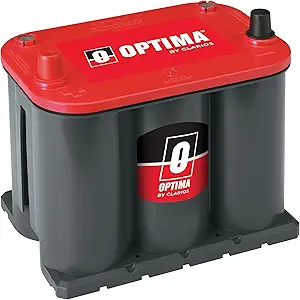
Starting power gets the spotlight here, and the 720 cold cranking amps help deliver strong engine cranks. For car audio systems with basic electrical demands, it offers steady support and maintenance-free convenience. The OPTIMA REDTOP AGM Battery uses SpiralCell Technology with 99.99% pure lead.
That design aims to improve power delivery and help it perform consistently in bad weather. It also charges faster than many conventional batteries. The sealed AGM construction supports cleaner ownership and easier installation.
Its 90-minute reserve capacity adds useful backup for everyday driving. Fifteen times more vibration resistance also helps it suit rougher roads.
At 31.7 pounds, it stays relatively manageable for a starting battery. SAE posts make it compatible with many passenger cars, trucks, and SUVs. It suits drivers wanting dependable starting power and basic electrical support.
Pros
- Strong 720 CCA starting power
- Maintenance-free sealed AGM design
- Good vibration resistance for daily use
Cons
- Not designed for heavy accessory loads
- Weight may feel high for some installs
- Basic electrical demands only
Who Should Buy It?
Drivers who want dependable starting power and simple upkeep should consider it. It fits passenger cars, trucks, and SUVs with SAE terminal needs. The battery suits basic electrical demands, so it works well for stock systems.
Buyers needing solid cold-weather cranking and vibration resistance will appreciate its design. It also makes sense for people who prefer maintenance-free convenience over extra audio support.
Key Specifications
| Specification | Details |
|---|---|
| Voltage | 12 volts |
| Cold Cranking Amps | 720 CCA |
| C20 Capacity | 44 AH |
| Reserve Capacity | 90 minutes |
| Size | 9.38″ Long x 6.75″ Wide x 7.69″ Tall |
| Weight | 31.7 pounds |
| Terminal Type | SAE Posts |
| Battery Type | Lead Acid |
| Vehicle Service Type | Passenger Car, Truck |
| Fit Type | Vehicle Specific Fit |
The 12-volt design suits standard vehicle electrical systems. Its 720 CCA rating means strong starting power in cold weather. The 44 AH C20 capacity shows the battery can store useful energy for starting needs. A 90-minute reserve capacity adds short-term backup when charging is limited. The 9.38 by 6.75 by 7.69 inch size and 31.7-pound weight place it in a familiar group for many vehicle fits. SAE posts make connection straightforward for compatible vehicles.
In daily use, these numbers point to a starting-focused battery with practical stability. The lead acid AGM build helps support maintenance-free ownership and faster charging. Vehicle specific fit can simplify replacement when the dimensions and terminal layout match the vehicle. Passenger cars and trucks benefit most when they need dependable cranking and modest electrical support. The reserve capacity and vibration resistance also help during rough roads and weather changes. It suits drivers who want reliable starting, not heavy audio power.
8. OPTIMA D51R YELLOWTOP Battery

Small-car audio setups often need a battery that fits tight spaces and still supplies steady power. The OPTIMA D51R YELLOWTOP is built for that role, with a compact case and dual-purpose design. It uses SpiralCell Technology with 99.99% pure lead for consistent output and strong starting power.
The battery delivers 450 cold cranking amps, 38 amp hours of capacity, and 66 minutes of reserve capacity. Those numbers suit vehicles with higher electrical demands and help support steady performance. Its sealed AGM build keeps maintenance simple and reduces worry about upkeep.
The battery also resists vibration far better than standard flooded types. That can help in daily driving, rough roads, and audio-heavy setups. At 26 pounds, it stays relatively easy to handle during installation.
The SAE posts and vehicle-specific fit make setup straightforward for the right small car. Drivers who need compact dimensions and dependable electrical support should find it appealing.
Pros
- Compact size suits smaller vehicle battery trays
- SpiralCell design supports steady starting power
- Maintenance-free AGM construction simplifies ownership
Cons
- 450 CCA may suit smaller engines better
- 26-pound weight may still feel bulky
- Size must match vehicle-specific fit carefully
Who Should Buy It?
Drivers with small cars and tight battery spaces should consider it. It suits vehicles with higher electrical demands and compact mounting areas. People who want maintenance-free AGM construction may also appreciate it.
The battery fits passenger cars and uses SAE terminals. It works well for drivers wanting steady starting power and vibration resistance.
Key Specifications
| Specification | Details |
|---|---|
| Voltage | 12 volts |
| Cold Cranking Amps | 450 CCA |
| C20 Capacity | 38 AH |
| Reserve Capacity | 66 minutes |
| Size | 9-5/16 x 5-1/16 x 8-15/16 inch |
| Weight | 26 pounds |
| Terminal Type | SAE Terminal |
| Battery Type | Lead Acid |
| Vehicle Service Type | Passenger Car |
| Fit Type | Vehicle Specific Fit |
The D51R YELLOWTOP uses a 12-volt system with 450 cold cranking amps. That means it is built to start a passenger car with dependable power. Its 38 amp hour capacity shows how much energy it can store for use over time. The 66-minute reserve capacity reflects how long it can sustain constant performance. The compact size, 9-5/16 by 5-1/16 by 8-15/16 inches, helps it fit smaller engine bays and battery trays.
Its 26-pound weight keeps handling manageable during installation and replacement. SAE terminals make it compatible with setups that use that post style. The lead acid AGM construction supports maintenance-free use and steady electrical delivery. Vehicle-specific fit matters here, since the battery is sized for particular cars. That makes it a better match for small-car owners needing reliable starting power, vibration resistance, and compact packaging. It suits drivers who want strong electrical support without a large battery case.
9. OPTIMA DH6 YELLOWTOP Battery

Strong audio systems need stable power, and the OPTIMA DH6 YELLOWTOP focuses on that job. Its 140-minute reserve capacity and 800 cold cranking amps make it a strong pick for heavy electrical demands.
This dual purpose sealed AGM battery delivers 12 volts, 72 amp hours, and maintenance free convenience. The PureFlow design uses 99.99% pure lead and compressed radial grid plates for vibration resistance and corrosion resistance.
That build helps it handle rough roads and repeated charging cycles. It also offers faster charging capabilities and steady starting power in bad weather. The BCI Group Size 48 fit, SAE terminals, and versatile mounting support easy installation for many passenger cars.
At 54 pounds, it feels substantial, and that weight reflects its durable construction. It suits drivers who want premium reserve for car audio and other demanding accessories.
Pros
- 140-minute reserve capacity supports long accessory use
- 800 CCA helps with strong starting power
- Vibration-resistant AGM build suits demanding installs
Cons
- 54-pound weight may complicate handling
- Group 48 fit limits vehicle compatibility
- Higher capacity may exceed basic needs
Who Should Buy It?
Buyers with strong car audio systems should consider it. It suits passenger cars that need steady reserve power and dependable starting strength. Drivers who use many accessories, or who face rough roads, may value its vibration resistance and sealed AGM design.
It also fits people who want maintenance free ownership and versatile mounting.
Key Specifications
| Specification | Details |
|---|---|
| Voltage | 12 volts |
| Cold Cranking Amps | 800 CCA |
| C20 Capacity | 72 AH |
| Reserve Capacity | 140 minutes |
| Size | 10.94 x 6.89 x 7.48 inches |
| Weight | 54 pounds |
| Terminal Type | SAE Terminal |
| Battery Type | Lead Acid |
| Vehicle Service Type | Passenger Car |
| Fit Type | Vehicle Specific Fit |
The 12-volt rating matches common passenger car electrical systems. Eight hundred cold cranking amps help start the engine with strong burst power. The 72 amp hour capacity shows how much energy it can store for accessories. A 140-minute reserve capacity means the battery can support constant draw for longer periods. SAE terminals simplify connection, while the 10.94 by 6.89 by 7.48 inch size gives a clear fit target for installation.
Its lead acid AGM construction supports repeated charging and heavy electrical use. The 54-pound weight and compressed radial grid plates point to a durable, dense build. A vehicle specific fit and BCI Group Size 48 make setup more predictable in compatible passenger cars. That matters for drivers running audio systems, lighting, or other accessories. The sealed design also reduces maintenance needs, which helps owners who want less upkeep and dependable day-to-day use.
10. OPTIMA DS46B24R YELLOWTOP Battery

Import cars often need a battery that fits tightly and powers audio gear reliably. The OPTIMA DS46B24R YELLOWTOP is built for that kind of job.
It uses a 12-volt sealed AGM design with 450 cold cranking amps and 38 amp hours of C20 capacity. That combination supports strong starts and steady electrical output for demanding systems. Its spiralcell technology uses 99.99 percent pure lead for consistent power delivery.
The battery also offers 66 minutes of reserve capacity for steady performance. Weighing 26 pounds, it stays compact and easier to handle during installation.
The SAE terminal layout and vehicle-specific fit suit select import applications well. It is maintenance free, vibration resistant, and made for high electrical demands. For drivers who want dependable import fit and clean installation, it is a practical choice.
Pros
- Fits select import vehicles well
- Maintenance free AGM design
- Good vibration resistance
Cons
- Only 450 CCA for larger setups
- Fit is limited to select vehicles
- Reserve capacity is moderate
Who Should Buy It?
Drivers with select import vehicles should consider this battery first. It suits setups that need a compact, vehicle-specific fit and steady electrical support. The sealed AGM design also works well for people who want less maintenance.
It fits passenger cars, trucks, and some Prius models, making it useful for mixed garage needs. Audio-focused drivers who value reliable starting power may like it most.
Key Specifications
| Specification | Details |
|---|---|
| Voltage | 12 volts |
| Cold Cranking Amps | 450 CCA |
| C20 Capacity | 38 AH |
| Reserve Capacity | 66 minutes |
| Size | 9 5/16″ x 5 1/16″ x 8 15/16″ |
| Weight | 26 pounds |
| Terminal Type | SAE Terminal |
| Battery Type | Lead Acid |
| Vehicle Service Type | Passenger Car, Truck |
| Fit Type | Vehicle Specific Fit |
The 12-volt rating matches standard car electrical systems. The 450 cold cranking amps describe starting strength in cold conditions. A 38 amp hour C20 capacity shows how much energy it can supply over time. The 66-minute reserve capacity indicates how long it can keep running essential loads. Its 9 5/16 by 5 1/16 by 8 15/16 inch size and 26-pound weight make it compact for select import bays and easier to position during installation.
The SAE terminal type supports straightforward connection in compatible vehicles. As a lead acid AGM battery, it is built for maintenance-free use and steady output. The vehicle-specific fit matters for import drivers who need correct sizing and terminal layout. Passenger cars and trucks can use it where the dimensions match. People with high electrical demands, including audio-focused setups, benefit from the sealed construction, vibration resistance, and steady reserve capacity during everyday driving and repeated starts.
Best Optima Battery for Car Audio: The Ultimate Buying Guide
Battery capacity and reserve power
Battery capacity directly affects how long a car audio system can play at strong volume without voltage drop. The amphour rating shows how much energy a battery can store, so a higher number usually supports amplifiers and subwoofers more effectively during heavy use. Reserve capacity is just as important because it indicates how long the battery can keep delivering power if the engine is off or if the system draws extra current for extended listening sessions.
It is also essential to match the battery size to the demand of the audio setup, since an undersized unit may struggle with power-hungry components, while an appropriately sized battery helps maintain stable performance and reduces stress on the electrical system.
- Amphour rating: Indicates how much energy the battery can supply over time.
- Reserve capacity: Shows how long the battery can support audio use during longer sessions.
- System demand: Helps ensure the battery can handle amplifiers, speakers, and other accessories.
Cold cranking amps and starting performance
Cold cranking amps directly affect how reliably a car starts in low temperatures and during repeated short trips. A battery with the right starting strength helps prevent slow cranking, voltage drops, and strain on the electrical system, which matters just as much in daily driving as it does for a powerful audio setup. It is important to balance starting power with audio performance because a system that supports strong bass and steady sound output still has to deliver enough reserve for ignition, lights, and other essentials. The correct CCA rating depends on your vehicle’s engine size, climate, and factory requirements, so a battery that is too weak can cause hard starts, while one that is oversized may not provide any practical benefit for your car.
- Daily driving reliability: Adequate CCA helps the engine start smoothly in real-world conditions.
- Audio system balance: Stable starting power supports the car’s electrical load without compromising sound quality.
- Proper fit for the vehicle: The right CCA rating should align with the manufacturer’s recommendations and your climate.
Deep cycle vs starting battery features
Deep cycle batteries are built to deliver steady power over longer periods, while standard starting batteries are designed for short, high-current bursts to crank the engine, which makes that difference important for car audio setups that draw a lot of power. A dual-purpose design can make sense if you want one unit to handle both engine starts and moderate audio demands, but it is usually a compromise rather than the ideal solution for extreme systems.
- Deep cycle vs. standard: deep cycle units suit sustained power use; standard batteries excel at starting the car.
- Dual-purpose fit: practical for mixed daily driving and audio needs with moderate output.
- High-powered systems: benefit from stronger reserve capacity and better resistance to repeated discharge.
Battery type and internal construction
AGM batteries are generally better suited for demanding car audio systems than flooded lead-acid units because they deliver power more steadily, resist vibration more effectively, and handle deep cycling with less wear. A strong battery design matters in a vehicle with powerful amplifiers and subwoofers, since rough roads and constant bass output can stress internal parts and shorten service life. It is also wise to compare maintenance needs, because sealed AGM models typically require little to no upkeep and offer far better spill resistance, while flooded batteries may need regular checks and are more vulnerable to leaks if mounted in less-than-ideal positions.
In practice, a well-built AGM unit can provide more dependable performance, cleaner installation options, and greater peace of mind for an audio setup that draws heavy current.
- AGM vs. flooded lead-acid: AGM batteries usually provide stronger output stability and better support for high-demand audio systems.
- Vibration resistance and durability: A tough internal build helps the battery survive road shock and extended bass use.
- Maintenance requirements and spill resistance: Sealed designs reduce upkeep and lower the risk of leaks or corrosion.
Compatibility with your car audio system
Amplifier power demand directly affects how much strain a battery will face, so the right unit must support the full electrical load of your car audio system without voltage drops that can cause distortion, dimming lights, or weak bass. A strong alternator also matters because it helps keep the battery charged during long drives and heavy listening sessions, reducing the risk of early wear or power shortages. Space, terminal layout, and fitment are equally important, since a battery that is physically too large or awkwardly arranged can create installation problems and limit how well it integrates with the vehicle’s wiring.
Paying attention to these details helps ensure the battery works smoothly with the audio setup, delivers reliable power, and fits the vehicle without unnecessary modification.
Budget, warranty, and longterm value
Audible system upgrades often draw more power than a standard starter setup can comfortably supply, so the first factor to weigh is how well the battery supports extra accessories, amplifiers, and future add-ons without voltage drops. Budget, warranty, and longterm value matter because a lower upfront cost can become expensive if the battery cannot handle demand or needs early replacement.
- Price range versus performance benefits: A modestly priced option may seem attractive, but better power delivery and stability can justify a higher cost if the system runs more efficiently.
- Warranty length and coverage details: Longer coverage can protect against defects and premature failure, while clear terms help avoid surprise expenses later.
- Expected lifespan and replacement costs: A battery with a longer service life lowers the frequency of replacements and helps spread the initial cost over more years of use.
In practice, the most economical choice is often the one that balances solid performance, dependable warranty protection, and lower long-term replacement expense rather than the cheapest option at checkout.
Handy Add-ons for Cleaner Installs
When shopping for an Optima battery for car audio, a few extra parts can make the setup easier and safer. These add-ons help the battery fit well, connect cleanly, and support strong power flow to your system.
A battery is only one part of the setup. Good cables, solid terminals, and the right mounting gear can help your audio system work better. Cheap or loose parts can cause voltage drops, noise, or starting trouble.
Good accessories to pair with an Optima battery include:
- Heavy-gauge power and ground wire for stable current flow
- Quality terminals to make tight, corrosion-resistant connections
- Battery tray or hold-down kit so the battery stays secure
- Fuse holder and fuse near the battery for circuit protection
- Battery terminal cleaner or protectant to help prevent corrosion
A digital voltmeter can also be useful. It lets you check charging voltage and spot problems early. If your audio system is large, a capacitor or extra battery may be part of the plan, but that depends on the full setup and power needs.
Before buying accessories, check the battery size, terminal style, and vehicle fit. Match the parts to your amp draw and cable length. A neat install is not just about looks. It can help your audio system run more reliably and make future upgrades easier.
FAQ’s
What Is The Best Optima Battery For Car Audio Systems?
The best Optima battery for car audio systems is usually the **Optima YellowTop**, because it’s designed for deep-cycle use and can handle the high power demands of audio equipment. If you need a more budget-friendly option for a stock system, the **RedTop** is good for starting power, but the YellowTop is the better choice for sound systems.
Which Optima Battery Works Best For High-Power Car Audio Setups?
For high-power car audio setups, the **Optima YellowTop** is usually the best choice because it’s designed for deep-cycle use and handles repeated heavy electrical loads well. If you need maximum starting power along with audio support, the **RedTop** can also be a good option.
Is A Yellow Top Or Red Top Optima Battery Better For Car Audio?
For car audio, the **yellow top Optima** is usually better because it’s designed for deep cycling and handling repeated power draws. The **red top** is more of a starting battery and is better for engine cranking than running audio systems.
How Do I Choose The Right Optima Battery For My Car Amplifier And Subwoofers?
Choose an Optima battery with enough reserve capacity and cranking power for your vehicle, and make sure its size and terminals fit your car. For a system with amplifiers and subwoofers, prioritize a battery with strong deep-cycle performance and enough amp output to handle the added electrical load.
What Size Optima Battery Do I Need For A Car Audio System?
For a car audio system, most people use an Optima YellowTop in a Group 34/78 size, but the right choice depends on your amp power and vehicle fitment. If your system is very powerful, you may need a larger battery or an additional battery for support.
Final Verdict
For buyers building a strong audio setup, the best optima battery for car audio depends on how much power the system needs and how much space and budget are available. The OPTIMA D34/78 YELLOWTOP Battery is the best overall pick for audio-heavy builds because it offers a strong balance of power support and flexibility for demanding systems. The OPTIMA 35 REDTOP Battery is the best value choice for daily drivers that want dependable starting power without paying for extra capacity they may not use.
For higher-end systems, the OPTIMA DH7 YELLOWTOP AGM Battery is the best premium option for top-end power, while the OPTIMA DH6 YELLOWTOP Battery suits serious audio systems that need extra reserve and stable performance. Buyers who want a balanced upgrade should start with the D34/78, while those chasing maximum output and reserve should move to the DH6 or DH7.
Choose the D34/78 for the best all-around audio setup, the 35 REDTOP for value, and the DH6 or DH7 YELLOWTOP for premium high-demand systems.