5 Key Differences Between Board Books and Hardcover Books
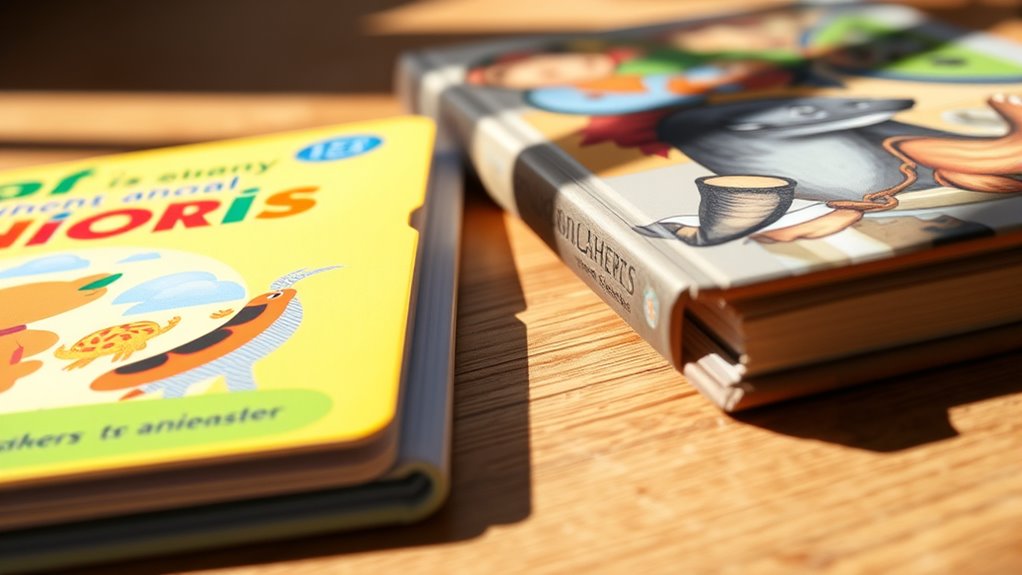
Board books and hardcover books differ in several key ways.
Board books are made from thick, tear-resistant paperboard, designed specifically for toddlers aged 0 to 3.
On the other hand, hardcover books target older audiences with more complex narratives and themes.
Board books are incredibly durable, cost-effective, and feature rounded corners for safety, making them perfect for little hands to explore.
In contrast, while hardcover books can last longer, they are less resistant to wear and tear, which can be a concern for young readers.
Want to discover more about these differences? Let’s dive deeper!
Key Takeaways
- Board books are made from thick paperboard, while hardcover books use traditional paper pages, making them more prone to tearing.
- Targeted at young children aged 0 to 3, board books focus on simple literacy concepts, unlike the complex narratives found in hardcover books for older readers.
- Board books are designed for durability, with tear-resistant pages and rounded corners to enhance safety for infants and toddlers.
- Cost-wise, board books are more budget-friendly, typically ranging from $1.10 to $5.80, compared to hardcover books which can be more expensive.
- Board books use non-toxic materials that withstand chewing, making them safer for little ones exploring their environment.
Structural Differences: Board Books vs. Hardcover Books
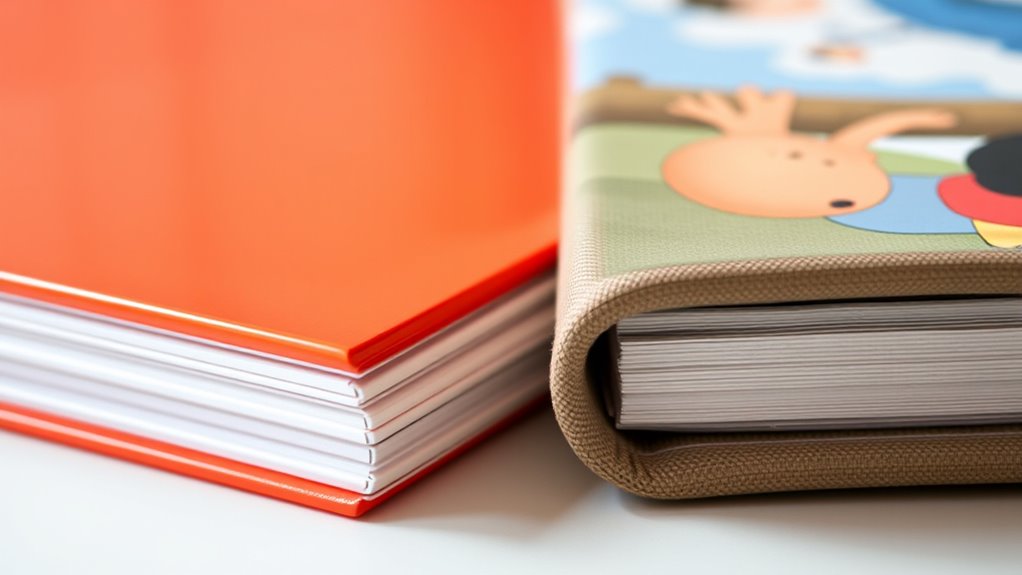
When you compare board books and hardcover books, the structural differences become immediately apparent.
Board books are made entirely from thick paperboard, making them durable and perfect for infants and toddlers. Their pages are tear-resistant, typically featuring 12 to 24 pages, while hardcover books can have a much larger count.
Board books, crafted from thick paperboard, are durable, tear-resistant, and ideal for little ones with their limited page count.
Board books also have rounded corners to guarantee safety for young readers, unlike the sharp edges of hardcover books. Additionally, board books open completely flat at 180°, making them easy for little hands to handle.
The materials used are non-toxic and designed to withstand chewing and rough handling, while hardcover books often use standard paper that can’t endure the same wear and tear.
Target Audience and Age Appropriateness
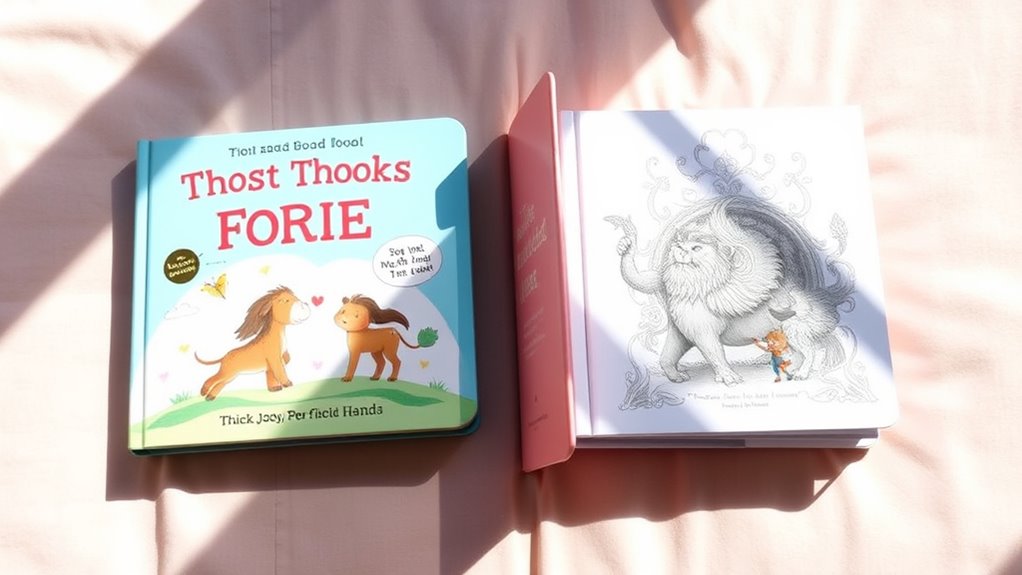
Targeting specific age groups, board books and hardcover books serve distinct audiences.
Board books cater to young children and toddlers aged 0 to 3, focusing on age appropriateness with their simple content and durable construction.
These books emphasize early literacy through sensory exploration and basic concepts, making them ideal for little hands.
In contrast, hardcover books target older children, teenagers, and adults, accommodating complex narratives and a wider range of topics.
With page counts that can exceed 800, they support advanced literacy skills and children’s learning as readers grow.
Understanding the target age for each format helps you choose the right book that meets developmental needs and fosters a love for reading.
Durability and Longevity of Each Format
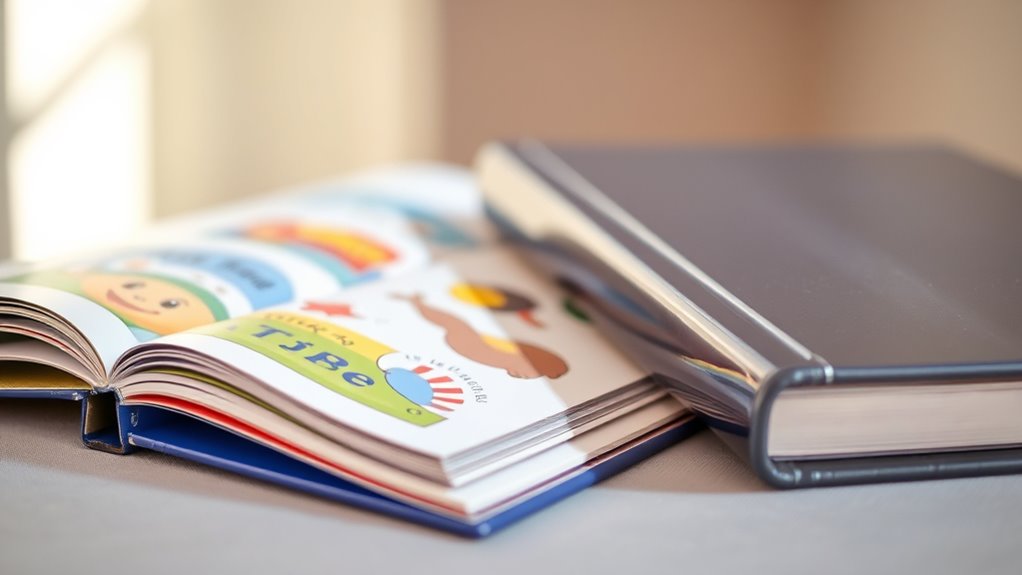
Choosing the right book format involves considering not just the target audience but also the durability and longevity of each option.
Board books, made from thick paperboard, offer superior durability against tearing and rough handling, making them perfect for infants and toddlers. Their rounded corners enhance safety, preventing injuries during playtime.
Board books provide excellent durability for little hands, ensuring safe and enjoyable reading experiences for infants and toddlers.
On the other hand, hardcover books, while still durable, feature standard paper pages that can be more easily damaged by young hands.
They can last 40 to 60 years or more with proper care, thanks to their robust construction and sewn binding. However, board books typically last several years under typical usage, making them a practical choice for little ones just starting their reading adventures.
Cost Considerations for Parents
Many parents find themselves weighing the costs of board books versus hardcover books as they build their child’s library.
Board books are generally more budget-friendly, with prices ranging from $1.10 to $5.80. Their lower cost stems from simpler manufacturing processes that use thick paperboard, making them ideal for young children.
In contrast, hardcover books can range from $0.90 to $4.20, reflecting their more complex construction and premium appearance.
If you’re considering hardcover board books, expect to pay between $1.44 and $7.55, as they combine toddler durability with a refined look.
Ultimately, the affordability of board books allows families to foster early reading habits without a significant financial investment.
This makes them a practical choice for any budget-conscious parent.
Safety Features and Design Elements
When considering safety features and design elements, board books stand out for their child-friendly construction.
Made from thick, durable paperboard, these books have rounded corners to prevent sharp edges that could harm little ones.
Their chewable design means infants can explore safely, accommodating those who love to nibble on objects.
In contrast, hardcover books use traditional paper pages that are more prone to tearing, making them less suitable for rough handling.
Additionally, board books are typically smaller, fitting comfortably in a baby’s hands to encourage independent exploration.
The non-toxic materials used in board books guarantee infant safety, while hardcover books may not always prioritize this aspect.
Frequently Asked Questions
Can Board Books Be Recycled or Composted After Use?
You can recycle board books, but it depends on your local guidelines. Composting isn’t feasible due to their materials, so if recycling isn’t an option, disposal in a landfill might be necessary. Check your waste management services.
Are There Specific Themes More Common in Board Books?
Sure, you’ll find board books often explore themes like family, friendship, and basic concepts. Their interactive elements, repetitive text, and sensory features engage little ones, fostering connections and early literacy in a fun, memorable way.
How Do Illustrations Differ Between Board Books and Hardcover Books?
Illustrations in board books focus on bold, simple designs to engage young kids, while hardcover books feature intricate art that supports more complex narratives. You’ll see larger visuals in board books and varied styles in hardcovers.
Can Hardcover Books Be Used for Read-Aloud Sessions?
Hardcover books are like treasure chests filled with stories. Yes, you can absolutely use them for read-aloud sessions! Their durability and engaging narratives captivate children, enriching vocabulary and sparking imagination during your shared reading experience.
What Age Do Children Typically Transition From Board Books to Hardcover Books?
Children typically shift from board books to hardcover books around age 3. As they develop their reading skills and interests, you’ll notice they’re ready for more complex stories and illustrations found in hardcover formats.
Conclusion
In the world of children’s literature, choosing between board books and hardcover books is like picking between a cozy blanket and a sturdy chair—each serves a unique purpose.
Whether you’re nurturing tiny hands or igniting a budding imagination, understanding these key differences helps you make an informed choice.
So, as you immerse yourself in the delightful domain of reading, remember to reflect on durability, age-appropriateness, and safety features.
This will help you find the perfect fit for your little one.
In conclusion, board books are great for younger children due to their durability and safety, while hardcover books offer more complex stories for older kids.
By considering these aspects, you can ensure that your child’s reading journey is both enjoyable and safe.
So, whether you opt for a board book or a hardcover book, the right choice will support their love for reading and help foster their imagination!