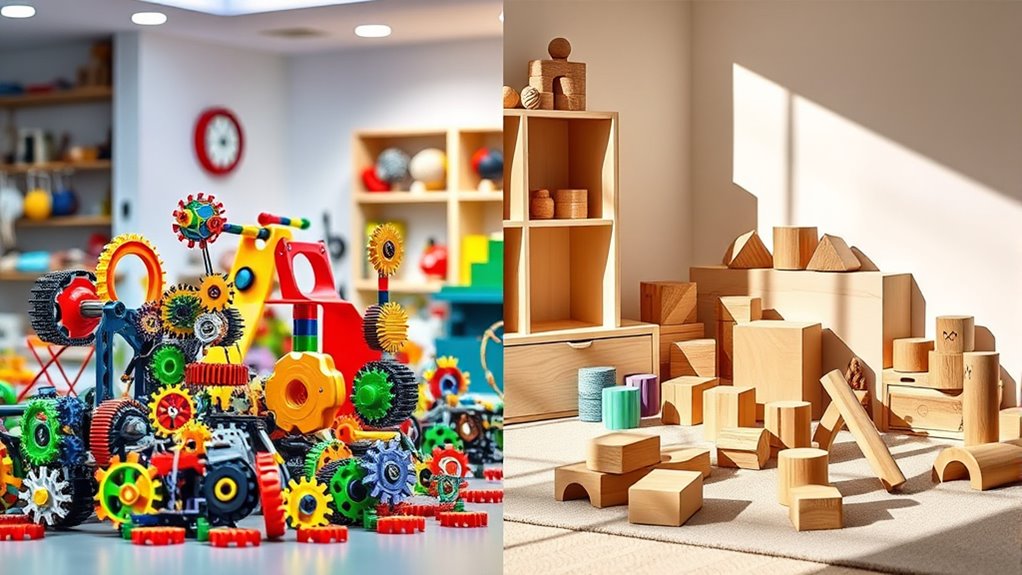
5 Key Differences: STEM Vs Montessori Toys
STEM and Montessori toys each embody unique educational philosophies that cater to different aspects of child development.
Montessori toys promote child-led exploration and creativity, allowing children to engage with materials in a way that sparks their natural curiosity.
On the other hand, STEM toys focus on structured learning outcomes in science, technology, engineering, and math, guiding logical reasoning within set parameters.
While Montessori encourages independence and self-discovery, STEM toys provide a more directed approach to learning.
The materials used also differ significantly. Montessori emphasizes natural elements that support holistic development, whereas STEM often relies on plastic to achieve specific educational goals.
Understanding these differences can help you choose the right approach for your child, aligning their learning style with the most suitable toy options.
Key Takeaways
- Montessori toys encourage open-ended exploration and creativity, while STEM toys focus on structured activities with specific educational outcomes.
- Montessori promotes self-directed learning and independence, whereas STEM toys guide children toward achieving defined skills in science, technology, engineering, and mathematics.
- Montessori toys utilize natural materials like wood and cotton to promote sustainability, while STEM toys often use plastic and complex designs.
- Montessori emphasizes holistic development through free play, while STEM focuses on logical reasoning and problem-solving within set parameters.
- Montessori designs avoid bright colors to prevent sensory overload, whereas STEM toys may feature vibrant colors to attract attention and engage children.
Educational Philosophy and Approach
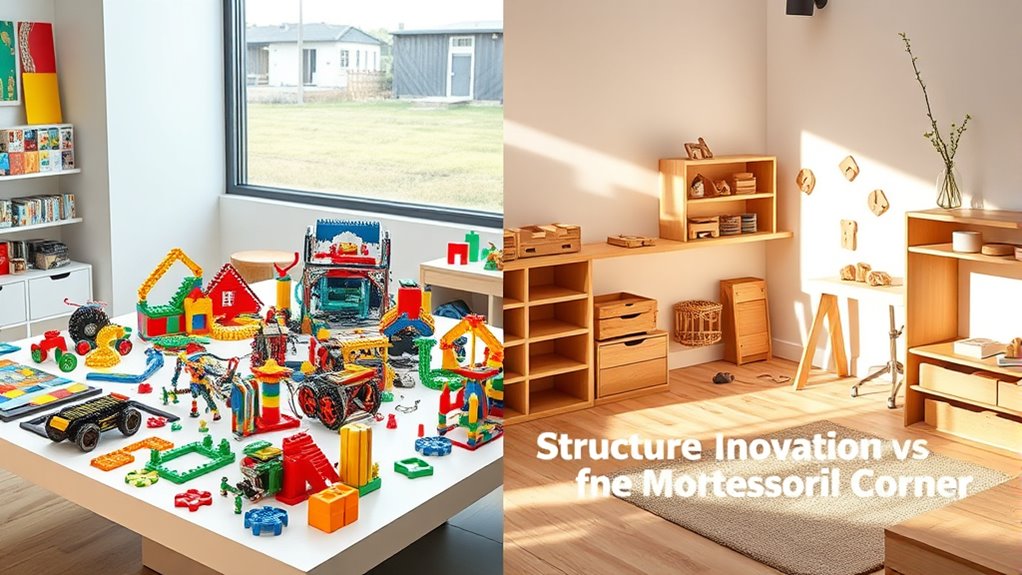
When comparing STEM and Montessori toys, it is essential to understand their distinct educational philosophies and approaches.
The Montessori method emphasizes child-led exploration and hands-on learning, allowing you to foster your child’s independence. Montessori educational toys encourage open-ended play, promoting holistic development through sensory experiences and creative problem-solving.
The Montessori method fosters independence through child-led exploration and hands-on learning, encouraging open-ended play and holistic development.
In contrast, STEM toys focus on structured activities that enhance skills in science, technology, engineering, and mathematics. These often lead to guided learning with specific objectives.
While Montessori toys support cognitive development through natural curiosity, STEM toys typically emphasize logical reasoning within defined parameters.
This difference shapes how children engage with the materials and each other, ultimately influencing their overall learning experience.
Focus on Learning Outcomes
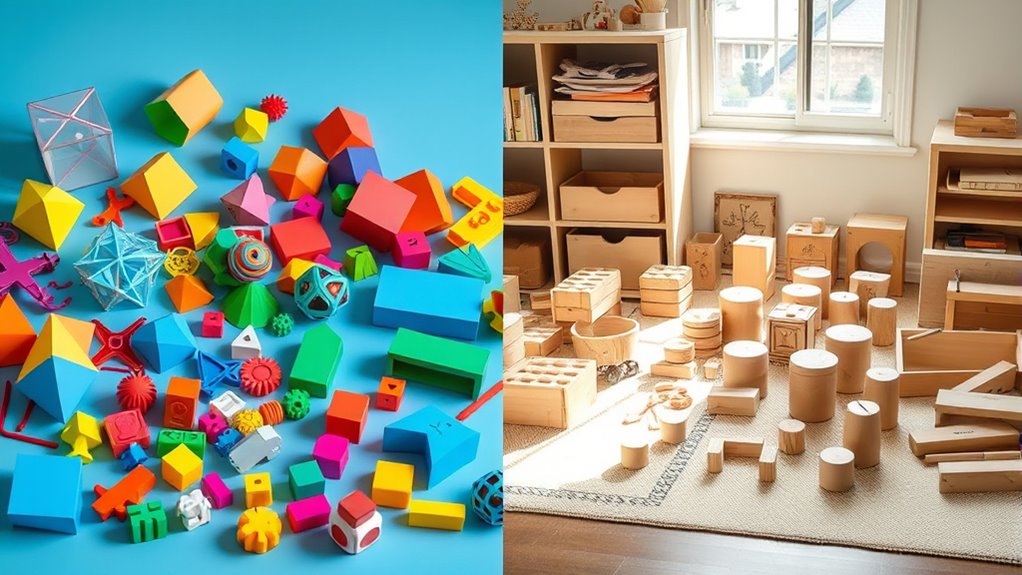
Learning outcomes play an essential role in distinguishing Montessori toys from STEM toys.
Montessori toys promote self-directed learning, allowing kids to explore at their own pace, which meets their developmental needs.
This approach fosters creativity and enhances cognitive abilities through unstructured play, encouraging intrinsic motivation and sustained engagement.
In contrast, STEM toys are often structured to achieve specific educational outcomes, focusing on logical reasoning and problem-solving.
While they can develop certain skills, they may lead to quick disengagement due to their defined tasks.
Ultimately, both toy types aim to foster a love of learning, but Montessori toys prioritize independence and holistic development.
This creates an environment where children thrive through exploration and meaningful play.
Role of Play and Exploration
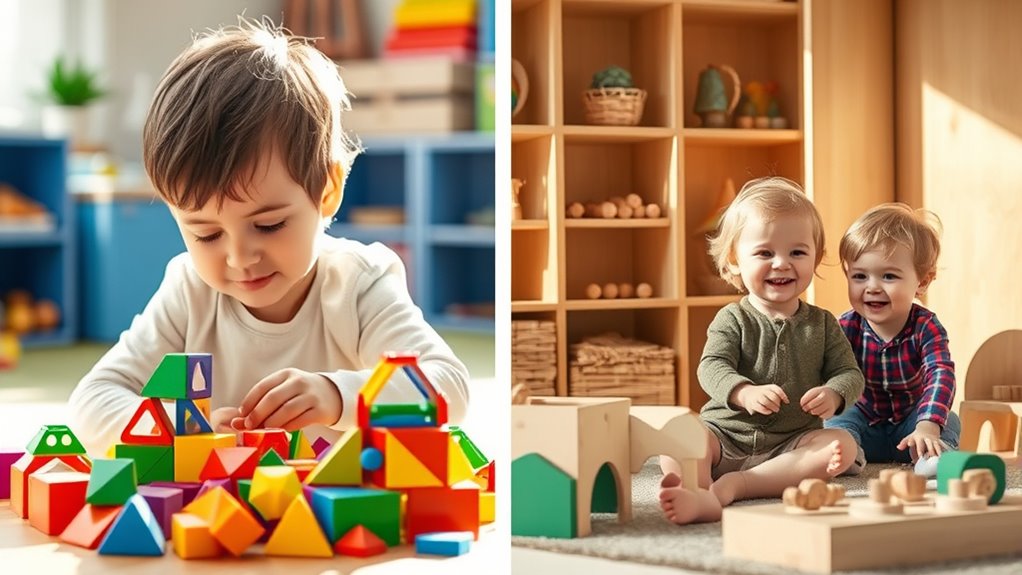
Play and exploration are fundamental to child development, and the type of toys children engage with can shape these experiences considerably.
Montessori toys encourage self-directed learning, allowing your child to explore their environment freely and creatively.
In contrast, STEM toys often focus on structured problem-solving and specific concepts.
Consider these key aspects of play and exploration:
- Montessori toys promote creativity through open-ended engagement.
- Children learn through experimentation and discovery in a Montessori setting.
- STEM toys guide children toward achieving specific outcomes.
- Both toy types support essential developmental skills but differ in approach.
Developmental Benefits
While both Montessori and STEM toys offer valuable developmental benefits, they do so through different methodologies.
Montessori toys often encourage self-directed learning, allowing children to choose activities that resonate with their interests. This promotes independence and exploration, enhancing fine motor skills and problem-solving abilities.
Montessori toys foster independence and exploration, empowering children to engage in self-directed learning and enhance their problem-solving skills.
In contrast, STEM toys focus on specific skills in science, technology, engineering, and mathematics, providing guided experiences. Montessori toys engage children’s natural curiosity, fostering imaginative play and experimentation with open-ended materials.
The use of natural materials in Montessori toys supports sensory exploration and environmental awareness.
Ultimately, both types of toys enhance concentration and focus, but Montessori toys achieve this by promoting prolonged engagement with simple, manipulable materials, encouraging holistic skill development.
Material and Design Considerations
When selecting toys for children, the material and design greatly influence their developmental experience.
Montessori toys offer natural materials such as wood and cotton, promoting sustainability and fostering independence.
In contrast, many traditional STEM toys utilize plastic and often feature complex designs aimed at specific educational outcomes.
Montessori toys encourage open-ended play, allowing exploration.
They support cognitive development aligned with the child’s developmental stage.
Montessori designs avoid bright colors to prevent sensory overload, creating a calmer play environment.
STEM toys, on the other hand, focus on structured activities that encourage problem-solving.
Ultimately, the choice between these toys can impact how effectively they facilitate learning and growth in your child.
This makes material and design essential considerations.
Frequently Asked Questions
Can STEM and Montessori Toys Be Used Together Effectively?
Yes, you can use STEM and Montessori toys together effectively. This combination fosters both structured learning and creative exploration, allowing your child to develop critical thinking, problem-solving skills, and independence in a more engaging way.
What Age Groups Benefit Most From STEM and Montessori Toys?
Kids aged 3 to 10 benefit most from STEM toys, while Montessori toys are great for infants to 6-year-olds. Each age range focuses on different developmental skills, enhancing learning and play effectively for your child.
Are There Specific Brands Known for Quality STEM or Montessori Toys?
Yes, brands like LEGO Education and Snap Circuits excel in STEM toys, while Melissa & Doug and Hape are renowned for Montessori toys. Each brand offers quality options that enhance learning and creativity for children.
How Do Parents Choose Between STEM and Montessori Toys for Their Children?
When choosing between STEM and Montessori toys, consider your child’s learning style and developmental stage. Think about whether they thrive on structured challenges or prefer open-ended exploration, as both approaches offer valuable benefits.
What Are Some Examples of Popular STEM and Montessori Toys?
Imagine your child building a robot with LEGO Technic or solving a wooden puzzle. Popular STEM toys include coding robots, while Montessori options feature stacking blocks and sensory bins, encouraging exploration and hands-on learning.
Conclusion
In choosing between STEM and Montessori toys, you’re really picking a path of discovery.
Both offer unique journeys, guiding your little ones through the delightful maze of learning.
While STEM toys spark curiosity in science and technology, Montessori toys nurture independence and creativity.
Embrace the joy of exploration and let your child’s imagination soar.
Ultimately, it’s about finding what resonates with their spirit and supports their growth.
A harmonious blend of education and fun is key!
By exploring both STEM and Montessori toys, you can create an enriching environment that fosters curiosity, creativity, and independence.
So, consider your child’s interests and learning style.
Choose toys that not only educate but also ignite passion and joy in their learning journey.
In the end, it’s all about nurturing their potential while having a blast!