Best Educational Toys for Smart Play
To foster creativity, critical thinking, and problem-solving skills in your child, it’s essential to focus on educational toys designed for smart play.
Look for open-ended toys such as building blocks, puzzles, and role-play sets.
These types of toys encourage imagination and cognitive development, making them perfect for young minds.
Plus, non-electronic options help avoid screen time, promote social interactions, and support independent exploration.
When selecting toys, consider eco-friendly choices as well.
Not only do they enhance your child’s playtime, but they also teach valuable lessons about environmental awareness.
By discovering more about the best toys for your child’s growth and development, you’re setting the stage for a fun, engaging, and educational play experience.
Key Takeaways
- Look for open-ended toys that encourage imaginative play, enhancing creativity and independent thinking in children.
- Choose eco-friendly options like wooden building blocks and natural puzzles to promote environmental awareness and skill development.
- Incorporate toys that foster problem-solving and critical thinking, such as puzzles and building sets, to enhance cognitive skills.
- Utilize art supplies and role-play toys to stimulate communication, social interaction, and collaborative play among peers.
- Implement a toy rotation system to keep playtime engaging, avoid toy fatigue, and encourage appreciation for available toys.
Understanding Learning and STEM Toys
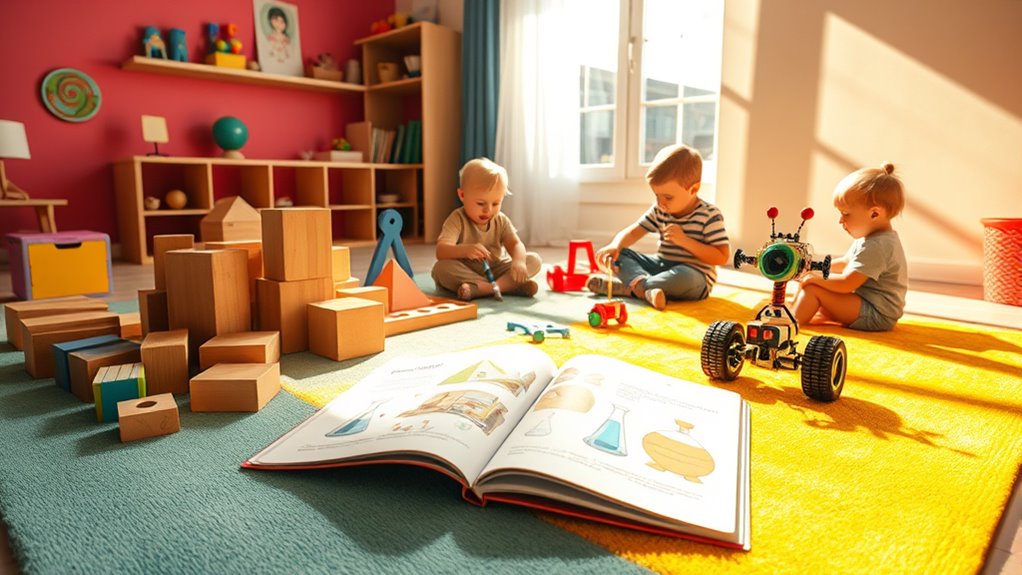
As you explore the world of educational toys, you’ll find that learning and STEM toys play an essential role in developing crucial skills in young children.
These toys encourage problem-solving and critical thinking, enhancing cognitive skills while fostering creativity through imaginative play.
Educational toys inspire problem-solving and critical thinking, boosting cognitive skills while nurturing creativity through imaginative play.
Learning toys often feature open-ended designs that allow for adaptive exploration, making them perfect for independent experimentation.
By engaging in these activities, children also strengthen their fine motor skills and enjoy replayable experiences that keep their curiosity alive.
Research supports that preschoolers thrive on toys offering maximum learning opportunities, ensuring that your selections promote effective child development.
Trustworthy recommendations come from extensive testing and expert insights, guaranteeing the impact of your chosen educational toys.
The Importance of Open-Ended Play
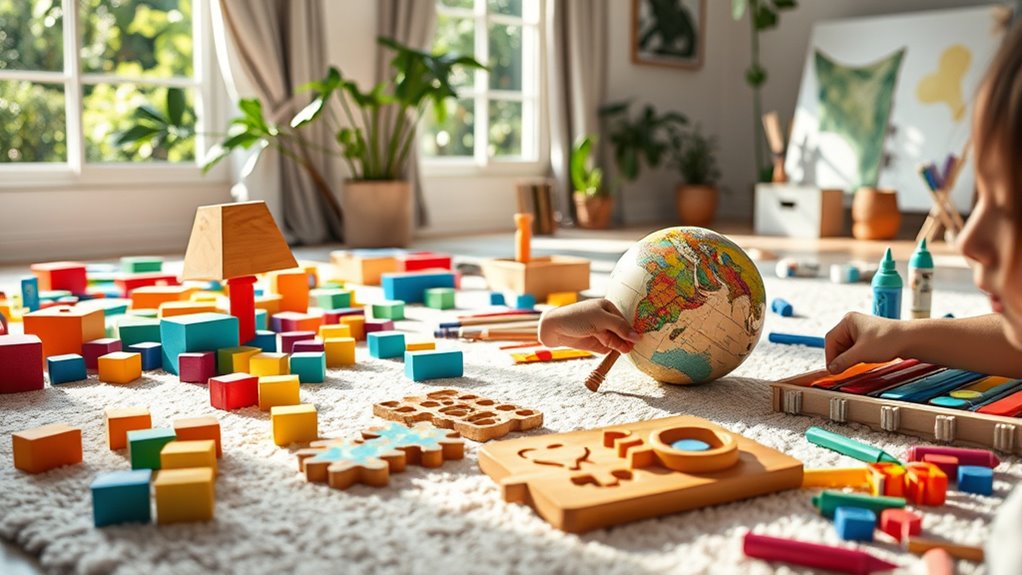
Open-ended play is a key component of effective learning, allowing children to harness their imagination and creativity.
This type of play fosters independent thinking and enhances problem-solving skills without the constraints of specific instructions.
By engaging with open-ended toys, kids can explore and experiment, promoting cognitive development and critical thinking through self-directed play.
These toys evolve with your child’s interests, providing lasting engagement across different ages.
Research shows that open-ended play encourages cooperative interactions, helping children develop social skills and collaboration abilities with peers.
Additionally, minimizing screen time and promoting tactile exploration through open-ended toys enhances sensory development.
This encourages your child to engage actively with their environment.
Embrace the power of open-ended play for a well-rounded learning experience!
Recommended Toys for Different Age Groups
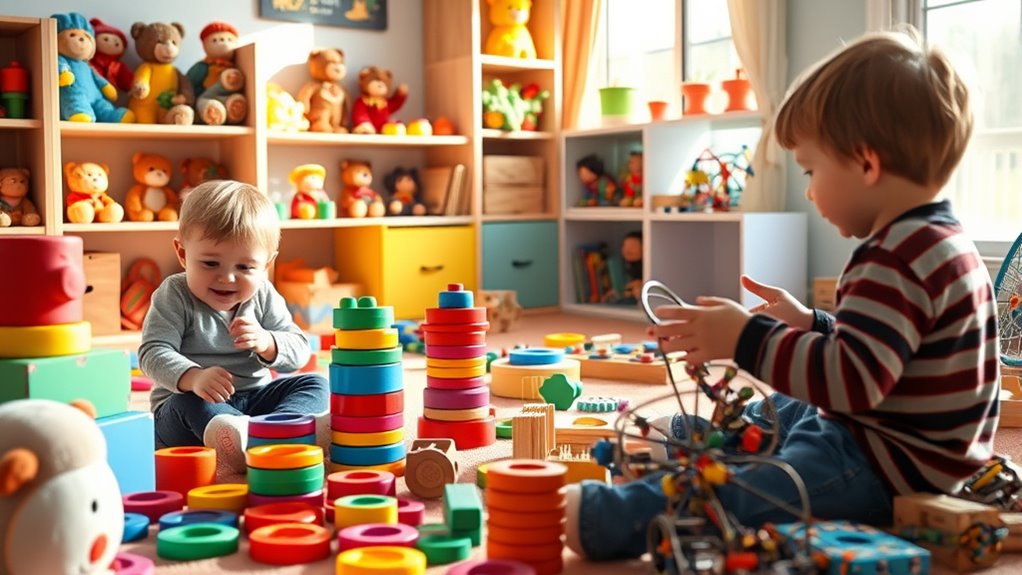
When it comes to choosing toys for toddlers and preschoolers, you want options that spark their growth and creativity. For toddlers, think about balls and shape-sorters, while preschoolers thrive with arts and crafts or blocks. These toys not only entertain but also support important developmental skills at each stage.
Toys for Toddlers
Finding the right toys for toddlers can make a significant difference in their development. Engaging toys not only entertain but also enhance essential skills.
Here are some top picks:
- Shape-sorting sets: These toys boost problem-solving skills as toddlers match shapes with the correct holes.
- Stacking toys: They help develop fine motor skills and hand-eye coordination while toddlers learn to balance various shapes.
- Role-play toys: Kitchen sets or tool kits foster imaginative play, allowing toddlers to mimic real-life scenarios and build social-emotional skills.
- Art supplies: Crayons and washable markers promote creativity and fine motor skills as toddlers explore colors and express themselves through drawing.
Choosing the right toys for toddlers can set the stage for their growth and learning!
Toys for Preschoolers
As toddlers grow and develop, their play needs evolve, making way for toys that spark creativity and imagination.
For preschoolers, toys that encourage imaginative play, like pretend play sets, are vital for social and emotional development.
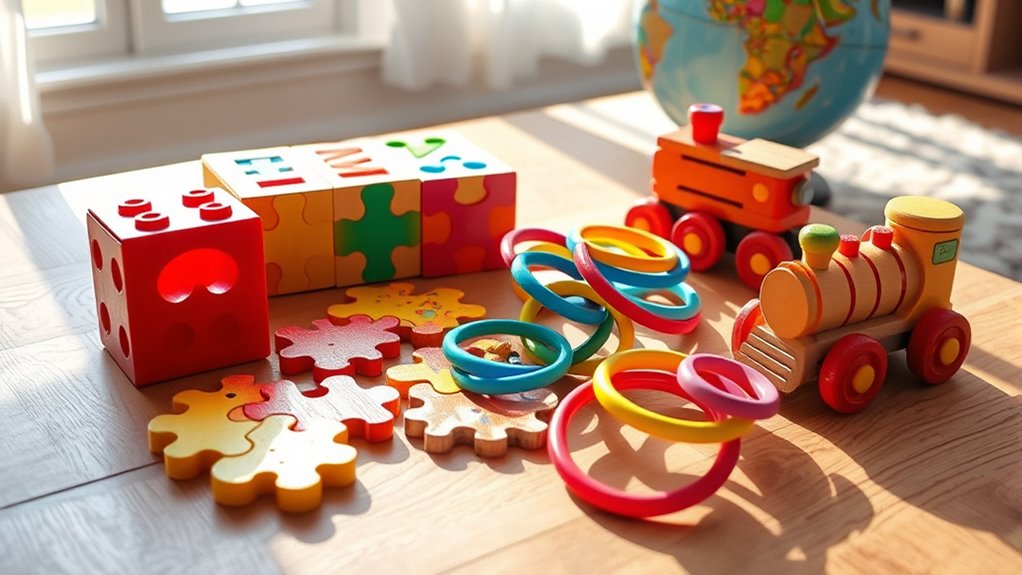
Puzzles, especially chunky wooden options, enhance fine motor skills and problem-solving skills, which are essential for coordination.
Building toys, such as blocks and construction sets, promote spatial awareness and collaborative play, helping them engage with peers.
Art supplies, including crayons and paints, foster creativity and improve hand-eye coordination through artistic exploration.
Role-play toys, like play kitchens or doctor kits, facilitate real-world understanding, enabling preschoolers to navigate social situations effectively.
With these toys, they truly learn through play!
Benefits of Non-Electronic Toys
Non-electronic toys spark your child’s imagination and creativity, giving them the freedom to explore without screen limitations. These toys also promote social interaction, as they often encourage cooperative play with peers or caregivers. By engaging in unstructured activities, your child develops essential skills that will serve them well in life.
Encourages Imagination and Creativity
While screens often dictate how children play today, non-electronic toys release their imagination and creativity in ways that digital devices simply can’t.
These toys encourage open-ended exploration, allowing kids to create their own stories and scenarios.
Here are four ways they foster imaginative play:
- Building Blocks: Inspire critical thinking and problem solving as kids design and construct their own creations.
- Arts and Crafts Materials: Enable sensory experiences, letting children explore textures and colors while expressing themselves.
- Play Silks: Serve as open-ended toys that adapt to various imaginative play scenarios.
- Realistic Toy Animals: Engage kids in storytelling, enhancing their creativity and independent thinking.
It’s amazing to see how these simple toys can spark so much creativity!
Enhances Social Interaction Skills
Playing with non-electronic toys naturally brings kids together, fostering essential social interaction skills.
When you engage in imaginative play with dolls or action figures, your children practice empathy and develop emotional understanding by maneuvering through various social scenarios.
Non-electronic toys encourage face-to-face interaction, which enhances communication and promotes sharing and cooperation among peers.
As kids negotiate roles and rules, they also strengthen their problem-solving skills.
Toys like building blocks and art supplies support collaborative play, allowing your children to work as a team towards a common goal.
This not only enhances teamwork but also strengthens social bonding.
Overall, these educational toys provide a platform for kids to improve their social skills while having fun.
Eco-Friendly Toy Selection
Choosing eco-friendly toys not only benefits the environment but also enriches your child’s playtime experience.
By opting for these toys, you can foster creativity, enhance fine motor skills, and promote problem-solving skills—all while teaching environmental awareness.
Here are four great options:
- Wooden Building Blocks: Made from natural materials, they encourage imaginative play and creative construction.
- Eco-Friendly Art Supplies: Non-toxic finishes and dyes guarantee safe artistic expression.
- Sustainable Plush Toys: Soft, safe, and often made from recycled materials, these toys are comforting and environmentally responsible.
- Natural Puzzles: Crafted from wood, they stimulate problem-solving skills and provide endless fun.
Choosing eco-friendly toys supports sustainable practices, nurturing a healthier planet for future generations.
Tips for Gift-Giving and Toy Rotation
Eco-friendly toys not only enrich your child’s play but also set the stage for thoughtful gift-giving and effective toy rotation.
When selecting educational toys, encourage gift-givers to choose high-quality, open-ended options that develop problem-solving skills and foster creativity.
Limiting the number of toys available at any time encourages deeper engagement and independent play. This allows kids to truly learn from their experiences.
Communicate with friends and family about the benefits of meaningful gifts that promote creative play. Ensure they understand the value of your child’s development.
Implement a toy rotation system by regularly swapping out limited toys to keep playtime fresh and engaging.
This strategy will help your child rediscover toys, enhancing their skills and creativity over time.
Frequently Asked Questions
How Can I Encourage My Child to Engage With Educational Toys?
Imagine a garden where ideas bloom; you can encourage your child by rotating toys, joining their play, and creating a focused space. Integrate learning into daily routines, turning playtime into an exciting adventure of discovery.
Are There Any Safety Concerns With Educational Toys?
Yes, there are safety concerns with educational toys. You should check for non-toxic materials, age-appropriate labeling, and wear and tear. Always look for safety certifications and supervise play to prevent accidents and guarantee safe usage.
What Materials Are Best for Eco-Friendly Educational Toys?
Imagine a forest of learning; the best eco-friendly educational toys are crafted from sustainable materials like wood, bamboo, and organic cotton. These choices keep your child’s play safe, nurturing, and kind to the planet.
How Do I Choose Toys That Align With My Child’s Interests?
To choose toys that align with your child’s interests, observe their play habits, discuss their preferences, and select open-ended toys that spark curiosity, creativity, and problem-solving, ensuring the toys evolve with their developing passions.
Can Educational Toys Replace Traditional Learning Methods?
Educational toys can’t fully replace traditional learning methods; they’re like spices in a recipe, enhancing the dish. You’ll find they complement structured education, fostering creativity and critical thinking while keeping your child engaged and enthusiastic to learn.
Conclusion
In choosing the best educational toys, you’re setting the stage for curiosity and creativity to thrive.
Imagine your child, fully engaged, exploring concepts that spark their interest and imagination.
With a thoughtful selection that encourages open-ended play and nurtures their developing minds, you’re not just giving a gift; you’re opening doors to endless possibilities.
So, as you prepare for the next toy adventure, ask yourself: what wonders await just around the corner?
The journey has only just begun.
When you select educational toys, you’re not just making a purchase.
You’re investing in your child’s growth, creativity, and critical thinking skills.
The right toys will inspire learning through play, making education fun and engaging.
With this in mind, take the time to choose wisely and watch as your child’s imagination flourishes!
Explore the world of educational toys today, and unlock the potential for smart play and lifelong learning!