Best STEM Toys for Young Learners in 2027?
In 2027, the best STEM toys for young learners truly revolutionize the way we think about education.
These innovative toys combine immersive experiences with hands-on learning, making science, technology, engineering, and math engaging for kids.
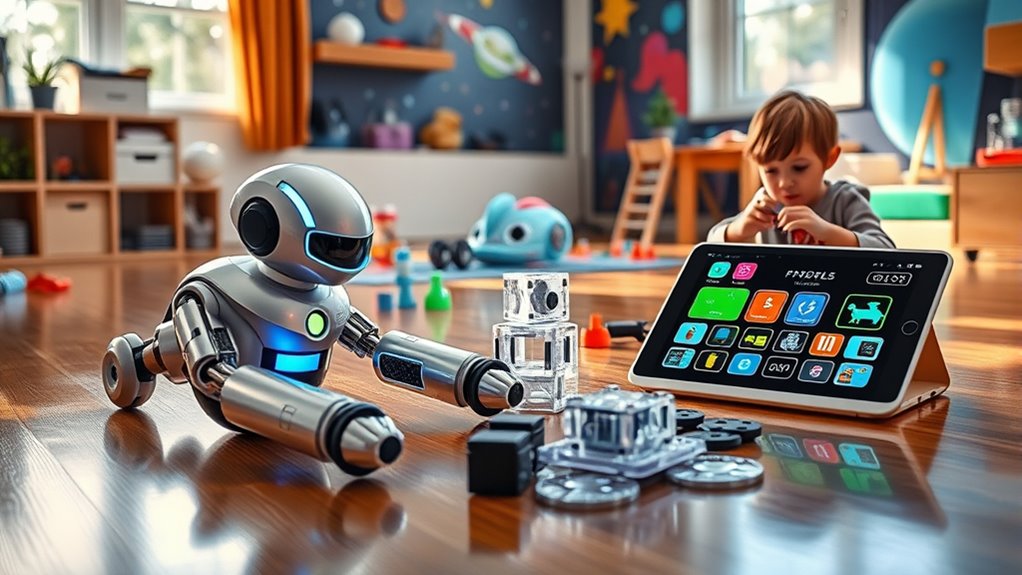
Robotics kits that allow children to build their own personal robots are a fantastic way to spark interest in engineering.
Coding tools that promote screen-free play are also gaining popularity, encouraging logical thinking without the distractions of screens.
Parents will appreciate eco-friendly materials that teach sustainability, helping kids understand their role in preserving the planet.
Science experiment kits that engage curiosity through hands-on activities are essential for young minds.
Additionally, subscription boxes offer monthly challenges that keep the excitement alive throughout the year.
Together, these toys foster creativity, critical thinking, and teamwork in young learners.
If you’re eager to discover specific recommendations and more features to consider, keep exploring the exciting world of STEM toys!
Key Takeaways
- Robotics kits that integrate coding and artificial intelligence will enhance personalized learning experiences for young learners in 2027.
- Eco-friendly materials will promote safe play and sustainability, making STEM toys more environmentally conscious.
- Augmented reality features will provide immersive learning experiences, engaging children in innovative ways.
- Collaborative kits will encourage teamwork and problem-solving, fostering social skills and cooperation among peers.
- Subscription boxes will deliver age-appropriate STEM challenges monthly, keeping learning fresh and exciting for children aged 3-12.
Innovative STEM Toys for 2027: What to Expect
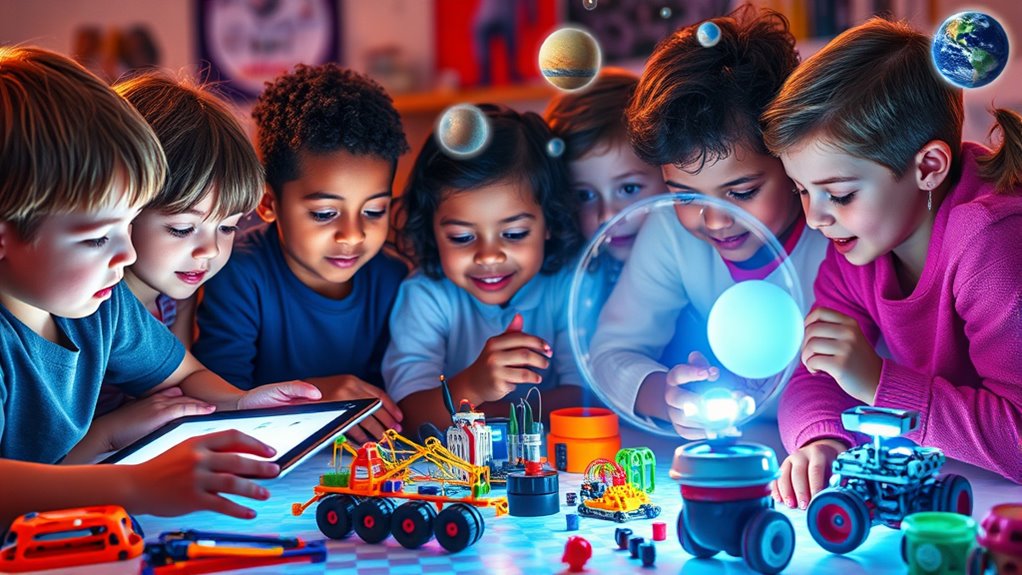
As we look ahead to 2027, you’ll find that innovative STEM toys are set to revolutionize how young learners engage with science, technology, engineering, and math.
Expect robotics kits that let kids build and code their own robots, deepening their understanding of coding concepts while enhancing cognitive development.
Many of these STEM toys for kids will incorporate eco-friendly materials, ensuring safe play and promoting sustainability.
Additionally, augmented reality features will enrich interactive learning experiences, allowing for immersive visualizations and real-time feedback.
With an emphasis on teamwork and social interaction, collaborative kits will encourage problem-solving in groups.
Finally, the integration of artificial intelligence will provide personalized learning experiences, adapting challenges to each child’s skill level and pace.
Top Picks for Coding and Robotics
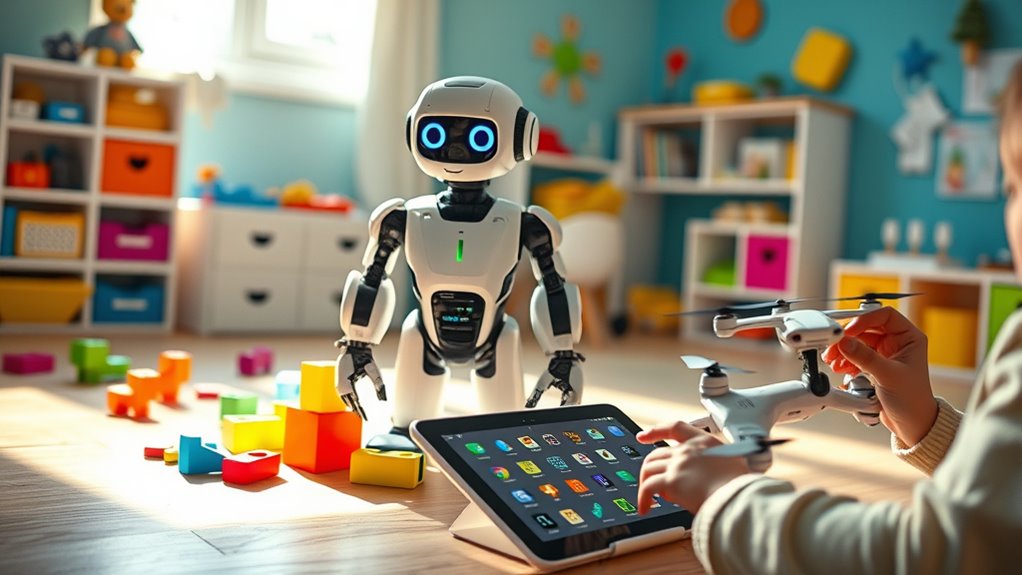
When exploring coding and robotics for young learners, you’ll find a variety of engaging kits that make learning fun. Options like the Sphero Mini and Botley 2.0 offer hands-on experiences that spark creativity and problem-solving. These innovative tools not only teach coding concepts but also encourage kids to think critically as they play.
Engaging Coding Kits
Coding kits open up a world of creativity and problem-solving for young learners.
These engaging tools provide excellent learning opportunities that promote STEM thinking and critical thinking skills.
Here are three top picks for coding kits:
- Sphero Mini Coding Robot Ball: Perfect for kids ages 5-10, it allows them to explore programming through fun obstacle courses and app-based coding.
- Botley 2.0 Coding Robot: Designed for ages 3-8, this kit promotes screen-free coding with a remote control and task cards, making it ideal for beginners.
- Learning Resources Coding Critters: Suitable for ages 4-7, it engages kids in interactive, screen-free coding logic, enhancing their problem-solving skills.
These educational experiences are perfect for fostering a love of coding in young minds!
Innovative Robotics Options
Innovative robotics options are transforming the way young learners engage with STEM concepts, making it easier than ever to plunge into coding and engineering.
The Sphero BOLT Coding Robot Ball supports various coding languages, featuring advanced sensors for interactive learning experiences.
For younger children, the Learning Resources Coding Critters Ranger and Zip provide a screen-free introduction to coding, while Botley 2.0 allows kids aged 3-8 to engage in programmable tasks without screens.
If you’re looking for hands-on building, the Smartivity DIY Robotic Mechanical Hand encourages children to construct their own robotic hand.
Budget-conscious families will appreciate the Sphero Mini Coding Robot Ball, which offers versatility and three control modes.
These options foster essential coding and robotics skills, ensuring a fun learning journey for children.
Hands-On Science Experiment Kits
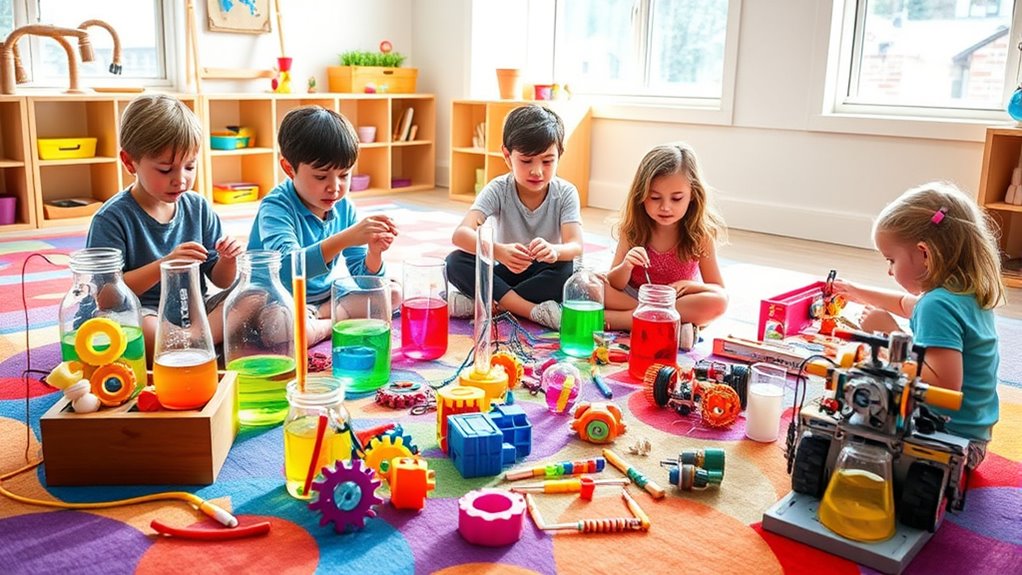
Hands-on science experiment kits are a fantastic way to spark your child’s curiosity with engaging themes like crystal growing and volcano eruptions. While these activities are exciting, safety and supervision are vital to guarantee a fun and secure learning environment. Let’s explore some popular kits that combine creativity with essential scientific concepts!
Engaging Experiment Themes
When you introduce young learners to engaging experiment themes, hands-on science kits can spark their curiosity and creativity like nothing else.
These STEM toys not only entertain but also educate through interactive projects.
Here are three enthralling themes to explore:
- Crystal Growing: The National Geographic Crystal Growing Kit teaches chemistry concepts while kids grow beautiful crystals in just 24 hours.
- Volcano Eruption: Deluxe Volcano Eruption Kits combine building activities with fun eruptions. This makes acid-base chemistry accessible and exciting for ages 5-11.
- Electronics Kit: The Little Bits Electronics Starter Kit empowers kids to create LED projects and sound machines. It’s a great way to merge play with learning.
These engaging themes really foster a love for science. They make learning an enjoyable adventure for young learners!
Safety and Supervision
Guaranteeing safety and proper supervision is essential for a successful science experiment experience with young learners.
When selecting hands-on science kits, make sure they’re age-appropriate and carry safety certifications to minimize risks.
Supervision is vital, especially for experiments involving chemicals or small components, to prevent accidents and guarantee children follow instructions correctly.
Many kits use non-toxic materials, but always check labels for compliance with safety standards.
Conducting experiments in a controlled environment allows you to monitor interactions and provide guidance, enhancing the educational experience.
By fostering a safe, supervised setting, you can boost children’s confidence in exploring scientific concepts while igniting their love for hands-on learning.
Eco-Friendly Learning Tools
Eco-friendly learning tools are revolutionizing how young learners engage with STEM concepts.
Eco-friendly learning tools are transforming the way children connect with STEM concepts and fostering a love for the environment.
These innovative STEM toys, made from sustainable materials, not only spark curiosity but also teach kids the importance of caring for our planet.
Here are three outstanding options to contemplate:
- Planting Kits: These kits incorporate natural elements, allowing children to explore biology while nurturing their own plants.
- Recycled Plastic Building Sets: Durable and engaging, these sets encourage creativity while minimizing environmental impact.
- Organic Cotton Stuffed Animals: Perfect for imaginative play, these toys are soft, safe, and made from recyclable materials.
It’s exciting to see how these tools can help shape environmentally-conscious future generations!
Subscription Boxes for Monthly STEM Challenges
Subscription boxes for monthly STEM challenges are a fantastic way to keep young learners engaged in hands-on activities that spark their curiosity.
These subscription boxes, like those from KiwiCo, cater to children aged 3-12, delivering age-appropriate STEM toys and materials for exciting projects.
Each month, your child will immerse themselves in themes like engineering, coding, and renewable energy. This allows them to explore various fields through practical application.
The hands-on projects often use everyday materials along with specially designed components, promoting creativity and problem-solving skills.
By introducing these challenges, you foster a routine of learning and anticipation.
This makes each box a new adventure that encourages your child to discover and innovate in the world of STEM.
How to Choose the Right STEM Toy for Your Child
How can you find the perfect STEM toy for your child?
Start by considering their age range and developmental stage. This ensures the toy aligns with their skills and interests.
Look for toys that promote open-ended exploration and encourage play.
Here are three key factors to keep in mind:
- Educational Value: Choose toys that integrate multiple STEM concepts. They should foster cognitive skills, critical thinking, and problem-solving.
- Durable Construction: Opt for high-quality toys designed to withstand rough play. This way, you get long-term benefits.
- Safety Features: Confirm the toy is made from non-toxic materials. Also, ensure it has age-appropriate parts to avoid choking hazards for younger children.
Finding the right STEM toy can spark creativity and develop fine motor skills, all while having fun!
Frequently Asked Questions
What Age Groups Are Best Suited for STEM Toys in 2027?
In 2027, STEM toys are best suited for preschoolers (ages 3-5), early elementary students (ages 5-7), and middle childhood kids (ages 8-12). Each group needs age-appropriate challenges to foster engagement and learning.
How Can Parents Support Their Child’s STEM Learning at Home?
You can support your child’s STEM learning at home by turning everyday activities into fun experiments, asking open-ended questions, and collaborating on projects. Mixing curiosity with play sparks creativity and deepens understanding of essential concepts.
Are There Any Safety Concerns With New STEM Toys?
Yes, there are safety concerns with new STEM toys. Always check for choking hazards, sharp edges, and small parts. Supervise playtime, inspect for wear, and verify toys meet safety certifications to keep your child safe.
How Do STEM Toys Promote Critical Thinking Skills?
STEM toys spark your critical thinking by challenging you to solve problems creatively. You experiment, collaborate, and learn from mistakes, all while applying real-world concepts, helping you build resilience and sharpen your analytical skills.
Can STEM Toys Be Used in Classroom Settings?
Yes, you can definitely use STEM toys in classroom settings. They enhance hands-on learning, foster teamwork, and promote critical thinking, allowing you to create an engaging environment where students can explore and understand complex concepts effectively.
Conclusion
As you explore the exciting world of STEM toys in 2027, remember that these tools can ignite your child’s curiosity and creativity.
In fact, studies show that children engaged in hands-on learning are 80% more likely to pursue careers in STEM fields.
By choosing the right toys—whether coding kits or eco-friendly tools—you’re not just giving them fun; you’re shaping their future.
So, immerse yourself, and watch their imaginations soar!
In conclusion, investing in STEM toys is a powerful way to foster your child’s love for learning.
With options ranging from interactive coding kits to sustainable science sets, you can spark their interest in the world of science, technology, engineering, and mathematics.
Choosing these engaging toys not only provides entertainment but also lays the groundwork for their future careers in STEM.
So, dive into the world of STEM toys and watch as your child’s dreams take flight!