10 Best Commercial EV Charging Stations: Top Picks Reviewed
Rising fuel costs and stricter emission goals are pushing many businesses to add EV charging to their sites. The challenge is finding a setup that fits daily use, supports different vehicle types, and stays reliable over time.
This review focuses on the best commercial EV charging stations for workplaces, retail lots, fleets, and public parking areas. It is for owners, facility managers, and operators who need a practical charging solution without wasting space or budget. The right station can help manage traffic flow, support employee and customer charging, and reduce downtime for electric vehicles.
It may also offer faster charging, easier controls, and simpler upkeep. In this review, we will cover performance, installation needs, charging speed, and value. We will also point out which models suit different business settings.
We will also point out which models suit different business settings.
Best Commercial EV Charging Stations Compared
| Image | Product | Price |
|---|---|---|
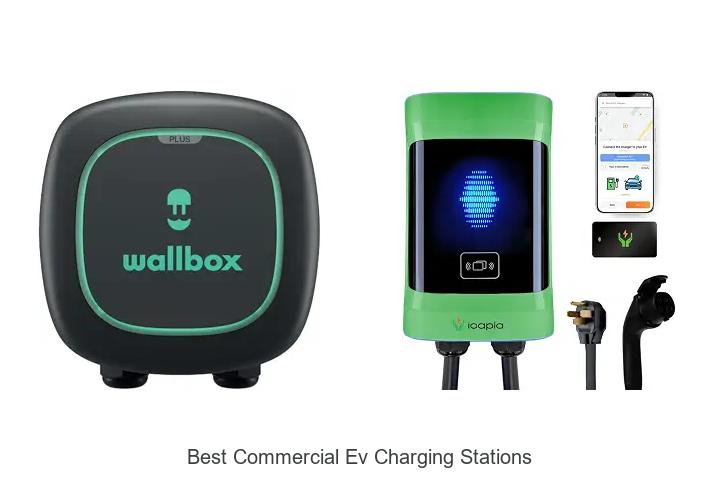
Pick 1  | Wallbox Pulsar Plus 48A EV Charger | Check Price On Amazon |
Pick 2  | Commercial Level 2 EV Charger 11.5kW J1772 | Check Price On Amazon |
Pick 3  | Level 2 Commercial EV Charger J1772 | Check Price On Amazon |
1. Wallbox Pulsar Plus 48A EV Charger
Revenue-focused charging needs a charger that can handle payments cleanly. Wallbox Pulsar Plus 48A with AmpedUp! is built for that purpose. It combines compact hardware with charging management tools for businesses.
The system lets site owners charge drivers per session, minute, hour, or kWh. Rates can also vary by time of day and day of week.
Drivers use the free AmpedUp! app to find the charger, view rates, and start charging. The hardware is a compact, Wi-Fi enabled, UL listed Level 2 charger.
That makes it practical for Airbnbs, apartments, restaurants, gyms, and other long-dwell locations.
The charger supports all electric vehicles with a J1772 connector. It delivers 48 amps at 240 volts, which suits higher-output Level 2 charging. The unit weighs 19 pounds, so it stays relatively manageable for installation and mounting.
A qualified electrician can install it like a standard Level 2 charger. The package includes a wall mount bracket, a J-1772 wall mount holster, and installation guides. For operators, the main appeal is monetization without complex hardware.
For drivers, the app-based access makes charging and payment information easy to understand.
Pros
- Supports charging revenue for site owners
- Flexible rate settings by time and usage
- Compact, UL listed Level 2 hardware
Cons
- Single port limits simultaneous charging
- Requires app-based driver access
- Best suited to managed charging locations
Who Should Buy It?
Site owners who want to earn from EV charging should consider it. It fits long-dwell businesses and properties that want app-based access control and flexible rate settings. Airbnbs, apartments, restaurants, gyms, B&Bs, and mixed-use properties benefit most.
It suits operators who want a compact Level 2 charger with monetization tools and straightforward installation.
Key Specifications
| Specification | Details |
|---|---|
| Power Output | 48A Level 2 charging output |
| Input Voltage | 240 volts of alternating current |
| Current Rating | 48 A |
| Connector Type | Type 1 (J1772) |
| Number of Ports | 1 |
| Connectivity | Wi-Fi |
| Access Control | AmpedUp! CSO app and Driver app |
| Payment Support | Per kWh, per minute, per hour, per session |
| Certifications | UL listed |
| Warranty | 3 Year Parts Warranty |
| Installation Form | Standard Level 2 wall-mounted charger |
The 48 amp output supports faster Level 2 charging for compatible EVs. It runs on 240 volts of alternating current, which matches common commercial electrical service for Level 2 equipment. The J1772 connector works with all electric vehicles listed here. A single port keeps the setup straightforward for one driver at a time. Wi-Fi connectivity helps the charger communicate with management tools, while the compact format suits walls, garages, and other shared parking areas.
These specifications point to a charger made for controlled, revenue-based use. The AmpedUp! apps handle driver access and pricing, while the UL listing supports confidence in the hardware. A 19-pound unit is easier to mount than larger commercial equipment. The standard Level 2 installation path helps qualified electricians handle setup without special hardware knowledge. Operators with long parking times gain the most, since the charger supports flexible billing and simple daily management.
2. Commercial Level 2 EV Charger 11.5kW J1772
Commercial sites need charging hardware that adapts to different power setups. The ICAPIA Opal stands out with hardwired and plug-in options.
It delivers up to 11.5 kW when hardwired, or 9.6 kW with the included NEMA 14-50 plug. That flexibility suits garages, driveways, parking lots, and mixed-use properties. The 25-foot cable adds reach across varied stall layouts.
J1772 compatibility covers all SAE J1772 EVs, including many major brands. Control options include RFID, Plug-n-Charge, and app control over 2.4GHz WiFi. The ICAPIA app supports charger location, navigation, filtering, booking, charging control, and payments.
ICSMS commercial features add in-app card, Google Pay, and Apple Pay support. ETL, Energy Star, FCC, NTEP, and EPRI certifications support safety and site readiness.
A 36-month warranty rounds out a practical, commercial-focused package for operators needing flexibility.
Pros
- Hardwire or plug-in installation options
- RFID, app control, and payment support
- 25-foot cable suits varied parking layouts
Cons
- WiFi control needs 2.4GHz only
- Tesla drivers need a separate connector version
- Pedestal installation requires separate purchase
Who Should Buy It?
Who should buy it: Site owners managing hospitality, multi-family, or fleet charging. It suits businesses needing flexible installation choices, app-based control, and public payment handling. Operators with mixed parking layouts may value the 25-foot cable and either hardwire or plug-in setup.
It also fits locations using J1772 vehicles and teams wanting RFID access alongside commercial software tools.
Key Specifications
| Specification | Details |
|---|---|
| Power Output | 11.5 kW hardwired; 9.6 kW plug-in |
| Input Voltage | 240 volts AC |
| Current Rating | 48 A |
| Connector Type | J1772 |
| Number of Ports | 1 |
| Connectivity | 2.4GHz WiFi |
| Access Control | RFID, Plug-n-Charge, app control |
| Payment Support | Card, Google Pay, Apple Pay |
| Certifications | ETL, Energy Star, FCC, NTEP, EPRI |
| Warranty | 36 months |
| Installation Form | Hardwire or plug-in |
The power rating changes with installation style. Hardwiring allows up to 11.5 kW at 48 amps. Using the included NEMA 14-50 plug provides 9.6 kW at 40 amps. That difference matters for sites balancing installation simplicity and charging speed. The 240-volt input matches common commercial electrical setups. A single J1772 port supports broad vehicle compatibility. The 25-foot cable helps drivers reach parking spaces without awkward positioning, which helps busy lots and shared spaces.
The connectivity and control features make the charger useful for managed locations. 2.4GHz WiFi supports app functions for starting, stopping, booking, and payment handling. RFID and Plug-n-Charge add more access options for staff or guests. The listed certifications point to safety and compliance-minded design, which matters for public-facing charging sites. A 36-month warranty provides added support planning. Businesses with garages, hospitality parking, or fleet yards may benefit most from the flexible setup and payment tools.
3. Level 2 Commercial EV Charger J1772
Commercial properties need charging that is simple to manage and dependable every day. IronWatt’s 50A Level 2 charger adds smart control, broad J1772 compatibility, and outdoor-ready construction.
Built for workplace fleets, parking areas, and multi-unit sites, it delivers 12kW through a single 240V port. The IronWatt app, OCPP 1.6 support, WiFi, and RFID access make supervision easier for shared sites. Charging data, scheduling, and user access can all be managed remotely.
The J1772 connector works with most EVs sold today, which helps reduce compatibility worries. Type 3R housing, UL and cUL certification, and built-in protection add confidence in harsher weather.
Wall mounting comes standard, while pedestal mounting is also supported with separate hardware. It suits property managers and fleet operators wanting a lower-cost smart charger with commercial features.
Pros
- Smart app control with scheduling and energy tracking
- Wide J1772 compatibility for many EVs
- Outdoor-rated housing for commercial environments
Cons
- Only one charging port
- Pedestal sold separately
- 2.4GHz WiFi only
Who Should Buy It?
Buyers managing workplaces, apartment parking, or fleet depots should consider it. It fits sites needing one smart, commercial-grade charger with access control. Property managers wanting RFID use, remote monitoring, and broad J1772 support will benefit most.
It also suits operators who want wall mounting now, with pedestal setup later.
Key Specifications
| Specification | Details |
|---|---|
| Power Output | 12kW |
| Input Voltage | 240 volts |
| Current Rating | 50 A |
| Connector Type | J1772 |
| Number of Ports | 1 |
| Connectivity | 2.4GHz WiFi, OCPP 1.6 |
| Access Control | RFID authentication |
| Payment Support | Payable |
| Certifications | UL, cUL |
| Warranty | 3 Year Manufacturer |
| Installation Form | Wall mount or pedestal mount |
A 12kW output at 240 volts gives this charger solid level 2 performance. The 50A rating points to faster charging than lower-amperage units. One J1772 connector means broad vehicle support across current EV models. The single-port layout suits assigned parking spaces, fleet stalls, or a shared charger lane. WiFi and OCPP 1.6 add remote oversight, while RFID access helps control who can use the station.
The Type 3R housing helps the unit handle rain, snow, and dust outdoors. UL and cUL certification add confidence for commercial installations and code-minded buyers. Wall mounting keeps setup straightforward, while pedestal mounting gives more placement flexibility. These specs suit property managers, workplace operators, and paid charging networks. The payable setup, app control, and access tools help keep usage organized across many drivers. Installation works well for lots, garages, retail sites, and depots.
4. LEDVANCE Phase EV Commercial Charger Gen 2

Commercial charging gets simpler with a charger built for shared use. LEDVANCE Phase EV Commercial Charger Gen 2 focuses on dependable Level 2 charging for multi-vehicle sites. It delivers up to 48 amps and 11.5kW, which helps vehicles return to service faster.
The 4.3-inch color LCD touchscreen gives clear control in English, French, and Spanish. A bright LED status indicator makes charging progress easy to see from farther away.
The 25-foot SAE J1772 cable supports wide placement flexibility and broad compatibility across North American EVs. Installation options include wall-mount or pedestal setups, with single or dual charger configurations available. The enclosure carries NEMA 4 and IP65 ratings, plus IK08 impact resistance, for indoor or outdoor use.
Built-in WiFi, Ethernet, and 4G LTE add remote connectivity, while ChargeLab software support adds management tools when subscribed. ENERGY STAR certification and free-charging mode add practical value for fleet, workplace, and property owners.
Pros
- High 48-amp output suits busy shared sites
- Long 25-foot cable improves parking flexibility
- Built-in WiFi, Ethernet, and 4G LTE
Cons
- ChargeLab software features require an optional subscription
- J1772 connector excludes non-compatible charging standards
- Commercial installation may need professional setup
Who Should Buy It?
Property managers, fleet operators, and workplace sites should consider this charger. It suits locations with multiple EVs needing Level 2 charging across different parking layouts. The long cable, dual-port support, and network connections fit shared environments well.
Buyers who want indoor or outdoor placement, access control cards, and software-based management will find it especially practical.
Key Specifications
| Specification | Details |
|---|---|
| Power Output | 11.5kW |
| Input Voltage | 240 volts_of_alternating_current |
| Current Rating | 48 A |
| Connector Type | SAE J1772 |
| Number of Ports | 2 |
| Connectivity | WiFi, Ethernet, 4G LTE |
| Access Control | 2 RFID Access Cards |
| Payment Support | ChargeLab software integration |
| Certifications | ENERGY STAR, NEMA 4, IP65, IK08 |
| Warranty | 3 Year Manufacturer |
| Installation Form | Wall-mount or pedestal |
The charger runs on 240-volt alternating current and delivers 11.5kW at 48 amps. In real use, that means faster Level 2 charging for vehicles parked longer at one location. The SAE J1772 connector works with nearly every North American EV using that standard. Two ports make it useful where several drivers share one installation. The 25-foot cable also gives drivers more room to park without awkward positioning near the unit.
WiFi, Ethernet, and 4G LTE give site owners flexible network access for charger management. RFID access cards help control who can use the unit in shared spaces. ChargeLab software adds tools for revenue tracking, load balancing, and real-time analytics when subscribed. The NEMA 4, IP65, and IK08 ratings support outdoor or indoor placement with stronger physical protection. Wall-mount and pedestal installation options suit garages, lots, and multi-unit properties with different space layouts.
5. EV Range Commercial EV Charging Station

Revenue control and access management make this charger stand out fast. It suits businesses that want charging income without extra complexity.
EV Range Commercial EV Charging Station is built for public and fleet use. It supports custom pricing, idle fees, monthly payouts, and usage reports.
Drivers pay through the EV Range app using credit cards. Access can be managed with RFID or app-based control.
The station uses a standard J1772 connector with a 25-foot cable. That works with all plug-in hybrids and most electric vehicles.
Tesla drivers can use an adapter supplied with the vehicle. Its polycarbonate NEMA 4 enclosure carries IK10 impact resistance. That helps it handle marine, desert, and snowy conditions.
Wall or pedestal mounting gives flexible installation options. OCPP compliance and network readiness support commercial management needs. It fits hotels, apartments, workplaces, retail sites, and fleet yards.
For operators who want a budget revenue charger, it covers the core needs well.
Pros
- Supports revenue collection with pricing and idle fees
- RFID and app access control suit shared sites
- Durable enclosure handles harsh outdoor conditions
Cons
- Pedestal is not included
- Single port limits charging capacity
- Tesla needs a separate adapter
Who Should Buy It?
Buy this charger if you need a commercial unit for paid charging. It suits apartments, hotels, workplaces, retail sites, and fleet parking areas. Operators who want app-based payments, usage reports, and access control will like it.
It also fits sites that need weather-ready hardware and simple wall mounting options.
Key Specifications
| Specification | Details |
|---|---|
| Power Output | Compatible with Level 2 and DC Fast Charging |
| Input Voltage | 240 volts AC |
| Current Rating | 32 A |
| Connector Type | J1772 |
| Number of Ports | 1 |
| Connectivity | OCPP-compliant, EV Range network ready |
| Access Control | RFID, app |
| Payment Support | Driver pay app, credit card, monthly payouts |
| Certifications | Energy Star, UL |
| Warranty | 2 Year Manufacturer Warranty |
| Installation Form | Wall or pedestal mountable |
The listed electrical specs point to a 240-volt, 32-amp charger with J1772 output. That means it connects to most plug-in hybrids and electric vehicles through a common plug standard. The station also supports Level 2 and DC fast charging compatibility in its network description. In daily use, that combination suits locations that want broad vehicle support and a familiar charging interface. A 25-foot cable also gives drivers more reach when parking varies.
Connectivity and access tools are the main commercial advantages here. OCPP compliance and EV Range network readiness help operators manage sessions through software. RFID and app access can separate public users from fleet drivers. Payment support includes credit cards, driver pay app use, and monthly revenue deposits. Energy Star and UL listings add confidence for business installations. The NEMA 4, IK10 enclosure, wall or pedestal mounting, and weather-ready build help sites that face heavy use, outdoor exposure, or shared parking needs.
6. Floor Standing 120kW DC EV Fast Charger

Payment flexibility gives this charger broad appeal in busy commercial settings. It combines DC fast charging with scan-to-pay, RFID card, and POS support. The floor standing design suits parking lots, campuses, and hotel service areas.
Its air cooling system helps it operate across wide temperature ranges. OCPP compliance supports cloud monitoring, charging statistics, and cost management.
The all-in-one build avoids wall mounting and simplifies placement. A CCS connector supports common commercial EV use cases.
The charger hole protector adds practical protection during daily operation. Build quality is presented for outdoor service and repeated use.
It suits operators who need straightforward payment handling and remote oversight. It also fits sites that want flexible installation and customer-friendly access.
Pros
- Supports scan-to-pay, RFID, and POS payments
- OCPP cloud management for remote monitoring
- Floor standing design simplifies installation
Cons
- Single-port setup limits simultaneous charging
- Outdoor performance details are limited
- Only one-year warranty is listed
Who Should Buy It?
Operators running hotel parking lots, office campuses, or public parking areas should consider it. It fits sites that need payment-ready DC charging with remote management. Businesses wanting flexible payment methods and a floor standing layout will find it practical.
It also suits locations that expect varied weather conditions and want outdoor charging hardware for customer use.
Key Specifications
| Specification | Details |
|---|---|
| Power Output | 120kW |
| Connector Type | CCS Connector |
| Connectivity | OCPP cloud management |
| Access Control | Scan-to-pay, RFID card, POS payment |
| Warranty | 1 year |
| Installation Form | Floor standing |
A 120kW output suits commercial sites needing faster turnaround between vehicles. The CCS connector matches many public charging needs and keeps compatibility straightforward. OCPP cloud management lets operators check charging activity and costs remotely. Payment support includes scan-to-pay, RFID cards, and POS use. That mix helps customers pay in ways they already know. Floor standing installation also simplifies placement in parking lots, campuses, and hotel service areas.
The air cooling system supports stable operation across wide temperature ranges. That matters for outdoor charging areas facing changing weather. The floor mounted format avoids wall preparation and can speed installation planning. OCPP tools help staff monitor sessions and charging statistics from a cloud platform. Payment options reduce friction for drivers at busy sites. Operators managing commercial parking or guest charging will benefit most from the flexible setup and payment-ready design.
7. EV DC Fast Charger 120kW

Dual-gun charging gives busy commercial sites faster turnover. The floor-mounted design suits public locations that need dependable EV service.
The EV DC Fast Charger 120kW is built for commercial use and supports two charging guns. That layout helps two drivers use the station in turn, which can improve site utilization. A high-definition touch screen shows charging power, time, and cost clearly for drivers.
The floor-mounted form fits shopping centers, car dealerships, tourist spots, and similar business locations. Its multiple electrical protection modules and international safety standards support public charging service. The unit also offers full customization, which may help businesses match site needs.
Build quality appears focused on commercial duty rather than home convenience. Performance is centered on fast DC charging and user-friendly operation. The display should make charging status easier to follow during busy stops.
It suits operators who want a flexible station for different property types. It also fits locations that need a visible, professional charging point.
Pros
- Dual guns help serve two drivers in turn
- Touch screen shows power, time, and cost
- Fits shopping centers, dealerships, and tourist spots
Cons
- Commercial installation may require professional planning
- Large floor-mounted unit needs dedicated space
- Customization details depend on direct contact
Who Should Buy It?
Buyers running commercial properties should consider this charger. It fits sites that want fast DC charging with two guns for shared use. Shopping centers, car dealerships, and tourist destinations can benefit from the floor-mounted format.
It also suits operators who want a display that shows charging details clearly to drivers. Businesses needing customization may find the manufacturer contact option useful.
Key Specifications
| Specification | Details |
|---|---|
| Power Output | 120kW |
| Connector Type | Dual charging guns |
| Number of Ports | 2 |
| Certifications | International safety standards |
| Installation Form | Floor mounted |
The 120kW power output points to a fast DC charging setup for commercial sites. In everyday use, that means vehicles can receive high-power charging during short stops. The dual charging guns let two drivers use the station in turn, which can help reduce wait time at busy locations. A floor-mounted format also suits public spaces where visible equipment is preferred. The touch screen adds clear charging information for drivers during each session.
These specifications make the charger fit places with regular traffic and shared parking. The two-port design helps operators serve more users with one station footprint. The display can help drivers track charging power, time, and cost without confusion. Multiple electrical protection modules and international safety standards support public service use. Sites such as shopping centers, dealerships, and tourist spots may benefit most from that mix of speed, visibility, and shared access.
8. 120kW Commercial DC Fast EV Charger

High-powered charging can keep commercial sites moving, and this unit is built for that pace. It delivers 120kW DC output, which suits locations with frequent vehicle turnover. The charger supports CCS1, CCS2, and other mainstream standards, so it works across many passenger cars, delivery vans, and ride-hailing EVs.
It also supports OCPP, RFID card access, scan code, and app payment, giving operators flexible control.
The floor-mounted design fits outdoor commercial setups, and the IP55 protection rating helps it handle dust and water exposure. Multiple safety protection functions add confidence for daily use in busy environments.
Fast charging can bring many EVs to 80% in about 20 to 30 minutes, which helps shorten wait times at public or fleet sites. It suits operators who want broad compatibility, remote management, and a charger built for demanding use.
Pros
- 120kW output supports fast commercial turnover
- Works with CCS1, CCS2, and other standards
- Supports RFID, scan code, app payment, and OCPP
Cons
- Single-port information is not provided
- Installation details are limited in the listing
- Certification details are not listed
Who Should Buy It?
Operators running busy public charging sites should consider this charger. It fits fleet depots, delivery hubs, and ride-hailing locations that need quick turnaround times. The broad connector support suits mixed EV traffic, while OCPP and payment options help manage access and billing.
It also works well for outdoor commercial installations that need dust and water resistance.
Key Specifications
| Specification | Details |
|---|---|
| Power Output | 120kW |
| Connector Type | CCS1, CCS2, and other mainstream standards |
| Connectivity | OCPP protocol |
| Access Control | RFID card, scan code, app payment |
| Installation Form | Floor mounted |
A 120kW output suits sites that serve many vehicles each day. Faster charging means drivers can return sooner, which helps reduce waiting lines at commercial locations. The support for CCS1 and CCS2 broadens compatibility across common EV models, including passenger cars and delivery vans. OCPP support also helps operators connect the charger to remote management systems. That makes billing, access control, and daily operation easier for busy site managers.
The floor-mounted format works well for outdoor parking areas and dedicated charging spaces. IP55 protection helps the unit handle dust and water exposure during daily use. Multiple safety protection functions add another layer of confidence for long operating hours. The payment options, including RFID, scan code, and app payment, suit mixed user groups. Operators who need quick service, flexible billing, and broad vehicle support will benefit most from these specifications.
9. 120kW Commercial DC Fast Charging Station

Heavy-duty charging sites need equipment that keeps pace with constant demand. Dual-gun hardware and wide voltage support make this model practical for busy commercial depots. Built around a sturdy metal cabinet, the unit is designed for long-time continuous operation in high-frequency charging locations.
Its 120kW output serves large vehicles and mixed fleets that need serious charging power.
The charger supports a 200V to 1000V output range, which broadens vehicle compatibility across newer and older high-voltage models. It also uses intelligent BMS matching, so output can adjust to the battery’s actual charging demand. That helps make charging more responsive and less wasteful.
Mature air cooling lowers maintenance frequency, which suits operators managing multiple outdoor units. The dual-gun layout improves site flexibility, while the custom manufacturing option helps match specific project needs.
It fits heavy-duty commercial use where uptime, compatibility, and service planning matter most.
Pros
- Dual-gun design suits busy charging locations.
- Wide voltage range supports many EV models.
- Air cooling lowers routine maintenance needs.
Cons
- No listed connectivity or payment features.
- Certification details are not provided.
- Install setup details are not specified.
Who Should Buy It?
Operators running heavy-duty DC sites should consider this charger first. It suits commercial depots, fleet yards, and outdoor charging locations with frequent turnover. The dual-gun structure, wide voltage range, and BMS matching fit mixed vehicle groups.
Buyers wanting a configurable unit for continuous use may find it a practical fit.
Key Specifications
| Specification | Details |
|---|---|
| Power Output | 120kW |
| Input Voltage | Not provided |
| Current Rating | Not provided |
| Connector Type | Dual gun |
| Number of Ports | 2 |
| Connectivity | Not provided |
| Access Control | Not provided |
| Payment Support | Not provided |
| Certifications | Not provided |
| Warranty | Not provided |
| Installation Form | Outdoor DC charging pile |
The 120kW output means the charger is built for higher-demand commercial use. A 200V to 1000V range supports many electric vehicles, including older and newer high-voltage models. The dual-gun setup gives two charging points in one cabinet, which helps at busy sites. BMS matching allows the charger to read the vehicle’s battery request and adjust power accordingly. That can make charging more compatible across different fleet vehicles and operating schedules.
The sturdy metal cabinet matters for places with constant use and rougher conditions. Mature air cooling helps reduce maintenance frequency, which can save labor for operators managing several stations. The outdoor DC charging pile form suits open-air commercial setups, while the custom manufacturing option can help fit special site needs. These specifications favor depots, logistics yards, and other high-throughput locations where durability, compatibility, and lower upkeep matter more than simple consumer convenience.
10. 120kW Commercial EV Charging Station Dual Gun DC Fast Charger

Heavy-duty charging needs often call for flexible hardware. The 120kW Commercial EV Charging Station Dual Gun DC Fast Charger focuses on that flexibility first. It supports fully custom builds, which suits operators with specific site goals and electrical requirements.
Its dual-gun layout uses intelligent dynamic load balancing, so power is shared reasonably when two vehicles charge together. That helps keep charging organized during busy periods.
The charger also targets practical day-to-day use. Its over 95% energy conversion efficiency helps reduce power loss and lower operating costs over time.
Built-in protection covers overvoltage, overheating, leakage, and short circuits for daily heavy use. A clear touch screen helps operators view real-time charging status and historical data quickly. The unit measures 39.4 x 27.5 x 70.8 inches, making it a substantial commercial installation for sites needing customized DC fast charging.
Pros
- Supports full customization for different site needs
- Dual guns with intelligent load balancing
- High conversion efficiency reduces power loss
Cons
- No listed certifications in the product data
- No listed payment support information
- Installation and network details are unspecified
Who Should Buy It?
Buyers needing a fully custom DC fast charging setup should consider this unit. It fits operators who want dual-gun charging, clear monitoring, and safety protection for heavy daily use. The design suits commercial sites that can handle a large floor-standing charger and want to tailor the build to specific electrical or operational needs.
It works best for organizations that value customization over a fixed, ready-made configuration.
Key Specifications
| Specification | Details |
|---|---|
| Power Output | 120kW |
| Connector Type | Dual gun |
| Number of Ports | 2 |
| Installation Form | Floor-standing commercial unit |
The 120kW output means the charger is built for faster DC charging at commercial sites. Dual guns let two vehicles connect at once, while dynamic power allocation shares available power between them. In everyday use, that helps reduce waiting at busy locations. The touch screen gives operators charging status and history at a glance, which supports smoother monitoring during active charging sessions and busier shifts.
The floor-standing size suits permanent installations rather than portable use. At 39.4 x 27.5 x 70.8 inches, it needs planned placement and enough surrounding space. That physical scale matches its commercial purpose and dual-port layout. High conversion efficiency helps limit wasted energy during charging, which benefits sites with frequent use. Built-in protection against overheating, leakage, overvoltage, and short circuits adds confidence for heavy-duty operation.
Best Commercial EV Charging Stations: The Ultimate Buying Guide
Charging speed and power output
Charging hardware with the right network features and future growth capacity can prevent costly upgrades, service disruptions, and compatibility problems later on. Level 2 charging is well suited to vehicles parked for several hours, while DC fast charging supports rapid turnaround for fleets that need quick top-ups during active routes.
It also helps to compare kW ratings with the charging time your vehicles actually require, since higher output can dramatically shorten downtime but may demand greater electrical capacity. Just as important, the charger’s power output should match daily fleet demand, route length, and vehicle battery size so the system can handle current operations without becoming overloaded. A well-planned setup makes it easier to add more ports, support new vehicles, and keep charging performance reliable as business needs grow.
Connector compatibility
Connector compatibility plays a major role in how useful a charging site will be over time, because vehicles on the market use different plug types such as J1772, CCS, CHAdeMO, and NACS. A station that supports only one standard can limit which drivers can charge, while a multistandard unit can serve a broader mix of EVs and reduce the chance of turning customers away. It also helps to check whether adapters will be needed, since extra accessories can slow down use and create an added maintenance burden.
Planning for future vehicle trends matters just as much, because newer models may rely on different connectors than older fleets, and a system with wider compatibility is far more likely to remain useful as demand grows.
- J1772: Common for many Level 2 charging needs and widely used across current EV models.
- CCS: A major fast-charging standard supported by many modern electric vehicles.
- CHAdeMO: Still relevant for some models, especially in certain fleets and legacy vehicles.
- NACS: Increasingly important for long-term compatibility as adoption continues to grow.
Installation requirements
Installation requirements directly affect how well a charging system performs in a commercial setting, because the site’s electrical capacity must match the unit’s power demand and may require panel upgrades to support safe, reliable operation. Indoor and outdoor mounting also shape the final setup, since weather exposure, ventilation, cable routing, and available wall space can determine which unit fits the property best. Permits, local codes, and professional installation are equally important, as compliance protects the business from delays, fines, and safety issues while helping ensure the equipment is installed correctly and ready for long-term use.
Permits, local codes, and professional installation are equally important, as compliance protects the business from delays, fines, and safety issues while helping ensure the equipment is installed correctly and ready for long-term use.
- Electrical capacity: Check whether the existing panel can handle the additional load or if an upgrade is needed.
- Mounting location: Match the charger’s design to indoor or outdoor conditions, including protection from weather and traffic.
- Compliance: Confirm permit needs, code requirements, and the value of certified installation before work begins.
Network and software features
Network and software features play a major role in how efficiently a charging site operates, because a station that can be monitored and controlled remotely reduces downtime and simplifies day-to-day management. Remote monitoring and management tools let operators track charging status, diagnose faults quickly, and adjust settings without being on-site, which is especially valuable for busy commercial locations. User access control and authentication help limit use to approved drivers, protect equipment, and create a smoother experience for staff, customers, or fleet users.
User access control and authentication help limit use to approved drivers, protect equipment, and create a smoother experience for staff, customers, or fleet users. Payment processing and usage reporting are equally important, since they support accurate billing, reveal peak charging patterns, and provide the data needed to plan future upgrades. A system with strong software support is easier to scale, more secure, and better prepared for long-term operational demands.
Durability and safety
Reliable charging hardware in commercial settings must handle heavy daily use, outdoor exposure, and unpredictable electrical conditions without frequent service interruptions.
- Weather resistance and enclosure rating: A durable enclosure with a strong IP or NEMA rating helps protect internal components from rain, dust, and temperature swings, which is essential for long-term performance in parking lots, fleets, and other exposed locations.
- Cable management and rugged build quality: Well-designed cable hooks, reinforced connectors, and impact-resistant housing reduce wear, prevent trip hazards, and keep the station operational even with constant public use.
- Overload, surge, and fault protection: Built-in safeguards against power surges, overloads, and electrical faults help protect both the charging unit and connected vehicles, lowering the risk of downtime and costly repairs.
These durability and safety features work together to extend service life, improve user confidence, and support dependable operation in demanding commercial environments.
Total cost and support
Hardware compatibility, installation demands, and ongoing software or network fees can dramatically affect the total cost of a charging site, especially as usage grows and business needs change. A unit that supports modular upgrades, multiple communication standards, and future power additions helps avoid costly replacements later, while also making it easier to adapt the system to new vehicles, payment methods, or fleet requirements. Strong warranty coverage and service plans matter just as much, since they can reduce downtime and protect the investment if components fail or maintenance is needed.
Strong warranty coverage and service plans matter just as much, since they can reduce downtime and protect the investment if components fail or maintenance is needed. Reliable customer support and easy access to replacement parts are equally important, because fast repairs keep stations available for drivers and help prevent revenue loss from extended outages. A well-planned system should balance upfront expense with long-term reliability, serviceability, and the ability to scale without major disruption.
How to Pick the Right Charging Station
Choosing a commercial EV charging station starts with your site needs. A small office lot has very different needs than a hotel, retail center, or fleet yard. Think about how many vehicles will charge at the same time and how long they usually stay parked.
Charging speed is one of the biggest choices. Level 2 stations work well for workplaces, apartments, and public parking where cars stay for several hours. DC fast chargers are better for high-traffic sites, fleets, and places where drivers need a quick charge. Faster units usually cost more and may need more electrical work.
Power output also matters. A charger with more ports can serve more drivers, but only if your electrical service can support it. Some businesses do better with a few higher-speed chargers, while others need many standard units spread across the lot.
Think about connector type too. Most commercial stations use standard plugs that fit many EVs, but your user base may affect the mix you need. If your customers drive different EV brands, a station with common connector support can be a smart choice.
Here is a simple way to match the charger to the site:
- Workplaces: Level 2 units for longer parking times
- Retail: Mix of Level 2 and faster units for shorter visits
- Fleets: Higher-power chargers with scheduled charging
- Public sites: Multiple ports and wide connector support
Also think about access and payment. Some stations are built for private use, while others support app access, cards, or network management. A smart choice now can save money later and make the station easier to use for drivers and site managers.
FAQ’s
What Features Should Businesses Look For When Choosing The Best Commercial Ev Charging Stations?
Businesses should look for charging speed, compatibility with different EV models, scalability, smart energy management, and reliable safety features. They should also consider installation costs, software for monitoring and billing, warranty support, and whether the stations can integrate with renewable energy or fleet management systems.
How Do Level 2 And Dc Fast Charging Stations Compare For Commercial Use?
Level 2 charging stations are cheaper to install and are best for longer parking times, like workplaces, hotels, and retail centers. DC fast chargers cost more but deliver much quicker charging, making them better for high-traffic commercial locations where fast turnover is important.
What Are The Installation And Maintenance Costs Of Commercial Ev Charging Stations?
Commercial EV charging stations typically cost from about **$2,000 to $10,000+ per port for Level 2** units and **$30,000 to $100,000+ for DC fast chargers**, with installation often adding several thousand dollars more depending on electrical upgrades and site work. Maintenance costs are usually modest, ranging from a few hundred to a few thousand dollars per year per charger, depending on usage, software fees, and repair needs.
How Can Commercial Ev Charging Stations Help Attract Customers And Employees?
Commercial EV charging stations can attract customers by offering a convenient place to charge while they shop, dine, or visit your business. They can also help attract and retain employees by showing a commitment to sustainability and providing a valuable workplace amenity.
What Are The Top Brands Or Models Of Commercial Ev Charging Stations In 2026?
In 2026, top commercial EV charging station brands/models include **Tesla Universal Wall Connector and DC fast chargers**, **ChargePoint C-Series/Coulomb-style commercial units**, **ABB Terra series**, **Siemens Sicharge D**, and **Blink/EVBox commercial solutions**. The “best” choice depends on whether you need **Level 2 workplace charging** or **high-power DC fast charging**, plus factors like reliability, software, and utility compatibility.
Final Verdict
The best commercial ev charging stations in this roundup cover four different buyer needs. Wallbox Pulsar Plus 48A EV Charger is the best overall pick for revenue charging sites that want a strong mix of performance, smart control, and broad appeal. The Level 2 Commercial EV Charger J1772 is the best value choice for buyers who want a lower-cost smart charger without giving up core commercial features.
For properties that need more capacity, LEDVANCE Phase EV Commercial Charger Gen 2 is the best premium option for multi-vehicle L2 charging.
Choose Wallbox for revenue-focused sites, the J1772 model for budget-conscious smart charging, LEDVANCE for multi-vehicle L2 setups, and the 120kW DC unit when fast, payment-ready charging matters most.