10 Best Generator to Charge Ev: Top Picks Compared
Charging an electric vehicle at home or on the road can be a challenge when power is not easy to find. Many drivers want a backup source that can keep an EV ready without relying on the grid alone. That is where the best generator to charge ev becomes worth a closer look.
That is where the best generator to charge ev becomes worth a closer look. This review is for EV owners, campers, and drivers who want a steady power option during outages or travel. It also helps buyers who need a generator that matches their car’s charging needs without wasting fuel or space.
A good EV generator should offer stable output, practical run time, and simple use. It should also fit different charging setups without adding extra stress.
Best Generators for Charging Your EV Quickly
| Image | Product | Price |
|---|---|---|
Pick 1  | 4 Prong 30 Amp to 50 Amp Generator Adapter Cord | Check Price On Amazon |
Pick 2  | WEN DF680iX Dual Fuel Inverter Generator | Check Price On Amazon |
Pick 3  | EF ECOFLOW DELTA 3800 Gen4 Portable Power Station | Check Price On Amazon |
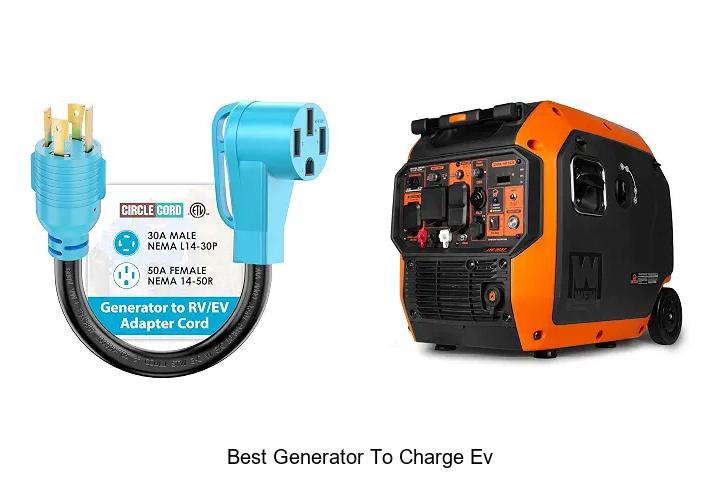
1. 4 Prong 30 Amp to 50 Amp Generator Adapter Cord
A compact adapter cord can make generator charging far easier for RV and EV owners. Its 30 amp locking male plug and 50 amp female receptacle create a practical bridge between common power setups.
CircleCord built this model for generator-to-RV and generator-to-EV use, with a 10 AWG copper wire layout and a 12-inch length for simple placement. The molded plug and flame-retardant, UV-resistant jacket add reassuring build quality for regular handling indoors or outdoors.
The ergonomic grip handle helps with plugging and unplugging, which matters when outlets sit in tight spots. Its blue color also makes it easier to spot among other cords in storage. At 1.2 pounds, it stays manageable without feeling flimsy.
The STW water-resistant PVC jacket and UL 62 and UL 817 standards add confidence for everyday use. It suits RV owners, Tesla drivers, and anyone needing a 30 amp generator source for a 50 amp connection.
Pros
- Works with generator-to-RV and EV charging setups
- Grip handle makes unplugging easier
- Durable jacket suits indoor and outdoor use
Cons
- Only fits specific NEMA plug and receptacle types
- Short 12-inch length limits placement flexibility
- Requires a 30 amp generator source
Who Should Buy It?
Buyers needing a practical adapter for RV or EV charging should consider it. It fits users who already have a 30 amp NEMA L14-30P generator outlet and need a 50 amp NEMA 14-50R connection. RV owners, Tesla drivers, and campers will value the compact size, copper wiring, and easy-grip design for everyday generator hookups.
Key Specifications
| Specification | Details |
|---|---|
| Brand | CircleCord |
| Model | GAC43050 |
| Power Output | 7500 watts |
| Input Voltage | 125/250V |
| Output Voltage | 125/250V |
| Weight | 1.2 pounds |
| Special Features | Heavy Duty |
The 30 amp, 125/250V input works with a generator that uses a NEMA L14-30P plug. The 50 amp, 125/250V output connects to a NEMA 14-50R receptacle. In daily use, that means one cord can bridge two common power standards. The 10 AWG wiring supports the cord’s 7500 watt rating. Its 12-inch length keeps the connection short, which can help reduce clutter near the generator or RV hookup point.
The 1.2-pound weight makes the cord easy to carry and store. The heavy duty build, copper wiring, and flame-retardant jacket are useful during frequent setup and removal. Water resistance also helps when outdoor conditions are less predictable. The grip handle on the female end can make connecting easier for people who plug in often. RV travelers, generator owners, and EV drivers with matching outlets will benefit most from its simple layout.
2. WEN DF680iX Dual Fuel Inverter Generator
Backup charging gets a practical boost from WEN’s dual-fuel inverter design. It offers bonded-neutral 240V output for low-power Level 2 charging.
The 224cc engine runs on gasoline or propane, adding flexibility during outages. Gasoline output reaches 6800 surge watts and 5100 rated watts. Propane output reaches 6000 surge watts and 4500 rated watts.
That range suits battery and hybrid electric vehicles needing steady backup power. The electric start makes setup easier during stressful power interruptions.
The generator includes a CO Watchdog sensor that shuts it down automatically. That safety feature helps protect nearby people when carbon monoxide levels rise. Fuel shutoff also helps the engine use remaining fuel before stopping.
Wheel kit and telescoping handle improve movement around a driveway or garage. The control panel adds an L14-30R receptacle, RV outlet, standard outlets, USB ports, and a 12V DC outlet.
It suits homeowners wanting portable backup charging with extra household utility.
Pros
- Supports bonded-neutral 240V charging for vehicles
- Runs on gasoline or propane
- Electric start simplifies operation
Cons
- Heavy at 99.2 pounds
- Lower output on propane than gasoline
- Only low-power Level 2 charging
Who Should Buy It?
Buyers needing emergency EV or hybrid charging during outages should consider it. It fits households that want portable backup power with dual-fuel flexibility. The 240V bonded-neutral setup supports low-power Level 2 charging, while extra outlets help with other essentials.
It also suits users who value electric start, onboard wheels, and added safety from CO shutdown protection.
Key Specifications
| Specification | Details |
|---|---|
| Brand | WEN |
| Model | DF680iX |
| Power Output | 6800 watts |
| Input Voltage | 240 volts |
| Output Voltage | 240 volts |
| Fuel Type | Gasoline, Liquefied Petroleum Gas |
| Weight | 99.2 pounds |
| Special Features | Electric Start, CO Watchdog, Fuel Shut Off |
The 240-volt bonded-neutral design matters for low-power Level 2 charging. That means it can support battery and hybrid electric vehicles during outages. Gasoline output is higher, with 6800 surge watts and 5100 rated watts. Propane output is lower, with 6000 surge watts and 4500 rated watts. The 224cc engine and 2.9-gallon tank balance runtime and portable size. Electric start helps users get power quickly without manual pull-start effort.
Its 99.2-pound weight makes it portable, yet still substantial. Wheels and a telescoping handle help with moving it around the home. The CO Watchdog sensor adds a layer of safety during garage or driveway use. Fuel shutoff helps reduce carburetor maintenance after operation. Multiple outlets, including L14-30R, RV, USB, and 12V DC, make it useful beyond EV charging. Households needing backup power for vehicles and basic devices benefit most.
3. EF ECOFLOW DELTA 3800 Gen4 Portable Power Station
Long outages feel easier to handle when backup power lasts this long. High-demand gear can stay running without constant recharging.
The EF ECOFLOW DELTA 3800 Gen4 offers 3,763Wh of capacity and 3,600W AC output. It can power refrigerators, microwaves, power tools, and other heavy appliances.
Surge output reaches 7,200W for short bursts. The unit also supports solar charging and works as a portable power station for home backup, RV use, camping, and emergencies.
Its standout feature is long runtime in a compact package. EcoFlow says it can power a refrigerator for up to 70 hours.
The battery uses LiFePO4 cells for long-term durability and low self-discharge. It can also expand from 4kWh to 12kWh with compatible extra batteries.
A sub-10 ms UPS switchover helps keep essential devices powered during outages. At 67.5 pounds, it is still portable enough for moving around the home or loading into an RV. It suits buyers who want high-capacity backup with flexible growth potential.
Pros
- Large 3,763Wh capacity for extended backup use
- 3,600W output handles many home appliances
- Expandable capacity reaches up to 12kWh
Cons
- 67.5 pounds may feel heavy for frequent carrying
- Higher-capacity setup needs compatible extra batteries
- Not a fuel-powered generator, so charging is required
Who Should Buy It?
Buyers needing high-capacity backup for outages should consider it. It fits homes with refrigerators, microwaves, and other power-hungry devices. RV users and campers also gain from the portable design.
The expandable battery system suits people who want backup power that can grow over time. It works well for anyone wanting solar-capable emergency power with fast switchover support.
Key Specifications
| Specification | Details |
|---|---|
| Brand | EF ECOFLOW |
| Model | DELTA 3800 Gen4 |
| Power Output | 3600W AC output |
| Fuel Type | Solar |
| Battery Capacity | 3763Wh |
| Weight | 67.5 pounds |
| Special Features | 4-12kWh expandable capacity, 7200W surge, under 10 ms UPS home backup, ultra-low 3W standby power, LiFePO4 battery |
The 3,763Wh battery capacity means it can run important devices longer between charges. A refrigerator may last up to 70 hours, which helps during outages. The 3,600W AC output supports many common household appliances at once. Its 7,200W surge power helps start equipment with higher startup needs. Solar power support also gives users another charging option. These numbers matter most for homes that need steady backup for several devices.
The LiFePO4 battery design supports long-term storage and repeated use. Low standby power helps reduce energy loss when the unit sits unused. The under 10 ms UPS switch helps keep sensitive devices from shutting off suddenly. At 67.5 pounds, it still stays movable for home or RV use. People who want backup for critical appliances will benefit most. Families, campers, and RV users can all use its portable format and expandable setup.
4. EF EcoFlow TITAN 5000 Classic Power Station

Silent home backup can feel far more practical than noisy gas options. The EF EcoFlow TITAN 5000 Classic Power Station brings that idea into a large-capacity format.
It offers 4,000 watts of AC output, so it can run a fridge, microwave, Wi-Fi, lighting, CPAP, and other essentials together. Its 5,017Wh battery starts strong, while expandable capacity reaches up to 30kWh for longer backup periods.
That range can cover around one day to one week of essential home use.
The unit stands out for quiet operation under 30 dB, which suits indoor and overnight use. With the Smart Home Panel 10, it can switch backup power in under 20 milliseconds for selected circuits. OASIS 3.0 also manages charging during off-peak hours and home power use during peak periods.
The EV-grade LFP battery, 24/7 BMS monitoring, UL certification, and 5-year warranty support confidence in safety and reliability. At 102.5 pounds, it is still a serious home system, not a portable grab-and-go unit.
It fits buyers who want whole-home silence, smart control, and strong emergency coverage.
Pros
- Quiet operation suits indoor and overnight backup.
- High output handles several essential appliances together.
- Expandable capacity supports longer backup times.
Cons
- Heavy unit is not easy to move.
- Smart home panel needed for fast switchover.
- Large system may exceed simple backup needs.
Who Should Buy It?
Buyers wanting quiet, whole-home backup should consider it first. It suits households that need refrigerator, lighting, Wi-Fi, and medical devices powered together. The expandable battery also helps families needing longer outage coverage.
It fits homes that value indoor use, smart energy management, and low-noise operation over portability or small emergency-only capacity.
Key Specifications
| Specification | Details |
|---|---|
| Brand | EF ECOFLOW |
| Model | TTC-SC |
| Power Output | 4000 watts |
| Input Voltage | 120 volts |
| Output Voltage | 120 volts |
| Fuel Type | Electric |
| Battery Capacity | 5017 watt-hours |
| Weight | 102.5 pounds |
| Special Features | LiFePO4 Battery, 5–30kWh Expandable Capacity, <30 dB, <20 ms Switchover with SHP10, APP Control, Solar Powered |
A 4,000-watt AC output means the unit can power several home essentials together. The 5,017Wh battery gives meaningful energy storage for outages or planned backup use. Its 120-volt input and output match common North American home setups. The electric, solar-powered design also supports charging from renewable sources. For everyday use, those numbers translate into support for refrigerators, lighting, Wi-Fi, and other household loads without constant refueling or loud engine noise.
The 102.5-pound weight shows it is built for stationary home use rather than quick transport. LiFePO4 battery chemistry and 24/7 BMS monitoring support long-term reliability. The expandable 5–30kWh range matters for families needing more outage time later. Under 30 dB operation helps keep bedrooms and living areas comfortable. The under-20-millisecond switchover with SHP10 benefits homes that want selected circuits to stay powered during outages with little interruption.
5. NEMA 6-50P to 14-50R EV Charger Adapter Cord

Charging a Tesla from a 6-50 outlet becomes much simpler with this adapter cord. Its heavy-duty 6 AWG construction and 50 amp rating give it a strong, practical setup for Level 2 charging.
Built for Tesla UMC, Cybertruck, Model 3, Y, X, and S use, it also works with J1772 EVs. The 1-foot length keeps the connection compact and easy to manage.
The opposite-facing connector ends help reduce twisting during use. That makes plugging in quicker and less awkward in tight spaces.
The molded copper wire and flame-retardant sleeve add durability for regular charging. ETL listing and a 250-volt rating support its everyday EV charging role. It is a focused adapter, not a general-purpose power cord.
Buyers who need Tesla adapter charging will appreciate the simple layout and clear purpose. It suits garage charging, workshop setups, and other EV-only charging locations.
Pros
- Heavy-duty 6 AWG wire helps limit heat buildup.
- Compact 1-foot cord reduces clutter near the charger.
- Works with Tesla UMC, Cybertruck, and J1772 EVs.
Cons
- Not suitable for RV or household outlet use.
- Short length may limit placement flexibility.
- Charging current must stay at 32A or below.
Who Should Buy It?
Buy this if you need a focused Tesla charging adapter for a 6-50 outlet. It suits drivers using a Tesla UMC, Cybertruck, or other compatible EVs. The short cord and 6 AWG build work well for controlled garage or workshop charging.
It also fits users who want a simple, EV-only connection without RV compatibility.
Key Specifications
| Specification | Details |
|---|---|
| Brand | Suplevel |
| Model | 648227f2-5609-41d2-9b55-7be03be6be2f |
| Power Output | 12500 watts |
| Input Voltage | 250 volts |
| Output Voltage | 250 volts |
| Fuel Type | Electric |
| Weight | Not provided |
| Special Features | Heavy Duty |
The adapter uses a NEMA 6-50P plug and a 14-50R connector. That means it bridges a three-prong 250-volt source to a four-prong EV charging connection. The 50 amp, 12,500 watt rating gives it enough capacity for Level 2 charging setups. In daily use, that matters for owners who already have a 6-50 outlet installed. The 1-foot cord length keeps the adapter close to the charger and outlet.
Its 6 AWG wire gauge is the main durability advantage. Thicker conductors help carry current with less heat during charging sessions. The flame-retardant, UV-resistant sleeve adds protection for regular handling and storage. The opposite-facing ends make the adapter easier to connect without twisting. That setup benefits users who want a tidy charging area and fewer cable bends. The 32A charging limit also helps keep operation within the stated use range.
6. Lectron NACS to J1772 EV Charging Adapter

Access to Tesla charging hardware becomes much broader with this adapter. It lets many J1772 EVs use NACS charging equipment at home or on the road.
Rated for up to 80 amps and 240 volts, it supports fast Level 2 charging. It works with Tesla Wall Connectors, Destination Chargers, and Mobile Connectors, but not Tesla Superchargers or Tesla EVs.
The adapter is UL 2252 certified and built with temperature monitoring for safer charging. Its IP67 weather resistance helps it handle indoor and outdoor use, while the reinforced plastic housing keeps the form factor light and portable.
Setup is simple, since it is a single adapter with a clear purpose. It suits J1772 drivers who want more charging choices without replacing their existing vehicle port. The value comes from wider charging access and high current support in a compact design.
Pros
- Supports Tesla chargers for J1772 vehicles
- Handles up to 80A and 240V
- Weather-resistant for indoor or outdoor use
Cons
- Does not work with Tesla Superchargers
- Only fits J1772 electric vehicles
- Requires compatible NACS charging equipment
Who Should Buy It?
Drivers with a J1772 EV should buy this adapter when they want access to Tesla Wall Connectors, Destination Chargers, or Mobile Connectors. It suits home charging, travel, and shared charging setups where NACS equipment is available. People who want higher-current Level 2 charging and a portable adapter will get the most use from it.
Key Specifications
| Specification | Details |
|---|---|
| Brand | Lectron |
| Model | NACS to J1772 EV Charging Adapter |
| Power Output | 20000 watts |
| Input Voltage | 240 volts |
| Output Voltage | 240 volts |
| Fuel Type | Electric |
| Weight | Lightweight |
| Special Features | Lightweight Design, UL 2252 Certified, IP67 Weather Resistant, Temperature Monitoring |
The adapter supports 240-volt charging and up to 80 amps. In daily use, that means it can work with capable Level 2 Tesla charging hardware. The 20,000-watt figure reflects a high charging ceiling for compatible setups. Because it serves J1772 electric vehicles, it broadens charging access without changing the car itself. The lightweight design also helps when carrying it in a trunk, garage bag, or travel kit for occasional use.
These specifications matter most when charging speed and portability both matter. High current support can reduce waiting time at compatible stations or home installs. UL 2252 certification and temperature monitoring add safety-focused design elements. IP67 protection helps when the adapter sees dust, rain, or outdoor storage. J1772 drivers gain the most, especially those who rely on Tesla charging equipment at home, at work, or during longer trips.
7. NEMA L14-30P to 14-50R Adapter

A small adapter can make generator power far more usable. The twist-lock input and 14-50 output create a practical link for RV and EV-style plugs.
Built for 30 amp generator connections, it converts a NEMA L14-30P source to a NEMA 14-50R outlet. The adapter supports up to 30 amp overload, with 125V and 3750W, or 250V and 7500W.
A built-in green light shows power status after connection. The molded plug, copper wiring coating, and flame-retardant housing support dependable everyday use. Its grip handle helps with plugging and unplugging, while the compact 2 by 2 by 2 inch size makes storage easy.
At 10.9 ounces, it stays light enough for travel and quick setup. It suits RV owners, EV owners using compatible cords, and anyone needing a simple generator cord adapter for a 50 amp receptacle.
Pros
- Converts 30 amp twist-lock power to 14-50 output
- Built-in light shows connection status clearly
- Compact size makes transport and storage easy
Cons
- Limited to 30 amp overload capacity
- Requires compatible twist-lock generator connection
- Not a full charging solution by itself
Who Should Buy It?
Buyers needing a simple generator cord adapter will appreciate this model most. It suits RV owners, EV users with 14-50 cords, and anyone using a generator or pickup power outlet with a 30 amp NEMA L14-30P connection. The compact body, grip handle, and status light make it easy to use for occasional travel or backup power setups.
Key Specifications
| Specification | Details |
|---|---|
| Brand | Not provided |
| Model | NEMA L14-30P to 14-50R RV Generator Adapter |
| Power Output | 125V/3750W and 250V/7500W |
| Input Voltage | 125/250V |
| Output Voltage | 125/250V |
| Weight | 10.9 ounces |
| Special Features | Green working light, molded plug, copper wiring coating, flame retardant, grip handle |
The key numbers show how this adapter fits into a generator setup. It accepts a 30 amp, 4 prong NEMA L14-30P plug and feeds a 50 amp NEMA 14-50R outlet. That means it adapts one power format to another, without changing the source itself. The 125/250V rating tells you it works with common generator voltage ranges. The compact 2 by 2 by 2 inch size and 10.9 ounce weight make it easy to carry.
These specs matter most when space, portability, and connector match are the main goals. The 30 amp limit means it suits moderate generator output, not heavier loads. The green working light helps confirm power status during setup. The grip handle makes plugging and unplugging easier, which helps when cords are tight. Copper wiring coating and flame-retardant materials add confidence for frequent use. RV owners and EV users with compatible cords gain the most from it.
8. Jackery Explorer 1000 v2 Portable Power Station

Compact backup power gets a smart upgrade here. The Jackery Explorer 1000 v2 pairs 1,024Wh of LiFePO4 storage with a 1,500W AC output, making it useful for home backup and travel. It also brings a 10ms UPS switchover, so small essentials can keep running during outages.
The layout is practical and easy to live with. Two USB-C ports, one USB-A port, one DC car port, and two pure sine wave AC outlets support several devices at once.
The unit weighs 23.3 pounds and includes a foldable handle, so moving it around stays manageable. Fast charging is another strong point, with a full charge possible in about 50 minutes using emergency charging mode. By default, it charges in 1.25 hours to support battery health.
The LFP battery is rated for more than 4,000 cycles, which suits frequent use over many years. Smart app control adds another layer of convenience for home backup, camping, and emergencies.
Pros
- 10ms UPS helps keep essentials running.
- Fast charging saves time between outages.
- Lightweight design suits home and travel.
Cons
- Heavy appliances may exceed its limits.
- Full fast charging needs app activation.
- Single included unit limits expansion options.
Who Should Buy It?
Buyers wanting compact home backup will like this unit most. It suits apartments, small homes, and anyone needing quick emergency power for routers, phones, lights, or small appliances. The 10ms UPS, portable size, and long-life LiFePO4 battery make it appealing for frequent outages and occasional travel.
It also fits users who want app control and fast recharging without a bulky setup.
Key Specifications
| Specification | Details |
|---|---|
| Brand | Jackery |
| Model | JE-1000D |
| Power Output | 1500 watts |
| Input Voltage | 120 volts |
| Output Voltage | 120 volts |
| Fuel Type | Electricity |
| Battery Capacity | 1024Wh |
| Weight | 23.3 pounds |
| Special Features | 10ms Seamless UPS for Home Backup, Fast Charging, LFP Battery, Lightweight, Smart App Control (Wi-Fi & Bluetooth) |
The 1,024Wh battery gives steady backup power for home essentials. A 1,500W output and 3,000W surge peak let it handle many common devices. Two AC outlets, USB-C ports, USB-A, and a car port cover different charging needs. Pure sine wave output helps power sensitive electronics more safely. The 120-volt input and output match standard home use, which simplifies setup for rooms, garages, or travel stops. Its electricity-based design also works with solar input.
Its 23.3-pound weight keeps it more portable than many backup units. The foldable handle helps with carrying and storage in tight spaces. LiFePO4 chemistry supports over 4,000 charge cycles, which suits repeated use over years. Fast charging can refill it in about 50 minutes through the app, while the default 1.25-hour setting protects battery health. The 10ms UPS feature benefits users who want quick backup for routers, computers, or other small essentials during outages.
9. PowerSmart 4300 Watt Portable Generator

Budget-minded power gets a practical package here. The PowerSmart 4300 Watt Portable Generator brings inverter technology, a 12-hour runtime, and enough output for everyday backup needs.
It delivers 4300 starting watts and 3500 running watts, which suits fridges, TVs, and similar household loads during outages. The clean power output under 3% THD also helps sensitive electronics stay protected. Its 1.9-gallon tank supports longer sessions between refills.
A 120V 30A twist-lock outlet, 120V 20A duplex outlet, and 12V DC port add useful flexibility. The steel build and 68-pound weight keep it portable without feeling flimsy.
Eco-mode, digital display, and low-oil shutdown add simple, practical control. For EV charging, it fits light backup use better than heavy-duty charging needs.
Pros
- Clean inverter power for sensitive devices
- Long runtime reduces refueling interruptions
- Portable size suits camping and backup use
Cons
- Not built for high-demand EV charging
- Gasoline operation needs fuel storage
- Limited outlets for larger setups
Who Should Buy It?
Buyers needing budget portable power will appreciate it most. It suits home backup, camping, and light appliance support during outages. The clean inverter output works well for phones, tablets, and cameras.
EV owners may use it for modest emergency charging needs only. People wanting compact, gas-powered backup with straightforward controls should find it appealing.
Key Specifications
| Specification | Details |
|---|---|
| Brand | PowerSmart |
| Model | DB5041 |
| Power Output | 4300 starting watts, 3500 running watts |
| Input Voltage | 120 volts |
| Output Voltage | 120 volts |
| Fuel Type | Gasoline |
| Weight | 68 pounds |
| Special Features | Cold Start Technology, Digital Display, Portable, Parallel Ready, Low-oil Shutdown, Eco-mode |
The generator runs on gasoline and produces 120-volt AC power for household use. Its 4300 starting watts help cover motor startup surges, while 3500 running watts support steady loads. The 1.9-gallon tank is paired with up to 12 hours of runtime at 25% load. The inverter design keeps output under 3% THD, which helps protect sensitive electronics and smaller charging devices during outages or trips.
A 68-pound steel frame keeps the unit portable without feeling too fragile. The control panel includes a 120V 30A twist-lock outlet, a 120V 20A duplex outlet, and a 12V 8A DC port. Digital display, Eco-mode, cold start technology, and low-oil shutdown make daily use simpler. These features suit campers, homeowners, and anyone wanting backup power with easier setup, cleaner output, and moderate portability.
10. EF ECOFLOW Delta 3 Portable Power Station

Fast charging stands out as the Delta 3’s biggest attraction. It reaches a full charge in 56 minutes, which is useful for quick turnaround use. The EF ECOFLOW Delta 3 Portable Power Station offers 1024Wh of capacity and 1800W AC output in a compact 12.5 kg body.
It supports solar input up to 500W and AC input up to 1500W. That mix makes it practical for home backup, camping, and RV use.
The unit can power 13 appliances at once, which helps during outages. X-Boost supports resistive loads above 2600W continuously, adding useful flexibility. Its LiFePO4 battery is rated for 4000 cycles to 80% capacity.
The IP65 battery pack adds splash, dust, and oil resistance. Setup is simple, with AC cable and manuals included.
It suits buyers who want fast recharging, long battery life, and strong output in one portable unit.
Pros
- Charges very quickly from AC power
- Expandable up to 5kWh
- LiFePO4 battery supports long cycle life
Cons
- Heavier than smaller portable power stations
- Output is limited to 1800W continuously
- Expansion batteries increase overall system cost
Who Should Buy It?
Buyers who need fast recharging and dependable backup power should consider it. It suits drivers, campers, and RV owners who want a portable station with strong AC output. It also fits homes needing a quick-charging battery backup for short outages.
People who value expansion options and long cycle life will get the most use from it.
Key Specifications
| Specification | Details |
|---|---|
| Brand | EF ECOFLOW |
| Model | DELTA 3 |
| Power Output | 1800W |
| Input Voltage | 120 volts AC |
| Output Voltage | 120 volts AC |
| Fuel Type | Electric |
| Battery Capacity | 1024Wh |
| Weight | 12.5 kg |
| Special Features | 1-5kWh expandable, 1800W AC output, 2200W with X-Boost, 4000 cycles, 5 fast recharging methods |
The 1024Wh battery capacity gives a solid energy reserve for portable use. Its 1800W output suits many household devices and mobile gear. The 120-volt AC input and output match common North American equipment. Fast charging matters here, since the unit can reach full charge in 56 minutes. An 80% charge arrives in 30 minutes, which helps when time is short. The electric power source and solar support add flexibility for different charging setups.
Long cycle life helps this model suit regular use over many years. The LiFePO4 battery is rated for 4000 cycles to 80% capacity. That makes it appealing for repeated charging and daily backup duties. The 12.5 kg weight keeps it portable without feeling tiny. Expansion up to 5kWh gives it room to grow for larger setups. The 13 outlets and X-Boost support make it useful for homes, camping, and RV owners.
Best Generator to Charge EV: A Smart Buyer’s Guide to Reliable Power
Power output and charging speed
Generator wattage has a direct impact on whether an EV charger can run safely and at a steady pace, so it is important to verify the power capacity before making a decision. A unit with enough continuous output can support long charging sessions without overload, while surge power matters because some chargers draw extra power at startup.
Matching the generator’s rating to the charger’s real demand helps avoid tripped breakers, unstable charging, and unnecessary wear on both devices.
- Generator wattage requirements: Check that the generator can supply enough total watts for the EV charger and any other devices running at the same time.
- Continuous vs. surge power: Continuous output shows what the generator can handle for extended use, while surge output covers short spikes in demand.
- Matching output to EV charger needs: Align the generator’s power rating with the charger’s specifications to keep charging reliable and efficient.
Fuel type and efficiency
Fuel type and efficiency play a major role in how practical a generator will be for EV charging, because the fuel it uses directly affects convenience, operating cost, and how often refueling is needed. Gasoline models are widely available and easy to refuel, but they often burn faster than propane units and may require more maintenance over time.
Propane offers cleaner storage and longer shelf life, making it a useful option for backup use, while dual-fuel models add flexibility by letting you switch between fuels based on price or availability. Runtime per tank matters just as much, since a longer runtime means fewer interruptions during charging sessions and better reliability during outages. It is also important to compare fuel consumption and overall efficiency, because a unit that uses less fuel to produce steady power can save money and deliver more dependable performance over the long term.
Portability and size
A generator that supports flexible charging setups is far more practical in the long run because it can adapt to different cable types, outlet needs, and future accessories without forcing a replacement later. Weight and transport features matter just as much, since a heavier unit can be difficult to move across driveways, garages, or uneven ground, while sturdy handles and a balanced frame make repositioning much easier.
Storage space and placement should also be checked in advance, because a generator needs enough room for safe airflow, easy access, and secure positioning near the charging area. A compact design can save space, but it still has to leave room for cords, maintenance, and comfortable movement around the unit.
Considering these practical details helps ensure the generator fits both the charging setup and the space available at home.
Noise level and emissions
Generators with lower decibel ratings make a major difference in daily use because quieter operation reduces disturbance at home, at campsites, and in neighborhoods where noise rules may apply. Inverter generator benefits are especially valuable for EV charging since they provide cleaner, more stable power that is safer for sensitive electronics and often improves fuel efficiency during lighter loads. It is also important to verify emissions compliance and local restrictions, as some areas limit generator use based on air-quality standards, operating hours, or certification requirements.
It is also important to verify emissions compliance and local restrictions, as some areas limit generator use based on air-quality standards, operating hours, or certification requirements. A model that meets these rules is easier to run legally and with fewer interruptions, which makes the overall charging setup more practical and dependable.
Compatibility and charging setup
An EV charging setup works reliably only if the generator can match the charger’s electrical requirements, because mismatched output can slow charging, trigger faults, or make the setup unusable. Compatibility with the EV charger and any adapter is the first detail to verify, since not every portable power unit supports the same plug standards or delivery limits. It also helps to compare 120V vs. 240V output, because 120V may support only basic or emergency charging, while 240V is generally better for faster and more practical charging speeds.
Plug types and outlet options matter just as much, since the generator must provide the correct receptacle or allow a safe adapter path for the charger you own.
- Check that the charger’s plug, adapter, and generator outlet match without forcing a connection.
- Confirm the voltage output fits your charging speed needs.
- Make sure the outlet style supports the EVSE or any required adapter safely and consistently.
Safety, reliability, and maintenance
Reliable EV charging support depends on how well a unit manages power stress, because an overloaded system can trip unexpectedly or suffer damage during sustained use. Overload and shutdown protection helps prevent unsafe operation by stopping output before components overheat, which protects both the generator and the vehicle charger.
Long-term ownership also depends on oil changes, servicing, and upkeep, because regular maintenance keeps performance steady, lowers the risk of breakdowns, and extends service life. A dependable model should make routine care simple, provide clear service intervals, and use parts that are easy to inspect or replace, so daily charging remains consistent over time.
How a Generator Charges an EV
A generator can charge an EV by supplying AC power that a charger then turns into the DC power the battery needs. In most cases, the generator does not connect straight to the car battery. It powers the EV charger, and the charger handles the rest.
The first step is matching the generator to the charger and vehicle. A portable unit may work for slow charging, while a larger inverter generator can support more steady charging. The charger’s power draw, measured in watts or amps, should stay within the generator’s safe output range.
Next, plug the EV charger into the generator’s outlet. Many people use a Level 1 or Level 2 charger, depending on the setup. The generator should run on a level surface, with good airflow, and with fuel checked before use. A stable power supply helps the charger run without cutting out.
Once connected, the charger begins sending power to the car. The vehicle’s onboard system controls how much energy it accepts. Charging is usually slower than a home wall unit or public fast charger, so this setup works best for backup power, travel stops, or places without grid access.
Here is the basic flow:
- Generator makes AC power.
- EV charger takes that power.
- Charger converts it to DC for the battery.
- Car manages the charging rate.
Not every generator is a fit for every EV. Size, power quality, outlet type, and runtime all matter. A pure sine wave inverter generator is often a better match for sensitive electronics and charging equipment than a basic model with less stable output.
For safe use, check the owner manuals for both the generator and the charger. Make sure cords are rated for the load, and avoid running the generator in a garage or any enclosed space.
FAQ’s
What Is The Best Generator Size To Charge An Ev At Home?
For most home EV chargers, a **7 kW to 10 kW generator** is usually the minimum practical size, but many homes will need **12 kW or more** for reliable charging without overloading. The exact size depends on your EV charger’s amperage and what other appliances you want to run at the same time.
Can A Portable Generator Safely Charge An Electric Vehicle?
Yes, a portable generator can charge an electric vehicle if it provides the right voltage, frequency, and enough power for the EV charger. However, it must be used carefully because many generators are not stable or powerful enough, and unsafe use can damage the vehicle or charger.
What Type Of Generator Is Most Efficient For Ev Charging?
The most efficient generator for EV charging is typically a **high-efficiency inverter generator** or a **clean grid-tied renewable source**, depending on the setup. For portable backup charging, **inverter generators** are usually best because they produce stable power with better fuel efficiency.
How Many Watts Do You Need To Charge An Ev With A Generator?
To charge an EV with a generator, you typically need at least **2,000 to 4,000 watts** for basic charging, though some EVs and faster charging setups may require **7,000 watts or more**. The exact wattage depends on your car’s charger and how fast you want to charge.
Is It Better To Use A Gas Generator Or Inverter Generator To Charge An Ev?
An inverter generator is usually better for charging an EV because it provides cleaner, more stable power that’s safer for the car’s charger. A gas generator can work, but it may be noisier and less efficient, and some EVs may not like the power quality.
Final Verdict
For buyers who want the best generator to charge ev during outages or roadside emergencies, the WEN DF680iX Dual Fuel Inverter Generator is the strongest overall pick thanks to its inverter output and dual-fuel flexibility. It suits drivers who need dependable backup charging without moving up to a larger, more expensive whole-home setup.
The PowerSmart 4300 Watt Portable Generator is the best value choice for shoppers watching their budget, while the EF EcoFlow TITAN 5000 Classic Power Station fits buyers who want quiet, premium whole-home power and prefer battery-based operation. For Tesla owners using compatible charging gear, the NEMA 6-50P to 14-50R EV Charger Adapter Cord is the right pick for portable adapter charging.
Choose the WEN DF680iX for backup EV charging, the PowerSmart for budget savings, the EcoFlow for quiet premium power, or the adapter cord for Tesla charging compatibility.