How Many Puppies Do Toy Poodles Have?
Toy Poodles are known for their adorable size and playful nature, but if you’re wondering how many puppies they typically have, you’re in the right place!
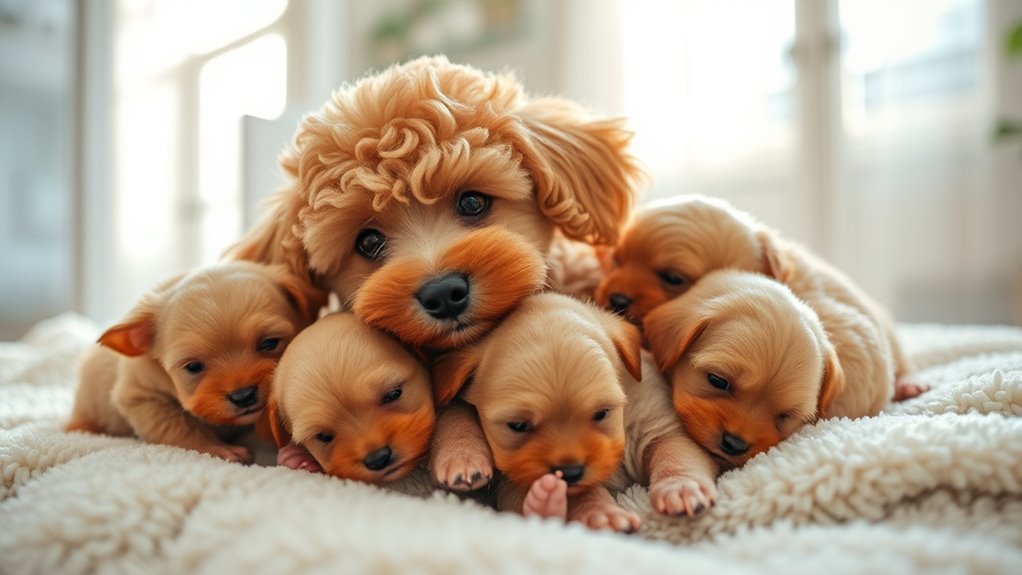
On average, Toy Poodles have a litter size of about three puppies. However, this number can vary quite a bit.
First litters might be smaller, ranging from just two to four puppies.
Several factors influence litter size, including the mother’s age, health, and genetics.
While there’s always a chance for larger litters, most Toy Poodle litters tend to fall within the typical range.
If you’re curious about the various factors that affect litter size, there’s plenty more to learn on the topic!
Key Takeaways
- The average litter size for Toy Poodles is about 3 puppies, typically ranging from 2 to 4 puppies per litter.
- First litters are usually smaller, often consisting of 1 to 4 puppies.
- Some Toy Poodles can have larger litters, with reports of up to 6 puppies in rare cases.
- Factors like the mother’s age, health, and genetic background influence the size of the litter.
- Proper breeding practices and a healthy environment are essential for maximizing litter size and puppy health.
Understanding Litter Size in Toy Poodles
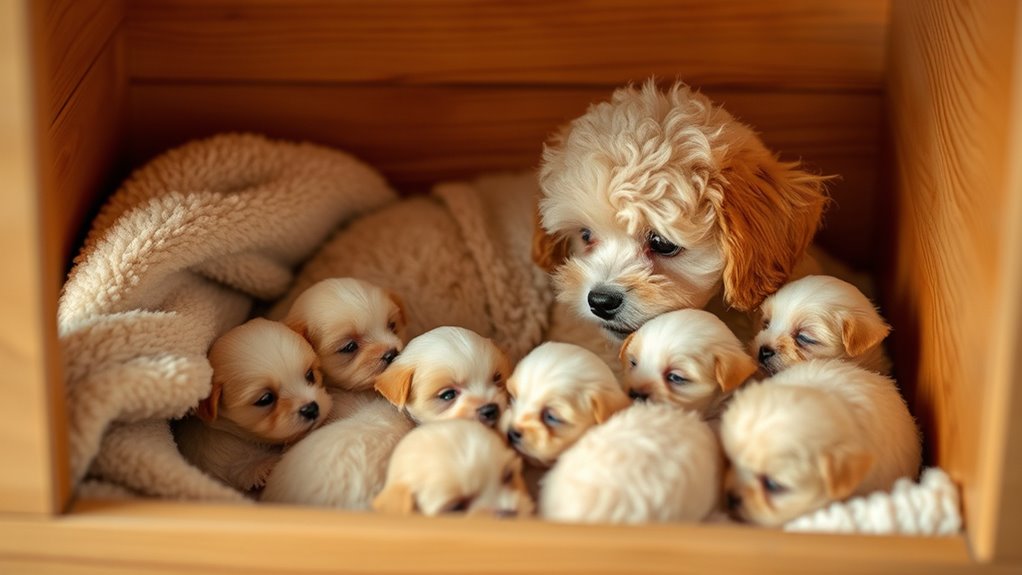
When you’re considering breeding Toy Poodles, it’s vital to understand their typical litter size, which averages around three puppies per birth.
While this is a general guideline, your Toy Poodle’s first litter can vary, sometimes producing two to four puppies.
Factors like the mother’s age and overall health conditions can greatly impact the litter size.
Smaller breeds, including Toy Poodles, generally produce fewer puppies compared to larger breeds like Standard Poodles.
It’s important to keep in mind that while some dogs may have a smaller first litter, others may surprise you with a larger one.
Every breeding experience is unique, so always be prepared for variability in litter sizes.
Factors Influencing Litter Size

Several factors influence the litter size of Toy Poodles, making it essential for breeders to contemplate these elements for successful breeding outcomes.
The age of the mother plays a fundamental role; younger, healthier dogs typically produce larger litters.
Additionally, maintaining a healthy weight is important, as underweight or overweight mothers can lead to smaller litter sizes.
Genetic background also matters; some lines may naturally produce more puppies than others.
Environmental factors, including the mother’s living conditions and overall health, greatly impact pregnancy outcomes.
Finally, proper breeding practices, like timing and ensuring the health of both parents, are vital in predicting and achieving the desired litter size.
Understanding these factors can help you breed more effectively.
Typical Litter Size for Toy Poodles
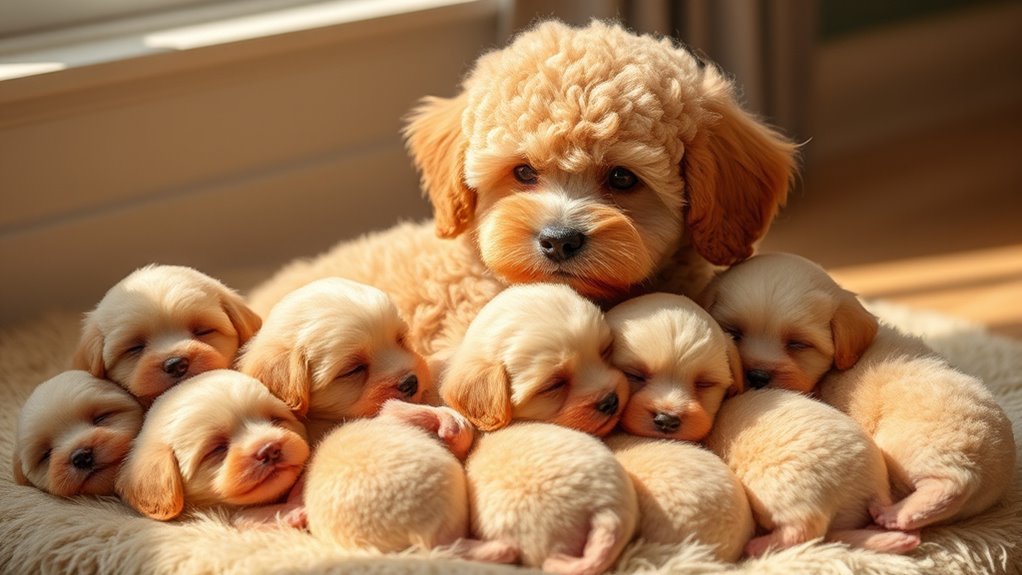
When it comes to Toy Poodles, you can expect an average litter size of about 3 puppies. However, this number can change based on factors like the mother’s age, health, and genetics. Understanding these variables helps you gauge what to anticipate for your Toy Poodle’s litter.
Average Litter Size
Toy Poodles typically have an average litter size of 2 to 4 puppies.
Compared to larger Poodle breeds like Miniature or Standard Poodles, Toy Poodles generally produce smaller litters.
While the average litter size falls within this range, it’s not uncommon for some individual Toy Poodles to have larger litters, with documented cases of up to 6 puppies.
However, keep in mind that first litters may be smaller than subsequent ones.
So if you’re expecting a Toy Poodle’s first litter, you might see just 1 or 2 puppies.
This smaller average litter size reflects the breed’s unique characteristics and reproductive patterns.
Making each new arrival a special event for any Toy Poodle owner.
Factors Affecting Litter Size
Various factors can considerably influence the typical litter size for Toy Poodles, making it vital for breeders and owners to understand these elements.
On average, you can expect about 3 puppies per litter, but this can vary.
The health of the mother plays a significant role; a healthy dog is more likely to have a successful pregnancy.
Additionally, the breeding age matters—younger mothers often produce larger litters than older ones.
Environmental conditions and genetic background also contribute to variability.
Keep in mind that the gestation period itself can yield unpredictable results; ultrasounds might not always accurately predict the final litter size.
Being mindful of these factors helps set realistic expectations for puppy arrivals.
Health Considerations for Breeding
When you’re considering breeding your Toy Poodle, health screenings are essential for catching any genetic issues that could affect the puppies. Prenatal care is just as important; ensuring your dog receives proper nutrition and veterinary attention can lead to healthier litters. By prioritizing these aspects, you set the stage for a successful breeding experience.
Genetic Health Screening
Genetic health screening plays an essential role in responsible breeding practices for Toy Poodles.
It helps identify over 230 potential genetic health conditions.
By screening for common health issues like Progressive Retinal Atrophy and patellar luxation, you can make informed decisions about your breeding pairs.
This proactive approach reduces the likelihood of passing on hereditary diseases, ensuring healthier Poodle puppies.
Reputable breeders conduct DNA tests to confirm that both parents are clear of genetic disorders.
This promotes the longevity and well-being of the litter.
Plus, regular veterinary check-ups and genetic screenings throughout their breeding life are crucial for monitoring and maintaining the overall health of your Toy Poodles.
Prioritizing genetic health screening ultimately benefits both the dogs and their future families.
Prenatal Care Importance
Prenatal care is essential for Toy Poodles, as it directly influences the health of both the mother and her developing puppies.
Regular veterinary check-ups are important to monitor the mother’s health and catch any potential issues early.
As her nutritional needs increase considerably by week 5, providing a balanced diet tailored for pregnant dogs is critical for fetal development.
| Consideration | Importance |
|---|---|
| Veterinary Check-ups | Monitor health and prevent issues |
| Balanced Diet | Supports healthy fetal growth |
| Calcium Management | Avoid eclampsia risk |
| Stress-Free Environment | Promotes better health outcomes |
| Emotional Support | Reduces anxiety for the mother |
Creating a stress-free environment enhances the wellbeing of both the dam and her litter.
This ensures a successful pregnancy.
Maternal Care During Pregnancy
As a Toy Poodle owner, it’s vital to understand the importance of maternal care during pregnancy to assure both the mother and her puppies remain healthy.
During the heat cycle, make certain your pregnant Toy Poodle receives a balanced diet to meet her increased nutritional needs, especially by week 5 of gestation.
Ensure your pregnant Toy Poodle has a balanced diet to support her growing nutritional needs, particularly by week 5 of gestation.
Moderate daily exercise will help her maintain health, but avoid intense activities.
Create a stress-free home environment, as this supports her well-being and the puppies’ development.
Regular veterinary check-ups are essential for monitoring her health throughout pregnancy.
As she approaches the end of her term, you might notice signs like increased grooming behavior, stomach enlargement, and nesting instincts, signaling her readiness for the whelping box.
Preparing for a New Litter of Puppies
When you’re preparing for a new litter of Toy Poodle puppies, gathering essential supplies is crucial to guarantee a smooth birthing process.
You’ll need a whelping box, clean sheets, towels, and a heating pad to create a comfortable environment for the mother.
Consult a veterinarian to confirm her pregnancy and determine the due date, which typically results in around three puppies for Toy Poodles.
By week five, verify she has a balanced diet to meet her nutritional needs.
As you approach the due date, monitor her for signs of labor, like restlessness and nesting behavior.
After the puppies are born, provide ongoing care and a supportive environment to promote their health and development in the following weeks.
Frequently Asked Questions
How Can I Tell if My Toy Poodle Is Pregnant?
To tell if your Toy Poodle’s pregnant, watch for signs like increased lethargy, stomach enlargement, and enlarged mammary glands. A vet can confirm pregnancy through a blood test or ultrasound around 28 to 30 days.
What Are the Signs of a Healthy Litter?
You’ll see tiny, wiggly puppies nursing enthusiastically, their little bodies gaining weight. The mother gently grooms them, radiating warmth and care. Watch for normal discharge and schedule that vet check-up to guarantee everyone’s thriving.
When Do Toy Poodle Puppies Open Their Eyes?
Toy Poodle puppies typically open their eyes around 12 days old. This milestone enhances their interaction with the world, letting them experience visual stimuli, which helps them bond with you and their environment.
How Soon Can Puppies Leave Their Mother?
Puppies shouldn’t leave their mother before 8 weeks. Staying longer allows them to socialize and develop properly. Early separation can impact their emotional growth and immune system, so wait until they’re ready.
What Should I Feed a Nursing Toy Poodle?
You should feed your nursing Toy Poodle high-quality commercial dog food formulated for lactating dogs or puppy food. Offer multiple small meals daily and guarantee fresh water is always available for proper hydration.
Conclusion
To sum up, when you consider breeding your toy poodle, remember that the typical litter size ranges from two to five puppies.
Curiously, studies show that smaller breeds like toy poodles often have fewer puppies compared to larger breeds, which can have litters of eight or more.
Understanding these dynamics helps you prepare for the joys and responsibilities of welcoming a new litter.
With proper care and attention, you’ll guarantee a healthy start for your adorable new companions.
In conclusion, if you’re looking to breed your toy poodle, expect a smaller litter size of around two to five puppies.
This is quite different from larger breeds, which can have significantly more puppies.
By being aware of these factors, you can better prepare for the exciting journey of bringing new toy poodle puppies into your life, ensuring they receive the love and care they need from day one.