10 Best Ev Charging Infrastructure for Industrial Fleets: Best Models Compared Side by Side
Industrial fleets face a hard problem. They need reliable charging that keeps vehicles moving and avoids costly downtime.
At the same time, they need a setup that fits heavy use and daily scheduling. This review looks at the best ev charging infrastructure for industrial fleets and what it can do for large operations. It is aimed at fleet managers, logistics teams, and site operators who need practical charging options for trucks, vans, and service vehicles.
The right system can help manage energy use, support multiple vehicles at once, and reduce delays during busy shifts. It may also make charging easier to track and scale as fleet needs grow.
In the sections ahead, this review will cover key features, setup needs, performance, and value. It will also help you see which charging systems match industrial fleet demands.
Best EV Charging Infrastructure for Industrial Fleet Needs
| Image | Product | Price |
|---|---|---|
Pick 1  | EV Charging Infrastructure Design | Check Price On Amazon |
Pick 2  | EMPORIA Level 2 EV Charger J1772 Connector | Check Price On Amazon |
Pick 3  | Autel MaxiCharger Level 2 EV Charger | Check Price On Amazon |
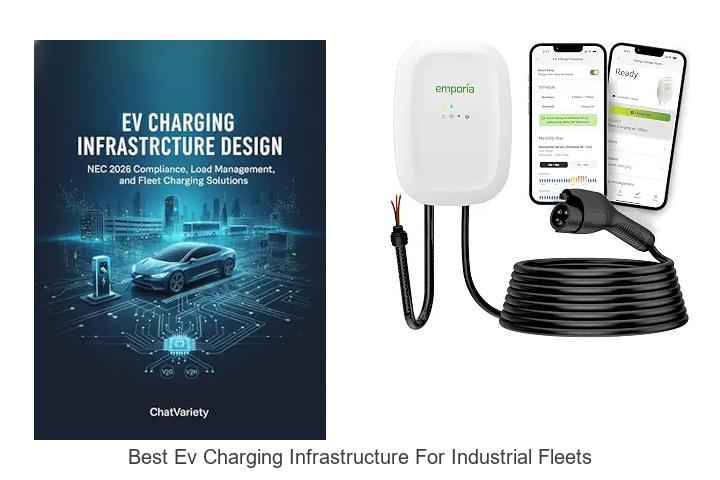
1. EV Charging Infrastructure Design
Industrial fleet charging starts with careful planning, and this title focuses on that foundation. It gives commercial operators a practical guide to design, load management, and compliance.
EV Charging Infrastructure Design covers NEC 2026 compliance alongside fleet charging solutions. The book is part of the Electric Vehicle & Battery Engineering Series. It spans 77 pages in a print replica format.
That length suits a focused technical reference rather than a broad handbook. The material appears aimed at planners, engineers, and facility teams.
It should help readers understand charging layouts before installation begins. The small file size also suggests easy digital storage and access.
Because the topic is specific, it fits commercial fleet use well. Readers wanting structured guidance for charging infrastructure will find clear value here.
Pros
- Focuses on NEC 2026 compliance
- Covers load management and fleet charging
- Short, focused technical reference
Cons
- No hardware specifications are provided
- Not a hands-on installation manual
- Limited to 77 pages
Who Should Buy It?
Facility managers, electrical planners, and fleet operations teams should buy it. It suits commercial organizations planning EV charging infrastructure for work vehicles. Engineers needing guidance on code compliance and load management will also benefit.
The book fits teams that want a concise technical reference before design decisions and site planning. It is less useful for readers seeking product hardware comparisons or installation walkthroughs.
Key Specifications
| Specification | Details |
|---|---|
| Brand | Not provided |
| Output Voltage | Not provided |
| Current Rating | Not provided |
| Number of Ports | Not provided |
| Connector Type | Not provided |
| Compatibility | Commercial fleet use |
| Smart/Cloud Features | Not provided |
| Certification | NEC 2026 compliance |
| Cable Length | Not provided |
| Mounting | Not provided |
| Special Commercial Features | Load management, fleet charging solutions |
The listed specifications point to a planning-focused guide, not a physical charger. Commercial fleet use suggests the content fits workplace charging needs. NEC 2026 compliance means the book addresses current electrical code expectations. Load management appears as a central theme, which matters when many vehicles charge at once. Fleet charging solutions also indicate attention to depot planning and power distribution. For managers, these details matter more than hardware features. They help teams think through capacity, compliance, and site readiness.
Because no voltage, ports, or connector data appear, the value lies in guidance. The specification set suits readers who need design decisions before equipment selection. NEC 2026 compliance can support safer planning and smoother approvals. Load management can help avoid electrical strain during peak charging periods. Fleet charging solutions make the material useful for commercial operators with multiple vehicles. Teams responsible for depot upgrades may benefit most. It offers a technical starting point before purchasing chargers or finalizing layouts.
2. EMPORIA Level 2 EV Charger J1772 Connector
Industrial fleets need fast charging, simple controls, and dependable installation. The EMPORIA Level 2 EV Charger brings all three in a compact wall-mounted package. It delivers up to 48 amps at 240 volts through a hardwired setup with whip, which suits steady daily fleet use.
The 25-foot cable adds reach for different parking layouts. Its J1772 connector works with many North American EVs, including popular fleet models.
The charger also adds WiFi connectivity for real-time energy data and scheduled charging. That helps managers track usage and set charging windows around utility rates. UL listing and ENERGY STAR certification support confidence in safety and compliance.
Build quality feels focused on practical use, with a wall mount, handle holster, and mounting hardware included. For fleets that want strong charging performance without unnecessary complexity, it offers clear value and broad vehicle support.
Pros
- 48-amp output charges fleet vehicles quickly
- WiFi app control adds useful scheduling
- Long 25-foot cable improves parking flexibility
Cons
- Hardwired setup needs professional installation
- Single-port design serves one vehicle at once
- J1772 only, so Tesla needs another model
Who Should Buy It?
Fleet operators and facility managers should buy it when they need a value-focused Level 2 charger. It fits mixed EV fleets that use J1772 ports and want faster charging than a wall outlet. The smart energy data and scheduling help manage daily charging routines, while the hardwired 48-amp design suits fixed parking spaces and regular use.
Key Specifications
| Specification | Details |
|---|---|
| Brand | EMPORIA |
| Output Voltage | 240 volts |
| Current Rating | 48 A |
| Number of Ports | 1 |
| Connector Type | J1772 |
| Compatibility | Electric vehicles with J1772 ports, including Chevrolet Bolt, VW ID 4, Nissan Leaf, Ford Mustang Mach-E, Hyundai, BMW i3, i4, iX, Audi, Jeep Wrangler 4xe, and more |
| Smart/Cloud Features | 2.4 GHz WiFi, real-time energy data, charging schedules |
| Certification | UL listed, ENERGY STAR certified, NEC 625, SAE J1772, UL 817, UL 991, UL 2231, UL 2251, UL 2594 |
| Cable Length | 25 ft |
| Mounting | Hardwired with whip, wall mount included |
| Special Commercial Features | Handle holster, mounting hardware, professional installation recommended |
The charger runs on 240 volts and delivers 48 amps through one port. That means one vehicle can charge at a time, but at a strong rate. The included 25-foot cable gives drivers flexibility when parking positions vary. The J1772 connector fits many North American EVs used in fleets. A wall mount, handle holster, and mounting hardware come in the box for a fixed installation.
In daily fleet use, the hardwired design suits dedicated parking spots and repeat charging. WiFi access lets managers view energy data and set charging schedules from a mobile device. That can help coordinate vehicle availability and charging windows. The UL listing and ENERGY STAR certification add confidence for commercial settings. These features benefit fleet sites that want controlled charging, clear usage data, and fewer moving parts.
3. Autel MaxiCharger Level 2 EV Charger
High power charging stands out here, with up to 80 amps available for demanding fleets. Autel pairs that output with AI-driven cloud controls, giving operators more visibility and control across busy charging sites.
The MaxiCharger Level 2 is a hardwired J1772 station built for indoor or outdoor use. It supports scheduling around time-of-use rates, remote session control, current adjustment, and real-time energy monitoring through the app.
That makes it practical for depot charging, shared parking areas, and vehicles that need quick turnaround.
Build quality looks suited to heavy daily use, with a flame-retardant enclosure and internal temperature monitoring. Dual-network Wi-Fi plus Wi-SUN helps keep the charger online, which matters for commercial locations that cannot afford downtime.
Tamper-resistant screws and remote locking add security for exposed installs. Performance is the headline feature, since 19.2 kW output can add range quickly between shifts or visits. Installation requires hardwiring and a 100A circuit for full output, so it fits best where professional setup is available and high charging speed matters most.
Pros
- Up to 80A output for fast turnaround
- AI app controls charging schedules and access
- Indoor and outdoor installation flexibility
Cons
- Requires hardwired installation
- 100A circuit needed for full output
- Single port limits simultaneous charging
Who Should Buy It?
Fleet operators who need high charging power will value this charger most. It suits depots, shared lots, and sites with professional electrical support. The app controls, remote access, and usage monitoring also help managers handle multiple vehicles.
Buyers wanting one fast, secure, and connected Level 2 station should find it a strong match.
Key Specifications
| Specification | Details |
|---|---|
| Brand | Autel |
| Output Voltage | 240 volts of alternating current |
| Current Rating | 80 A |
| Number of Ports | 1 |
| Connector Type | SAE J1772 |
| Compatibility | All EVs and PHEVs in North America |
| Smart/Cloud Features | Integrated cloud, AI app control, scheduling, remote start and stop, current adjustment, real-time energy data, alerts |
| Certification | CSA, UL |
| Mounting | Hardwired |
| Special Commercial Features | Tamper-resistant screws, remote locking, dual-network Wi-Fi + Wi-SUN, internal temperature monitoring, indoor/outdoor use |
The charger runs on 240 volts and supports 80 amps of current. That combination explains why it can deliver up to 19.2 kW. In daily use, that means faster replenishment for vehicles between shifts or customer visits. The single SAE J1772 connector works with all EVs and PHEVs in North America. For fleet managers, those details matter because they match broad vehicle compatibility while keeping charging time short across demanding schedules.
Hardwired mounting points to a permanent installation, which suits depot-style charging better than portable use. CSA and UL certification speak to recognized safety standards for commercial planning. The smart cloud tools add scheduling, remote control, and energy tracking, which help manage electricity use and charger access. Tamper-resistant screws, remote locking, Wi-Fi, and Wi-SUN support improve site control. Those features benefit operations that need speed, uptime, and tighter charging oversight.
4. EV Range Commercial EV Charging Station

Revenue collection becomes part of daily charging operations with this commercial station. It pairs access control, usage reporting, and driver payment tools in one network-ready package. Built for public or fleet use, it lets operators set custom pricing and idle fees.
Monthly payouts and usage reports support sites that want charging to generate income.
The unit uses a J1772 connector with a 25-foot cable and supports one port. It runs on 240 volts with a 32-amp current rating. The polycarbonate NEMA 4 enclosure carries IK10 impact resistance for harsh sites.
Wall mounting is supported, and pedestal mounting is possible with separate hardware. Drivers can pay through the EV Range app, while RFID access supports controlled fleet use. It suits hotels, retail locations, workplaces, apartments, resorts, and commercial fleets needing paid charging access.
Pros
- Supports revenue charging with pricing and idle fees
- RFID and app access fit fleet control
- NEMA 4 and IK10 housing suits harsh sites
Cons
- Only one charging port is included
- Pedestal hardware is not included
- Tesla drivers need an adapter
Who Should Buy It?
Commercial sites that want charging to generate income should consider it. It fits fleets, apartments, hotels, retail properties, and workplaces with controlled access needs. Operators who want driver payment tools, monthly payouts, and usage reporting will benefit most.
It also suits locations needing a durable charger for varied weather and frequent public use.
Key Specifications
| Specification | Details |
|---|---|
| Brand | EV Range |
| Output Voltage | 240 volts of alternating current |
| Current Rating | 32 A |
| Number of Ports | 1 |
| Connector Type | J1772 |
| Compatibility | All plug-in hybrid and electric vehicles, with Tesla adapters |
| Smart/Cloud Features | OCPP-compliant, EV Range app payments, RFID access, usage reports, monthly revenue deposits |
| Certification | Energy Star, UL |
| Cable Length | 25 feet |
| Mounting | Wall or pedestal mountable |
| Special Commercial Features | Custom pricing, idle fees, fleet and public access control, revenue generation |
The charger uses 240 volts and a 32-amp output for Level 2 charging. Its J1772 connector works with most plug-in hybrids and electric vehicles. A 25-foot cable gives drivers more room to park and connect comfortably. The single-port layout suits one vehicle at a time. Energy Star and UL listings add confidence for commercial use, while the EV Range app and RFID access support controlled payment and entry management.
These specifications point to a charger built for managed locations, not casual home use. The wall or pedestal mounting options help fit different site layouts. The polycarbonate NEMA 4 enclosure and IK10 impact resistance support outdoor exposure and physical abuse. OCPP compatibility helps operators connect it into broader charging software setups. The commercial features benefit fleets, hotels, apartments, retail sites, and workplaces that want charging access, revenue tracking, and driver payment handling.
5. MACH 1 Fast 48 Amp Level 2 EV Charger

Mixed fleets need charging gear that handles many EV types without extra hassle. MACH 1 answers that need with J1772 and NACS support in one station.
ApexCharger MACH 1 is a wall-mount Level 2 charger built for indoor or outdoor use. It supports 200 to 240 volts and up to 48 amps. That output suits faster fleet charging during breaks or shift changes.
The included 30-foot cable helps reach varied parking layouts and vehicle positions. Installation flexibility stands out, since it supports hardwire or NEMA 14-50 setups.
The included hardwire kit and instructions help simplify deployment for site teams. Smart features include Bluetooth, Wi-Fi, RFID cards, and a mobile app.
The 2.4-inch LED display and light assist indicator aid daily operation. Its anti-theft bolt, cable holder, and outdoor enclosure support shared commercial parking. ETL, Energy Star, UL 2594:2022 Ed.3, FCC, and RoHS certifications add confidence.
For mixed EV fleets, it offers broad compatibility, clear controls, and practical installation options.
Pros
- Supports J1772 and NACS vehicles
- Long 30-foot cable improves reach
- Hardwire or NEMA 14-50 installation
Cons
- Single port limits simultaneous charging
- Outdoor setup still needs proper installation planning
- Smart features may exceed simple fleet needs
Who Should Buy It?
Fleet managers with mixed EV inventories should consider it. It fits sites that need one charger for different vehicle types. Facilities with indoor bays, outdoor lots, or shared parking spaces can use it well.
It also suits operations that want app control, RFID access, and flexible installation. Mixed commuter fleets and service vehicles benefit most from its universal connector setup.
Key Specifications
| Specification | Details |
|---|---|
| Brand | ApexCharger |
| Output Voltage | 240 volts |
| Current Rating | 48 A |
| Number of Ports | 1 |
| Connector Type | Dual: Type 1 SAE J-1772 & NACS Tesla |
| Compatibility | All EVs in the US |
| Smart/Cloud Features | Bluetooth, Wi-Fi, mobile smart app, 2 RFID cards |
| Certification | ETL certified, Energy Star certified, UL certified up to UL 2594:2022 Ed.3, FCC, RoHS |
| Cable Length | 30 ft |
| Mounting | Wall-mount |
| Special Commercial Features | Indoor/outdoor enclosure, anti-theft bolt, cable holder, lights assist indicator, remote connector holster |
The main electrical specs point to practical fleet charging use. A 240-volt input and 48-amp output support Level 2 charging for daily operations. The single port means one vehicle charges at a time. J1772 and NACS compatibility covers most U.S. EVs, including Tesla vehicles with the included adapter. The 30-foot cable gives drivers more parking flexibility. Wall mounting keeps the unit off the floor and better suited to organized charging areas.
Smart features matter in shared fleet spaces. Bluetooth, Wi-Fi, RFID cards, and the mobile app help manage access and monitoring. The 2.4-inch LED display offers quick status checks during busy shifts. Certifications from ETL, UL, Energy Star, FCC, and RoHS add extra trust for commercial use. The indoor and outdoor enclosure, anti-theft bolt, and cable holder help protect the unit in public or fleet lots. Those features suit managers who need controlled access and tidy cable storage.
6. DEWALT Level 2 EV Charger 40A 240V

Fleet charging gets easier when control and durability work together. The DEWALT Level 2 EV Charger adds app-based management to a hardwired 40A setup.
It delivers up to 9.6 kW, which supports faster daily charging. The charger works with SAE J1772 EVs and includes a 25-foot cable for flexible parking layouts.
Its LCD screen, adjustable current, and Bluetooth or Wi-Fi control help supervisors manage sessions from a phone.
Built for indoor or outdoor use, the unit carries a NEMA 4X enclosure and IP66 waterproof rating. DEWALT adds protection against overcurrent, overheating, overcharging, overvoltage, and electrical surges. The yellow housing, reinforced cage, and rubberized charging gun suit demanding sites.
Installation is wall-mounted, and the package includes a bracket and mounting hardware. It fits industrial fleets that want monitored charging, tough construction, and straightforward day-to-day operation.
Pros
- App control supports remote scheduling and monitoring.
- Long 25-foot cable helps with flexible parking positions.
- Indoor and outdoor rating suits harsh fleet sites.
Cons
- Single-port design limits charging one vehicle at once.
- Tesla drivers need a separate adapter.
- Hardwired installation may need professional help.
Who Should Buy It?
Buy this charger for fleet depots, work yards, or service sites needing app-controlled charging. It suits managers who want remote start and stop control, scheduled off-peak charging, and usage tracking from a phone. The 40A output and durable enclosure fit daily industrial use, while the long cable helps reach awkward parking spots.
It also works well where indoor and outdoor charging happens on the same property.
Key Specifications
| Specification | Details |
|---|---|
| Brand | DEWALT |
| Output Voltage | 240 volts |
| Current Rating | 40 A |
| Number of Ports | 1 |
| Connector Type | SAE J1772 |
| Compatibility | Electric Vehicles |
| Smart/Cloud Features | Bluetooth, Wi-Fi, DEWALT App, remote start and stop, scheduling, energy tracking |
| Certification | CSA Certified |
| Cable Length | 25 ft |
| Mounting | Wall mounted |
| Special Commercial Features | NEMA 4X enclosure, IP66 waterproof rating, overcurrent protection, overheating protection, overcharging protection, overvoltage protection, electrical surge protection, indoor/outdoor use |
A 240-volt, 40-amp output gives the charger its Level 2 speed. The 25-foot cable helps reach vehicles parked farther from the wall. A single SAE J1772 connector works with most electric vehicles, while Tesla drivers need an adapter. The wall-mounted format keeps the unit fixed in place. For daily fleet use, that means less clutter around the charging spot and easier access for drivers who rotate between vehicles during busy shifts.
Bluetooth and Wi-Fi control make charging easier for supervisors and operators. The DEWALT app can start and stop sessions, schedule charging, and track energy use. CSA certification, plus the NEMA 4X and IP66 enclosure, supports indoor or outdoor placement. Protection against overheating, surges, and voltage issues helps on busy sites. The single-port layout suits one vehicle at a time, which works well for controlled depot charging and assigned parking spots.
7. LEDVANCE Phase EV Commercial Charger Gen 2

Commercial fleets need charging that stays easy to manage and hard to outgrow. LEDVANCE Phase EV Commercial Charger Gen 2 brings touchscreen control, network connectivity, and outdoor-ready construction in one station.
It delivers up to 48 amps and 11.5kW through a 25-foot J1772 cable, giving operators flexible placement around busy parking areas. The 4.3-inch color LCD supports English, French, and Spanish, which helps mixed teams use it quickly.
A bright LED status light adds fast visibility from across the lot.
The charger is built for commercial and multi-unit sites, with wall-mount or pedestal setups and single or dual configurations. Its NEMA 4 and IP65 enclosure ratings suit indoor or outdoor placement, while IK08 impact resistance adds extra protection in active environments.
Built-in WiFi, Ethernet, and 4G LTE support future software management, and optional ChargeLab integration adds load balancing, analytics, and revenue tracking. ENERGY STAR certification and free-charge mode give site owners useful operating flexibility. It fits fleets that want clear control, durable hardware, and room to scale.
Pros
- Touchscreen interface is easy to read and use
- Supports WiFi, Ethernet, and 4G LTE connectivity
- Long 25-foot cable improves parking flexibility
Cons
- Level 2 charging is slower than DC fast charging
- Optional software features require a ChargeLab subscription
- Large commercial setup may need professional installation
Who Should Buy It?
Commercial fleets, property managers, and multi-unit sites should consider it. It suits teams that want visible status feedback, touchscreen control, and network connectivity in one charger. The 25-foot cable and wall or pedestal options help with varied parking layouts.
It also fits operations that may want software tools later, while keeping free-charging mode available now.
Key Specifications
| Specification | Details |
|---|---|
| Brand | LEDVANCE |
| Output Voltage | 240 volts |
| Current Rating | 48 A |
| Number of Ports | 2 |
| Connector Type | SAE J1772 |
| Compatibility | All EVs with SAE J1772 connector |
| Smart/Cloud Features | WiFi, Ethernet, 4G LTE, ChargeLab software integration |
| Certification | ENERGY STAR |
| Cable Length | 25 ft |
| Mounting | Wall-mount or pedestal configurations |
| Special Commercial Features | 4.3-inch color LCD touchscreen, LED status indicator, free-charge mode, load balancing, real-time analytics, revenue tracking |
The 240-volt input and 48-amp rating indicate strong Level 2 charging output for fleet use. In daily operations, that means vehicles can recover range between shifts without needing a fast charger. The 25-foot cable helps reach vehicles in wider parking stalls or awkward spaces. A J1772 connector keeps compatibility broad across North American EVs. The two-port design can also support more efficient space use at commercial sites.
WiFi, Ethernet, and 4G LTE give operators several ways to connect the charger. That helps sites with changing network setups or remote management needs. The ENERGY STAR rating can support lower energy use during regular operation. Wall-mount and pedestal options make installation adaptable to garages or open lots. NEMA 4, IP65, and IK08 ratings support outdoor use and impact resistance, which suits high-traffic areas and mixed commercial environments.
8. REV+ Dual EV Charger Level 2

Dual-vehicle charging stands out as the REV+ charger’s main appeal. It gives two independent ports, which helps when multiple EVs need power.
Built for 240-volt Level 2 charging, it delivers 50 amps and 12kW output. That setup can charge up to ten times faster than Level 1 charging.
The charger supports J1772 vehicles, plus Tesla with a compatible adapter. It works with Chevrolet, Hyundai, Kia, Nissan, and other compatible EVs and plug-in hybrids. The smart app adds practical control through Wi-Fi and Bluetooth.
Users can start or stop charging, set schedules, and track energy use. It can be hardwired or installed with a NEMA 14-50 plug.
Indoor and outdoor use add flexibility for garages, yards, or fleet locations. Made in the USA with UL certification, it aims for long-term use. The 18-foot cable also helps reach vehicles parked in different positions.
For homes or smaller fleet setups, it offers strong convenience and strong charging capability.
Pros
- Charges two vehicles at once
- Smart app supports scheduling and monitoring
- Indoor or outdoor installation options
Cons
- Not a commercial fleet pedestal unit
- Requires compatible adapter for Tesla
- Single 18-foot cable may limit reach
Who Should Buy It?
Buyers with two EVs or plug-in hybrids should consider it. It fits garages, shared parking areas, and smaller fleet sites needing dual-vehicle charging. The smart controls help schedule charging around peak and off-peak periods.
It also suits operators wanting J1772 compatibility, flexible installation, and a higher-power Level 2 setup.
Key Specifications
| Specification | Details |
|---|---|
| Brand | REV+ |
| Output Voltage | 240 volts |
| Current Rating | 50 A |
| Number of Ports | 2 |
| Connector Type | 18 Feet J1772 |
| Compatibility | Chevrolet Volt, Chevrolet Bolt EV, Hyundai Kona, Hyundai Ioniq, Kia Niro, Nissan Leaf, Tesla with adapter, and other J1772-compliant EVs and PHEVs |
| Smart/Cloud Features | Wi-Fi, Bluetooth, app control, scheduling, remote start and stop, energy monitoring |
| Certification | UL |
| Cable Length | 18 feet |
| Mounting | Hardwired or NEMA 14-50 plug |
| Special Commercial Features | Dual-port charging, indoor or outdoor installation, made in the USA |
The 240-volt, 50-amp output means faster Level 2 charging for daily use. Dual ports allow two vehicles to charge at once without swapping cables. The 18-foot J1772 cable gives enough reach for many parking layouts. Compatibility covers several popular EVs and plug-in hybrids, plus Tesla with an adapter. Wi-Fi and Bluetooth support app-based scheduling, remote control, and energy monitoring. That makes routine charging easier for shared households and smaller work sites.
The UL certification and USA manufacture point to controlled build standards and safer installation expectations. Hardwired or NEMA 14-50 mounting gives more setup flexibility for different spaces. Indoor and outdoor support helps place the charger where parking is available. The dual-port layout benefits operators who manage two vehicles in one spot. People wanting scheduled charging, usage tracking, and flexible installation will benefit most from these features. The setup suits garages, driveways, and light fleet charging areas.
9. REV+ Dual EV Charger Level 2

Dual charging can simplify fleet or multi-vehicle management fast. The REV+ Dual EV Charger Level 2 brings two independent J1772 ports into one compact unit. It delivers 50 amps at 240 volts, with up to 11.5kW output.
That means two EVs or plug-in hybrids can charge at once. It suits mixed vehicle groups that need steady daily charging.
The built-in Wi-Fi and Bluetooth add phone-based control and monitoring. Users can start, stop, and schedule charging, or check energy use. Plug-and-charge setup keeps operation straightforward right away.
It also supports hardwired or plugged installation, indoors or outdoors. The gray housing is UL certified and made in the USA.
For industrial fleets with multiple light-duty vehicles, it offers practical dual-port efficiency.
Pros
- Two independent ports charge two vehicles at once
- Wi-Fi and Bluetooth support app-based control
- Indoor or outdoor installation options
Cons
- J1772 needs adapters for Tesla vehicles
- Cable length may feel short for larger bays
- Dual-port focus may exceed single-vehicle needs
Who Should Buy It?
Buy this charger for fleets or sites with two EVs needing shared charging access. It suits operations that want app control, flexible installation, and J1772 compatibility across common electric cars and plug-in hybrids. Facilities managing light-duty service vehicles, company cars, or mixed commuter EVs can benefit from the dual-port layout and 50-amp output.
Key Specifications
| Specification | Details |
|---|---|
| Brand | REV+ |
| Output Voltage | 240 volts of alternating current |
| Current Rating | 50 A |
| Number of Ports | 2 |
| Connector Type | J1772 |
| Compatibility | Electric cars and plug-in hybrids with J1772; Tesla with adapter |
| Smart/Cloud Features | Wi-Fi, Bluetooth, mobile app control, scheduling, energy monitoring |
| Certification | UL |
| Cable Length | 18 ft |
| Mounting | Indoor or outdoor; hardwired or plug-in installation |
| Special Commercial Features | Dual-port charging, simultaneous charging, 11.5kW output, 4-year warranty |
The 240-volt output and 50-amp current rating support Level 2 charging speeds. In daily use, that means faster turnaround than standard wall outlets. The two ports let two vehicles share one charging point without constant swapping. J1772 compatibility covers many common EVs and plug-in hybrids. The 18-foot cable gives useful reach around parking spaces or garages. For mixed vehicle fleets, the setup reduces waiting and helps keep vehicles ready for work.
Wi-Fi, Bluetooth, and mobile app controls make charging easier to manage. Users can schedule sessions, track energy use, and start or stop charging remotely. The UL certification supports a safer installation profile for indoor or outdoor use. Hardwired or plug-in mounting gives flexibility for different sites and electrical setups. The dual-port design suits small fleet depots, shared garages, and homes with multiple EVs. Tesla drivers can use it with a compatible adapter.
10. ChargePoint HomeFlex Level 2 EV Charger

Tesla-only depot charging gets a straightforward, tidy solution here. The ChargePoint HomeFlex Level 2 EV Charger brings hardwired NACS charging in a compact package.
It delivers up to 37 miles of range per hour, depending on the vehicle. That makes it a practical fit for sites that need steady overnight or shift-based top-offs.
The unit uses 240 volts, a 50 amp rating, and a single port. Its black housing measures 7.06 by 11.19 by 5.2 inches, so it stays compact on a wall.
The hardwired setup suits fixed installations where charging stations remain in place. Build quality looks purpose-built for regular use, and the three-year warranty adds useful support details. A NACS connector keeps it focused on Tesla vehicles only.
Performance is strongest when paired with the right circuit and vehicle match. The charger requires a 20A or 80A circuit, giving facilities flexibility during planning.
Charge time can be as short as 1.89 hours, depending on conditions and battery state. That makes it a strong fit for fleet locations with predictable parking patterns.
Ease of use is straightforward, since the cable and connector are built for Tesla compatibility. It suits centralized sites that want simple, reliable home-style AC charging for dedicated Tesla fleets.
Pros
- Fast Level 2 charging for Tesla vehicles
- Hardwired design suits fixed fleet installations
- Compact wall-mounted unit saves space
Cons
- Works only with Tesla vehicles
- Single port limits charging capacity
- Requires circuit planning before installation
Who Should Buy It?
Buy this for Tesla-only fleet sites that need fixed Level 2 charging. It fits depots, garages, and assigned parking areas where vehicles return regularly. The hardwired design and NACS connector suit controlled installations with planned electrical service.
It works best for operators who want compact AC charging without extra complexity.
Key Specifications
| Specification | Details |
|---|---|
| Brand | ChargePoint |
| Output Voltage | 240 volts |
| Current Rating | 50 A |
| Number of Ports | 1 |
| Connector Type | NACS (Tesla) |
| Compatibility | Tesla vehicles |
| Cable Length | Not provided |
| Mounting | Hardwired, wall-mounted |
| Special Commercial Features | Tesla Compatible, Fast Charge Solution for Electric Vehicles |
The charger runs on 240 volts and uses a 50 amp rating. That gives it the electrical muscle for Level 2 charging in fixed locations. The NACS connector fits Tesla vehicles, which keeps the setup focused on one vehicle family. A single port means one car charges at a time. In daily fleet use, that works well for assigned spaces, overnight charging, or predictable shift changes where one vehicle returns to base.
Its hardwired mounting suits permanent installations on walls or dedicated charge points. That can simplify site planning for facilities with stable parking layouts. The compact size also helps in tight garages or utility areas. Because the cable length is not provided, placement planning matters during installation. The Tesla-only compatibility makes it a better choice for dedicated fleets than mixed-brand operations. Sites with standard Tesla vehicles gain the most from its direct, fixed-format charging setup.
Best EV Charging Infrastructure for Industrial Fleets: A Smart Buyer’s Guide
Assess fleet charging demand
Fleet charging systems fail most often when their communication and growth capacity are not planned from the start. A site must be able to handle the number of vehicles to charge without slowing operations, while also matching each unit’s daily mileage and energy use so that trucks and vans return to service on time. It is equally important to account for peak charging windows, because industrial fleets often plug in during short overnight or shift-change periods, creating a heavy load that can strain underpowered hardware.
Just as critical is the ability to support future fleet expansion needs, since a system that cannot scale may force costly upgrades, downtime, or a full replacement later. A well-planned setup keeps energy delivery steady today and leaves room for additional vehicles, higher demand, and changing depot operations tomorrow.
Evaluate charger types and power levels
Industrial fleets lose valuable operating time if their charging system cannot match vehicle duty cycles, plug standards, and future route demands. Level 2 and DC fast charging serve different needs: Level 2 units are well suited to vehicles that remain parked for longer shifts or overnight intervals, while DC fast charging helps keep high-utilization assets moving with short turnaround times. Connector compatibility is equally important, because the fleet’s vehicles must be able to plug in without adapters, delays, or costly retrofits.
Charging speed requirements should be matched to daily mileage, idle windows, and depot schedules so vehicles return to service with enough energy exactly when needed. A well-planned mix of charger types can support both light-duty and heavy-duty operations, reduce bottlenecks at busy depots, and create flexibility as routes, vehicle counts, and workload patterns change.
Operational fit and future readiness matter just as much as initial price, since a charging setup that cannot support growth or varied use cases can quickly become a limitation.
Check site and electrical readiness
Industrial fleet charging systems often draw far more power than a standard facility can support, so available electrical capacity should be confirmed first to avoid overloaded circuits, delayed installations, or costly redesigns later.
- Available electrical capacity: Verify whether the current service can handle present charging demand and future vehicle growth without compromising other operations.
- Utility service upgrades: Assess whether transformer, panel, or service improvements may be required, since these upgrades can affect both project timelines and total cost.
- Space for equipment and parking layout: Make sure there is enough room for chargers, conduit runs, accessible parking, and safe vehicle movement around the site.
- Load management and power distribution: Plan how electricity will be shared across chargers so fleet operations remain efficient, balanced, and ready for additional units later.
Why it matters: A site that is electrically prepared and physically organized can support smoother installation, lower operating disruptions, and easier growth as fleet demand increases.
Review installation and deployment costs
Electric fleet charging systems often cost far more than the chargers alone, because the total project depends on how well the site can support networked equipment, future load growth, and ongoing service needs. Hardware and installation pricing should be reviewed first, since charger type, mounting method, trenching, and labor can vary widely from one facility to another. Permitting and engineering fees also matter, especially at industrial sites where electrical drawings, inspections, and local code compliance can add meaningful cost before the first unit is energized.
Utility upgrade costs deserve close attention as well, because transformers, panels, service extensions, or demand-management equipment may be required to handle higher power levels. Finally, maintenance and replacement expenses should be built into the budget from the start, since cables, connectors, software, and power modules will wear over time and affect long-term reliability.
Look at software, monitoring, and fleet integration
Modern fleet charging systems are most effective when they can coordinate vehicles, energy use, and depot operations through software that scales with future demand. Charge scheduling and optimization help reduce peak electricity costs, keep vehicles ready for route assignments, and make better use of limited charging capacity.
Telematics and fleet management integration allows charging activity to sync with vehicle location, battery status, and duty cycles, which supports smarter dispatch planning. Remote monitoring and alerts give operators real-time visibility into charger performance, faults, and energy consumption, so issues can be addressed before they disrupt service. User access and reporting tools are also essential for assigning permissions, tracking usage by vehicle or department, and generating clear records for operations and cost control.
Together, these software capabilities create a charging setup that is easier to manage, more reliable, and better prepared for future fleet growth.
Consider reliability, support, and compliance
Reliable fleet charging hardware does far more than deliver power—it keeps vehicles on schedule, reduces repair costs, and supports long-term site growth. Warranty coverage and service terms matter because industrial fleets depend on equipment that can withstand heavy daily use, so a strong warranty and clear maintenance support can limit unexpected downtime and replacement expenses. Vendor support and response times are equally important, since fast troubleshooting, remote diagnostics, and available spare parts can make the difference between a minor delay and a major disruption. Uptime and durability requirements should also be reviewed carefully, with attention to weather resistance, load handling, and component quality, especially in high-traffic depots where equipment must perform consistently under demanding conditions.
Uptime and durability requirements should also be reviewed carefully, with attention to weather resistance, load handling, and component quality, especially in high-traffic depots where equipment must perform consistently under demanding conditions. Safety codes, incentives, and regulatory compliance should never be overlooked, as meeting local electrical standards and utility rules helps avoid penalties while also improving access to rebates and tax benefits.
- Warranty and service: Reduces long-term risk and helps control maintenance costs.
- Vendor assistance: Short response times minimize operational interruptions.
- Reliability: Durable systems support high uptime in demanding fleet environments.
- Compliance: Proper adherence to codes and regulations protects the site and may unlock incentives.
How EV Fleet Charging Usually Works
Industrial fleet charging usually starts with a plan. The team checks how many vehicles need power, when they return to base, and how much energy each one uses. That helps match the charging setup to the fleet’s daily schedule.
Next, the chargers are installed at the depot or yard. Many fleets use a mix of AC chargers for overnight charging and DC fast chargers for faster turnarounds. The right mix depends on vehicle duty cycles, parking time, and site power limits.
After installation, drivers plug in when vehicles park. Charging software can then assign power, set charging times, and spread energy across the fleet. This helps avoid demand spikes and keeps more vehicles ready when needed.
Most systems also track usage. Fleet managers can see charge status, energy use, and any faults from a dashboard. That makes it easier to spot problems early and plan vehicle dispatch.
A simple flow looks like this:
- Vehicles return to the depot.
- Drivers connect them to the charger.
- The system starts charging based on the schedule.
- Fleet software monitors progress and power use.
- Vehicles leave with enough charge for the next shift.
For industrial fleets, this process matters because it affects uptime, energy costs, and site planning. A good charging setup keeps vehicles moving while fitting the space, power supply, and work pattern of the fleet.
FAQ’s
What Are The Key Factors To Consider When Choosing Ev Charging Infrastructure For An Industrial Fleet?
Key factors include the fleet’s vehicle types, daily range, charging speed needs, site power capacity, and whether charging will happen overnight or during shifts. You should also consider installation costs, scalability for future growth, software for load management, and maintenance requirements.
How Do Ac And Dc Fast Charging Compare For Industrial Fleet Operations?
AC fast charging is usually cheaper and better for overnight or longer dwell times, while DC fast charging delivers much quicker turnaround for vehicles that need to stay in service. For industrial fleet operations, the best choice often depends on route schedules, vehicle downtime, and infrastructure budget.
What Charging Infrastructure Is Most Cost-Effective For Large Commercial Or Industrial Ev Fleets?
For large commercial or industrial EV fleets, the most cost-effective charging infrastructure is usually **private depot charging**, especially **Level 2 chargers** for overnight charging and **DC fast chargers** only where quick turnaround is essential. This setup minimizes electricity and installation costs while keeping vehicles charged when they’re not in service.
How Can Fleet Managers Plan Ev Charging To Minimize Downtime And Improve Efficiency?
Fleet managers can minimize downtime by scheduling charging during off-peak hours, using smart charging software to prioritize vehicles based on route demands, and installing enough chargers to avoid bottlenecks. They can also monitor vehicle state of charge in real time and plan routes around charging availability to improve overall efficiency.
What Role Do Energy Management Systems And Smart Charging Software Play In Industrial Fleet Charging Infrastructure?
Energy management systems optimize how power is distributed across charging sites, helping prevent overloads and reduce energy costs. Smart charging software schedules and controls charging based on fleet needs, grid conditions, and pricing to improve efficiency and uptime.
Final Verdict
For buyers seeking the best ev charging infrastructure for industrial fleets, EV Charging Infrastructure Design is the strongest overall pick because it is tailored for commercial fleet use and provides the broadest fit for depot-scale planning. It is the best choice for operators that need a system-level solution rather than a single charger.
EMPORIA Level 2 EV Charger J1772 Connector is the best value option for fleets that want dependable Level 2 charging at a lower cost. Autel MaxiCharger Level 2 EV Charger is the best premium choice for sites that want higher power and faster charging capacity. EV Range Commercial EV Charging Station is the best fit for revenue charging models, especially where the goal is to monetize access for drivers, tenants, or customers.
Choose EV Charging Infrastructure Design for fleet depots, EMPORIA for budget-focused charging, Autel for higher-power needs, and EV Range if your site needs to generate charging revenue.