10 Best EV Charging Solutions for Parking Lots: Ranked and Compared
Managing EV charging in a parking lot can be hard. Drivers need fast access, clear payment options, and reliable service. Property owners also need a setup that fits space, budget, and daily use.
Property owners also need a setup that fits space, budget, and daily use. That is why many managers search for the best ev charging solutions for parking lots when planning upgrades. The right product can help reduce wait times, support more vehicles, and make the lot easier to use.
This review is for property managers, business owners, and facility teams. It also helps anyone who wants a practical charging setup for offices, retail centers, apartments, or public parking areas. In this review, we will cover key features, installation needs, and day-to-day performance.
We will also look at how well the product supports busy parking spaces and long-term use.
Best EV Charging Solutions for Parking Lots
| Image | Product | Price |
|---|---|---|
Pick 1  | Electric Vehicles Parking Only While Charging Sign 4-Pack | Check Price On Amazon |
Pick 2  | EMPORIA Level 2 EV Charger 48A WiFi, White | Check Price On Amazon |
Pick 3  | MACH 2 Level 2 EV Charger | Check Price On Amazon |
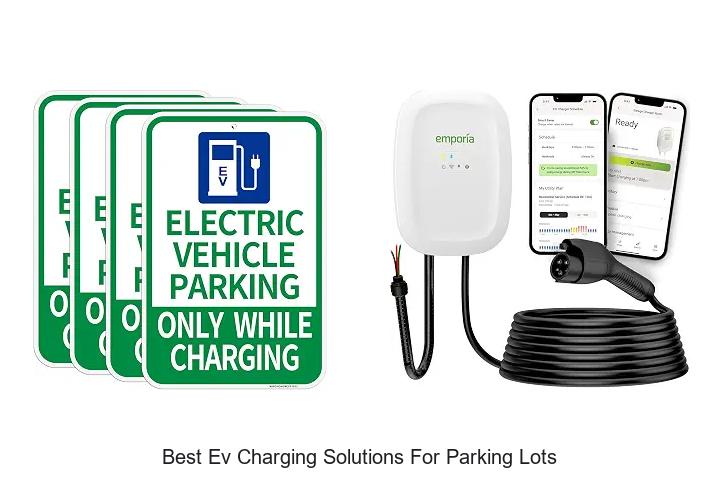
1. Electric Vehicles Parking Only While Charging Sign 4-Pack
Clear parking control starts with signs that drivers can see fast. The four-pack gives businesses a simple way to mark charging-only spaces.
Built from heavy-duty aluminum, each 18 by 12 inch sign is made for outdoor use. The reflective surface helps the message stand out when light hits it. That visibility can help parking enforcement in busy lots, garages, or industrial areas.
Pre-installed holes make mounting straightforward on posts, fences, or similar surfaces. The rust-free build and UV coating support long outdoor exposure without fading.
It suits property managers who need durable, easy-to-read signage for EV charging spaces.
Pros
- Four signs cover multiple charging spaces
- Reflective surface improves visibility in low light
- Aluminum construction resists rust and weather
Cons
- No electrical charging hardware is included
- Requires separate mounting hardware for some surfaces
- Only provides signage, not active enforcement
Who Should Buy It?
Property managers, business owners, and parking operators should buy it. It fits lots that need clear EV parking control near charging stations. The large reflective signs help guide drivers and support enforcement.
Anyone managing outdoor spaces with many vehicles can use the four-pack for multiple spots.
Key Specifications
| Specification | Details |
|---|---|
| Installation Type | Pre-drilled holes for post, fence, and wall mounting |
| Weather Resistance | Rust-free aluminum with reflective film and UV coating |
| Vehicle Compatibility | Electric vehicles while charging |
| Signage Size | 18 x 12 inches |
| Material | Aluminum |
| Brand | MINGHONG |
| Item Weight | 3 pounds |
Each sign measures 18 by 12 inches, which gives the message room to stand out. The aluminum body uses a 120 mil thickness for added outdoor durability. Reflective film on the surface helps the text and graphics catch light. The design is meant for electric vehicles parked only while charging. In daily use, that means drivers can spot the restriction quickly from a distance. The four-pack also helps cover several spaces at once.
Pre-installed holes simplify mounting on U-channel posts, square posts, round posts, wooden posts, and wire mesh fences. That setup works well for parking lots that need fast installation. The rust-free aluminum and UV coating help the signs handle weather and sunlight. Long-lasting ink supports clear graphics over time. Businesses benefit most when they need readable signage that stays visible outdoors. Parking enforcement teams also gain a simple tool for marking charging-only spaces.
2. EMPORIA Level 2 EV Charger 48A WiFi, White
Parking lots need fast, dependable charging that drivers can use with little fuss. The EMPORIA Level 2 EV Charger brings 48-amp hardwired power and smart WiFi controls in one package.
It can deliver up to 46 miles of range per hour through a hardwired connection, which suits busy shared parking areas well. The 25-foot cable gives extra reach for different stall layouts.
Its J1772 connector works with many North American EVs, including Chevrolet Bolt, Ford Mustang Mach-E, Hyundai, BMW, Audi, and Jeep Wrangler 4xe models. The unit includes wall-mount hardware, a handle holster, and a whip for installation.
It is UL listed and ENERGY STAR certified, which adds confidence for property managers. The 2.4 GHz WiFi connection lets users view energy data and schedule charging sessions from a mobile device. That makes it a strong fit for workplaces, apartment lots, and commercial parking spaces.
Pros
- Fast 48-amp charging for busy parking areas
- WiFi app control with energy data
- Long 25-foot cable improves parking flexibility
Cons
- Hardwired installation may need professional help
- J1772 plug needs Tesla adapter for some vehicles
- White finish may show dirt in outdoor lots
Who Should Buy It?
Who should buy it: Property owners, managers, and installers needing smart Level 2 charging for shared parking spaces. It suits garages, workplaces, apartments, and commercial lots where drivers need quick turnaround and simple scheduling. The 48-amp output, WiFi controls, and long cable make it practical for spaces with varied stall positions and mixed EV types using J1772 ports.
Key Specifications
| Specification | Details |
|---|---|
| Current Rating | 48 A |
| Output Voltage | 240 volts |
| Connector Type | J1772 |
| Cable Length | 25 ft |
| Installation Type | Hardwired with whip |
| Smart Features | 2.4 GHz WiFi, real-time energy data, scheduling |
| Certification | UL listed, ENERGY STAR certified |
| Vehicle Compatibility | North American EVs with J1772 ports |
A 48-amp, 240-volt charger gives strong Level 2 output for shared lots. The 25-foot cable helps reach cars parked in different stall positions. J1772 compatibility covers many common EVs sold in North America. The hardwired setup with whip suits permanent parking-lot installs. Real-time energy data and charging schedules add control for drivers and property operators. Together, these specs point to a charger made for steady daily use in places with multiple vehicles and varied parking distances.
These specifications matter because they shape both speed and convenience. Higher amperage supports faster charging, while the long cable reduces parking restrictions. WiFi features help users monitor energy use and plan charging around utility rates. UL listing and ENERGY STAR certification add confidence for commercial or residential parking areas with regular use. The hardwired design favors fixed installations, so it works best where an electrician can handle setup. Drivers with J1772-compatible vehicles gain the easiest experience.
3. MACH 2 Level 2 EV Charger
Parking lots need chargers that can serve many driver types without confusion. MACH 2 aims at that need with J1772 and NACS support.
Built by ApexCharger, it combines a hardwired 48 amp Level 2 setup with a 30-foot cable and outdoor-ready enclosure. The universal connector setup makes it practical for mixed EV fleets, including Tesla drivers using the included adapter.
Its 240-volt, 11.5 kW output supports steady daily charging for workplaces, apartment lots, and public parking spaces. The high-end display, Bluetooth, Wi-Fi, RFID cards, and mobile app add useful control for shared use. Safety features include an anti-theft bolt, breathing light indicator, cable holder, and weather protection.
The unit is ETL, Energy Star, FCC, RoHS, and UL certified to UL 2594:2022 Ed.3. For operators who want one charger for many vehicles, MACH 2 feels well matched to fleet duty.
Pros
- Supports J1772 and NACS vehicles
- Includes smart controls for shared access
- Built for outdoor parking lot use
Cons
- Hardwired setup may need professional installation
- Single port serves one vehicle at a time
- Large cable may need careful management
Who Should Buy It?
Property managers, fleet operators, and workplace lot owners should consider it. The universal connector setup suits mixed EV parking areas with different brands. Its smart access tools and outdoor-rated enclosure fit shared charging spaces well.
Drivers who need one station for many vehicle types will benefit most.
Key Specifications
| Specification | Details |
|---|---|
| Current Rating | 48 A |
| Output Voltage | 240 volts |
| Connector Type | Dual: Type 1 SAE J-1772 & NACS Tesla |
| Cable Length | 30 ft |
| Installation Type | Hardwired |
| Smart Features | Bluetooth, Wi-Fi, mobile smart app, RFID cards, LED display |
| Certification | ETL, Energy Star, FCC, RoHS, UL 2594:2022 Ed.3 |
| Weather Resistance | IP-rated enclosure for snow, water, and dust |
| Vehicle Compatibility | All EVs in the US |
| Signage Size | 4 3/4-inch LED display panel |
A 48 amp, 240-volt setup gives the MACH 2 steady Level 2 charging power. The 30-foot cable helps reach parked vehicles in wider lots. J1772 and NACS support means one station can serve many EV models. The 4 3/4-inch LED display gives clear status feedback for drivers and operators. Bluetooth, Wi-Fi, RFID cards, and the mobile app add control for shared charging areas. Hardwired installation suits fixed parking lot locations better than temporary setups.
For parking lots, these specifications support dependable daily use across mixed vehicles. The IP-rated enclosure helps the charger handle snow, water, and dust outdoors. The anti-theft bolt and cable holder help keep the setup orderly. ETL, Energy Star, FCC, RoHS, and UL certification signals broad compliance for commercial settings. The universal vehicle support is useful for fleets with different brands. Operators who need one mounted charger for public or employee parking will get the most value.
4. 48A EV Charger Station Level 2 Hardwired

Smart access control stands out first, thanks to WiFi app management and RFID entry. For parking lots, that combination helps balance convenience, monitoring, and unauthorized-use prevention.
Aries Nexus built this Level 2 hardwired charger for flexible everyday charging. The 48A output delivers 11.5kW at 240V, which supports faster charging than many basic units. A standard J1772 connector works with most EVs and plug-in hybrids, while Tesla drivers can use a separate adapter.
The 25-foot cable helps reach varied parking spaces without awkward positioning. IP66 protection supports indoor and outdoor use in busy lots or garages.
The smart app lets managers monitor charging status and schedule sessions during lower-demand hours. RFID card access adds a useful layer of security for shared parking environments.
FCC, UL, and ETL certification also adds confidence for buyers who want verified equipment. Hardwired installation suits permanent setups better than portable charging.
Overall, it fits workplaces, apartment lots, and private properties that need controlled access, steady charging, and practical cable reach.
Pros
- RFID access helps prevent unauthorized charging.
- WiFi app supports remote monitoring and scheduling.
- 25-foot cable suits varied parking layouts.
Cons
- Requires hardwired installation.
- Tesla needs a separate adapter.
- Single port limits simultaneous charging.
Who Should Buy It?
Parking lot owners, property managers, and shared-garage operators should buy it. It fits locations that need controlled charging access, remote scheduling, and a fixed installation. The RFID card system helps limit use to approved drivers, while the app supports monitoring from a phone.
It also suits homes or businesses with J1772 vehicles and outdoor parking spaces.
Key Specifications
| Specification | Details |
|---|---|
| Current Rating | 48 A |
| Output Voltage | 240 volts of alternating current |
| Connector Type | J1772 |
| Cable Length | 25 ft |
| Installation Type | Hardwired |
| Smart Features | 2.4GHz WiFi app control, charging schedule, real-time monitoring, RFID access |
| Certification | FCC, UL, ETL |
| Weather Resistance | IP66 waterproof and dustproof |
| Vehicle Compatibility | Most EVs and plug-in hybrids with J1772; Tesla with adapter |
A 48A current rating at 240 volts gives this charger strong Level 2 output for daily use. In practical parking lot settings, that means drivers can add charge faster than with lower-powered units. The J1772 connector works with many popular EV brands and plug-in hybrids. A 25-foot cable helps reach vehicles parked at different angles or spaces. Hardwired installation suits permanent locations where the charger stays in place and serves regular users.
Smart WiFi app control changes how shared charging areas can be managed. Owners can monitor charging progress, set schedules, and limit access with RFID cards. IP66 protection helps the unit handle dust and water exposure in indoor or outdoor locations. FCC, UL, and ETL certification adds confidence for fixed installations in private lots, garages, or workplaces. Drivers who need controlled access and reliable cable reach will benefit most from these features.
5. ChargePoint HomeFlex EV Charger
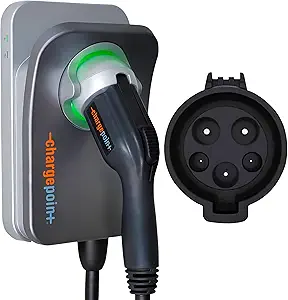
Trusted branding gives this charger immediate appeal for parking lot installations. Its hardwired Level 2 design supports dependable daily charging.
ChargePoint HomeFlex focuses on smart control, safety, and flexible installation. The J1772 connector works with all non-Tesla EVs. Tesla drivers can use an adapter for compatibility.
The charger supports indoor or outdoor installation by an electrician. A cold-resistant cable adds practical durability in harsh conditions. The ChargePoint Mobile App adds remote control, reminders, and charging data.
WiFi is needed for certain app features and troubleshooting steps. It delivers up to 45 miles per hour, depending on the vehicle. Adjustable current from 16 to 50 amps helps match site needs.
UL certification and Energy Star support confidence in its build. It suits property owners wanting a premium, network-backed charging option.
Pros
- Trusted ChargePoint brand with wide charging network access
- App control with reminders and charging data
- Indoor or outdoor installation with cold-resistant cable
Cons
- WiFi is needed for some app features
- Tesla vehicles need an adapter
- Single-port design limits simultaneous charging
Who Should Buy It?
Property managers and site owners wanting a premium, recognized charging brand should consider this unit. It suits locations that value app control, reliable support, and flexible installation. The hardwired setup works well for fixed parking spaces and long-term use.
It also fits sites serving mostly non-Tesla drivers, or Tesla drivers with adapters.
Key Specifications
| Specification | Details |
|---|---|
| Current Rating | 50 A |
| Output Voltage | 240 volts_of_alternating_current |
| Connector Type | Hardwired (J1772)-Non Tesla |
| Cable Length | 23 ft |
| Installation Type | Hardwired; indoor/outdoor rated |
| Smart Features | WiFi app control, reminders, charging data, smart home connectivity |
| Certification | UL-certified, Energy Star |
| Weather Resistance | Indoor/outdoor rated; cold-resistant cable |
| Vehicle Compatibility | All non-Tesla EVs; Tesla with adapter |
A 50-amp current rating gives the charger strong Level 2 output. The 240-volt supply matches common hardwired EV charging setups. Its J1772 connector serves all non-Tesla electric vehicles directly. A 23-foot cable gives drivers helpful reach in parking spaces. The hardwired installation suits fixed stations indoors or outdoors. UL certification and Energy Star support safe, efficient operation. A cold-resistant cable helps the unit handle lower temperatures. These specifications make it practical for regular parking lot use.
The adjustable 16 to 50 amp range helps match circuit capacity. That flexibility can matter at locations with different electrical limits. WiFi app control adds charge monitoring, reminders, and station data. Those features help managers and drivers track charging more easily. The single-port design fits one vehicle at a time. That works best for reserved spaces, employee parking, or home-like settings. Tesla drivers need an adapter, so mixed fleets may need planning. The indoor and outdoor rating helps broaden placement options.
6. EV Charging Station Parking Only Sign

Clear parking control starts with strong nighttime visibility. This reflective EV charging sign helps mark dedicated charging spaces after dark.
The 18 by 12 inch aluminum sign uses bold blue, green, and white graphics for quick recognition.
It is built from thick, rust-free aluminum that resists bending, warping, and corrosion. The reflective surface returns headlight and lot lighting toward approaching drivers, helping the message stay readable in low light.
UV-resistant printing helps the colors stay sharp through sun exposure and changing weather. Rounded corners and two pre-drilled holes make mounting straightforward on posts or flat surfaces.
It suits office buildings, retail centers, apartments, hotels, hospitals, and parking garages with EV chargers. For properties needing clear parking-only messaging, it offers practical visibility and durable construction without complicated setup.
Pros
- Reflective face improves after-dark visibility
- Rust-free aluminum suits outdoor use
- Pre-drilled holes simplify mounting
Cons
- Does not include mounting hardware
- Single sign may not cover large lots
- Fixed wording limits message flexibility
Who Should Buy It?
Property managers, facility teams, and business owners should buy it. It fits locations with installed EV chargers that need clear parking control. The reflective face helps drivers spot charging-only spaces after dark.
Its aluminum build suits outdoor exposure in parking lots, garages, and mixed-use properties. It works well where simple installation and durable signage matter most.
Key Specifications
| Specification | Details |
|---|---|
| Installation Type | Wall Mount |
| Smart Features | None |
| Weather Resistance | Reflective, UV-resistant, rust-free aluminum |
| Vehicle Compatibility | Electric vehicles |
| Signage Size | 18 x 12 inches |
The listed size is 18 by 12 inches, which gives the sign clear presence in a parking area. The portrait layout and pre-printed EV parking message help drivers read it quickly. The wall mount format and two pre-drilled holes make placement simple on suitable surfaces. Rounded corners also help with safer handling during installation. For lots with chargers, these details support clear posting without extra assembly or complicated hardware choices.
Reflective aluminum changes how the sign works after dark. Headlights and parking lot lighting bounce back from the surface, which helps the message stay visible in low light. The UV-resistant print supports color retention during long sun exposure. Rust-free aluminum adds durability in rain, humidity, road salt, heat, and freezing temperatures. These traits help property owners keep charging spaces clearly marked with less frequent replacement or maintenance effort.
7. ChargePoint HomeFlex EV Charger

Tesla parking setups get a focused charging upgrade here. The hardwired NACS design keeps the connection simple and vehicle-friendly.
ChargePoint HomeFlex is a Level 2 charger built for Tesla vehicles. It delivers up to 37 miles of range per hour, depending on the vehicle, and charges far faster than a 120V outlet.
The unit uses a NACS connector and needs a 240-volt, hardwired installation with a 20A or 80A circuit. That makes it a strong fit for parking lots that need steady, dedicated charging for Tesla drivers. Its black housing is compact, with modest wall space needs.
The charger supports one port, so it suits individual parking spaces rather than shared multi-vehicle stations. Build quality appears straightforward and practical, with a design meant for fixed installation. For daily use, the main appeal is speed, direct compatibility, and a cleaner setup than portable charging.
It works best for locations serving Tesla owners who want reliable overnight or extended parking charging.
Pros
- Tesla-specific NACS connector
- Fast Level 2 charging
- Compact hardwired design
Cons
- Single-port setup only
- Requires hardwired installation
- Tesla compatibility limits flexibility
Who Should Buy It?
Buy it for parking spaces serving Tesla drivers who want fixed Level 2 charging. It fits private lots, assigned stalls, and workplace parking where a dedicated charger makes sense. The hardwired setup suits properties that want a permanent installation with straightforward Tesla access.
It is less useful for mixed-EV parking areas that need broader connector support.
Key Specifications
| Specification | Details |
|---|---|
| Current Rating | 50 A |
| Output Voltage | 240 volts |
| Connector Type | NACS (Tesla) |
| Installation Type | Hardwired |
| Vehicle Compatibility | Tesla vehicles |
A 50-amp, 240-volt charger gives Tesla drivers a strong Level 2 setup for parking lots. That combination supports much faster charging than a standard wall outlet. The NACS connector matches Tesla vehicles, so the plug fits naturally without adapters in normal use. Hardwired installation means the charger is fixed in place, which works well for assigned spaces and dedicated charging stalls. The single-port design keeps the unit simple and focused on one vehicle at a time.
In everyday use, these specs point to reliable charging for longer parking stays. The 50-amp rating helps deliver quicker energy transfer, while the 240-volt input supports that pace. Hardwiring can suit property owners who want a permanent installation rather than a plug-in unit. Tesla compatibility means less setup friction for drivers using the space. The compact size also helps when wall space is limited. It suits parking areas that serve one Tesla driver per stall.
8. 40FT Level 1&2 EV Charger

Long parking areas need charging gear that reaches every space without fuss. The ENERGYGENIE 40FT Level 1&2 EV Charger brings portable 240V flexibility to garages, driveways, indoor areas, and outdoor spots. It ships with NEMA 5-15 and NEMA 6-20 plugs, so users can switch between 120V and 240V outlets as needed.
The 40-foot cable helps reach distant parking spots, while the included storage bag keeps the cord tidy during travel. Four current settings, from 8A to 16A, let users match charging speed to circuit capacity.
A delay timer also supports scheduled off-peak charging. ETL and FCC certification add confidence, and the 10-layer safety protection supports everyday use. It suits drivers who want a portable charger with extra reach and flexible power options.
Pros
- 40-foot cable reaches distant parking spots
- Supports both 120V and 240V outlets
- Four current settings offer flexible charging
Cons
- Tesla needs a separate adapter
- No hardwired installation option listed
- Portable design may suit lighter-duty use
Who Should Buy It?
Buyers who need portable charging for garages, driveways, and parking spaces will like this model. It fits drivers who want both Level 1 and Level 2 charging from compatible outlets. The long cable helps reach vehicles parked farther away, while adjustable current settings suit different electrical setups.
It also suits users who value a bagged, portable charger for home use or travel.
Key Specifications
| Specification | Details |
|---|---|
| Current Rating | 16A |
| Output Voltage | 110/240V |
| Connector Type | NEMA 6-20, J1772 |
| Cable Length | 40FT |
| Installation Type | Portable |
| Smart Features | 4 adjustable current levels, delay timer |
| Certification | ETL, FCC |
| Vehicle Compatibility | J1772 vehicles; Tesla requires adapter |
| Signage Size | No data provided |
The 16A current rating points to a portable charger that works within common home circuits. The 110/240V output means it can charge from standard Level 1 outlets or faster Level 2 outlets. A J1772 connector fits many electric vehicles, while Tesla drivers need a separate adapter. The 40-foot cable matters in daily use because it reaches cars parked farther from the outlet. That extra reach can reduce repositioning in crowded parking areas.
The portable design suits drivers who move between parking spots or charging locations. Four adjustable current levels let users choose a lower setting for lighter electrical capacity, or higher output when the circuit allows. The delay timer helps schedule charging for later hours. ETL and FCC certification support confidence in the charging gear, while the listed safety protection adds another layer for regular use. Drivers with varied parking layouts may benefit most from these features.
9. Level 1&2 EV Charger

Portable charging matters when parking space is shared and flexibility counts. The Level 1&2 EV Charger brings plug-and-charge convenience with adjustable current and long cable reach.
AIXINE designed it for J1772 vehicles that need a portable, budget-friendly charging option. The charger supports 8A, 10A, 12A, and 16A settings through a physical button.
It can deliver up to 3.68KW on 240V power, which suits overnight or off-peak charging. A built-in 2 to 8 hour delay timer helps shift charging away from busy electricity hours.
The included NEMA 6-20 plug and 5-15 adapter add flexibility for different outlets. A 25-foot cable gives useful reach for garage bays or outdoor parking spots. ETL, FCC, and UL-related safety claims add confidence for daily use.
IP67 protection and temperature resistance support harsh weather, while the TPU cable and copper core aim for durability. It fits many J1772 EVs and PHEVs, but not Tesla NACS cars.
Pros
- Adjustable current fits different outlet limits.
- Long 25-foot cable helps wider parking access.
- IP67 rating supports outdoor charging conditions.
Cons
- Not compatible with Tesla NACS vehicles.
- 5-15 adapter requires lower current settings.
- Portable design is less fixed than wall units.
Who Should Buy It?
Parking lot operators, fleet drivers, and home users with shared spaces should consider it. It suits buyers who need portable charging for J1772 vehicles and flexible outlet support. The adjustable current and delay timer help manage power use during off-peak hours.
It also works well for drivers who travel often and want a carryable charger.
Key Specifications
| Specification | Details |
|---|---|
| Current Rating | 16 A |
| Output Voltage | 240 volts |
| Connector Type | J1772 |
| Cable Length | 25 ft |
| Installation Type | Portable |
| Smart Features | Adjustable current, 2 to 8 hour delay timer |
| Certification | ETL, FCC, UL |
| Weather Resistance | IP67 |
| Vehicle Compatibility | All J1772 standard electric vehicles |
The charger runs at 240 volts and supports up to 16 amps. That combination gives a practical charging speed for daily parking use. The 25-foot cable helps reach vehicles in wider stalls or awkward spots. J1772 compatibility means it works with many BEVs and PHEVs. The portable format makes it easy to carry between home, work, and travel stops. A physical button lets users change current settings without app setup.
Its ETL, FCC, and UL-related listing claims add safety reassurance for routine charging. IP67 protection helps the unit handle rain, dust, and dirty parking areas. Temperature protection from -40°F to 131°F supports outdoor use in harsh conditions. The included NEMA 6-20 plug and 5-15 adapter widen outlet options, though the adapter needs lower current. That makes it useful for drivers who need flexible charging across different locations and power sources.
10. Grizzl-E 48A Level 2 EV Charger

Parking lots need chargers that can take abuse and keep working. Grizzl-E’s 48A model answers that need with a metal enclosure and hardwired design. It delivers up to 48A at 11.5kW, which suits busy shared parking areas.
The 25-foot J1772 cable gives drivers extra reach at different stall layouts. Its UL Type 4 rated aluminum cast case is built for harsh weather exposure. That makes it a strong fit for outdoor lots, fleets, and workplace parking.
The charger includes Wi-Fi monitoring through Grizzl-E Connect software. Users can check charging status, schedules, and energy data from the app. It also works without an online connection, which helps in spotty network areas.
Load balancing can share power across multiple chargers or favor one vehicle. The hardwire-only setup keeps the installation clean and fixed in place.
For parking lots that need dependable daily charging, it brings useful control and durable construction.
Pros
- Heavy-duty metal enclosure suits exposed outdoor parking areas
- 48A output supports faster charging for frequent use
- Load balancing helps manage multiple chargers
Cons
- Hardwire-only setup needs professional electrical work
- Single port serves one vehicle at a time
- Advanced OCPP needs a one-time activation fee
Who Should Buy It?
Choose this charger for parking lots that need weather-tough, fixed installation charging. It fits workplaces, multifamily lots, and fleets that want higher power delivery and load management. The long cable and Wi-Fi controls help where stalls vary in size or access.
It suits operators who value durability, monitoring, and future integration options.
Key Specifications
| Specification | Details |
|---|---|
| Current Rating | 48 A |
| Output Voltage | 240 volts AC |
| Connector Type | J1772 |
| Cable Length | 25 feet |
| Installation Type | Hardwired |
| Smart Features | Wi-Fi monitoring, charging schedules, energy statistics, diagnostics, load balancing, OCPP support |
| Certification | UL Certified, Energy Star Certified |
| Weather Resistance | UL Type 4 rated aluminum cast enclosure |
| Vehicle Compatibility | Electric vehicles with J1772 charging port |
A 48A current rating means faster charging than basic Level 2 units. It runs on 240 volts AC, which is standard for many dedicated EV circuits. The J1772 connector fits many non-Tesla electric vehicles using the common North American plug style. A 25-foot cable gives extra flexibility across parking spaces and stall positions. Hardwired installation keeps the charger fixed in place, which suits permanent parking lot setups better than portable units.
The smart features matter for sites with many cars and regular turnover. Wi-Fi monitoring supports schedules, diagnostics, and energy tracking, while load balancing helps share power across multiple units. UL and Energy Star certification add confidence for managed properties and commercial installs. The UL Type 4 aluminum cast enclosure helps the charger handle weather exposure outdoors. Drivers with J1772-compatible vehicles benefit most, especially where reliable daily charging and cable reach matter.
Best EV Charging Solutions for Parking Lots: What to Look For Before You Buy
Charging needs and usage patterns
Parking facilities with a large number of vehicles require charging hardware that can keep pace with both current use and future demand. The number of parking spaces to serve directly affects how many ports are needed, while daily charging demand and turnover rate determine whether vehicles will stay connected long enough for slower charging or need faster service to keep traffic moving. Level 2 units are often a practical fit for long dwell times and steady workplace or retail parking, whereas DC fast charging is better suited to high-turnover lots where drivers need a rapid boost and space must free up quickly.
Thinking through these factors early helps ensure the site can handle real-world traffic without creating bottlenecks, underused equipment, or costly upgrades later.
Power capacity and electrical infrastructure
Power capacity and electrical infrastructure can determine whether an EV charging project runs smoothly or becomes expensive to upgrade later. A site’s available electrical service capacity sets the ceiling for how many chargers can operate at once, so it is essential to verify whether the existing service can handle the added demand without causing overloads or interruptions. Load management helps distribute power efficiently across multiple chargers, reducing the need for immediate service increases and keeping utility costs under control, while panel upgrades may be necessary if the current equipment cannot support the expected demand.
Load management helps distribute power efficiently across multiple chargers, reducing the need for immediate service increases and keeping utility costs under control, while panel upgrades may be necessary if the current equipment cannot support the expected demand. Transformer and wiring requirements also matter because insufficient electrical components can limit charging speed, create safety risks, and drive up installation costs. A thorough review of these factors early on helps avoid costly redesigns and ensures the charging setup can support future growth.
Site layout and installation constraints
Parking lot design shapes how far each charger must reach, how drivers move through the site, and how smoothly the system can be installed. A layout with narrow aisles, angled stalls, or limited utility access can affect where units are mounted and whether additional trenching or hardware is needed. Cable length matters just as much, because cords must reach vehicle ports without creating trip hazards or blocking adjacent spaces, and they should still support ADA-compliant access for users with mobility needs.
It also helps to account for indoor versus outdoor placement, since outdoor units must withstand weather, temperature swings, and possible vandalism, while indoor setups may need ventilation, fire-safety review, and coordination with building systems. Careful planning for these site-specific factors reduces installation delays, improves everyday usability, and makes the charging area more reliable over time.
Smart features and network capabilities
Smart features and network capabilities play a major role in how well an EV charging setup performs in a parking area, because the system must handle payments, access control, and ongoing management without creating delays for drivers or staff. A strong platform should support secure payment processing and user authentication, so only approved users can start sessions while transactions remain fast and reliable.
It should also allow remote monitoring and software management, which makes it easier to check charger status, fix issues, update settings, and reduce downtime without visiting each unit in person. In addition, usage analytics and energy reporting help operators understand demand patterns, track electricity costs, and plan future capacity with confidence. These features work together to improve convenience, protect revenue, and keep the charging network scalable as usage grows.
Cost, incentives, and return on investment
Upfront equipment and installation costs can vary widely because the most capable charging units often need stronger electrical service, trenching, permits, and added labor, all of which affect the total project budget. Ongoing maintenance and network fees also matter, since software subscriptions, remote monitoring, payment processing, and periodic servicing can influence long-term operating expenses well beyond the initial setup.
A clear plan for these financial factors helps parking lot operators compare short-term spending with long-term value, avoid hidden costs, and estimate how quickly the system can pay for itself.
Durability, safety, and support
Reliable charging equipment in a parking area must handle constant exposure to weather, public use, and heavy daily demand. Weather resistance is essential because rain, heat, dust, and freezing conditions can shorten equipment life if the unit is not built for outdoor environments, while vandal-resistant housing helps protect cables, screens, and ports from tampering or damage. Safety certifications and compliance standards matter just as much, since they confirm the system has been tested for electrical safety, proper installation, and code requirements that reduce fire and shock risks.
Warranty coverage and vendor support also play a major role, because a strong warranty can limit repair costs and service interruptions, while responsive technical support helps keep the station operating smoothly over time. A well-supported system is easier to maintain, safer for drivers, and more dependable for long-term use.
Setting Up Lot Chargers the Smart Way
Parking lot charging works best when the layout matches how people park and move through the space. Start by checking where cars stay the longest, where power is available, and how drivers enter and exit. A charger placed in the wrong spot can slow traffic or leave cables hard to reach.
For most lots, a mix of charger types works well. Level 2 units are a good fit for shoppers, office visitors, and apartment parking because they charge faster than a standard outlet without requiring the heavy electrical setup of fast charging. DC fast chargers fit busier sites, but they cost more and need stronger electrical service.
Good setup also means thinking about cable length, stall spacing, lighting, and signs. Drivers should be able to find the chargers easily and park without blocking other spaces. Clear markings help reduce confusion and make the area feel organized.
It also helps to plan for daily use. Networked chargers can track usage, set charging schedules, and let site owners manage access. These features can reduce idle time and make billing simpler for staff and visitors.
For best results, match the number of chargers to how many cars usually need a charge at the same time. A small lot may only need a few units, while a busy retail or workplace site may need more. Leave room to add more later as demand grows.
- Place chargers near powered equipment rooms when possible.
- Keep walk paths clear and easy to see.
- Use signs and paint to mark charging spaces.
- Choose charger types based on dwell time and traffic.
- Plan for future expansion before pouring concrete or running conduit.
With careful planning, parking lot chargers can serve drivers well and support steady use without creating headaches for the property owner.
FAQ’s
What Are The Most Cost-Effective Ev Charging Solutions For Parking Lots?
The most cost-effective EV charging solutions for parking lots are usually Level 2 chargers, especially shared or networked units that can serve multiple vehicles throughout the day. To keep costs down, pair them with smart load management and only add DC fast chargers where quick turnaround is essential.
How Do You Choose The Right Type Of Ev Charger For A Parking Lot?
Choose the right EV charger by considering how long vehicles typically stay parked, the number of spaces you want to serve, and the electrical capacity available on-site. Level 2 chargers work well for longer stays, while DC fast chargers are better for quick turnarounds and higher traffic areas.
What Factors Affect The Installation And Maintenance Of Ev Charging Stations In Parking Lots?
Key factors include the parking lot’s electrical capacity, available space, local permitting rules, and the number and type of chargers needed. Maintenance is affected by usage levels, weather exposure, equipment quality, and how easily the stations can be accessed for repairs.
How Can Parking Lots Optimize Ev Charging Capacity And Reduce Wait Times?
Parking lots can optimize EV charging capacity by installing a mix of fast and standard chargers, using smart load management, and placing chargers where they’re easy to access. They can reduce wait times by using reservation systems, real-time availability apps, and clear time limits for charging spaces.
What Incentives Or Rebates Are Available For Installing Ev Charging Solutions In Parking Lots?
Many utilities, local governments, and state or federal programs offer rebates, grants, or tax credits to help offset the cost of installing EV charging stations in parking lots. Availability and amounts vary by location, so it’s best to check with your utility provider and local clean energy programs.
Final Verdict
For property owners comparing the best ev charging solutions for parking lots, the EMPORIA Level 2 EV Charger 48A WiFi is the best overall pick for premium smart charging, especially when remote control, scheduling, and app-based monitoring matter. The Grizzl-E 48A Level 2 EV Charger is the best value option for lots that need rugged outdoor hardware at a lower cost, while ChargePoint HomeFlex fits buyers who want a premium brand name and a polished charging experience.
For lots where parking rules matter as much as charging access, the Electric Vehicles Parking Only While Charging Sign 4-Pack is the best choice for parking enforcement and can help keep stalls available for active charging use. The right pick depends on whether your priority is smart features, price, brand trust, or stall control.
Choose EMPORIA for smart features, Grizzl-E for durable value, ChargePoint HomeFlex for premium branding, and the sign pack if parking enforcement is the main need.