10 Best Full House Generator: Top Choices Reviewed and Compared
Are you trying to find a generator that can keep a full home running during an outage? Power loss can interrupt daily life fast, from lights and appliances to work and comfort. This review focuses on the best full house generator for people who want steady backup power without guesswork.
It is for homeowners who need support for essential circuits or the whole house. You will also see how different models handle power output, fuel use, noise, and setup.
The goal is to help you compare options before you choose one. In this review, I will explain what makes a unit practical, reliable, and worth the cost.
You will also learn which features matter most for real home use.
Best Full House Generators Compared for Reliable Power
| Image | Product | Price |
|---|---|---|
Pick 1  | Westinghouse 12500 Watt Dual Fuel Generator | Check Price On Amazon |
Pick 2  | Generac 14kW Whole Home Generator | Check Price On Amazon |
Pick 3  | Jackery HomePower 3600 Plus Power Station | Check Price On Amazon |
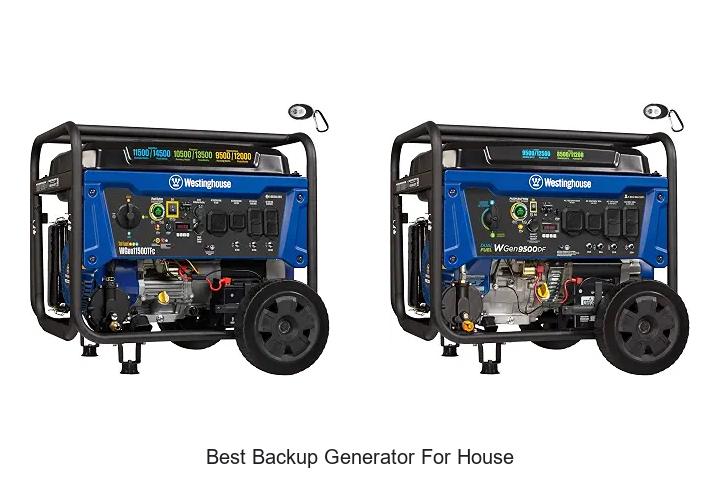
1. Westinghouse 12500 Watt Dual Fuel Generator
Power outages call for serious backup, and this generator brings strong home support. Dual fuel operation and remote starting make it practical for fast emergency use.
Westinghouse pairs a 457cc four-stroke OHV engine with 9,500 running watts on gasoline and 8,500 on propane. That output suits refrigerators, lights, sump pumps, and other household essentials. The 6.6-gallon tank supports up to 12 hours of runtime, helping reduce refueling during long outages.
Build quality also stands out, with a cast iron sleeve, metal construction, and rubber outlet covers for added protection. Two GFCI 120V outlets, a transfer-switch-ready outlet, and an RV-ready outlet add flexibility.
Ease of use is a major strength here. The included key fob, electric start, and recoil backup offer multiple starting options. A fuel gauge, hour meter, and VFT display help track voltage, frequency, and runtime data.
It arrives with oil, an oil funnel, a battery charger, and a tool kit, which helps reduce setup hassle. At 210 pounds, it is not lightweight, but the features suit homeowners who want dependable whole-home backup support and flexible fuel choice.
Pros
- Dual fuel design adds useful backup flexibility
- Remote electric start speeds up emergency operation
- Multiple outlets support household and RV connections
Cons
- Heavy unit is harder to move
- Open-frame design takes more storage space
- Manual refueling still needed during long outages
Who Should Buy It?
Homeowners wanting strong backup power for outages should consider it. It fits households needing support for major appliances, essential circuits, and transfer-switch setups. Dual fuel operation also helps people who want gasoline or propane options.
The remote start, runtime display, and included setup parts suit users who want practical emergency readiness without complicated assembly.
Key Specifications
| Specification | Details |
|---|---|
| Brand | Westinghouse |
| Wattage | 12500 watts |
| Output Wattage | 9500 watts |
| Fuel Type | Gasoline, Propane |
| Power Source | Fuel Powered |
| Voltage | 120 volts |
| Recommended Uses | Residential |
| Item Weight | 210 pounds |
| Special Features | Automatic Voltage Regulation, Dual Fuel, Electric Start, Fuel Gauge, Hour Meter |
| Included Components | Battery Charger, Engine Oil & Funnel, Key FOB, Owner’s Manual, Propane Hose, Quick-Start Guide, Warranty Battery Charger, Engine Oil & Funnel, Key FOB |
The listed wattage tells you how much power the generator can supply during an outage. Gasoline output reaches 12,500 starting watts and 9,500 running watts. Propane lowers output slightly, but still supports major home loads. The 120-volt rating matches common household power needs. The residential use label points to home backup use. A 210-pound frame also signals a stationary setup, rather than frequent carrying around the property.
Special features like electric start, fuel gauge, and hour meter help daily use feel simpler. Automatic voltage regulation can help keep output steadier for connected appliances. The included propane hose, battery charger, and oil accessories reduce extra shopping before first use. A 6.6-gallon tank and 12-hour runtime support longer outage coverage. Together, these details suit homeowners who want practical backup power with fewer setup headaches and clear operating feedback.
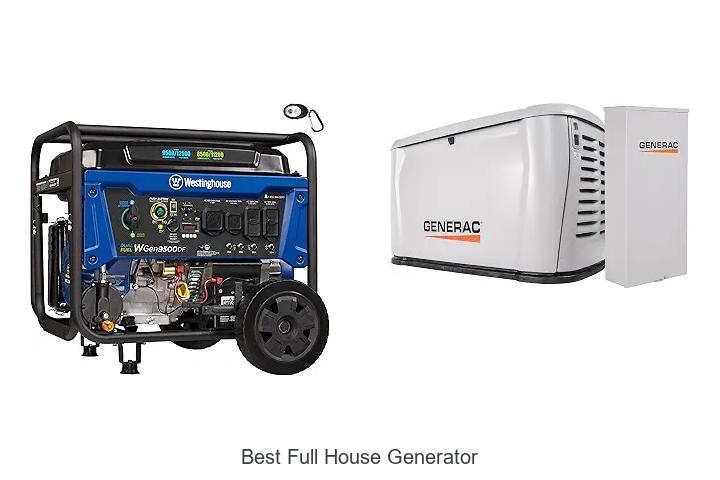
2. Generac 14kW Whole Home Generator
Power outages feel far less disruptive when backup power covers the whole house. The Generac 14kW Whole Home Generator focuses on keeping lights, refrigeration, heating, cooling, and devices running. It delivers 14,000 watts of fuel-powered standby output for residential use, with automatic outage detection and a 200 amp transfer switch.
Built-in cellular connectivity adds remote monitoring through the Mobile Link app. Electronic fuel and ignition control helps reduce fuel use, while oil level sensors support readiness and cold-weather starting. The fully enclosed stainless steel design also helps protect key components outdoors.
It suits homeowners who want whole-home standby power with remote oversight and straightforward automatic operation.
Pros
- Automatic whole-home backup power during outages
- Mobile Link monitoring adds remote status updates
- 200 amp transfer switch included for setup
Cons
- Requires fuel connection and proper installation
- Mobile Link premium subscription is required
- Large unit needs considerable outdoor space
Who Should Buy It?
Homeowners who want automatic backup for major household circuits should consider it. It fits families needing refrigeration, heating, cooling, lighting, and device connectivity during outages. The built-in cellular monitoring also suits owners who travel or want remote status checks.
It works best for residential users seeking whole-home standby power, not portable backup.
Key Specifications
| Specification | Details |
|---|---|
| Brand | Generac |
| Wattage | 14000 watts |
| Output Wattage | 14000 |
| Fuel Type | Fuel Powered |
| Power Source | Fuel Powered |
| Voltage | 240 volts |
| Recommended Uses | Residential |
| Item Weight | 391 pounds |
| Special Features | Automatic Idle Control, Dual Fuel, Fully Enclosed Design, Overload Protection, Super Quiet |
| Included Components | Owner’s Manual |
The 14,000-watt output and 240-volt rating suit whole-home standby use. That capacity can support major household systems during an outage. Residential sizing matches homes that need backup for refrigeration, lighting, and climate control. The 391-pound weight reflects a stationary outdoor unit, not a portable generator. Automatic idle control and overload protection support everyday operation, while the fully enclosed design helps shield internal parts from weather exposure and outdoor wear.
Fuel-powered operation pairs with electronic ignition and fuel control for consistent startup and use. The 200 amp transfer switch helps move power to home circuits automatically when outages happen. Built-in cellular connectivity gives owners remote access through the Mobile Link app, which helps track performance and maintenance alerts. The super quiet design, oil level sensors, and cold-start support make it better suited for homeowners who want steady backup power with less hands-on checking.
3. Jackery HomePower 3600 Plus Power Station
Power outages feel easier when a whole-home battery backup can keep major appliances running. The Jackery HomePower 3600 Plus is built for that role, with high output and flexible expansion.
It delivers 3600W AC output, or 7200W in parallel, for pumps, heaters, and dryers.
Its 3584Wh capacity can expand to 21kWh per unit, or 43kWh with multiple units. Dual voltage support lets it handle 120V and 240V in parallel.
Jackery also highlights ceramic membrane battery cells, 6,000 cycles, and cold-weather operation down to -4 °F. The plug-and-play design with MTS keeps setup simple, and four charging options add flexibility. It can recharge in two hours with hybrid AC and DC, or charge by AC, solar, or a gas generator.
The luggage-style design, wheels, and telescopic handle make moving it easier than many home backup systems. For battery backup buyers, it offers strong capacity, practical portability, and serious household coverage.
Pros
- Strong 3600W output for major home appliances
- Expandable capacity for longer outage coverage
- Plug-and-play design simplifies setup
Cons
- Only two outlets are listed
- Large capacity still needs recharging time
- Heavy compared with smaller portable stations
Who Should Buy It?
Who should buy it: Homeowners who want battery backup for essential appliances will appreciate this unit. It suits families needing power for pumps, heaters, dryers, and other high-demand devices during outages. Buyers who want dual voltage support, expandable storage, and easier setup will find it especially practical.
It also fits people who value quiet, fuel-free backup power for residential use.
Key Specifications
| Specification | Details |
|---|---|
| Brand | Jackery |
| Wattage | 3600W |
| Output Wattage | 3600 |
| Fuel Type | Battery Powered |
| Power Source | Battery-Powered |
| Voltage | 120 volts_of_alternating_current |
| Recommended Uses | Residential |
| Item Weight | 77.2 pounds |
| Special Features | Easy to Install |
| Included Components | Built in Cables, HomePower 3600 Plus, User Manual |
The 3584Wh capacity shows how much stored energy the unit can hold. That storage helps keep household essentials running when the grid goes down. The 3600W output tells you how much power it can deliver at once. With dual voltage support in 120V and 240V in parallel, it can match more home devices. Two outlets are listed, so buyers should plan their loads carefully for daily backup use.
The 77.2-pound weight and luggage-style design point to a unit built for moving, not carrying lightly. Wheels and a telescopic handle help during setup or repositioning. The easy-to-install feature and built-in cables also reduce setup effort. Its battery-powered design supports quiet residential use, while the expandable capacity and fast charging options help households keep power available longer. Families with essential appliances benefit most from that flexibility.
4. Honda EM6500SX Generator

Quiet backup power matters when storms knock out a home’s essentials. Honda’s EM6500SX focuses on stable output, low noise, and easy starting.
It is built for residential backup use and handles large appliances well. The generator delivers 6,500 running watts and 7,000 starting watts for ten seconds. That extra surge helps start equipment like freezers, furnaces, and sump pumps.
It runs on gasoline and uses electric start for simpler operation. Honda also adds iAVR technology for steadier power to sensitive devices.
Noise stays between 64 and 66 dB(A), which suits neighborhood use. The 6.2-gallon tank supports long runtime for overnight outages. A wheel kit helps with movement, though the unit is heavy.
It supports 120 and 240 volts, which adds flexibility at home. The My Generator app adds Bluetooth control and monitoring. For buyers wanting quieter gas backup power, it offers strong practical value.
Pros
- Low noise for a powerful gas generator
- Electric start simplifies startup during outages
- iAVR helps steady power for sensitive equipment
Cons
- Heavy unit at 231.7 pounds
- Not available in California
- Large size may limit storage space
Who Should Buy It?
Homeowners needing quiet backup power for larger appliances should consider it. It fits households that want reliable gas operation, electric starting, and stable output for sensitive electronics. People who value app-based monitoring and long runtime will appreciate the added convenience.
It suits users who can handle a heavier generator and need 120/240-volt flexibility for residential outage support.
Key Specifications
| Specification | Details |
|---|---|
| Brand | Honda |
| Wattage | 6500 watts |
| Output Wattage | 7000 watts |
| Fuel Type | Gasoline |
| Power Source | Gasoline |
| Voltage | 120 |
| Recommended Uses | Residential |
| Item Weight | 231.7 pounds |
| Special Features | Electric start, Bluetooth, iAVR technology |
| Included Components | Wheel kit |
The 6,500-watt rating shows how much power it can supply during normal use. The 7,000-watt output helps larger appliances start without strain. Gasoline fuel and a 6.2-gallon tank support longer household backup sessions. The 120-volt rating fits common home needs, while 240-volt capability adds more flexibility. Residential use means it is aimed at homes needing dependable outage power.
At 231.7 pounds, it is not a lightweight unit. The included wheel kit helps with moving it around a driveway or garage. Electric start reduces effort when power is needed quickly. Bluetooth app control adds remote monitoring and stop functions. The quiet 64 to 66 dB(A) range helps keep noise lower during use. These details suit users who want calmer, easier backup power at home.
5. EF ECOFLOW DELTA Pro Portable Power Station

Clean battery power gives the EF ECOFLOW DELTA Pro a clear advantage for home backup use. Its 3600Wh capacity and 3600W AC output support heavy-duty devices indoors or outdoors.
The DELTA Pro uses an LFP battery and offers expandable storage up to 25kWh. That range makes it useful for home battery backup, camping, RV travel, and emergencies.
A single unit provides 15 output methods, including USB-A, USB-C, AC outlets, DC outlets, a car output, and an Anderson port. It also supports X-Boost up to 4500W, with two units reaching 7200W.
Charging flexibility stands out here. It can recharge in 1.8 hours with a 240V outlet, 2.7 hours with an 1800W wall outlet, or 2.8 hours using four 400W solar panels.
The app smart control feature adds easier monitoring and management. At 99 pounds, it is not light, but the build feels purpose-made for serious portable power. It suits buyers who want cleaner backup power and flexible expansion.
Pros
- High 3600Wh capacity for home backup
- Expandable up to 25kWh with accessories
- Many output ports for multiple devices
Cons
- Heavy at 99 pounds
- Large size limits easy carrying
- Accessory expansion costs extra
Who Should Buy It?
Buyers needing clean portable power for home backup should consider it. It suits households, RV owners, campers, and work sites needing battery-powered output. The expandable capacity helps users who want more runtime later.
Its many outlets also fit people running several devices at once.
Key Specifications
| Specification | Details |
|---|---|
| Brand | EF ECOFLOW |
| Wattage | 3600 watt-hours |
| Output Wattage | 3600 watts |
| Fuel Type | Non-gasoline |
| Power Source | Battery Powered |
| Voltage | 120 volts |
| Recommended Uses | Commercial/Residential, Outdoor Use |
| Item Weight | 99 pounds |
| Special Features | APP Smart Control, Expandable Capacity, X-BOOST Technology, X-STREAM Fasting Charging |
| Included Components | 3600Wh Power Station, AC Charging Cable, Car Charging Cable, DC5521 to DC5525 Cable |
The 3600Wh battery capacity means it stores a large amount of energy. That helps when running appliances during outages or while camping. The 3600W output gives enough power for many heavy-duty devices at once. Since it uses battery power and no gasoline, it works cleanly indoors and outdoors. The 120-volt design matches common household devices, which makes setup straightforward for many users. The included AC, car, and DC cables support several charging methods.
The special features shape how the unit fits daily use. APP Smart Control helps users check and manage power more easily. X-BOOST Technology raises single-unit output up to 4500W for demanding gear. X-STREAM Fast Charging reduces wait time during recharging, especially from wall power or solar input. The 99-pound weight reflects a large battery system, so it suits users who value capacity more than portability. Expansion support helps households needing longer runtime and more backup flexibility.
6. DuroMax XP13000EH Dual Fuel Portable Generator

Power outages call for serious output, and this generator brings plenty. Dual-fuel flexibility makes it useful during storms, home backup needs, and RV trips.
The DuroMax XP13000EH delivers 13,000 starting watts and 10,500 running watts, giving it the capacity for whole-home backup tasks. Its push-button electric start and front-facing fuel selection make operation straightforward.
The heavy-duty all-metal frame and power panel add durability, while no-flat tires help it move over rough ground. Copper windings support long-term use, and the transfer switch-ready 50 amp outlet adds convenience for home connections. It suits homeowners who need high power in a portable format and want gas or propane options.
Pros
- High starting power for home backup needs
- Dual fuel design adds practical flexibility
- Electric start simplifies operation
Cons
- Heavy at 234 pounds
- Runtime is limited to 3 hours
- Only two total outlets
Who Should Buy It?
Who should buy it: Homeowners needing portable, high-output backup power will value this model. It fits people who want gas or propane operation, electric starting, and transfer switch-ready support. It also suits RV owners and jobsite users who need strong output in a mobile package.
Buyers who want a durable metal build and easy fuel switching may find it especially useful.
Key Specifications
| Specification | Details |
|---|---|
| Brand | DuroMax |
| Wattage | 13000 watts |
| Output Wattage | 10500 watts |
| Fuel Type | Gasoline/Propane |
| Power Source | Gas |
| Voltage | 240 volts |
| Recommended Uses | Residential |
| Item Weight | 234 pounds |
| Special Features | CO Sensor, Dual Fuel, Electric Start, Foldable Handle, Hour Meter, Low Oil Shutdown, Portable |
| Included Components | XP13000EH Generator, Oil Funnel, Spark Plug Wrench, Tool Set, Wheel & Handle Kit, Owner’s Manual |
The XP13000EH lists 13,000 starting watts and 10,500 running watts. That gap matters during startup, when appliances need extra power. A 240-volt output supports larger household loads and transfer switch use. Dual fuel operation means it can run on gasoline or propane. The 234-pound weight shows it is a substantial machine, not a lightweight backup unit. Its residential recommendation fits homes that need serious emergency power for essential circuits and larger appliances.
Several features make daily use easier for homeowners and RV users. Electric start reduces pulling effort, while foldable handles help with storage and movement. The CO sensor, low oil shutdown, and hour meter support safer, more informed operation. A transfer switch-ready 50 amp outlet helps with home hookup planning. Heavy steel construction and copper windings point to long-term durability. The included wheel and handle kit also helps offset the generator’s size during setup and transport.
7. PowerSmart 4300 Watt Portable Generator

Power outages feel easier to handle when backup power stays simple and dependable. A compact inverter generator like this one can cover household basics without taking up much space.
PowerSmart delivers 4300 starting watts and 3500 running watts, which suits fridges, TVs, and other everyday appliances during blackouts. Its 1.9-gallon tank can run up to 12 hours at 25% load, so refueling stays infrequent.
Inverter technology provides clean power for phones, tablets, and cameras. The control panel includes a twist-lock outlet, a duplex household outlet, and a 12V DC port. At 68 pounds, it remains portable for home storage or camping use.
The steel build, low-oil shutdown, digital display, and cold start technology add practical convenience. It suits budget-minded buyers who want backup power without oversized equipment.
Pros
- Clean inverter power for sensitive electronics
- Long runtime from a small fuel tank
- Portable size fits home and camping use
Cons
- Running wattage limits larger appliance loads
- Gasoline operation needs fuel storage
- Heavier than ultra-light portable models
Who Should Buy It?
Households needing basic emergency backup will get the most from it. It fits buyers who want refrigerator support, lighting, and device charging during outages. The inverter output also suits families using sensitive electronics.
Campers may like the portable size and long runtime. It works best for smaller homes, apartments with outdoor storage, or anyone wanting practical coverage without oversized generator weight.
Key Specifications
| Specification | Details |
|---|---|
| Brand | PowerSmart |
| Wattage | 3500 watts |
| Output Wattage | 3500 watts |
| Fuel Type | Gasoline |
| Power Source | Fuel Powered |
| Voltage | 120 volts |
| Recommended Uses | Camping, Residential |
| Item Weight | 68 pounds |
| Special Features | Cold Start Technology, Digital Display, Portable |
| Included Components | Manual, Screwdriver, Spark Plug Wrench |
The 4300 starting watts help appliances start under load, while 3500 running watts support ongoing use. That range covers common household essentials like fridges and TVs during outages. The 120-volt output matches standard home equipment, and the gasoline fuel source keeps operation familiar for many owners. A 1.9-gallon tank supports long stretches between refills. The 68-pound weight also keeps it manageable for moving around a garage, shed, or campsite.
Inverter technology matters because it delivers clean power below 3% THD. That helps phones, tablets, cameras, and other sensitive electronics. The digital display makes output status easier to check, while cold start technology helps in cooler conditions. A low-oil shutdown adds protection during use, and the steel body supports durability. With four outlets, including a twist-lock and household duplex option, it suits users who want flexible connections for home backup or portable outdoor power.
8. Westinghouse 18000 Peak Watt Dual Fuel Generator

Power-hungry homes need backup that can handle serious loads. Dual fuel flexibility and remote electric start make operation easier.
Westinghouse builds this open-frame generator for maximum portable power, with 14,500 running watts on gasoline and 18,000 peak watts for startup surges. The 713cc engine uses full-pressure lubrication and an oil filter for cleaner operation, while copper windings help keep temperatures down. Less than 5% THD supports sensitive electronics like phones, computers, and TVs.
A 10.5-gallon tank can deliver up to 16 hours at 25% load, depending on fuel and conditions. Transfer switch readiness, multiple outlets, and CO safety shutdown suit home backup use. It is heavy, but the feature set fits larger households needing serious emergency capacity.
Pros
- High power output for large home loads
- Dual fuel operation adds flexibility
- Remote start and transfer switch readiness
Cons
- Heavy to move at 352 pounds
- Open-frame design is bulky indoors
- Transfer switch sold separately
Who Should Buy It?
Buyers with larger homes and higher backup needs should consider it. It suits users who want portable generator power with home backup features. Dual fuel support helps when gasoline or propane availability changes.
The remote electric start, CO sensor, and transfer switch compatibility make it practical for family households, garages, and emergency planning. It fits people who need strong output and can handle the size.
Key Specifications
| Specification | Details |
|---|---|
| Brand | Westinghouse |
| Wattage | 18000 watts |
| Output Wattage | 14500 watts |
| Fuel Type | Gasoline, Liquefied Petroleum Gas |
| Power Source | Fuel Powered |
| Voltage | 240 volts |
| Recommended Uses | Residential |
| Item Weight | 352 pounds |
| Special Features | Automatic Idle Control, Automatic Voltage Regulation, CO Sensor, Dual Fuel, Electric Start, Fuel Gauge, Hour Meter, Overload Protection, USB Port Auto |
| Included Components | Battery Charger, Engine Oil & Funnel, Key FOB, Owner’s Manual, Propane Hose, Quick-Start Guide, Warranty Battery Charger, Engine Oil & Funnel, Key FOB |
The 18,000-watt peak rating shows strong startup support for large appliances. The 14,500-watt running output reflects the power available during normal use. A 240-volt output suits home backup setups with transfer switches or interlock kits. Gasoline and propane fuel options add flexibility when one fuel is easier to find. The 10.5-gallon tank supports long runtime, while the 352-pound weight shows this is a large, stationary-style portable unit.
Special features like electric start, remote start, and fuel gauge simplify daily handling. The CO sensor and low-oil shutdown add automatic protection during operation. Automatic voltage regulation and less than 5% THD help support sensitive electronics and steadier power delivery. The included propane hose, battery charger, oil funnel, and key fob help with setup right away. These features favor homeowners who want strong backup power without giving up portability completely.
9. Anker SOLIX C1000 Gen 2

Light portable power meets serious output in a compact package. The Anker SOLIX C1000 Gen 2 pairs a 1,024Wh battery with 2,000W output for flexible backup power. It suits camping trips, laptop backup, and small home essentials without taking up much space.
The unit is 14% smaller and 11% lighter than similar models, which helps when storage and transport matter. Nine outlets support several devices at once, while the 10 ms UPS switchover helps keep CPAP machines and computers running. The LiFePO4 battery is rated for 4,000 cycles with 80% capacity remaining, which supports long service life.
Recharge options are strong, with 49-minute ultra-fast AC charging and 600W solar input for off-grid use. The included 200W solar panel adds solar flexibility, though the generator and panel ship separately.
App control also adds TOU scheduling and monitoring for easier daily use. It suits buyers wanting portable backup power without a bulky setup.
Pros
- Compact size makes transport and storage easier
- Fast AC charging and solar recharge options
- Nine ports support multiple devices at once
Cons
- Solar panel and generator ship separately
- Panel output may not suit larger arrays
- Battery capacity suits light, not whole-home, loads
Who Should Buy It?
Buyers wanting light portable power for camping, laptop backup, or small home essentials should consider it. It fits users who need quick charging, app control, and a compact form factor. People relying on CPAP machines or other sensitive electronics may value the 10 ms UPS switchover.
It also suits households wanting a portable backup unit that stores easily.
Key Specifications
| Specification | Details |
|---|---|
| Brand | Anker |
| Wattage | 2000 watts |
| Output Wattage | 2000 watts |
| Fuel Type | solar |
| Power Source | Battery Powered |
| Voltage | 120 volts |
| Recommended Uses | Camping |
| Item Weight | 24.9 pounds |
| Special Features | Portable |
| Included Components | Anker SOLIX C1000 Gen 2 Portable Power Station, AC charging cable, Quick Start Guide, and Safety and Warranty Card. Anker SOLIX C1000 Gen 2 Portable P |
A 2,000W output rating means the unit can handle many everyday appliances and electronics. The 1,024Wh battery capacity shows how much energy it stores for later use. The 120-volt rating matches common household gear, which helps with simple plug-in operation. Nine total outlets allow several devices to run at once. The 24.9-pound weight keeps it manageable for moving between rooms, vehicles, and campsites. These specs suit users who want portable backup power without carrying a large, heavy system.
The solar fuel type and battery-powered design give flexible charging choices. Solar input up to 600W supports off-grid replenishment, while the AC charger can fill the unit quickly. The compact 15.1 x 8.2 x 9.6 inch size helps with storage in smaller spaces. Portable construction also makes it easier to bring along for camping or temporary backup use. The included power station, AC cable, and guides simplify setup for people who want a straightforward power source for light backup needs.
10. Westinghouse 12500 Peak Watt Tri-Fuel Generator

Tri-fuel flexibility gives this generator broad backup options for home power. It can run on gasoline, propane, or natural gas, which adds real convenience.
The Westinghouse 12500 Peak Watt Tri-Fuel Generator delivers strong starting power and dependable running output. It offers 12500 peak watts on gasoline, plus 11200 on propane and 9500 on natural gas.
Running wattage reaches 9500 on gasoline, 8500 on propane, and 7500 on natural gas.
The unit includes remote electric start, recoil start, and an included key fob. It also comes transfer switch ready, with household, L14-30R, and RV outlets.
GFCI outlets and rubber covers add everyday safety. A 457cc OHV engine, cast iron sleeve, low oil shutdown, CO shutdown, and digital hour meter support dependable operation. The 6.6-gallon tank can provide up to 12 hours of runtime.
At 215 pounds, it is portable for an open-frame generator, and it suits homeowners wanting flexible backup power for essential circuits.
Pros
- Tri-fuel operation adds backup fuel flexibility
- Remote start and electric start included
- Transfer switch ready with multiple outlet types
Cons
- Heavy at 215 pounds
- Open-frame design is less compact
- Natural gas output is lower than gasoline
Who Should Buy It?
Homeowners who want flexible backup power should consider this generator. It suits people with access to gasoline, propane, and natural gas. The transfer switch ready design works well for residential backup setups.
It also fits users who want remote starting and multiple outlet choices. Households needing strong wattage for essential systems will benefit most.
Key Specifications
| Specification | Details |
|---|---|
| Brand | Westinghouse |
| Wattage | 12500 watts |
| Output Wattage | 9500 watts |
| Fuel Type | Natural Gas |
| Power Source | Fuel Powered |
| Voltage | 240 volts |
| Recommended Uses | Residential |
| Item Weight | 215 pounds |
| Special Features | Automatic Voltage Regulation, CO Sensor, Electric Start, Fuel Gauge, Hour Meter, Overload Protection, Tri-Fuel |
| Included Components | Assembly Wrench, Battery Charger, Engine Oil & Funnel, Key FOB, Owner’s Manual, Propane Hose, Quick-Start Guide |
The 12500 peak watt rating shows strong startup capacity for home backup loads. Running wattage reaches 9500 watts on gasoline, which supports steady household use. Tri-fuel support means it can operate on gasoline, propane, or natural gas. The 240-volt output suits transfer switch setups and larger appliances. A 6.6-gallon fuel tank and 12-hour runtime help reduce refill frequency. The 457cc engine gives the generator enough displacement for demanding residential power needs.
Automatic voltage regulation helps keep power output steadier for connected equipment. The CO sensor and low oil shutdown add protective functions during operation. Electric start, recoil start, and a key fob make starting more convenient. The hour meter helps track usage for maintenance planning. At 215 pounds, the unit is substantial, so moving it takes effort. Homeowners with backup circuits, RV power needs, or fuel flexibility will benefit most from these features.
Best Full House Generator: The Ultimate Buying Guide for Reliable Whole-Home Power
Power output and wholehome coverage
Power output determines whether a standby unit can keep essential rooms and appliances running without overload, so the first step is to calculate the total wattage your home truly needs. A practical estimate should include everything you expect to run at once, from lighting and refrigeration to HVAC, sump pumps, and medical equipment, because the combined load can quickly exceed a unit that seems large enough on paper. It is also important to match the generator’s size to the specific circuits in your home, since a system that cannot support the right breakers or transfer switch setup may leave critical areas unpowered.
Just as important, many appliances draw a much higher surge at startup than they do during normal operation, and that brief spike can trip an undersized system even if the running load appears manageable. Factoring in these startup surges helps ensure the unit delivers reliable whole-home coverage instead of shutting down at the very moment you need it most.
Fuel type and runtime
Fuel type and runtime directly affect how reliably a standby system can keep a home running through an outage. Natural gas offers the convenience of a continuous supply where a utility line is available, while propane provides strong energy storage and cleaner storage stability for homes that are off the gas grid. Diesel units are often valued for robust output, but they usually require more attention to fuel storage and maintenance.
It is also important to evaluate fuel efficiency under load, since real-world performance can drop as more appliances draw power at the same time. A unit that performs well at typical household demand will deliver longer, more practical operation during extended outages without constant refueling.
- Natural gas: Convenient continuous supply, best for homes with an existing gas line.
- Propane: Excellent for stored backup fuel and longer shelf life.
- Diesel: Strong output and durability, but often needs more fuel management.
| Fuel option | Main advantage | Runtime consideration |
|---|---|---|
| Natural gas | No refilling needed while utility service remains available | Depends on gas supply continuity and unit efficiency |
| Propane | Easy to store on-site for emergency use | Runtime depends on tank size and household load |
| Diesel | High power delivery for demanding setups | Runtime varies with load and stored fuel volume |
For dependable home backup, the ideal system is one that balances fuel availability, efficient operation under stress, and enough runtime to cover the appliances you use most.
Transfer switch and installation requirements
A generator that ties into a home’s electrical system must match the panel capacity and wiring setup to work safely and efficiently. Transfer switch and installation requirements deserve close attention because they determine how smoothly backup power can reach essential circuits during an outage.
- Determine compatibility with your electrical panel. The unit must work with your home’s breaker panel size, voltage, and circuit layout so it can support the loads you expect without creating overload risks.
- Review automatic vs manual transfer switch options. An automatic switch restores power with minimal interruption, while a manual switch usually costs less but requires you to act during an outage.
- Factor in professional installation needs. Proper setup often involves electrical permits, code compliance, fuel line connections, and load management, all of which are best handled by a qualified installer.
Careful attention to these points helps ensure reliable performance, safer operation, and a smoother transition from utility power to backup power when your home needs it most.
Noise level and placement
Noise output and installation location can determine whether a standby generator feels practical or becomes a constant nuisance. A model with a lower decibel rating is usually easier to live with, especially in neighborhoods where sound travels easily, so it is worth comparing specifications at different load levels rather than relying on a single advertised number. Local setback and zoning rules also matter, since many areas restrict how close equipment can sit to property lines, windows, or neighboring homes, and those limits may affect where the unit can be installed.
Ventilation should never be overlooked, because the enclosure needs enough airflow to support safe operation and prevent overheating, while weather exposure can influence how well the system holds up over time. A sheltered, code-compliant spot with proper clearance often delivers quieter performance, safer exhaust handling, and better long-term durability.
Maintenance, reliability, and warranty
A whole-house generator works best over the long term only if routine care is simple, replacement parts are easy to obtain, and service technicians are readily available in your area. A strong support network can reduce downtime, while a well-designed unit with solid construction usually delivers more consistent performance during long outages.
- Review maintenance schedules and service access: Check how often oil changes, inspections, and filter replacements are needed, and confirm that local technicians or authorized service centers are available to handle repairs without long delays.
- Consider brand reputation and build quality: Established brands with durable components, proven engine design, and dependable performance records are often a safer choice because they tend to hold up better under heavy use.
- Compare warranty length and coverage terms: A longer warranty is only valuable if it also covers key parts, labor, and major failures, so read the fine print to understand what is protected and what conditions could void coverage.
These details matter because a generator is a long-term investment, and the right combination of reliable service support, strong construction, and clear warranty protection can save time, money, and stress after installation.
Budget and longterm value
A generator that costs less upfront can become expensive over time if it uses more fuel, needs frequent repairs, or requires costly installation upgrades. The initial price should be balanced against the work needed to set up the system, including transfer switch installation, electrical modifications, and any permits or labor fees that may apply. Ongoing expenses matter just as much, since fuel consumption, oil changes, filters, and routine servicing can add up quickly during frequent outages or extended use.
- Upfront cost: Compare the unit price with installation charges so the total project cost stays realistic.
- Fuel and maintenance: Estimate how much it will cost to run the system regularly and keep it in reliable condition.
- Features and lifespan: Pay for useful functions that support durability and performance rather than extras that will not provide lasting value.
A model with stronger components, better efficiency, and a longer service life often delivers better value than a cheaper option that wears out early. Weighing these factors together helps ensure the generator fits both immediate needs and long-term household costs.
Safe Use Tips for Home Generators
A whole-house generator can keep lights, heat, and key appliances running during an outage. Safe use starts before the power goes out. Read the manual, follow local codes, and have the unit installed by a qualified professional if the model needs hardwiring or a transfer switch.
Place the generator outdoors in a dry spot with plenty of open space around it. Never run it in a garage, basement, porch, or near windows and doors. Carbon monoxide can build up fast and cannot be seen or smelled.
Fuel handling also matters. Store gasoline, propane, or diesel in approved containers only. Keep fuel away from heat sources, and let the generator cool before refilling. For standby models, check that the fuel supply and shutoff valves are set up the way the maker recommends.
Use the right extension cords and power settings. Heavy-duty outdoor-rated cords reduce overheating risk. Do not overload the generator with more appliances than it is built to handle. A load manager or transfer switch can help balance power use and protect circuits.
- Test the system on a regular schedule.
- Keep vents, intake areas, and filters clean.
- Check oil levels, battery condition, and visible wear.
- Use a carbon monoxide alarm near sleeping areas.
Before storm season, walk through the startup and shutdown steps. Keep a simple checklist near the unit. Clear labeling saves time and lowers the chance of mistakes when the power fails.
FAQ’s
What Features Should I Look For In The Best Full House Generator?
Look for a full house generator that is accurate, reliable, and easy to use, with adjustable settings to match different game rules. It should also offer fast results, clear output, and good support for multiple platforms or devices.
How Do Full House Generators Work?
Full house generators create a list of all possible “full house” poker hands by combining three cards of one rank with two cards of another rank. They work by systematically choosing the ranks and suits that fit the full house pattern.
Are Full House Generators Accurate And Reliable?
Full house generators are generally not accurate or reliable, since they usually create random combinations without considering actual game rules, strategy, or probability. They can be useful for fun or practice, but not for trustworthy predictions or serious decision-making.
Which Full House Generator Is Best For Beginners?
For beginners, the best full house generator is usually **PokerNews’ Full House Generator** or **CardPlayer’s hand generator** because they’re simple, free, and easy to use. If you want, I can also recommend one based on whether you need it for learning, testing, or game development.
Can A Full House Generator Help Improve My Poker Strategy?
Yes, a full house generator can help you practice recognizing strong hand patterns and improve your decision-making in poker. It’s useful for study and simulation, but it won’t replace real-game experience and strategy.
Final Verdict
For most households, the Westinghouse 12500 Watt Dual Fuel Generator is the best full house generator pick because it balances strong output, dual-fuel flexibility, and broad backup coverage without pushing into the highest price tier. It fits buyers who want reliable all-around home backup for outages, with enough power for many essential circuits and appliances.
The Generac 14kW Whole Home Generator is the best value choice for homeowners who want a more permanent whole-home standby setup and are comfortable investing in a fixed system. For battery backup, the Jackery HomePower 3600 Plus Power Station suits buyers who want quieter operation and indoor-friendly energy storage. If portability matters most, the Westinghouse 18000 Peak Watt Dual Fuel Generator is the strongest pick for maximum portable power and larger temporary backup needs.
Choose the Westinghouse 12500 Watt Dual Fuel Generator for the best mix of whole-home backup power, flexibility, and value.