10 Best Generator for Small House: Our Favorite Picks Compared
A small house needs power that is steady, quiet, and easy to manage. When the lights go out, many homeowners want a simple backup that fits limited space.
That search often leads to the best generator for small house use, especially for people who want reliable support without a large machine. This kind of generator suits apartments, tiny homes, cottages, and smaller family houses that need only the basics covered. The right model can keep lights on, protect food in the fridge, and run a few key appliances.
It can also offer better fuel use and easier storage than larger units. This review will help you compare the main features, power output, fuel type, and noise level.
Best Generators for Small House Power Needs
| Image | Product | Price |
|---|---|---|
Pick 1  | Westinghouse 12500 Watt Dual Fuel Portable Generator | Check Price On Amazon |
Pick 2  | PowerSmart 4300 Watt Portable Generator | Check Price On Amazon |
Pick 3  | Genkins 4500W Inverter Generator | Check Price On Amazon |
1. Westinghouse 12500 Watt Dual Fuel Portable Generator
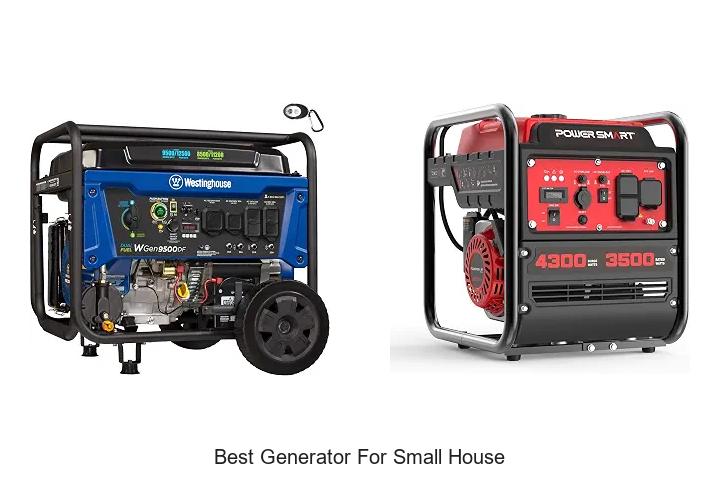
Power outages can feel manageable when backup power starts quickly and covers real household loads. The Westinghouse 12500 Watt Dual Fuel Portable Generator aims squarely at whole-home backup with flexible fuel options. It delivers 9500 running watts on gasoline and 8500 on propane, giving strong support for essential circuits.
Remote start, electric start, and recoil start add convenience during stressful outages. The included key fob makes starting easier from a distance.
The heavy-duty 457cc four-stroke OHV engine uses a cast iron sleeve for durability. A 6.6-gallon fuel tank supports up to 12 hours of runtime. The VFT display shows voltage, frequency, and lifetime hours in real time.
Two GFCI household outlets, a transfer-switch-ready outlet, and an RV-ready outlet cover many setups. Rubber outlet covers add protection, while the metal construction and low-oil shutdown support long-term use. It suits homeowners who want serious backup power and flexible hookup options.
Pros
- Strong output for whole-home backup needs
- Dual fuel design adds useful flexibility
- Remote start improves convenience during outages
Cons
- Heavy unit at 210 pounds
- Open-frame design is less compact
- Requires setup for home transfer use
Who Should Buy It?
Buyers needing whole-home backup power should consider this model. It fits small houses with essential appliances, lights, and transfer-switch setups. Dual fuel operation helps when one fuel source is harder to find.
The remote start, electric start, and clear outlet layout also suit users who want faster outage response without complicated controls.
Key Specifications
| Specification | Details |
|---|---|
| Brand | Westinghouse |
| Running Watts | 9500 watts |
| Peak Watts | 12500 watts |
| Fuel Type | Gasoline, Propane |
| Start Type | Remote, electric, recoil |
| Voltage | 120 volts |
| Runtime | 12 hours |
| Weight | 210 pounds |
| Outlet Options | Two GFCI 120V 5-20R, L14-30R, 14-50R |
| Special Features | Dual fuel, electric start, fuel gauge, hour meter, automatic voltage regulation |
| Recommended Use | Residential, whole-home backup |
The 9500 running watts and 12500 peak watts indicate strong household support. That output can handle many essential loads during an outage. The dual-fuel design lets it run on gasoline or propane. A 6.6-gallon tank supports up to 12 hours of runtime. The 120-volt output and multiple receptacles help connect common appliances. Real-time voltage, frequency, and hour readings make monitoring simpler during longer use.
Remote, electric, and recoil starting give users several ways to power up quickly. That flexibility helps when conditions are dark or stressful. The 210-pound weight reflects a larger generator built for serious backup duties. GFCI outlets and rubber covers add practical safety details for home use. The transfer-switch-ready and RV-ready outlets help people with different connection needs. Homeowners who want stronger backup coverage will benefit most from these specifications.
2. PowerSmart 4300 Watt Portable Generator
Powerful backup support meets a compact, portable frame here. It is built for households that need basic emergency power. With 4300 starting watts and 3500 running watts, it can support fridges, TVs, and other household appliances during outages.
Inverter technology delivers clean power under 3% THD, which helps sensitive electronics stay protected. The 1.9-gallon tank can run up to 12 hours at 25% load.
Its steel build, digital display, and cold start technology add practical everyday usability. At 68 pounds, it stays manageable for a portable gas generator.
Four outlets give flexible connection options, including a twist-lock outlet and standard household sockets. Eco-mode and low-oil shutdown add useful control. It suits buyers who want dependable backup power without overcomplicating setup.
Pros
- Good power output for essential household backup
- Clean inverter power for sensitive electronics
- Long runtime on a modest fuel tank
Cons
- Gas-powered operation needs fuel storage and handling
- 68-pound weight may feel heavy for some users
- Power output suits essentials, not larger whole-home loads
Who Should Buy It?
Buyers needing budget-friendly backup power for a small house should consider it. It fits homes that want support for refrigerators, televisions, phones, and similar essentials during outages. The portable design also suits people who may use it for camping or occasional residential backup.
Its clean inverter output and long runtime make it practical for light emergency use.
Key Specifications
| Specification | Details |
|---|---|
| Brand | PowerSmart |
| Running Watts | 3500 watts |
| Peak Watts | 4300 watts |
| Fuel Type | Gasoline |
| Start Type | Cold Start Technology |
| Voltage | 120 volts |
| Runtime | Up to 12 hours at 25% load |
| Weight | 68 pounds |
| Outlet Options | 120V 30A L5-30R twist-lock outlet, 120V 20A 5-20R duplex household outlet, 12V 8A DC port |
| Special Features | Inverter technology, Eco-mode, digital display, cold start technology, low-oil shutdown, parallel ready |
| Recommended Use | Camping, Residential |
The 4300 starting watts and 3500 running watts define what it can power. In everyday use, that means essentials like a fridge, TV, and other household appliances. The 120-volt output matches common home equipment, while inverter technology keeps power cleaner for phones, tablets, and cameras. A 1.9-gallon gasoline tank supports up to 12 hours at 25% load. That runtime helps reduce refueling during an outage and supports longer overnight use.
Its 68-pound weight makes portability possible, though not effortless for everyone. The steel build and 4-stroke engine point to a practical, work-ready design for residential backup and camping. Cold start technology can help starting in cooler conditions, while the digital display gives useful operating feedback. Eco-mode and low-oil shutdown add more control during use. The twist-lock outlet, duplex outlet, and DC port give flexible hookup options for different needs.
3. Genkins 4500W Inverter Generator
Portable backup power gets a practical twist here. The Genkins 4500W Inverter Generator blends clean inverter output with an open-frame design for easier cooling and dependable everyday use.
With 3700 running watts and 4500 peak watts, it can handle refrigerators, digital devices, and other sensitive appliances through its pure-sine-wave output. The 212cc four-stroke engine uses gas and starts with a pull start and manual choke.
A 2.11-gallon tank supports up to 8 hours at half load, which helps reduce refueling during outages or outdoor use. At 56 pounds, it stays relatively manageable for a unit in this power range. The steel build, low-oil shutdown, and overload protection add practical durability.
Two outlets, including a 30A RV-ready option, make it useful for home backup, camping, tailgating, and light job-site power.
Pros
- Pure sine wave output for sensitive electronics
- Lightweight for its power class
- Long runtime for a compact generator
Cons
- Manual starting only
- Open frame is louder than enclosed models
- Only two outlet choices
Who Should Buy It?
Buyers needing light portable power for short outages, camping, or RV trips should consider it. It suits people who want clean power for refrigerators and electronics, plus a manageable weight for moving around. Homeowners with modest backup needs will appreciate the 30A outlet and steady runtime.
It fits users who value practicality over ultra-quiet operation.
Key Specifications
| Specification | Details |
|---|---|
| Brand | Genkins |
| Running Watts | 3700 watts |
| Peak Watts | 4500 watts |
| Fuel Type | Gasoline |
| Start Type | Pull start |
| Voltage | 120 volts |
| Runtime | 8 hours |
| Weight | 56 pounds |
| Outlet Options | 1 x 120V NEMA L5-30R, 1 x 120V NEMA 5-20R |
| Special Features | Fuel Efficient, Lightweight, Low Oil Shutdown, Overload Protection, Super Quiet |
| Recommended Use | Camping, Commercial, Emergency Power, Residential, Tailgating |
The 3700 running watts and 4500 peak watts define the load it can support. That means steady power for a refrigerator, lights, and smaller electronics. The 120-volt output and 30A current support suit common household and RV needs. A 2.11-gallon tank and 8-hour runtime at half load help limit refueling during outages. The 56-pound weight keeps it more portable than many generators with similar output, which helps when moving it between storage and outdoor use.
The pure-sine-wave output with THD under 3% matters for sensitive devices. It helps power digital electronics and appliances with cleaner electricity. The pull start and manual choke keep the starting system simple, though less convenient than electric start. Low-oil shutdown and overload protection add helpful safeguards during regular use. The open-frame design improves cooling, while the steel construction supports durability. These traits suit homeowners, campers, and tailgaters who want portable backup power without excessive bulk.
4. 5000-Watt Portable Inverter Generator

Small homes need backup power that stays practical, not oversized. The 5000-Watt Portable Inverter Generator aims to cover essential appliances with clean, stable output.
It delivers 4000 running watts and 5000 peak watts, giving enough capacity for temporary outages, RV use, and general outdoor power needs. The inverter design provides THD under 5%, which helps protect sensitive electronics. ECO mode adjusts engine speed to match demand, which supports fuel efficiency during lighter loads.
A 2-gallon tank can run up to 6 hours at 50% load. The 30A outlet adds RV readiness and simple connection options.
At 60 pounds, it stays manageable for a portable open-frame unit. The metal build, electric start, cold start technology, and overload protection add convenience and confidence.
It suits homeowners who want a lower-cost inverter with useful household backup power.
Pros
- Clean inverter power for sensitive electronics
- RV-ready 30A outlet adds flexibility
- ECO mode supports fuel efficiency
Cons
- Open-frame design is less enclosed
- 70dB may feel loud nearby
- Two-gallon tank limits long runtime
Who Should Buy It?
Homeowners needing affordable backup for essential appliances should consider it. It also fits RV users and campers who want clean power and a 30A outlet. The generator suits smaller households that need practical coverage during short outages.
Buyers who want lighter weight than many gas units may appreciate the 60-pound design. Those needing longer runtimes or quieter operation may want to compare other options.
Key Specifications
| Specification | Details |
|---|---|
| Brand | Oxseryn |
| Running Watts | 4000 watts |
| Peak Watts | 5000 watts |
| Fuel Type | Gasoline |
| Start Type | Electric start |
| Voltage | 120 volts |
| Runtime | 6 hours |
| Weight | 59.5 pounds |
| Outlet Options | 30A outlet |
| Special Features | Automatic Shut Down, Cold Start Technology, Extra-Long Run Time, Heavy Duty, Overload Protection |
| Recommended Use | Camping, Commercial, Residential |
The generator delivers 4000 running watts and 5000 peak watts. That means it can power essential household loads during short outages. The 120-volt output fits common home appliances and electronics. Its gasoline engine and electric start make it easier to get going. The 2-gallon tank supports up to 6 hours at 50% load. For everyday use, that runtime suits short backup sessions, evening camping trips, or light RV needs without frequent refueling.
Its 59.5-pound weight keeps it portable for a gas generator with this output level. The open-frame metal build helps it stay practical for home and outdoor use. ECO mode can lower engine speed when demand drops, which may reduce noise and fuel use. Overload protection and automatic shut down add useful safeguards during setup or heavier appliance use. The 30A outlet and RV-ready design benefit users who want flexible connection options and cleaner power for electronics.
5. Generac 14kW Whole Home Generator

Power outages feel less stressful when the home stays running. Automatic standby backup keeps lights, refrigeration, and climate control available.
Generac’s 14kW whole home generator is built for that job. It includes a 200 amp transfer switch and cellular connectivity.
The unit automatically detects outages and supplies backup power. Built-in mobile monitoring helps you check status and maintenance alerts remotely.
The electronic fuel and ignition control supports efficient operation. Cold-climate readiness and oil level sensors add practical reliability. Its fully enclosed build, stainless steel material, and quiet operation suit residential settings.
The 14,000-watt output fits many small homes needing whole-house protection. It also works with Generac energy ecosystem components. Families wanting automatic backup and connected control will appreciate it most.
Pros
- Automatic standby power during outages
- Built-in cellular monitoring and control
- Strong whole-home support for small houses
Cons
- Requires professional standby installation
- Premium app features need subscription
- Large, heavy unit needs dedicated space
Who Should Buy It?
Buyers wanting whole-home standby protection should consider it. It suits small homes that need refrigeration, lights, heating, cooling, and device connectivity during outages. Families who want automatic startup, remote monitoring, and better fuel control will like the setup.
It also fits homeowners planning energy ecosystem integration with Generac-compatible equipment.
Key Specifications
| Specification | Details |
|---|---|
| Brand | Generac |
| Running Watts | 14000 watts |
| Peak Watts | 14000 watts |
| Fuel Type | Fuel Powered |
| Start Type | Automatic |
| Voltage | 240 volts |
| Runtime | Not listed |
| Weight | 391 pounds |
| Outlet Options | 200 amp transfer switch |
| Special Features | Automatic Idle Control, Dual Fuel, Fully Enclosed Design, Overload Protection, Super Quiet |
| Recommended Use | Residential, whole house backup power |
The 14,000-watt output gives a clear picture of daily use. It can support whole-home backup needs in many small houses. The 240-volt rating matches residential standby setups. Fuel-powered operation means it runs from outdoor gas or propane sources. Automatic start matters during outages because power returns without manual effort. The included 200 amp transfer switch helps route power to the home safely. These basics make the generator feel built for dependable household backup.
A 391-pound unit usually stays in one outdoor location. That weight suits permanent standby use more than portable jobs. Automatic idle control and overload protection help protect operation under changing demand. The fully enclosed design, super quiet behavior, and stainless steel material suit neighborhood placement. Oil level sensors and cold-start support help in harsh weather. Mobile Link cellular control helps homeowners monitor status away from home. These features benefit families who want convenient oversight and steady backup power.
6. DuroMax XP13000EH Dual Fuel Portable Generator

Severe weather can knock out power fast, and backup capacity matters most then. The DuroMax XP13000EH brings gas and propane flexibility for heavier home loads. It offers 13,000 starting watts and 10,500 running watts for residential backup.
That output can support more essential circuits during outages and storms. The push-button electric start makes starting simple, and fuel switching happens quickly. A transfer switch-ready 50 amp outlet adds practical home setup options.
The all-metal frame and power panel add durability without plastic parts. Copper windings help with heat control and long-term engine life. No-flat tires and foldable handles improve movement over rough ground.
It also includes a CO sensor, low oil shutdown, and hour meter. At 234 pounds, it suits users needing serious emergency power more than light portability.
Pros
- High running wattage for larger backup needs
- Dual fuel operation adds flexibility
- Transfer switch-ready outlet simplifies home hookup
Cons
- Heavy unit limits easy one-person lifting
- Runtime is short at full load
- Requires space for storage and operation
Who Should Buy It?
Homeowners who need high-power backup for outages will appreciate it most. It suits small houses with larger electrical demands, plus users wanting gas or propane flexibility. The electric start, transfer switch-ready outlet, and residential rating make setup more practical.
Buyers who want emergency power for essential appliances and selected whole-home circuits should find it a strong fit.
Key Specifications
| Specification | Details |
|---|---|
| Brand | DuroMax |
| Running Watts | 10500 watts |
| Peak Watts | 13000 watts |
| Fuel Type | Gasoline/Propane |
| Start Type | Electric start |
| Voltage | 240 volts |
| Runtime | 3 hours |
| Weight | 234 pounds |
| Outlet Options | Transfer switch-ready 50 amp outlet, wide variety of outlets |
| Special Features | CO Sensor, Dual Fuel, Foldable Handle, Hour Meter, Low Oil Shutdown, Portable |
| Recommended Use | Residential |
The 13,000-watt starting rating means the generator can handle demanding startup loads. Its 10,500 running watts support ongoing household needs during outages. Dual fuel operation lets owners choose gasoline or propane. The electric start reduces effort at startup, while the 240-volt output fits home backup use. A three-hour runtime gives a clear idea of fuel planning. The 234-pound weight shows this is a serious backup unit, not a light travel model.
In daily use, the transfer switch-ready 50 amp outlet helps connect to home systems. The CO sensor, low oil shutdown, and hour meter add useful monitoring support. No-flat tires and foldable handles help with moving it around the property. The all-metal frame and steel construction suit long-term wear. Copper windings support heat management and motor life. People needing emergency power for a small house with higher electrical demand will benefit most.
7. Jackery Explorer 300 Portable Power Station

Lightweight power can make a big difference during outages or travel. The Jackery Explorer 300 brings portable backup energy into a compact, easy-to-carry format. Built around a 292Wh battery and a 300W rated output, it suits small devices, short trips, and light emergency needs.
The unit weighs just 7.5 pounds and uses an integrated handle for easy transport. Its six-device layout includes two AC outlets, USB-C, USB-A, and a car port. That mix works well for laptops, phones, drones, cameras, and similar gear.
The build leans toward everyday portability and long service life. Jackery uses LiFePO4 chemistry, rated for over 4,000 cycles before reaching 70% capacity. That gives it a long lifespan for recurring home backup or camping use.
Solar charging support adds flexibility, with 80% charge in about 2.8 hours using a 100W panel. The pure sine wave AC output also helps protect sensitive electronics. It suits people who want light, quiet backup power without fuel, fumes, or maintenance.
Pros
- Very light and easy to carry
- Multiple ports for different devices
- Long-life LiFePO4 battery
Cons
- 300W output limits larger appliances
- Solar panel sold separately
- Not ideal for heavy house backup
Who Should Buy It?
Buy this if you want light backup power for phones, laptops, cameras, or a CPAP. It also fits campers and road-trippers who value low weight and simple charging options. Small-house users with modest backup needs may appreciate its quiet operation and solar support.
It suits anyone who wants portable power without fuel, noise, or maintenance.
Key Specifications
| Specification | Details |
|---|---|
| Brand | Jackery |
| Running Watts | 300 watts |
| Peak Watts | 600 watts |
| Fuel Type | Solar Powered |
| Start Type | Push Button |
| Voltage | 110 volts |
| Runtime | Depends on connected devices and load |
| Weight | 7.1 pounds |
| Outlet Options | 2 AC outlets, 100W USB-C, 2 USB-A, 120W car port |
| Special Features | PD USB-C In/Out, no fumes, no noise, no maintenance |
| Recommended Use | Camping, outdoor activities, road trips, backup power for outages |
The Explorer 300 uses a 292Wh battery and a 300W output rating. In everyday use, that means it can handle light electronics rather than large appliances. The two AC outlets, USB-C port, USB-A ports, and car port cover common charging needs. Its 110-volt output matches standard household devices. The 7.1-pound weight makes it easier to move between rooms, a car, or a campsite without strain.
The LiFePO4 battery chemistry and 4,000-plus cycle claim point to long-term durability. That matters for repeated backup use during outages or frequent travel. Solar charging support also changes the setup experience, since it can recharge from panels instead of fuel. The pure sine wave output is useful for sensitive gear like laptops and cameras. People who need light, quiet backup power will benefit most from this design.
8. Power Equipment 4400W Inverter Generator

Reliable backup power matters when lights go out or campsite needs rise. A compact inverter generator with RV support can handle both jobs well. Oxseryn’s 4400-watt inverter generator offers 3400 running watts and 4400 peak watts for home backup and RV use.
It includes two 120V AC outlets, one 12V DC port, and one RV port. ECO mode helps stretch runtime up to 14 hours at 25% load. The 2-gallon tank includes a fuel gauge for quick checks.
Noise stays under 72 dBA from 23 feet away, which suits home and campsite use. At 56 pounds, it stays manageable for moving around.
The metal build and cold start technology add practical value for regular use.
Pros
- RV-ready outlet suits travel and home backup
- Long runtime supports extended outage coverage
- Lightweight design is easier to move
Cons
- Open frame design may feel less enclosed
- Gasoline fuel requires storage and refilling
- Noise may still be noticeable near windows
Who Should Buy It?
Buyers needing portable backup power for a small house or RV will appreciate this model. It suits people who want steady output, multiple outlet choices, and a manageable weight. Campers, homeowners, and occasional outage users can all benefit from the ECO mode and long runtime.
It fits smaller backup needs better than heavy whole-house systems.
Key Specifications
| Specification | Details |
|---|---|
| Brand | Oxseryn |
| Running Watts | 3400 watts |
| Peak Watts | 4400 watts |
| Fuel Type | Gasoline |
| Start Type | Electronic |
| Voltage | 120 volts |
| Runtime | 14 hours |
| Weight | 56 pounds |
| Outlet Options | 2*120V AC ports, 1*12V DC port, 1*RV port |
| Special Features | Cold Start Technology, Fuel Efficient, Fuel Gauge, Low Oil Shutdown, Overload Protection |
| Recommended Use | Camping, Commercial, Residential |
The 3400 running watts and 4400 peak watts give it useful household coverage. That output can support essential items during outages without feeling oversized for smaller spaces. The 120-volt output matches standard home devices, while the RV port adds travel flexibility. A gasoline engine powers the unit, and electronic starting keeps setup simple. The 2-gallon tank and fuel gauge help users track fuel levels without guessing during longer outages or overnight camping.
At 56 pounds, the generator stays portable for moving between storage, yard, and campsite. ECO mode helps extend runtime, which can reach 14 hours at 25 percent load. Low oil shutdown and overload protection add practical safety during everyday use. Noise stays under 72 dBA from 23 feet away, which helps keep operation more tolerable near a home or RV. The metal construction and cold start technology suit users who need dependable seasonal backup power.
9. Westinghouse 4650 Peak Watt Portable Generator

Compact backup power gets a practical, no-frills shape here. The Westinghouse unit pairs 3600 running watts with 4650 peak watts for household essentials.
Its 4-gallon tank can run up to 14 hours, which helps during outages. Two duplex outlets, one RV-ready 30A outlet, and one L5-30R outlet add useful connection options.
The open-frame build uses a 212cc four-stroke engine with recoil start. It also includes automatic low-oil and carbon monoxide shutdown for added safety.
Rubber outlet covers help protect the receptacles during use. At 100.6 pounds, it is portable enough for moving around a property, though not lightweight.
The plug-and-play setup includes oil, a funnel, tools, and a manual. It suits homeowners who want dependable backup power without complicated setup or oversized output.
Pros
- Good running power for essential home loads
- Long runtime from a 4-gallon tank
- Multiple outlet types for home and RV use
Cons
- Recoil start may feel less convenient than electric start
- 100.6-pound weight limits easy carrying
- Open-frame design is bulkier than compact inverter units
Who Should Buy It?
Homeowners needing practical backup power for essential appliances should consider it. It fits small-house outages, garage use, and RV-friendly setups well. The runtime, outlet variety, and safety features suit people who want straightforward operation.
It also works for buyers who prefer gas power and can handle a heavier portable unit.
Key Specifications
| Specification | Details |
|---|---|
| Brand | Westinghouse |
| Running Watts | 3600 watts |
| Peak Watts | 4650 watts |
| Fuel Type | Gas powered |
| Start Type | Recoil start |
| Voltage | 120 volts |
| Runtime | Up to 14 hours |
| Weight | 100.6 pounds |
| Outlet Options | Two 5-20R 120V duplex outlets, one TT-30R 30 amp outlet, one L5-30R 30 amp outlet |
| Special Features | CO sensor, fuel gauge, overload protection |
| Recommended Use | Residential |
The generator provides 3600 running watts and 4650 peak watts for home backup tasks. That level can support essential lighting, refrigeration, and similar household needs. The 120-volt output matches common residential equipment. A 4-gallon tank and up to 14 hours of runtime reduce refill frequency during longer outages. The fuel gauge helps track remaining gas more easily. Four total outlets give useful flexibility for different cords and plugs.
A recoil start keeps the design simple, while the 212cc four-stroke engine handles the load. The 100.6-pound frame is portable, yet still substantial enough to feel stable. Rubber outlet covers add protection around the receptacles. The CO sensor and automatic low-oil shutdown support safer operation during extended use. These features suit homeowners who want dependable emergency power, basic setup, and practical outlet choices without complicated controls or oversized generator dimensions.
10. Westinghouse 6600 Peak Watt Portable Generator

Power outages feel easier to manage with steady home backup capacity. The Westinghouse 6600 Peak Watt Portable Generator offers strong output for mid-size household needs. It delivers 5300 running watts and 6600 peak watts, which supports essential appliances during outages.
A 4.7-gallon fuel tank helps it run up to 14.5 hours per tank. The recoil start, fuel gauge, and digital hour meter keep operation straightforward.
Built for residential backup use, it includes a 120/240V selector switch and four protected outlets. Those outlets include a household duplex, an RV-ready TT-30R, and a transfer switch ready L14-30R. The open-frame design uses a 274cc four-stroke engine with a cast iron sleeve.
Automatic low-oil shutdown and CO sensor protection add useful safety support. At 133.6 pounds, it is portable for its class, though not light.
It suits homeowners who want dependable backup power with practical features and simple setup.
Pros
- Strong running wattage for essential home circuits
- Transfer switch ready and RV ready outlets
- Includes CO sensor and low-oil shutdown
Cons
- Recoil start may feel less convenient
- Heavy unit limits easy solo moving
- Open-frame design is less compact
Who Should Buy It?
Who should buy it: Homeowners needing backup power for a small or mid-size house. It fits people who want support for key appliances, select circuits, or RV-style connections. The transfer switch ready outlet helps users planning a home hookup.
Its long runtime and fuel gauge also suit anyone who values fewer refueling breaks during outages.
Key Specifications
| Specification | Details |
|---|---|
| Brand | Westinghouse |
| Running Watts | 5300 watts |
| Peak Watts | 6600 watts |
| Fuel Type | Gasoline |
| Start Type | Recoil Start |
| Voltage | 240 volts |
| Runtime | Up to 14.5 hours |
| Weight | 133.6 pounds |
| Outlet Options | One 5-20R 120V 20A duplex, one TT-30R 30A, one L14-30R 30A |
| Special Features | Automatic Voltage Regulation, CO Sensor, Fuel Gauge, Hour Meter, Overload Protection |
| Recommended Use | Residential |
The 5300 running watts tell you how much steady power it can supply. The 6600 peak watts help with startup surges from appliances and tools. A gasoline tank holds 4.7 gallons, and runtime reaches up to 14.5 hours per tank. The 240-volt output and 120/240V selector switch support different household needs. The recoil start is simple, and the fuel gauge helps track remaining fuel during use.
Its outlet layout gives flexibility for home backup and RV use. The transfer switch ready L14-30R outlet suits planned house connections. The RV-ready TT-30R outlet adds travel utility, while the duplex household outlet handles smaller loads. Automatic voltage regulation helps keep power steadier for connected items. At 133.6 pounds, it is substantial, so two-person moving may help. The CO sensor and low-oil shutdown add useful safety features for residential users.
Best Generator for a Small House: How to Choose the Right One
Power needs and wattage requirements
Reliable backup power starts with a clear picture of which appliances and devices must stay on, because a small home may need only the refrigerator, lights, Wi-Fi router, and a few fans, while other households also rely on a sump pump, medical equipment, or a space heater. It is equally important to understand starting watts versus running watts, since motors and compressors draw a much higher surge at startup than they do during normal use, and underestimating that peak demand can lead to tripped breakers or failed starts.
A simple load checklist makes it easier to match the unit to real household needs instead of overspending on capacity you may never use.
Fuel type and runtime
Fuel source compatibility affects how reliably a generator can support a small home during outages. A unit that supports gasoline, propane, dual-fuel, or solar power gives you more flexibility if one energy source becomes scarce or expensive, and it can make backup power easier to manage over time. Runtime per tank or fuel source is equally important, since a longer run time means fewer refills, less interruption, and better coverage for essential appliances. Fuel storage and local availability also matter, because gasoline degrades over time, propane stores more cleanly for longer periods, and solar setups depend on sunlight and battery capacity rather than stored fuel.
Fuel storage and local availability also matter, because gasoline degrades over time, propane stores more cleanly for longer periods, and solar setups depend on sunlight and battery capacity rather than stored fuel. A generator with practical fuel options and a runtime that matches your household needs can provide steadier, more dependable performance during extended outages.
Generator size and portability
Physical footprint matters because a compact unit is far easier to fit into the limited utility areas common in small homes, and it reduces clutter in garages, sheds, or side yards. Weight, wheels, and handles also make a major difference, since a lighter model with sturdy rolling features is simpler to move for setup, servicing, or repositioning during an outage. Indoor storage and placement space should not be overlooked either, as the generator needs a safe, dry location with enough clearance for ventilation, maintenance access, and easy day-to-day handling.
- Physical footprint: A smaller chassis helps the unit fit neatly into tight storage or operating areas.
- Weight, wheels, and handles: Portability features reduce strain and make relocation more practical.
- Indoor storage and placement space: Adequate room is essential for safety, airflow, and convenient access.
Noise level and neighborhood use
Decibel ratings matter because they reveal how much sound a generator produces at a given distance, and that number can make the difference between comfortable backup power and constant disturbance for you and your neighbors. A quieter inverter model usually runs with a softer, steadier hum, while a conventional unit often creates a louder and more noticeable engine sound that can travel farther, especially in close residential settings.
It is also important to check local noise rules before use, since some neighborhoods limit generator operation at night or set maximum sound levels for outdoor equipment.
- Decibel ratings: Lower numbers generally mean less disruptive operation around the home.
- Inverter vs. conventional noise output: Inverter units are typically quieter and better suited to residential areas.
- Local noise restrictions: Community rules may limit how loud or how late a generator can run.
- Nighttime operation: A quieter model helps reduce complaints and avoids disturbing sleep.
Safety, emissions, and installation
Carbon monoxide protection matters because a generator placed too close to living spaces can create a serious health risk in only minutes. A unit with automatic shutoff, low-CO sensors, and clear warning systems adds an essential layer of safety for a small home, especially during long outages.
Outlet compatibility and transfer switch readiness also deserve close attention, since a generator should match the appliances and circuits you plan to power without forcing unsafe workarounds or overloaded cords. Indoor use restrictions and ventilation needs are equally important: fuel-burning models must never run inside garages, basements, or enclosed porches, and they need strong airflow to prevent dangerous exhaust buildup. For that reason, it is wise to confirm that the setup fits your home’s layout, installation space, and electrical plan before bringing it into service.
Features, budget, and maintenance
Electric start, remote start, and smart monitoring can make a compact generator far easier to use in a small home, especially during outages when fast access and simple controls matter most. These features reduce the hassle of manual operation, let you check performance from a distance, and help you track fuel use, runtime, and load levels more efficiently. A model with these capabilities may cost more upfront, but the added convenience and lower chance of misuse often deliver stronger long-term value.
It is also wise to think about maintenance requirements before deciding, because routine oil changes, filter care, and proper storage upkeep all affect reliability and lifespan. A unit that is easy to service and store properly can save time, reduce repair costs, and stay ready for the next power loss.
- Electric start: Quick ignition with less effort during urgent situations.
- Remote start and smart monitoring: Easier control and better visibility over operation from a distance.
- Price range and long-term value: Higher initial cost can be justified by convenience, durability, and fewer problems over time.
- Maintenance: Oil changes, filter care, and storage habits directly influence performance and service life.
How Long a Small Generator Lasts
A small house generator can last for many years, but its life depends on the fuel type, how often it runs, and how well it is cared for. Portable gas models often need replacement sooner than standby units. In many cases, the engine may still work after other parts wear out.
Most generators are rated by running hours. A light-duty portable unit may last around 1,000 to 2,000 hours with basic care. A better-built model can last longer. Standby generators often run for far more hours because they are made for regular backup use and have automatic maintenance features.
Daily use also affects lifespan. A generator that runs through many outages each year will wear faster than one used only a few times. Hot weather, dirty fuel, old oil, and overloading can shorten service life. Clean fuel and fresh oil help the engine stay in better shape.
Watch for these signs that a replacement may be near:
- Hard starting or frequent stalling
- Lower power output than before
- Strange noise, smoke, or strong vibration
- Costly repairs that keep coming back
- Parts that are hard to find
A good rule is to replace a generator when repair costs start to approach the price of a new unit, or when it can no longer handle your home’s basic needs. If your small house now uses more power than before, a larger or newer model may be a better fit.
Regular maintenance can delay replacement. Change oil on schedule, check the air filter, run the unit under load now and then, and store fuel the right way. A well-kept generator usually lasts longer and works better when the power goes out.
FAQ’s
What Size Generator Do I Need For A Small House?
For a small house, a generator in the **3,000 to 7,500 watt** range is usually enough to run essential appliances like lights, a fridge, and a few electronics. If you want to power more items at once, especially heating or air conditioning, you may need a larger model.
Which Type Of Generator Is Best For Powering A Small House During An Outage?
A portable inverter generator is often best for powering a small house during an outage because it’s fuel-efficient, quiet, and safe for sensitive electronics. If you need to run more appliances for longer periods, a standby generator may be a better choice.
How Long Can A Generator Run Continuously For A Small House?
A small house generator can often run continuously for about 8 to 24 hours on a full tank, depending on its size, load, and fuel type. For longer use, it should be shut down periodically for maintenance and refueling.
What Features Should I Look For When Buying A Generator For A Small House?
For a small house, look for a generator with enough wattage to run your essential appliances, plus clean power output if you plan to use sensitive electronics. Also consider fuel type, runtime, noise level, portability, and safety features like automatic shutoff and overload protection.
Is A Portable Generator Or Standby Generator Better For A Small House?
For a small house, a portable generator is usually better if you only need to power a few essentials during outages because it’s cheaper and more flexible. A standby generator is better if you want automatic, whole-house backup and don’t mind the higher cost.
Final Verdict
For a small house that needs serious backup power, the Westinghouse 12500 Watt Dual Fuel Portable Generator is the best overall pick because it can cover whole-home essentials during an outage and gives you fuel flexibility. Buyers who want the strongest permanent setup should choose the Generac 14kW Whole Home Generator, especially for automatic standby power and hands-off operation.
For shoppers focused on value, the PowerSmart 4300 Watt Portable Generator is the smart budget pick for basic backup needs without a high price. For light, portable charging needs, the Jackery Explorer 300 Portable Power Station is the best fit thanks to its compact size and easy transport. The best generator for small house depends on whether you want full backup, a fixed standby system, or a low-cost portable option.
Choose the Westinghouse for the best balance of power and flexibility, or the Generac if you want permanent standby backup.