10 Best States for Mule Deer Hunting: Top-Rated Options Compared
Finding the right place to hunt mule deer can be hard. Some states offer better access, better herd numbers, and better terrain for different hunting styles. This review of the best states for mule deer hunting is for hunters who want a practical guide before planning a trip.
It also fits readers comparing public land, tag rules, and seasonal conditions. The guide will cover what each state offers, who it suits best, and which factors can affect success.
It will also touch on why some hunters choose certain regions over others when planning a mule deer hunt.
Top States for Mule Deer Hunting Success
| Image | Product | Price |
|---|---|---|
Pick 1  | Hunting Open Country Mule Deer | Check Price On Amazon |
Pick 2  | Finding Mule Deer | Check Price On Amazon |
Pick 3  | The Complete Guide to Mule Deer Hunting | Check Price On Amazon |
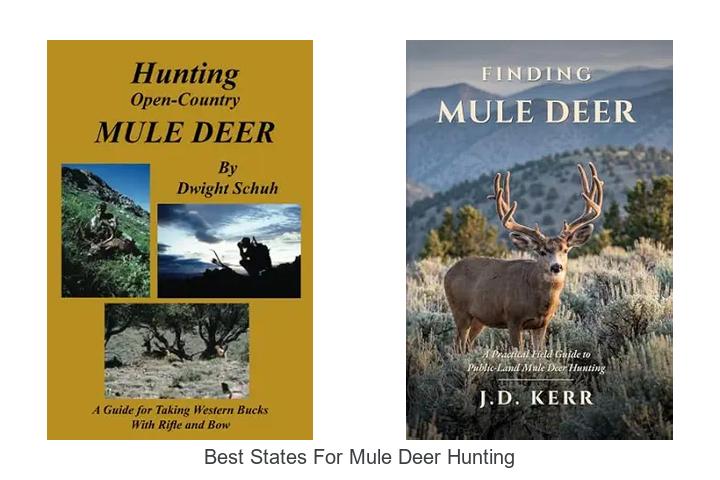
1. Hunting Open Country Mule Deer
Open-country mule deer hunters often need practical field guidance. This book focuses on western bucks with rifle and bow. It offers a specialized look at hunting open country mule deer, which suits hunters facing wide terrain and longer sightlines.
The sixth edition gives the title a long publishing history, and the 180-page length suggests a focused, manageable read.
Its main appeal lies in its specific western emphasis. The guide targets buck tactics rather than broad deer hunting topics. Hunters who use rifles or bows can compare approaches within one book.
The Stoneydale Press edition comes in a compact 6 x 0.41 x 9-inch format, which is easy to carry or store. At one pound, it feels practical for pack or shelf use. It suits readers who want a concise field-oriented reference for mule deer country.
Pros
- Focused on western bucks and open-country tactics
- Covers both rifle and bow approaches
- Compact size suits field or home use
Cons
- Publication date is older than many newer guides
- Only 180 pages, so coverage may feel narrow
- Focus stays specific to western mule deer hunting
Who Should Buy It?
Hunters who want a focused guide for western mule deer tactics should buy it. It fits readers targeting open country bucks with rifle or bow. The book also suits people who prefer a compact, specialized reference over a broad hunting manual.
Those wanting historical hunting guidance may appreciate its sixth edition and concise format.
Key Specifications
| Specification | Details |
|---|---|
| Title | Hunting Open Country Mule Deer: A Guide for Taking Western Bucks With Rifle and Bow |
| Publisher | Stoneydale Press Publishing Company |
| Publication Date | January 1, 1985 |
| Edition | 6th |
| Language | English |
| Print Length | 180 pages |
| ISBN-10 | 0912299231 |
| ISBN-13 | 978-0912299235 |
| Item Weight | 1 pounds |
| Dimensions | 6 x 0.41 x 9 inches |
The title shows a narrow focus on open-country mule deer hunting. It covers western bucks and includes rifle and bow use. The English language and 180-page length suggest a readable guide. The sixth edition signals repeated publication over time. Stoneydale Press Publishing Company produced the book, and the January 1, 1985 date places it in an older hunting-library category. The ISBNs help identify the exact edition for buyers and collectors.
The physical specs suggest a compact printed guide. At 6 x 0.41 x 9 inches, it should fit easily on a shelf or in a pack. One pound is light enough for simple carrying, while the short profile makes storage easy. Hunters who want a small reference book may like that format. The page count points to focused content rather than a large manual, which may suit readers who want targeted tactics.
2. Finding Mule Deer
Budget-minded mule deer hunters will appreciate a compact guide that stays focused on field basics. It aims to help readers find deer, get close, shoot straight, and bring game home.
The book is part of the Finding Wild Game series, and it spans 114 pages. That shorter length can make it easier to read before a season starts, or while reviewing notes between outings.
The independently published format suggests a straightforward, no-frills presentation. Its 6 x 0.26 x 9 inch size and 8-ounce weight also make it easy to pack.
For hunters wanting practical fundamentals without a heavy manual, the appeal is clear. It suits readers who want a simple reference on mule deer hunting basics.
The English-language text should be accessible for most readers, and the concise page count keeps the focus tight. It looks like a solid pick for someone who wants a light, affordable-style resource that does not demand a large time commitment. Hunters who prefer concise guides over lengthy technical books may get the most from it.
Pros
- Compact 114-page format
- Lightweight and easy to pack
- Focused on mule deer basics
Cons
- Limited length may skip advanced detail
- No edition information listed
- No reading age provided
Who Should Buy It?
Hunters who want a short, practical mule deer guide should consider it. It suits readers who prefer basic field advice and a simple format. The compact size also helps hunters who want something easy to carry in a pack.
It fits budget-focused buyers who value concise instruction over a longer, denser book.
Key Specifications
| Specification | Details |
|---|---|
| Title | Finding Mule Deer: Find Them, Get Close, Shoot Straight, and Bring Your Deer Home (Finding Wild Game) |
| Publisher | Independently published |
| Publication Date | August 14, 2026 |
| Language | English |
| Print Length | 114 pages |
| ISBN-13 | 979-8192576854 |
| Item Weight | 8 ounces |
| Dimensions | 6 x 0.26 x 9 inches |
A 114-page print length means the book stays short and focused. Readers can move through it quickly without a large time commitment. The English text should make the material easy to follow for many hunters. Its compact 6 x 0.26 x 9 inch size also suggests a book that fits well in a pack or glove box. The 8-ounce weight keeps it light enough for travel, field notes, or quick pre-season reading sessions.
Those numbers point to a guide built for convenience rather than bulk. A lighter book is easier to carry on scouting trips and hunting days. The modest dimensions help it fit beside other gear without taking much space. Because it is independently published, buyers should expect a straightforward presentation. The short format benefits hunters who want basic mule deer instruction, while readers seeking extensive detail may want a longer companion book.
3. The Complete Guide to Mule Deer Hunting
Mule deer hunters often want guidance that stays practical and focused. This guide offers that kind of steady, organized help.
The book covers tactics and strategies for success across 288 pages, giving readers a structured approach to mule deer hunting. Its first edition format and English language presentation make it straightforward to follow. The paperback-sized dimensions and 1.32-pound weight suggest a manageable book for home study or gear-bag reading.
The material suits hunters who want a single source for planning, field decisions, and broader mule deer hunting knowledge. The guide’s main strength is its clear scope, which supports both newer hunters and more experienced readers. It should appeal to anyone who values methodical instruction over scattered tips.
Pros
- Focused entirely on mule deer hunting
- Substantial 288-page length
- Readable English-language presentation
Cons
- Publication date is older
- Physical book adds some weight
- No reading age listed
Who Should Buy It?
Hunters who want a single, book-based reference should consider it. It suits readers who prefer structured tactics and strategies over short online advice. Newer hunters may appreciate the organized approach, while experienced hunters may use it as a planning reference.
It also fits anyone building a mule deer library for long-term study and field preparation.
Key Specifications
| Specification | Details |
|---|---|
| Title | The Complete Guide to Mule Deer Hunting: Tactics and Strategies for Success |
| Publisher | Lyons Pr |
| Publication Date | January 1, 2003 |
| Edition | First Edition |
| Language | English |
| Print Length | 288 pages |
| ISBN-10 | 1592282040 |
| ISBN-13 | 978-1592282043 |
| Item Weight | 1.32 pounds |
| Dimensions | 6.5 x 0.75 x 9.25 inches |
The 288-page length suggests a book with room for organized instruction and examples. The English language format keeps the material accessible for most readers. The first edition and 2003 publication date point to an established hunting book with a specific point in time. Its 6.5 x 0.75 x 9.25 inch size feels like a standard trade paperback. That makes it easy to store on a shelf or pack for reading before a trip.
At 1.32 pounds, the book has enough heft to feel substantial without seeming bulky. That weight may matter for hunters who carry books in a truck or camp bag. The dimensions support comfortable reading at home or during planning sessions. Readers who want a durable, physical reference will likely appreciate the format. The listed ISBN numbers help with exact identification when searching for the same edition.
4. Mule Deer Hunting Tactics by Mike Eastman

Mike Eastman’s tactical approach gives mule deer hunters a clear field guide. The 2nd edition offers focused instruction across 288 pages.
Built as a hunting tactics book, it centers on field judgment, pattern reading, and practical decision-making. Readers get a single-author perspective from Mike Eastman, published by MHE Ventures LLC in English. The format suits hunters who want steady, text-based instruction before heading out.
Its long page count suggests room for detailed examples and methodical advice. The book feels aimed at hunters who value strategy over quick tips.
It should appeal most to readers seeking structured mule deer hunting guidance.
Pros
- Focused tactical instruction from a single author
- Substantial 288-page format for detailed coverage
- Second edition suggests revised, established material
Cons
- Text-only format may not suit visual learners
- No physical dimensions provided in the data
- No reading age listed for age guidance
Who Should Buy It?
Hunters who want structured mule deer tactics should consider this book. It suits readers who prefer detailed written guidance over short field notes. The 288-page format gives room for methodical instruction and practical planning.
It also fits anyone studying mule deer behavior before hunting season. Readers who value a focused, author-driven approach will get the most from it.
Key Specifications
| Specification | Details |
|---|---|
| Title | Mule Deer Hunting Tactics by Mike Eastman |
| Publisher | MHE Ventures LLC |
| Publication Date | January 1, 2012 |
| Edition | 2nd |
| Language | English |
| Print Length | 288 pages |
| ISBN-10 | 0977883728 |
| ISBN-13 | 978-0977883721 |
| Item Weight | 0.01 ounces |
The 288-page length suggests a book with room for careful instruction. Readers can expect enough space for tactics, examples, and repeated field concepts. The 2nd edition usually signals a refined print version with established content. English language text makes it accessible for straightforward reading. The listed publisher, MHE Ventures LLC, identifies the source clearly. ISBN numbers help readers match the exact edition when ordering or cataloging.
A long print length often benefits hunters who want methodical guidance. The published 2012 date places the material in a settled, backlist format. With no listed dimensions, buyers should expect standard book handling rather than special packing details. The very light item weight appears in the data, though it likely reflects listing formatting. Readers who want a dedicated tactics book and easy identification details will benefit most.
5. Mule Deer Handbook for Utah Hunters and Landowners

Utah hunters and landowners get a focused field guide with regional relevance. Its 293 pages offer targeted information for mule deer management and hunting.
The handbook comes from Utah State University Press and carries a 2010 first edition. That academic background suggests practical organization and grounded subject matter.
The English text spans 293 pages, giving room for detailed guidance. Its 6 by 9 inch format should fit shelves and packs easily.
At 14.4 ounces, it remains manageable for regular reference use.
Readers seeking Utah-specific mule deer information will find the scope appealing. The book suits adults, with a reading age of 18 years and up. That makes it a better match for serious hunters and landowners than casual readers.
The ISBNs also help when matching exact editions. For anyone wanting state-focused knowledge in one volume, it offers clear value.
Pros
- Utah-specific content for hunters and landowners
- Substantial 293-page reference length
- Compact, easy-to-store paperback size
Cons
- Focused on Utah, not broader Western hunting
- Reading age may limit younger readers
- Published in 2010, so details may date
Who Should Buy It?
Buyers needing Utah-specific mule deer guidance should find this useful. It suits hunters, landowners, and adults who want a focused reference. The book also fits readers who prefer an academic source from Utah State University Press.
People wanting a compact, detailed handbook for field or home use will appreciate it most.
Key Specifications
| Specification | Details |
|---|---|
| Title | Mule Deer: A Handbook for Utah Hunters and Landowners |
| Publisher | Utah State University Press |
| Publication Date | February 21, 2010 |
| Edition | First Edition, 1 |
| Language | English |
| Print Length | 293 pages |
| ISBN-10 | 0874217415 |
| ISBN-13 | 978-0874217414 |
| Item Weight | 14.4 ounces |
| Dimensions | 6 x 0.74 x 9 inches |
| Reading Age | 18 years and up |
The 293-page length suggests a detailed manual with room for focused material. A 6 by 9 inch size is practical for shelving and carrying. At 14.4 ounces, it should feel light enough for regular use. The English language format broadens accessibility for adult readers. The 18 years and up reading age points toward a more serious audience. Together, these details fit hunters and landowners wanting a reference they can keep nearby.
Publication by Utah State University Press suggests an academic style and regional focus. The first edition, released on February 21, 2010, gives the book a defined place in print history. ISBN-10 and ISBN-13 details help buyers match the exact listing or edition. These identifiers matter when ordering replacements or confirming a specific copy. The format and length favor readers who want structured information without an oversized book.
6. The Total Deer Hunter Manual

A solid field guide can sharpen every part of deer hunting. Hunters get 301 skills packed into one illustrated manual.
The book covers broad deer knowledge, which suits mule deer hunters too. Its 256 pages offer practical instruction across many hunting situations.
The illustrated edition helps explain techniques with clearer visual support. That makes the material easier to study at home or in camp. The paperback-sized format should fit into a gear bag easily.
At 1.9 pounds, it has enough substance without feeling flimsy. Weldon Owen published it in English on October 1, 2013.
The Outdoor Life series connection also signals a seasoned hunting focus. Readers who want all-around deer skills should find real value here.
It suits hunters building fundamentals, or refining older habits.
Pros
- Covers 301 hunting skills in one volume.
- Illustrations help explain techniques clearly.
- Useful for broad deer hunting knowledge.
Cons
- Not focused only on mule deer.
- May feel detailed for casual readers.
- No reading age listed in the data.
Who Should Buy It?
Hunters who want one manual covering many deer skills should consider it. It fits people building a stronger foundation before spending time in the field. Mule deer hunters may like its broad approach to deer behavior and techniques.
Readers who prefer illustrated guidance and a structured reference book will likely benefit most. It also suits anyone who wants a compact study resource for ongoing practice.
Key Specifications
| Specification | Details |
|---|---|
| Title | The Total Deer Hunter Manual (Field & Stream): 301 Hunting Skills You Need |
| Publisher | Weldon Owen |
| Publication Date | October 1, 2013 |
| Edition | Illustrated |
| Language | English |
| Print Length | 256 pages |
| ISBN-10 | 1616286083 |
| ISBN-13 | 978-1616286088 |
| Item Weight | 1.9 pounds |
| Dimensions | 7.5 x 0.9 x 9.5 inches |
The book runs 256 pages, giving readers plenty of room for instruction. Its illustrated edition format suggests visual support alongside written guidance. Published in English by Weldon Owen, it should be easy to follow for most readers. The size, 7.5 x 0.9 x 9.5 inches, points to a manageable book format. At 1.9 pounds, it feels substantial without becoming overly heavy for home use.
Those specifications suit hunters who want a reference they can revisit often. The page count allows broad coverage, while the illustrated layout may help with learning techniques. Its dimensions make storage in a shelf, pack, or truck more practical. The weight suggests durable construction rather than a thin pamphlet feel. Hunters who prefer a physical study guide will likely benefit most from these traits.
7. Hunting High Country Mule Deer

High-country mule deer hunting demands patience, planning, and solid field knowledge. Hunting High Country Mule Deer focuses on that niche with a clear, practical guide. Published by MHE Ventures in a second edition, it runs 242 pages and uses English throughout.
The book suits hunters who want a dedicated resource on high-elevation deer country. Its format includes enhanced typesetting, Word Wise, page flip, and screen reader support.
Those features make reading easier on digital devices in the field or at home.
The guide offers a focused look at mule deer hunting in steep, remote terrain. Since it is an older 1997 edition, readers get a long-standing reference rather than a current trends guide. That can still appeal to hunters who want foundational knowledge in a compact format.
The 42.2 MB file size keeps it manageable for mobile devices. The book feels straightforward to access, and the digital tools help with navigation and reading comfort. It suits hunters who value a specialized, no-frills reference for high-country conditions.
Pros
- Focused entirely on high-country mule deer hunting
- Readable digital features support easier use
- Manageable 242-page length
Cons
- Older publication date may limit current relevance
- No X-Ray feature for quick topic jumps
- Single-language format only
Who Should Buy It?
Hunters who spend time in steep, high-elevation mule deer country should consider it. It also suits readers who want a focused field reference with digital reading features. The book fits people who prefer a clear, specialized guide over broad hunting coverage.
Those who value accessible text, page flip, and Word Wise will benefit most.
Key Specifications
| Specification | Details |
|---|---|
| Title | Hunting High Country Mule Deer |
| Publisher | MHE Ventures |
| Publication Date | April 16, 1997 |
| Edition | 2nd |
| Language | English |
| Print Length | 242 pages |
| ISBN-13 | 978-0965770408 |
The 242-page length suggests a focused guide rather than a large reference book. That size works well for hunters who want targeted reading without extra bulk. The second edition points to a revised version of the material. English language text keeps the content easy to follow for most readers. The April 16, 1997 publication date places it among older hunting resources. MHE Ventures is listed as the publisher, which identifies the source clearly.
The digital features matter for everyday reading and field use. Enhanced typesetting and page flip can make the text easier to browse on a screen. Word Wise may help readers move through unfamiliar terms more smoothly. Screen reader support also broadens accessibility for different users. The 42.2 MB file size should download without much trouble on many devices. These specs suit hunters who want portable reading and simple access.
8. Mule Deer Quest

Decades of mule deer observation shape this hunting book’s appeal. It gathers lessons from Sonora to Saskatchewan in one volume.
Mule Deer Quest focuses on thirty-five years of field observation and hunting experience. The book spans a wide northern range, which gives readers a broad view of mule deer country. Its 306 pages suggest a substantial read with room for detailed accounts.
Safari Press gives it a specialized outdoor identity, and the first edition format adds collector interest. The English text makes it accessible to a wide audience.
The book suits readers who value long-term field notes over quick tips. It likely rewards patient hunters who want patterns, habits, and regional perspective.
The print size and paperback-like dimensions make it comfortable for shelf storage and carrying. At 1.33 pounds, it has enough substance to feel substantial without becoming bulky. Value comes from its focused subject matter and long observational span.
Hunters who study mule deer movement and habitat history should find it especially useful.
Pros
- Covers thirty-five years of mule deer observation.
- Offers regional scope from Sonora to Saskatchewan.
- Substantial 306-page reading experience.
Cons
- Focuses on long-form observation, not quick field tips.
- Specialized subject matter may suit narrower audiences.
- Published in 2001, so some details may feel dated.
Who Should Buy It?
Hunters and readers who value long-term mule deer observations should consider it. It suits people studying regional patterns, habitat differences, and hunting history across broad country. The book also fits collectors who want a first edition from Safari Press.
Readers who prefer detailed field writing over short instruction will get the most from it.
Key Specifications
| Specification | Details |
|---|---|
| Title | Mule Deer Quest: Thirty-Five Years of Observation and Hunting Mule Deer from Sonora to Saskatchewan |
| Publisher | Safari Press |
| Publication Date | November 8, 2001 |
| Edition | First Edition |
| Language | English |
| Print Length | 306 pages |
| ISBN-10 | 1571572201 |
| ISBN-13 | 978-1571572202 |
| Item Weight | 1.33 pounds |
| Dimensions | 7.16 x 1.08 x 9.36 inches |
The 306-page length suggests a detailed book with room for field stories and observations. Safari Press as publisher points toward a specialized outdoor title with a focused audience. A first edition often appeals to readers who value original printings and hunting literature. The English language format makes the material easy to read for many hunters and collectors. The title also shows the book covers a wide geographic span, from Sonora to Saskatchewan.
At 1.33 pounds, the book has enough heft to feel substantial in hand. Its 7.16 x 1.08 x 9.36 inch size makes it manageable on a shelf or in a pack. Those dimensions usually suit comfortable reading at home or in camp. The publication date places it as an older hunting reference, which may appeal to readers interested in long-range observations. Collectors, mule deer students, and history-minded hunters will likely value it most.
9. Hunting Big Mule Deer

Big mule deer hunters often want field-tested advice, not broad theory. Hunting Big Mule Deer focuses on taking a larger buck and staying patient.
Written in English, it runs 285 pages and gives readers plenty of space. The book was published by Wescout4u.com on July 17, 2015. Its 6 by 9 inch size feels familiar for shelf storage or pack use.
The paperback weight stays light enough for easy handling at home or camp. Content should suit hunters who want a buck-focused strategy, not general deer talk. The title promises a direct approach to taking the best buck possible.
That makes it appealing for hunters targeting mature mule deer in serious country. Its length allows for fuller discussion without feeling overly condensed.
The format also works well for repeated reference before a trip. Readers seeking a focused hunting guide will likely get the most value.
Pros
- Focused on big buck mule deer hunting
- Substantial 285-page length for detailed reading
- Portable 6 by 9 inch paperback size
Cons
- No edition information provided
- No reading age listed
- Publication date may feel dated
Who Should Buy It?
Hunters who want a buck-focused mule deer guide should consider it. It suits readers who prefer written strategy over general hunting advice. The length and format work well for study before season.
It also fits hunters who like keeping a compact reference book nearby. Readers targeting mature mule deer should get the most from it.
Key Specifications
| Specification | Details |
|---|---|
| Title | Hunting Big Mule Deer: How to Take the Best Buck of Your Life |
| Publisher | Wescout4u.com |
| Publication Date | July 17, 2015 |
| Language | English |
| Print Length | 285 pages |
| ISBN-10 | 069245795X |
| ISBN-13 | 978-0692457955 |
| Item Weight | 13.6 ounces |
| Dimensions | 6 x 0.65 x 9 inches |
The 285-page length suggests a fuller guide with room for detail. The English language edition suits readers who want clear hunting advice in one format. Its 6 by 9 inch size is practical for a bookshelf, truck, or camp bag. At 13.6 ounces, it stays light enough for easy carrying. Those details point to a book meant for repeated reading before hunts.
A July 17, 2015 publication date places the material in a specific hunting season snapshot. The ISBN numbers help identify the exact edition for ordering or cataloging. Wescout4u.com is the listed publisher, which may matter for buyers tracking source details. The listed dimensions and weight suggest a standard paperback format. Hunters who like compact reference books will likely appreciate the size and portability.
10. Mule Deer Handbook

Field knowledge often matters as much as a good map. Here, that knowledge is packed into one compact 221-page guide. MULE DEER HANDBOOK focuses on mule deer behavior, habitat, diet, seasonal movement, tracks, signs, and ethical wildlife observation.
The book is aimed at readers from beginner to expert, so the material should suit many skill levels. Its independently published format keeps the presentation straightforward and practical.
At 6 by 9 inches, it should be easy to carry and handle in the field or at home.
The main appeal is its broad subject coverage in one focused reference. Readers can learn how mule deer move, feed, and leave signs across seasons. That can help hunters and observers read terrain with more confidence.
The print length suggests enough room for detail without feeling oversized. Its English-language format keeps it accessible for a wide audience.
The paperback-style dimensions and 10.7-ounce weight support portability during scouting trips. It suits beginners who need structure, and experienced hunters who want a quick refresher.
Pros
- Covers behavior, habitat, diet, and movement
- Includes tracks, signs, and observation guidance
- Portable size suits field and home use
Cons
- Publication date is very recent.
- Independent publishing may mean simpler presentation.
- No edition details were provided.
Who Should Buy It?
Hunters, wildlife observers, and students of mule deer behavior should find strong value here. It fits readers who want a structured guide that starts with basics and reaches advanced topics. The compact size and clear subject range make it useful for scouting, study, or casual learning.
It also suits anyone who prefers a single reference for field signs and seasonal movement.
Key Specifications
| Specification | Details |
|---|---|
| Title | MULE DEER HANDBOOK: The Complete Beginner-to-Expert Guide to Mule Deer Behavior, Habitat, Diet, Seasonal Movement, Tracks & Signs, and Ethical Wildlife Observation |
| Publisher | Independently published |
| Publication Date | January 23, 2026 |
| Language | English |
| Print Length | 221 pages |
| ISBN-13 | 979-8245257181 |
| Item Weight | 10.7 ounces |
| Dimensions | 6 x 0.5 x 9 inches |
The 221-page length suggests a focused guide with room for useful detail. A 6 by 9 inch format feels familiar and easy to carry. At 10.7 ounces, it should fit in a pack without much burden. English-language text also makes the material straightforward for many readers. The independently published label points to a direct, topic-centered presentation. These specs suit readers who want a practical reference for study or field use.
A compact book can be easier to keep close during scouting trips. The thin 0.5-inch profile should store well beside other outdoor gear. That can help readers check behavior, tracks, and signs without extra bulk. The size also works well at home for repeat study and note taking. Since the guide targets beginner-to-expert readers, the format likely suits many learning levels. It benefits anyone who wants portability with enough pages for real detail.
Best States for Mule Deer Hunting: Where to Find Bigger Bucks and Better Hunts
Hunting success rates and deer population
Mule deer hunting results often vary more by access and landscape reach than by sheer acreage. A state with strong habitat but limited public access can be far less productive than one with well-linked migration corridors, mixed ownership, and room to move between feeding, bedding, and rutting areas. Evaluating how easy it is to cover multiple regions, track seasonal movement, and adapt to changing conditions helps reveal whether a destination can support consistent encounters, not just occasional sightings.
That flexibility matters because deer distribution is rarely uniform: some states hold higher mule deer density in certain basins or mountain ranges, while others have broader but thinner populations. Harvest success trends also tell an important story, since steady success rates usually point to reliable access, sound herd management, and huntable numbers. Just as important, age structure and buck quality can shape the overall experience, because areas with more mature bucks often reward patience and scouting, even if overall densities are lower.
| Factor | Why it matters |
|---|---|
| Mule deer density by state | Higher densities can improve encounter rates, but access and habitat connectivity determine how usable those numbers are. |
| Harvest success trends | Consistent success rates suggest dependable opportunities and a healthier balance between hunter pressure and deer numbers. |
| Age structure and buck quality | Older age classes and stronger antler development often indicate better long-term trophy potential and a more rewarding hunt. |
Tag availability and drawing odds
Tag access can decide how often you get into mule deer country, because some states sell over-the-counter licenses with fewer barriers, while others rely on draw-only systems that may require years of planning. Nonresident tag quotas also matter, since many top destinations reserve only a limited number of permits for out-of-state hunters, which can sharply reduce your odds and raise the importance of timing. Preference points and application systems add another layer, as points can improve future draw chances but often require careful tracking, deadlines, and fee commitments to stay competitive.
A state with a simple over-the-counter process may offer more immediate opportunities, while a draw-only state can provide access to highly managed hunting areas if you are willing to build points and wait. Understanding how these systems work helps you match your hunt goals with realistic tag availability.
Public land access and huntable terrain
Public acreage is one of the strongest indicators of how much room hunters have to roam, because larger public holdings often mean more opportunities to cover ground, avoid crowding, and adapt to changing deer movement. Access limitations and landowner programs also deserve close attention, since walk-in access, permission-based parcels, seasonal restrictions, and special use rules can dramatically affect where and how often a hunt can happen.
Terrain type and elevation changes matter just as much, because mule deer often use ridges, benches, canyon edges, and broken country to bed and travel, making some landscapes far more productive than flat or heavily blocked areas. A solid plan accounts for all three factors together, since abundant land alone does not guarantee usable hunting ground if access is restricted or the habitat is too difficult to hunt effectively.
Season timing and hunting pressure
Season timing and hunting pressure shape mule deer success more than almost any other factor. Archery, rifle, and muzzleloader seasons can vary widely from one state to another, and those dates often line up differently with local rut activity, weather patterns, and deer movement. A region with an early archery opener may offer quieter conditions but less daytime buck activity, while rifle season during the rut can produce more sightings at the cost of heavier hunter traffic. It also pays to compare rut timing by region, since northern, southern, high-country, and desert herds often peak at different points in the fall.
It also pays to compare rut timing by region, since northern, southern, high-country, and desert herds often peak at different points in the fall. Understanding crowd levels matters just as much, because heavy pressure can push deer onto private ground, steep cover, or less accessible terrain, making access and patience more important. In practice, a state that balances solid season dates, predictable rut windows, and manageable pressure usually gives hunters a better chance to hunt effectively throughout the season.
Regulations and unit rules
Every mule deer hunt starts with the rules on paper, because a missed deadline or overlooked unit restriction can mean losing a season before it begins. License requirements and application deadlines vary by state and often by unit, so it is essential to confirm draw dates, tag availability, and any residency rules well in advance.
Weapon restrictions and antler point rules also differ widely, with some areas limiting hunters to specific firearms, archery equipment, or minimum antler standards that affect which bucks can be legally taken. In addition, baiting, land access, and game transport regulations can change from one area to the next, shaping where you may hunt, how you enter private or public ground, and how harvested deer must be handled or moved. Reviewing these details early helps avoid costly mistakes and ensures the hunt stays legal, ethical, and well planned.
Cost, travel, and lodging factors
License and tag fees can vary widely from one state to another, and that difference can have a major impact on the total cost of a mule deer hunt. Travel distance also matters, because a farther destination usually means higher fuel expenses, more vehicle wear, and extra time on the road. In addition, camping, lodging, and outfitter options can change both comfort and budget, especially if a remote area requires guided access or limited overnight stays. A clear review of these expenses helps hunters plan realistically and avoid surprises once the trip is already underway.
- License and tag fees: Compare resident and nonresident costs, along with any special draw or preference point charges.
- Travel distance and fuel costs: Factor in mileage, fuel prices, and possible long-haul vehicle expenses.
- Camping, lodging, and outfitter options: Check whether public campsites, motels, or guided services fit the trip budget and style.
Gear That Makes Hunts Easier
The right add-ons can make a mule deer hunt more comfortable and more efficient. A good pack helps carry water, snacks, layers, and extra ammo without bouncing around. Binoculars or a spotting scope help you find deer from far away, which saves time and energy in steep country.
Clothing accessories matter too. A quiet belt, gloves, gaiters, and a warm beanie can help on cold mornings. A compact seat pad or cushion can make long glassing sessions easier. For hunters who cover rough ground, trekking poles can help with balance and reduce fatigue.
Field care items are worth packing as well. A sharp knife, game bags, gloves, and a small first-aid kit help with dressing and packing meat. A map, compass, or GPS unit can also help you stay on track in big country where phone service is weak.
When buying extras, match them to the hunt style and state rules. Long hikes call for light gear. Cold or high-country hunts may call for more insulation and weather protection. The goal is not to carry more gear. It is to carry the pieces that help you hunt longer and move safer.
- Pack weight: light enough for long climbs
- Glass for distance: binoculars or a spotting scope
- Comfort items: seat pad, gloves, gaiters, beanie
- Recovery gear: knife, game bags, first-aid kit
- Navigation tools: map, compass, GPS
Small upgrades often make the biggest difference. A few well-chosen items can save time, reduce strain, and help you make better decisions in the field.
FAQ’s
Which States Offer The Highest Mule Deer Populations And Best Trophy Opportunities?
The best mule deer states for high populations and trophy opportunities are typically Colorado, Wyoming, Montana, and Utah. Nevada and Arizona are also renowned for producing very large trophy bucks, especially in premium units.
What Are The Top Public-Land States For Mule Deer Hunting Access?
The top public-land states for mule deer hunting access are typically **Colorado, Wyoming, Montana, Idaho, and New Mexico**, because they offer large amounts of accessible public land. Exact rankings can vary by access quality and region, but these states are consistently among the best.
How Do Mule Deer Hunting Success Rates Compare Across Western States?
Mule deer hunting success rates vary widely across western states, depending on deer populations, habitat, tag availability, and hunting pressure. In general, states with abundant mule deer and more accessible public land tend to have higher success rates, while states with tougher terrain or tighter tag limits often have lower rates.
What States Have The Best Otc Or Draw Tag Options For Mule Deer Hunters?
For mule deer hunters, some of the best OTC or draw tag options are found in **Colorado, Utah, Arizona, and Idaho**, depending on the season and unit. **Colorado** is often the top OTC choice for mule deer, while **Arizona and Utah** can offer excellent draw-tag opportunities for higher-quality hunts.
Which States Are Best For Hunting Mule Deer On A Budget?
The best budget-friendly states for mule deer hunting are usually **Wyoming, Montana, Colorado, and Idaho**, because they offer solid mule deer numbers and relatively affordable nonresident licenses compared with some other western states. **Wyoming and Colorado** are especially popular for hunters looking for a good balance of hunt quality and cost.
Final Verdict
For hunters comparing the best states for mule deer hunting, these books serve different needs rather than different regions alone. Hunting Open Country Mule Deer is the best overall pick for western buck tactics and hunters who want a broad, field-ready approach. Finding Mule Deer is the best value choice for buyers who want solid budget basics without paying for a more specialized title.
Mule Deer Hunting Tactics by Mike Eastman is the best premium option for readers who want more detailed tactical instruction and a deeper strategy focus. Mule Deer Handbook for Utah Hunters and Landowners is the best fit for Utah-specific guidance, especially for hunters who want local rules, access, and habitat context. Pick the book that matches your hunting style and the state information you need most.
Choose the title that matches your budget and hunting location: general western tactics, budget basics, premium instruction, or Utah-specific guidance.