10 Best Stem Toys for Children No Artificial Intelligence: Top Rated Options Compared
Many parents want toys that build real skills and keep children busy without screens. They also want options that feel simple, safe, and useful for everyday play. That is why many families search for best stem toys for children no artificial intelligence when choosing learning toys.
These products can support problem-solving, fine motor skills, and early science learning. This review is for parents, grandparents, and gift buyers who want practical STEM toys for children.
It will cover what the toys do, who they suit, and what benefits they may offer. It will also point out strengths and limits so you can compare choices with confidence. The goal is to help you find a toy that fits your child’s age, interests, and learning style.
Here’s a concise subtitle option: **Hands-On Toys That Spark Creativity, Build Skills, and Keep Playtime Screen-Free**
| Image | Product | Price |
|---|---|---|
Pick 1  | SNAP CIRCUITS Explorer SC-100 | Check Price On Amazon |
Pick 2  | ThinkFun Gravity Maze | Check Price On Amazon |
Pick 3  | Learning Resources STEM Explorers Magnet Movers | Check Price On Amazon |
1. SNAP CIRCUITS Explorer SC-100
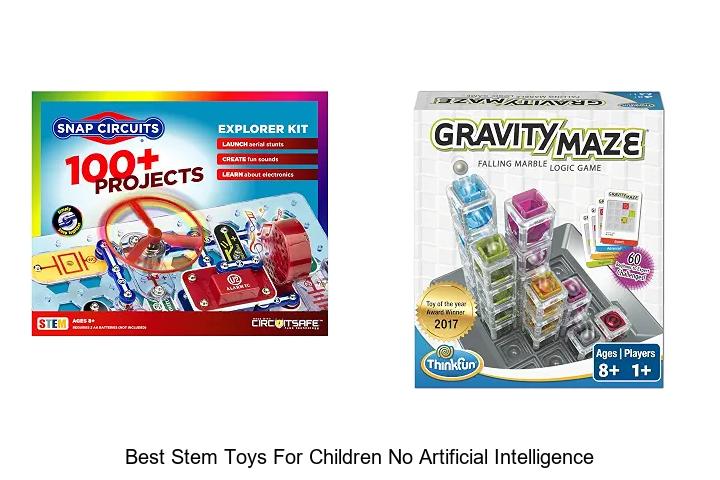
Hands-on circuit building makes electronics feel approachable for kids. The colorful pieces invite quick success and playful learning. SNAP CIRCUITS Explorer SC-100 introduces electrical engineering through 100+ projects.
Children snap parts together without soldering or extra tools. The kit includes 29 parts and a full-color manual.
Projects cover gadgets, alarms, and a flying saucer design. The numbered and color coded pieces help beginners follow instructions easily. That setup supports critical thinking, logical thinking, and problem solving skills.
The plastic grid and snap-together format feel tidy and organized. Batteries are required, so the kit needs a small setup step.
Build quality suits repeated project changes rather than rough outdoor play. It fits children ages 8 and older, while older learners can enjoy it too.
Families, classrooms, and hobby beginners will find strong educational value here. It works well for screen-free play focused on practical STEM skills.
Pros
- 100+ projects keep building sessions varied and engaging
- No soldering or tools needed for setup
- Color coded parts help beginners follow instructions
Cons
- Batteries are required for operation
- Only 29 parts limit larger builds
- Plastic pieces may feel less substantial
Who Should Buy It?
Parents, teachers, and gift buyers should consider this kit for children ages 8 and older. It suits learners who enjoy hands-on electronics and structured projects. The snap-together design works well for beginners who need clear steps.
It also fits families wanting screen-free activities that build logical thinking and problem solving skills.
Key Specifications
| Specification | Details |
|---|---|
| Brand | Snap Circuits |
| Age Range | 8-108 |
| STEM Focus | Critical Thinking, Dexterity Skills, Logical Thinking, Problem Solving Skills, STEM |
| Materials | Plastic |
| Number of Pieces | 28 |
| Included Components | 28 electrical components, 4-color manual, Snap Board |
| Project Count | 100+ projects |
| Power Source | Batteries required |
| Screen-Free | Yes |
| Recommended Use | Electronics projects |
Snap Circuits SC-100 uses 28 electrical components and a snap board. The 4-color manual guides children through more than 100 projects. That mix gives beginners a clear starting point for learning circuitry. The plastic parts are light and easy to handle during setup. Because the pieces snap together, children avoid soldering and extra tools. Batteries power the projects, so the kit needs a ready supply before play begins.
These specifications make the kit practical for guided learning at home or school. The age range of 8-108 supports younger beginners and older hobby learners alike. Screen-free play keeps attention on building and troubleshooting rather than on a display. The electronics focus supports logical thinking, dexterity skills, and problem solving skills. Since the kit uses a small number of parts, organization stays manageable. That helps children move between projects with less setup frustration.
2. ThinkFun Gravity Maze
Marble paths become a hands-on logic puzzle with real challenge. Kids place towers, test ideas, and watch each run unfold. ThinkFun Gravity Maze blends construction play with problem solving in a compact tabletop format.
It includes 60 challenge cards from beginner to expert, so children can build skills gradually. The set also comes with nine towers, three marbles, a game grid, and a target piece. That mix supports creative builds while keeping the goal clear and focused.
The materials use paper and plastic, and no batteries are needed. Assembly is required, yet the manual setup stays simple enough for independent play.
A single player can work through the maze cards, while friends or family can join for collaborative solving. Its 75 pieces create many layout options without overwhelming the table. For children ages 8 and older, it offers solid value through replayable logic challenges.
It suits kids who enjoy STEM play, planning, and spatial reasoning.
Pros
- 60 challenge cards offer steady skill progression
- No batteries needed for screen-free play
- Supports solo play and family collaboration
Cons
- Assembly is required before play begins
- Small pieces may not suit younger children
- Challenge focus may feel demanding for some kids
Who Should Buy It?
Buy this for children who enjoy logic games and hands-on building. It fits ages 8 and older, especially kids who like solving puzzles step by step. Parents and teachers seeking screen-free STEM play may like its challenge cards and single-player format.
Families wanting cooperative problem solving can also use it together at the table.
Key Specifications
| Specification | Details |
|---|---|
| Brand | ThinkFun |
| Age Range | 8+ |
| STEM Focus | Logic, critical thinking, problem solving |
| Materials | Paper, Plastic |
| Number of Pieces | 75 |
| Included Components | 1 Target Piece, 3 Marbles, 60 Challenge Cards, 9 Towers, Game Grid |
| Project Count | 60 challenge cards |
| Power Source | Manual |
| Screen-Free | Yes |
| Recommended Use | Indoor tabletop play |
The 75-piece set includes towers, marbles, a grid, and a target piece. Those parts create a hands-on maze that children build and test. The 60 challenge cards guide play from beginner to expert levels. Paper and plastic materials keep the kit lightweight and easy to store. Because no batteries are needed, kids can start solving with only the pieces and a flat surface.
Manual operation keeps attention on planning, placement, and trial-and-error thinking. Single-player play works well for quiet focus, while group solving adds conversation and teamwork. The indoor tabletop format suits desks, playrooms, and classroom spaces. Assembly required means setup takes a little time, yet it also supports active building. Children ages 8 and older gain the most from the increasing puzzle difficulty and repeated use.
3. Learning Resources STEM Explorers Magnet Movers
Magnet forces become hands-on with a kit built for curious young learners. Guided challenges turn simple play into science discovery.
Learning Resources STEM Explorers Magnet Movers introduces magnetism through interactive activities that teach attraction, repulsion, and motion. The included activity cards provide ten structured challenges, while still leaving room for open-ended exploration. Kids practice observation, prediction, and reasoning as they test ideas and compare results.
The tools are sized for small hands and made for repeated use at home or in class. Its manual design keeps the focus on screen-free learning and physical experimentation. The plastic build feels suitable for everyday classroom or household play.
It suits toddlers who enjoy science toys, especially children ready for early STEM concepts and magnet learning.
Pros
- Teaches magnetism through hands-on play
- Includes ten guided challenge cards
- Sized for small hands
Cons
- Contains only one type of science topic
- Requires a 12V battery
- Best for guided play, not freeform building
Who Should Buy It?
Parents, caregivers, and teachers should buy this for early magnet lessons. It suits toddlers who enjoy simple science play and guided discovery. The kit works well for children building observation and reasoning skills.
It also fits indoor learning spaces and classroom centers. Families wanting a screen-free STEM activity will find it especially useful.
Key Specifications
| Specification | Details |
|---|---|
| Brand | Learning Resources |
| Age Range | Toddler |
| STEM Focus | Engineering, STEM, Science |
| Materials | Plastic |
| Number of Pieces | 34 |
| Included Components | Counter toys |
| Project Count | 10 guided challenges |
| Power Source | 1 12V battery required |
| Screen-Free | Yes |
| Recommended Use | Indoor magnet science learning |
The kit includes 34 pieces and one set of activity cards. Those parts support ten guided challenges for magnet exploration. Children handle child-sized tools while learning attraction, repulsion, and motion. The manual operation keeps the experience hands-on and direct. A single 12V battery is listed, which may matter during setup. The compact size also fits shelves, classroom bins, and home learning areas. These details make the set easy to store and use often.
Plastic construction supports repeated play in indoor settings. The small, lightweight design suits toddlers and younger learners well. Guided cards help children follow clear steps while leaving room for discovery. That structure can help beginners feel confident with science play. The screen-free format works well for families wanting active learning time. Because the set focuses on magnetism, it benefits children who enjoy simple experiments and predictable routines. Teachers may also like it for centers and small-group science tasks.
4. Smartivity Robotic Mechanical Hand

Hands-on builders will enjoy a project that feels active and imaginative. The Smartivity Robotic Mechanical Hand invites kids to assemble a screen-free mechanical model with clear instructions.
It uses engineered wood and a kid-tested design for steady build quality. The anatomy and robotics theme adds a strong learning angle while keeping play tactile and fun. Children can build, then enjoy hours of use with the finished hand.
The included parts and step-by-step manual make setup approachable for ages eight through fourteen. Parents may appreciate the focus on confidence, creativity, and science learning. It suits children who enjoy construction projects and mechanical motion.
The lightweight wooden pieces also support repeated handling during play. As a gift, it combines building, learning, and active play in one kit.
Pros
- Screen-free building keeps kids engaged without devices.
- Engineered wood adds a durable, kid-safe feel.
- Step-by-step manual supports independent assembly.
Cons
- Requires patience during assembly.
- Limited to one project design.
- May suit older children better.
Who Should Buy It?
Children who enjoy mechanical builds and hands-on projects will like this kit. It suits ages eight through fourteen, especially kids who prefer making something they can use afterward. Parents seeking a screen-free STEM activity may also appreciate the anatomy and robotics focus.
The manual-led build works well for children who enjoy following steps and solving small assembly challenges.
Key Specifications
| Specification | Details |
|---|---|
| Brand | Smartivity |
| Age Range | 8-14 years |
| STEM Focus | Anatomy, Robotics |
| Materials | Engineered wood |
| Number of Pieces | 1 set |
| Included Components | Step-by-step instructional manual, replacement parts |
| Project Count | 1 |
| Screen-Free | Yes |
| Recommended Use | Mechanical building |
The age range runs from eight to fourteen years old. That range suits children ready for a hands-on build with directions. The STEM focus covers anatomy and robotics, so the kit teaches motion and structure. Engineered wood gives the parts a sturdy feel and a natural finish. One set includes the main build and a step-by-step manual for guided assembly.
These specifications point to a project that favors patient builders. Screen-free play works well for families wanting device-free time. Engineered wood usually feels solid during repeated assembly and play. The included replacement parts support longer use when pieces go missing. Since the kit centers on one project, children who enjoy focused builds may benefit most. Its manual-led setup also helps older kids work more independently.
5. Sillbird 12-in-1 Solar Robot Building Kit

Solar power gives this robot kit a strong hands-on appeal. Kids can build moving models while learning how sunlight powers motion.
The Sillbird 12-in-1 Solar Robot Building Kit offers 190 parts and 12 build options, including robots and cars. That range gives children a clear sense of progress as skills grow.
Clear step-by-step instructions help make assembly manageable for independent play or family time.
The kit focuses on STEM learning through engineering and renewable energy concepts. Its larger solar panel helps collect more sunlight for stronger output. It can also run indoors with a strong artificial light source, such as a flashlight.
That flexibility helps keep play going when outdoor sun is limited. Made from ABS plastic, the parts are designed for building and rebuilding.
It suits kids ages 8 and up who enjoy screen-free projects and hands-on challenges.
Pros
- 12 buildable models keep play varied
- Solar power teaches renewable energy ideas
- Clear instructions support independent building
Cons
- Solar performance depends on available light
- Smaller builders may need adult help
- Some models may feel challenging at first
Who Should Buy It?
Parents wanting a screen-free STEM gift will find plenty here. It suits kids ages 8 to 13 who like building, experimenting, and seeing motion powered by sunlight. Families interested in engineering, renewable energy, and hands-on problem solving should appreciate the variety.
Children who enjoy step-by-step assembly and rebuilding different models may get the most from it.
Key Specifications
| Specification | Details |
|---|---|
| Brand | Sillbird |
| Age Range | Kid, ages 8 to 13 |
| STEM Focus | Engineering skills, renewable energy, dexterity skills |
| Materials | ABS |
| Number of Pieces | 190 |
| Included Components | 12 buildable models, step-by-step instructions |
| Project Count | 12-in-1 |
| Power Source | Solar power, strong artificial light source |
| Screen-Free | Yes |
| Recommended Use | Indoor or outdoor STEM building play |
The 190-piece set gives children enough parts for multiple builds. Twelve model options include robots, cars, and other creations. That variety helps kids practice following instructions and handling small components. The age range of 8 to 13 fits children ready for more patient construction play. ABS material gives the parts a familiar plastic feel for repeated assembly. The solar setup keeps the experience hands-on and tied to real energy use.
In daily play, the solar power feature changes how and where kids build. Outdoor sunlight works well, and indoor light can also keep models moving. That flexibility suits families who want play outside and inside. The clear instructions lower setup frustration and help younger builders stay engaged. Because the kit has no battery, children can focus on sunlight, motion, and structure. Kids who like tinkering and rebuilding will get the most from it.
6. Kids STEM Building Toys

A colorful 125-piece building set gives children many ways to create and play. It mixes guided model ideas with open-ended building, which keeps sessions flexible and creative.
Kids can build race cars, robots, trucks, dinosaurs, and more from the included blocks. The idea booklet adds helpful structure without limiting imagination.
Bright colors and mixed shapes make the set appealing for younger builders. The portable storage box also helps keep all pieces together after play.
The toy supports science, technology, engineering, and math learning through hands-on construction. Children practice problem solving while matching pieces and forming different structures. The interlocking blocks are made from plastic and include moving parts for added variety.
The manual instructions make it easier for kids to start, while free building invites original designs. It suits children aged three and up, including mixed-age play at home or in classrooms. Families, teachers, and caregivers wanting screen-free building time will find strong everyday value here.
Pros
- Many building options from one 125-piece set
- Includes booklet plus open-ended free play
- Portable storage box helps keep pieces organized
Cons
- Small size may limit very large builds
- Plastic blocks may feel simple to older kids
- Some models need adult help for younger children
Who Should Buy It?
Parents, teachers, and caregivers who want screen-free building play should consider it. It suits children three and older who enjoy hands-on construction and imaginative model making. The mix of guided projects and open-ended play works well for homes, classrooms, and shared playtime.
It also fits families seeking a colorful set that supports early STEM learning.
Key Specifications
| Specification | Details |
|---|---|
| Brand | Qirptey |
| Age Range | 3+ years |
| STEM Focus | Cognitive Development, Creative Thinking, Critical Thinking, Engineering Skills, Imagination Development, Logical Thinking, STEM, Team Building Skills |
| Materials | Plastic |
| Number of Pieces | 125 |
| Included Components | Building Blocks, Instruction manual, Stem Bins |
| Project Count | Multiple models, including race car, robot, truck, dinosaur |
| Power Source | Manual |
| Screen-Free | Yes |
| Recommended Use | Preschool classroom activities, home building play, educational gifts |
The 125-piece count gives children enough parts for repeated building sessions. Mixed colors and shapes support simple designs and more ambitious creations. The included instruction manual offers model ideas such as race cars and robots. That helps children start quickly, while still leaving room for original builds. The set is made from plastic, and the manual operation keeps play hands-on. The storage bins help families keep pieces sorted after use.
These specifications make the kit practical for classrooms and home play. The manual, screen-free format keeps attention on physical construction and planning. Because the set includes moving parts and many shapes, children can test different structures and rebuild often. The recommended age of three and up suits early learners, though younger users may need help. The portable storage also helps during cleanup, travel, or classroom rotation, which benefits groups and busy households.
7. STEM Toys Pixel Art Kit

Creative kids get a hands-on way to build patterns and think through visual puzzles. The STEM Toys Pixel Art Kit mixes art, logic, and simple challenge play in one compact set. It includes four challenge types, three difficulty levels, and more than 50 patterns.
That gives children many ways to practice matching, planning, and pattern recognition.
The kit uses colorful plastic blocks, a plastic platform, and a color instruction booklet. Its small size makes storage simple, and the non-toxic materials suit younger children.
The activities also support fine motor practice through placing and arranging pieces. It works well for individual play or group activities, and the finished designs feel satisfying for kids.
Families wanting screen-free STEM play will find strong value here, especially for ages five and up.
Pros
- Offers over 50 patterns for varied play
- Supports fine motor skills and pattern recognition
- Screen-free activity with clear instructions
Cons
- Only one set piece count is listed
- Plastic build may feel basic to some families
- Best for pattern play, not open-ended building
Who Should Buy It?
Parents, teachers, and caregivers wanting screen-free creative STEM play should consider it. It suits children aged five to twelve who enjoy colors, patterns, and simple problem solving. The kit also fits classroom use, group activities, or quiet individual time.
Families looking for a gift that mixes art and logic will likely appreciate its varied challenges and compact format.
Key Specifications
| Specification | Details |
|---|---|
| Brand | CYOEST |
| Age Range | 5+ |
| STEM Focus | Concept Development Skills, Logical Thinking, STEM |
| Materials | Plastic |
| Number of Pieces | 1 |
| Included Components | color instruction booklet, colored plastic blocks, plastic platform |
| Project Count | Over 50 patterns |
| Power Source | Manual |
| Screen-Free | Yes |
| Recommended Use | Individual play, group activity, classroom activities |
The brand is CYOEST, and the kit is made for ages five and up. Its STEM focus centers on concept development skills and logical thinking. The materials are plastic, and the included parts are a color instruction booklet, colored plastic blocks, and a plastic platform. In daily use, that means children follow visual guides and place pieces by hand. The set is screen-free and powered manually, so play depends on attention, color matching, and steady finger movement.
Over 50 patterns give children many ways to practice the same core skills. The manual format keeps setup simple, with no batteries or charging needed. The small size and plastic build make it easy to store and carry. Since the kit supports individual play, group activity, and classroom use, it fits different routines well. Children who enjoy structured creative tasks will benefit most, especially when they like repeating patterns and completing guided projects.
8. National Geographic Kids Microscope

Curiosity gets a powerful boost with this kid-friendly microscope kit. Young scientists can explore plant slides, rocks, minerals, and home-made samples. National Geographic Microscope for Kids offers up to 400x magnification, with lights above and below for clearer viewing.
Large focus knobs, a soft-touch eyepiece, and an adjustable platform help children position samples with confidence. The kit includes six prepared plant slides, six rocks and minerals, and six blank slides for at-home experiments.
A pipette, specimen dish, tweezers, and easy instructions add hands-on science practice. The included lab guide gives viewing activities, a scientist game, and merit badge stickers. Its plastic build keeps it lightweight at 1.8 pounds, while the battery-powered design supports portable use.
Families wanting screen-free science play will find strong educational value here. It suits children who enjoy biology, geology, and early lab discovery.
Pros
- Up to 400x magnification supports close scientific observation.
- Prepared slides and blank slides expand activity options.
- Included tools make hands-on experiments more engaging.
Cons
- Requires batteries for the lighted viewing system.
- Plastic construction may feel less substantial.
- Some younger children may need adult help.
Who Should Buy It?
Buyers seeking a screen-free science kit for ages six and up should consider this microscope. It suits children who enjoy observing plants, rocks, and minerals up close. The included tools, slides, and guide make it useful for home learning, science clubs, or rainy-day projects.
Families wanting a simple introduction to microscopy will find plenty to explore.
Key Specifications
| Specification | Details |
|---|---|
| Brand | Blue Marble |
| Age Range | Ages 6+ |
| STEM Focus | Science exploration |
| Materials | Plastic |
| Number of Pieces | 1 Count |
| Included Components | Prepared and blank slides, rock and mineral specimens, easy-to-use science kit, STEM project toy, detailed learning guide, tweezers, pipette, specimen dish |
| Project Count | 6 prepared slides, 6 rocks and minerals, 6 blank slides |
| Power Source | Battery Powered |
| Screen-Free | Yes |
| Recommended Use | Science exploration |
The microscope uses up to 400x magnification for close observation. Lights above and below help illuminate samples from different angles. Large focus knobs and a soft-touch eyepiece make the viewing setup easier for small hands. An adjustable platform helps keep each specimen centered during use. The kit also includes prepared slides, rocks, minerals, and blank slides for varied practice.
These specifications support clear viewing and easier handling during science activities. The battery-powered design allows flexible placement without a cord. At 1.8 pounds, the kit stays light enough for home use and moving between rooms. The plastic construction helps keep it manageable for children. Families with school-age kids will likely appreciate the included guide, which adds structure to each session.
9. STEM Kit for Kids Ages 8-12

A hands-on robot kit can turn building time into real learning. Five project options keep kids busy with repeat play and fresh challenges. Designed for boys ages 6 to 13, it supports science, engineering, and problem-solving skills through simple construction activities.
The set includes parts for a crawler, obstacle-avoiding car, delivery bot, doodle robot, and single-engine flyer. That mix gives children different ways to explore mechanics and motion.
The kit includes assembly parts, a battery holder, building pieces, a motor, and wheels. Metal and plastic parts give the set a practical feel for home projects.
Clear instructions help kids build with more confidence and less frustration. It also works well as a parent-child activity, since adults can guide younger builders through each model.
Screen-free play keeps attention on hands-on work, while battery power gives the robots their movement. It suits beginners who like tinkering, building, and experimenting with simple robotics.
Pros
- Five robot projects add variety and replay value.
- Supports engineering, creativity, and problem-solving practice.
- Clear instructions help beginners build with confidence.
Cons
- Battery-powered operation needs batteries on hand.
- Parts may feel small for younger children.
- Focused mainly on beginner robot building.
Who Should Buy It?
Parents should buy this for children who enjoy building robots and simple science projects. It fits ages 6 to 13, especially beginners who want guided hands-on play. Families wanting a screen-free activity with parent-child interaction may also appreciate it.
Kids who like tinkering, motors, wheels, and model building will get the most from it.
Key Specifications
| Specification | Details |
|---|---|
| Brand | gesboole |
| Age Range | 6 to 13 years |
| STEM Focus | Creative Thinking, Engineering Skills, Motor Skills, Problem Solving |
| Materials | Metal, Plastic |
| Included Components | Assembly Parts, Battery Holder, Building Pieces, Motor, Wheels |
| Project Count | 5 |
| Power Source | Battery Powered |
| Screen-Free | Yes |
| Recommended Use | Indoor, educational robot building |
The age range covers children from six to thirteen years old. That makes the kit flexible for younger builders with help, and older kids working more independently. The five projects add variety, so children can try different robot motions and designs. Creative thinking, engineering skills, motor skills, and problem solving all come into play during building. Screen-free indoor use also keeps the focus on hands-on learning instead of digital play.
Metal and plastic parts give the kit a mixed-material build that suits home construction. Included pieces like the motor, wheels, battery holder, and assembly parts support each robot model. Battery power makes the finished builds move, which adds motion to the learning experience. The kit suits children who enjoy practical projects and guided assembly. Parents, teachers, or older siblings can help younger kids complete the models and enjoy the process together.
10. STEM Remote Control Car Kit

Remote control racing meets hands-on building in one compact STEM kit. Kids assemble a wooden RC car, then drive it with latency-free control. Poraxy includes all needed parts, plus a manual for guided assembly.
The 160-foot range supports racing indoors or outside, while multiple cars can run together without interference. An auto-centering steering device helps the car return to alignment before the next run. The laser-cut wood pieces are smooth and flat, and the MG90S servo adds quick response during use.
The natural wood design also invites coloring and decorating after assembly. That gives each finished car a personal look for display on desks, shelves, or in bedrooms. It suits children ages 8 through 14 who enjoy building projects, car models, and active play.
The kit supports construction skills and combines crafting with remote control fun. It feels like a strong pick for families seeking a screen-free project with play value after the build is complete.
The mix of display appeal and racing use makes it flexible for gifts and shared activities.
Pros
- Combines building, decorating, and remote control play
- Long 160-foot range for racing sessions
- Multiple cars can race without interference
Cons
- Assembly may feel challenging for some children
- Wood finish may need decorating for variety
- Manual is the only included guide
Who Should Buy It?
Buyers wanting a hands-on RC project should like this kit. It suits kids ages 8 to 14 who enjoy building models and then racing them. Families that want a screen-free activity with both craft and play value may find it a solid fit.
It also works well for children who like personalizing their projects with color and decoration.
Key Specifications
| Specification | Details |
|---|---|
| Brand | Poraxy |
| Age Range | Kid, ages 8-14 |
| STEM Focus | Construction Skills |
| Materials | Wood |
| Included Components | 1 RC Racing Car Kit, 1 Manual |
| Project Count | 1 |
| Power Source | Manual |
| Screen-Free | Yes |
| Recommended Use | Indoor, outdoor remote control racing and building |
Poraxy makes this kit, and the age range spans kids through older children. The kit focuses on construction skills, so the main learning comes from assembly. Wood is the primary material, which gives the finished car a natural look. Only one project is included, so the experience centers on a single build-and-race activity. The package includes the RC racing car kit and a manual, which helps guide setup and use at home.
The manual operation means children handle the build themselves before driving. That makes the kit feel hands-on from start to finish. Because it is screen-free, it fits families wanting a physical activity instead of digital play. Indoor and outdoor use adds flexibility for living rooms, driveways, or yards. The single-project format suits kids who want one focused challenge. It also works well for children who enjoy crafting, decorating, and then racing their own creation.
Best STEM Toys for Children: Smart, Fun, and Hands-On Picks
Age appropriateness
Age appropriateness is one of the most important factors because a kit that matches a child’s stage of development supports safe, confident play and better learning results. A recommended age range helps ensure the toy includes activities that are neither too simple nor too advanced, so children stay engaged without becoming frustrated. It is also wise to check whether the skill level fits the child’s current abilities, since the right level encourages problem-solving, creativity, and steady progress.
It is also wise to check whether the skill level fits the child’s current abilities, since the right level encourages problem-solving, creativity, and steady progress. In addition, toys with small parts should be examined carefully, especially for younger children, because loose pieces can create choking risks and make supervision more necessary.
- Recommended age range: Confirms the toy suits the child’s developmental stage.
- Skill level match: Helps maintain interest while supporting growth in confidence and ability.
- Small parts and choking risks: Important for safety, especially for toddlers and early learners.
Learning goals
STEM toys that encourage science, technology, engineering, and math skills often work best for children when they can grow with a child’s abilities and support different play styles. Science, technology, engineering, and math focus matters because toys with flexible parts, add-on pieces, or adjustable challenge levels can deepen learning over time instead of becoming too simple too quickly. Creativity and problem-solving benefits also improve when a toy offers room for open-ended building, testing, and redesign, giving children chances to experiment, fix mistakes, and think independently.
Creativity and problem-solving benefits also improve when a toy offers room for open-ended building, testing, and redesign, giving children chances to experiment, fix mistakes, and think independently. Hands-on vs. guided play value should be weighed carefully as well, since some children learn best through free exploration while others benefit from step-by-step activities or structured instructions; a toy that supports both can keep them engaged longer and make the experience more rewarding.
Safety and material quality
Safety and material quality play a major role in how well a STEM toy supports long-term, worry-free play. Nontoxic materials help ensure that children can handle, touch, and explore each piece without unnecessary exposure to harmful substances, especially during frequent use. Durability and build quality matter just as much, since a well-made toy can withstand repeated assembly, disassembly, and active play without cracking or loosening over time.
Smooth edges and sturdy construction also reduce the risk of scrapes, pinches, or breakage, making the toy safer and more dependable for young learners. Together, these features create a more secure play experience and help the toy remain useful through many stages of development.
Ease of use
Ease of use matters because a STEM toy that is simple to assemble, tidy away, and understand will get used more often and with less frustration. Many children stay engaged longer when the pieces fit together without complicated steps, the set can be packed back into a box or tray quickly, and the learning process begins without a confusing setup. Clear instructions also help parents support play without spending extra time troubleshooting missing steps or unclear diagrams, which makes the whole experience smoother from the start. A well-organized kit with sensible storage options reduces lost parts and keeps cleanup manageable, while straightforward directions help children build confidence as they follow each activity independently or with minimal help.
- Assembly requirements: Simple construction keeps the focus on exploration instead of difficult setup.
- Storage and cleanup: Compact parts, trays, or bags make tidying up faster and help prevent pieces from disappearing.
- Instructions and setup clarity: Easy-to-follow guides support smoother play and reduce confusion for both kids and adults.
Engagement and play value
STEM toys that adapt to many play styles usually keep children interested for longer, because the same set can support different projects as skills grow. Open-ended play potential matters since children can experiment, build, rebuild, and invent new uses instead of following only one fixed activity.
Replayability is equally important, because toys that can be used in fresh ways again and again offer better value and help prevent boredom after the first few sessions. It also helps to check whether the set works well for both solo and group play options; some children enjoy independent problem-solving, while others learn more through teamwork, sharing ideas, and cooperative building. A toy with flexible play modes gives families more ways to use it at home, during quiet time, or in social settings, making it a more rewarding addition to a child’s learning routine.
Price and longterm value
Cost often reflects more than the initial price tag, because well-designed STEM toys can offer richer features, broader learning activities, and longer play value as a child grows. Cost vs. features matters since a lower-priced set may seem appealing at first, but it can lack durable parts, varied challenges, or enough materials to keep interest high.
This flexibility can also make it easier to build on earlier projects without starting over with a completely different system. Educational value over time should not be overlooked, since the most useful STEM toys continue to teach problem-solving, creativity, and logical thinking at multiple age stages, giving families better long-term value from a single investment.
How STEM Toys Work
STEM toys help children learn by doing. They turn science, technology, engineering, and math into simple play. Many sets use blocks, gears, magnets, circuits, or building parts. Children can see how each piece fits together and what happens when they change one part.
A simple play flow often looks like this:
- Pick a project or challenge from the set.
- Sort the pieces and read the picture guide.
- Build the model step by step.
- Test what happens when the child presses, turns, connects, or moves a part.
- Fix mistakes and try again.
This repeated try-and-fix process is the main learning tool. It teaches patience, problem solving, and cause and effect. A child may notice that a gear moves another gear, or that a bridge needs stronger support. Small changes can lead to different results.
Many STEM toys also grow with the child. A younger child may use large blocks or simple magnetic shapes. An older child may work with more parts, basic coding, or more detailed building sets. This makes the toy useful for more than one stage of development.
When choosing a set, think about the child’s age, interest, and skill level. Some children enjoy open-ended building. Others like guided kits with clear steps. A good match keeps play fun and helps the child stay engaged longer.
These toys work best when an adult gives a little support at first, then lets the child take over. That balance helps children learn by trying, making mistakes, and building again.
FAQ’s
What Are The Best Stem Toys For Children That Encourage Hands-On Learning Without Using Artificial Intelligence?
Some of the best STEM toys for hands-on learning without AI include building sets like LEGO, magnetic tiles, robotics kits such as Snap Circuits, and science kits for experiments. These toys help children explore engineering, coding basics, problem-solving, and creativity through active play.
How Do Stem Toys Help Children Develop Problem-Solving And Critical-Thinking Skills?
STEM toys encourage children to experiment, test ideas, and figure out how things work, which builds problem-solving skills. They also challenge kids to analyze situations, make decisions, and learn from mistakes, strengthening critical thinking.
What Age-Appropriate Stem Toys Are Best For Toddlers, Preschoolers, And Older Kids?
Toddlers do best with simple STEM toys like shape sorters, stacking blocks, and sensory toys that build basic motor and problem-solving skills; preschoolers enjoy building sets, simple puzzles, magnets, and beginner science kits. Older kids are ready for more advanced options like robotics kits, coding toys, circuit sets, and experiment kits that encourage creativity and critical thinking.
Which Stem Toys Are Most Effective For Improving Creativity, Engineering, And Science Skills In Children?
The most effective STEM toys for boosting creativity, engineering, and science skills are open-ended building sets like LEGO, magnetic tiles, and robotics kits, because they encourage problem-solving and imaginative design. Science experiment kits, circuit sets, and simple coding toys are also excellent since they teach hands-on experimentation and foundational engineering concepts.
Are There Affordable Stem Toys For Children That Provide Educational Value Without Ai Features?
Yes, there are many affordable STEM toys that offer strong educational value without any AI features, such as building blocks, science kits, coding board games, and simple robotics kits. These toys can help children develop problem-solving, creativity, and critical thinking skills at a lower cost.
Final Verdict
For families seeking the best stem toys for children no artificial intelligence, SNAP CIRCUITS Explorer SC-100 is the strongest overall pick for kids who enjoy electronics projects and want a clear introduction to circuits. Learning Resources STEM Explorers Magnet Movers is the best value choice for magnet learning, with simple activities that are easy to use at home or in a classroom. National Geographic Kids Microscope is the best premium option for children who want more science exploration and a closer look at everyday materials.
Choose SNAP CIRCUITS Explorer SC-100 for electronics-focused play, Magnet Movers for budget-friendly magnet activities, National Geographic Kids Microscope for science exploration, or Kids STEM Building Toys for open-ended building.