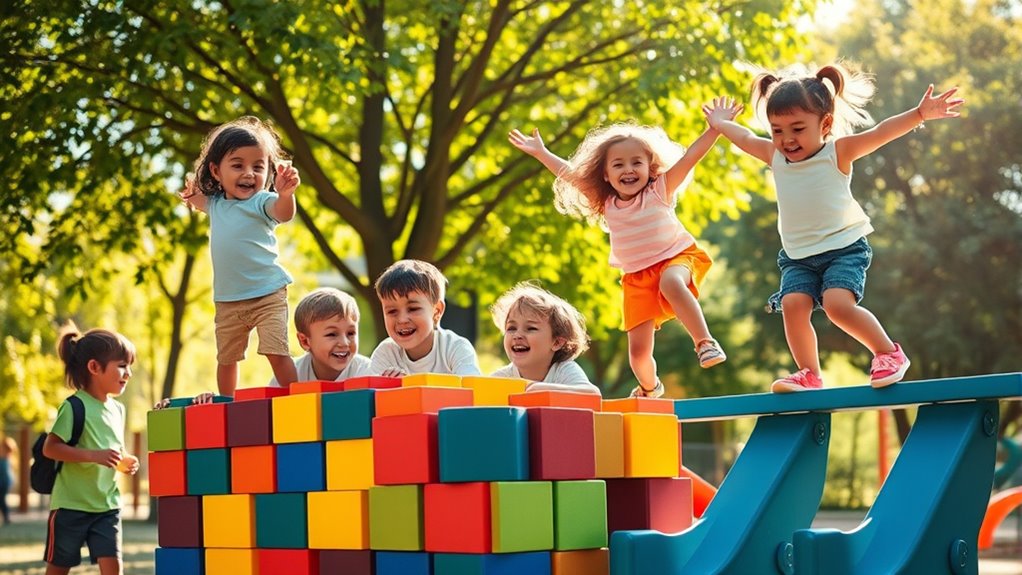
What Is Learning Through Play and Its Importance?
Learning through play is a crucial approach that significantly supports your child’s overall growth and development. It enhances cognitive skills, emotional regulation, and social interactions, making learning enjoyable and effective.
Through various types of play, such as free play and dramatic play, kids explore their world. This exploration helps them develop problem-solving abilities and build relationships.
Playful engagement nurtures their curiosity and creativity, allowing them to express themselves fully.
Discover how you can encourage this valuable process and its broader implications for your child’s development.
By fostering an environment that prioritizes learning through play, you set the stage for lifelong learning and resilience.
Key Takeaways
- Learning through play engages children in exploration, fostering creativity and critical thinking essential for cognitive development.
- It enhances social skills, promoting relationship-building and collaboration among peers.
- Play nurtures emotional growth, providing a safe space for children to develop resilience and emotional regulation.
- Different types of play, such as dramatic and constructive play, support various aspects of learning, including problem-solving and language development.
- Embracing play as an educational tool contributes to children’s academic success and lifelong love for learning.
Understanding Learning Through Play
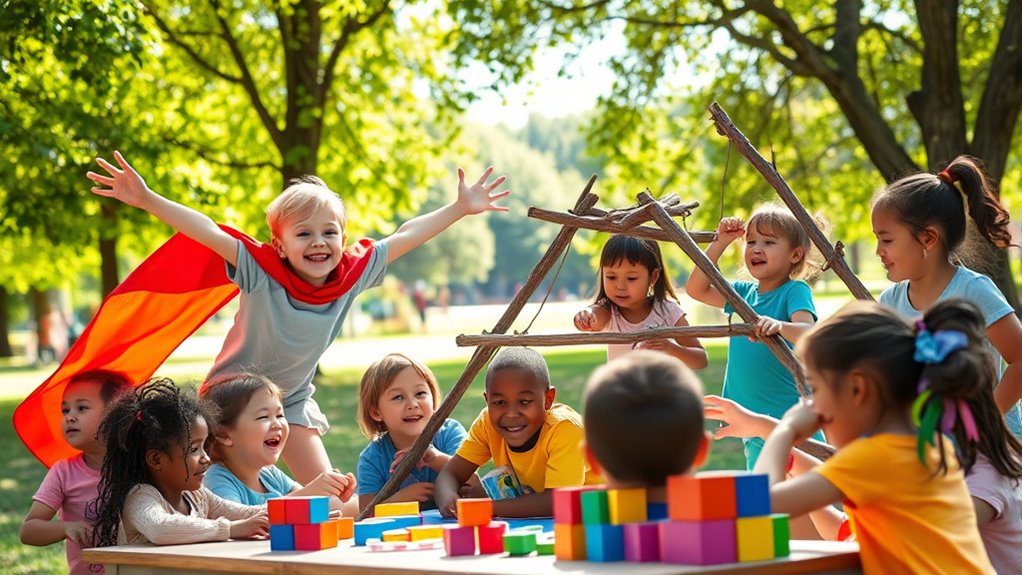
When you think about how children learn, it’s clear that play isn’t just fun; it’s a powerful educational tool.
Play-based learning engages children in exploration and creativity, fostering critical thinking and a lifelong love for learning.
This approach greatly enhances cognitive development, as children interact with their environment and tackle challenges during play.
It also nurtures social skills, helping kids build relationships and collaborate with peers.
Additionally, play provides a safe space for emotional growth, allowing them to navigate feelings and develop resilience.
With various types of play—like dramatic, exploratory, and manipulative—early childhood educators can design activities that align with educational goals.
This ensures each child thrives in a supportive learning environment.
The Benefits of Play for Child Development
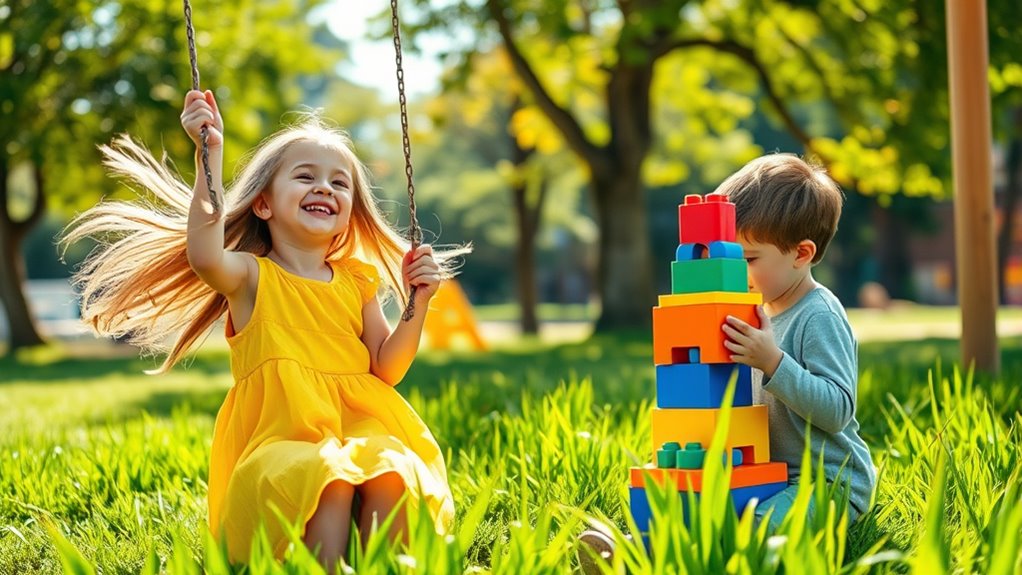
Play is essential for your child’s development, boosting their cognitive growth and enhancing problem-solving skills. As they engage in play, they’re not only learning how to interact socially but also gaining emotional regulation abilities. This combination sets the foundation for a well-rounded, thriving individual.
Cognitive Growth Through Play
While many parents recognize the joy that play brings, they may not realize its profound impact on cognitive growth.
Play greatly enhances cognitive development in children, fostering essential skills that set the foundation for future learning.
- Problem-solving skills: Engaging in block play boosts mathematical understanding.
- Language development: Children in play-based learning programs excel in vocabulary and grammar.
- Executive functioning: Free play nurtures memory, attention, and self-regulation.
These experiences not only support academic success but also cultivate curiosity and exploration.
As children navigate various play scenarios, they develop social awareness and emotional regulation.
Embracing play as a crucial component of learning can help your child thrive in both school and life.
Emotional and Social Skills
Building on the cognitive benefits of play, emotional and social skills are equally enhanced through these experiences.
Through play, children learn to manage their feelings, leading to better emotional regulation and reducing behavioral issues.
These interactions are essential for developing social skills like cooperation, empathy, and negotiation, as kids navigate conflicts and collaborate with peers.
Engaging in play-based programs can boost social awareness, making children more compassionate and empathetic.
Dramatic play, in particular, fosters emotional development, allowing kids to express feelings and work through anxieties in a safe space.
Longitudinal studies show that play-based learning practices contribute to higher achievement in social and emotional competencies, positively impacting overall well-being in adulthood.
Different Types of Play and Their Impact
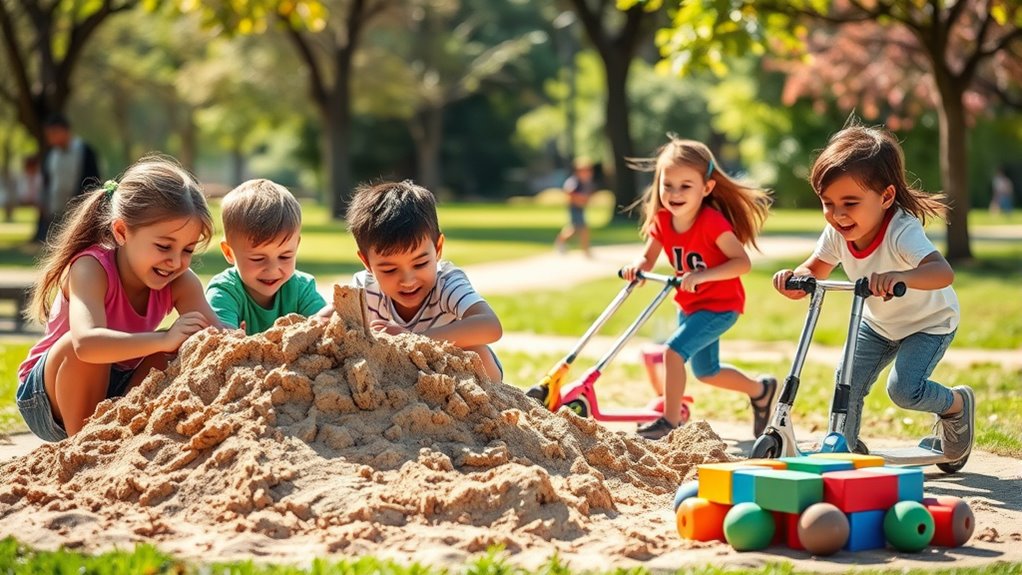
How do different types of play shape a child’s development? Each type of play plays a unique role in enhancing children’s development, particularly in social and emotional skills.
Free play fosters initiative and problem-solving abilities, which are essential for cognitive growth.
Free play cultivates initiative and problem-solving skills, vital for fostering cognitive development in children.
Guided play helps children focus on learning goals, reinforcing knowledge in subjects like math and literacy.
Dramatic play enables children to process emotions and develop language skills through real-world scenarios.
Other forms of play, like constructive play, enhance spatial reasoning and math achievement.
Meanwhile, digital play builds digital literacy.
Engaging in these varied types of play not only enriches children’s development but also prepares them for future challenges, both socially and academically.
How Educators Can Support Playful Learning
To effectively support playful learning, educators must create engaging environments that nurture children’s natural curiosity and interests.
By observing and responding to kids, you can balance child-led exploration with guided experiences that promote children’s development.
Continuous assessment of play activities helps you refine your methods, ensuring purposeful learning connections.
Incorporating open-ended questions during guided play enhances problem-solving skills and critical thinking, leading to improved learning outcomes.
Collaboration with families and professionals is essential, particularly for children with special needs, as it boosts engagement through evidence-based strategies.
Reflecting on your teaching strengths and sharing insights about playful learning with families fosters equitable experiences.
This ensures that all children thrive during their early childhood years.
The Role of Families in Promoting Play
Families greatly influence a child’s playful learning journey by participating in shared activities that deepen emotional bonds and foster development.
Engaging in play not only strengthens connections but also helps children grow in essential areas.
Here’s how you can promote play:
- Encourage unstructured play at home to boost creativity and problem-solving skills.
- Actively participate in play, which supports social skills and emotional regulation.
- Provide diverse materials and limit screen time to prioritize active play and movement.
Balancing Screen Time and Active Play
As children immerse themselves in the digital world, it’s essential to remember that screen time shouldn’t replace active play, which is significant for their development.
Active play offers fundamental learning experiences that help children develop crucial skills, like problem-solving and creativity.
Active play is essential for fostering creativity and problem-solving skills in children, laying the foundation for their future learning.
While it’s tempting to let them spend hours in front of screens, especially for school-age kids, limiting screen time to 1-2 hours a day guarantees they engage in physical activity.
For infants and toddlers, avoiding screen time, except for video chats, encourages healthy social interactions.
By promoting play in early childhood, you nurture lifelong learners who thrive on real-world experiences, building their emotional regulation and social skills.
Balancing both can lead to well-rounded growth.
Frequently Asked Questions
How Can Parents Incorporate Play at Home Effectively?
You can incorporate play at home effectively by providing diverse materials, engaging in dramatic play, allowing unstructured time, using educational games, and encouraging outdoor activities. This fosters creativity, social skills, and overall development in your children.
What Age Groups Benefit Most From Learning Through Play?
Kids of all ages benefit from learning through play, but it’s especially vital for those in early childhood. Engaging them in playful activities fosters essential skills that enhance their development and prepares them for future learning.
Are There Specific Toys That Enhance Learning Through Play?
Imagine your child immersed in building a towering castle with blocks. Toys like these enhance learning through play by fostering problem-solving skills, while puzzles sharpen memory and attention, enriching their cognitive development in engaging ways.
How Does Play-Based Learning Align With Traditional Education Methods?
Play-based learning aligns with traditional education methods by promoting active engagement, allowing you to explore concepts and apply knowledge meaningfully. This approach enhances retention, fosters collaboration, and personalizes learning experiences based on your interests.
Can Learning Through Play Be Applied in Older Children or Teens?
Yes, you can absolutely apply learning through play with older children or teens. Engaging them in playful activities enhances their motivation, boosts critical thinking, and fosters collaboration, ultimately deepening their understanding of complex subjects.
Conclusion
So, if you think learning through play is just an excuse for kids to run wild, think again!
It’s actually the secret sauce for developing creativity and problem-solving skills.
Who knew that building block towers and pretending to be superheroes could mold the next generation of innovators?
As you juggle screens and schedules, remember that a little chaos in the name of play might just be the ticket to raising tomorrow’s geniuses—cape optional.
In conclusion, learning through play is not just playful nonsense; it’s a vital part of child development.
It fosters creativity, critical thinking, and social skills, all while kids enjoy themselves.
So, embrace the messiness of playtime!
After all, the playful moments today could lead to the brilliant minds of tomorrow.