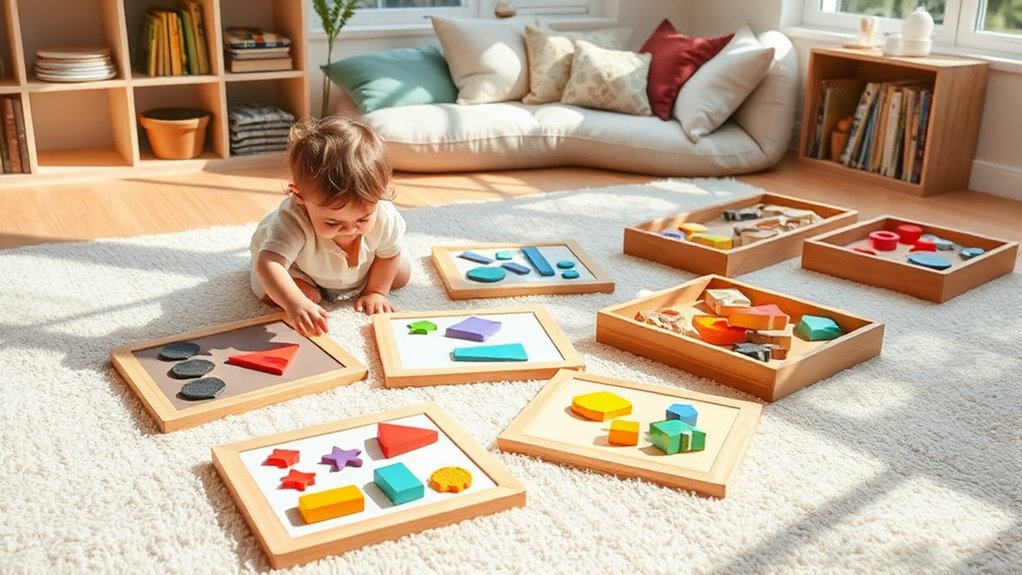
Top 7 Montessori Tablets for Kids – Foster Learning Through Play
When you’re searching for the top Montessori tablets for kids, you have some fantastic options to consider.
Tablets like the Amazon Fire Kids Edition and the LeapFrog LeapPad Academy are excellent choices. These devices encourage self-directed learning, allowing children to explore at their own pace.
They come loaded with interactive apps that foster creativity and critical thinking.
Plus, their customizable features cater to different learning styles, ensuring that every child can find something that resonates with them.
By combining educational content with enjoyable activities, these tablets promote meaningful exploration through play.
So, let’s dive in and discover even more about how these amazing tablets can enhance your child’s learning journey!
Key Takeaways
- Montessori tablets emphasize self-directed learning, allowing children to explore educational content at their own pace through interactive apps.
- The Amazon Fire Kids Edition features educational apps that align with Montessori principles, promoting mastery through self-paced learning.
- LeapFrog LeapPad Academy incorporates tactile elements to enhance fine motor skills and includes parental controls for safe use.
- Kurio Tab Connect offers customizable learning experiences tailored to individual learning styles, fostering a personalized educational journey.
- These tablets promote a balance of screen time and hands-on exploration, ensuring meaningful engagement with learning concepts.
Understanding Montessori Tablets and Their Benefits
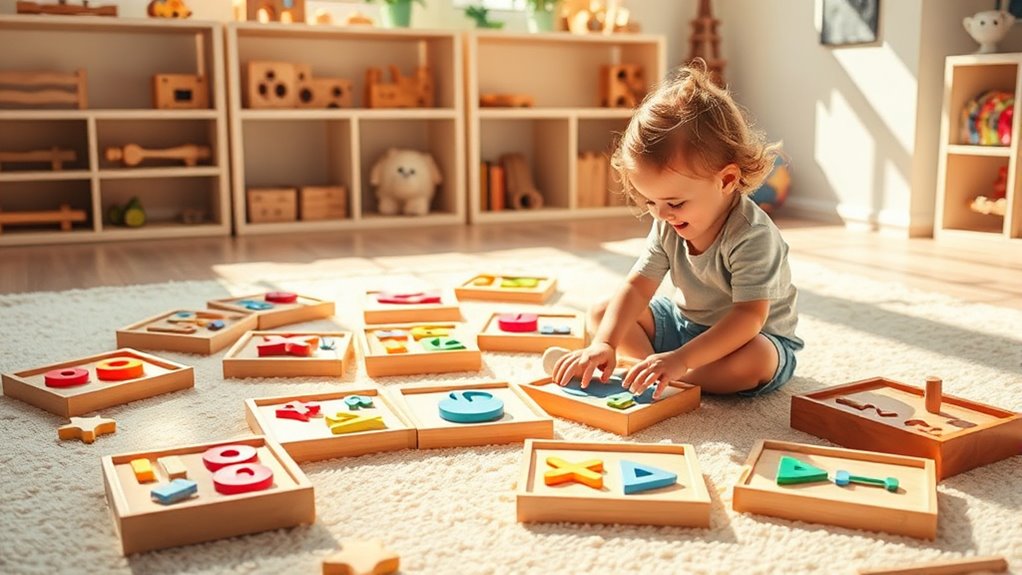
When you introduce Montessori tablets to your child, you’re opening a door to self-directed learning that encourages exploration and independence.
These innovative Montessori materials align perfectly with early childhood development, offering interactive and hands-on activities that engage kids.
The tablets often include educational apps focused on practical skills, fostering your child’s curiosity and love for learning while minimizing screen time.
With tactile elements and real-world applications, they make concepts like math and language arts meaningful.
They also cater to various learning styles, providing activities tailored to your child’s individual interests and needs.
By blending Montessori principles with technology, these tablets enhance critical thinking, problem-solving skills, and creativity.
This makes them a valuable tool in your child’s learning journey.
Top 7 Montessori Tablets for Engaging Learning
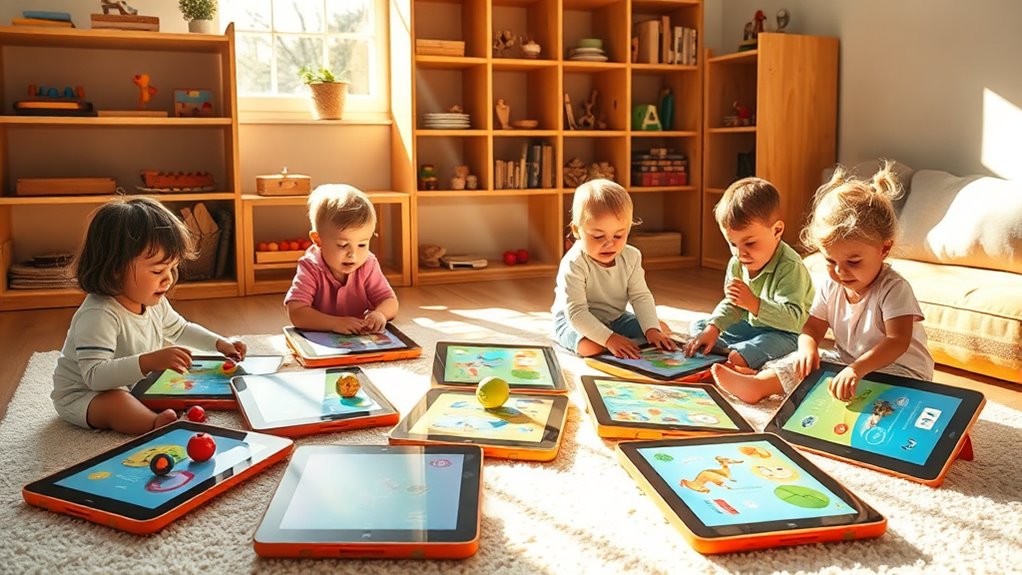
Discovering the right Montessori tablet can transform your child’s learning experience, making it engaging and interactive.
Finding the ideal Montessori tablet can revolutionize your child’s education, making it both enjoyable and interactive.
Here are the top three Montessori tablets that foster active participation in your child’s learning:
- Amazon Fire Kids Edition: This tablet offers educational apps aligned with Montessori principles. It promotes self-paced mastery in subjects like math and language arts.
- LeapFrog LeapPad Academy: Equipped with tactile elements, it encourages fine motor skills. Plus, it provides a safe learning environment with parental controls.
- Kurio Tab Connect: Customizable learning experiences allow parents to tailor content to fit individual learning styles. This ensures your children learn at their own pace.
With these options, you can create a fun and effective learning journey for your child!
Features to Look for in Montessori Tablets
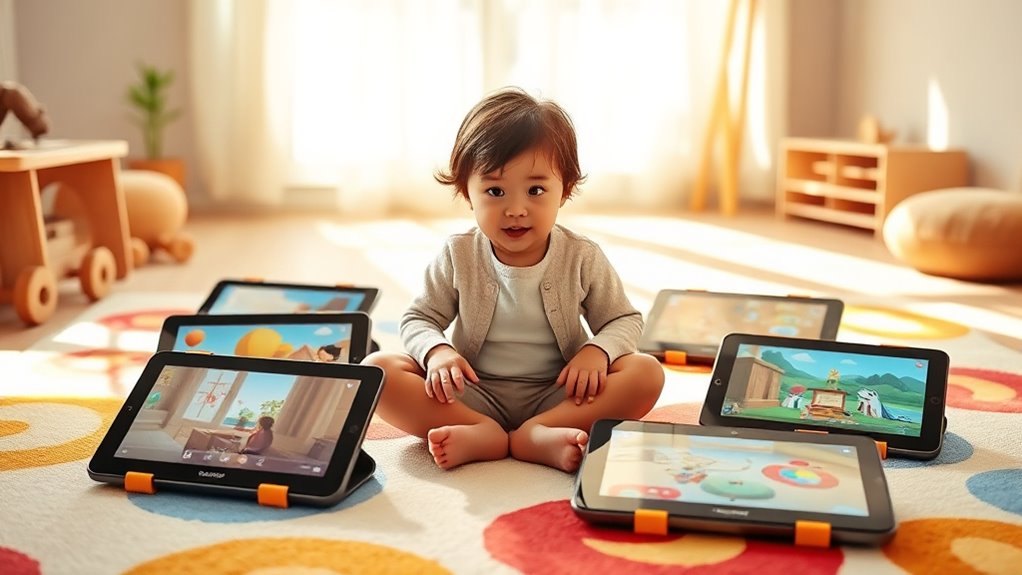
When choosing a Montessori tablet, focus on the quality of educational content and how it balances screen time. You want apps that enhance skill-building while minimizing passive consumption. It’s also essential to guarantee the device encourages hands-on learning experiences that resonate with Montessori principles.
Educational Content Quality
As you explore Montessori tablets for kids, it’s essential to focus on the quality of educational content they offer.
Look for these key features to guarantee a rich learning experience:
1. Variety of Interactive Apps****: Choose tablets with hands-on, educational apps that align with Montessori principles.
This promotes self-directed learning, which is crucial for children’s development.
2. Real-World Applications: Ensure the content encourages children to connect what they learn with everyday experiences.
This helps foster practical knowledge, making learning more meaningful and applicable.
3. Customizable Learning Paths: Opt for devices with adaptive technologies that cater to different learning styles and paces.
This resonates with the individualized approach of Montessori education, allowing each child to thrive in their unique way.
Screen Time Balance
To guarantee a healthy balance of screen time for kids using Montessori tablets, prioritize features that promote mindful technology use.
Look for tablets that emphasize educational content, offering apps that encourage hands-on learning and real-world skills instead of passive consumption.
Choose devices with customizable timers or usage tracking to help manage screen time effectively.
Ascertain the tablet includes a variety of interactive activities that align with Montessori principles, fostering independent exploration.
Opt for devices that minimize distractions with ad-free environments and focused educational applications to enhance engagement.
Finally, select tablets that promote creativity through customizable features, like drawing apps or coding programs, which support critical thinking and problem-solving skills essential for your child’s development.
How Montessori Tablets Foster Independent Learning
Montessori tablets encourage independent learning by providing interactive, self-directed activities that tap into your child’s natural curiosity.
These devices support hands-on exploration, allowing your child to learn at their own pace.
Montessori tablets promote hands-on exploration, empowering children to learn at their own pace and fostering independence.
Here are three key ways they promote independence:
1. Customizable Content: With age-appropriate apps, your child can engage with material that suits their learning style.
This fosters ownership of their education, making learning more personal and effective.
2. Immediate Feedback: Educational apps offer instant responses, which is super helpful.
It enables your child to understand concepts and correct mistakes independently.
3. Collaborative Learning: By sharing discoveries, children enhance their social skills.
They also learn from peers, which further cultivates their independence.
Through these features, Montessori tablets create an engaging environment.
This nurtures critical thinking and problem-solving abilities in your child.
Incorporating Montessori Principles in Tablet Use
When you incorporate tablets into Montessori learning, focus on purposeful screen time that enhances your child’s exploration. Choose interactive apps that encourage guided exploration and learning, ensuring they remain engaged and curious. Balancing digital activities with hands-on experiences can create a richer educational environment.
Purposeful Screen Time
In today’s digital age, incorporating purposeful screen time into your child’s learning can be incredibly beneficial.
To align with Montessori principles, consider these key strategies:
- Choose Educational Apps: Select applications that boost critical thinking, creativity, and problem-solving skills. Make sure the content is age-appropriate and engaging.
- Combine Digital and Physical Learning: Use tablets alongside hands-on materials. This allows your child to explore concepts like math and language arts through interactive activities, reinforcing their understanding.
- Monitor and Guide Use: Keep track of your child’s screen time and content. Encourage independence while ensuring they engage with high-quality, meaningful experiences.
Interactive Learning Experiences
Purposeful screen time can open up a world of interactive learning experiences that align perfectly with Montessori principles.
By choosing educational apps, you can promote hands-on exploration and mastery, allowing your child to learn at their own pace.
Storytelling apps can enhance language arts skills, engaging your little one in narratives that spark creativity and comprehension.
Math-focused games, like Mammoth Math, reinforce essential concepts through visual learning rather than rote memorization.
Coding and robotics apps encourage interest-led learning, fostering problem-solving skills as your child explores technology.
Additionally, combining tablet use with physical Montessori materials, such as puzzle maps or beads, creates a blended learning environment.
This enriches understanding through multi-sensory experiences.
Embrace these interactive opportunities for deeper engagement!
Guided Exploration Opportunities
Using tablets in a Montessori setting can transform the way children explore and learn.
By incorporating guided exploration opportunities, you can enhance their educational journey.
Focus on these three key approaches:
1. Interactive Storytelling: Engage children with apps that promote narrative comprehension and creativity.
Encourage them to create their own stories.
2. Math Games: Choose apps that provide hands-on math challenges.
This allows kids to solve problems while developing critical thinking skills.
3. Science Simulations: Use simulations that encourage curiosity.
Let children experiment with concepts in a virtual environment.
Balancing tablet use with traditional materials respects individual learning styles.
It fosters a love for knowledge.
By setting clear educational goals, you can maximize benefits while minimizing distractions.
This ensures enriching experiences.
Balancing Screen Time With Hands-On Activities
While screens can offer engaging educational content, balancing screen time with hands-on activities is vital for your child’s development.
Excessive screen exposure can hinder social skills and creativity, which are fundamental for growth. Montessori education emphasizes minimal screen use, advocating for practical experiences that foster independence and critical thinking.
Excessive screen time can stifle social skills and creativity; Montessori methods prioritize hands-on experiences for holistic development.
You can enhance learning by incorporating tactile materials like Montessori beads or puzzle maps alongside digital tools.
This combination promotes cognitive skills and kinesthetic learning. Setting clear limits on screen time, such as no more than 30 minutes a day for young children, guarantees that digital learning complements active, engaged experiences.
Encouraging Creativity and Critical Thinking Through Play
How can play spark a child’s creativity and critical thinking?
Montessori tablets provide a unique platform that encourages both.
With interactive applications, kids can explore their imagination and develop problem-solving skills.
Here are three ways these tablets foster creativity and critical thinking:
1. Digital Art and Music:
Children can create unique pieces of art or compose music, promoting self-expression and innovation.
2. Problem-Solving Games:
Engaging puzzles challenge kids to analyze and find solutions, enhancing their critical thinking abilities.
3. Collaborative Projects:
Working with peers on creative tasks boosts teamwork and communication skills while allowing kids to share and refine their ideas.
Frequently Asked Questions
What Age Group Are Montessori Tablets Suitable For?
Montessori tablets are suitable for children aged 2 to 7 years. They encourage exploration and hands-on learning, helping your little one develop essential skills while having fun. Just watch them engage and grow!
Are Montessori Tablets Screen-Based or Tactile?
Montessori tablets are typically tactile rather than screen-based. They encourage hands-on exploration, allowing you to engage with physical materials that promote learning through touch, enhancing your child’s sensory development and fine motor skills effectively.
How Do I Choose the Right Tablet for My Child?
Think of choosing a tablet like picking the perfect book. Consider your child’s interests, age, and learning style. Look for interactive features, educational apps, and durability, ensuring it sparks curiosity and fosters creativity in their learning journey.
Can Montessori Tablets Be Used in Group Settings?
Yes, Montessori tablets can definitely be used in group settings. They encourage collaboration and communication, allowing kids to share ideas and learn from each other while exploring various concepts together in a fun, engaging way.
Are There Any Safety Concerns With Montessori Tablets?
Safety concerns with Montessori tablets can be like maneuvering through a maze; you’ve got to take into account factors like screen time, durability, and age-appropriate content. Always check for certifications and supervise usage to guarantee a safe learning environment.
Conclusion
In the world of learning, Montessori tablets are like treasure maps guiding your child to hidden gems of knowledge.
By choosing the right tablet, you’re not just handing over a device; you’re opening a door to independent exploration and creativity.
Remember, balance is key—pair screen time with hands-on activities to create a rich learning environment.
Embrace the adventure, and watch as your child discovers the joy of learning through play!
—
In conclusion, Montessori tablets provide an exciting pathway for kids to learn and grow.
They encourage independent thinking and creativity while fostering a love for learning.
Just remember to balance screen time with interactive play to enhance the educational experience.
With the right tools, your child can embark on a joyful learning journey that combines fun with knowledge!