7 Must-Have Musical Sensory Toys for Enhanced Playtime
Looking for the best musical sensory toys to enhance playtime?
These toys can significantly boost creativity and cognitive development while providing sensory stimulation.
Here are seven must-haves: a xylophone for active play, maracas for developing fine motor skills, a musical mat for tactile fun, an interactive keyboard for auditory stimulation, and a musical box for infants.
These toys not only enhance creativity and cognitive development but also create opportunities for social interaction.
Want to know more about how to incorporate these toys into everyday activities?
Keep exploring!
Key Takeaways
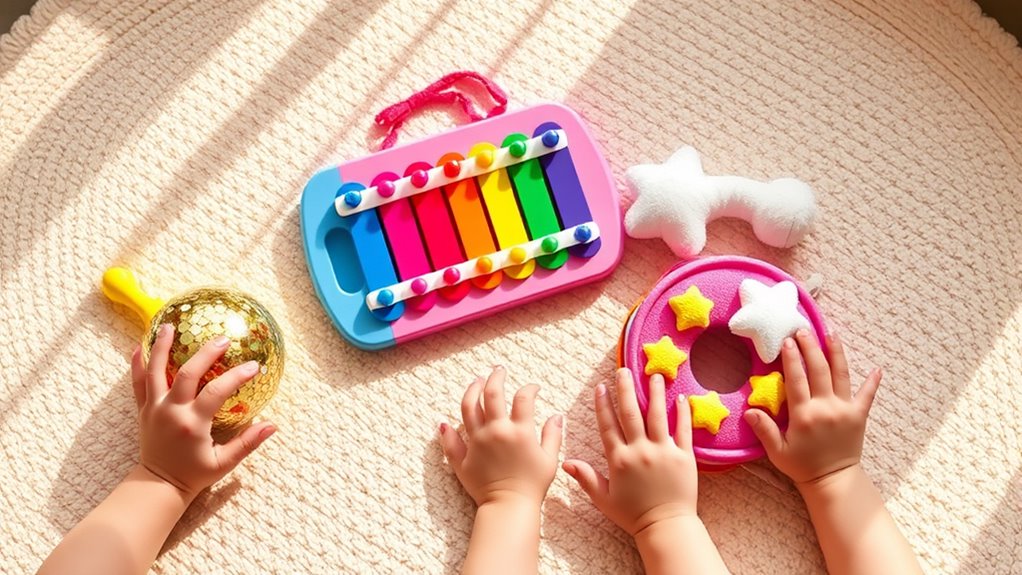
- Xylophone: Perfect for ages 2-5, this instrument encourages creativity and active play while enhancing fine motor skills.
- Musical Mat: Designed for ages 2-6, it combines tactile feedback with sound, promoting gross motor skills and interactive play.
- Maracas: Ideal for children aged 1-4, these instruments foster fine motor skills while providing auditory stimulation and rhythm exploration.
- Interactive Keyboard: Suitable for ages 3-6, it stimulates auditory senses and encourages creative expression through music-making.
- Musical Box: Safe for infants (0-3 years), this toy promotes sensory engagement and introduces music in a calming format.
The Benefits of Musical Sensory Toys
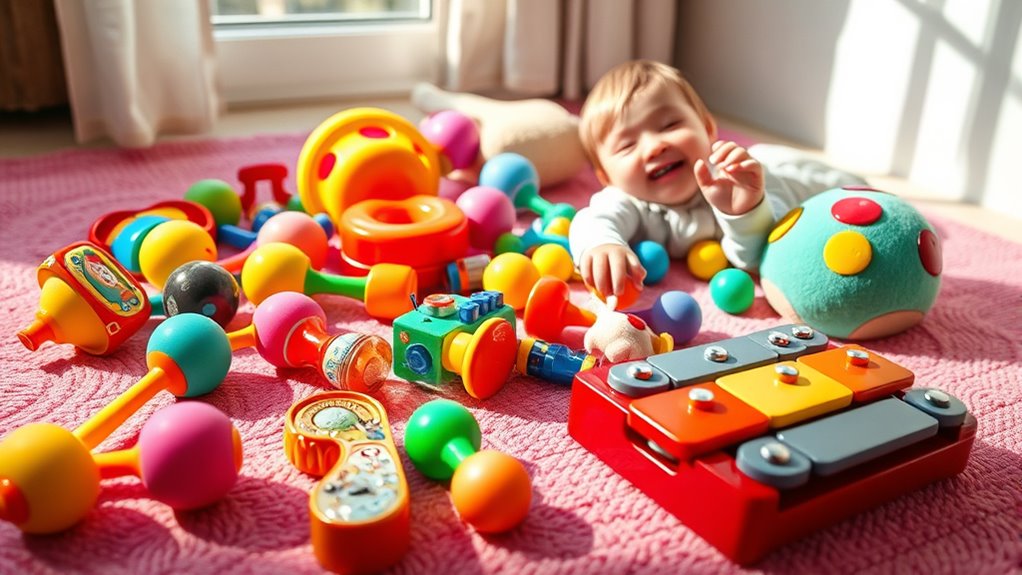
When you introduce musical sensory toys to children, you’re not just providing a source of entertainment; you’re also enhancing their cognitive development.
These engaging sounds stimulate auditory processing, helping improve memory and learning.
Engaging sounds from musical sensory toys enhance auditory processing, boosting memory and learning in children.
For children with sensory needs, musical sensory toys can effectively reduce anxiety and improve mood, promoting emotional regulation.
Furthermore, they foster social interaction as children often play together, creating shared experiences that boost communication skills.
The rhythmic patterns encourage fine motor skills through pressing buttons or moving to the beat, making playtime both fun and beneficial.
In addition, the fascinating nature of these toys can enhance attention spans, particularly for kids with ADHD or similar challenges.
This makes them invaluable tools in your child’s development journey.
Top 7 Musical Sensory Toys for Kids
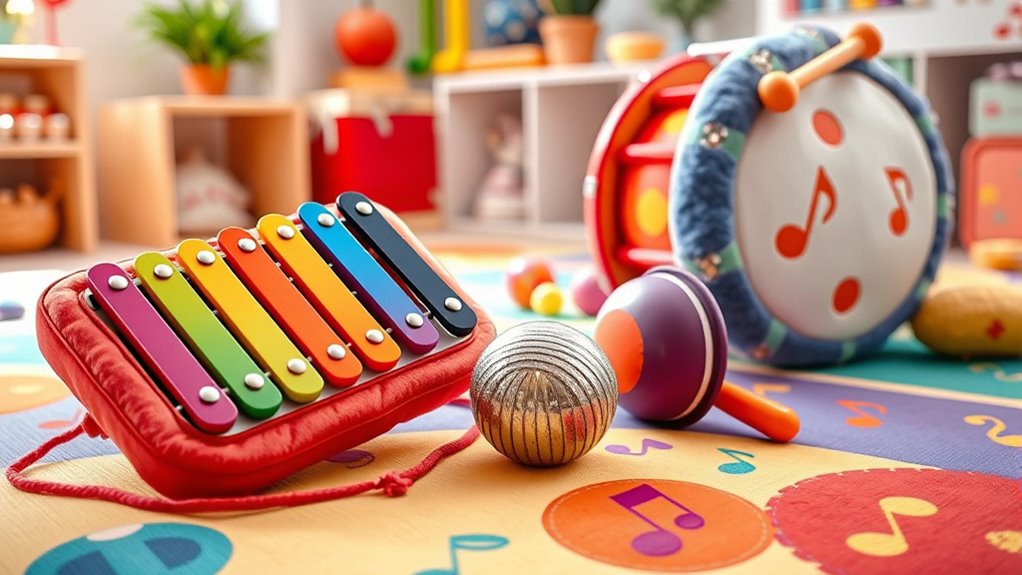
As you explore the world of musical sensory toys for kids, you’ll discover a variety of engaging options that not only entertain but also support development.
Here are the top 7 musical sensory toys that enhance playtime and promote cognitive development:
| Toy Name | Features | Age Group |
|---|---|---|
| Xylophone | Encourages active play | 2-5 years |
| Maracas | Develops fine motor skills | 1-4 years |
| Musical Mat | Tactile feedback & audio | 2-6 years |
| Interactive Keyboard | Stimulates auditory senses | 3-6 years |
| Musical Box | Age-appropriate design | 0-3 years |
| Sound Puzzle | Enhances emotional regulation | 3-5 years |
| Rhythm Sticks | Combines movement & music | 2-5 years |
These toys provide enriching experiences while ensuring safety with proper safety labels.
How Musical Toys Enhance Cognitive Development
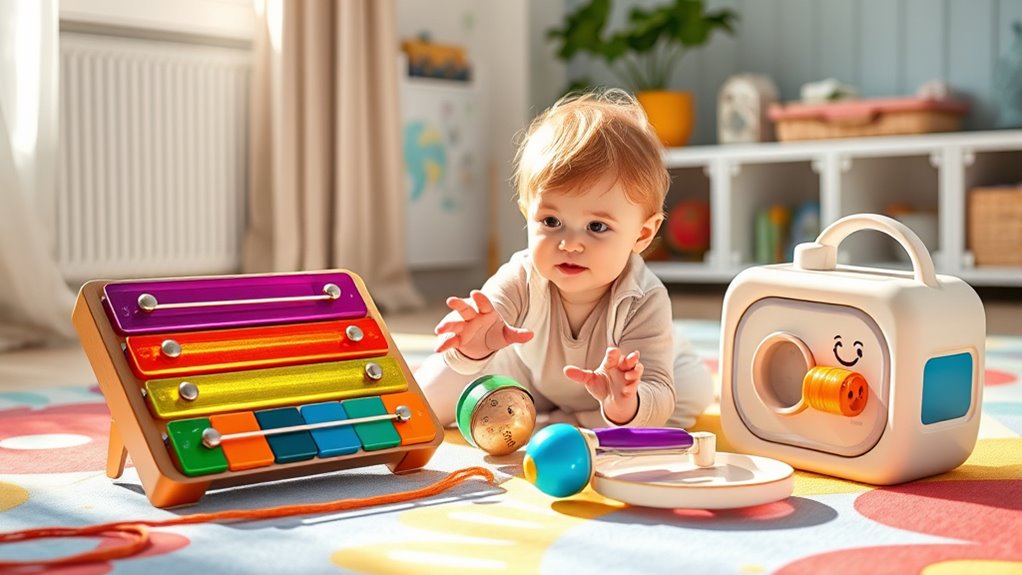
Musical toys play an essential role in enhancing cognitive development, offering children a dynamic way to engage their minds.
These toys stimulate auditory processing, improving sound discrimination and language skills.
Musical toys enhance auditory processing, fostering sound discrimination and language development in children.
When kids interact with musical toys, they release their creative expression, which supports problem-solving and critical thinking as they explore different sounds and rhythms.
Research shows that children playing with musical instruments experience better memory retention and spatial-temporal skills, crucial for tackling complex tasks.
Additionally, regular use of musical toys boosts social skills through cooperative play, enhancing their communication abilities.
Finally, these toys promote emotional development, helping kids express feelings and understand emotional responses through music and sound, enriching their overall cognitive growth.
Tips for Choosing the Right Musical Sensory Toy
When you’re choosing a musical sensory toy, keep your child’s sensory preferences in mind to guarantee it engages them fully. It’s also important to take into account age appropriateness, as toys designed for different stages can impact safety and enjoyment. Finally, don’t forget about durability and safety standards—select toys made from sturdy, non-toxic materials to keep playtime worry-free.
Consider Sensory Preferences
Choosing the right musical sensory toy can be a rewarding experience, especially if you take into account your child’s unique sensory preferences.
Start by looking for interactive toys that respond to touch or movement, fostering exploration and enhancing engagement. Check the safety labels and verify they’re made from non-toxic materials for peace of mind.
It’s also essential to take into account your child’s age and developmental stage, as these factors influence sensory needs.
Opt for toys that offer diverse sensory inputs, like various sounds and textures, to keep your child interested.
Finally, prioritize options with adjustable volume settings, allowing you to tailor the sound levels to suit your child’s preferences and environment.
This guarantees a safe and enjoyable playtime experience.
Age Appropriateness Matters
Selecting the right musical sensory toy hinges on understanding your child’s age and developmental stage, as these factors directly impact their abilities and interests.
For toddlers (ages 1-3), opt for simple instruments like maracas or xylophones. These toys promote exploration through touch and sound, which enhances fine motor skills.
Preschoolers (ages 3-5) thrive with interactive toys like rhythm sticks or musical mats. These encourage active play and creativity, making music a fun experience.
For elementary-aged children (ages 6-9), consider more sophisticated musical toys, such as electronic keyboards or music-making apps. These options challenge their cognitive skills while fostering independent play.
Tween and teen musical sensory toys should focus on enhancing creativity. Look for tools like digital music production devices, which allow for personal expression while providing sensory comfort.
Durability and Safety Standards
Understanding age appropriateness is just the beginning; durability and safety standards play an essential role in guaranteeing your child’s musical sensory toy is both fun and secure.
Always look for toys that meet safety standards like ASTM F963, guaranteeing they’re free from choking hazards and toxic materials.
Prioritize non-toxic, durable materials that can handle rough play.
Check for age-appropriate labels and features like volume control to prevent auditory overstimulation.
Confirm electronic components are in a secure enclosure and that battery compartments are easy to access, reducing the risk of accidents.
| Feature | Importance | What to Look For |
|---|---|---|
| Durability | Longevity during play | Non-toxic materials |
| Safety Standards | Protection from hazards | ASTM F963 compliance |
| Volume Control | Prevents hearing damage | Adjustable sound levels |
Incorporating Musical Toys Into Playtime Routines
Incorporating musical toys into your child’s playtime routine can transform their experience. These engaging tools stimulate auditory processing and enhance sensory exploration.
By introducing musical sensory toys, you can improve social interactions. They encourage your child to share musical experiences with peers and foster communication.
Rhythmic play not only aids in developing motor skills but also invites movement and dance. This adds fun to their routine!
Additionally, these toys provide calming auditory input, helping with anxiety management and smoother shifts between activities.
Regular use of musical toys boosts cognitive development. It encourages creativity, problem-solving, and memory retention through musical exploration.
Safety Considerations for Musical Sensory Toys
When choosing musical sensory toys, you need to pay attention to age appropriateness and material safety standards. Look for toys rated for your child’s age to guarantee they can safely engage with them. Also, make certain the materials are non-toxic, especially since young kids often explore by putting things in their mouths.
Age Appropriateness Guidelines
Choosing the right musical sensory toys for your child involves considering their age and developmental stage, as each group has unique needs and safety concerns.
For toddlers (1-3 years), opt for toys with soft sounds and safe materials to prevent choking hazards.
Preschoolers (3-5 years) benefit from lightweight instruments that encourage active play and cause-and-effect learning.
As your child enters elementary school (6-9 years), look for more complex toys that stimulate creativity and fine motor skills, like electronic instruments or musical building sets.
Finally, tweens and teens appreciate musical sensory toys that prioritize independence, offering customizable sound settings while ensuring durability.
Always check age appropriateness and safety certifications to meet their developmental needs and keep playtime safe.
Material Safety Standards
Ensuring your child’s safety while they enjoy musical sensory toys is paramount.
So, it’s important to look for products that meet established safety standards.
Choose toys labeled as BPA-free, phthalate-free, and lead-free to protect them from harmful chemicals.
Non-toxic paints and finishes are essential, especially for toys that infants and toddlers might mouth.
Pay attention to age appropriateness; toys designed for younger kids undergo stricter testing to avoid choking hazards or sharp edges.
Regular safety checks are vital—make sure batteries, cords, and electronic components are secure and in good condition.
Creative Ways to Use Musical Sensory Toys in Daily Activities
Incorporating musical sensory toys into your daily activities can transform routine moments into engaging learning experiences.
For breakfast, try using a xylophone to encourage rhythm and coordination while eating.
During movement activities, maracas or shakers promote physical engagement and help develop gross motor skills through dance and play.
To create a calming environment, integrate soothing musical sensory toys like a gentle sound machine during quiet time or naptime, fostering relaxation and sleep readiness.
In group settings, hand drums can enhance social interaction and communication skills during circle time.
Finally, combine these toys with storytelling by adding sound effects, enriching narratives and igniting your child’s imagination during reading sessions.
Ultimately, this approach enhances playtime in creative ways.
Frequently Asked Questions
What Age Group Is Best Suited for Musical Sensory Toys?
Musical sensory toys are best suited for toddlers and preschoolers, as these age groups engage their auditory senses and develop fine motor skills. However, older children can also benefit by enhancing creativity and focus through interactive play.
How Do Musical Sensory Toys Promote Emotional Well-Being?
Musical sensory toys work wonders for emotional well-being. They help you navigate feelings, nurture creativity, and foster connections, allowing you to experience joy and calmness through sound, ultimately enhancing your overall emotional landscape.
Can Musical Sensory Toys Help With Language Development?
Yes, musical sensory toys can greatly help with language development. They encourage vocalization, enhance phonetic awareness, and stimulate auditory processing, making learning speech sounds and vocabulary fun and engaging for you and your child.
Are There Any Educational Benefits to Using These Toys?
Yes, using these toys offers educational benefits. They enhance auditory processing, improve fine motor skills, boost cognitive functions, and encourage social interaction, all essential for language development and emotional regulation as you engage in fun, interactive play.
How Do I Clean and Maintain Musical Sensory Toys?
You’d think cleaning musical sensory toys is a breeze, but it’s vital! Use a damp cloth with mild soap, inspect for damage, machine wash as needed, and air dry completely to keep them safe and fun.
Conclusion
Incorporating musical sensory toys into your child’s playtime can truly enhance their development and spark creativity.
Did you know that over 90% of brain growth occurs in the first five years of life?
By choosing the right musical toys, you’re not just providing fun; you’re also fostering cognitive skills and emotional expression.
So, immerse yourself in the world of music and watch your child thrive as they learn and grow through play!
In conclusion, musical sensory toys are more than just entertaining; they are vital tools for your child’s development.
By engaging with these toys, children can improve their cognitive abilities while also expressing themselves emotionally.
So why not introduce these enriching toys into your child’s playtime?
Watch as they flourish, develop essential skills, and create wonderful memories through the power of music!