7 Essential Toys for Occupational Therapy Skill Development
To boost occupational therapy skills in children, it’s essential to incorporate a variety of engaging toys into their playtime.
Consider a purple piggy bank, which is great for developing fine motor skills, or a teeter popper that encourages gross motor development.
Sensory exploration toys, like coffee beans and water beads, can enhance cognitive growth and provide a fun way for kids to experience different textures.
Self-care puzzles and interactive playsets are fantastic for fostering independence.
Don’t forget about role-play toys, which can spark creativity and improve social skills.
Each of these toys contributes uniquely to skill development, and there’s so much more to discover about how they can benefit your child.
Let’s explore how these toys can make therapy fun and effective!
Key Takeaways
- Fine motor skill toys like purple piggy banks and tweezer toys enhance dexterity and grip strength essential for daily tasks.
- Sensory exploration toys such as coffee beans and water beads promote cognitive growth while providing tactile experiences that engage children.
- Gross motor skill enhancers like the Teeter Popper and tunnels improve balance, coordination, and physical activity through active play.
- Self-care toys, including latch puzzles, foster independence and essential skills necessary for dressing and grooming, promoting self-sufficiency.
- Role-play and collaborative toys encourage social skills development, teamwork, and emotional intelligence through imaginative play scenarios.
Fine Motor Skill Development Toys
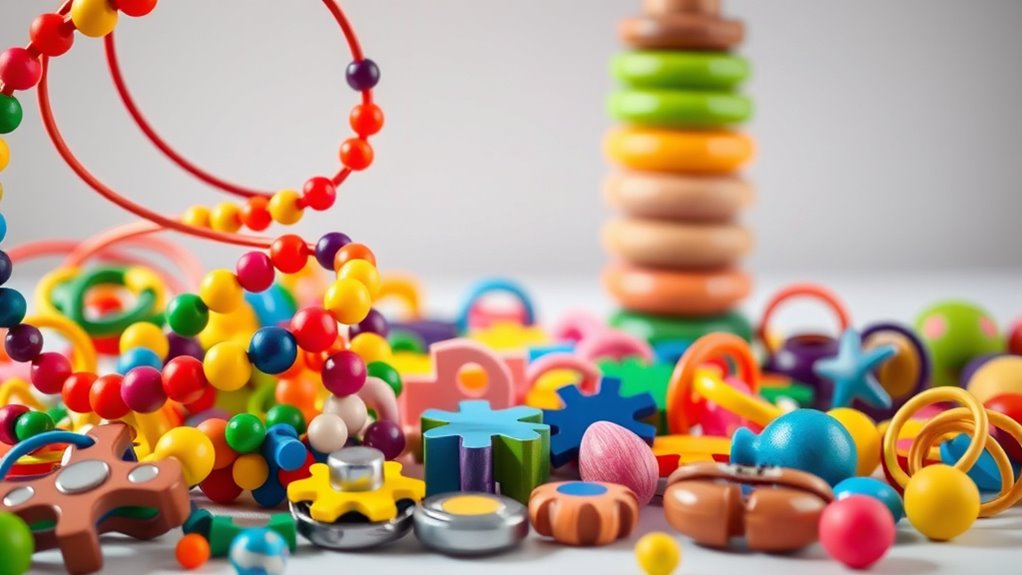
When you’re looking to boost fine motor skills in children, incorporating the right toys can make all the difference.
Occupational therapy toys like the purple piggy bank and peg board enhance pincer grasp, bilateral coordination, and eye-hand coordination.
Tweezer toys and clothespins provide varied grasp activities that strengthen finger muscles essential for improving pencil grasp.
Shape puzzles not only assess visual perceptual abilities but also develop problem-solving skills through manipulation.
Engaging in cutting play food activities fosters bilateral coordination and matching skills, making these toys versatile for different developmental levels.
Mini spiky balls and stacking cups encourage vital grasp and release actions, further developing finger strength and fine motor control.
Choose these toys to support your child’s growth effectively!
Sensory Exploration Toys
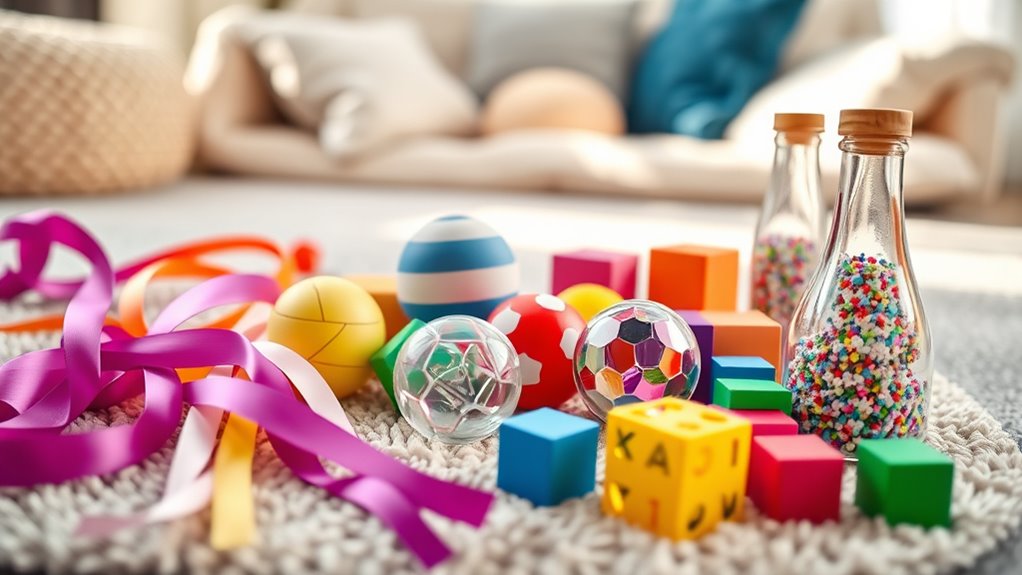
Sensory play is vital for helping children develop essential skills, and sensory exploration toys play a big role in this process. From tactile experiences like coffee beans to interactive spinny toys, these tools offer varied benefits for development. By incorporating sensory toys into playtime, you’re supporting your child’s growth in multiple areas.
Importance of Sensory Play
While engaging in sensory play, children gain valuable insights into their surroundings. This enhances their cognitive and motor skills.
This type of play is essential for developing sensory processing abilities. It also fosters creativity through hands-on experiences.
Sensory toys like coffee beans and water beads not only promote fine motor skills but also support emotional regulation and focus.
| Benefits of Sensory Play | Examples of Engaging Activities |
|---|---|
| Enhances cognitive skills | Creating sensory boxes |
| Improves fine motor skills | Using mini spiky balls |
| Supports emotional regulation | Exploring varied textures |
Types of Sensory Toys
Exploring different types of sensory toys can greatly enhance a child’s development during play.
Sensory toys like coffee beans and water beads provide tactile experiences that encourage exploration. Plus, they’re easy to clean for repeated use!
Mini spiky balls and stacking cups promote fine motor skills and hand strength, which are essential for children with sensory processing challenges.
Washable bath soap finger paint offers a creative outlet while supporting fine motor skills and artistic expression.
Additionally, toys like the bug massager deliver proprioceptive input, helping children feel comfortable during therapy.
Spinny toys enhance visual input and promote bilateral coordination through turn-taking.
This makes them effective in engaging children in sensory play while developing important motor skills.
Benefits for Development
When children engage with sensory exploration toys, they not only discover new textures and sensations but also develop essential skills that aid their overall growth.
These sensory toys, like coffee beans and water beads, enhance their ability to process different sensory inputs, improving sensory processing skills.
Engaging with items such as washable bath soap finger paint fosters creativity and fine motor skills, allowing kids to explore colors and textures.
Additionally, toys like mini spiky balls and stacking cups promote hand separation and dexterity, vital for coordination.
Utilizing these toys during therapy sessions can reduce anxiety and boost engagement, making learning more enjoyable.
Ultimately, sensory exploration supports emotional regulation, providing calming experiences for children with sensory needs.
Engaging Play Activities
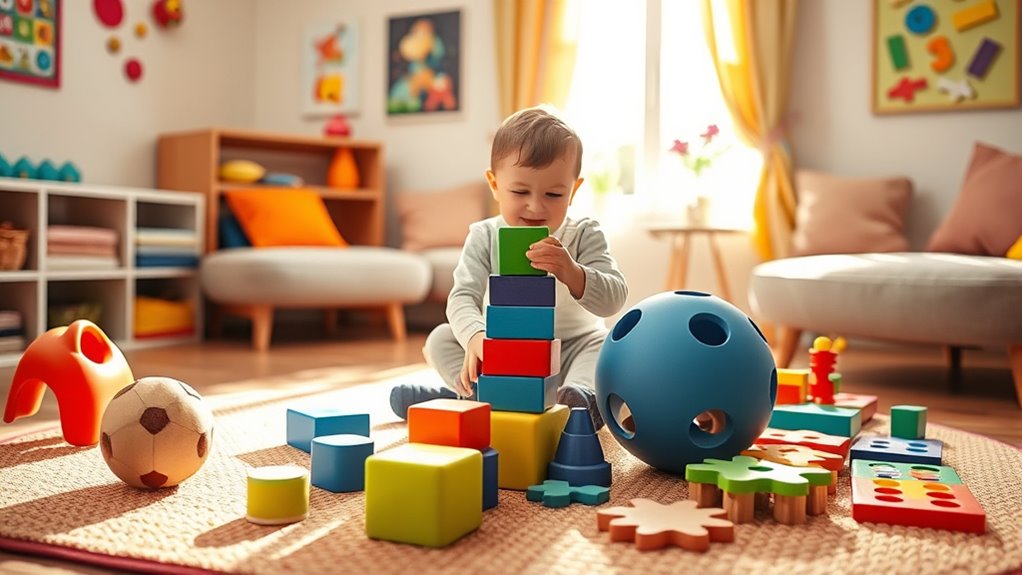
Engaging play activities are key to enhancing motor skills and promoting creative exploration in therapy. By using interactive toys and sensory-rich materials, you can support the development of essential skills while making the process enjoyable. Let’s explore how these activities can transform therapy sessions into fun and effective learning experiences.
Enhancing Motor Skills
Play activities designed to enhance motor skills can be both fun and beneficial for children.
Using a purple piggy bank encourages your child to develop a pincer grasp and wrist rotation while placing coins, promoting fine motor skills.
Engaging with toys like pop tubes and mini spiky balls enhances bilateral coordination and hand strength through pulling and grasping activities.
Cutting play food offers versatile opportunities for practicing bilateral coordination at various difficulty levels.
Shape puzzles not only assess visual perceptual abilities but also support gradual skill development.
Additionally, activities involving tweezers and clothespins boost grasp and release skills, which are essential for improving finger strength and pencil grasp necessary for writing.
These engaging play activities make learning motor skills enjoyable!
Promoting Creative Exploration
While exploring creative avenues, children can thrive through engaging activities that stimulate their imagination and development.
Creative exploration not only enhances motor skills but also fosters cognitive growth.
For instance, toys like wooden blocks and lacing sets encourage imaginative play while promoting fine motor skills.
Sensory play with coffee beans and water beads allows kids to discover various textures, enhancing sensory processing.
Here’s a quick reference table for engaging activities:
| Activity | Benefits |
|---|---|
| Pop Tubes | Enhances fine motor skills |
| Shape Puzzles | Supports bilateral coordination |
| Connect 4 | Facilitates social interaction |
Incorporating these activities will help your child develop essential skills while having fun!
Toys for Visual Perceptual Skills
How can toys enhance visual perceptual skills in children?
Engaging with toys designed for visual perceptual development can greatly boost your child’s skills.
For example, shape puzzles are a great way for them to match and fit shapes, improving visual perceptual abilities.
Travel-sized Connect 4 games promote visual discrimination as children identify and connect colors strategically.
Stacking cups also encourage spatial awareness and visual tracking as kids experiment with different configurations.
Wooden puzzles enhance problem-solving and support visual-motor integration through hands-on play.
Finally, activities with dry erase boards and markers foster visual-motor coordination, allowing your child to draw and write.
This simultaneously develops fine motor skills.
Incorporating these toys into playtime makes skill development fun and effective!
Gross Motor Skill Enhancers
To develop gross motor skills effectively, incorporating engaging toys into your child’s playtime is essential.
These toys not only promote active participation but also enhance coordination and strength.
| Toy | Benefits | Skills Developed |
|---|---|---|
| Teeter Popper | Improves core strength and balance | Gross motor skills, coordination |
| Tunnels | Encourages crawling and climbing | Bilateral coordination, trunk strength |
| Joey Jump Stomp | Builds balance for hopping and skipping | Eye-hand coordination |
| Velcro Catch Mitts | Facilitates catch and throw practice | Hand muscle strength, postural control |
| Jumpers | Promotes physical activity | Gross motor skills, active play |
Self-Care and Daily Living Skills Toys
As children engage with self-care and daily living skills toys, they not only have fun but also develop essential abilities that foster independence.
Toys like latch and dressing puzzles provide interactive play that sharpens fine motor skills vital for dressing and grooming.
By using these self-care toys, you encourage your child to take on responsibilities, nurturing self-sufficiency and essential routines.
Toys that simulate daily tasks, such as the Little Tikes Grocery Cart, enhance motor planning through pretend play.
Incorporating tools like cutting play food boosts bilateral coordination and matching skills necessary for feeding.
Additionally, toys requiring grasping, like jars and clothespins, support finger strength and dexterity, helping kids master buttoning and managing zippers.
Creative Play and Imagination Stimulators
Building on the skills gained from self-care toys, creative play and imagination stimulators open up a world of possibilities for children.
These toys not only spark joy but also enhance important developmental skills through imaginative scenarios. Here are some essential options:
- Building blocks promote problem-solving and creativity.
- Melissa and Doug Ice Cream Set encourages social skills through role-play.
- Sequin pillows provide tactile experiences that enhance fine motor skills.
- Teeter Popper improves balance and inspires versatile imaginative play.
- Climbing tunnels support cognitive development through storytelling and exploration.
Incorporating these toys into playtime nurtures creativity and helps children express themselves in new and exciting ways.
Embrace the magic of creative play to foster their growth!
Frequently Asked Questions
How Do I Choose the Right Toy for My Child’s Needs?
To choose the right toy for your child’s needs, assess their developmental level and interests. Look for engaging, versatile options that encourage skill progression, social interaction, and imaginative play to support their growth.
At What Age Should I Start Using Occupational Therapy Toys?
You can start using occupational therapy toys as early as infancy. Just like planting seeds in a garden, nurturing your child’s development with the right toys helps them grow essential skills from a young age.
Can These Toys Be Used at Home or Only in Therapy Sessions?
Yes, you can absolutely use these toys at home! Incorporating them into daily play helps reinforce skills learned in therapy, allowing your child to practice and master new abilities in a comfortable environment.
How Can I Incorporate These Toys Into Daily Routines?
Imagine your child’s snack time as a mini obstacle course. You can easily incorporate fine motor toys like peg boards, stacking cups, and puzzles into daily routines, making learning fun while enhancing their skills naturally.
Are There Any Safety Concerns With These Occupational Therapy Toys?
Yes, safety concerns exist with occupational therapy toys. You should check for small parts, guarantee materials are non-toxic, regularly clean them, and inspect for wear and tear to keep your child safe during play.
Conclusion
In a world where screens dominate playtime, it’s ironic that some of the best tools for development are simple toys.
By choosing engaging toys that foster fine motor skills, sensory exploration, and imaginative play, you’re not just entertaining your child—you’re equipping them with essential life skills.
So, while others might chase the latest gadget, you’ll be the one nurturing creativity and confidence.
After all, who knew that a humble toy could pave the way for a brighter future?
In conclusion, opting for simple yet effective toys can significantly impact your child’s development.
These toys not only enhance fine motor skills but also promote sensory exploration and creativity.
As a parent, focusing on these essential tools empowers your child to build confidence and essential life skills, setting them up for success in the future.
Choose wisely, and watch them thrive!