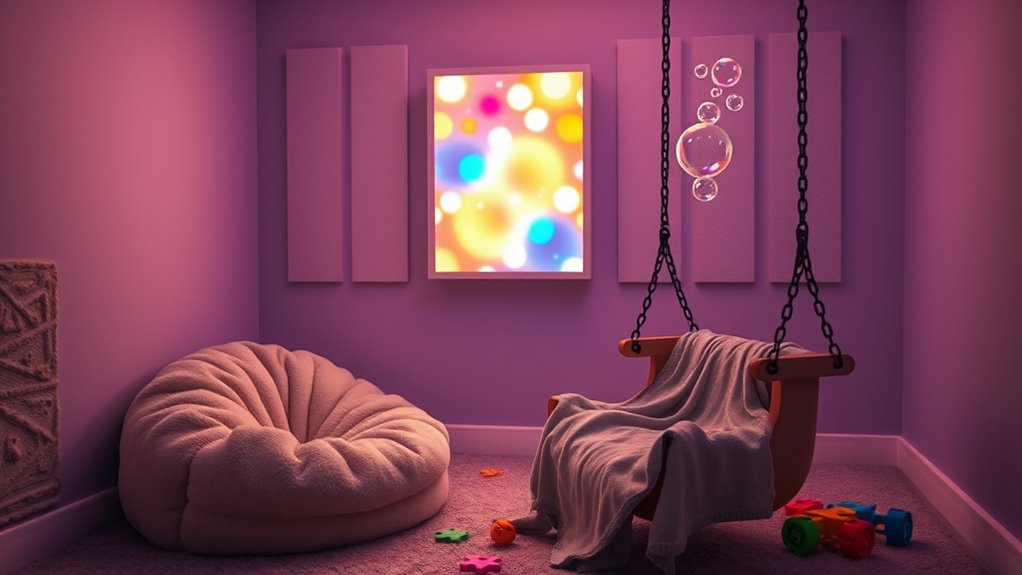
7 Essential Equipment Items for Autism Sensory Rooms
To create an effective autism sensory room, it’s important to include essential equipment that caters to various sensory needs.
Start with weighted blankets for comfort, as they provide a soothing effect.
Bubble tubes offer visual stimulation, creating a mesmerizing environment that can engage and calm.
Tactile sensory bins are great for hands-on exploration, allowing individuals to engage with different textures and materials.
Incorporating sound machines can help establish a calming atmosphere, which is vital for relaxation.
Consider adding interactive tools like vibroacoustic amplifiers to enrich sensory experiences further.
Large water sensory tables can encourage exploration and play, while soft seating areas promote relaxation and comfort.
Each piece of equipment plays a crucial role in development and engagement, making the sensory room a valuable resource.
And remember, there’s even more to discover in creating the perfect sensory space!
Key Takeaways
- Weighted blankets provide comfort and reduce anxiety, aiding emotional regulation in sensory rooms for individuals with autism.
- Bubble tubes offer soothing visual stimulation, enhancing engagement and focus during sensory activities.
- Tactile sensory bins encourage hands-on exploration, fostering emotional expression and fine motor skill development.
- Vibroacoustic amplifiers enrich sensory experiences through sound and vibrations, promoting interaction and engagement.
- Soft seating areas with sound-absorbing materials create a calming environment conducive to focused learning and relaxation.
Visual System Equipment for Sensory Rooms
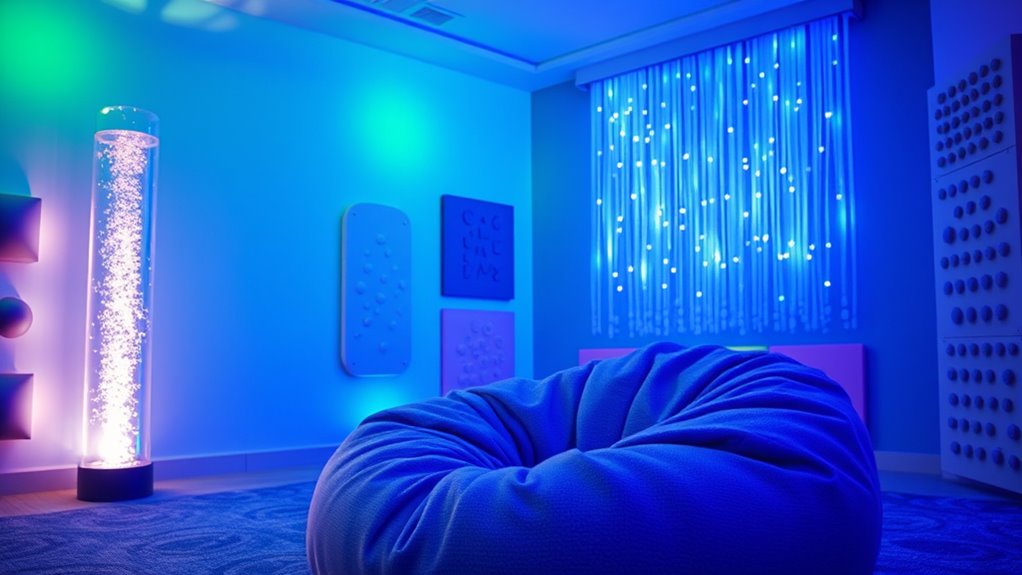
When creating a sensory room, incorporating visual system equipment is essential for engaging those with autism.
Bubble tubes provide enchanting visual input, featuring slow-moving bubbles and vibrant color changes that enhance focus and visual tracking.
Bubble tubes create mesmerizing visual experiences, with gentle bubbles and vibrant colors that improve focus and visual tracking.
Fiber optic lights add a soft, touchable experience with their color-changing strands, encouraging interaction and exploration.
You can also use projectors to display calming images or patterns, like underwater scenes, creating a soothing environment that promotes relaxation.
LED strip lights offer customizable visual stimulation, allowing you to adjust brightness and colors to meet individual sensory needs.
Finally, color-changing light panels enable interactive visual play, fostering creativity and sensory exploration while providing a dynamic and engaging atmosphere.
Tactile Sensory Tools for Exploration
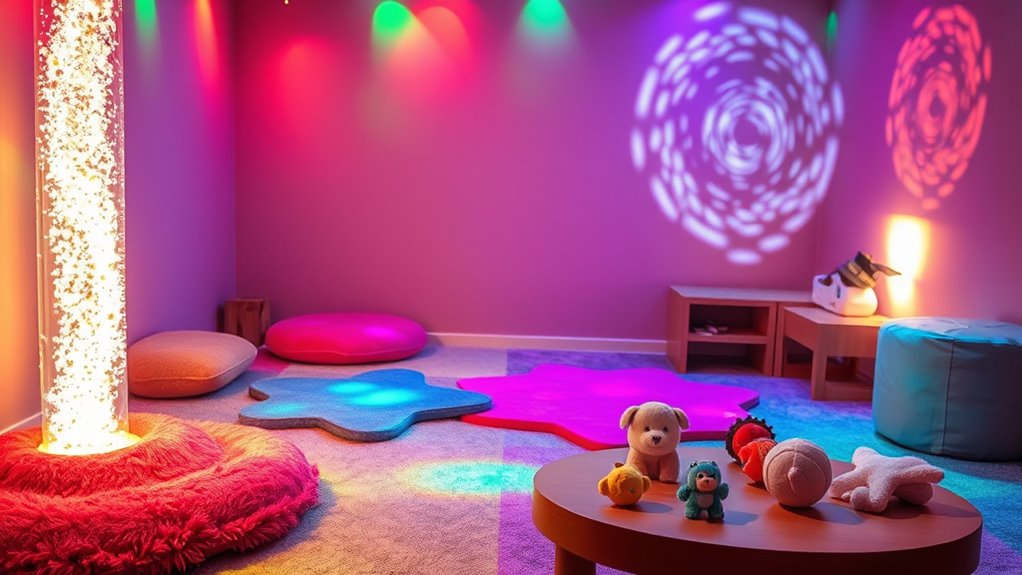
Tactile sensory tools are essential for encouraging exploration and enhancing fine motor skills. You can use sensory bins filled with materials like rice or beans, along with textured wall panels for hands-on interaction. Fidget toys and therapeutic putty also provide calming, tactile experiences that support sensory processing.
Sensory Bins for Exploration
Sensory bins offer a world of exploration for children, especially those with autism, by providing a hands-on approach to learning and play.
Filled with materials like rice, sand, or beans, these sensory bins deliver rich tactile experiences that engage your child’s senses. As they scoop, pour, and manipulate the contents, they’re developing fine motor skills essential for everyday tasks.
You can create themed sensory bins for different seasons or holidays, enhancing imaginative play and creativity.
Incorporating color sorting activities promotes cognitive development and visual discrimination skills. Engaging in sensory play within these bins also fosters social skills, encouraging turn-taking and cooperative interaction with peers.
An autism sensory room enriched with sensory bins can be both fun and educational.
Textured Wall Panels
After exploring the engaging world of sensory bins, textured wall panels offer another exciting avenue for sensory exploration.
These panels are designed to provide hands-on tactile experiences, featuring a variety of surface textures like bumpy, smooth, and rough.
By interacting with textured wall panels, individuals can enhance their fine motor skills while enjoying sensory input that promotes sensory regulation.
These versatile tools can be easily mounted on walls, making them perfect for homes, schools, and therapy clinics.
Additionally, textured wall panels encourage social interaction and cooperative play, as users can explore and discuss different textures with peers or caregivers.
Incorporating these panels into sensory rooms can greatly enhance focus and calmness for those with autism.
Fidget Toys and Putty
Fidget toys and therapeutic putty are fantastic tools for individuals with autism. They offer engaging ways to explore tactile sensations while promoting focus and calmness.
These tools help meet sensory needs and encourage sensory exploration, making them essential for managing anxiety.
As you engage with these items, you can enhance fine motor skills and discover your unique sensory preferences.
- A vibrant squishy fidget toy that brings joy with every squeeze.
- A soft, stretchy therapeutic putty that molds to your hands, inviting creativity.
- A colorful sensory spinner that captivates attention and soothes the mind.
Integrating fidget toys and putty into your daily routine can facilitate self-soothing techniques.
This provides comfort during overwhelming moments.
Auditory Equipment for Sound Management
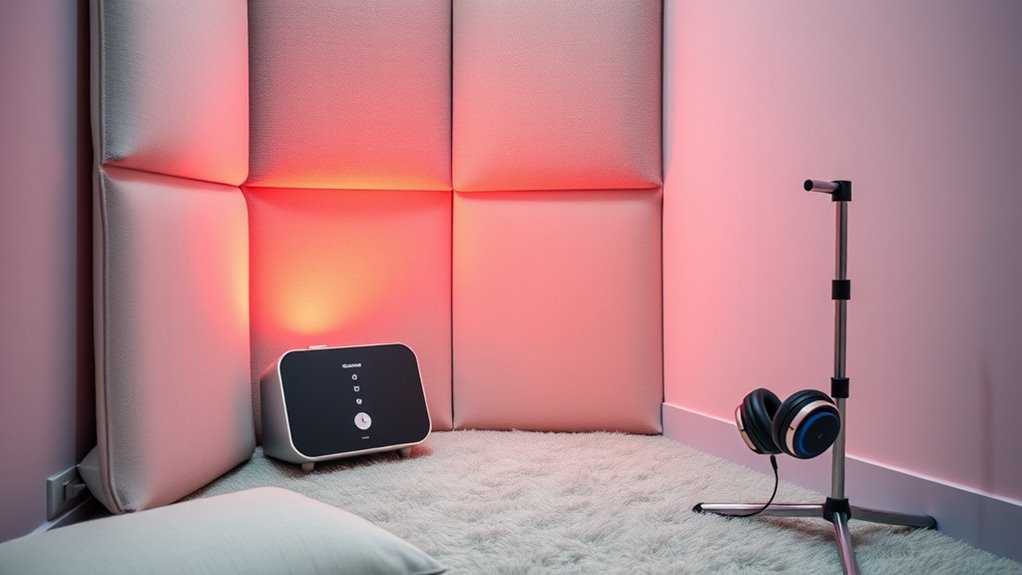
When creating a calming environment for individuals with autism, incorporating auditory equipment is essential for sound management.
Noise-canceling headphones can be crucial in reducing sensory overload, helping users block out disruptive external sounds.
You’ll also want to include sound wall panels, which absorb excess noise and enhance the comfort of the sensory space.
Bluetooth speakers are great for playing calming music or guided meditations, promoting relaxation and focus.
Additionally, consider adding musical instruments like drums or xylophones.
These can provide engaging interactive auditory experiences that foster communication and social skills.
Proprioceptive Activities for Body Awareness
Proprioceptive activities are essential for enhancing body awareness and self-regulation in individuals with autism.
These activities provide the deep pressure and resistance needed to develop gross motor skills and coordination.
Proprioceptive activities offer vital deep pressure and resistance to enhance gross motor skills and coordination.
Incorporating sensory room equipment, like weighted blankets and body socks, into playtime can create a calming environment that encourages exploration and movement.
For example, crawling through fabric tunnels promotes teamwork and communication.
Therapy balls engage core muscles while improving strength and balance.
Additionally, pushing or pulling weighted items supports sensory regulation and endurance.
Vestibular Tools for Movement Play
Vestibular tools, like swings and trampolines, play an important role in providing movement play that enhances balance, coordination, and sensory regulation for individuals with autism.
Incorporating these tools into sensory rooms allows for engaging activities that promote gross motor skills and body awareness.
For instance, platform and bolster swings provide crucial vestibular input, helping to strengthen upper bodies while kids enjoy playtime.
Trampolines engage children, encouraging physical activity and social interaction as they jump and play together.
Activities like pushing peers on swings or bouncing on trampolines create opportunities for teamwork and fun, all while delivering the necessary vestibular input fundamental for sensory development.
Embracing these tools can greatly enhance your child’s sensory experiences.
Calming and Regulation Spaces
Calming and regulation spaces are essential for providing safe exploration opportunities that help you manage sensory input. By creating an environment that enhances emotional regulation, these spaces support focused learning and growth. You’ll find that the right tools can markedly improve overall well-being and concentration.
Safe Exploration Opportunities
Creating safe exploration opportunities in sensory rooms is essential for individuals with autism. It allows them to engage with sensory inputs in a controlled setting.
Utilizing sensory room tools fosters independence and supports sensory needs effectively. Key items that enhance this experience include:
- Bubble tubes that provide calming visual stimulation and reduce anxiety.
- Sensory bins filled with various tactile tools, encouraging hands-on exploration and fine motor skill development.
- Swings and soft play items that promote vestibular input, aiding body awareness in a safe environment.
These elements, like sensory wall panels, create inviting spaces where individuals can freely explore. This ensures a positive experience while managing their unique sensory needs.
Enhanced Emotional Regulation
In a sensory room, enhanced emotional regulation is essential for individuals with autism, as it provides a refuge from overwhelming stimuli.
Calming spaces filled with sensory equipment, like weighted blankets, help reduce anxiety and promote relaxation.
Bubble tubes and fiber optic lights offer soothing visual stimulation, encouraging focus and diminishing agitation.
Sensory bins filled with tactile materials—such as rice or sand—allow for hands-on exploration, aiding in emotional expression and self-regulation skills.
Additionally, incorporating sound machines that produce white noise or calming nature sounds creates a serene atmosphere, further supporting emotional balance.
Focused Learning Environments
While sensory overload can hinder learning for individuals with autism, focused learning environments in sensory rooms offer tailored spaces that promote calmness and regulation.
These calming spaces are equipped with sensory room equipment that fosters relaxation and engagement.
You’ll find bubble tubes and fiber optic lights, which enhance visual engagement and create a soothing atmosphere.
Consider these essential items for your sensory room:
- Tactile sensory bins filled with rice or sand for hands-on exploration.
- Soft seating areas with sound-absorbing materials to promote comfort.
- Structured sensory play activities to improve focus and fine motor skills.
Interactive Sensory Play Equipment
Interactive sensory play equipment offers a dynamic way to engage children with autism, fostering sensory exploration and social interaction.
Items like the Illuminated Inflatable Ball Pool, filled with 1,500 clear balls, create a safe space for playful sensory support.
The Rod Wall Panel transforms walls into interactive sensory room items, promoting tactile exploration and creativity.
Meanwhile, a Large Water Sensory Table allows kids to pour and splash, enhancing fine motor skills while providing a calming experience.
The Sound & Light Panel visualizes voices with color changes, facilitating focused communication.
Ultimately, Vibroacoustic Amplifiers serve as central units for music and sensory interaction, enriching the overall sensory experience through vibrations and sound.
These tools collectively enhance engagement and support development.
Frequently Asked Questions
How Do I Choose the Right Sensory Equipment for My Child?
To choose the right sensory equipment, evaluate your child’s unique sensory preferences, consider space and safety, and consult professionals. Prioritize engaging items that meet their developmental goals while ensuring they feel comfortable and secure.
What Safety Features Should I Look for in Sensory Room Equipment?
You should look for equipment made from non-toxic materials, secure mounting systems, easy-to-clean surfaces, high-quality construction, and safety-tested features. These aspects guarantee a safe, durable, and hygienic environment for everyone using the sensory room.
How Can I Budget for Setting up a Sensory Room?
You can budget for setting up a sensory room by determining your total funds, prioritizing essential items, researching grants, investing in durable equipment, and creating a phased purchasing plan for the most impactful elements first.
Can Sensory Room Equipment Be Used at Home?
Absolutely, you can transform your home into a sanctuary of calm. Sensory room equipment enhances daily life, creating a cozy nest where you can explore and relax, helping you find balance amidst the chaos of everyday challenges.
What Maintenance Is Required for Sensory Room Equipment?
You need to regularly clean sensory room equipment, inspect for wear and tear, check battery levels, and follow manufacturer guidelines. Keeping a maintenance log helps track service dates and guarantees everything stays in prime condition.
Conclusion
In crafting a sensory room, think of it as creating a garden of calm, where every piece of equipment is a flower blooming in harmony.
Each tool nurtures unique senses, inviting exploration and fostering growth.
Just as a gentle breeze soothes, your chosen items can guide individuals toward tranquility and joy.
By carefully selecting these essential elements, you’re not just building a room; you’re cultivating a safe haven where minds can flourish and spirits can dance freely.
In conclusion, a well-designed sensory room is crucial for enhancing the experience of individuals with autism.
By incorporating essential equipment, you can create an environment that encourages exploration and relaxation.
Remember, each item plays a vital role in promoting calmness and joy, making it a valuable space for growth and comfort.