7 Must-Have Sensory Furniture Pieces for Kids’ Playrooms
If you’re looking to create an engaging playroom, there are seven must-have sensory furniture pieces to contemplate.
These items can enhance your child’s playtime experience and foster their development.
Start with a sensory swivel chair to boost movement and coordination.
Add an interactive fidget wall for tactile fun that keeps little hands busy.
Don’t forget a cozy reading nook with soft seating and multi-functional storage solutions.
Incorporate engaging sensory bins that allow for exploration and creativity.
Bright adjustable lighting can set the mood and stimulate the senses.
Lastly, themed decor can inspire imagination and make the space truly unique.
Stick around to discover how each piece can transform your kids’ playtime experience!
Key Takeaways
- Sensory swivel chairs promote movement, balance, and coordination, making them ideal for active play and skill development.
- Interactive fidget walls engage children with tactile materials, improving fine motor skills and reducing anxiety through sensory exploration.
- Cozy reading nooks with soft seating and layered textures create inviting spaces for relaxation and imaginative reading experiences.
- Multi-functional storage solutions like the IKEA TROFAST system help organize toys while encouraging ownership and responsibility in cleanup.
- Themed decor elements foster creativity by immersing children in imaginative environments, enhancing playtime engagement and visual appeal.
Sensory Swivel Chair for Movement and Coordination
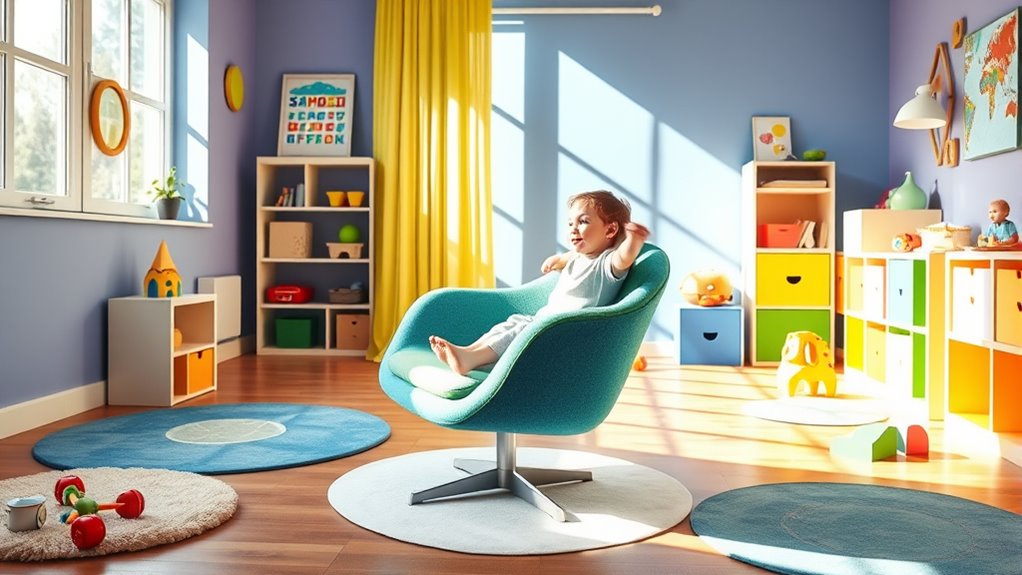
The FERUERW Kids Sensory Swivel Chair is a fantastic tool for enhancing movement and coordination in children.
The FERUERW Kids Sensory Swivel Chair enhances children’s movement and coordination through engaging play.
This sensory chair’s spinning mechanism encourages kids to engage in active play.
It’s perfect for play areas where children can improve their balance and spatial awareness.
Plus, it’s especially beneficial for children with autism or ADHD, helping them develop essential gross motor skills through interactive movement.
You’ll love how it requires no assembly, allowing you to set it up quickly in any sensory space.
Available in a vibrant blue, it adds a fun visual element to the room’s decor while serving a practical purpose.
With this sensory chair, you’re promoting a dynamic environment that supports your child’s physical development.
Interactive Fidget Wall for Tactile Stimulation
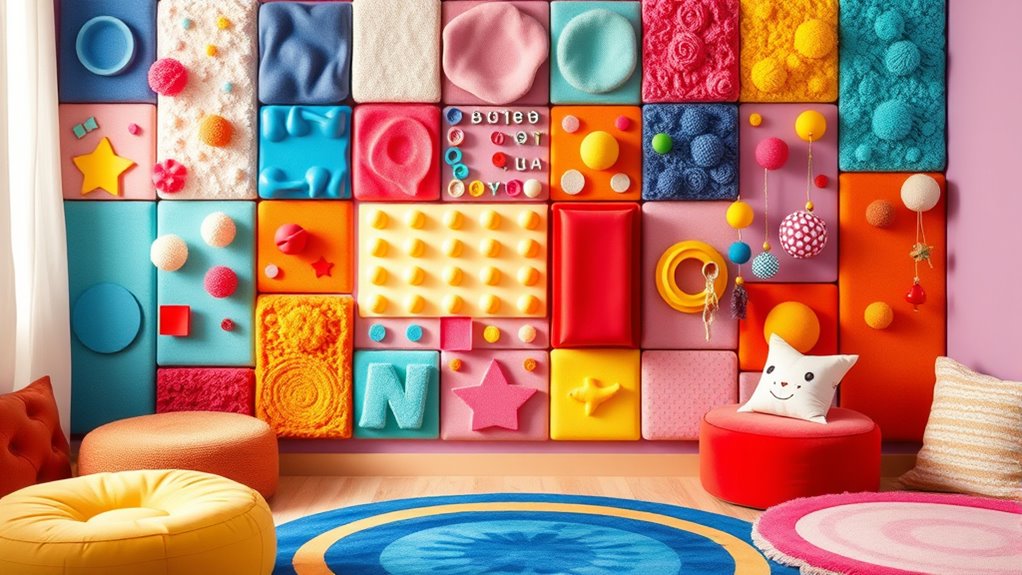
When designing an interactive fidget wall, think about the tactile materials you’ll use to engage kids effectively. Consider incorporating various textures and interactive features that not only stimulate touch but also encourage exploration. Optimizing the wall’s space can create a fun and inviting area for children to play and learn together.
Tactile Materials Selection
Creating an interactive fidget wall with a variety of tactile materials can greatly enhance sensory engagement for kids in playrooms.
Incorporate textured fabrics, rubbery surfaces, and soft foam shapes as sensory toys to stimulate exploration.
Adding interactive elements like spinning wheels, sliding panels, and buttons can improve fine motor skills while providing a calming effect for children with sensory processing challenges.
Customize the fidget wall with materials that cater to different sensory preferences, allowing kids to choose textures that are either soothing or stimulating.
Research shows that tactile stimulation from interactive fidget walls can boost focus and reduce anxiety.
This makes it a crucial feature in a sensory-friendly environment.
Don’t forget to verify that the wall is at an accessible height for independent interaction!
Interactive Features Design
Incorporating interactive features into a fidget wall can transform a playroom into an engaging sensory haven.
These walls can include various textures, buttons, and sensory items that provide tactile stimulation, keeping your child engaged.
You can integrate elements like spinners, switches, and sensory boards to cater to different sensory preferences, promoting fine motor skills development.
An interactive fidget wall encourages exploration through touch, allowing kids to engage in self-soothing activities that help reduce anxiety and improve focus.
Plus, customizable designs can reflect your child’s interests, making the fidget wall a personalized feature in their sensory room for kids.
This interactive features design greatly enhances the sensory experience, offering a dedicated space for sensory processing and enjoyment.
Space Optimization Techniques
To make the most of your playroom space, an interactive fidget wall offers an innovative solution for tactile stimulation.
This sensory space not only engages your child but also maximizes vertical space, perfect for smaller rooms.
Here are three benefits of incorporating a fidget wall:
1. Tactile Engagement: With various textures like buttons and levers, your child can explore and fidget.
This helps improve focus and ease anxiety.
2. Customization: Tailor the fidget wall to your child’s interests, whether it’s colors or themes.
This enhances their connection to the space.
3. Dynamic Experience: Regularly update the items to keep the sensory experience fresh.
This encourages ongoing interaction.
Plus, it doubles as a creative storage solution, keeping the playroom organized while promoting exploration!
Cozy Reading Nook With Soft Seating
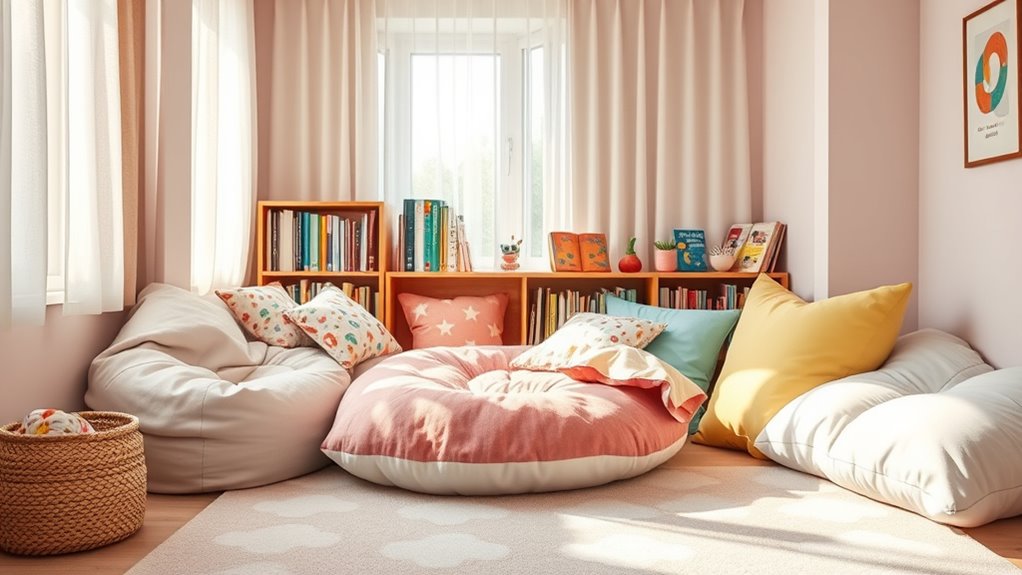
Creating a cozy reading nook starts with choosing soft seating options like bean bags or plush chairs that invite kids to settle in comfortably. To enhance the atmosphere, layer in throws and blankets for that extra touch of warmth and coziness. This inviting space not only encourages reading but also makes it a special retreat for your little ones.
Soft Seating Options
While designing a cozy reading nook, soft seating options like bean bags and plush chairs invite children to relax and immerse themselves in their favorite stories.
Here are some key elements to contemplate:
- Child-Friendly Heights: Verify seating is at the right height for little ones. This makes it easy for them to access and use independently.
- Layering Different Textures: Add throws and blankets to enhance warmth and appeal. This creates an inviting atmosphere that encourages kids to curl up with a book.
- Cushioned Floor Seating: Incorporate soft rugs or floor cushions for a safe and comfy spot. Here, children can sit and engage with books or crafts.
Cozy Atmosphere Creation
A cozy reading nook comes alive when you combine soft seating with thoughtful design elements that enhance comfort and encourage a love for reading.
Opt for bean bags or plush chairs to create a sensory haven that invites relaxation during storytime.
Layering textures with soft throws and blankets adds warmth, making the nook even more inviting for your child.
Position it in a well-lit area, merging natural light with reading lamps to boost visibility and promote a positive reading experience.
Install shelving at your child’s height for easy access to books, empowering them to choose their reading materials freely.
Personalize the space with artwork or themes they love, making their reading nook a special retreat that sparks creativity.
Multi-Functional Storage Solutions
To keep your kids’ playroom organized and functional, multi-functional storage solutions are essential.
By incorporating these pieces, you’ll create a tidy environment that promotes creativity.
Here are three great options:
- IKEA TROFAST System: Customize storage with mix-and-match bins. It’s easy to clean and perfect for toys.
- Clear Bins: Use them for small toys to enhance visibility. This makes it easier for kids to take ownership and clean up.
- Wall-Mounted Shelves: Save floor space while keeping books and toys accessible. This helps maintain a clutter-free area.
Additionally, consider multi-purpose furniture like benches with built-in storage or ottomans that serve as toy chests.
These solutions maximize utility and comfort, making playtime enjoyable and organized!
Engaging Sensory Bins for Exploration
Sensory bins can transform your kids’ playroom into an engaging space for exploration and creativity.
You can fill them with materials like rice, beans, or water beads to provide various textures that encourage tactile exploration.
Themed bins, like ocean or garden themes, enhance imaginative play while helping kids learn about specific concepts.
Plus, these sensory rooms promote fine motor skills as children scoop, pour, and manipulate materials, aiding muscle development.
Sensory bins foster fine motor skills as children engage in scooping, pouring, and manipulating materials, supporting their muscle development.
Incorporate tools such as scoops and tweezers to practice hand-eye coordination and dexterity.
By regularly rotating the contents of the bins, you keep the experience fresh and maintain your child’s interest.
Making sensory bins a fantastic addition to your playroom filled with open-ended toys!
Bright and Adjustable Lighting Options
Creating an engaging playroom goes beyond sensory bins; the right lighting can greatly enhance the atmosphere.
Bright and adjustable lighting options are essential for creating a versatile space.
Consider these three features:
- Smart RGB LED lamps: With 16 million customizable colors, you can effortlessly set the mood for different activities.
- Dimmable lighting: Adjust brightness levels to meet your child’s comfort needs, helping to reduce overstimulation during playtime.
- Color temperature settings: Choose warm lights for relaxation or cool lights to boost alertness, depending on the sensory activity.
Plus, lighting that syncs with music can create a dynamic experience.
Remote or app control offers convenience in adapting the environment as needed.
Bright and adjustable lighting truly transforms your playroom!
Themed Decor Elements for Creativity
While you might focus on toys and activities, themed decor elements can greatly boost your child’s creativity by immersing them in imaginative environments.
Consider themes like outer space or fairy tales to stimulate imaginative play. Focal points such as murals or themed wallpaper not only establish a cohesive aesthetic but also create a vibrant backdrop for various activities.
To really make the space pop, match bedding, rugs, and curtains to your chosen theme. This fosters visual harmony and engagement.
Multi-functional themed furniture, like pirate ship storage benches or animal-shaped ottomans, offers utility and inspiration for creative play.
Don’t forget DIY elements—personalized crafts or artwork can further enhance the themed decor. This allows your child to express their individuality and creativity.
Frequently Asked Questions
What Age Group Is Best Suited for Sensory Furniture?
Sensory furniture’s best suited for toddlers to early school-aged children, typically ages 2-7. It helps them develop sensory processing skills, self-regulate, and engage in play, making it beneficial for their growth and learning.
How Can I Ensure Safety in a Playroom With Sensory Furniture?
Think of your playroom as a castle. To keep it safe, round edges and soft finishes are essential. Secure furniture, choose non-toxic materials, use cushioned flooring, and inspect regularly. Your little knights will thrive!
Are There Budget-Friendly Options for Sensory Furniture?
Yes, you’ve got budget-friendly options! Consider bean bags, DIY sensory walls, or multifunctional furniture like storage ottomans. Shopping at discount stores can also help you find great deals on sensory furniture for your space.
How Do I Clean and Maintain Sensory Furniture?
To keep your sensory furniture fresh and inviting, vacuum regularly, spot clean stains with mild detergent, and inspect for wear. Use non-toxic cleaners, and consider machine-washable covers for effortless upkeep, ensuring a safe play environment.
Can Sensory Furniture Be Used Outside?
Yes, you can use sensory furniture outside! Just make certain it’s made from weather-resistant materials. Supervise your kids closely while they play, and enjoy watching them explore textures and engage with nature in a safe environment.
Conclusion
So, you thought creating the perfect playroom was just about throwing in a few toys? Think again!
With these sensory furniture pieces, you’re not just decorating; you’re crafting an environment that sparks creativity, movement, and exploration.
Who knew a swivel chair could boost coordination or that a fidget wall could be a work of art?
Immerse yourself in this sensory wonderland, and watch your kids thrive in ways you never imagined.
Because who wouldn’t want a playroom that doubles as a mini adventure?
Incorporating sensory furniture can transform your kids’ playroom into a vibrant space filled with engaging experiences.
These pieces not only enhance play but also promote developmental skills through fun and interactive design.
So go ahead, create that perfect playroom that encourages exploration and creativity.
Your kids will thank you for a playroom that’s not just about toys but about adventure and growth!