7 Must-Have Outdoor Sensory Toys for Autism
If you’re searching for must-have outdoor sensory toys for autism, you’re in the right place!
Outdoor play is vital for children with autism as it supports movement, balance, and sensory exploration.
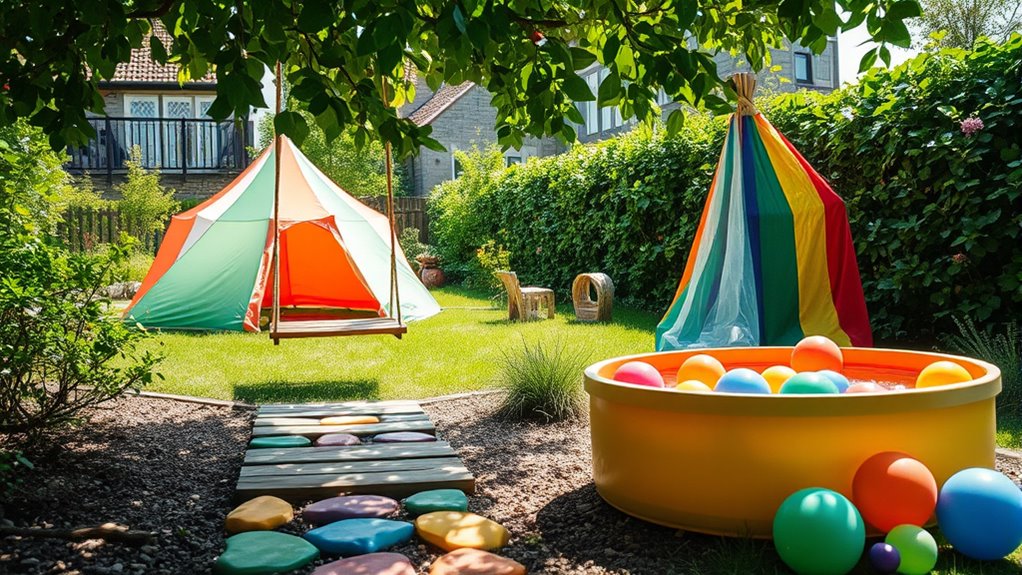
Consider incorporating swing sets for movement and balance, which can really help with coordination.
Trampolines are a fantastic option, offering both fun and fitness.
Sensory sand and water tables provide engaging tactile play that can keep kids entertained for hours.
Climbing structures are not just fun; they build strength and coordination too.
Plus, sound and musical play equipment enhances auditory exploration, making it a great addition to your outdoor setup.
Bubble machines add enchanting visual stimulation that can captivate any child.
And let’s not forget balance bikes—they’re perfect for fostering coordination and boosting confidence.
Each of these toys plays an essential role in emotional regulation and social interaction, so keep exploring to find your perfect selection!
Key Takeaways
- Swing sets provide rhythmic motion that aids emotional regulation, enhancing balance and social skills among children with autism.
- Trampolines offer a fun way to improve fitness, coordination, and relieve anxiety through physical activity and endorphin release.
- Sensory sand and water tables engage tactile exploration, enhancing fine motor skills while promoting a calming atmosphere and cooperative play.
- Climbing structures strengthen muscles and improve coordination, providing valuable sensory experiences and encouraging teamwork among peers.
- Bubble machines promote relaxation with gentle movement and auditory stimulation, supporting both individual play and social interaction in outdoor settings.
Swing Sets: Promoting Movement and Balance
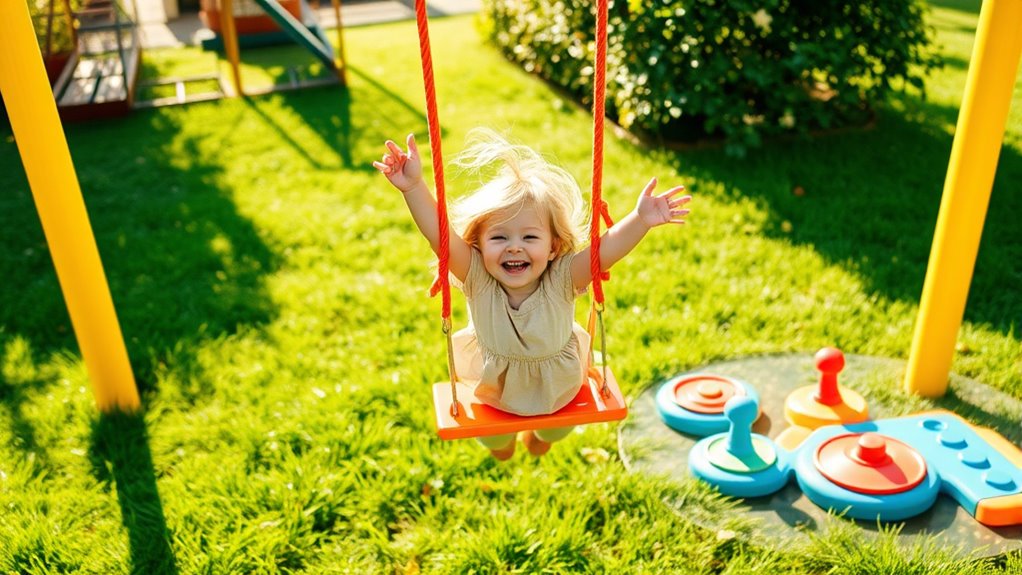
Swing sets offer a unique way to promote movement and balance for children with autism, making outdoor play both enjoyable and beneficial.
These dynamic sensory experiences provide a rhythmic motion that can help with emotional regulation, easing anxiety during sensory overload.
As your child swings, they gain essential deep pressure input, which contributes to a calming effect.
Different swing types cater to various developmental needs, ensuring accessibility and engagement.
Incorporating swing sets into playtime also encourages social skills, as children interact while taking turns or pushing each other.
Regular use of these swings enhances physical development, building strength and balance crucial for overall motor skills.
Ultimately, swing sets create a fun environment that supports growth and connection.
Trampolines: Encouraging Physical Activity and Fun
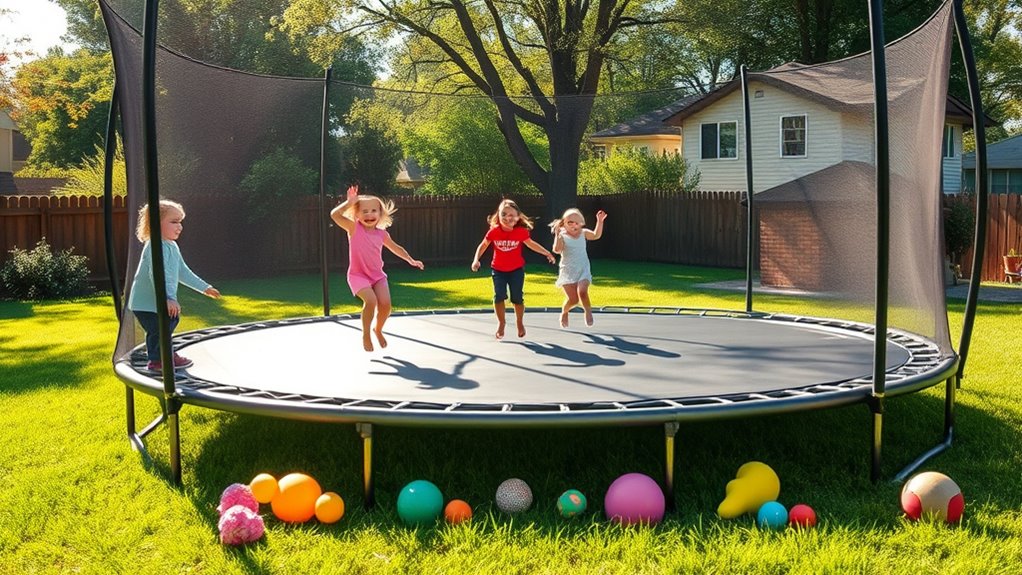
Trampolines offer a fantastic way for your child to engage in physical activity while having fun outdoors. They not only improve fitness and coordination but also create opportunities for social interaction as kids bounce together. Just remember to follow safety guidelines to guarantee a secure and enjoyable jumping experience.
Physical Benefits of Trampolines
When kids jump on a trampoline, they’re not just having fun; they’re also reaping significant physical benefits.
This engaging activity provides an excellent cardiovascular workout, enhancing overall fitness and stamina, especially for children who struggle with physical activity.
The bouncing motion improves body awareness and proprioception, helping them develop better motor skills and coordination.
Additionally, jumping releases endorphins, which promote happiness and alleviate anxiety, particularly beneficial for those facing sensory processing challenges.
Trampolines also help build muscle strength and endurance, as various muscle groups are engaged during play.
Social Interaction Opportunities
Jumping on a trampoline isn’t just about having a blast; it also opens up fantastic opportunities for social interaction among children.
Trampolines encourage cooperative play, helping kids build friendships while having fun. Here are three key benefits:
- Enhanced Communication Skills: While bouncing, children practice taking turns and engaging in playful conversations. This strengthens their verbal interactions.
- Emotional Regulation: The rhythmic bouncing can help kids with autism manage their sensory input. It provides calming effects that support emotional balance during social activities.
- Active Environment: Trampolines promote physical fitness, allowing children to socialize in a lively setting. This enhances their gross motor skills and coordination.
Safe Jumping Guidelines
To guarantee that trampoline play remains safe while maximizing the fun and physical activity it offers, implementing proper safety guidelines is key.
Start by ensuring your trampoline has safety features like protective nets and padded edges.
Limit jumping to one child at a time to reduce the risk of collisions.
Teach safe jumping techniques, like landing on two feet and avoiding flips, to enhance safety during sensory play.
Regularly inspect the trampoline for any wear and tear, ensuring it’s in good condition.
Supervision is essential; always watch your child during play to provide guidance and intervene if unsafe behaviors arise.
These practices promote safe jumping while providing valuable sensory input, supporting both physical activity and autism support.
Sensory Sand and Water Tables: Engaging Tactile Play
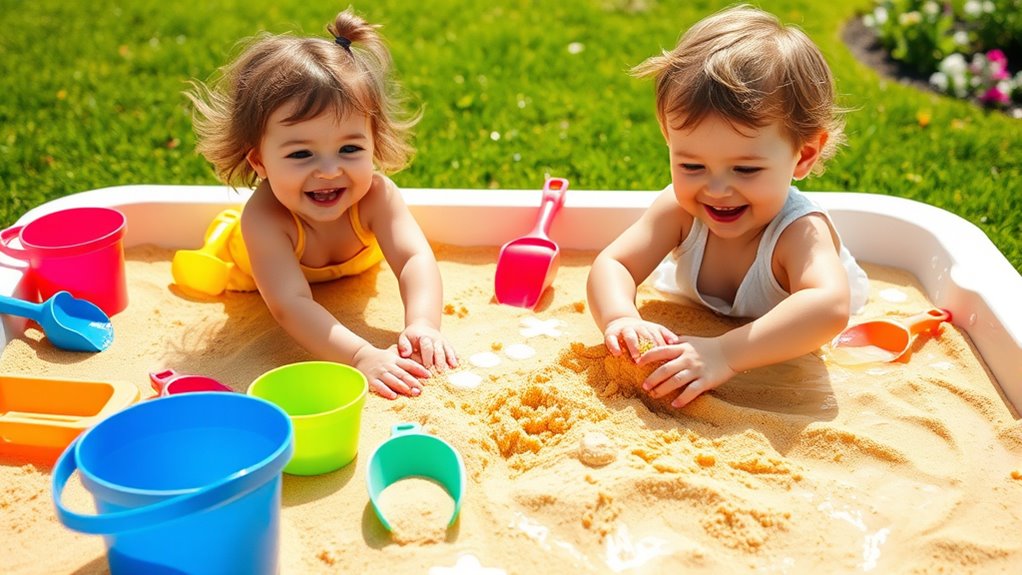
Sensory sand and water tables offer a dynamic way for children with autism to engage in tactile play, fostering essential skills while exploring various textures.
These tables not only enhance fine motor skills but also provide a calming atmosphere for emotional regulation.
Enhancing fine motor skills while creating a soothing space, sensory tables support emotional regulation in children with autism.
Here are three engaging features to contemplate:
- Diverse Materials: Fill the table with kinetic sand, natural sand, or water beads for varied sensory experiences.
- Interactive Tools: Incorporate scoops, cups, and textured items to encourage tactile exploration. This also introduces measurement concepts in a fun way.
- Social Opportunities: Promote cooperative play by allowing children to share tools and collaborate. This enhances social interaction and communication skills, making playtime even more enriching.
Climbing Structures: Building Strength and Coordination
Climbing structures like jungle gyms and climbing walls can greatly boost your child’s physical development by strengthening muscles and improving coordination. As they engage in climbing, they also have great opportunities for social interaction, working together with peers to achieve goals. This blend of physical and social skills helps create a well-rounded outdoor play experience.
Physical Development Benefits
Engaging with climbing structures offers numerous physical development benefits for children, particularly those on the autism spectrum.
These activities not only build muscle strength but also enhance coordination and spatial awareness.
Here are three key benefits:
- Gross motor skills: Climbing improves your child’s ability to navigate various terrains confidently.
- Fine motor skills: Grasping different grips helps refine hand-eye coordination, which is essential for everyday tasks.
- Sensory input: Climbing provides valuable sensory experiences, helping children self-regulate their emotions and behaviors.
Social Interaction Opportunities
As children navigate climbing structures, they’re not just building strength and coordination; they’re also creating valuable social interactions.
These structures promote cooperative play, enhancing communication skills and teamwork among peers. Through climbing activities, kids learn essential social skills like turn-taking and sharing, which can lead to lasting friendships.
Additionally, engaging in outdoor play helps improve body awareness and spatial orientation, making children feel more comfortable in physical spaces.
For kids with autism, these climbing experiences can remarkably enhance emotional regulation and reduce anxiety, fostering a positive social environment.
Sound and Musical Play Equipment: Enhancing Auditory Exploration
When children explore sound and music through outdoor play equipment, they not only have fun but also enhance their auditory skills.
Engaging with musical play equipment fosters auditory exploration, helping kids differentiate sounds and tones essential for communication development.
Here are three must-have sound and musical play items for outdoor fun:
- Xylophones: They encourage experimentation with different notes and rhythms.
- Drums: These support emotional regulation by providing calming auditory input.
- Maracas: They promote social interaction as children collaborate and share.
Incorporating these sensory toys into outdoor activities creates a stimulating environment, enhancing both auditory processing and peer relationships.
Bubble Machines: Captivating Visual and Sensory Stimulation
Bubble machines create a mesmerizing visual spectacle that captivates children with autism, drawing them into a world of sensory play. The continuous stream of bubbles provides delightful visual stimulation, encouraging exploration and engagement.
As your child chases and pops the bubbles, they enhance their gross motor skills while enjoying a fun sensory outlet. The gentle movement and floating nature of the bubbles can help reduce anxiety, promoting relaxation in outdoor settings.
Additionally, the sound from the bubble machine offers auditory stimulation, complementing the colorful bubbles that cater to various sensory needs.
These versatile tools not only foster individual play but also encourage social interaction, making bubble machines a must-have for children with autism.
Balance Bikes: Fostering Coordination and Confidence
Balance bikes are an excellent tool for fostering coordination and confidence in children with autism.
They allow kids to propel themselves with their feet, learning balance and steering without the complexity of pedaling.
Here are three key benefits of balance bikes:
- Improved Motor Skills: Regular use enhances coordination and promotes the development of essential motor skills.
- Encouragement of Physical Activity: Engaging in outdoor play reduces anxiety and helps with emotional regulation, making it crucial for children with autism.
- Adaptable Design: Many balance bikes come with adjustable seats, allowing them to grow with your child and meet their developmental needs.
Frequently Asked Questions
What Age Range Is Suitable for Outdoor Sensory Toys?
Outdoor sensory toys are suitable for a wide age range, typically from toddlers to young adults. You’ll find options designed for different developmental stages, ensuring everyone can benefit from sensory play and exploration.
How Do I Choose the Right Toy for My Child’s Sensory Needs?
Did you know that 1 in 54 children are diagnosed with autism? To choose the right toy for your child’s sensory needs, consider their preferences, sensory sensitivities, and developmental stage. Test different options for engagement.
Are These Toys Safe for Children With Autism?
Yes, most sensory toys are safe for children with autism. You should always check for non-toxic materials and age-appropriate designs. Supervision during playtime can also help guarantee a safe and enjoyable experience for your child.
Can Outdoor Sensory Toys Be Used Indoors?
Yes, you can definitely use outdoor sensory toys indoors! They often provide great tactile experiences and sensory stimulation. Just make certain the space is safe and that the toys fit well within your indoor environment.
How Can I Encourage My Child to Play With Sensory Toys?
Like a moth to a flame, you can attract your child to sensory toys by making playtime exciting. Join in the fun, create engaging activities, and let their curiosity lead the way. They’ll love exploring!
Conclusion
In a world where screens dominate playtime, it’s ironic that the most enriching experiences come from simple outdoor sensory toys.
By encouraging movement, balance, and tactile exploration, these toys not only engage your child’s senses but also foster essential skills.
Who knew that swinging, jumping, and splashing could be the secret to building confidence and coordination?
So, step outside, leave the gadgets behind, and watch as your child discovers joy in the great outdoors—it’s a revitalizing surprise!
Outdoor sensory toys are a fantastic way to boost your child’s development.
They promote not just physical activity, but also help with emotional regulation and social skills.
Encouraging outdoor play can lead to happier, healthier children who thrive in their environment.
So, gather those toys and let your child explore, play, and grow!