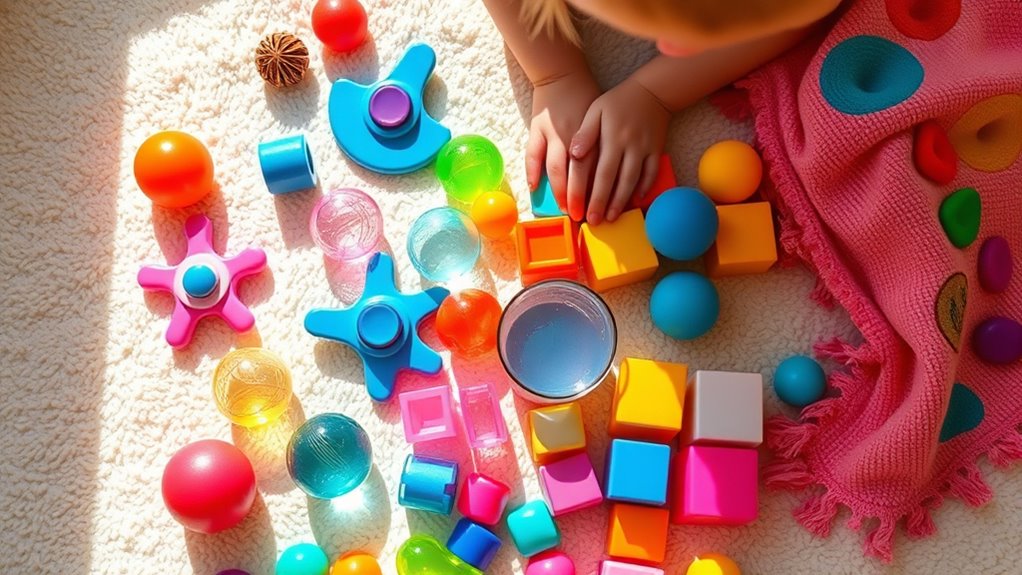
What Are Sensory Toys and How Do They Help?
Sensory toys are specialized tools designed to stimulate your child’s senses. They offer therapeutic benefits, particularly for children on the autism spectrum.
These toys help with emotional regulation, reduce anxiety, and enhance fine motor skills.
By providing different sensory inputs, sensory toys can also foster social interaction and build essential skills.
When you understand your child’s unique sensory needs, you can select the right toys to help them thrive.
There’s so much more to discover about how these toys can support your child’s development and overall well-being.
So, let’s dive deeper into the world of sensory toys and how they can make a difference in your child’s life!
Key Takeaways
- Sensory toys engage multiple senses, providing therapeutic benefits, particularly for children with autism, aiding in emotional regulation and calming effects.
- They enhance fine motor skills and encourage exploration of different textures and sounds, creating a rich learning experience for children.
- Sensory toys help children manage anxiety, promoting a sense of security while enhancing awareness and social interaction among peers.
- Choosing the right sensory toys involves observing individual sensory needs and matching preferences to ensure optimal engagement and comfort during play.
- They foster emotional and social skills, encouraging cooperative play, communication, and improved attention spans in both play and learning environments.
Definition of Sensory Toys
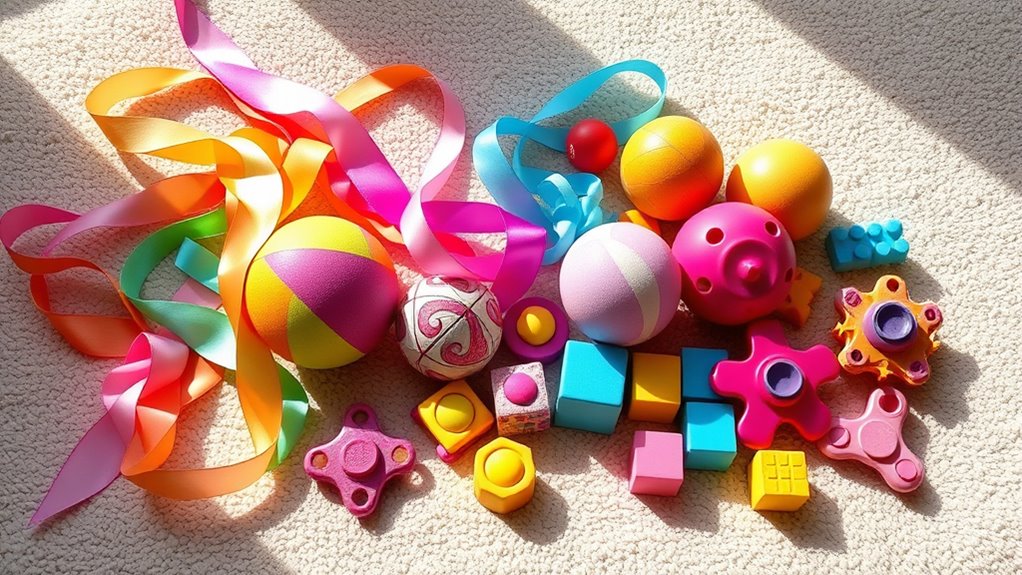
Sensory toys are specialized tools that engage your senses—such as touch, sound, sight, and movement—offering therapeutic benefits that go beyond simple play.
Designed to provide sensory input, these toys are particularly beneficial for children with autism.
Sensory toys offer crucial sensory input, especially aiding children with autism in emotional regulation and calming.
They help calm their bodies and regulate emotions, creating a soothing environment for focused play and learning.
Sensory toys support the proprioceptive and vestibular systems, which are essential for body awareness and balance.
You’ll find them in various forms, including textured balls, fidget toys, and sensory bins, catering to diverse sensory needs and preferences.
Benefits for Children on the Spectrum
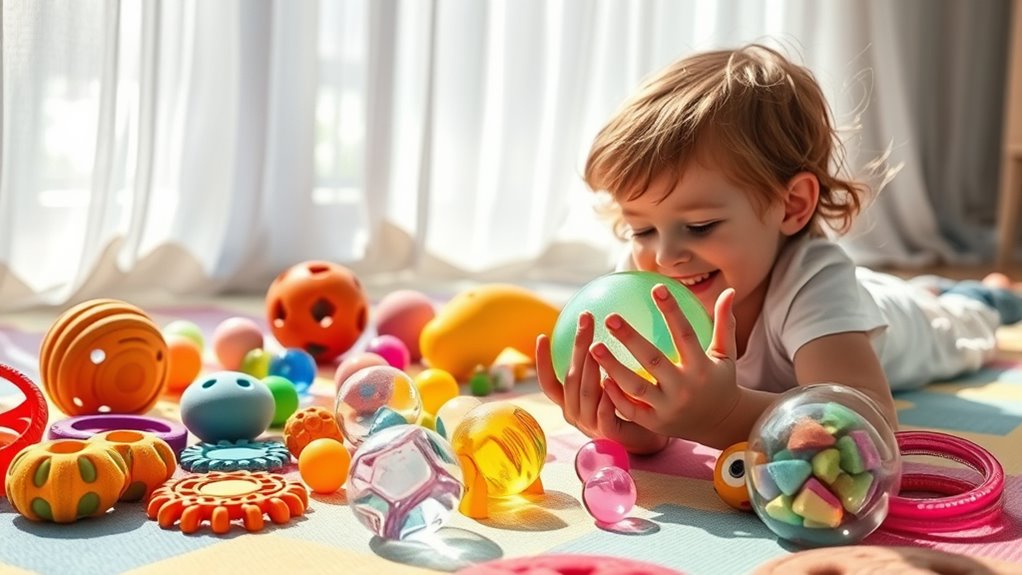
While engaging with sensory toys, children on the spectrum can experience a significant boost in emotional regulation and social interaction.
These toys provide essential sensory input, helping kids manage anxiety and find security.
Through sensory play, they explore their environment and build vital social skills with peers and family.
| Benefits | Description |
|---|---|
| Emotional Regulation | Calming experiences reduce anxiety and promote security |
| Fine Motor Skills | Manipulating toys enhances dexterity and coordination |
| Social Interaction | Shared play fosters connections with others |
Understanding Your Child’s Unique Sensory Needs
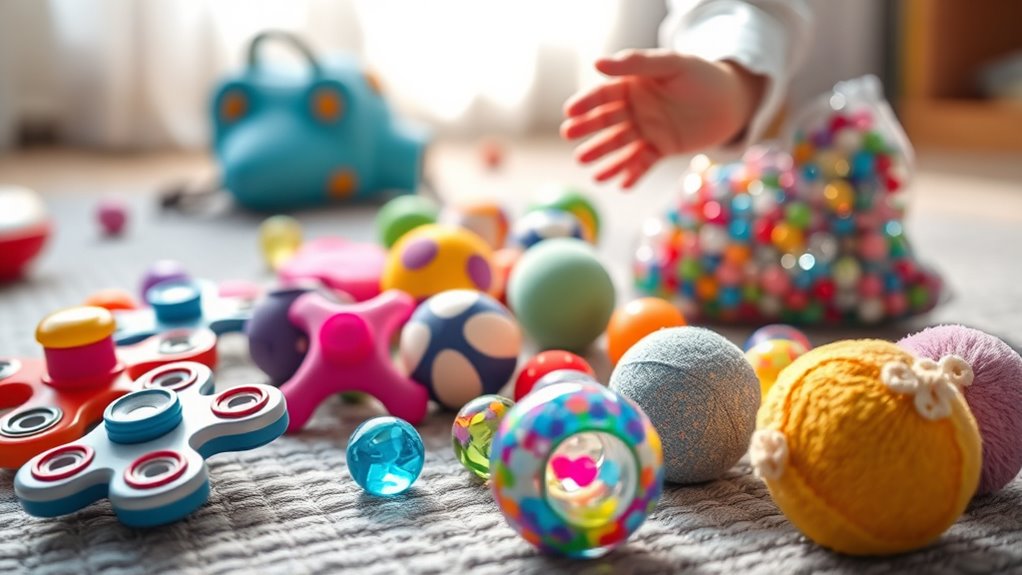
Understanding whether your child is a sensory seeker or avoider can make a big difference in their development. Each child has unique sensory preferences that can either enhance their play or cause distress. By recognizing these needs, you can choose sensory toys that truly support their emotional well-being and engagement.
Sensory Seekers vs. Avoiders
Every child interacts with their environment differently, especially when it comes to sensory experiences.
Some kids are sensory seekers, actively craving input through jumping, spinning, or exploring textures. They thrive on stimulation and often need sensory toys that provide that excitement.
On the other hand, sensory avoiders feel overwhelmed by certain stimuli like loud noises or bright lights, leading them to withdraw.
Understanding whether your child is a sensory seeker or avoider is essential for selecting the right sensory toys that meet their unique needs.
Recognizing these sensory processing differences helps you create a supportive environment.
This fosters emotional regulation and encourages engagement in sensory activities tailored to your child’s preferences.
Individual Sensory Preferences
Recognizing your child’s unique sensory preferences can greatly enhance their playtime experience.
Every child has different sensory systems, with some being sensory seekers who thrive on input, while others are sensory avoiders sensitive to textures and sounds.
By observing your child’s reactions during play, you can gain insight into their individual sensory preferences.
This understanding is essential for selecting sensory toys that help children engage meaningfully and comfortably.
Tailoring sensory input to meet their specific needs can improve their emotional regulation and overall sensory processing.
As a parent or caregiver, providing the right sensory environment allows your child to explore and grow.
This makes playtime not just fun but also beneficial for their development.
What Is Sensory Regulation?
Sensory regulation is all about finding the right balance that helps you and your child stay calm and focused in different situations. By using tailored sensory toys, you can equip your child with effective tools to manage overwhelming feelings and sensory experiences. This approach not only supports emotional control but also enhances play and learning, fostering positive interactions with their environment.
Importance of Balance
Achieving balance in sensory input is essential for children to manage their emotions effectively. Sensory regulation involves finding that balance, allowing kids to stay calm and focused during play and learning.
When you understand your child’s unique sensory needs, you can select appropriate sensory materials and toys that promote emotional regulation.
These tailored sensory toys help children cope with overwhelming experiences, fostering healthier responses to their environment.
Additionally, effective sensory regulation enhances connections with others, improving social skills through shared play.
In the area of health care, recognizing the importance of balance in sensory input can lead to better emotional well-being for your child.
This ensures they’re equipped to navigate the world around them.
Tools for Emotional Control
While maneuvering daily challenges, children often struggle to manage their emotions.
That’s where tools for emotional control come into play.
Sensory toys are designed to provide the sensory stimulation necessary for emotional regulation.
By engaging with these tools, children can develop effective coping mechanisms for their big feelings.
This promotes healthier emotional responses.
| Sensory Toy | Purpose | Benefits |
|---|---|---|
| Fidget Spinner | Focus and calmness | Reduces anxiety |
| Stress Ball | Tension release | Enhances emotional stability |
| Weighted Blanket | Deep pressure input | Promotes relaxation and calm |
| Sensory Bin | Exploration and play | Encourages imaginative play |
| Chewable Jewelry | Oral sensory input | Helps manage sensory overload |
Using these tools helps children find sensory equilibrium.
This, in turn, improves their overall well-being.
Tailored Toy Selection
Understanding how to select tailored toys can make a significant difference in your child’s ability to manage sensory inputs and emotions.
By recognizing their unique sensory needs, you can choose sensory toys that promote effective emotional regulation.
Here are three key strategies for tailored toy selection:
- Identify Sensory Preferences: Determine if your child is a sensory seeker or avoider to guide your toy choices.
- Focus on Emotional Needs: Select toys that not only engage your child but also help them calm down during overwhelming situations.
- Encourage Interaction: Choose toys that foster social connections, enhancing your child’s ability to relate with peers and caregivers.
Incorporating these strategies will support your child’s journey in achieving sensory regulation through play.
How to Choose the Right Sensory Toys
How do you know which sensory toys are the best fit for your child?
Start by observing their play patterns and preferences to identify their sensory needs, whether they’re sensory seekers or avoiders.
This will guide you in selecting appropriate sensory toys.
Match toys to your child’s specific sensory preferences, like visual, auditory, tactile, or proprioceptive experiences, to help them focus and engage more effectively.
Prioritize quality over quantity; one or two well-chosen toys can be more beneficial than an overwhelming selection.
Verify the toys are age-appropriate and safe for your child’s developmental stage.
Finally, monitor their reactions during play, adjusting your choices as needed to create a comfortable and enjoyable sensory experience.
Engaging Children With Sensory Toys
Engaging children with sensory toys can transform playtime into a rich learning experience.
These toys help children explore different sensory inputs, enhancing their awareness and development.
Sensory toys encourage children to engage with various sensory inputs, fostering awareness and developmental growth.
Here are three key benefits of sensory toys:
1. Emotional Regulation: Sensory toys provide various textures and sounds.
This helps children manage anxiety and self-regulate their emotions.
2. Social Skills: When kids play together with sensory toys, they promote social interaction and cooperation.
This is essential for developing strong social skills.
3. Enhanced Focus: Incorporating these toys into playtime can improve children’s attention and focus.
This makes it easier for them to participate in learning activities.
Frequently Asked Questions
Can Sensory Toys Be Beneficial for Adults Too?
Yes, sensory toys can be beneficial for adults too. They help you manage anxiety, improve focus, and relieve stress. Using them in high-pressure situations can boost your productivity and enhance your overall well-being.
How Long Should a Child Use Sensory Toys Daily?
Research shows children benefit from 1 to 2 hours of sensory toy use daily. Aim for 15 to 30 minute sessions several times a day, adjusting based on your child’s comfort and engagement levels.
Are There Any Safety Concerns With Sensory Toys?
Yes, there are safety concerns with sensory toys. You should check for small parts that can choke younger kids, guarantee they’re made from non-toxic materials, and supervise playtime to prevent misuse and monitor for wear and tear.
Can Sensory Toys Help in Educational Settings?
Imagine a classroom where every child thrives. Yes, sensory toys can greatly enhance educational settings. They help you maintain focus, regulate emotions, and boost social interactions, creating an engaging and supportive learning environment for everyone.
How Do I Clean and Maintain Sensory Toys?
To clean and maintain sensory toys, wash them with warm soapy water or disinfectant wipes. Store them in a dry place, inspect for damage regularly, and avoid harsh chemicals to guarantee safety and longevity.
Conclusion
In a world bursting with colors and textures, sensory toys are your child’s guiding stars, illuminating their path to comfort and joy.
By tuning into their unique needs, you hold the key to revealing a treasure trove of benefits that foster growth and connection.
As you explore and choose the right toys, remember: each squeeze, spin, and shake is a step toward a vibrant, harmonious journey in their sensory universe.
Embrace the adventure together!
Sensory toys are more than just playthings; they are essential tools for development. These toys engage your child’s senses, helping them explore the world around them in a safe and enjoyable way.
By incorporating sensory play into their routine, you can enhance their motor skills, improve focus, and reduce anxiety.
So, as you embark on this journey, choose toys that resonate with your child’s needs and watch them flourish. Together, you can create a joyful sensory experience that promotes growth and connection.