Average Life Expectancy of Toy Poodles
Toy Poodles are known for their charming personalities and intelligence, but did you know they also have a remarkable life expectancy? Typically, these delightful little companions live between 12 to 15 years, making them one of the longer-living small dog breeds.
Their lifespan can be influenced by several factors, including genetics, health care, and lifestyle choices.
To ensure your Toy Poodle enjoys a long, healthy life, regular veterinary check-ups are essential. A balanced diet and proper grooming play significant roles in their overall well-being.
By taking good care of your furry friend, you can help them thrive for years to come.
There’s much more to know about keeping your Toy Poodle happy and healthy, so let’s explore how to provide the best care for your beloved pet!
Key Takeaways
- The average lifespan of Toy Poodles is approximately 12 to 15 years.
- Factors like genetics and health care significantly influence their longevity.
- Smaller dog breeds, including Toy Poodles, typically have longer lifespans than larger breeds.
- Common health issues may impact lifespan, necessitating regular veterinary check-ups.
- Responsible breeding practices are essential for promoting the health and longevity of Toy Poodles.
A Brief History of the Toy Poodle

The Toy Poodle, originally derived from the larger Standard Poodle, began its journey in Germany where it was bred for retrieving waterfowl.
Over time, breeders in France scaled down its size, transforming the Toy Poodle into a beloved companion dog for the European aristocracy.
By the 18th century, these charming dogs became symbols of sophistication and elegance among nobility.
Their intelligence and playful nature made them stars in the European circus tradition, enchanting audiences with their remarkable skills.
With their cleverness and playful spirit, Toy Poodles captivated audiences as the dazzling stars of the European circus.
Today, Toy Poodles are cherished for their affectionate demeanor and hypoallergenic coats, making them perfect family companions.
The history of the Toy Poodle showcases its evolution from a working dog to a treasured member of many households, reflecting both status and companionship.
Factors That Affect a Toy Poodle’s Lifespan

When it comes to your Toy Poodle’s lifespan, several key factors come into play. Genetics can influence their health, so responsible breeding is important. Additionally, a balanced diet and regular exercise are essential for keeping them happy and healthy throughout their lives.
Genetic Health Factors
While many factors contribute to a Toy Poodle’s lifespan, genetic health issues often play a vital role.
Genetic factors can greatly impact your Toy Poodle’s longevity. Responsible breeding practices can help minimize inherited health conditions.
Common genetic health issues, such as progressive retinal atrophy, luxating patellas, and dental problems, are more prevalent in smaller breeds like Toy Poodles.
Regular veterinary check-ups and screenings are essential for detecting and managing these health issues early. This ultimately contributes to a longer life.
While you’ll need to focus on nutrition, exercise, and emotional well-being in the next section, addressing genetic factors is vital. It’s important for ensuring your furry friend enjoys a healthy, fulfilling life.
Nutrition and Exercise
Maintaining a balanced diet and ensuring regular exercise are essential for keeping your Toy Poodle healthy and extending their lifespan.
A healthy diet with high-quality dog food rich in essential nutrients can greatly influence their longevity.
Here are some key elements to take into account:
- Daily walks: Aim for 30 to 45 minutes of exercise each day.
- High-quality nutrition: Choose small-breed dog food to meet their specific needs.
- Preventing obesity: Monitor calorie intake and limit treats to avoid health issues.
- Mental stimulation: Engage in activities that challenge their minds to promote overall well-being.
Together, proper nutrition and regular exercise not only enhance your Toy Poodle’s quality of life but can also help them live 15 years or more.
How to Take Care of a Toy Poodle
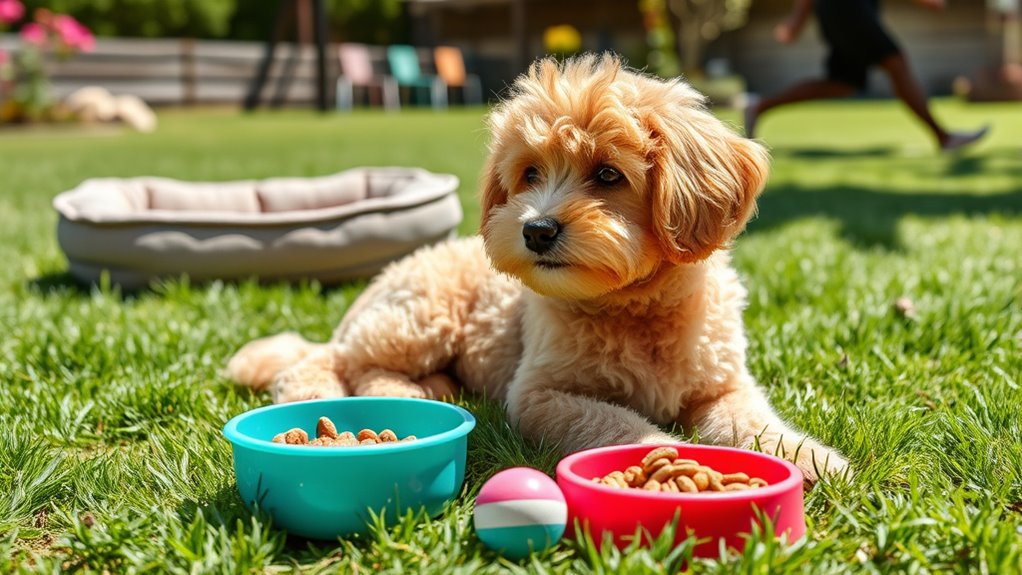
Taking care of your Toy Poodle involves a few key elements to guarantee they thrive. You’ll need to focus on grooming, a balanced diet, and regular exercise to keep them happy and healthy. By paying attention to these aspects, you can help your furry friend live a longer, more fulfilling life.
Grooming and Maintenance Needs
To keep your Toy Poodle looking and feeling their best, regular grooming is essential.
Here are some key grooming needs to contemplate:
- Brush their curly coat three to four times a week to prevent matting.
- Schedule professional grooming every four to six weeks to keep their coat trimmed and comfortable.
- Implement daily dental care to prevent gum disease, which is common in small breeds.
- Don’t skip regular veterinary check-ups to monitor for breed-specific health issues.
Diet and Nutrition Tips
Providing your Toy Poodle with a balanced diet is crucial for their overall health and energy levels.
Choose high-quality dog food specifically formulated for small breeds, ensuring it’s rich in essential nutrients.
Monitor their calorie consumption closely to prevent obesity, as these little dogs can easily gain weight.
Offer fresh fruits and vegetables as healthy treats, but steer clear of cooked bones and fatty table scraps.
Regular dental care is important; brush their teeth daily and schedule professional cleanings to prevent gum disease, which affects 80% of dogs by age two.
Don’t forget to consult your vet for tailored dietary recommendations and regular check-ups to address any specific health concerns related to your Toy Poodle’s nutrition.
Exercise and Mental Stimulation
While your Toy Poodle might be small, they have big energy needs, requiring 30 to 45 minutes of exercise each day.
Incorporate a mix of activities to keep them healthy and well-adjusted:
- Daily brisk walks to burn off energy
- Indoor games like fetch to stimulate their minds
- Agility sports that challenge their physical skills
- Interactive toys for solo play and mental engagement
Regular mental stimulation is essential, too.
By using puzzle toys and learning new tricks, you can prevent boredom and associated behavioral issues.
Remember, consistent companionship helps alleviate clinginess and anxiety.
Establishing a routine with these activities fosters a happy environment for your Toy Poodle and strengthens your bond.
Common Health Issues Impacting Lifespan
Understanding the common health issues that can impact your Toy Poodle’s lifespan is fundamental for their well-being.
Toy Poodles are prone to several health concerns, such as luxating patella, progressive retinal atrophy (PRA), and dental problems due to their small mouths.
Toy Poodles may face health challenges like luxating patella, progressive retinal atrophy, and dental issues due to their small size.
Regular veterinary check-ups are essential for early detection of these issues, which can greatly affect their longevity.
Maintaining a healthy weight is also important, as obesity can worsen joint problems and lead to other complications.
Proper grooming and dental care are necessary since poor dental hygiene may result in periodontal disease, affecting your dog’s overall health.
Cherishing Every Year With Your Toy Poodle
As you share your life with a Toy Poodle, each year becomes a treasure filled with joy and companionship.
To cherish every year with your furry friend, focus on their well-being and happiness.
Remember that Toy Poodles live longer with proper care, so keep these essentials in mind:
- Provide regular veterinary check-ups to catch any potential health issues early.
- Guarantee a balanced diet to support their overall health and energy levels.
- Engage in daily exercise to keep them fit and mentally stimulated.
- Shower them with affection, celebrating their affectionate nature and the bond you share.
Tips for Enhancing Your Toy Poodle’s Longevity
To enhance your Toy Poodle’s longevity, focus on several key aspects of care that promote their overall health and happiness.
Start with a balanced diet; high-quality small-breed dog food is essential for maintaining their health.
Engage in daily exercise and mental stimulation for 30 to 45 minutes to support both physical and mental well-being.
Regular veterinary check-ups are critical for identifying and managing breed-specific health issues early on, contributing to a longer life.
Don’t forget consistent grooming and dental care to prevent problems like gum disease and matting.
Finally, creating a loving and stable environment reduces stress and promotes emotional well-being, which is fundamental for your Poodle’s longevity.
Frequently Asked Questions
Do Toy Poodles Shed a Lot of Fur?
Toy Poodles don’t shed a lot of fur compared to many breeds. Their curly coats trap loose hair, but you’ll still need to groom them regularly to keep their coat healthy and minimize any shedding.
Are Toy Poodles Good for Apartment Living?
“Good things come in small packages.” Yes, Toy Poodles are perfect for apartment living! Their small size, moderate exercise needs, and affectionate nature make them ideal companions. You’ll love their adaptability and low-shedding coat, too!
What Is the Ideal Diet for a Toy Poodle?
The ideal diet for your Toy Poodle includes high-quality, small-breed dog food rich in nutrients. Consult your vet for tailored options, monitor their calorie intake, and limit treats to maintain their health and prevent obesity.
How Often Should I Groom My Toy Poodle?
Think of grooming your Toy Poodle like maintaining a classic car; regular upkeep keeps it gleaming. You should groom your Toy Poodle three to four times weekly, with professional grooming every four to six weeks.
Can Toy Poodles Be Left Alone for Long Periods?
You shouldn’t leave Toy Poodles alone for long periods. They can become anxious and vocalize if left for more than 4-6 hours. Providing mental stimulation and companionship helps keep them calm when you’re away.
Conclusion
In the grand tapestry of life, each moment with your Toy Poodle is a precious thread. By nurturing their health and happiness, you’re weaving a vibrant future together.
Embrace the joy they bring, and remember that every wag of their tail is a reminder of the love you share.
As you cherish each year, you’re not just adding time; you’re creating memories that linger. These moments fill your hearts with warmth long after those playful paws have danced away.
Toy Poodles typically live between 12 to 15 years, and with proper care, you can help them thrive. Prioritizing their health through good nutrition and regular vet visits will ensure they enjoy a longer, happier life.
So, enjoy every wag and each playful leap, as they remind us of the bond we share. Together, you can create a lifetime of cherished memories with your beloved Toy Poodle!