Benefits of Using Therapeutic Toys
Using therapeutic toys can greatly benefit children by enhancing emotional expression and building trust with therapists.
These toys empower kids to explore their feelings and improve self-esteem through play. When children choose their toys, they gain a sense of control over their experience.
Observing how they interact with these toys offers insights into their inner world, guiding effective therapeutic interventions.
It’s amazing how these simple tools can enrich the therapeutic process and foster growth.
Keep exploring to discover even more ways to incorporate these valuable resources into therapy sessions.
Key Takeaways
- Therapeutic toys promote emotional expression, allowing children to convey feelings through play rather than words.
- They create a safe environment that fosters trust and rapport between children and therapists.
- By choosing their toys, children gain autonomy, enhancing self-esteem and decision-making skills.
- Play with therapeutic toys reveals insights into a child’s inner world and emotional states.
- Engaging with sensory-rich toys helps calm anxieties and encourages meaningful participation in therapy.
Enhancing Emotional Expression Through Play

When children struggle to express their feelings, therapeutic toys can bridge that gap by providing a unique avenue for emotional expression.
These toys serve as a symbolic language, allowing kids to convey emotions they might not be able to articulate.
Through play therapy, children can explore complex family dynamics using toys like dollhouses, making it easier to discuss their feelings in a safe environment.
Through play therapy, children can safely navigate their emotions and family dynamics with the help of engaging therapeutic toys like dollhouses.
Engaging with these toys empowers them, enhancing their self-esteem and giving them a sense of control over their narratives.
You’ll notice how their interactions with these toys reveal valuable insights into their emotional states, helping therapists tailor interventions to meet their needs.
Ultimately, therapeutic toys foster deeper emotional connections, encouraging healthier emotional expression.
Building Trust and Rapport in Therapy
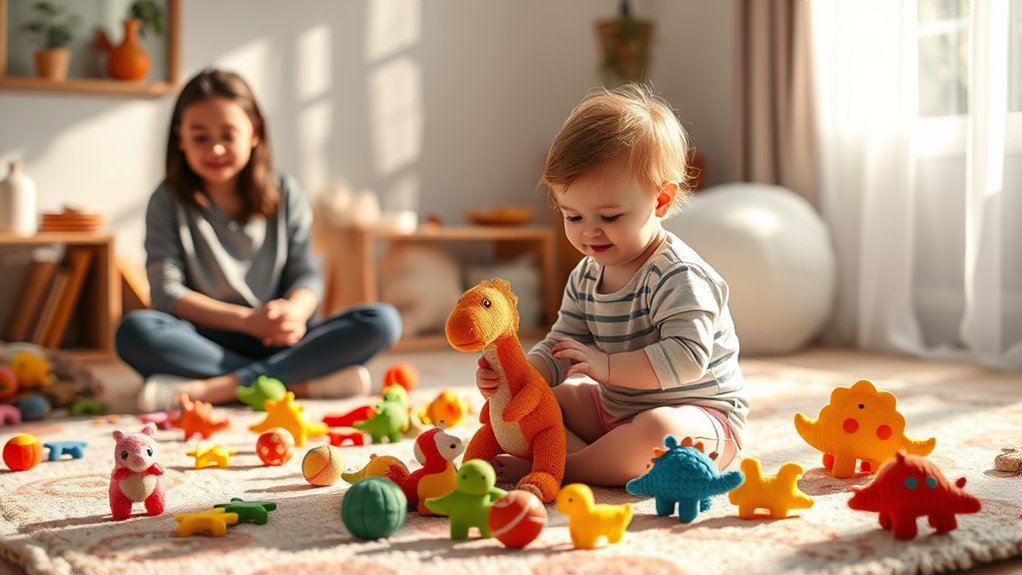
Therapeutic toys play an essential role in creating a welcoming environment where children can feel safe and comfortable.
This is vital for building trust in therapy. By engaging in play with these toys, you foster a sense of connection and rapport with your child.
When they choose and interact with toys, they gain a sense of empowerment that boosts their self-esteem and encourages participation in the therapeutic process.
Play therapy allows them to express feelings non-verbally, giving you insights into their emotional states.
This shared experience enhances trust, as you can better understand their inner world.
Ultimately, using therapeutic toys not only creates a fun environment but also strengthens the therapeutic relationship through informed interventions and meaningful interactions.
Empowering Children With Autonomy

When you let children choose how they want to play with therapeutic toys, you’re giving them a sense of control over their experience. This freedom encourages them to express their thoughts and emotions through imaginative storytelling. By fostering these playful choices, you empower them to explore their feelings in a supportive environment.
Encouraging Playful Choices
Allowing children to choose their own therapeutic toys not only fosters autonomy but also creates a safe space for them to express their preferences and emotions.
When you provide a variety of toys, you help children explore different aspects of their personalities and feelings.
This freedom encourages them to engage more deeply in play therapy, as they invest themselves in scenarios that resonate with their experiences.
Empowering children to make decisions enhances their self-esteem, giving them a sense of control over their therapeutic journey.
By encouraging playful choices, you allow them to practice decision-making skills, building confidence in their judgment.
Ultimately, this approach leads to richer connections and more meaningful engagement in the therapeutic environment.
Fostering Self-Expression Opportunities
Empowering children with autonomy through play is a powerful way to foster self-expression opportunities.
When you provide therapeutic toys, you enable kids to communicate their thoughts and feelings, even when words fail them.
This process offers several developmental benefits:
- Children gain a sense of control over their play narrative.
- They build self-esteem and confidence by making choices.
- Symbolic play helps them explore complex emotions and relationships.
- Observing their interactions gives insights into their emotional states.
By encouraging this type of play, you’re helping children develop essential skills for life.
It’s amazing to see how play can unlock their minds and hearts!
Observing Insights Into a Child’s Inner World
Understanding a child’s inner world often unfolds through their play.
The patterns and choices they make reveal emotional states and conflicts that might not surface in conversation.
By observing how they interact with toys, you can gain valuable insights into their coping mechanisms and emotional regulation skills.
For instance, their preferences for certain sensory toys may indicate what comforts or excites them.
Meanwhile, their use of fine motor skills can show their ability to manage control or chaos in their lives.
Themes in their play often reflect real-life experiences, helping you understand their relational dynamics and social skills.
This non-verbal expression allows you to connect with their feelings and challenges.
Ultimately, it guides effective therapeutic interventions tailored to their needs.
Creating a Safe and Engaging Therapeutic Environment
Creating a safe and engaging therapeutic environment is essential for fostering meaningful interactions between you and the child.
A sensory-rich space can help children calm their anxieties and express themselves freely. Here are some key elements to contemplate:
- Familiar toys: Use blocks and dolls to encourage emotional expression.
- Autonomy in play: Allow children to dictate how they interact with toys, boosting self-esteem.
- Shared activities: Engage in board games or building blocks to build trust and rapport.
- Observation: Pay attention to play patterns to gain insights into the child’s emotional state.
Facilitating Cognitive and Social Development
As you incorporate therapeutic toys into play, you can greatly enhance a child’s cognitive and social development.
These toys stimulate problem-solving abilities and help establish cause-and-effect relationships through interactive play, boosting cognitive development.
Engaging with toys that promote social skills, like taking turns and cooperation, encourages peer interactions and strengthens communication among children.
In addition, playing with therapeutic toys enhances fine motor skills, which are essential for tasks such as writing and self-feeding.
Sensory exploration toys, like Kinetic Sand or fidget tools, assist children in managing intense emotions and improving focus.
This is particularly beneficial for those with ASD or ADHD.
Ultimately, these toys provide a platform for children to express feelings symbolically, fostering both cognitive growth and social connections through shared experiences.
Frequently Asked Questions
What Types of Therapeutic Toys Are Most Effective for Children?
Fidget cubes, liquid timers, chew toys, kinetic sand, and push-pop bubble fidgets are effective therapeutic toys for children. They engage sensory needs, encourage creativity, and help manage anxiety, making therapy sessions more enjoyable and productive.
Can Therapeutic Toys Be Used at Home With Parents?
Yes, you can definitely use therapeutic toys at home! Imagine creating a cozy space where your child explores feelings through play. These toys not only engage them but also deepen your bond, revealing their emotional needs.
How Do I Choose the Right Toy for My Child?
To choose the right toy for your child, consider their sensory preferences, developmental needs, and social skills. Look for toys that promote engagement, enhance motor skills, and encourage emotional regulation to support their overall growth.
Are There Age Restrictions for Therapeutic Toy Use?
There aren’t strict age restrictions for therapeutic toys, but you should consider your child’s developmental stage. Choosing age-appropriate toys guarantees safety and effectiveness, allowing them to express emotions and develop skills more effectively.
How Can I Assess My Child’s Progress With Therapeutic Toys?
You can assess your child’s progress with therapeutic toys by observing their engagement, tracking fine motor skill development, noting emotional expression, and monitoring social interactions. Regularly evaluate how they communicate feelings during play activities.
Conclusion
Incorporating therapeutic toys into your practice not only enhances emotional expression but also builds trust and rapport.
They empower children with autonomy, offer insights into their inner worlds, and create a safe, engaging environment for growth.
By facilitating cognitive and social development, these toys become invaluable tools in your therapeutic arsenal.
Embrace the power of play, and watch as it transforms your approach, deepens connections, and nurtures the journey of healing and discovery for every child you work with.
In conclusion, therapeutic toys are essential in fostering emotional expression and trust. They allow children to explore their feelings and develop crucial social skills in a secure setting. By integrating these playful tools into your practice, you not only enhance the therapeutic experience but also empower children on their healing journey. Embrace this transformative approach and witness the profound impact it can have on the lives of the children you support.