7 Creative Sensory Tables for Preschoolers to Engage and Inspire
Looking for creative sensory tables to engage and inspire your preschoolers?
Sensory play is essential for early childhood development, allowing little ones to explore, discover, and learn through hands-on experiences.
Try a nature table filled with leaves and stones for tactile exploration.
Create a winter wonderland with shaving cream and trucks, or set up a vibrant rainbow experience using colorful rice.
Explore marine life with a water table featuring toy sea creatures, or dive into a construction zone with sand and vehicles.
Incorporating storytelling into your sensory bins can also transform playtime into an imaginative adventure.
There’s so much more to discover and enjoy with these engaging sensory tables!
Key Takeaways
- Create a sensory table with leaves and stones to promote tactile exploration, enhance vocabulary, and support emotional regulation through outdoor connection.
- Use shaving cream in a winter-themed sensory table, encouraging imaginative play with toy trucks while developing fine motor skills and discussing winter weather.
- Introduce colorful rice for a vibrant sensory experience, facilitating color recognition, counting, and imaginative play through scooping and pouring activities.
- Design an ocean discovery table with water and toy sea creatures, enhancing fine motor skills and vocabulary development while fostering cooperative play among peers.
- Incorporate storytelling elements and props in sensory play to captivate children’s imaginations, promote language development, and encourage collaborative engagement.
Exploring Nature: a Sensory Table Filled With Leaves and Stones

Exploring nature through a sensory table filled with leaves and stones invites preschoolers to engage their senses in a hands-on way.
This sensory bin offers diverse textures that spark tactile exploration and sensory development.
As children sift through various shapes and sizes of stones, they can create imaginative landscapes or structures.
You’ll notice them measuring and sorting the leaves and stones based on color, size, or texture, which enhances their cognitive and fine motor skills.
Discussing the environment while playing encourages vocabulary related to nature and ecology.
Plus, using natural materials supports emotional regulation, helping kids connect with the outdoors.
This calming, sensory-rich experience fosters creativity and joy, making learning both fun and meaningful.
Winter Wonderland: Sensory Play With Shaving Cream and Trucks
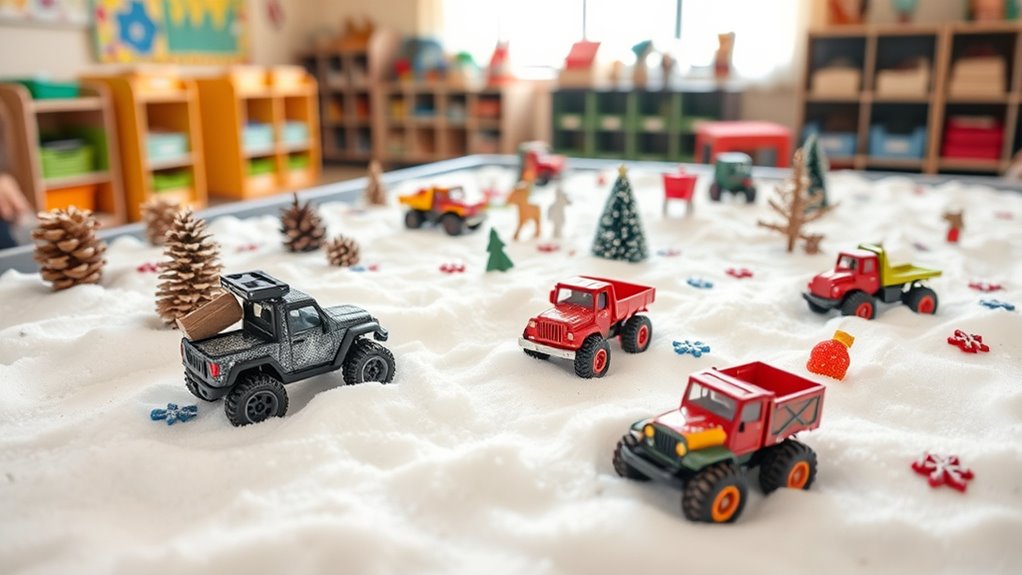
In your Winter Wonderland sensory table, you can use shaving cream to mimic snow, making it soft and fun for kids to explore. Adding toy trucks lets them drive through their snowy landscape, sparking imaginative play. This activity not only boosts their fine motor skills but also provides a unique sensory experience that encourages creativity and exploration.
Sensory Exploration Techniques
Creating a winter wonderland with shaving cream and toy trucks transforms sensory exploration into an exciting adventure for preschoolers.
The creamy texture mimics snow, encouraging imaginative play while developing fine motor skills as kids squish, sift, and pour.
Incorporating measuring cups enhances cognitive skills through interactive sorting and pouring activities.
| Activity | Materials Needed | Skills Developed |
|---|---|---|
| Snow Truck Races | Toy trucks, shaving cream | Movement concepts, coordination |
| Sorting Snowflakes | Measuring cups, containers | Cognitive skills, categorization |
| Pouring Fun | Various containers | Hand-eye coordination, fine motor skills |
| Outdoor Exploration | Outdoor space | Environmental awareness, creativity |
Setting up outdoors makes clean-up easier, allowing for expanded exploration while keeping indoor spaces mess-free.
Winter-Themed Play Ideas
Winter-themed play ideas come alive when you set up a sensory experience that captures the magic of the season.
Using shaving cream to mimic snow creates a soft, tactile playground for preschoolers. As they explore, they can squish, sift, and pour, enhancing their fine motor skills through hands-on interaction.
Add toy trucks to the mix, allowing children to engage in imaginative play while learning about movement and transportation in a winter setting.
To keep things tidy, set up your sensory table outdoors or place a towel underneath to catch spills.
This winter wonderland activity not only promotes sensory stimulation but also sparks conversations about winter weather and safety.
It’s a great way to enrich their vocabulary and understanding of the season!
Colorful Rice: A Rainbow Sensory Experience

Colorful rice offers a fantastic opportunity for vibrant color mixing techniques that captivate young minds. As you set up sensory play ideas, consider using different tools for scooping and pouring to enhance the experience. Your preschoolers will love exploring the textures and colors while developing their fine motor skills.
Vibrant Color Mixing Techniques
There’s something magical about vibrant color mixing techniques that captivate preschoolers’ imaginations.
Creating colorful rice not only dazzles their eyes but also engages their hands and minds.
Here’s how you can enhance this sensory experience:
- Mix white rice with food coloring and vinegar for a rainbow of hues.
- Let children scoop, pour, and combine the colorful rice to develop fine motor skills.
- Encourage them to build scenes or stories, fostering imaginative play.
- Provide tools like scoops and funnels to stimulate problem-solving and sensory exploration.
As they play, you’ll notice enhanced vocabulary development as they describe colors and textures.
Colorful rice transforms simple play into a vibrant learning adventure, making it a must-have for your sensory table!
Engaging Sensory Play Ideas
While exploring sensory play, colorful rice offers a fantastic way to engage preschoolers in hands-on learning.
You can easily create this sensory experience by mixing uncooked rice with food coloring and vinegar.
At the sensory table, children will love scooping, pouring, and manipulating the rice with cups and spoons, promoting their fine motor skills.
Encourage imaginative play by letting them build landscapes or create pathways for toy vehicles, enhancing their creativity.
The vibrant textures and colors stimulate sensory development, aiding in color recognition, counting, and categorization.
To make it even more interactive, add small toys, natural objects, or themed items.
These engaging sensory play ideas will keep your preschoolers inspired and excited to explore!
Ocean Discovery: Water Table With Toy Sea Creatures
Exploring an ocean discovery water table filled with water and toy sea creatures invites preschoolers to immerse themselves in the fascinating world of marine life.
This hands-on play helps children develop essential skills while enjoying sensory exploration.
Here are some engaging aspects of this activity:
Engaging in this ocean discovery water table activity promotes fine motor skills, imaginative play, vocabulary development, and social skills in preschoolers.
- Fine motor skills: Pouring, scooping, and sorting the creatures strengthens hand-eye coordination.
- Imaginative play: Adding seashells or sand enhances creativity and simulates ocean habitats.
- Vocabulary development: Discussing marine biology and ocean safety encourages language growth.
- Social skills: Cooperative play fosters communication and teamwork among peers.
Construction Zone: Sensory Play With Sand and Toy Vehicles
After discovering the wonders of the ocean, preschoolers can shift their focus to a construction zone sensory table filled with sand and toy vehicles.
This setup allows them to engage in imaginative play while manipulating trucks, diggers, and other vehicles.
Acknowledge how the sand’s unique texture stimulates tactile exploration, perfect for measuring, pouring, and sorting activities that enhance fine motor skills.
Kids can experiment with building structures in the sand, promoting problem-solving as they figure out stable designs.
Adding construction-themed accessories like cones, shovels, and small signs enriches the sensory experience, encouraging collaborative play among peers.
This construction zone not only sparks creativity but also fosters essential skills through hands-on activities.
Magical Snow: Instasnow Sensory Bin for Winter Fun
As winter approaches, you can bring the magic of snow indoors with an Instasnow sensory bin.
This special bin transforms simple water into a fluffy, snow-like material that preschoolers will love to touch and mold.
This engaging activity not only sparks creativity but also enhances fine motor skills through various play options.
Here’s how to set up your Instasnow sensory bin:
- Mix Instasnow with water according to the package instructions.
- Add measuring cups for pouring and sorting activities.
- Include toy vehicles like snow plows for imaginative winter transportation play.
- Encourage discussions about winter and snow.
With Instasnow being non-toxic and safe, you can let your little ones explore and enjoy the winter wonderland without worry!
Themed Sensory Bins: Incorporating Storytelling Into Play
Integrating storytelling into sensory play not only captivates children’s imaginations but also enhances their learning experience.
Themed sensory bins designed around popular children’s stories, like “The Very Hungry Caterpillar,” allow kids to explore relevant textures and materials.
Themed sensory bins inspired by beloved stories, such as “The Very Hungry Caterpillar,” invite children to discover engaging textures and materials.
By incorporating story elements, you encourage them to act out narrative scenarios, sparking their creativity.
Using props such as toy figures and themed items reinforces vocabulary and concepts from the narrative, making learning more relatable.
As children engage with these themed sensory bins, they develop language skills by discussing their experiences and sharing interpretations of the story.
This approach to sensory play not only fosters imagination but also nurtures a love for storytelling in young learners.
Frequently Asked Questions
What Materials Are Safe for Sensory Tables?
You can use safe materials like dry rice, water beads, sand, and soft fabrics. Avoid small items that pose choking hazards. Always supervise children to guarantee they’re playing safely and enjoying the sensory experience.
How Can I Clean Sensory Table Items Effectively?
You’ll want to scrub those sensory table items like you’re polishing a treasure! Use warm soapy water, rinse well, and air dry. For tougher grime, a diluted vinegar solution works wonders, leaving everything sparkling clean and safe!
What Age Group Is Best for Sensory Tables?
Sensory tables work best for children aged 2 to 5 years old. At this age, they’re naturally curious, enthusiastic to explore textures, and ready to engage in hands-on learning experiences that promote development and creativity.
How Often Should I Change Sensory Table Contents?
You should change sensory table contents every week or sooner if kids lose interest. Regularly renewing materials keeps their curiosity alive and encourages exploration, ensuring they stay engaged while developing essential sensory skills.
Can Sensory Tables Be Used Outdoors?
Absolutely, you can use sensory tables outdoors! While some worry about mess, outdoor settings allow for even more exploration. Just make certain you choose safe materials and keep an eye on the weather for ideal fun.
Conclusion
You might think sensory tables are just messy fun, but they’re so much more!
These creative setups spark curiosity and promote learning through play. Each theme encourages exploration and storytelling, helping preschoolers develop essential skills like fine motor coordination and social interaction.
Embracing the messiness allows kids to fully engage their senses and imaginations. This turns simple materials into extraordinary adventures.
So, don’t shy away from the mess—dive in and watch your little ones thrive!
Sensory tables are a fantastic way to encourage exploration and creativity in preschoolers. They not only provide engaging activities but also foster important developmental skills. The joy of sensory play enhances social interaction and fine motor skills, making learning fun.
When you embrace the mess, you open the door to incredible learning experiences for your little ones. So, let them dig in, explore, and let their imaginations soar!