10 Best Building Toys for 8 Year Olds: Top Rated Options Compared
Many parents want toys that keep an 8 year old busy, creative, and off screens for a while. They also want something that feels fun but still helps with focus and problem solving. That is where the search for the best building toys for 8 year olds often begins.
That is where the search for the best building toys for 8 year olds often begins. This review looks at a building toy option made for kids who enjoy hands-on play and simple challenges. It is a good fit for children who like to stack, connect, and make their own designs.
The set may also suit kids who want a toy that offers repeat play without getting boring fast. We will look at how easy it is to use, what kind of play it supports, and how well it fits the age group. You will also see what stands out, what may not suit every child, and how it compares as a gift idea.
Explore the Most Engaging Construction Sets for Growing Builders
| Image | Product | Price |
|---|---|---|
Pick 1  | Klutz Lego Gear Bots Science Kit | Check Price On Amazon |
Pick 2 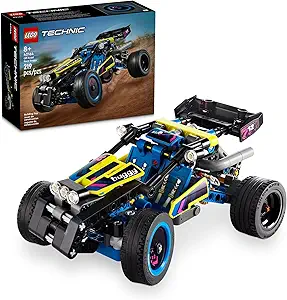 | LEGO Technic Off-Road Race Buggy 42164 | Check Price On Amazon |
Pick 3  | ThinkFun Gravity Maze | Check Price On Amazon |
1. Klutz Lego Gear Bots Science Kit
Hands-on building meets simple science in one compact kit. Kids can make eight kinetic creatures while learning how motion works. Klutz LEGO Gear Bots Science Kit combines LEGO Technic bricks, papercraft, and a 64-page instruction book.
The included lessons cover axles, cams, cranks, and machines found in everyday life. That mix makes the set feel both playful and educational. The kit includes 62 LEGO elements and 10 sheets of papercraft.
Build steps are clearly laid out for single-player use. The models focus on physics-driven movement rather than display alone. That makes each finished build feel active and interesting.
The parts count stays manageable for the target age range. Kids who enjoy construction and STEM activities should find plenty here.
The portable format also makes storage and setup simple. It suits children who like guided projects with a clear goal.
Families wanting a classic LEGO-based learning kit will find strong value here.
Pros
- Combines LEGO building with STEM learning.
- Includes step-by-step instructions and ideas book.
- Eight kinetic builds add variety.
Cons
- Single-player format limits group play.
- Paper craft pieces may need careful handling.
- Fewer pieces than larger LEGO sets.
Who Should Buy It?
Buyers seeking a guided LEGO STEM project for ages 8 to 12 should consider it. It suits kids who like building moving models and learning how mechanisms work. The included book adds structure, while the compact piece count keeps the project approachable.
Families wanting a hands-on science activity with clear instructions will find it appealing.
Key Specifications
| Specification | Details |
|---|---|
| Brand | Klutz |
| Model Name | LEGO Gear Bots Science |
| Age Range | 8-12 years |
| Piece Count | 62 |
| Included Components | 64-page book of ideas and inspiration, 62 LEGO® elements, 10 sheets of papercraft |
| Educational Objective | STEM, Construction Skills, Problem Solving Creative Critical Thinking, Reasoning Skills |
| Theme | Science |
| Model Number | 9781338603453 |
| Unit Count | 1 Count |
| Target Audience | Kids aged 8-12 |
The brand is Klutz, and the model name is LEGO Gear Bots Science. It is made for ages 8 to 12, with 62 pieces included. The package also contains a 64-page book and 10 sheets of papercraft. In daily use, that means children get guided building steps and background reading together. The science theme and STEM focus make the kit feel educational without losing play value.
The model number is 9781338603453, and the unit count is one. The target audience is kids aged 8 to 12, which matches the intended difficulty level. A 62-piece set keeps setup simple and the build time manageable. The included LEGO elements and papercraft support moving models instead of static ones. That format suits kids who like structured projects and hands-on mechanics.
2. LEGO Technic Off-Road Race Buggy 42164
Race car fans get a compact Technic build with moving mechanical details. The buggy adds steering, suspension, and engine action in one small model.
LEGO Technic Off-Road Race Buggy 42164 gives kids ages 8 and up a clear introduction to engineering ideas. The 219-piece build includes authentic buggy styling inspired by real race cars.
A moving 4-cylinder engine adds visible motion during play. Rear suspension helps the model react while rolling and turning. Flex steering lets the buggy tilt side to side with control.
The finished car measures over 3.5 inches high. It also measures 6.5 inches long and 4 inches wide.
Build quality should feel familiar to LEGO fans, with interlocking plastic elements. The model suits children who enjoy vehicle toys and hands-on building. It works well for kids who like realistic features and car mechanics.
The build is manageable without being overly simple. It offers good value for families wanting a small engineering-focused set.
Pros
- Moving engine adds real mechanical interest.
- Steering and suspension increase play value.
- Compact build suits younger Technic fans.
Cons
- Only 219 pieces, so the build stays brief.
- Small size limits display presence.
- Best for car fans, not all builders.
Who Should Buy It?
Buy it for kids who love cars, mechanics, and hands-on building. It suits 8-year-olds who enjoy realistic vehicle details and simple engineering features. The small piece count makes it approachable for newer LEGO Technic builders.
Families wanting a compact, play-friendly race car model should find it appealing.
Key Specifications
| Specification | Details |
|---|---|
| Brand | LEGO |
| Model Name | tbd Technic 42164 42164 |
| Age Range | 8+ |
| Piece Count | 219 |
| Included Components | LEGO Building Elements |
| Educational Objective | Concentration |
| Theme | LEGO |
| Model Number | 6465070 |
| Unit Count | 1 Count |
| Target Audience | Boys & Girls |
The 219-piece count points to a shorter build that stays manageable for kids. Ages 8 and up matches a model with simple but real moving parts. LEGO Building Elements mean the set uses standard interlocking pieces. The concentration objective fits a project that asks kids to follow steps carefully. One count means the box includes a single complete buggy. That makes it a focused build for one child or a small shared activity.
The Technic theme matters because the model includes moving steering and suspension parts. Model number 6465070 helps identify the exact version for shopping or replacement needs. Boys and girls are both part of the intended audience, so it suits mixed households. The small footprint also helps with storage after play. Kids who enjoy cars, motion, and mechanical detail will benefit most from these specifications.
3. ThinkFun Gravity Maze
Gravity Maze turns marble play into a logic puzzle with real challenge. Kids build a path, test it, and adjust their plan.
ThinkFun includes 60 challenge cards, from beginner to expert, so play grows with skill. The set has nine towers, three marbles, a game grid, and one target piece.
That mix supports hands-on STEM learning through planning, spatial thinking, and problem solving.
The pieces are made for tabletop indoor play and manual setup. Assembly is required, but the layout stays simple once started. The 75-piece set feels substantial without being hard to store.
Single-player design suits focused practice, while friends or family can help solve cards together. It works well for children who enjoy puzzles, engineering-style play, and steady mental challenge.
The maze format keeps children engaged while building reasoning skills through repeated trial and error.
Pros
- Offers 60 challenges from beginner to expert.
- Combines marble play with logic and planning.
- Supports STEM learning through hands-on problem solving.
Cons
- Single-player mode may limit group play.
- Assembly is required before puzzle play starts.
- Marbles and small pieces need careful storage.
Who Should Buy It?
Buy it for kids who enjoy puzzles, strategy, and hands-on STEM play. It suits children ages 8 and up who like building paths and solving challenges step by step. Families wanting a focused tabletop activity will like the single-player format.
It also fits classrooms or home learning when critical thinking practice matters most.
Key Specifications
| Specification | Details |
|---|---|
| Brand | ThinkFun |
| Model Name | Gravity Maze |
| Age Range | 8+ |
| Piece Count | 75 |
| Included Components | 1 Target Piece, 3 Marbles, 60 Challenge Cards from Beginner to Expert, 9 Towers, Game Grid |
| Educational Objective | stem |
| Theme | Maze |
| Model Number | 44001006 |
| Unit Count | 1 Count |
| Target Audience | Kids 8-12 |
ThinkFun makes the Gravity Maze, a maze-themed logic game for ages 8 and up. The set includes 75 pieces, which means children get a complete puzzle system in one box. Sixty challenge cards give a clear path from easier setups to harder ones. The included target piece, marbles, towers, and game grid give kids the parts needed to build and test each solution without extra supplies.
The 1-count package is meant for one player, though others can help solve cards. The STEM objective points to practice in planning, reasoning, and problem solving during play. The 75-piece count gives enough variety for repeated use without making setup feel overwhelming. Kids who like table activities and hands-on puzzles will benefit most, since the maze format rewards patience, careful thinking, and repeated adjustment.
4. SNAP CIRCUITS Explorer SC-100

Hands-on science feels exciting when kids can build real electronic projects themselves. SNAP CIRCUITS Explorer SC-100 turns circuit basics into 100+ quick, rewarding builds. This STEM kit includes 28 snap-together parts, a colorful project manual, and a snap board.
Kids can create gadgets, toys, and experiments without soldering or extra tools. The numbered, color-coded pieces make setup simple for beginners. That helps young builders focus on learning circuitry, not wrestling with wires.
The kit supports critical thinking, logical thinking, dexterity skills, and problem solving. Its plastic parts feel suited to repeated classroom or home use. Performance depends on batteries, which are required for the projects.
The included manual gives clear steps for steady progress through each build. It suits ages 8 and up, and older kids can keep exploring. The main value comes from variety, since one box offers many activities.
Families seeking an electronics-focused gift will find plenty of learning and play here.
Pros
- 100+ projects keep kids busy for a long time
- No soldering or extra tools needed
- Color-coded parts make setup easy
Cons
- Requires batteries for operation
- Only 28 snap-together parts included
- Some builds may feel similar over time
Who Should Buy It?
Buy it for kids who enjoy hands-on electronics and guided STEM play. It suits beginners who want simple circuit projects with clear instructions. Parents, teachers, and gift buyers will like the low-setup format.
Older children can also use it for repeated experimentation and skill practice.
Key Specifications
| Specification | Details |
|---|---|
| Brand | Snap Circuits |
| Model Name | STEM Electronics Kit, 100+ Projects, Ages 8+ |
| Age Range | 8-108 |
| Piece Count | 28 |
| Included Components | 28 electrical components, 4-color manual, Snap Board |
| Educational Objective | Critical Thinking, Dexterity Skills, Logical Thinking, Problem Solving Skills, STEM |
| Theme | Electronics, Engineering |
| Model Number | SC-100 |
| Unit Count | 1 Count |
| Target Audience | Kids ages 8 and up |
The Snap Circuits brand focuses on snap-together electronics learning. The SC-100 model name points to a STEM kit with 100+ projects. Its age range starts at eight and extends much higher. That range makes the kit useful for beginners and older learners too. The 28-piece count means the set stays portable and manageable. Included components add a four-color manual and a Snap Board. Together, those parts help kids follow steps and build circuits clearly.
Educational goals center on critical thinking, logical thinking, and problem solving skills. The electronics and engineering theme matches the hands-on project style. In everyday use, that means children can practice planning and assembly with each build. The one-count unit gives a single complete kit for home or classroom use. The SC-100 model number helps identify the exact set easily. Kids ages 8 and up benefit most from the simple layout and guided projects.
5. Smartivity Robotic Mechanical Hand

Mechanical hands can make STEM play feel instantly exciting. Smartivity turns that idea into a hands-on build with moving parts and clear purpose.
The Robotic Mechanical Hand is a screen-free DIY toy for ages 8 to 14. Kids follow a step-by-step manual while building a wooden machine.
That process supports science learning, confidence, and creativity during play. The anatomy and robotics theme adds a strong educational angle. The engineered wood construction gives it a sturdy feel for repeated use.
At 40.2 x 29 x 8.9 cm, the finished model has a substantial presence. It is designed for boys and girls who enjoy building and mechanical action.
The included lifetime replacement parts add peace of mind for family use. It suits children who like practical construction and moving mechanisms. Kids who enjoy hands-on learning may find the build especially rewarding.
Parents seeking a structured STEM activity should also find it appealing.
Pros
- Hands-on build with clear mechanical movement
- Screen-free play supports science learning
- Engineered wood adds durability
Cons
- Assembly may take patience from younger builders
- Single model limits variety after completion
- Mechanical focus may not suit every child
Who Should Buy It?
Parents should buy it for kids who enjoy building moving models. It suits children aged 8 to 14 who like STEM toys and hands-on projects. The wooden construction and step-by-step manual fit patient builders well.
Families wanting screen-free play and a mechanical challenge should find strong value here.
Key Specifications
| Specification | Details |
|---|---|
| Brand | Smartivity |
| Model Name | Smartivity DIY Robotic Mechanical Hand STEM Fun Toys |
| Age Range | 8-14 years |
| Piece Count | 1 Count |
| Included Components | DIY robotic mechanical hand STEM toy |
| Educational Objective | STEM |
| Theme | Anatomy, Robotics |
| Model Number | SMRT1135 |
| Unit Count | 1 Count |
| Target Audience | Boys and girls |
The age range of 8 to 14 makes this a flexible family toy. Younger builders can use the manual with adult guidance. Older children may enjoy the mechanical challenge more independently. The STEM objective means play centers on science learning and building skills. Its anatomy and robotics theme gives the project a clear educational identity. The single-count format means one complete build comes in the box. That keeps the experience focused on one main mechanical model.
Engineered wood shapes the feel of the finished hand and its parts. Wood can suit repeated handling while keeping the build lightweight. The included DIY hand gives kids a direct building project with moving action. The 40.2 x 29 x 8.9 cm size suggests a noticeable display piece. Boys and girls can use it as a structured activity with clear steps. The model number SMRT1135 helps identify the exact version for buying and setup.
6. Smartivity DIY Pinball Machine

An arcade classic gets rebuilt into a hands-on tabletop game. Kids can assemble it, then keep playing for hours. Smartivity DIY Pinball Machine turns 375 wooden and game pieces into a working pinball setup with a spring launcher, working flippers, ramps, bumpers, and scoring targets.
The kit uses precision-cut wooden parts, rubber bands, marbles, colorful balls, and a steel ball, all guided by illustrated instructions. No glue, screws, or batteries are needed, so setup stays straightforward.
The finished game feels sturdy and meant for repeated indoor play. It also teaches engineering ideas through motion, momentum, and mechanical advantage while kids build.
The manual play style suits family game nights and solo score challenges. It fits ages 8 through 14, and also appeals to teens and adults who enjoy building. For families wanting a toy with a lasting payoff, it offers strong value and real replay appeal.
Pros
- Builds into a working pinball arcade game
- No batteries, glue, or screws required
- Teaches engineering through hands-on play
Cons
- Assembly may take patience and focus
- Single-player mode limits group competition
- Wooden pieces need careful handling
Who Should Buy It?
Buy this for kids who like building and arcade-style games. It suits ages 8 and up, especially children who enjoy hands-on projects with a clear payoff. Families wanting screen-free play will appreciate the manual flippers and launcher.
It also fits teens and adults who like science toys, woodworking-style assembly, and repeat play during game night.
Key Specifications
| Specification | Details |
|---|---|
| Brand | Smartivity |
| Model Name | SMRT1169 |
| Age Range | Kid, ages 8-14 |
| Piece Count | 375 |
| Included Components | Colorful plastic balls, Glass marbles, Illustrated instruction booklet, Precision-cut wooden parts, Rubber bands, Rubber-band hook tool, Steel ball |
| Educational Objective | Concentration, Construction Skills, Dexterity, Engineering Skills, Logical Thinking |
| Theme | Physics |
| Model Number | SMRT1169 |
| Unit Count | 1 Count |
| Target Audience | Kids aged 8-14 |
The 375-piece count shows this kit is a substantial build. Kids get precision-cut wooden parts, rubber bands, marbles, and a steel ball. The included illustrated booklet helps guide each step clearly. Since the kit needs no glue, screws, or batteries, the build stays manual and hands-on. The finished machine becomes a real tabletop arcade game. That makes the specifications feel more like a project and less like a one-time craft.
These details point to a toy built for repeat use and steady attention. The physics theme connects directly to the spring launcher, flippers, ramps, and scoring targets. That gives children a clear way to see motion and mechanical action at work. The wood construction supports indoor play, while the single-player setup suits focused practice. Kids who enjoy construction, dexterity challenges, and logical thinking will get the most from it.
7. STEM Kits for Kids Crafts

Five different builds keep kids busy with science and motion. Solar power, wind power, and simple robotics make learning feel hands-on.
STEM Kits for Kids Crafts includes five projects: a solar powered car, wind powered car, obstacle avoidance robot, transmission tank, and glider. That variety gives children multiple ways to explore building, problem solving, and motor skills. The set is made from odorless, safety materials, and it includes a mini screwdriver plus step-by-step manuals.
Assembly should feel manageable for many elementary students, especially with adult help. AA batteries are required and not included, so setup needs a small extra step. The finished models suit classroom activities, family projects, and science fair use.
It feels like a solid pick for children who enjoy making things work.
Pros
- Five different STEM projects in one set
- Includes manuals and mini screwdriver
- Good for parent-child or classroom use
Cons
- AA batteries are required and not included
- Some projects may need adult help
- Plastic build may feel lightweight
Who Should Buy It?
Parents, teachers, and gift buyers should consider it for curious eight year olds. It fits children who like building, simple machines, and science activities. The five projects offer variety, so kids can try different kinds of motion.
It also suits shared family time or classroom STEM work. Children who enjoy hands-on problem solving may get the most from it.
Key Specifications
| Specification | Details |
|---|---|
| Brand | BeAndge |
| Model Name | STEM Kits for Kids Crafts |
| Age Range | 6-12 years |
| Piece Count | 5 |
| Included Components | STEM kits for kids |
| Educational Objective | Coding Skills, Concentration, Motor Skills, Problem Solving Skills, STEM |
| Theme | STEM Education |
| Model Number | BA1011 |
| Unit Count | 5 Count |
| Target Audience | Kids |
The five-pack format means kids get multiple projects instead of one build. That variety includes solar, wind, robot, tank, and glider designs. The age range covers younger and older elementary children, which helps families with mixed ages. The included mini screwdriver and instruction manuals support first-time builders. In daily use, that means more guided assembly and less guesswork. The educational goals also point toward hands-on learning that supports focus and motor control.
The theme and objectives show a strong focus on STEM learning through play. Kids can practice problem solving while building models that move in different ways. The model number, BA1011, identifies the kit for ordering or matching later. A five-count unit size also suits classrooms, where several projects may be used in rotation. The target audience is kids, so the activities are made for younger learners who benefit from clear steps and varied builds.
8. Tiny Land Glow Fort Building Kit

Glow-filled fort play starts with a simple snap-together system and plenty of room for creativity. Kids can build caves, tunnels, rockets, tents, forts, and houses with 130 pieces.
Tiny Land Glow Fort Building Kit includes 86 glow-in-the-dark rods and 44 balls. The rods charge under light for 15 to 30 minutes before glowing.
That adds a fun effect for indoor or outdoor play. The kit also includes a portable storage bag, which helps with organization and cleanup. Its manual assembly supports hands-on building and family play.
The design suits ages 5 to 12, with older kids able to build more independently. It encourages imagination, spatial awareness, hand-eye coordination, problem-solving, teamwork, communication, and social skills. The plastic pieces are non-toxic, and the set works well for kids who enjoy fort construction and open-ended building.
It feels especially useful for children who want screen-free play and flexible building options. The mix of glowing parts and simple connectors gives it broad appeal for playdates and family time.
Pros
- Glow-in-the-dark pieces add extra play value.
- Many build options for creative fort making.
- Storage bag helps keep pieces organized.
Cons
- Younger children may need adult help.
- Glow effect needs prior light exposure.
- Large builds may take extra setup time.
Who Should Buy It?
Buy it for kids who love forts, tunnels, and open-ended building. It suits ages 5 to 12, especially children who enjoy hands-on, screen-free play. Families who want a shared activity will also like it.
The glow feature adds novelty for indoor or outdoor play, while the storage bag helps keep cleanup simple after building sessions.
Key Specifications
| Specification | Details |
|---|---|
| Brand | Tiny Land |
| Model Name | FB0002 |
| Age Range | Kid |
| Piece Count | 130 |
| Included Components | 86 Rods and 44 Balls |
| Educational Objective | Enhance imagination, spatial awareness, hand-eye coordination, problem-solving, teamwork, communication, and social skills |
| Theme | fort |
| Model Number | FB0002-DE-20220211 |
| Unit Count | 130 Count |
| Target Audience | Children aged 5-12 |
The set contains 130 pieces, split into 86 rods and 44 balls. That mix gives kids enough parts to form larger structures, such as forts and tunnels. The model name is FB0002, and the model number is FB0002-DE-20220211. It is made for children ages 5 to 12, which fits a wide age range for family play. The fort theme keeps the building goals easy to understand for young users.
These specifications point to a toy built for flexible, hands-on play. The 130-count unit gives enough parts for repeated builds, while the included rods and balls keep assembly straightforward. Since it targets children aged 5 to 12, younger builders may need help, while older kids can work more independently. The educational focus supports spatial skills and teamwork, which suits group play. The fort theme also makes the building purpose clear from the start.
9. 10 in 1 Stem Toys Building Block Kit

A compact STEM kit can keep young builders busy with real hands-on projects. Ten model options give kids plenty of variety without needing a huge pile of parts. The 10 in 1 Stem Toys Building Block Kit is aimed at children ages four to eight, with 112 pieces and detailed instructions.
Kids can build engineering vehicles like a bulldozer, crane, forklift, and gantry crane. Each model is designed to move, which adds extra fun after assembly.
The kit focuses on simple engineering play and basic problem solving. Its plastic pieces are non-metal and come with a sturdy storage box for cleanup.
That makes it practical for home use, classroom projects, or quiet independent play. The instruction manual helps children follow each build step by step. The set suits kids who like construction toys and hands-on learning.
It also works well for families wanting a budget-friendly vehicle kit with multiple build options.
Pros
- Ten build options add variety
- Includes storage box for cleanup
- Instructions support independent assembly
Cons
- Plastic pieces may feel less substantial
- Some builds may need adult help
- Piece count is modest for larger models
Who Should Buy It?
Buy this for kids ages four to eight who enjoy vehicle builds and hands-on STEM play. It fits families wanting a compact set with multiple model choices and simple instructions. Teachers and parents may also like it for classroom activities or home learning.
Children who prefer construction themes, moving models, and organized storage will get the most from it.
Key Specifications
| Specification | Details |
|---|---|
| Brand | choopheme |
| Model Name | J-77 |
| Age Range | 4 to 8 Years |
| Piece Count | 100 |
| Included Components | Instruction Manual |
| Educational Objective | STEM |
| Theme | STEM |
| Model Number | J-77 |
| Unit Count | 112 Count |
| Target Audience | kids aged 4-8 years old |
The choopheme J-77 set targets kids ages four to eight. It includes 112 pieces and an instruction manual. In daily use, that means children get enough parts for several vehicle builds without a huge pile to sort through. The STEM theme points to science, technology, engineering, and math play. The kit is manual, so children assemble each model themselves. That makes it a good fit for guided learning and independent building time.
The 100-piece count and 112-count unit listing suggest a mid-sized kit. That size supports multiple builds while staying manageable for storage and cleanup. The plastic build type should suit light everyday play and repeated assembly. Since the set is aimed at children aged four to eight, the parts and instructions are meant for younger builders. Kids who like construction projects and movable models will benefit most from the hands-on setup.
10. STEM Remote Control Car Kit

RC racing meets hands-on building in a compact wooden STEM kit. Kids assemble a remote control car, then race it indoors or outside. The kit includes one RC Racing Car Kit and a manual, so the building process stays focused.
The natural wood pieces use precision laser-cut edges, which helps parts fit together smoothly. A high-torque MG90S servo supports quick response during driving. The remote control range reaches up to 160 feet, giving kids plenty of space to race.
Multiple cars can run at the same time without interference. The auto-centering steering device returns the car to alignment before the next drive. Children can also color and decorate the finished model, making each build personal.
It suits kids who like construction projects, motion, and simple engineering challenges. It also works well as a display piece after the fun of racing ends.
Pros
- Combines building, decorating, and remote control play
- Long 160-foot range supports bigger races
- Laser-cut wood pieces help with assembly
Cons
- Requires assembly before any driving begins
- Wooden parts may feel less durable than plastic
- Manual use may challenge younger builders
Who Should Buy It?
Buy it for kids who enjoy hands-on projects and RC cars. It suits ages eight and up, especially children who like building before playing. The wooden design also appeals to kids who want a display piece after racing.
Families wanting a budget-friendly STEM activity with active play will find it practical.
Key Specifications
| Specification | Details |
|---|---|
| Brand | Poraxy |
| Model Name | STEM Kits for Kids 8-10, STEM Toys for Ages 8-13, Remote Control Car, Wood Crafts 3D Puzzles Science 8-12 Projects Engineering Building Model, Birthday Gifts for 9 10 11 14 Year Old Teen Boys Girls |
| Age Range | Kid |
| Piece Count | 1 |
| Included Components | 1*RC Racing Car Kit 1*Manual |
| Educational Objective | Construction Skills |
| Theme | Car |
| Model Number | Not provided |
| Unit Count | 1 Count |
| Target Audience | Kids ages 8-14 |
The brand is Poraxy, and the kit centers on construction skills. It comes as one RC Racing Car Kit with one manual. The age range is listed as kid, while the target audience spans kids ages eight to fourteen. The car theme makes the build feel familiar and easy to understand. A single unit count means one complete project per box. In everyday use, that means one child or family can focus on one finished model.
The model name points to a STEM kit, remote control car, and wood craft puzzle. That mix suggests both building and play after assembly. The included manual helps guide setup step by step. Because the unit count is one, families should expect one car to build and race. The lack of a listed model number means shoppers rely on the title and included parts. Kids who enjoy hands-on assembly will benefit most from that setup.
Best Building Toys for Kids: A Fun Buyer’s Guide
Age appropriateness and skill level
A recommended age range printed on the box is one of the clearest signs that a building set will match an 8-year-old’s abilities, since it helps ensure the pieces, instructions, and mechanics are neither too simple nor frustratingly advanced. A well-matched set can keep a child engaged with just enough challenge to build confidence, improve problem-solving, and encourage creative play without needing constant adult help.
Age appropriateness and skill level matter most because they shape how rewarding the experience will be, and the right balance of challenge can make a toy feel exciting, educational, and fun rather than overwhelming.
- Recommended age range: Use the box guidance as a first filter for safety and suitability.
- Skill match: Make sure the design fits an 8-year-old’s fine motor skills and attention span.
- Play style: Check whether the set works well for solo building, shared building, or a mix of both.
Safety and material quality
Safe materials are the foundation of a reliable building set, especially for children around eight years old. Toys made from nontoxic plastics and paints help reduce exposure to harmful substances during regular play, while smooth finishes and sturdy construction support safer handling. Small parts also deserve close attention, since tiny pieces and loose connectors can create choking hazards for younger siblings or less cautious play settings.
A set that holds up well not only lasts longer, but also gives children more freedom to experiment without frustration from broken or loose components.
Building experience and play value
Easy-to-follow assembly instructions make a big difference because they help an 8-year-old stay engaged without becoming frustrated, especially with sets that have many small parts or multiple steps. A well-designed kit should also support creative play and open-ended use, so the finished model is not just a one-time project but a starting point for imaginative scenes, custom designs, and new builds. Just as important, strong replayability after the build is complete means the toy continues to offer value over time, whether it can be rebuilt into different forms, combined with other sets, or used in fresh ways during independent play.
Together, these features create a richer building experience that keeps interest high long after the initial assembly is finished.
Educational benefits
Strong building sets do more than entertain; they can shape a child’s ability to think, plan, and create. Sets that work well with other kits or include add-on pieces keep play fresh over time, giving children more chances to experiment with STEM ideas and solve problems through trial and error. They also support fine motor skill development as small hands connect, twist, and balance different parts, which helps improve control and coordination. Just as importantly, open-ended pieces encourage spatial reasoning and creativity, since children learn how shapes fit together, how structures stay stable, and how to turn simple materials into original designs.
Just as importantly, open-ended pieces encourage spatial reasoning and creativity, since children learn how shapes fit together, how structures stay stable, and how to turn simple materials into original designs. A set with room to grow and combine with other components often offers longer-lasting educational value and more opportunities for imaginative learning.
Theme and interest level
Favorite themes shape how much long-term value a building set can have. Sets centered on vehicles, animals, space, or other familiar subjects often feel more exciting because they connect with a child’s current interests and encourage repeated play. Story-based designs can add extra appeal by giving each build a role in an adventure, which helps keep attention focused and makes the finished model feel more meaningful.
Budget and longterm value
Price is only part of the value story, because a set with more pieces or smarter design can keep a child engaged far longer than a cheaper option with limited play potential. A closer review of piece count helps show whether the cost matches the amount of material included, while expansion sets and cross-compatible parts can add new challenges over time without forcing a full replacement. Storage and organization also matter, since bins, trays, or compact packaging make cleanup easier and help keep small pieces from getting lost between play sessions. Together, these details reveal whether a set will stay useful, grow with a child’s skills, and remain manageable in a busy home.
Together, these details reveal whether a set will stay useful, grow with a child’s skills, and remain manageable in a busy home.
How Long They Usually Last
Building toys for 8 year olds can last a long time when they are made from sturdy parts and used with care. Many sets stay in good shape for years, especially brick sets, magnetic tiles, and wood blocks. These toys can grow with a child and still be fun later on.
The main things that shorten their life are rough play, missing pieces, and storage in damp or hot places. Small parts can get lost, magnets can chip, and plastic connectors can loosen over time. A set with a few missing pieces may still work, but it can become less satisfying to build with.
It helps to think about how a toy will be used at home. A set that is built and taken apart often may wear faster than one that stays mostly assembled. Toys with simple shapes and few moving parts often last longer than toys with joints, gears, or snap-fit pieces.
Replace a building toy when:
- Pieces crack, bend, or no longer connect well
- Magnets or small parts break loose
- The set has too many missing pieces to use well
- It shows sharp edges, splinters, or other damage
You can also extend the life of these toys with basic care. Keep pieces in a box or bag, wipe them clean when needed, and store them away from water and direct sun. For sets with instructions, save the booklet so the child can rebuild later.
A good building toy should last long enough to give many play sessions, not just one afternoon. When parts stop fitting well or the toy feels unsafe, it is time to replace it.
FAQ’s
What Are The Best Building Toys For 8-Year-Olds That Help Develop Creativity And Problem-Solving Skills?
The best building toys for 8-year-olds include LEGO sets, magnetic tiles, and modular construction kits because they encourage creativity, planning, and hands-on problem-solving. STEM building toys like gears, marble runs, and snap-together engineering kits are also great for building spatial reasoning and critical thinking skills.
Which Building Toys Are Most Durable And Age-Appropriate For 8-Year-Olds?
For 8-year-olds, the most durable and age-appropriate building toys are usually LEGO sets, magnetic tiles, and sturdy wooden or plastic construction blocks. These options are easy to use, safe, and strong enough to handle lots of play.
What Are The Best Stem Building Toys For 8-Year-Olds?
The best STEM building toys for 8-year-olds are ones that encourage creativity and problem-solving, like LEGO sets, magnetic tiles, K’NEX, and simple robotics kits. Look for toys that match their interests and offer a mix of building, experimenting, and hands-on learning.
Which Building Toys Are Best For Solo Play Versus Group Play For 8-Year-Olds?
For solo play, building toys like LEGO sets, magnetic tiles, and marble run kits are great because they let 8-year-olds build independently and follow their own ideas. For group play, large block sets, collaborative construction kits, and interlocking building toys work best because they encourage sharing, teamwork, and shared projects.
What Are The Safest Building Toys For 8-Year-Olds With Small Parts?
The safest building toys for 8-year-olds with small parts are age-rated sets from trusted brands, like LEGO Classic or Magna-Tiles, that clearly meet safety standards and are designed for children over 8. Always check for non-toxic materials, sturdy pieces, and labels that say the toy is appropriate for the child’s age to reduce choking risks.
Final Verdict
For families comparing the best building toys for 8 year olds, the Klutz Lego Gear Bots Science Kit is the strongest all-around pick for kids who already enjoy classic LEGO builds and want a STEM twist. It blends familiar pieces with gear-driven projects, making it a good fit for curious builders who like hands-on problem solving and simple engineering concepts.
For shoppers focused on price, the 10 in 1 Stem Toys Building Block Kit offers solid value with a vehicle-building angle and multiple build options. The STEM Kits for Kids Crafts set is the better choice for buyers who want the widest project range and a more premium-feeling science activity kit, especially when variety matters more than a single build style.
Choose Klutz Lego Gear Bots for the most balanced pick, 10 in 1 Stem Toys Building Block Kit for budget-friendly building, and STEM Kits for Kids Crafts for the most project variety.