10 Best Commercial Ev Charging for Office Car Parks: Top Picks
Office car parks are under more pressure than ever. Many businesses now need a reliable way to charge staff and visitor EVs without slowing down daily parking use.
Choosing the best commercial ev charging for office car parks can feel confusing. The right setup should fit your space, support busy hours, and work well for both short stays and full workdays. This review is for office managers, facilities teams, and business owners planning EV charging for staff and visitors.
It also suits sites that want a practical system with steady performance and simple day-to-day use. We will look at how different commercial chargers compare on power, ease of use, and installation needs. The guide will also cover value, charging speed, and which models suit office car parks best.
Best Commercial EV Charging Options for Office Car Parks
| Image | Product | Price |
|---|---|---|
Pick 1  | EV Range Commercial EV Charging Station | Check Price On Amazon |
Pick 2 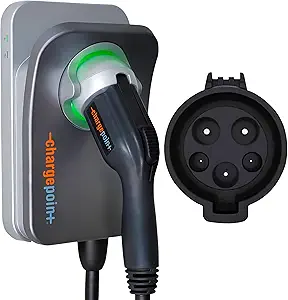 | ChargePoint HomeFlex Level 2 EV Charger | Check Price On Amazon |
Pick 3  | Level 2 EV Charger 40A J1772 Wall Charger | Check Price On Amazon |
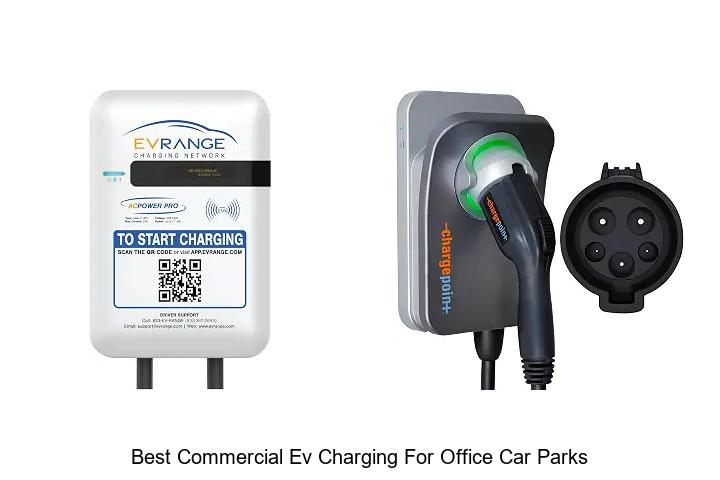
1. EV Range Commercial EV Charging Station
Commercial sites that want charging revenue will find a strong fit here. EV Range pairs revenue control with access management and networked billing tools.
The charger supports custom pricing and idle fees, plus monthly payout reporting. It works for hotels, retail, restaurants, workplaces, apartments, resorts, and fleet sites. Access can be controlled with RFID or app-based authorization.
The unit uses a J1772 connector with a 25-foot cable, which suits most plug-in hybrids and electric vehicles. Tesla drivers can use adapters supplied with their vehicles.
Its polycarbonate NEMA 4 enclosure adds IK10 impact resistance for harsh weather and demanding locations. Wall or pedestal mounting is available, though the pedestal is not included.
Network support through EV Range adds app payments, usage tracking, and private fleet options.
Pros
- Supports paid charging with custom pricing and idle fees
- RFID and app access help manage public or fleet use
- NEMA 4 enclosure suits demanding outdoor environments
Cons
- Pedestal mounting hardware is not included
- Single port limits charging throughput at busy sites
- Tesla drivers need a separate adapter
Who Should Buy It?
Property managers, fleet operators, and business owners should consider it. It suits offices, hotels, apartments, and retail car parks that want charging revenue and controlled access. Sites needing app payments, monthly usage reports, and RFID authorization will benefit most.
It also fits locations facing weather exposure, since the enclosure is rated for demanding outdoor conditions.
Key Specifications
| Specification | Details |
|---|---|
| Power Output | Compatible with Level 2 and DC Fast Charging |
| Current Rating | 32 A |
| Connector Type | J1772 |
| Number of Ports | 1 |
| Installation Type | Wall or pedestal mountable |
| Smart Connectivity | OCPP-compliant; EV Range app; network ready |
| Access Control | RFID and app access |
| Certification | Energy Star, UL |
| Cable Length | 25 feet |
| Compatibility | All plug-in hybrid and electric vehicles; Tesla with adapter |
The 32-amp output and 240-volt input suit commercial charging setups. J1772 compatibility covers most plug-in hybrids and electric vehicles without special hardware. A 25-foot cable gives drivers extra reach in tighter parking layouts. One port keeps the unit simple for assigned spaces or lower-traffic locations. Wall mounting works well for garages, while pedestal mounting suits open car parks. The Energy Star and UL listings add confidence for workplace and public deployment.
Smart features matter here as much as electrical specs. OCPP compliance helps the charger fit into broader network systems and billing workflows. EV Range software supports app payments, usage reports, and monthly revenue deposits. RFID access helps separate public charging from private fleet use. The NEMA 4 enclosure and IK10 impact resistance help protect the unit in harsh weather and busy areas. These details suit offices, mixed-use properties, and managed parking sites.
2. ChargePoint HomeFlex Level 2 EV Charger
Reliable charging starts with strong network support and simple control. ChargePoint HomeFlex brings smart, hardwired Level 2 charging to office parking setups. It suits workplaces that want dependable daily charging for non-Tesla EVs.
The charger uses a J1772 connector and supports indoor or outdoor installation. Its 23-foot cable offers flexible reach across parking spaces. The ChargePoint Mobile App adds scheduling, reminders, charging data, and station access.
WiFi is needed for certain app functions and troubleshooting. The UL-certified build adds confidence for shared parking environments.
It delivers up to 45 miles of range per hour. That makes it useful for employees topping up during the workday.
Adjustable amperage and Energy Star certification add practical value. It fits businesses wanting connected charging with familiar controls and broad network support.
Pros
- Reliable smart app control and charging data
- Hardwired design suits fixed workplace installations
- Indoor or outdoor use with cold-resistant cable
Cons
- WiFi is needed for some features
- Requires professional hardwired installation
- Tesla drivers need an adapter
Who Should Buy It?
Office managers and property owners should consider this charger. It suits workplaces needing dependable Level 2 charging for non-Tesla employees and visitors. The smart app controls, hardwired setup, and indoor or outdoor rating work well for fixed parking areas.
It also fits sites that value charging data, reminders, and flexible amperage control.
Key Specifications
| Specification | Details |
|---|---|
| Power Output | 240 volts AC |
| Current Rating | 50 A |
| Connector Type | Hardwired (J1772)-Non Tesla |
| Number of Ports | 1 |
| Installation Type | Hardwired |
| Smart Connectivity | WiFi, ChargePoint Mobile App |
| Certification | UL-certified, Energy Star |
| Cable Length | 23 ft |
| Compatibility | All non-Tesla EVs; Tesla with adapter |
The charger runs on 240 volts AC and a 50 amp rating. That combination supports Level 2 charging for daily workplace use. The hardwired J1772 connector works with most non-Tesla electric vehicles. A single port keeps the unit straightforward for assigned parking spaces. The 23-foot cable gives drivers room to park without awkward positioning. WiFi and the ChargePoint app add remote control, reminders, and charging information.
These specifications suit office car parks that need fixed, connected charging points. UL certification and Energy Star alignment support a safer, more efficient installation profile. The hardwired setup fits planned electrical work better than portable charging. Indoor and outdoor placement gives facilities flexibility across garages and open lots. Drivers with non-Tesla EVs benefit most, while Tesla owners can still use an adapter. Adjustable amperage can help match site electrical limits.
3. Level 2 EV Charger 40A J1772 Wall Charger
Low-cost entry charging starts with a simple plug-in setup and wide EV compatibility. The 40A output and 25-foot cable make everyday parking easier for office lots.
The charger uses a J1772 connector, which works with most North American EVs and plug-in hybrids. Tesla drivers need a separate adapter, which is not included.
The NEMA 14-50 plug allows quick installation on a matching 50A circuit breaker, without hardwiring. Built-in GFCI protection adds an extra safety layer, while ETL listing to UL-2594 and CSA-C22.2 No.
280 supports safety confidence. Its IP65 rating suits indoor and outdoor use. The metal case and rubberized handle add durability for frequent daily charging.
With 9.6kW output, it offers practical level 2 charging for workplace parking needs. The long cable helps reach vehicles in varied stall layouts, which suits shared office spaces well.
Pros
- Low entry setup with plug-in installation
- Long 25-foot cable reaches awkward parking spots
- Compatible with most North American EVs
Cons
- Needs a matching 14-50 outlet
- Tesla needs a separate adapter
- Not a multi-port charging solution
Who Should Buy It?
Office managers and property owners wanting simple level 2 charging should consider this unit. It fits sites that already have a compatible 14-50 outlet and want quick setup without hardwiring. The long cable helps in mixed parking layouts, while the J1772 connector supports many common EVs.
It suits smaller shared lots, fleet overflow areas, and basic workplace charging programs.
Key Specifications
| Specification | Details |
|---|---|
| Power Output | 9.6kW |
| Current Rating | 40A |
| Connector Type | J1772 |
| Number of Ports | 1 |
| Installation Type | Plug-in |
| Smart Connectivity | None listed |
| Access Control | None listed |
| Certification | ETL listed to UL-2594 / CSA-C22.2 No. 280 |
| Cable Length | 25FT |
| Compatibility | Most North American EVs and plug-in hybrids |
A 9.6kW output and 40A rating place this charger in level 2 territory. In daily office use, that means a faster charge than a standard outlet can provide. The J1772 connector fits many common EVs and plug-in hybrids sold in North America. A single port keeps the setup simple. The 25-foot cable adds reach, which helps when parking spaces are uneven or the outlet sits off to one side.
The plug-in installation uses a NEMA 14-50 connection, so setup stays simple when the outlet already exists. That can help office sites avoid hardwiring work. ETL listing to UL-2594 and CSA-C22.2 No. 280 supports safety requirements for shared parking areas. IP65 protection helps the unit handle indoor or outdoor placement. A metal case and rubberized handle support frequent use, while the long cable benefits drivers parking farther from the outlet.
4. Grizzl-E Ultimate EV Charger

Heavy-duty charging meets high-capacity performance in a form built for demanding sites. Grizzl-E Ultimate brings 80 amps and 19.2 kW output for fast Level 2 charging.
It uses a metal enclosure rated for indoor and outdoor use, so it suits exposed office car parks well. The hardwired design keeps installation fixed and tidy, while the included hardware helps with setup.
Wi-Fi connectivity adds charging schedules, usage statistics, diagnostics, and real-time monitoring. It also works without an online connection, which helps during network interruptions.
Adjustable amperage lets installers match circuit capacity, from 16 to 80 amps. That flexibility makes it easier to fit different electrical setups. The charger supports all EVs and PHEVs sold in North America.
Built-in protections cover faults, overloads, and temperature issues. For sites needing durable hardware and smart management, it offers strong everyday value.
Pros
- High 80A output suits busy charging demand
- Metal enclosure handles outdoor office car park conditions
- Smart load balancing helps manage multiple chargers
Cons
- Hardwired installation needs professional electrical work
- Single-port design serves one vehicle at a time
- Wi-Fi features depend on network setup
Who Should Buy It?
Office car parks with heavy daily charging demand should shortlist this charger. It suits locations needing durable outdoor hardware, adjustable amperage, and smart monitoring. Facilities managers who want a fixed, hardwired unit will appreciate the installation style.
It also fits mixed EV fleets, since it supports all North American EVs and PHEVs. Buyers needing one reliable charger for harsh conditions will find it appealing.
Key Specifications
| Specification | Details |
|---|---|
| Power Output | 19.2 kW |
| Current Rating | 80 A |
| Connector Type | J1772 |
| Number of Ports | 1 |
| Installation Type | Hardwired |
| Smart Connectivity | Wi-Fi connected |
| Access Control | No access control data provided |
| Certification | UL Tested and Certified |
| Cable Length | 25 ft |
| Compatibility | All EVs and PHEVs sold in North America |
The charger delivers 19.2 kW through an 80-amp circuit rating. In daily use, that means faster Level 2 charging for drivers who need a quicker turnaround. The 25-foot cable gives extra reach across larger parking spaces. Its J1772 connector works with most North American EVs and plug-in hybrids. The hardwired setup keeps the unit fixed in place. For office car parks, that setup supports regular use and reduces cable clutter around the bay.
Wi-Fi connectivity adds schedules, charging data, and remote diagnostics. Those tools help site managers track energy use and plan charging around office hours. The unit also works without an online connection, which helps during network drops. UL certification and built-in protections add confidence for long-term outdoor use. Adjustable amperage supports different breaker sizes, so installers can match the electrical supply more easily. Fleet-heavy offices and managed parking sites benefit most from that flexibility.
5. ELEGRP Level 2 EV Charger 40Amp

Portable charging gets a strong practical edge here, especially for office car parks with flexible power needs. The ELEGRP Level 2 EV Charger 40Amp brings adjustable output, long reach, and outdoor-ready design into one simple package.
It delivers up to 9.6 kW through a NEMA 14-50 plug, which suits locations already equipped with compatible 240V outlets. Five current levels and a timed delay help match charging to available capacity and off-peak hours.
The charger uses a 25-foot cable, giving drivers more freedom to park without exact alignment near the outlet. Its ETL certification and ELEGRP PBE protection add safety-focused features, including overheat protection and a triple-layer system.
The IP67 rating supports indoor and outdoor use in rain, snow, and extreme temperatures. Universal compatibility covers many EVs and plug-in hybrids, while Tesla drivers can use a separate NACS adapter.
It suits offices wanting portable charging without fixed installation.
Pros
- Portable design suits shared office parking spaces
- Adjustable current levels help match outlet capacity
- Long 25-foot cable improves parking flexibility
Cons
- Needs a compatible 240V outlet
- Tesla needs a separate adapter
- No built-in access control or app features
Who Should Buy It?
Office managers and drivers who need portable Level 2 charging should consider it. It works well where a compatible 240V outlet already exists and fixed installation is not practical. The adjustable current settings help fit different electrical limits, while the long cable supports varied parking positions.
It suits mixed EV fleets, travel use, and budget-conscious sites that want simple charging without complex setup.
Key Specifications
| Specification | Details |
|---|---|
| Power Output | Up to 9.6 kW |
| Current Rating | 40A |
| Connector Type | J1772 |
| Number of Ports | 1 |
| Installation Type | Portable |
| Certification | ETL Certified |
| Cable Length | 25 FT |
| Compatibility | Mercedes, Chevy, Ford, Mustang Mach-E, Cadillac, Hyundai Ioniq, Kia EV6/EV9, Nissan Leaf, Chevy Bolt, Chrysler Pacifica Hybrid, all PHEV/BEV, Tesla with NACS adapter |
Up to 9.6 kW gives drivers faster charging than Level 1 units. The 40A rating and five current levels let users match available power more closely. A J1772 connector works with many non-Tesla EVs and plug-in hybrids. The single-port setup keeps the unit simple for one vehicle at a time. Because it is portable, it can move between outlets and locations without fixed mounting, which helps offices using shared parking spaces.
The 25-foot cable gives extra reach across wider parking stalls or garages. ETL certification adds a recognized safety marker for everyday use. IP67 protection supports use outdoors in rain, snow, and temperature swings. Compatibility covers many popular electric and plug-in hybrid models, while Tesla drivers need a separate adapter. These features suit workplaces that want flexible charging for employees, visitors, or fleet vehicles without committing to a permanent installation.
6. EMPORIA Level 2 EV Charger with J1772 Connector

Office parking lots need charging that feels dependable every day. Emporia’s Level 2 charger brings fast hardwired charging with smart controls.
Built for workplace settings, it combines a 48 amp output with WiFi features and a long cable. The unit supports up to 46 miles per hour charging through a hardwired connection. That speed helps employees top up during a workday.
The 25 foot cable gives flexible reach across varied parking layouts. The included J1772 connector works with many North American EVs.
Compatible models include Chevrolet Bolt, Ford Mustang Mach-E, Nissan Leaf, and Hyundai vehicles. It also supports BMW, Audi, Jeep Wrangler 4xe, and more. WiFi connectivity lets users view energy data and schedule sessions from a phone.
That helps office teams manage charging during lower utility rate periods. UL listing and ENERGY STAR certification add confidence for shared workplace use. Hardwired installation with whip suits permanent setups and cleaner cable management.
The white finish and included wall mount, holster, and hardware keep installation tidy. It suits offices wanting a balanced mix of speed, control, and broad compatibility.
Pros
- Fast 48 amp charging for workplace top-ups
- WiFi control with energy data and scheduling
- Long 25 foot cable reaches varied parking spots
Cons
- Hardwired installation needs professional setup
- J1772 connector excludes native NACS-only vehicles
- Single port serves one vehicle at a time
Who Should Buy It?
Buyers wanting a workplace charger with strong speed and smart scheduling should consider it. It fits offices that need broad J1772 compatibility, clear energy monitoring, and a fixed hardwired setup. The long cable also helps in car parks with awkward stall spacing.
It suits managers who want a practical shared charger for daily employee use.
Key Specifications
| Specification | Details |
|---|---|
| Power Output | 48 amp |
| Current Rating | 48 A |
| Connector Type | J1772 |
| Number of Ports | 1 |
| Installation Type | Hardwired with whip |
| Smart Connectivity | 2.4 GHz WiFi |
| Access Control | Mobile device management and scheduled charging |
| Certification | UL listed, ENERGY STAR certified |
| Cable Length | 25 ft |
| Compatibility | North American EVs with J1772 charge port |
The charger delivers 48 amps at 240 volts for Level 2 charging. That means faster charging than a standard wall outlet. The 25 foot cable helps reach cars in wider office bays. A single J1772 connector supports many common electric vehicles in North America. The hardwired design with whip suits fixed workplace installations. UL listing and ENERGY STAR certification add confidence for shared parking areas and regular daily use.
Smart WiFi connectivity links the charger to a mobile device on 2.4 GHz networks. That allows real-time energy tracking and charging schedules for workday timing. Scheduled charging can help offices line up charging with lower utility periods. The one-port design keeps operation simple for individual parking stalls. Employees with compatible EVs get quick access, while managers get clearer control. The included wall mount and holster also support tidy cable storage.
7. Autel Level 2 EV Charger 50A J1772

Fast charging matters in busy office car parks, and Autel brings strong output to the table. Its smart controls and weather-ready design suit daily workplace use. Built for 50A charging at 12kW, this J1772 charger adds up to 37 miles per hour.
That makes it useful for employees topping up during the workday. The hardwired setup supports a tidy installation, while WiFi, Bluetooth, and Ethernet add flexible control. Through the Autel Charge app, users can schedule charging and shift loads to off-peak hours.
The 25-foot cable gives helpful reach across parking spaces. Its NEMA Type 4 rating suits indoor or outdoor mounting, and CSA certification adds confidence. Safety protections cover fire resistance, over current, over voltage, and over temperature.
For offices wanting smart, high-power charging for one vehicle, it fits well.
Pros
- High 12kW output supports faster workplace charging.
- Smart app scheduling helps manage charging times.
- Weather-rated design suits indoor and outdoor use.
Cons
- Single-port design serves one vehicle at a time.
- Requires hardwired installation by an electrician.
- No built-in access control features listed.
Who Should Buy It?
Office managers and property owners should buy it for one dedicated parking space. It suits workplaces that want fast charging, smart scheduling, and weather-ready hardware. The single-port design works well for reserved spots, fleet overflow, or management parking.
It is a good match for sites that can support hardwired installation and want app-based charging control for one EV.
Key Specifications
| Specification | Details |
|---|---|
| Power Output | 12kW |
| Current Rating | 50 A |
| Connector Type | J1772 |
| Number of Ports | 1 |
| Installation Type | Hardwired |
| Smart Connectivity | WiFi, Bluetooth, Ethernet |
| Certification | CSA, NEMA Type 4 |
| Cable Length | 25 feet |
| Compatibility | Electric Vehicles and Hybrid Plug-in |
The charger delivers 12kW power at 50 amps for faster daily top-ups. Its J1772 connector works with many electric vehicles and plug-in hybrids. A single port means one car charges at a time. The 25-foot cable gives extra reach across wider parking bays. Hardwired installation suits permanent workplace setups better than portable units. WiFi, Bluetooth, and Ethernet support app-based control for scheduling charging around office hours. That combination fits sites that want one reliable parking-space charger.
NEMA Type 4 protection helps the unit handle rain, snow, hail, and sleet. CSA certification adds another layer of installation confidence. The 25-foot cable stays flexible in cold weather down to -40℃. That helps when offices have exposed outdoor parking. Smart app features let users set charge times and use off-peak electricity periods. The unit works best for workplaces with one assigned space, since it has one port and a fixed hardwired setup.
8. Level 2 EV Charger for Tesla

Fleet parking gets a focused charging solution here, built for Tesla-only spaces. The charger targets office car parks that want controlled, fast overnight or workday charging. IYILO rates it at up to 48A and 11.5kW, with hardwired installation and a 60A breaker requirement.
Current adjusts in 1A steps, giving managers flexible control over site power use. The NACS connector includes temperature monitoring, with live readings in the app. If heat rises too far, charging power drops or stops automatically.
That adds a useful layer of protection for repeated daily use.
The charger also supports utility charging programs, which may help sites access local incentives. Smart app tools let users set scheduled charging, track energy use, and view charging costs. Power sharing and dynamic load balancing suit shared parking setups with many vehicles.
The unit carries UL 2594, ETL, Energy Star, CA ETL, and FCC wireless certification. Build details point to a practical wall-mounted unit with RFID cards for access control.
It suits offices with Tesla drivers, dedicated parking, and a need for predictable charging management.
Pros
- Fast 48A charging for Tesla vehicles
- Temperature sensor adds connector protection
- App supports scheduling and energy tracking
Cons
- Tesla-only connector limits vehicle compatibility
- Hardwired setup needs licensed electrician
- Single port suits one vehicle at a time
Who Should Buy It?
Office sites with dedicated Tesla parking should consider this charger. It suits workplaces that want controlled charging, app-based scheduling, and clear energy tracking for staff or fleet use. Facilities with professional electrical support will get the most value from its hardwired design and load management features.
It is a better fit for Tesla-dominant parking areas than mixed-brand office lots.
Key Specifications
| Specification | Details |
|---|---|
| Power Output | 11.5 kW |
| Current Rating | 48A |
| Connector Type | NACS (Tesla-style) |
| Number of Ports | 1 |
| Installation Type | Hardwired |
| Smart Connectivity | WiFi Smart App |
| Access Control | RFID Cards |
| Certification | UL 2594, ETL, Energy Star, CA ETL, FCC Wireless Certification |
| Compatibility | Tesla vehicles with NACS connector |
The charger delivers 11.5 kW at up to 48 amps. In daily office use, that means faster replenishing between meetings or during a work shift. The NACS connector fits Tesla vehicles, so parking bays can stay dedicated to one brand. Current can be adjusted from 6A to 48A in 1A steps. That gives facility managers more control over how much power each charging session uses during busy hours.
Hardwired installation suits fixed office parking spaces with planned electrical work. The 60A breaker requirement and licensed electrician need make setup less casual, yet more stable for regular use. WiFi app control, scheduled charging, and energy tracking help manage usage across employees or vehicles. RFID cards add access control for shared parking. The connector temperature sensor and automatic power reduction add practical protection for high-frequency charging sites.
9. Level 2 Fast EV Charger 50A 240V J1772 Cable

Ultra-budget fleets still need fast charging, and this portable Level 2 unit brings strong output. Its adjustable current settings make it flexible for different electrical setups and daily use. Delivering up to 11.5kW, it can add about 45 miles of range per hour.
That makes it far faster than a standard 110V charger. The J1772 connector works with many North American EVs and hybrids.
Tesla drivers can use an adapter, though one is not included. ETL and FCC certification add confidence for indoor and outdoor operation.
The IP54 housing and flame-retardant build suit varied weather and busy parking areas. Ten layers of safety protection cover overvoltage, overcurrent, overcharge, overheating, and leakage.
A 25-foot cable helps reach parked vehicles without awkward positioning. It suits offices wanting simple, portable charging on a tight budget.
Pros
- Very fast 11.5kW output for a portable charger
- Five current settings support different electrical setups
- Long 25-foot cable improves parking reach
Cons
- Tesla needs a separate adapter
- Single-port charging only
- Portable design may suit fewer fixed installations
Who Should Buy It?
Buyers who need a low-cost Level 2 charger for a small office car park may like this unit. It suits mixed EV and hybrid parking, especially where J1772 compatibility matters. The adjustable current settings help match available power, while the 25-foot cable adds flexibility.
It works best for light-duty shared charging, not heavy multi-vehicle rotation.
Key Specifications
| Specification | Details |
|---|---|
| Power Output | 11.5kW |
| Current Rating | 50 A |
| Connector Type | J1772 |
| Number of Ports | 1 |
| Installation Type | Portable |
| Certification | ETL, FCC |
| Cable Length | 25 FT |
| Compatibility | All major North American electric and hybrid vehicles with SAE J1772; Tesla requires adapter |
The charger delivers 11.5kW at 240 volts, which suits faster daily top-ups. A 50 amp rating gives strong charging capacity for compatible electrical circuits. The J1772 connector works with many North American electric and hybrid vehicles. One port keeps the unit simple and direct for shared parking use. A portable installation style means it can move between locations easily. The 25-foot cable helps reach vehicles parked at different angles or distances.
ETL and FCC certification give added confidence for indoor and outdoor use. The 25-foot cable helps drivers park without tight positioning near the outlet. Adjustable current settings from 16A to 50A help match available power safely. That flexibility benefits offices with different circuits or mixed parking needs. The single-port design suits one vehicle at a time. Drivers with J1772 vehicles get broad compatibility, while Tesla owners need an adapter.
10. Autel MaxiCharger Level 2 EV Charger

Cloud-managed charging makes this unit stand out for office parking lots. Autel pairs remote control with AI-driven scheduling for daily fleet use.
It can start or stop sessions remotely and adjust current levels. Real-time energy data helps managers track usage and spot issues quickly.
The charger delivers up to 19.2 kW at 80 amps. That output suits busy workplaces with long dwell times and rotating drivers. Hardwired installation supports dependable power delivery and a cleaner site layout.
Dual-network Wi-Fi and Wi-SUN help keep the station online. Tamper-resistant screws and remote locking add useful access protection. The flame-retardant enclosure and temperature monitoring support daily outdoor use.
It works with all North American EVs and PHEVs using J1772. For office car parks needing oversight, it offers strong remote management tools.
Pros
- Cloud control supports remote charging management
- High 80 amp output suits busy sites
- Dual-network connectivity helps maintain uptime
Cons
- Requires hardwired installation by an electrician
- Single port limits simultaneous charging
- Full output needs a 100A circuit
Who Should Buy It?
Office managers, property operators, and workplace fleets should buy it. It suits sites that need remote control, usage tracking, and access management. The high output helps drivers charge during work hours or between visits.
It also fits locations wanting a hardwired station with strong connectivity and tamper protection. Commercial settings with mixed EV and PHEV parking can use it easily.
Key Specifications
| Specification | Details |
|---|---|
| Power Output | Up to 19.2 kW |
| Current Rating | 80 A |
| Connector Type | SAE J1772 |
| Number of Ports | 1 |
| Installation Type | Hardwired |
| Smart Connectivity | Integrated Cloud, AI app control, Wi-Fi, Wi-SUN |
| Access Control | Remote locking, tamper-resistant screws |
| Certification | CSA, UL |
| Compatibility | All EVs and PHEVs in North America |
The charger delivers up to 19.2 kW at 80 amps. That level suits workplace charging with longer parking periods. The SAE J1772 connector works with most North American EVs and PHEVs. One port keeps the unit simple for assigned spaces or controlled access areas. Hardwired installation supports steady power delivery and reduces plug handling. Cloud and app controls let managers start sessions, stop sessions, and change current remotely.
Wi-Fi and Wi-SUN support help the charger stay connected for daily use. Dual-network coverage helps managers monitor charging activity and receive alerts. Remote locking and tamper-resistant screws add access control for shared parking areas. CSA and UL certification support a fit for structured installations. The hardwired design and temperature monitoring suit outdoor or indoor workplace setups. Sites with frequent drivers benefit most from the remote management and usage visibility.
Best Commercial EV Charging for Office Car Parks: A Smart Buyer’s Guide
Charging capacity and port count
Charging systems for office car parks need to match both today’s fleet and future demand, because an underpowered setup can create long queues, unhappy employees, and costly retrofits later. The number of vehicles a site must support should guide the overall unit count and layout, while the power output delivered by each charger determines how quickly drivers can get back on the road. It also matters to balance peak and off-peak charging demand, since most cars may arrive at the same time in the morning but can often charge more flexibly during quieter periods.
Planning for these three factors together helps an office car park avoid bottlenecks, use available electrical capacity efficiently, and stay ready for growth without disrupting daily operations.
Installation requirements
A charging network in an office car park depends on more than the charger itself, because the available electrical supply, the site layout, and the civil works all determine how practical and cost-effective the installation will be. Available electrical supply matters first: the building’s electrical capacity, distribution board space, and load management options decide how many units can run at once without overloading the system or forcing expensive upgrades. Site layout and parking space access are just as important, since cable reach, vehicle turning room, pedestrian routes, and bay positioning affect ease of use and safety for employees and visitors.
Site layout and parking space access are just as important, since cable reach, vehicle turning room, pedestrian routes, and bay positioning affect ease of use and safety for employees and visitors. Civil works and mounting needs can also influence the project significantly, as trenching, resurfacing, bollard protection, wall support, and weatherproof foundations may be required to ensure the equipment is secure, compliant, and built to last.
Smart charging features
Smart charging features play a major role in keeping office car park installations efficient, secure, and ready for future demand. A charging system with load balancing can distribute power across multiple vehicles without overloading the site’s electrical capacity, helping reduce costly upgrades and avoiding disruptions during busy periods.
Remote monitoring and reporting add another layer of value by giving facility managers real-time visibility into charger status, energy use, fault alerts, and session history, which makes maintenance easier and supports better planning over time. Together, these capabilities help create a charging setup that is efficient today and flexible enough to adapt as workplace EV demand grows.
Compatibility and connector types
Office car parks serve a wide mix of vehicles, so charging hardware needs to handle today’s cars and tomorrow’s arrivals without constant upgrades. AC units are often the practical fit for daytime parking because they deliver steady power over longer stays, while DC chargers are better suited to drivers who need a much faster top-up. It also helps to confirm support for the main vehicle connector standards used across your fleet, since a station that works seamlessly with common plug types reduces delays and avoids the need for extra adapters.
Futureproofing matters just as much, especially where staff, visitors, and company vehicles may all use different models over time. A well-planned setup should make it easy to add more charge points, balance demand across multiple bays, and adapt to newer vehicles as they enter the car park.
- AC vs DC: AC suits longer workplace stays, while DC delivers faster turnaround.
- Connector standards: Broad compatibility helps serve more vehicle makes and models.
- Mixed fleets: Flexible infrastructure supports a changing range of employee and visitor vehicles.
Costs and ongoing expenses
Reliable charging infrastructure for office car parks depends on the ability to connect with energy management platforms, access control systems, and future network upgrades, because these features directly affect how easily the equipment can scale as staff demand grows. A unit with strong networking options can support remote monitoring, usage reporting, and load balancing, which helps control operating costs and reduces the risk of service interruptions. It is also worth factoring in room for additional ports, modular hardware, and compatibility with newer standards, since a system that can grow with the site is usually more cost-effective than replacing the entire setup later.
It is also worth factoring in room for additional ports, modular hardware, and compatibility with newer standards, since a system that can grow with the site is usually more cost-effective than replacing the entire setup later.
- Hardware and installation costs: Initial spend can vary widely depending on charger power rating, electrical upgrades, trenching, cable runs, and the number of bays served.
- Software subscription fees: Many networked units require monthly or annual platform fees for charge management, reporting, user controls, and remote diagnostics.
- Maintenance and support charges: Regular inspections, warranty extensions, repairs, and helpdesk access can add recurring expense over time, so these should be included in the total budget.
Safety, compliance, and durability
Verified charging hardware for office car parks can reduce installation risks, keep operations compliant, and minimize long-term downtime. Electrical safety certifications matter because they confirm the unit has been tested to recognized standards, helping protect vehicles, users, and the building’s power infrastructure.
Weather resistance and vandal protection are equally important in shared parking areas, where equipment is exposed to rain, dust, temperature swings, and potential damage from heavy daily use. Strong enclosures, impact-resistant materials, and suitable ingress protection ratings all help extend service life in demanding environments. Warranty coverage and service support should not be overlooked, since fast access to parts, remote diagnostics, and responsive maintenance can prevent minor faults from becoming costly disruptions.
A well-supported charger is easier to keep running reliably, which is especially valuable in offices where employees and visitors expect consistent availability.
Setting Up Office Car Park Chargers
Commercial EV charging for office car parks works best when the setup matches how people actually park and work. A good plan starts with the number of bays, the length of stay, and how many drivers may need power at the same time.
Begin with a site check. The installer will usually review your supply, switchgear, cable routes, and parking layout. This helps decide whether you need a few chargers for steady use or a larger system with load balancing across many bays.
For office sites, smart charging can make a big difference. It lets the system share available power between cars, so you can support more vehicles without overloading the building supply. This is helpful when several staff members plug in during the morning and leave later in the day.
Access control also matters. RFID cards, app login, or simple user codes can limit use to staff and visitors. If the car park is shared, clear signs and marked bays help keep charging spaces free for EVs that need them.
Good placement improves day-to-day use. Put chargers where cables can reach easily and where cars can park without awkward angles. Wall-mounted units suit many office car parks, while pedestal units work well in open parking areas.
For the best results, think ahead about growth. Many businesses start with a smaller install and add more units later. Choosing a system that can expand can save time and cost later on.
- Check power capacity before ordering
- Plan for future staff EV demand
- Use smart load sharing where possible
- Set clear rules for charger use
- Keep charging bays easy to access
A well-planned setup makes charging simpler for drivers and easier to manage for facilities teams. It also helps the business get better use from each charger across the working day.
FAQ’s
What Are The Key Features To Look For In The Best Commercial Ev Charging Systems For Office Car Parks?
The best commercial EV charging systems for office car parks should offer fast, reliable charging, smart load management, and easy payment or access control. They should also be scalable, cloud-connected for monitoring and reporting, and built with strong safety and durability features.
How Much Does It Cost To Install Commercial Ev Charging Stations In An Office Car Park?
Commercial EV charging station installation in an office car park typically costs about **$3,000 to $10,000 per charger**, depending on electrical upgrades, trenching, and the type of charger. Larger projects with multiple units and major infrastructure work can cost **much more**.
Which Ev Charging Options Are Best For High-Traffic Office Parking Lots?
For high-traffic office parking lots, Level 2 chargers are usually the best option because they balance charging speed, cost, and the ability to serve many employees throughout the day. If turnover is very high or you need rapid top-ups, add a few DC fast chargers for short-stay users.
How Can Office Car Park Ev Chargers Be Managed And Monitored Efficiently?
Office car park EV chargers can be managed efficiently with a central charging management platform that schedules usage, balances load, and controls access for employees and visitors. They can be monitored in real time through connected software that tracks energy use, charger status, session history, and alerts for faults or maintenance needs.
What Incentives Or Grants Are Available For Commercial Ev Charging Installations In Office Car Parks?
Available incentives often include federal, state, and local grants, tax credits, and utility rebates that help offset the cost of installing commercial EV chargers in office car parks. Some programs also offer support for electrical upgrades, demand management equipment, and workplace charging infrastructure.
Final Verdict
For offices that want the best commercial ev charging for office car parks, EV Range Commercial EV Charging Station is the strongest overall pick, especially if revenue charging and paid access matter most. It suits sites that want a commercial-first setup for employees, visitors, or shared parking spaces.
ChargePoint HomeFlex Level 2 EV Charger is the best value choice for dependable smart charging at a lower cost, making it a practical fit for smaller office car parks or budget-minded installs. Autel MaxiCharger Level 2 EV Charger is the best premium option for teams that want cloud-managed charging and more control across multiple bays. For Tesla-only parking areas or fleets built around Tesla vehicles, the Level 2 EV Charger for Tesla is the most direct fit.
Choose EV Range for revenue-focused offices, ChargePoint for value, Autel for premium cloud control, or Tesla-specific units for Tesla-only parking.