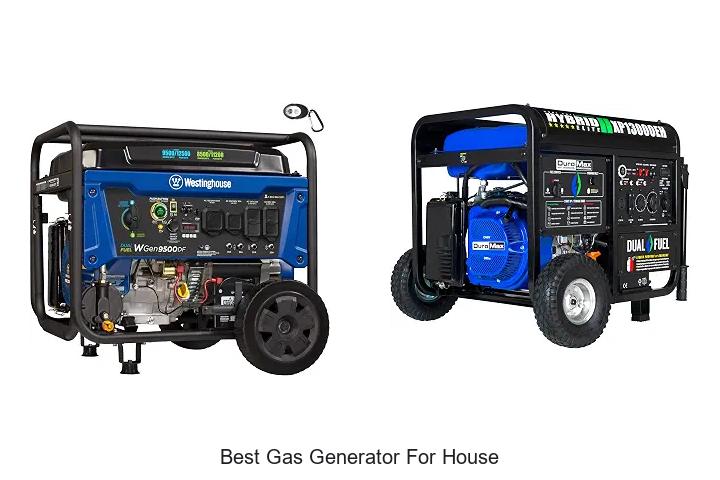
10 Best Gas Generator for House: Best Models Compared Side by Side
Power outages can disrupt daily life fast. Food can spoil, lights go out, and basic home tasks become hard. A reliable backup power source helps keep a house running when the grid fails.
A reliable backup power source helps keep a house running when the grid fails. That is why many homeowners search for the best gas generator for house use. The right model can support key appliances, offer steady power, and fit the needs of a small or large home.
It also matters for anyone who wants backup power for storms, outages, or remote living. This review is for homeowners who want a practical and dependable option. It will also help buyers who want a generator that is easier to use and maintain than some other types.
It will also help buyers who want a generator that is easier to use and maintain than some other types. You will see the main features, power output, fuel use, noise level, and overall value.
Best Gas Generators for Home Backup Power
| Image | Product | Price |
|---|---|---|
Pick 1  | Westinghouse 12500 Watt Dual Fuel Portable Generator | Check Price On Amazon |
Pick 2  | DuroMax XP13000EH Dual Fuel Portable Generator | Check Price On Amazon |
Pick 3  | Westinghouse 12500 Peak Watt Tri-Fuel Generator | Check Price On Amazon |
1. Westinghouse 12500 Watt Dual Fuel Portable Generator
Power outages feel less disruptive when a generator can cover major household loads. Dual fuel support and remote starting make this model especially practical for home backup. It delivers 9500 running watts on gasoline and 8500 running watts on propane, with transfer switch ready outlets for easier home connection.
The 457cc four-stroke OHV engine uses a cast iron sleeve for added durability. Rubber outlet covers, GFCI receptacles, and automatic low oil shutdown add useful safety touches. The VFT display shows voltage, frequency, and lifetime hours in real time.
It also includes electric and recoil start, plus a key fob for remote operation. A 6.6-gallon tank supports up to 12 hours of runtime. The included oil, funnel, charger, and tool kit help simplify setup.
It suits homeowners wanting strong whole-home backup capability and flexible fuel options.
Pros
- High running wattage for household backup
- Dual fuel operation adds flexibility
- Remote start and transfer switch ready
Cons
- Heavy at 210 pounds
- Open-frame design is less quiet
- Requires space for storage and operation
Who Should Buy It?
Buyers who need strong backup power for a house should consider it. It suits homeowners wanting dual fuel flexibility, transfer switch readiness, and remote starting. The high wattage output can support many essential appliances during outages.
It also fits users who want clear status readings and included starter accessories. Large properties and families with frequent outage concerns may benefit most.
Key Specifications
| Specification | Details |
|---|---|
| Brand | Westinghouse |
| Wattage | 12500 watts |
| Output Wattage | 9500 watts |
| Fuel Type | Gasoline, Propane |
| Voltage | 120 volts |
| Recommended Uses | Residential |
| Item Weight | 210 pounds |
| Special Feature | Automatic Voltage Regulation, Dual Fuel, Electric Start, Fuel Gauge, Hour Meter |
| Included Components | Battery Charger, Engine Oil & Funnel, Key FOB, Owner’s Manual, Propane Hose, Quick-Start Guide, Warranty Battery Charger, Engine Oil & Funnel, Key FOB |
| Runtime | 12 hours |
The 12500-watt starting output gives extra power for startup surges. Its 9500-watt running output supports steady household demand during outages. The 120-volt output and 50-amp current rating fit residential backup needs. Gasoline and propane fuel options add flexibility when one fuel source is limited. A 6.6-gallon tank supports longer use between refills. The hour meter and fuel gauge help track usage and planning during extended outages.
The 457cc four-stroke OHV engine provides the muscle behind the power output. Cast iron sleeve construction supports long-term durability under regular use. Automatic voltage regulation helps keep output more stable for connected devices. GFCI outlets and rubber covers add practical safety for home setups. Remote start, electric start, and recoil start give multiple ways to begin operation. Homeowners using a transfer switch or RV-ready connection gain easier setup and wider appliance support.
2. DuroMax XP13000EH Dual Fuel Portable Generator
Power outages call for serious backup, and this generator brings plenty of it. Dual fuel support and electric start make home backup easier to manage.
The DuroMax XP13000EH delivers 13,000 starting watts and 10,500 running watts for residential use. It can run on gasoline or propane, which adds flexibility during emergencies. The front-facing interface lets you switch fuel types in seconds.
A transfer switch-ready 50 amp outlet supports whole-home backup setups. The all-metal frame and power panel are built for hard use.
Copper windings help support longer service life. No-flat tires help move it across rough ground. At 234 pounds, it is heavy, but the wheel kit helps mobility.
It suits homeowners who want high power value and emergency-ready versatility.
Pros
- Dual fuel flexibility for gasoline or propane
- High output for whole-home backup needs
- Electric start and easy fuel switching
Cons
- Heavy at 234 pounds
- Only two power outlets
- Runtime is limited at three hours
Who Should Buy It?
Buy it if you want high-output backup power for a house. It suits homeowners needing whole-home support during outages, along with propane or gasoline flexibility. The electric start and transfer switch-ready outlet help simplify emergency use.
It also fits RV owners and jobsite users needing portable power.
Key Specifications
| Specification | Details |
|---|---|
| Brand | DuroMax |
| Wattage | 13000 watts |
| Output Wattage | 10500 watts |
| Fuel Type | Gasoline/Propane |
| Voltage | 240 volts |
| Recommended Uses | Residential |
| Item Weight | 234 pounds |
| Special Feature | CO Sensor, Dual Fuel, Electric Start, Foldable Handle, Hour Meter, Low Oil Shutdown, Portable |
| Included Components | XP13000EH Generator, Oil Funnel, Spark Plug Wrench, Tool Set, Wheel & Handle Kit, and Owner’s Manual |
| Runtime | 3 hours |
The 13,000-watt starting output and 10,500-watt running output show serious backup capacity. It runs at 240 volts, which suits home circuits and transfer switch setups. Dual fuel support means you can use gasoline or propane. That flexibility helps when one fuel is unavailable. The three-hour runtime points to short-term emergency coverage. It is built for residential use, so the setup targets household backup rather than light camping duties.
A 234-pound frame makes this generator a heavy machine, yet the wheel and handle kit help movement. The foldable handle and no-flat tires support rolling it over uneven ground. Electric start and the front-facing fuel control simplify operation during outages. The CO sensor, low oil shutdown, and hour meter add useful monitoring features. Copper windings and the all-metal frame support durability for frequent use, which suits homeowners needing strong, portable emergency power.
3. Westinghouse 12500 Peak Watt Tri-Fuel Generator
Powerful home backup starts with flexible fuel options and straightforward starting. The Westinghouse 12500 Peak Watt Tri-Fuel Generator brings serious residential power with remote electric start. It runs on gasoline, propane, or natural gas, which adds real convenience during outages.
Gasoline output reaches 12500 peak watts and 9500 running watts. Propane and natural gas ratings stay strong for whole-home support. A 6.6-gallon tank can deliver up to 12 hours.
The heavy-duty 457cc engine includes a cast iron sleeve. Safety features include low oil shutdown and carbon monoxide shutdown.
The unit also includes GFCI household outlets, transfer switch readiness, and an RV outlet. Rubber outlet covers add another layer of protection.
Setup stays straightforward with included oil, funnel, charger, and remote key fob. It suits homeowners who want premium backup power and multiple fueling choices.
Pros
- Tri-fuel flexibility supports different backup fuel sources
- Remote electric start adds easy operation
- Transfer switch ready with useful household outlets
Cons
- Heavy unit at 215 pounds
- Open-frame design is less compact
- Fuel storage needs vary by fuel type
Who Should Buy It?
Homeowners wanting premium backup power should consider this generator. It fits households that need strong output for residential use, transfer switch readiness, and fuel flexibility during outages. The remote start, electric start, and included accessories make setup easier.
It also suits buyers who want natural gas, propane, or gasoline options in one machine.
Key Specifications
| Specification | Details |
|---|---|
| Brand | Westinghouse |
| Wattage | 12500 watts |
| Output Wattage | 9500 watts |
| Fuel Type | Natural Gas |
| Voltage | 240 volts |
| Recommended Uses | Residential |
| Item Weight | 215 pounds |
| Special Feature | Automatic Voltage Regulation, CO Sensor, Electric Start, Fuel Gauge, Hour Meter, Overload Protection, Tri-Fuel |
| Included Components | Assembly Wrench, Battery Charger, Engine Oil & Funnel, Key FOB, Owner’s Manual, Propane Hose, Quick-Start Guide |
| Runtime | 12 hours |
The 12500 peak watt rating describes strong startup power for home appliances. The 9500 running watt rating shows steady output for daily backup needs. Voltage at 240 volts supports household and transfer switch use. Fuel flexibility matters during outages, since it runs on natural gas, propane, or gasoline. A 6.6-gallon tank and 12-hour runtime help reduce refueling. The 215-pound weight shows it is a substantial open-frame unit built for stationary home backup use.
Practical features help the generator fit real outage routines. Remote electric start, recoil start, and a key fob make starting easier. The hour meter, fuel gauge, and electric start support simpler monitoring. Automatic voltage regulation helps keep output steadier for connected equipment. CO sensor and low oil shutdown add safety-minded operation. GFCI outlets, transfer switch readiness, and an RV outlet broaden setup options. People who need flexible, high-output backup power will benefit most.
4. 4400-Watt Inverter Generator

Backup power feels simple with this 4400-watt inverter generator. It pairs RV-ready convenience with portable handling for home use. Oxseryn built it around 3400 running watts, 4400 peak watts, and inverter technology.
That combination supports essential household devices, charging gear, and small appliances during outages. The open-frame design keeps the unit manageable at 57 pounds. A two-gallon tank helps deliver up to 14 hours at 25% load.
ECO mode, overload protection, low oil shutdown, and cold start technology add practical protection. Two 120V AC outlets, one 30A RV outlet, and one 12V DC outlet expand connection options.
The generator suits buyers who want backup capability without moving into larger standby systems. It feels especially useful for households needing portable power for emergencies, camping, or light commercial use. Functional testing at the factory may leave a gas smell on arrival.
Pros
- Strong wattage for essential home backup
- RV-ready outlet adds flexible use
- Lightweight design is easier to move
Cons
- Open-frame design is less enclosed
- Two-gallon tank limits fuel capacity
- Factory testing may leave gas smell
Who Should Buy It?
Buy this if you want budget-minded backup power for outages, camping, or RV use. It suits households needing a portable generator for essential appliances and charging needs. The 3400 running watts and multiple outlets fit smaller home backup setups well.
Its lighter weight also helps people who need easier moving and storage.
Key Specifications
| Specification | Details |
|---|---|
| Brand | Oxseryn |
| Wattage | 4400 watts |
| Output Wattage | 4400 watts |
| Fuel Type | Gasoline |
| Voltage | 120 volts |
| Recommended Uses | Camping, Commercial, Residential |
| Item Weight | 57 pounds |
| Special Feature | Cold Start Technology, Fuel Efficient, Low Oil Shutdown, Overload Protection, Portable |
| Included Components | 4400-Watts Generator, Accessories, User Manual |
| Runtime | 14 hours |
The 4400-watt output shows how much power it can deliver for household basics. Its 120-volt setup matches common home outlets and many small appliances. The gasoline engine uses a two-gallon tank, which supports portable fueling instead of fixed installation. A 14-hour runtime at 25% load means fewer refueling breaks during lighter use. That helps during outages, campsite stays, or work tasks where steady power matters. The included accessories and user manual also make initial setup more straightforward.
Special features shape everyday use more than raw wattage alone. Cold start technology helps when weather makes starting harder. Low oil shutdown and overload protection add automatic safeguards for the engine and connected devices. ECO mode can improve fuel use during lighter loads, which suits longer backup periods. At 57 pounds, the unit stays portable enough for one person to move carefully. People needing flexible emergency power, RV support, or residential backup should find the balance practical.
5. PowerSmart 4300 Watt Portable Generator

Power stays ready when household essentials need backup power. The PowerSmart 4300 Watt Portable Generator pairs inverter tech with a compact portable build for home emergency use. It delivers 4300 starting watts and 3500 running watts for fridges, TVs, and similar appliances.
A 1.9-gallon tank supports up to 12 hours at 25% load. The clean output below 3% THD suits phones, tablets, and cameras. Its control panel includes a twist-lock outlet, a duplex household outlet, and a 12V DC port.
Eco-mode and low-oil shutdown add practical control during use. At 68 pounds, it remains manageable for a portable gas generator.
The steel construction and digital display add durability and convenience. It suits homeowners who want affordable inverter power for outages and light residential backup.
Pros
- Clean inverter output for sensitive electronics
- Long runtime for a small fuel tank
- Useful outlet mix for home backup
Cons
- Not enough output for large household loads
- Heavier than some compact portable models
- Fuel tank is modest for extended outages
Who Should Buy It?
Buyers who want affordable inverter backup for household essentials should consider it. It fits homes that need to keep fridges, TVs, phones, and tablets running during outages. The 12-hour runtime and clean power make it useful for light emergency use.
It also suits people who want a portable gas generator with straightforward controls and a practical outlet selection.
Key Specifications
| Specification | Details |
|---|---|
| Brand | PowerSmart |
| Wattage | 3500 watts |
| Output Wattage | 3500 watts |
| Fuel Type | Gasoline |
| Voltage | 120 volts |
| Recommended Uses | Camping, Residential |
| Item Weight | 68 pounds |
| Special Feature | Cold Start Technology, Digital Display, Portable |
| Included Components | Manual, Screwdriver, Spark Plug Wrench |
| Runtime | Up to 12 hours at 25% load |
The PowerSmart unit uses gasoline and outputs 120 volts for household-style devices. Its 3500 running watts support everyday essentials like refrigerators and televisions. The 4300 starting watts help appliances start without immediate strain. A 1.9-gallon tank gives up to 12 hours at 25% load. That runtime can reduce refueling during a typical outage. The 68-pound weight keeps it portable, while the digital display helps track operation during use.
Cold start technology can help starting in cooler weather. The inverter design produces clean power under 3% THD for sensitive electronics. That matters for phones, tablets, and cameras that prefer stable electricity. The included manual, screwdriver, and spark plug wrench help with basic setup. Its residential and camping uses make it flexible for home backup or outdoor power. The portable design suits buyers who want easier movement and simpler storage.
6. Power Equipment 4400W Inverter Generator

Home backup gets simpler with a portable inverter generator that balances power and noise. Its 3400 running watts suit light household needs, while ECO mode helps stretch fuel use.
The unit delivers 4400 peak watts, which supports starting loads during outages. It includes two 120V AC outlets, one 12V DC port, and one RV port.
The open-frame design weighs 56 pounds, so moving it is easier than with larger units. A 2-gallon tank and fuel gauge add convenience during longer runs.
It can run up to 14 hours at 25% load. Noise stays under 72 dBA from 23 feet away. Cold Start Technology, low oil shutdown, and overload protection add practical protection.
The metal build and electronic ignition support straightforward setup. It suits light home use, camping, and RV backup very well.
Pros
- Lightweight at 56 pounds for easier moving
- ECO mode helps extend runtime
- Multiple outlet options add flexibility
Cons
- 3400 running watts limits heavier home loads
- Open-frame design is less enclosed than some models
- Noise may still be noticeable near the unit
Who Should Buy It?
People needing light home backup should consider this generator. It fits small outages, camping trips, and RV use. The 3400 running watts support basic appliances and essential devices.
Its lighter 56-pound build helps when moving it around. Buyers who want multiple outlet options and longer runtime may find it practical.
Key Specifications
| Specification | Details |
|---|---|
| Brand | Oxseryn |
| Wattage | 3400 watts |
| Output Wattage | 4400 |
| Fuel Type | Gasoline |
| Voltage | 120 volts |
| Recommended Uses | Camping, Commercial, Residential |
| Item Weight | 56 pounds |
| Special Feature | Cold Start Technology, Fuel Efficient, Fuel Gauge, Low Oil Shutdown, Overload Protection |
| Included Components | 4400 Watts generator |
| Runtime | 14 hours |
The generator uses gasoline and provides 120 volts for common household devices. Its 3400-watt running output supports steady use during outages. The 4400-watt peak output helps when appliances need extra power at startup. A 2-gallon tank and 14-hour runtime at 25% load show how long it can keep working. The fuel gauge lets you check fuel level quickly. Cold Start Technology also helps with easier starting in cooler conditions.
At 56 pounds, the unit stays portable for moving around a home or campsite. Its low oil shutdown and overload protection support safer operation during use. The electronic ignition and 4-stroke engine design help keep starting straightforward. Three outlet types, including an RV port, make it useful for different setups. The low-noise rating under 72 dBA from 23 feet away may suit users who want less disturbance near living areas.
7. Westinghouse 18000 Peak Watt Dual Fuel Generator

Huge backup power meets practical home readiness. The Westinghouse 18000 Peak Watt Dual Fuel Generator is built for whole-home support during outages.
It delivers 14,500 running watts on gasoline and handles propane too, giving homeowners fuel flexibility. A 713cc engine, copper windings, and less than 5% THD help it power sensitive electronics cleanly.
Remote start, electric start, and transfer switch readiness make setup easier for home backup. The 10.5-gallon tank can run up to 16 hours at 25% load on gas.
Built-in CO sensing, low-oil shutdown, and overload protection add useful protection. It feels suited to larger homes that need serious reserve power. The 352-pound frame is heavy, yet the output matches that scale well.
For families wanting maximum backup power, it offers strong capability and flexible home integration.
Pros
- Very high starting and running wattage for larger homes
- Dual fuel design adds useful fuel flexibility
- Clean power suits phones, computers, and TVs
Cons
- Heavy unit is harder to move
- Transfer switch sold separately
- Large size needs plenty of storage space
Who Should Buy It?
Buyers with larger homes and serious outage needs should consider it. It suits households wanting strong backup power for many circuits and appliances. The dual fuel design helps when gasoline is limited.
Remote starting, transfer switch readiness, and cleaner output also appeal to users who want easier home integration. Its weight and size make it better for planned stationary backup use than frequent transport.
Key Specifications
| Specification | Details |
|---|---|
| Brand | Westinghouse |
| Wattage | 18000 watts |
| Output Wattage | 14500 watts |
| Fuel Type | Gasoline, Liquefied Petroleum Gas |
| Voltage | 240 volts |
| Recommended Uses | Residential |
| Item Weight | 352 pounds |
| Special Feature | Automatic Idle Control, Automatic Voltage Regulation, CO Sensor, Dual Fuel, Electric Start, Fuel Gauge, Hour Meter, Overload Protection, USB Port Auto |
| Included Components | Battery Charger, Engine Oil & Funnel, Key FOB, Owner’s Manual, Propane Hose, Quick-Start Guide |
| Runtime | 11 hours |
The 18,000 peak watt rating and 14,500 running watts point to serious home backup capacity. A 240-volt output and seven outlets help it connect to home circuits and appliances. Gasoline and propane fuel options add flexibility during long outages. The 10.5-gallon tank supports longer operation, while the listed runtime reaches 11 hours. Less than 5% THD matters for sensitive electronics, since it helps deliver cleaner electricity for devices like computers, phones, and televisions.
The 713cc four-stroke engine and copper windings support cooler operation and long service life. Full-pressure lubrication and an oil filter help protect internal parts during heavy use. Electric start, remote start, and the included key fob make starting more convenient. Safety features like CO sensing, automatic low-oil shutdown, and overload protection help during home use. At 352 pounds, it is better suited to fixed backup placement than frequent moving. Homeowners needing strong, reliable power benefit most from it.
8. Westinghouse 4650 Peak Watt Dual Fuel Generator

Power backup gets simpler when one unit handles both gas and propane. The Westinghouse 4650 Peak Watt Dual Fuel Generator adds RV-ready outlets and CO shutdown for added peace of mind. It delivers 4650 peak watts on gasoline and 3240 running watts on propane.
That output suits household essentials, RV use, and outage support.
A 212cc Westinghouse four-stroke OHV engine powers the open-frame design. The cast iron sleeve supports durability for repeated use. A four-gallon tank can run up to 14 hours per fill.
The built-in fuel gauge helps track remaining fuel at a glance. Rubber outlet covers add protection, while automatic voltage regulation helps keep output steadier.
It arrives with oil, a funnel, a tool kit, and a manual. Minimal assembly makes setup easier for first-time owners.
Its 5-20R household outlet, TT-30R RV outlet, and L5-30R outlet add flexibility. That makes it a strong fit for RV trips and outage backup.
At 108 pounds, it is not light, but it remains portable for an open-frame model. The dual-fuel design gives users more fuel options during shortages. It suits homeowners who want practical backup power and RV users who need ready-to-plug output.
Pros
- Dual fuel adds flexible fuel options
- RV-ready 30A outlet improves compatibility
- Up to 14 hours runtime
Cons
- 108-pound weight limits easy moving
- Open-frame design is less compact
- Not suited for whole-home power
Who Should Buy It?
Buy it if you want backup power for outages and RV use. It fits households that need essential appliances covered, plus travelers who need a 30A RV outlet. The dual-fuel setup helps when gasoline is limited.
It also suits users who want CO shutdown, fuel gauge monitoring, and straightforward setup from the box.
Key Specifications
| Specification | Details |
|---|---|
| Brand | Westinghouse |
| Wattage | 4650 watts |
| Output Wattage | 3600 watts |
| Fuel Type | Gasoline, Liquefied Petroleum Gas |
| Voltage | 120 volts |
| Recommended Uses | Residential |
| Item Weight | 108 pounds |
| Special Feature | Automatic Voltage Regulation, CO Sensor, Dual Fuel, Fuel Gauge, Hour Meter, Overload Protection |
| Included Components | Engine Oil & Funnel, Owner’s Manual, Propane Hose, Quick-Start Guide, Warranty |
| Runtime | 14 hours |
The generator uses gasoline or propane, which gives useful fuel flexibility. Its 4650 peak watts and 3600 running watts on gas support several home essentials. On propane, it still reaches 4650 peak watts and 3240 running watts. The 120-volt output, 30-amp outlets, and 5-20R duplex receptacle cover common household and RV needs. The 4-gallon tank and fuel gauge help users track supply during longer outages.
The 212cc four-stroke OHV engine and cast iron sleeve point to durable construction. Automatic voltage regulation helps keep power steadier for connected items. The CO sensor and low-oil shutdown add helpful protection during use. At 108 pounds, setup works best for users who can handle some lifting. The included oil, funnel, hose, and quick-start guide make first use easier. RV owners and outage users benefit most from these practical features.
9. Westinghouse 5000 Peak Watt Dual Fuel Inverter Generator

Quiet power and flexible fuel choices make this generator stand out fast. It suits home backup, RV trips, and jobsite needs with ease. The Westinghouse iGen5000DFc delivers 5,000 peak watts on gasoline.
It also offers 4,500 peak watts on propane. Running output reaches 3,900 watts on gas, or 3,500 watts on propane. The inverter design helps lower fuel use and noise.
It can run up to 18 hours at 25% load. A 3.4-gallon tank supports long stretches between refills.
Super quiet operation can reach 52 dBA. That makes it far easier to live with during outages.
The double-insulated cover, muffler, and variable speed engine support that quieter profile. Remote electric start adds convenience, and the CO sensor adds peace of mind.
Outlets include RV-ready, standard duplex, and USB connections. It also handles sensitive electronics with less than 3% THD.
At 105.8 pounds, it is portable, though not lightweight. It suits buyers wanting quiet, versatile backup power with simple operation.
Pros
- Dual fuel design adds useful flexibility
- Quiet operation suits neighborhood backup use
- Remote electric start improves convenience
Cons
- Heavier than smaller portable generators
- Parallel kit sold separately
- Running wattage may limit larger loads
Who Should Buy It?
Buyers needing quiet, flexible backup power should like it most. It fits households wanting gasoline or propane options during outages. RV owners and campers may also value the RV-ready outlet.
People running sensitive electronics can benefit from the inverter output. Those who want remote starting and long runtime will appreciate it too. It works best for users who want convenience, lower noise, and steady everyday emergency support.
Key Specifications
| Specification | Details |
|---|---|
| Brand | Westinghouse |
| Wattage | 5000 watts |
| Output Wattage | 3900 watts |
| Fuel Type | Gasoline, Propane |
| Voltage | 120 volts |
| Recommended Uses | Camping, Residential |
| Item Weight | 105.8 pounds |
| Special Feature | CO Sensor, Dual Fuel, Electric Start, Fuel Gauge, Hour Meter, Overload Protection, USB Port |
| Included Components | Battery Charger, Engine Oil & Funnel, Key FOB, Owner’s Manual, Propane Hose, Quick-Start Guide, Warranty Battery Charger, Engine Oil & Funnel, Key FOB |
| Runtime | 18 hours |
The 5,000 peak watt rating shows strong startup capacity for home backup. Its 3,900 running watts on gasoline support everyday household loads. Propane drops output slightly, but adds fuel flexibility. The 120-volt output works with common household appliances and devices. An 18-hour runtime at 25% load means fewer refills during lighter use. The 3.4-gallon tank helps support that longer operation. For many families, that combination means fewer interruptions during extended outages and more confidence managing basic essentials.
The special features matter in daily use. Remote electric start makes starting easier from a distance. The CO sensor adds an extra layer of safety monitoring. The fuel gauge and hour meter simplify upkeep and refueling planning. Overload protection helps guard connected equipment. USB ports and an RV-ready outlet add practical flexibility for travel or backup power. At 105.8 pounds, it is portable but still substantial. Buyers who want quiet operation, clean power, and easy control will value these features most.
10. Generac 14kW Whole Home Generator

Power outages feel far less disruptive with whole-home backup ready to step in automatically. The Generac 14kW Whole Home Generator is built for standby protection, with a 200 amp transfer switch and cellular monitoring.
It is made for residential use, helping keep refrigeration, heating, cooling, lights, and devices running during outages. The 14,000-watt output supports whole-house coverage for many homes.
Electronic fuel and ignition control helps manage fuel use for lower emissions and better efficiency. Built-in cellular capability lets owners check status and get alerts through the Mobile Link app. Oil level sensors, cold-climate support, and a sloped roof design add practical reliability.
The fully enclosed stainless steel build also supports durability outdoors. It suits homeowners who want automatic backup power with remote monitoring and steady everyday convenience.
Pros
- Automatic backup power for whole-home outages
- Built-in cellular monitoring and alerts
- Supports whole-house loads with 14,000 watts
Cons
- Requires a dedicated outdoor installation
- Mobile Link premium subscription is required
- Heavy unit may complicate handling
Who Should Buy It?
Homeowners needing automatic standby power for important household circuits should consider it. It fits families that want refrigeration, lighting, climate control, and device connectivity during outages. The built-in cellular monitoring also suits people who travel often or want remote status checks.
It is a strong match for residential users wanting whole-home protection and straightforward backup power management.
Key Specifications
| Specification | Details |
|---|---|
| Brand | Generac |
| Wattage | 14000 watts |
| Output Wattage | 14000 watts |
| Fuel Type | Fuel Powered |
| Voltage | 240 volts |
| Recommended Uses | Residential |
| Item Weight | 391 pounds |
| Special Feature | Automatic Idle Control, Dual Fuel, Fully Enclosed Design, Overload Protection, Super Quiet |
| Included Components | Owner’s Manual |
| Runtime | Not provided |
Generac builds this standby generator for residential backup power. Its 14,000-watt output and 240-volt rating support whole-home use during outages. The fuel-powered design pairs with electronic ignition control for steady operation. A 200 amp transfer switch is included for automatic switching. The 391-pound weight reflects a stationary installation, not portable use. Owners get a system meant to watch the home and react when utility power fails.
The listed special features point to practical everyday reliability. Automatic idle control and overload protection help manage load changes during use. The fully enclosed design and super quiet operation suit homes where noise matters. Oil level sensors and improved cold start performance support readiness in colder weather. The stainless steel build adds durability for outdoor placement. People who want hands-off backup power and remote monitoring will benefit most from these features.
Best Gas Generator for House: The Smart Buyer’s Guide to Reliable Home Backup
Power needs and wattage
Household backup power needs can change quickly, and a generator that is not matched to your setup may fail right when you need it most. Before adding any unit to your home, identify the essential appliances you want to keep running, such as the refrigerator, furnace fan, sump pump, lights, and charging devices, so you know the total load your system must handle.
It is also important to compare running watts with starting watts, since many appliances draw extra power the moment they turn on, and that brief surge can exceed the generator’s steady output if it is not properly rated.
- Determine essential household appliances: List the devices that matter most during an outage and total their wattage needs.
- Compare running watts vs. starting watts: Make sure the generator can handle both continuous use and short startup surges.
- Size the generator for outage coverage: Match capacity to the number of circuits and appliances you want backed up so you avoid overloads and wasted fuel.
Taking time to assess these power requirements helps ensure the generator can support your home reliably during blackouts, instead of forcing you to sacrifice comfort, safety, or essential functions.
Fuel type and runtime
Fuel type and runtime directly affect how dependable a home generator will be during an outage, because the fuel you rely on determines both convenience and how long the unit can keep essential appliances running. Gasoline is widely available and familiar to many homeowners, propane stores well for long periods, and dual-fuel models offer added flexibility by running on either option. Tank capacity matters just as much, since a larger tank often means fewer refills, but the real measure is runtime at your expected load, not the no-load figure in the brochure.
Tank capacity matters just as much, since a larger tank often means fewer refills, but the real measure is runtime at your expected load, not the no-load figure in the brochure. It is also wise to think about fuel storage and local availability, since a generator is only useful if the fuel can be stored safely and replenished easily during emergencies.
- Gasoline: convenient and easy to find, but less ideal for long-term storage.
- Propane: cleaner-burning and stable in storage, with reliable shelf life.
- Dual-fuel: offers flexibility if one fuel becomes scarce or impractical.
Portability and installation
Portability and installation affect how easily a generator can be moved, positioned, and put into service during an outage, so they deserve close attention before a unit is brought home. A lighter frame with sturdy handles or a wheel kit can make relocation far less strenuous, especially if the generator needs to be stored in a garage or moved away from living areas after use. It also helps to compare portable and standby models, since a portable unit offers flexibility and easier repositioning, while a standby system is installed in one fixed place and is better suited for automatic whole-home backup.
It also helps to compare portable and standby models, since a portable unit offers flexibility and easier repositioning, while a standby system is installed in one fixed place and is better suited for automatic whole-home backup. Safe placement matters just as much as mobility, because the generator should sit on a stable, dry surface with enough clearance for ventilation and exhaust control.
- Weight and wheel kit: Check whether the unit can be moved by one person or needs extra help.
- Portable vs. standby: Decide which setup fits your backup needs, budget, and available space.
- Placement safety: Make sure the location supports airflow, noise control, and distance from doors or windows.
Noise level and emissions
A generator’s sound output and exhaust impact can affect both daily comfort and long-term use, especially in neighborhoods with close homes or strict local rules. Reviewing decibel ratings helps you understand how disruptive the unit may be during nighttime outages or extended operation, while eco mode or inverter features can reduce engine speed, lower fuel use, and keep noise more manageable under lighter loads.
- Decibel ratings: Compare the listed noise level to find a model that fits your home environment.
- Eco mode or inverter features: These can improve efficiency and help keep operation quieter.
- EPA and CARB compliance: Confirms the unit meets important emissions standards and regional restrictions.
Safety and home connection
A reliable home generator setup depends on how well it integrates with your existing electrical system, because the wrong match can limit performance and create avoidable hazards. Transfer switch compatibility is especially important since it determines whether power can be routed safely and efficiently to essential circuits during an outage without backfeeding the grid. It is also wise to check for CO shutdown and overload protection, as these safeguards help reduce the risk of carbon monoxide buildup and prevent damage from excessive demand.
In addition, proper grounding and ventilation requirements must be followed to support safe operation, protect the equipment, and maintain reliable output over time.
- Transfer switch compatibility: Helps ensure seamless, safe power delivery to key home circuits.
- CO shutdown and overload protection: Adds critical safety support during extended use and heavy loads.
- Grounding and ventilation requirements: Reduces electrical risk and supports proper engine performance.
Durability, maintenance, and budget
A reliable home generator should do more than supply power during an outage; it also needs the right outlets, transfer-switch compatibility, and room for future load needs so your system can support essential appliances without extra complications. Strong engine quality and durable build materials matter because they affect how well the unit handles frequent use, weather exposure, and heavy electrical demand over time. Maintenance is just as important, since easy access to oil, filters, and service points can reduce downtime, while a solid warranty adds peace of mind if parts or performance issues appear early.
Upfront cost should never be the only factor, because a slightly more expensive model with better durability, lower upkeep, and broader support can deliver better value in the long run. A practical comparison should cover power connections, serviceability, material strength, and warranty terms side by side.
- Engine quality: Smoother operation, better fuel efficiency, and longer service life.
- Build materials: Stronger frames and weather-resistant parts improve durability.
- Maintenance needs: Simple access to service points helps reduce repair time and effort.
- Warranty coverage: Longer protection can lower risk and support long-term value.
- Overall value: A balanced price is worthwhile only if performance and upkeep remain manageable.
Setup Tips for Reliable Home Backup
A gas generator can keep key home appliances running during an outage, but setup matters. A good first step is to place the unit outdoors, far from doors, windows, and vents. This helps keep exhaust away from the house.
Before you start it, read the owner’s manual and check the oil and fuel levels. Use fresh fuel and the right oil grade for the model. Let the generator sit on a flat, dry surface so it runs more steadily.
Think about what you want to power before you plug anything in. Start with the most important items, such as a refrigerator, lights, modem, or furnace fan. Do not overload the generator. A unit that is too small may trip off or struggle with heavy loads.
Use heavy-duty outdoor extension cords that match the power needs of your devices. Keep cords short when possible, and avoid running them through water or under rugs. If you plan to connect the generator to home wiring, use a transfer switch installed by a licensed electrician.
Let the generator warm up before adding loads. This can help it run more smoothly. During use, check fuel, noise, and any warning lights from time to time. If it starts to vibrate, smoke, or sound unusual, shut it down and inspect it.
A few simple habits can improve results:
- Run it in a dry, open area
- Use the right cords and plugs
- Keep fuel fresh
- Test it before storm season
- Store it clean and covered when not in use
Good setup does more than protect the generator. It also helps keep your home backup power ready when you need it most.
FAQ’s
What Size Gas Generator Do I Need To Power My House During An Outage?
For most homes, a 7,000 to 20,000-watt generator is enough to power essential appliances like the fridge, lights, and furnace, but the exact size depends on what you want to run. To choose the right one, add up the starting and running watts of your essential devices, or have an electrician help size it properly.
Should I Choose A Portable Gas Generator Or A Standby Generator For Home Use?
If you want something affordable and flexible for occasional use, choose a portable gas generator. If you want automatic, whole-home backup power during outages, a standby generator is the better choice.
What Features Should I Look For In The Best Gas Generator For A House?
Look for a gas generator with enough wattage to power your essential appliances, automatic transfer switch compatibility, and reliable starting in bad weather. Also prioritize fuel efficiency, low noise, safety features like overload protection and carbon monoxide shutoff, and a reputable brand with good warranty support.
How Much Fuel Does A Gas Generator Use To Run A Whole House?
A whole-house gas generator typically uses about 1 to 3 gallons of natural gas or propane per hour, depending on the generator size and how much power the home is using. For an exact estimate, check the generator’s fuel consumption rating and the appliances you plan to run.
What Are The Safest Ways To Operate A Gas Generator At Home?
Operate a gas generator outdoors only, far from doors, windows, and vents to prevent carbon monoxide poisoning, and never use it indoors or in a garage. Follow the manufacturer’s instructions, keep it dry, use properly rated extension cords, and store fuel safely away from heat and flames.
Final Verdict
For shoppers seeking the best gas generator for house use, the Westinghouse 12500 Watt Dual Fuel Portable Generator is the strongest all-around pick for whole-home backup, balancing power, fuel flexibility, and broad household coverage. The DuroMax XP13000EH Dual Fuel Portable Generator is the best value choice for buyers who want high output without moving into premium pricing, while the Westinghouse 12500 Peak Watt Tri-Fuel Generator is a smart premium option for those who want added fuel versatility.
For homes that need the most backup capacity, the Westinghouse 18000 Peak Watt Dual Fuel Generator is the best fit, especially for larger houses or heavier load demands. Overall, the right choice comes down to whether you want balanced coverage, value, fuel flexibility, or maximum power.
Choose the Westinghouse 12500 Watt Dual Fuel Portable Generator for most homes, or step up to the 18000 Peak Watt model if you need maximum backup power.