10 Best Generator for Sq Ft House: Ranked and Compared
Power outages can disrupt daily life fast. A 2000 sq ft house needs enough backup power for lights, appliances, and comfort during an outage. That is why many homeowners search for the best generator for 2000 sq ft house.
The right unit depends on power needs, fuel type, and home layout. This review is for homeowners who want steady backup power without overspending.
It also helps buyers who want a generator that fits a medium to large home. You will see which models can handle key appliances and which ones offer easier use. The review will also cover power output, runtime, noise, and value.
The review will also cover power output, runtime, noise, and value.
Best Generators for a Sq Ft House
| Image | Product | Price |
|---|---|---|
Pick 1  | DuroMax XP13000EH Portable Generator | Check Price On Amazon |
Pick 2  | Westinghouse 12500 Watt Dual Fuel Generator | Check Price On Amazon |
Pick 3  | Jackery HomePower 3600 Plus Power Station | Check Price On Amazon |
1. DuroMax XP13000EH Portable Generator
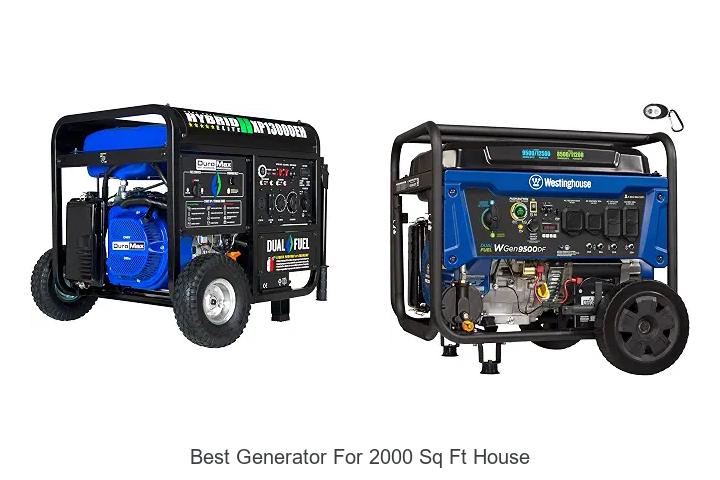
Stormy weather calls for serious backup power, and the XP13000EH brings plenty of it. Dual fuel operation and electric start make home emergency use simpler. DuroMax built this portable generator for whole-home backup, RV travel, and jobsite power.
It delivers 13,000 starting watts and 10,500 running watts, which suits larger homes well. A transfer switch-ready 50 amp outlet helps connect it to home circuits. The front-facing interface lets you change fuel types in seconds.
Heavy-duty all-metal construction adds durability for harsh weather and heavy use. Copper windings help support longer service life and better heat handling. No-flat tires and a foldable handle improve movement across rough ground.
The CO sensor, low oil shutdown, and hour meter add useful protection and tracking. It weighs 234 pounds, so setup is not effortless.
Still, electric start and clear controls make operation straightforward. For households needing whole-home backup, it offers strong utility and solid flexibility.
Pros
- Dual fuel operation adds useful fuel flexibility.
- Transfer switch-ready outlet suits home backup setups.
- Electric start makes starting easier during outages.
Cons
- Heavy weight makes moving it harder.
- Runtime is limited at higher loads.
- Only two total outlets limit flexibility.
Who Should Buy It?
Buyers with larger homes and outage concerns should shortlist it. It fits households needing whole-home backup power and dual fuel flexibility. The 240-volt output and transfer switch-ready outlet suit home circuits well.
It also works for RV use and emergency readiness. People wanting portable power with strong starting output will appreciate it. Those needing lighter weight or long runtime may want other options.
Key Specifications
| Specification | Details |
|---|---|
| Brand | DuroMax |
| Wattage | 13000 watts |
| Output Wattage | 10500 watts |
| Fuel Type | Gasoline/Propane |
| Power Source | Gas |
| Voltage | 240 volts |
| Item Weight | 234 pounds |
| Special Feature | CO Sensor, Dual Fuel, Electric Start, Foldable Handle, Hour Meter, Low Oil Shutdown, Portable |
| Recommended Uses For Product | Residential |
| Included Components | XP13000EH Generator, Oil Funnel, Spark Plug Wrench, Tool Set, Wheel & Handle Kit, and Owner’s Manual |
The 13,000-watt starting rating shows strong surge capacity for large appliances. Its 10,500-watt running output gives steady support during outages. A 240-volt output helps it handle home backup needs. Gasoline and propane fueling adds flexibility when one fuel source is limited. The 500 cubic centimeter engine and four-stroke design suggest a sizable powerplant. A 0.5-gallon tank volume and three-hour runtime point to frequent refueling during heavier use. These numbers fit homes needing serious emergency coverage.
The 234-pound weight reflects a large portable generator with substantial hardware inside. Foldable handles and no-flat tires help moving it across yards or driveways. Electric start reduces effort during stressful outage conditions. The CO sensor, low oil shutdown, and hour meter add practical monitoring and protection. All-metal steel construction and copper windings support durability over time. With only two total outlets, buyers should match their connections carefully. It suits homeowners who want portable power without giving up home backup capability.
2. Westinghouse 12500 Watt Dual Fuel Generator
A strong standby option can make whole-home backup feel much more manageable. Westinghouse pairs dual-fuel flexibility with remote starting and transfer-switch readiness. The generator delivers 9500 running watts on gasoline and 8500 on propane, which suits larger residential loads.
It also offers 12500 peak watts on gasoline and 11200 peak watts on propane for startup surges. The heavy-duty 457cc Westinghouse OHV engine adds cast iron sleeve durability. A digital hour meter and VFT display provide useful status feedback.
Two GFCI household outlets, one L14-30R, and one RV-ready 14-50R outlet expand connection options. Rubber outlet covers add a safety touch. The 6.6-gallon tank supports up to 12 hours of runtime.
Included accessories make setup easier right away. For homeowners wanting dependable capacity and flexible fuel choices, it offers solid value.
Pros
- Dual-fuel operation offers flexible fuel choice.
- Remote start adds easy starting convenience.
- Multiple outlet types support varied household needs.
Cons
- Heavy frame makes moving it harder.
- Open-frame design is less compact indoors.
- Assembly and hookup may take some time.
Who Should Buy It?
Buyers needing strong backup power for a larger home will appreciate this model. It suits households that want gas or propane flexibility, plus remote starting for easier operation. The transfer-switch-ready outlet and multiple receptacles help it fit common residential backup setups.
It also works well for anyone who values clear output monitoring and included startup accessories.
Key Specifications
| Specification | Details |
|---|---|
| Brand | Westinghouse |
| Wattage | 12500 watts |
| Output Wattage | 9500 watts |
| Fuel Type | Gasoline, Propane |
| Power Source | Fuel Powered |
| Voltage | 120 volts |
| Item Weight | 210 pounds |
| Special Feature | Automatic Voltage Regulation, Dual Fuel, Electric Start, Fuel Gauge, Hour Meter |
| Recommended Uses For Product | Residential |
| Included Components | Battery Charger, Engine Oil & Funnel, Key FOB, Owner’s Manual, Propane Hose, Quick-Start Guide |
The 12500-watt rating shows strong starting capacity for a home backup setup. Its 9500-watt running output on gasoline supports several essential circuits at once. Propane operation lowers that running output to 8500 watts, which still covers many household needs. The 120-volt output matches common residential equipment. A 6.6-gallon tank and 12-hour runtime give it longer operating stretches between refueling. The 210-pound weight signals a substantial portable unit with open-frame construction.
Special features shape daily use more than raw wattage alone. Remote electric start helps when quick power restoration matters. Automatic voltage regulation supports steadier output for connected equipment. The hour meter and VFT display help track use and monitor voltage, frequency, and hours. Included battery charger, oil, funnel, propane hose, and key fob reduce extra prep. These details favor homeowners who want a practical backup unit with straightforward setup and clear operating information.
3. Jackery HomePower 3600 Plus Power Station
Power outages feel much less stressful when a home backup unit can handle heavy appliances. Jackery’s HomePower 3600 Plus aims squarely at that need with strong output and flexible charging.
Built around a 3584Wh battery and 3600W AC output, it can support pumps, heaters, and dryers. Dual-voltage 120V and 240V support adds useful home coverage. The design focuses on safety, portability, and simple setup.
The battery uses high-temp resistant ceramic membrane cells tested at 302°F. Jackery says that helps prevent thermal runaway during heat or overcharge conditions.
It also lists 6,000 cycles and a 10-year lifespan. Charging options are another strong point, with AC, solar, gas generator, and hybrid AC plus DC support. Hybrid charging can refill it in two hours.
Wheels and a telescopic handle make the 77.2-pound unit easier to move.
For larger households, the expandable capacity stands out most. One unit can grow to 21kWh, or 43kWh with multiple units.
That makes it appealing for long outages and whole-home backup planning. The plug-and-play approach also keeps setup approachable for residential use. With only two outlets, though, users should plan their appliance connections carefully.
It suits homeowners who want premium battery backup without complicated installation.
Pros
- Strong 3600W output handles heavy household appliances
- Expandable battery capacity supports longer outages
- Four charging options add flexibility
Cons
- Only two outlets limit simultaneous device connections
- Heavy unit still weighs 77.2 pounds
- Premium backup setup may exceed basic needs
Who Should Buy It?
Homeowners wanting battery backup for essential appliances should consider this unit. It suits larger houses that need support for pumps, heaters, dryers, and other high-demand loads. The plug-and-play design also helps people who want easier setup.
Families facing longer outages may appreciate the expandable capacity and dual-voltage support.
Key Specifications
| Specification | Details |
|---|---|
| Brand | Jackery |
| Wattage | 3600 watts |
| Output Wattage | 3600 |
| Fuel Type | Battery Powered |
| Power Source | Battery-Powered |
| Voltage | 120 volts_of_alternating_current |
| Item Weight | 77.2 pounds |
| Special Feature | Easy to Install |
| Recommended Uses For Product | Residential |
| Included Components | Built in Cables, HomePower 3600 Plus, User Manual |
| Rating | Not provided |
The 3584Wh capacity shows how much stored energy the unit carries. In everyday use, that means longer backup time for essential home devices. The 3600W output tells you how much power it can deliver at once. That level can support demanding equipment like pumps, heaters, and dryers. Dual-voltage 120V and 240V support also helps it cover more household needs. Built-in cables and included instructions keep the setup straightforward.
The weight of 77.2 pounds matters when moving the unit around a home. Jackery’s wheels and telescopic handle help offset that size during storage or repositioning. The easy-to-install design suits homeowners who want less setup work. Residential use makes it a fit for backup power during outages. The battery-powered design avoids fuel storage, while the ceramic membrane cells aim to improve safety. Those details matter most for families wanting cleaner backup power and simpler handling.
4. Westinghouse 5000 Peak Watt Dual Fuel Inverter Generator

Quiet backup power can make long outages feel less disruptive. The Westinghouse iGen5000DFc stands out with dual fuel flexibility and inverter-based operation.
It delivers 5,000 peak watts on gasoline and 4,500 peak watts on propane. Running output reaches 3,900 watts on gas and 3,500 watts on propane.
That makes it a practical fit for essential home circuits and sensitive electronics. The inverter design helps keep noise low, with operation as quiet as 52 dBA. It also uses less fuel than traditional generators at lighter loads.
A remote electric start adds convenience during bad weather or late-night outages. The CO sensor adds another layer of safety for residential use. Its outlets include a 30A RV-ready plug, a standard duplex outlet, and two USB ports.
The digital display shows fuel level, voltage, runtime, and lifetime hours. Build quality feels ready for regular backup use, with a double-insulated cover and muffler.
At 105.8 pounds, it is portable but not light. It suits homeowners who want quieter backup power, cleaner output, and easy starting.
Pros
- Very quiet for a backup generator
- Dual fuel adds useful flexibility
- Remote electric start improves convenience
Cons
- Running wattage may limit larger household loads
- 105.8-pound weight can be awkward
- Parallel kit sold separately
Who Should Buy It?
Homeowners who want quieter emergency power should consider it. It fits people who value dual fuel flexibility and inverter output. The remote start, CO sensor, and digital display add everyday convenience.
It suits smaller backup needs, RV use, and light residential support. Buyers needing whole-house coverage may want more wattage or a parallel setup.
Key Specifications
| Specification | Details |
|---|---|
| Brand | Westinghouse |
| Wattage | 5000 watts |
| Output Wattage | 3900 watts |
| Fuel Type | Gasoline, Propane |
| Power Source | Fuel Powered |
| Voltage | 120 volts |
| Item Weight | 105.8 pounds |
| Special Feature | CO Sensor, Dual Fuel, Electric Start, Fuel Gauge, Hour Meter, Overload Protection, USB Port |
| Recommended Uses For Product | Camping, Residential |
| Included Components | Battery Charger, Engine Oil & Funnel, Key FOB, Owner’s Manual, Propane Hose, Quick-Start Guide, Warranty Battery Charger, Engine Oil & Funnel, Key FOB |
The wattage figures show how much power the generator can supply. Five thousand peak watts helps with startup surges from appliances. The 3,900 running watts on gasoline supports steady household loads. On propane, output drops to 3,500 running watts. The 120-volt setup matches common home and RV equipment. A 3.4-gallon tank helps extend use between refills. The 18-hour runtime rating comes from light 25% loading, which helps during extended outages.
Its special features make everyday use easier and safer. Electric start and a key fob reduce setup effort during storms. The CO sensor adds protection for enclosed or nearby spaces. Fuel gauge, hour meter, and digital display simplify monitoring during long runs. Overload protection helps guard connected devices. USB ports support phones and small electronics directly. At 105.8 pounds, it is portable enough for some moving, though two people may prefer handling it.
5. PowerSmart 4300 Watt Portable Generator

Reliable emergency backup starts with enough power for key household essentials. PowerSmart’s 4300-watt portable generator focuses on practical home backup with clean inverter output and long runtime.
It offers 4300 starting watts and 3500 running watts, which can support fridges, TVs, and other common appliances during outages. The inverter technology delivers under 3% THD, so sensitive devices like phones and tablets can run more safely. A 1.9-gallon tank can provide up to 12 hours at 25% load, reducing refill stops.
The steel build, 68-pound weight, and compact frame support portability without feeling flimsy. A twist-lock outlet, household duplex outlet, and DC port add useful flexibility.
Eco-mode and cold start technology also help simplify daily operation. For families wanting emergency coverage without oversized equipment, it offers a balanced mix of output and practicality.
Pros
- Clean inverter power for sensitive electronics
- Long runtime on a small fuel tank
- Useful outlet mix for home backup
Cons
- Running wattage may limit larger household loads
- Gasoline fuel requires storage and refueling
- 68-pound weight still needs careful handling
Who Should Buy It?
Households wanting budget emergency power should consider it. It suits users who need backup for refrigerators, televisions, phones, and other basic appliances during outages. The 120-volt output and inverter technology also fit lighter residential use.
People who value portable storage, simple controls, and long runtime over whole-home coverage will get the most from it.
Key Specifications
| Specification | Details |
|---|---|
| Brand | PowerSmart |
| Wattage | 3500 watts |
| Output Wattage | 3500 watts |
| Fuel Type | Gasoline |
| Power Source | Fuel Powered |
| Voltage | 120 volts |
| Item Weight | 68 pounds |
| Special Feature | Cold Start Technology, Digital Display, Portable |
| Recommended Uses For Product | Camping, Residential |
| Included Components | Manual, Screwdriver, Spark Plug Wrench |
| Rating | 2-year manufacturer warranty |
The 4300 starting watts and 3500 running watts describe how much load it can handle. Starting watts help appliances start, while running watts support ongoing use. The 120-volt output matches common household devices and outlets. A 1.9-gallon gasoline tank supports long operation at lighter loads. The 68-pound weight keeps it portable, while cold start technology helps with cooler-weather starts. The digital display gives quick status checks during use.
In everyday backup use, these specifications point to practical power for essential rooms. The inverter design produces clean electricity, so phones, tablets, and cameras connect with less concern. The 30A twist-lock outlet, duplex outlet, and 12V DC port expand connection options. Eco-mode can help reduce fuel use when loads stay light. Steel construction adds durability for storage and transport. Families who want emergency power for basics will benefit most from this setup.
6. PowerSmart 4000 Watt Portable Inverter Generator

Compact power meets household practicality in a very portable package. The PowerSmart 4000 Watt Portable Inverter Generator brings clean output and quiet operation for smaller home backup needs. It delivers 4000 starting watts and 3200 running watts, with less than 3% THD for sensitive electronics.
That clean power matters when running laptops, phones, tablets, and similar devices. Its outlet selection includes a 120V 20A duplex, a 30A twist-lock, DC output, and dual USB ports.
Eco Mode helps manage fuel use, while the 1.3-gallon tank supports long runtime. At 50.7 pounds, it stays manageable for one person.
Build quality feels practical rather than bulky. The compact frame measures 20.1 by 12.2 by 17.7 inches, and the carry handle improves portability. Low oil shutdown, cold start technology, and a magneto ignition system add convenience during setup and use.
The generator runs at under 59 dBA from 23 feet away, which suits neighborhoods and camping sites.
For home users, it offers a strong balance of size, noise control, and useful output. It will not replace a large whole-house system, but it can support compact backup needs well. The 2-year manufacturer coverage and lifetime technical support add peace of mind for buyers who want a smaller, easier-to-move generator for residential use.
Pros
- Clean power for sensitive electronics
- Quiet operation for a gas generator
- Lightweight and easy to carry
Cons
- Not sized for large whole-house loads
- Gasoline fuel requires regular refueling
- Single 120-volt output limits flexibility
Who Should Buy It?
Buyers needing compact backup power for smaller homes should consider it. It fits users who want clean electricity for electronics, plus enough capacity for essential devices. The quiet operation and light weight also suit camping, patio use, and occasional residential backup.
It works best for people who value portability over heavy-duty whole-house coverage.
Key Specifications
| Specification | Details |
|---|---|
| Brand | PowerSmart |
| Wattage | 3200 watts |
| Output Wattage | 3200 watts |
| Fuel Type | Gasoline |
| Power Source | Fuel Powered |
| Voltage | 120 volts |
| Item Weight | 50.7 pounds |
| Special Feature | Cold Start Technology, Low Oil Shutdown, Super Quiet |
| Recommended Uses For Product | Camping, Residential |
| Included Components | Funnel, Spark Plug Wrench |
| Rating | 8 |
The generator’s 3200-watt output tells you how much steady power it can supply. Its 4000 starting watts help appliances begin running without immediate strain. A 120-volt system matches common household equipment and basic backup needs. Gasoline fuel and fuel-powered operation make it familiar to use, while the 50.7-pound weight keeps transport manageable. Cold start technology and low oil shutdown add practical protection during regular operation.
Clean power under 3% THD matters for electronics like phones and laptops. Super quiet operation below 59 dBA helps reduce noise during evening use or camping. Eco Mode can lower fuel use when demand drops, which helps extend runtime from the 1.3-gallon tank. The included funnel and spark plug wrench support setup and upkeep. These details suit homeowners who want portable backup power without heavy, noisy equipment.
7. Anker SOLIX S2000 Solar Powered Generator

Battery backup feels smarter when portability stays part of the package. Anker’s SOLIX S2000 pairs 2,010Wh capacity with a 1,500W output for home essentials.
The unit focuses on fridge backup, emergency power, and cleaner indoor setups. It can keep a refrigerator running for up to 35 hours.
That runtime depends on the appliance and surrounding conditions, of course. The LiFePO4 battery uses 314Ah cells and targets a long service life. Anker rates it for 10,000 charge cycles, which suits repeated outage use.
The body is compact and relatively light for a 2kWh station. At 35.7 pounds, it is easier to move than many rivals. Eight outlets help organize devices across front and rear sections.
Solar input up to 400W adds useful charging flexibility. It also supports AC, generator, alternator, and car charging. That range makes it practical for home backup and travel use.
The <10 ms UPS switchover helps keep office gear powered. It fits households that want battery backup without gas or fumes.
Pros
- Long 2,010Wh capacity for essential backup
- Compact and lighter than many 2kWh stations
- Multiple charging options, including solar input
Cons
- 1,500W output may not cover larger appliances
- No 12V DC port included
- Solar charging needs compatible panels
Who Should Buy It?
Homeowners who want solar-capable backup should consider it. It suits families that need quiet power for fridges, routers, lights, and office gear. The compact size also helps users who may move it between rooms or store it easily.
Buyers wanting battery backup for essential loads, rather than whole-home power, will get the most from it.
Key Specifications
| Specification | Details |
|---|---|
| Brand | Anker |
| Wattage | 1500 watts |
| Output Wattage | 1500 watts |
| Fuel Type | Battery Powered |
| Power Source | Battery Powered |
| Voltage | 60 volts |
| Item Weight | 16.2 kg |
| Special Feature | lightweight、Compact and Safe、Portable |
| Recommended Uses For Product | Camping, Emergencies, Home Backup, Home Use, Power Outages |
| Included Components | Anker SOLIX S2000 Power Station |
The S2000 uses a 2,010Wh LiFePO4 battery and 1,500W output. In daily use, that means it can handle many household essentials. The 3,000W peak output gives short bursts for startup demands. The 60-volt battery system supports stable operation for backup tasks. Its 35-hour fridge runtime offers a clear use case during outages. For households needing quiet, fuel-free power, those figures matter most.
Its 35.7-pound weight and compact footprint affect where it fits. The unit measures 8.2 by 11.1 by 12.7 inches, so storage stays simple. Eight outlets help separate always-on appliances from daily devices. Solar input up to 400W adds charging flexibility during long outages. The <10 ms UPS switchover helps protect home office equipment. People who want indoor-friendly backup will benefit most from this setup.
8. Jackery Explorer v2 Solar Generator

Home backup power gets a cleaner, quieter approach here. The Jackery Explorer 2000 v2 Solar Generator pairs 2042Wh capacity with 2200W AC output.
It is built for homes, camping, and small business use.
Three AC ports support common appliances and essential electronics. A USB-C PD 100W port handles fast charging without extra adapters. The LiFePO4 battery supports long service life and indoor use.
Jackery also includes 2x200W solar panels for renewable charging support.
At 39.5 pounds, the power station stays relatively compact for its class. Jackery says it is smaller and lighter than many 2kWh units.
The CTB structure adds stability and space efficiency. That design can help with handling, storage, and transport.
Performance is geared toward quick recovery between outages. AC charging reaches 80% in 66 minutes. App-activated Emergency Super Charging reaches full charge in 102 minutes.
Solar charging can take about six hours with 400W panels.
Silent Charging mode runs at 30dB for quieter operation. The advanced temperature control system also reduces fan noise. That makes it a better fit for indoor backup use.
It suits buyers wanting solar support, low noise, and portable home power.
Pros
- High 2042Wh capacity for home backup needs
- Includes two 200W solar panels
- Quiet operation suits indoor use
Cons
- Solar charging still depends on sunlight
- Three AC outlets may limit larger setups
- Heavier than smaller portable power stations
Who Should Buy It?
Buyers needing indoor-safe backup power should consider it. It suits households wanting solar charging, quiet operation, and fast recharge times. The 2200W output works for many essential devices and appliances.
It also fits campers and small businesses needing portable battery power. The included solar panels add value for people wanting renewable charging support.
Key Specifications
| Specification | Details |
|---|---|
| Brand | Jackery |
| Wattage | 2200 watts |
| Output Wattage | 2200 watts |
| Fuel Type | Electric |
| Power Source | Battery Powered |
| Voltage | 120 volts_of_alternating_current |
| Item Weight | 66.8 pounds |
| Special Feature | Cell to Body Technology, Fast Charging, UPS Power Supply |
| Recommended Uses For Product | Camping, Commercial, Residential |
| Included Components | 2x200W Solar Panels, AC Charging Cable, Explorer 2000 v2 |
| Rating | 20ms UPS |
The 2042Wh capacity describes how much energy the station stores. In everyday use, that affects how long devices can keep running. The 2200W output tells you how much power it can deliver at once. The 120-volt AC output and three AC ports support common home gear. The USB-C PD 100W port helps charge laptops and phones directly.
Its 39.5-pound power station weight makes handling easier than many large units. The included two 200W solar panels add renewable charging support for outdoor or emergency use. Fast charging helps reduce waiting time between outages. The LiFePO4 battery and CTB construction support durability and space savings. Quiet charging and UPS power help households, campers, and small businesses use it indoors.
9. Anker SOLIX C1000 Gen 2 Solar Generator

Portable backup power meets fast solar charging in a compact package. The Anker SOLIX C1000 Gen 2 is built for homes that need quick support during outages and daily outages planning.
It delivers 2,000W output, 3,000W peak output, and 1,024Wh capacity. Nine ports let it run several devices at once, including laptops and CPAP machines. The 10 ms UPS switchover helps keep sensitive equipment active during interruptions.
Its 14% smaller and 11% lighter design makes storage and movement easier. The battery is rated for 4,000 cycles and at least 80% capacity afterward.
Solar recharging can finish in 1.8 hours with 600W input, while HyperFlash charging reaches full power in 49 minutes at 1,600W. It suits buyers who want portable solar backup, easy app control, and dependable short-term home support.
Pros
- 2,000W output handles many common home devices.
- Fast solar and AC recharging options.
- Compact, lighter design is easier to move.
Cons
- 1,024Wh capacity may limit longer whole-home use.
- Solar panel ships separately from the power station.
- Nine ports may still feel limited for larger setups.
Who Should Buy It?
Buyers who want portable solar backup for short outages should consider it. It fits homes needing quick support for laptops, CPAP machines, and similar devices. People who value compact storage, app-based control, and fast recharging will also like it.
It works best for users who want flexible backup power, not full-house long-duration coverage.
Key Specifications
| Specification | Details |
|---|---|
| Brand | Anker |
| Wattage | 2000 watts |
| Output Wattage | 2000 watts |
| Fuel Type | solar |
| Power Source | Battery Powered |
| Voltage | 120 volts |
| Item Weight | 24.9 pounds |
| Special Feature | Portable |
| Recommended Uses For Product | Camping |
| Included Components | Anker SOLIX C1000 Gen 2 Portable Power Station, AC charging cable, Quick Start Guide, and Safety and Warranty Card. Anker SOLIX C1000 Gen 2 Portable P |
| Rating | 10 ms UPS Backup, 2,000W Portable Power Station with 1,024Wh LiFePO4 Battery, Up to 3,000W Output, for UPS, Home, Outdoor |
A 2,000W output means it can power many household devices at once. The 120-volt design matches common home outlets, which helps with familiar plug-in gear. The 24.9-pound weight keeps it portable enough for moving between rooms. Solar fuel type and battery power work together for backup and charging flexibility. The 1,024Wh battery gives enough stored energy for short backup use, while the 9 ports support several devices at the same time.
The 10 ms UPS switchover matters for devices that cannot tolerate long interruptions. That speed helps keep laptops and CPAP machines running during brief outages. Its portable design suits people who need backup power without a fixed installation. The solar charging option, plus the included AC cable, gives different setup paths at home or outdoors. Users who want frequent movement, quick response, and simple charging will benefit most from these specifications.
10. Jackery Solar Generator 1000 v2 with 200W Solar Panel

Quiet backup power feels more practical when it starts fast and stays portable. Jackery’s Solar Generator 1000 v2 brings that balance to home emergency use and travel. It pairs a 1024Wh LiFePO4 battery with a 1500W AC output and a 3000W surge peak.
That gives it enough reach for small essentials during an outage. Two pure sine wave AC ports, USB-C, USB-A, and a DC car port add flexibility. The 10ms UPS switchover helps keep important devices running during brief outages.
Fast charging also helps, reaching full battery in about 50 minutes through the app.
The design suits people who want backup power without heavy gear. At 23.3 pounds, it is easier to move than many home units.
The foldable handle helps with storage and transport. A 200W solar panel adds off-grid charging support for emergencies, camping, or road trips.
Jackery uses an LFP battery rated for over 4,000 cycles, which supports long service life. Build quality looks focused on portability and daily practicality.
It works best for small essentials backup, not whole-house coverage. For lights, communications, and small appliances, it offers useful capability in a compact package.
Pros
- Fast 10ms UPS switchover for brief outages
- Lightweight and easy to carry
- Fast charging through the Jackery App
Cons
- Not sized for full-house backup
- Only three total outlets
- Runtime depends heavily on appliance load
Who Should Buy It?
People needing small essentials backup will get the most from it. It suits apartments, modest homes, camping trips, and road travel. The compact size helps users who want portable emergency power.
It also fits buyers who value solar charging and fast device replenishment. Households wanting limited backup for lights, phones, routers, or small appliances will find it practical.
Key Specifications
| Specification | Details |
|---|---|
| Brand | Jackery |
| Wattage | 1500 watts |
| Output Wattage | 1500 watts |
| Fuel Type | Electric |
| Power Source | Solar Powered, Battery Powered |
| Voltage | 120 volts |
| Item Weight | 23.4 pounds |
| Special Feature | Fast Charging |
| Recommended Uses For Product | Residential, Camping, Roadtrip |
| Included Components | Lithium Polymer battery |
The 1024Wh battery capacity shows how much stored power is available. In daily use, that affects how long small devices can stay on. The 1500W output tells you what equipment it can run at once. Its 120-volt output matches common household devices. The solar and battery power sources add flexibility during outages or travel. The 23.4-pound weight keeps it manageable for one person. A 10ms UPS switchover helps prevent brief interruptions for sensitive gear.
These specifications point to a portable backup unit for essential loads. The 3000W surge rating helps start some appliances that need extra power briefly. The fast charging feature reduces downtime between uses. LiFePO4 battery construction supports long-term durability and many charge cycles. Two AC ports, USB-C, USB-A, and a DC car port help serve different devices. People with limited storage space will appreciate the compact size. Users needing whole-home support will need a larger system.
Best Generator for a Sq Ft House: How to Choose the Right Power Backup for Your Home
Power needs for a sq ft house
A 2,000 sq ft home can place very different demands on a standby power unit depending on how many major appliances and systems need to stay on during an outage. Careful attention to input options and future add-ons matters because the right unit should work smoothly with your transfer switch, home circuits, and any extra equipment you may want later. A practical plan starts with identifying the essentials: refrigerator, lighting, Wi-Fi, sump pump, heating or cooling equipment, medical devices, and kitchen appliances.
That difference can make a unit seem powerful enough on paper while still falling short in real use. It also helps to decide whether the goal is whole-home backup or partial coverage, because full coverage requires more capacity, more circuit support, and often more room for future electrical additions.
- Essential appliances and systems: Refrigerator, lighting, internet, HVAC, sump pump, and medical equipment.
- Starting vs. running wattage: Startup surges can be much higher than normal operation and must be included in the total.
- Whole-home vs. partial backup: Full coverage needs greater capacity, while partial backup focuses on the most critical circuits.
Generator type and fuel options
Reliable backup power depends on how easily the unit can link to your home’s essential circuits and how well it can support future electrical needs. Portable, inverter, and standby generators each serve different purposes: portable models are flexible and more affordable, inverter units run quieter and deliver cleaner power for sensitive electronics, while standby systems provide automatic whole-home coverage with little manual effort. Fuel choice matters just as much, since gasoline is widely available but harder to store long term, propane stores more safely and lasts longer on the shelf, and dual-fuel models add flexibility by letting you switch sources during shortages.
A practical setup also needs enough room for safe fuel storage and easy access to supplies, because convenience during an outage can matter as much as raw wattage.
| Type | Main Advantage | Best Fit |
|---|---|---|
| Portable | Flexible and budget-friendly | Basic backup for a few essential appliances |
| Inverter | Quiet operation and stable power | Homes with electronics and smaller power demands |
| Standby | Automatic activation and higher capacity | Whole-home protection during longer outages |
- Fuel availability: Make sure the fuel source is easy to find in your area during emergencies.
- Fuel storage: Confirm that you have a safe place to store fuel without creating fire or ventilation risks.
- Long-term flexibility: Dual-fuel models can reduce stress if one fuel becomes scarce.
Output capacity and load management
A generator’s wattage should match the real power demand of a 2,000 sq ft home, or it may fail to keep essential systems running during an outage. Output capacity and load management matter because appliances such as HVAC units, sump pumps, and refrigerators often draw far more power at startup than they do during normal operation. A unit with enough headroom can handle these surges without tripping or stalling, which helps maintain comfort and protects food, water control systems, and climate control.
Features like overload protection and automatic load shedding add another layer of reliability by preventing damage and prioritizing critical circuits when demand climbs too high. This kind of planning ensures the generator can support daily living needs instead of only powering a few devices at a time.
Installation, transfer, and safety requirements
A generator that can handle a 2,000 sq ft home needs more than enough wattage; it also has to work smoothly with the house’s electrical setup and safety rules.
- Review transfer switch compatibility: A properly matched transfer switch helps route power safely to essential circuits without backfeeding the utility line. It also makes startup and shutoff easier during outages, so the generator works as part of the home’s system instead of as a temporary workaround.
- Check indoor/outdoor placement needs: The unit’s location affects noise, weather protection, fuel access, and how far it must sit from windows, doors, and vents. Some models are built for outdoor installation only, while others may fit in a sheltered spot with the right clearances and enclosure.
- Understand ventilation, grounding, and code compliance: Proper airflow keeps heat and exhaust from building up, grounding reduces electrical hazards, and local codes determine how the system must be installed. Ignoring these details can lead to unsafe operation, failed inspections, or costly changes later.
In short, the right power setup should match both the home’s electrical layout and the installation environment, not just its power output. Paying attention to these details helps ensure reliable operation, safer use, and fewer surprises during an outage.
Runtime, noise, and maintenance
A larger fuel tank can keep a generator running much longer during extended outages, but runtime drops as the electrical load increases, so it is important to compare how long each unit can support essential appliances at 25%, 50%, and near-full demand. For a 2000 sq ft home, that difference can determine whether you maintain refrigeration, heating, lights, and internet through the night or need frequent refueling.
Noise also matters because a quieter model is far more practical in a residential area, especially if it will operate close to bedrooms, patios, or neighboring homes. Service requirements should not be overlooked either, since regular oil changes, filter checks, and battery care affect reliability and long-term value. A unit with easier maintenance access and reasonable service intervals can reduce downtime and make emergency use far less stressful.
| Factor | Why it matters |
|---|---|
| Tank size and runtime | Determines how long the unit can run at different load levels before refueling is needed. |
| Decibel output | Affects comfort for your household and nearby neighbors during overnight or extended operation. |
| Maintenance schedule | Influences reliability through oil changes, inspection timing, and battery upkeep. |
- Review runtime charts at multiple load levels, not just the maximum figure.
- Compare noise ratings in decibels and note whether “quiet mode” is available.
- Confirm how often oil changes, spark plug service, and battery charging are required.
Budget, warranty, and longterm value
A generator’s long-term value depends on more than its sticker price, because fuel use, maintenance, and repair costs can quickly outweigh a low initial cost. A model with a lower upfront price may seem attractive, but if it burns more fuel or needs frequent servicing, it can become far more expensive over time than a unit with better efficiency and a stronger build.
It is equally important to check whether replacement parts are easy to find and whether the brand has dependable service support, because a well-supported unit is usually easier and cheaper to keep running for years. Comparing these factors side by side helps ensure the generator delivers reliable performance without creating avoidable costs later.
| Factor | Why it matters |
|---|---|
| Upfront cost | Affects the initial budget, but does not reflect total ownership expense. |
| Operating cost | Includes fuel and maintenance, which can add up significantly over time. |
| Warranty coverage | Protects against certain defects and can lower repair expenses. |
| Parts and brand support | Makes servicing simpler and helps keep the unit usable for longer. |
How a Home Generator Works
A generator gives your home backup power when the grid goes down. It does this by turning fuel, such as natural gas, propane, or gasoline, into electricity. For a 2000 sq ft house, the goal is to keep the most needed circuits running, not every appliance at once.
Here is the basic flow:
- A power outage happens.
- The generator starts, either by hand or on its own if it has an automatic transfer switch.
- Fuel feeds the engine, and the engine spins the alternator.
- The alternator makes electricity.
- The transfer switch sends that power to selected home circuits.
- Lights, the fridge, internet gear, or a furnace can stay on, depending on the unit size.
Portable models work a little differently from standby units. A portable generator usually needs to be set up outside and connected by cords or a transfer switch kit. A standby generator is installed outside the home and can switch on by itself during an outage.
For a house this size, the right choice depends on what you want to run. A small unit can cover basics. A larger one can handle more rooms and bigger appliances. Think about starting power too, since items like air conditioners and sump pumps can draw extra power when they first turn on.
Simple use habits help too. Keep the unit outside, away from doors and windows. Use the correct fuel type. Test it from time to time so you know it will start when needed.
When you know how the system works, it gets easier to compare models and match one to your home’s needs.
FAQ’s
What Size Generator Do I Need For A 20Sq Ft House?
For a 20 sq ft house, a very small portable generator around 1,000 to 2,000 watts would usually be enough for basic lights and a small appliance. The exact size depends on what you want to run, so add up the wattage of your devices first.
Final Verdict
For most homeowners, the DuroMax XP13000EH Portable Generator is the best generator for 2000 sq ft house because it offers strong whole-home backup power and fits families who want coverage for major appliances during outages. If you want a lower-cost option, the Westinghouse 12500 Watt Dual Fuel Generator delivers strong capacity and flexibility without pushing into premium pricing.
Buyers who want cleaner, quieter operation should look at the Westinghouse 5000 Peak Watt Dual Fuel Inverter Generator, which suits lighter backup needs and noise-sensitive settings. For a premium battery-powered setup, the Jackery HomePower 3600 Plus Power Station is the best pick for indoor-friendly backup, quieter use, and homeowners who prefer battery storage over fuel.
Choose the DuroMax for whole-home backup, the Westinghouse 12500 Watt for value, the Jackery for premium battery backup, or the Westinghouse inverter for quieter operation.