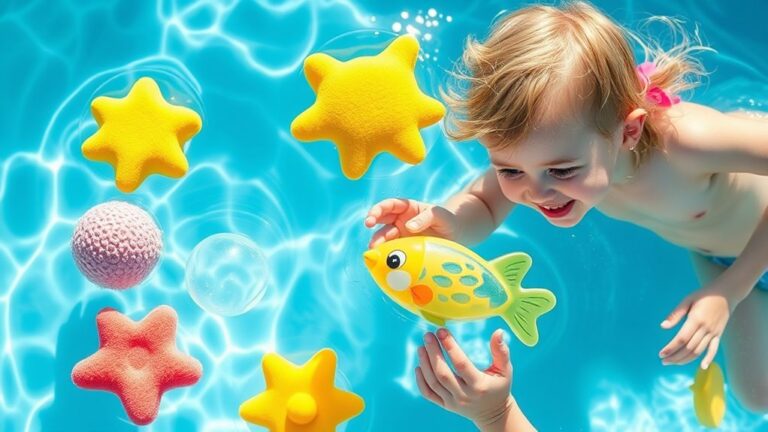
Benefits of Educational Sensory Activities
Educational sensory activities are a fantastic way to engage your child’s senses while promoting exploration and learning.
These activities are essential for brain development and can significantly enhance cognitive and motor skills.
By participating in sensory play, children can build fine motor abilities and improve critical thinking skills.
Moreover, these activities support emotional regulation and social skills, encouraging children to develop self-awareness and effective coping strategies.
Additionally, sensory play fosters creativity and imagination, which lays a strong foundation for future academic success.
So, why not discover how to easily incorporate sensory play into your child’s daily routine?
The benefits are immense and can make a lasting impact on their development!
Key Takeaways
- Engages multiple senses, promoting exploration and enhancing cognitive development through hands-on learning experiences.
- Fosters emotional regulation, helping children articulate feelings and develop coping mechanisms for stress and anxiety.
- Enhances fine motor skills and coordination, which are essential for writing and other physical activities.
- Encourages creativity and critical thinking, allowing children to explore cause and effect through sensory interactions.
- Supports social skills and teamwork by providing opportunities for cooperative play and shared experiences.
What Is Sensory Play?

Sensory play is all about engaging your child’s senses through hands-on activities that promote exploration and learning.
In this type of play, children immerse themselves in sensory activities that stimulate sight, hearing, touch, taste, and smell.
This exploration is vital for their brain development, helping them build neurological pathways essential for cognitive skills like problem-solving and language acquisition.
As your child engages in sensory play, they’re not just having fun; they’re enhancing their emotional regulation and social skills through interaction with peers.
By exploring different textures, sounds, and sights, children learn to process sensory information effectively.
Ultimately, sensory play lays the groundwork for holistic development, fostering creativity, imagination, and teamwork among children.
Key Benefits of Sensory Play in Child Development

Sensory play is essential for your child’s cognitive development, as it encourages exploration and problem-solving skills. It also helps kids learn to manage their emotions and cope with stress, promoting better focus and self-regulation. By engaging in these activities, you’re setting the stage for a well-rounded developmental experience.
Cognitive Development Through Exploration
When children engage in hands-on exploration, they activate multiple senses that forge powerful neural connections, greatly enhancing their cognitive skills.
Sensory play activities, like manipulating playdough or exploring sensory bins, foster creativity and imagination that encourage kids to explore and discover new concepts.
These sensory experiences help develop language skills as children describe textures, sounds, and sensations, enriching their vocabulary.
Additionally, as they interact with materials like sand and water, kids learn about cause and effect, strengthening their understanding of scientific processes.
This environment of curiosity and exploration is essential for holistic growth.
It motivates children to ask questions and seek answers, laying the groundwork for lifelong learning and critical thinking.
Emotional Regulation and Coping
Engaging in sensory play can greatly enhance a child’s ability to regulate emotions and cope with challenges.
Through tactile experiences, children learn essential coping mechanisms that help them manage overwhelming stimuli.
Sensory play provides a calming effect, promoting self-soothing and focus.
| Key Benefits | Description | Impact on Children |
|---|---|---|
| Emotional Regulation | Helps articulate feelings | Enhances self-awareness |
| Coping Mechanisms | Develops strategies for anxiety | Builds resilience |
| Sensory Processing | Engages various textures | Improves focus and attention |
| Self-Soothing | Encourages calming techniques | Reduces anxiety |
| Tactile Experiences | Fosters emotional expression | Promotes confidence in feelings |
In this safe space, children can explore emotions and gain valuable skills for emotional regulation.
Enhancing Cognitive and Motor Skills Through Sensory Activities

As children explore various materials, they naturally enhance their cognitive and motor skills through sensory activities.
Engaging in sensory play, like pouring water or molding clay, promotes fine motor skills essential for writing and self-care.
By manipulating different materials, kids develop critical thinking and problem-solving abilities, boosting their cognitive skills.
These activities stimulate neural pathways, enhancing language development as they describe their sensory experiences.
Creating sensory-rich environments fosters curiosity and creativity, leading to greater engagement and retention of academic concepts through hands-on learning.
Additionally, sensory integration helps with emotional regulation, allowing children to focus better and manage anxiety.
Ultimately, this improves attention spans and learning outcomes.
Embracing sensory activities can greatly benefit your child’s development.
Supporting Emotional Regulation and Social Skills
Sensory activities not only enhance cognitive and motor skills but also play a significant role in supporting emotional regulation and social skills.
Through sensory play, children receive essential sensory input that helps them self-soothe and manage their emotions during playtime.
Sensory play provides crucial input for children, aiding in self-soothing and emotional management during their playtime experiences.
Engaging in collaborative activities encourages them to share materials and take turns, which boosts their social skills and peer interactions.
As children explore tactile experiences, they often express emotions more effectively, leading to better emotional understanding.
Research shows that sensory play can reduce anxiety and stress, allowing kids to focus and engage socially.
Furthermore, these cooperative experiences foster empathy, helping children become more aware of others’ feelings, a critical aspect of developing strong social skills.
Practical Sensory Play Ideas for Home and School
Creating sensory play experiences at home and school can be both fun and educational.
Sensory play provides endless opportunities to engage your child’s development. Set up sensory bins filled with rice or beans to encourage your child to manipulate small objects while searching for hidden toys. This activity enhances their cognitive skills.
Water play is another great option! It allows them to pour and splash, which supports fine and gross motor skills.
Incorporating play dough helps strengthen hand muscles, crucial for writing. Plus, nature walks engage their senses, fostering curiosity and language through descriptive conversations.
Finally, music and movement activities encourage your child to share space and cooperate. This enhances physical coordination while having fun!
These activities will certainly support your child’s growth and learning.
How Sensory Play Contributes to Academic Success
While many parents might focus solely on traditional learning methods, incorporating sensory play can greatly boost your child’s academic success.
Sensory activities engage multiple senses, enhancing cognitive development and strengthening neural pathways vital for problem-solving and language acquisition.
Research shows that children who participate in these activities tend to have improved sensory integration skills, leading to better focus and attention in school.
For instance, kneading playdough while learning letters creates multiple memory pathways, enhancing recall more effectively than visual-only methods.
Additionally, sensory play fosters creativity and critical thinking, which are fundamental for academic performance.
The American Academy of Pediatrics emphasizes that these activities also support emotional regulation, helping children thrive socially and academically in early childhood education settings.
Frequently Asked Questions
What Age Group Benefits Most From Sensory Activities?
Children aged 0 to 5 years benefit most from sensory activities. They explore textures, sounds, and visuals, enhancing their motor skills and cognitive development, while also improving social interactions and emotional processing as they grow.
How Can Sensory Play Support Children With Special Needs?
Sensory play supports children with special needs by enhancing focus, building motor skills, and fostering emotional regulation. You’ll notice improved social interactions, increased confidence, and greater coping strategies as they engage in these enriching experiences.
Are There Any Safety Concerns With Sensory Materials?
Yes, there are safety concerns with sensory materials. You should always choose non-toxic items, supervise young children to prevent choking, check for allergens, and guarantee hygiene to keep the play environment safe and enjoyable.
How Often Should Sensory Activities Be Incorporated?
You should incorporate sensory activities at least three times a week. Engaging in these activities regularly helps children develop essential skills, encourages curiosity, and enhances their ability to adapt to different environments effectively.
Can Sensory Play Be Integrated Into Traditional Classroom Settings?
You can totally integrate sensory play into traditional classrooms. Think of it like adding sprinkles to ice cream—enhancing engagement, fostering creativity, and helping students connect with lessons in a fun, hands-on way.
Conclusion
Incorporating sensory activities into your child’s routine can transform their development in remarkable ways.
Imagine a child, like Jamie, who struggled with focus in class. After engaging in sensory play with sand and water, Jamie not only improved their attention span but also found joy in learning.
By embracing sensory experiences, you’re not just fostering creativity; you’re building essential skills that pave the way for academic success and emotional growth.
So, why not start today?
Sensory activities are a fantastic way to enhance focus, creativity, and emotional well-being in children. They allow kids to explore and learn through hands-on experiences, which can lead to better engagement in their education.
By incorporating these activities into your daily routine, you’re laying a strong foundation for your child’s future. So go ahead, make sensory play a part of your child’s life and watch them thrive!