7 Easy Homemade Sensory Toys for Creative Play
If you’re looking for fun sensory toys to spark creativity, you’re in the right place!
Sensory activities are a great way to engage kids and support their development. From calming effects to tactile fun, there are so many DIY options to explore.
Try making sensory bottles filled with glitter and water to create a calming effect.
Squishy sensory bags offer tactile fun and help fine motor skills.
For creative molding, whip up colorful homemade playdough using simple ingredients.
Engage in textural exploration with sensory bins, and don’t forget crinkly sound jars for some auditory stimulation.
Want to keep the fun going? There are plenty more exciting DIY ideas waiting for you!
Key Takeaways
- Create sensory bottles using water, glitter, and small objects for calming visual exploration and enhanced focus.
- Make squishy sensory bags with sealable plastic bags and various fillings to provide tactile fun and improve fine motor skills.
- Whip up colorful homemade playdough from flour, salt, and food coloring to stimulate creativity and sensory experiences.
- Design engaging sensory bins filled with diverse materials to promote textural discovery and imaginative play.
- Construct crinkly sound jars with transparent containers and crinkly materials to enhance auditory skills and provide calming effects.
Sensory Bottles for Calm and Exploration

Creating sensory bottles not only captivates children’s attention but also provides a calming effect during overwhelming moments.
These DIY sensory toys are simple to make using empty water bottles filled with water, glitter, and small objects like beads or sequins.
By engaging with sensory bottles, you help children explore their environment while enjoying the calming visual effects of the moving objects inside.
Engaging with sensory bottles allows children to explore their surroundings while being soothed by the mesmerizing movement of colorful objects.
This exploration encourages focus and self-regulation skills, making it easier for kids to manage anxiety or overstimulation.
Plus, making sensory bottles together can strengthen the bond between you and your child as you personalize them with different colors and items.
Squishy Sensory Bags for Tactile Fun

After enjoying the calming effects of sensory bottles, you can take sensory play a step further with squishy sensory bags.
These homemade sensory toys are easy to create and provide a unique tactile experience for children, especially those with sensory processing challenges.
Here’s how to make them:
- Use a sealable plastic bag.
- Fill it with hair gel, food coloring, and small objects.
- Seal and tape the bag shut for safety.
- Let your child manipulate the bag to create color patterns while exploring textures.
Squishy sensory bags not only enhance fine motor skills but also offer a calming experience for children with special needs.
Your kids will love the squishy textures, making playtime both fun and beneficial!
Colorful Homemade Playdough for Creative Molding
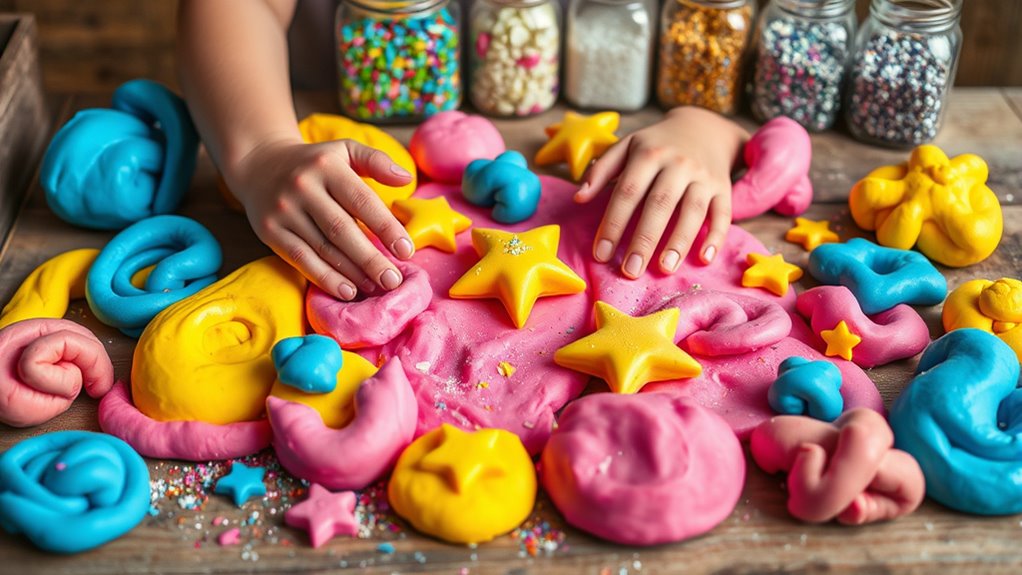
There’s something magical about colorful homemade playdough that sparks creativity and imagination in kids.
You can easily whip up a batch using flour, salt, water, and food coloring.
Adding scents like vanilla extract enhances the fun sensory experience, while incorporating glitter or sand encourages imaginative play.
This non-toxic material is safe for all ages and provides a tactile experience that develops fine motor skills.
| Ingredient | Purpose |
|---|---|
| Flour | Base for playdough |
| Salt | Texture and preservation |
| Water | Binds ingredients |
| Food Coloring | Adds vibrant colors |
Involving kids in creating the playdough not only makes it a fun sensory activity but also teaches them about measurement and mixing.
It’s a great way to bond while learning!
Engaging Sensory Bins for Textural Discovery
Engaging with sensory bins opens up a world of textural discovery for children, inviting them to explore diverse materials like rice, beans, and sand.
These bins not only spark imaginative play but also help enhance fine motor skills.
Here are some ways to make the most of sensory bins:
- Incorporate various textures: Mix materials like foam, pebbles, or feathers for a rich sensory experience.
- Add small objects: Toys or natural items promote imaginative play and encourage exploration.
- Use vibrant colors: Brightly colored materials stimulate visual senses, boosting cognitive development.
- Tailor to needs: Modify bins with calming materials to cater to different sensory preferences.
Regular sensory bin play enhances sensory processing and problem-solving skills, making it a valuable activity for your child.
Crinkly Sound Jars for Auditory Stimulation
Crinkly sound jars are easy to make and require just a few materials like transparent containers and crinkly items such as cellophane or aluminum foil. As you shake and explore these jars, you’ll discover how they enhance auditory discrimination and promote fine motor skills. Plus, customizing them with colorful additions can make the sound exploration even more exciting for kids!
Materials Needed Overview
While creating sensory toys can be a fun and rewarding experience, crinkly sound jars stand out for their ability to stimulate auditory senses.
To make these engaging toys, gather a few materials that will enhance your children’s playtime and motor skills. Here’s what you’ll need:
- Empty jars – Any size works, but smaller jars are easier for little hands to handle.
- Crinkly materials – Use cellophane, foil, or plastic wrap for that delightful sound.
- Lid – Confirm it’s secure to prevent spills during exploration.
- Decorative items – Stickers or paint can personalize the jars, enhancing visual appeal.
These jars not only encourage auditory processing but also allow children to enjoy the crinkly sounds while they play!
Sound Exploration Benefits
When you introduce crinkly sound jars into playtime, you’re not just providing a fun activity; you’re also enhancing your child’s auditory skills.
These jars create engaging auditory experiences using materials like cellophane or foil, fostering sound exploration and auditory discrimination.
As your child squeezes and shakes the jars, they develop fine motor coordination while experimenting with different sounds.
This playful interaction encourages focus on subtle auditory differences and promotes an understanding of cause and effect.
Additionally, crinkly sound jars can serve as a calming tool for children who experience sensory overwhelm, allowing them to explore sounds in a soothing way.
This combination of sensory play and auditory stimulation makes sound jars a valuable addition to your child’s playtime.
Nature-Inspired Sensory Activities for Outdoor Play
When you take your kids outside, nature offers endless opportunities for sensory play. Organizing a nature scavenger hunt can spark their curiosity as they collect different textures and shapes. Plus, creating a sensory garden lets them explore various plants while engaging all their senses!
Nature Scavenger Hunts
How can a simple outdoor activity transform your child’s connection with nature?
Nature scavenger hunts are perfect for engaging your child in Activities for Kids while enhancing sensory experiences.
As your child explores, they’ll discover various textures, colors, and shapes. This exploration improves their problem-solving skills and attention to detail.
Here’s how to create a scavenger hunt:
- List items to find, like different leaves, rocks, and flowers.
- Encourage your child to listen for the sounds of birds or rustling leaves.
- Incorporate elements like water to splash in or feel.
- Tailor the hunt to suit children with Sensory Processing needs.
This flexible activity fosters curiosity and helps your child connect with the sensory garden around them.
Sensory Garden Exploration
Exploring a sensory garden opens up a world of nature-inspired experiences that can enhance your child’s outdoor play.
A sensory garden filled with fragrant flowers, textured leaves, and colorful blooms invites your child to engage in sensory play. Encourage tactile exploration by using natural materials like stones, bark, and sand.
This allows them to feel different textures and spark curiosity. Incorporate sound elements, such as wind chimes, to enrich auditory experiences.
Activities like planting seeds or creating scavenger hunts for various textures promote fine motor skills and cognitive development.
This calming retreat offers a safe space for mindful exploration, which is beneficial for emotional regulation and sensory processing support.
Creating lasting connections with nature enhances your child’s overall well-being.
DIY Sensory Balloons for Squeezing and Squishing
Creating DIY sensory balloons is a fun and easy way to engage kids in tactile play.
These sensory balloons not only help your child feel different textures, but they also encourage sensory exploration.
Here’s a simple recipe to make them:
- Gather stretchy balloons.
- Fill them with rice, flour, or cornstarch for a satisfying squishy texture.
- Personalize with food coloring, glitter, or essential oils for added fun.
- Securely tie off the balloons to guarantee they won’t burst during play.
As your child explores these DIY sensory balloons, they’ll develop fine motor skills by grasping and squeezing.
These calming tools provide an excellent outlet for stress relief and promote hand-eye coordination, making playtime both enjoyable and beneficial!
Frequently Asked Questions
What Age Group Is Best Suited for Homemade Sensory Toys?
Homemade sensory toys are great for all age groups, from infants exploring textures to teenagers seeking stress relief. You can tailor them to fit each developmental stage, ensuring everyone finds something beneficial and engaging.
How Can I Ensure the Materials Are Safe for Children?
Choosing materials for sensory toys is like picking fruits at a market: you’ve gotta guarantee they’re fresh and safe. Always opt for non-toxic, age-appropriate items, and supervise play to keep your child safe and sound.
Can Sensory Toys Be Made With Recycled Materials?
Yes, you can make sensory toys with recycled materials! Use empty bottles, plastic bags, or cardboard boxes to create engaging sensory experiences. It’s fun, creative, and helps the environment by repurposing items you already have.
How Do I Clean and Maintain Sensory Toys?
When it comes to cleaning and maintaining sensory toys, you’ve got to stay on your toes. Regularly wash with mild soap, check for damage, and store them properly to guarantee safe and fun play for kids.
What Are the Benefits of Sensory Play for Children?
Sensory play boosts your child’s learning by engaging their senses, enhancing fine motor skills, fostering creativity, and improving social interactions. It also promotes emotional expression, helping them feel understood and confident during their explorations.
Conclusion
Creating these homemade sensory toys opens up a world of imagination and exploration for your little ones.
They’ll be entertained for hours, discovering new textures, sounds, and colors while developing essential skills.
Plus, you’ll enjoy quality bonding time as you make these engaging activities together.
With just a few simple materials, you can transform your home into a sensory wonderland that sparks creativity and joy beyond belief!
Immerse yourself and watch their imaginative play soar!
In conclusion, making sensory toys at home is an excellent way to foster creativity and learning.
Not only do these activities provide hours of fun, but they also help develop important skills in children.
So gather your materials, get creative, and enjoy the special moments as you explore the magic of sensory play together!