How to Wash Stuffed Toys: A Step-by-Step Guide
To wash stuffed toys, it’s essential to start by checking the care instructions on the label. This will guide you on the best washing method for your specific toy.
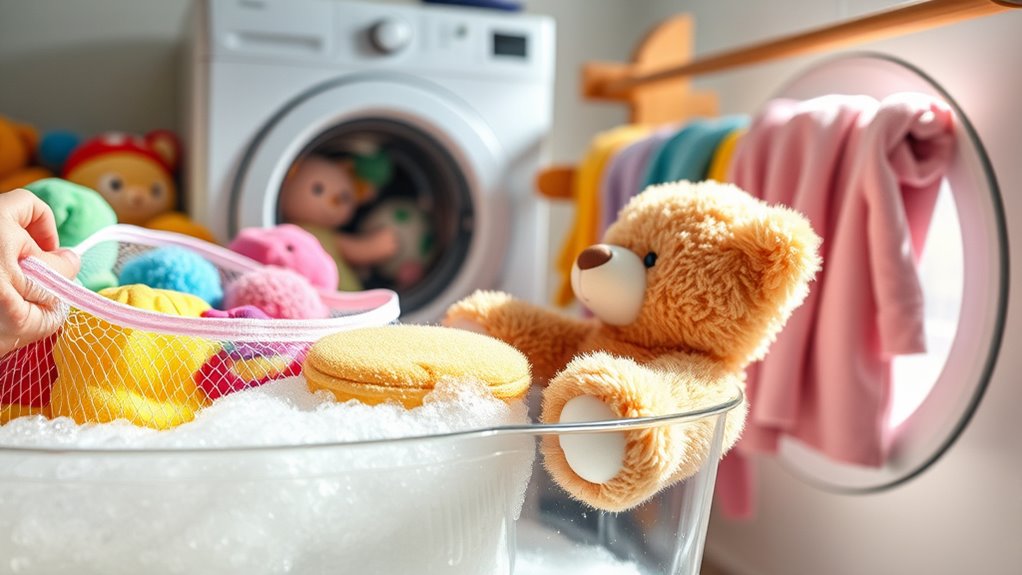
If machine washing is an option, use a gentle cycle with cold water. It’s a smart idea to place the toys in a mesh bag to protect them during the wash.
For delicate items, hand washing is often the best choice. Simply fill a basin with lukewarm water and add a mild detergent.
If you notice any stains, act quickly! Spot clean them using a diluted cleaner for the best results.
Once washed, air dry your toys on a towel or use low heat in the dryer. Just remember to check frequently to ensure they don’t get damaged.
With these detailed tips, you can keep your stuffed toys fresh and fluffy!
Key Takeaways
- Check the care label for specific washing instructions and any limitations on water temperature.
- For machine washing, use a gentle cycle with cold water and protect toys in a mesh bag.
- Hand wash delicate items in lukewarm water with mild detergent to preserve their quality.
- Spot clean stains immediately with a diluted Simple Green solution and air dry afterward.
- Wash stuffed toys every 3-6 months and store them in breathable containers to maintain cleanliness.
Checking Care Instructions
How do you guarantee your stuffed toy gets the best care possible?
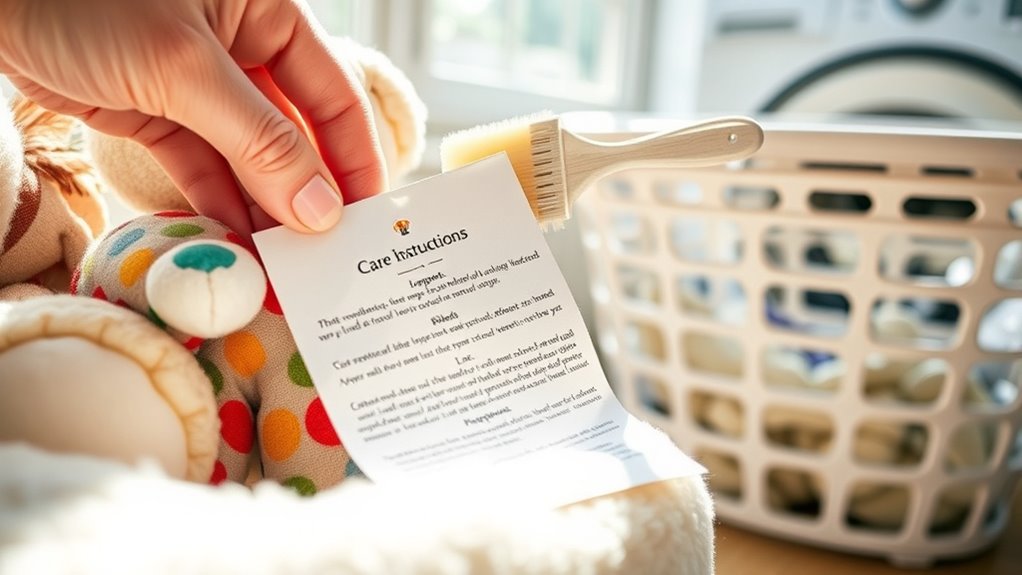
Start by checking the care label attached to it. This label holds essential washing instructions, guiding you on whether to machine wash, hand wash, or spot clean your toy.
Begin by examining the care label on your stuffed toy for crucial washing guidance.
Look for symbols that indicate the appropriate method, like “do not wash” or “hand wash,” to prevent any damage.
Pay attention to temperature limits, as some toys only tolerate cold or lukewarm water.
If your stuffed toy features delicate materials like mohair or alpaca, hand washing is often the safest choice.
And if the care label is missing or unclear, don’t hesitate to reach out to customer service for help with the right cleaning methods.
Cleaning Methods: Machine vs. Hand Washing
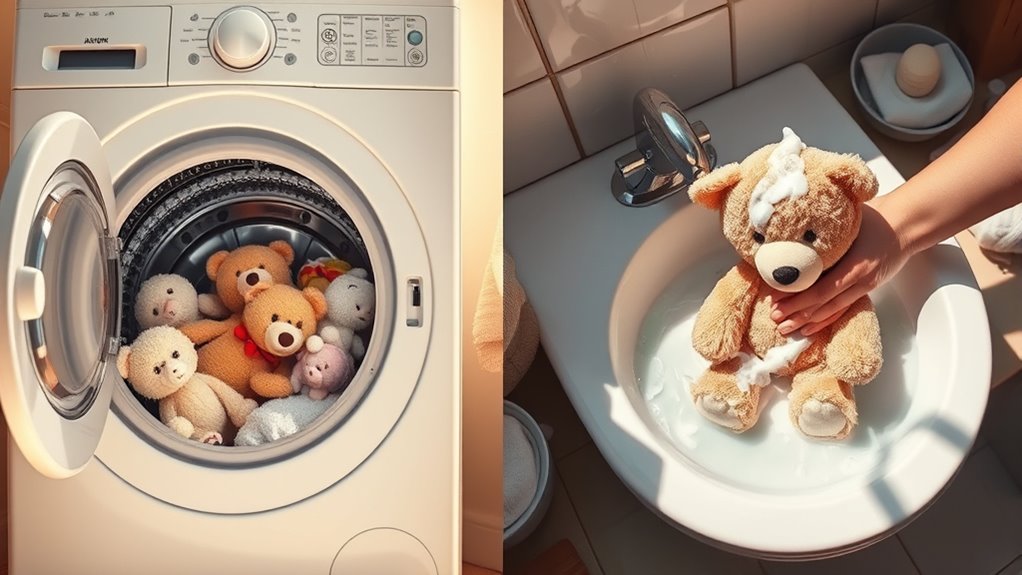
After you’ve checked the care instructions, it’s time to choose the right cleaning method for your stuffed toy.
You can either opt for machine washing or hand washing, depending on the toy’s materials and components.
| Method | Best For | Tips |
|---|---|---|
| Machine Washing | Most plush toys | Use a gentle cycle and cold water. Place in a mesh bag to protect. |
| Hand Washing | Delicate items/electronic toys | Fill a sink with lukewarm water and mild detergent. Agitate gently. |
Always refer to the care instructions to decide which method suits your toy best.
After washing, air dry your toy to prevent mold, unless the instructions specify otherwise.
Spot Cleaning Stains Effectively
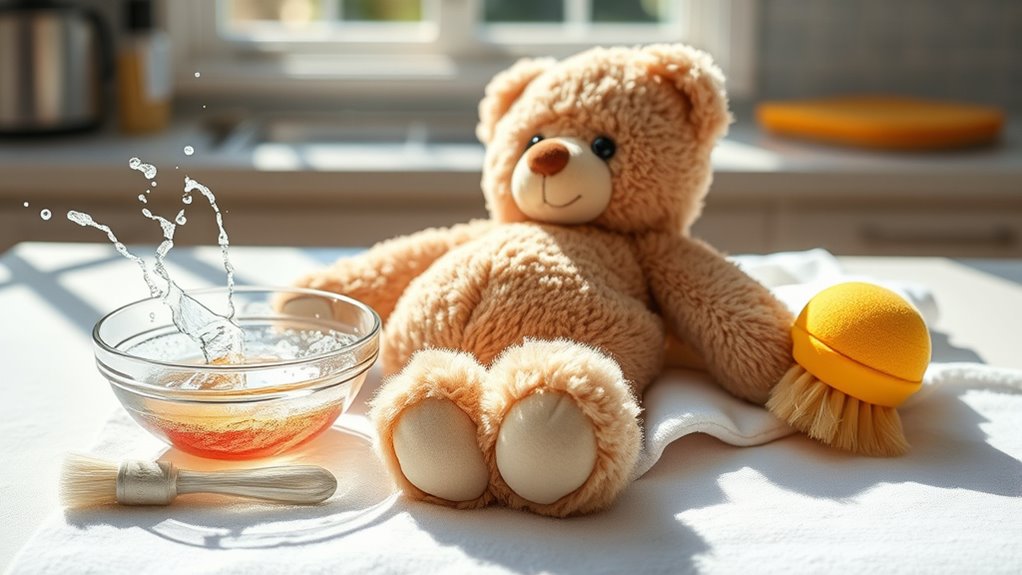
When you notice a stain on your stuffed toy, it’s important to act quickly to prevent it from setting in.
Follow these steps for effective spot cleaning:
For effective spot cleaning, follow these simple steps to keep your stuffed toys looking fresh and clean!
- Wet the stained area with clean, cold water to prepare for treatment.
- Create a cleaning solution by diluting Simple Green All-Purpose Cleaner in a 1:10 ratio and apply it directly to the stain.
- Let the cleaner sit for 1-2 minutes to break down the dirt. Then, gently scrub with an old toothbrush or nylon brush, being careful not to damage the fabric.
- Rinse the area thoroughly with clean, cold water to remove any cleaner residue. Blot with a damp cloth before air drying.
This method works wonders for keeping your plush toys looking fresh!
Drying Techniques for Stuffed Toys
Drying stuffed toys properly is essential to keep them looking great and prevent damage.
Start by air drying your plushies on a towel in a well-ventilated area. This helps avoid mold and maintains their shape.
If you choose to use a dryer, set it to low heat and toss in dryer balls or clean tennis balls to help fluff the toys.
Periodically check on them during the drying process to guarantee they don’t overheat or sustain damage.
For delicate materials or items labeled “do not tumble dry,” stick to air drying.
Flipping or shaking the stuffed toy occasionally while it dries will help redistribute the stuffing and keep it looking soft and cuddly.
Maintaining Softness and Fluffiness
To keep your stuffed toys looking fresh and feeling soft, regular maintenance is key.
Follow these steps to guarantee their softness and fluffiness:
- Fluff regularly: Use a soft-bristled brush to gently brush the fur, keeping it looking vibrant.
- Redistribute stuffing: After washing, shake or massage the toy to restore its original shape.
- Dryer method: Toss the plush toy in the dryer on a no-heat setting with clean tennis balls to help fluff it up.
- Avoid over-stuffing: Assure the toy is completely dry to prevent mold growth and maintain its plush texture.
With consistent care and attention, your stuffed toys will remain soft and cuddly for years to come.
Regular Cleaning and Storage Tips
To keep your stuffed toys clean and safe, you should wash them every few months to prevent dirt buildup. Storing them in breathable containers will help avoid moisture and maintain their condition. Regularly vacuuming these toys also helps eliminate dust and allergens, ensuring they’re fresh for playtime.
Cleaning Frequency Recommendations
Regularly cleaning stuffed toys every few months is essential for maintaining their hygiene and preventing dirt buildup, especially if they’re often used for cuddling or sleeping.
To guarantee effective cleaning and upkeep, consider these recommendations:
- Wash stuffed toys every 3-6 months, adjusting based on usage.
- Inspect for wear and tear regularly; address stains or damage immediately.
- Encourage children to participate in the cleaning process to foster responsibility.
- Store cleaned toys in breathable containers, avoiding plastic bags to prevent moisture buildup.
Proper Storage Techniques
After ensuring your stuffed toys are clean, proper storage techniques play an essential role in maintaining their condition.
Store your stuffed animals in a cool, dry place to prevent moisture buildup that can cause mold and mildew.
Avoid plastic bags, as they trap moisture; instead, use breathable containers or cloth storage bags.
Regularly check the care of your stored stuffed animals for any signs of wear, dirt, or pests.
It’s also a good idea to rotate the display or storage of stuffed animals to promote even wear and keep them looking fresh.
Encourage your kids to establish a routine for washing and inspecting their toys to help maintain cleanliness and prolong their lifespan.
Dust and Allergen Control
While it might seem like a hassle, keeping your stuffed animals free of dust and allergens is crucial for your child’s health.
Regular cleaning and proper storage can make a significant difference. Here are some tips to help you maintain a clean environment:
- Vacuum stuffed animals regularly to remove dust and allergens.
- Store them in breathable containers or shelves to avoid moisture and mold.
- Clean stuffed animals every few months to prevent dust buildup.
- Rotate stuffed animals frequently to guarantee even wear and hygiene.
Involving your child in this process not only fosters good hygiene habits but also makes cleaning more fun.
Frequently Asked Questions
Can I Wash Stuffed Toys With Batteries or Sound Boxes?
No, you can’t wash stuffed toys with batteries or sound boxes in water. Instead, use a damp cloth and mild detergent for spot cleaning. Always check the care label for specific cleaning instructions.
How Often Should I Wash My Child’s Stuffed Toys?
Regularly refresh your child’s cherished companions! You should wash stuffed toys every few months. If they’re cuddle constants or your child’s been sick, consider cleaning them weekly to keep germs and grime at bay.
Are There Any Toys That Should Never Be Washed?
Yes, some toys shouldn’t be washed. Avoid washing delicate materials, electronic components, and items labeled “do not wash.” Always check care labels to guarantee you’re protecting your toys from potential damage during cleaning.
What if the Stuffed Toy Has a Strong Odor?
If your child’s favorite stuffed bear smells after a camping trip, sprinkle baking soda over it, let it sit for half an hour, then vacuum. For tougher odors, wash it with vinegar and mild detergent.
Can I Use Bleach to Clean Stuffed Toys?
No, you shouldn’t use bleach to clean stuffed toys. It can damage the fabric and irritate sensitive skin. Instead, opt for mild detergents or a diluted vinegar solution for safe and effective cleaning.
Conclusion
In summary, keeping your cuddly companions clean and cozy is essential for their comfort and charm.
By checking care instructions, choosing the right cleaning method, and drying them properly, you’ll preserve their plushness and personality.
Regularly revitalizing their fluff not only maintains their appeal but also promotes a healthier play environment.
So, don’t delay—dedicate a day to delight in the delightful task of washing your stuffed toys.
This ensures they stay snuggly and safe for years to come!
Remember, a clean stuffed toy is not just about looks; it’s about creating a safe and inviting space for playtime.
So grab those toys and give them the love they deserve.
Your efforts will not only keep them looking great but also enhance their comfort and safety!