What Are Sensorimotor Toys and Why Are They Important?
Sensorimotor toys are specially designed playthings that enhance your child’s sensory processing and motor skills through playful interaction.
They encourage exploration with varied textures and movements, which supports both fine and gross motor development.
These toys are not only instrumental in boosting cognitive growth but also play a significant role in aiding emotional regulation.
This makes them essential for all children, especially those facing sensory processing difficulties.
Curious about how to choose the right sensorimotor toys for your child?
Want to learn more about their incredible benefits?
Keep exploring to discover more solutions!
Key Takeaways
- Sensorimotor toys stimulate sensory processing and enhance motor skills through varied textures and movements for exploration.
- They help develop fine motor skills, essential for tasks like writing and self-care.
- These toys promote cognitive growth by encouraging problem-solving and imaginative play.
- Sensorimotor toys support emotional regulation, providing calming effects for children experiencing anxiety or sensory overload.
- Choosing the right toys involves considering a child’s sensory preferences and developmental stage for optimal benefits.
Understanding Sensorimotor Toys
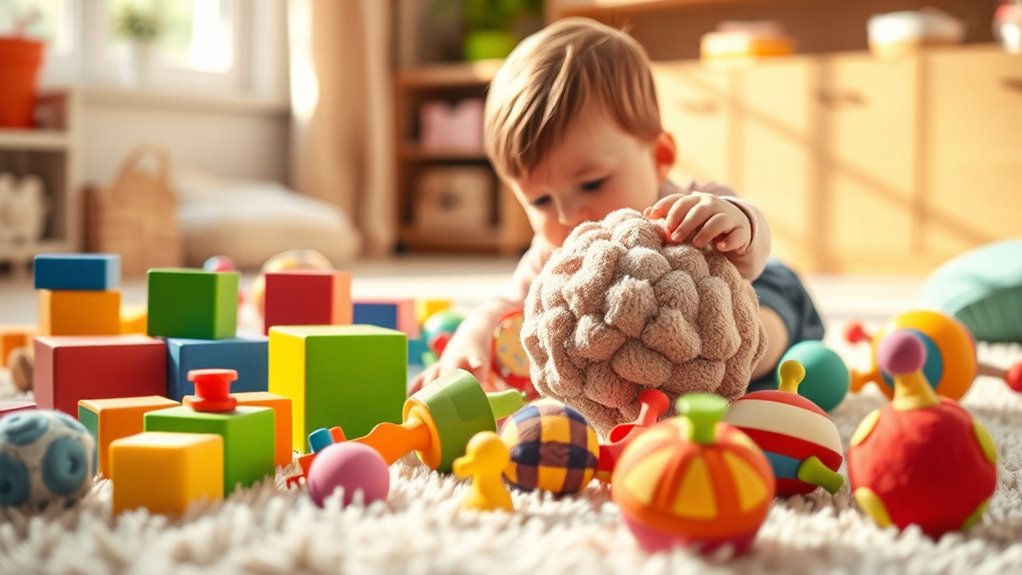
When you think about toys that truly engage a child’s senses, sensorimotor toys come to mind.
These toys are specially designed to stimulate sensory processing while enhancing motor skills.
They often feature varied textures and movements that encourage exploration, helping kids develop fine motor skills.
As children interact with these toys, they receive essential feedback that promotes problem-solving and cognitive growth.
Additionally, sensorimotor toys can aid in emotional regulation by providing calming tactile experiences.
This can be particularly beneficial for kids experiencing anxiety or sensory overload.
For children with developmental disorders, these toys play an important role in supporting sensory integration.
Ultimately, they promote overall developmental growth and enhance their playtime experience.
Benefits of Sensorimotor Toys
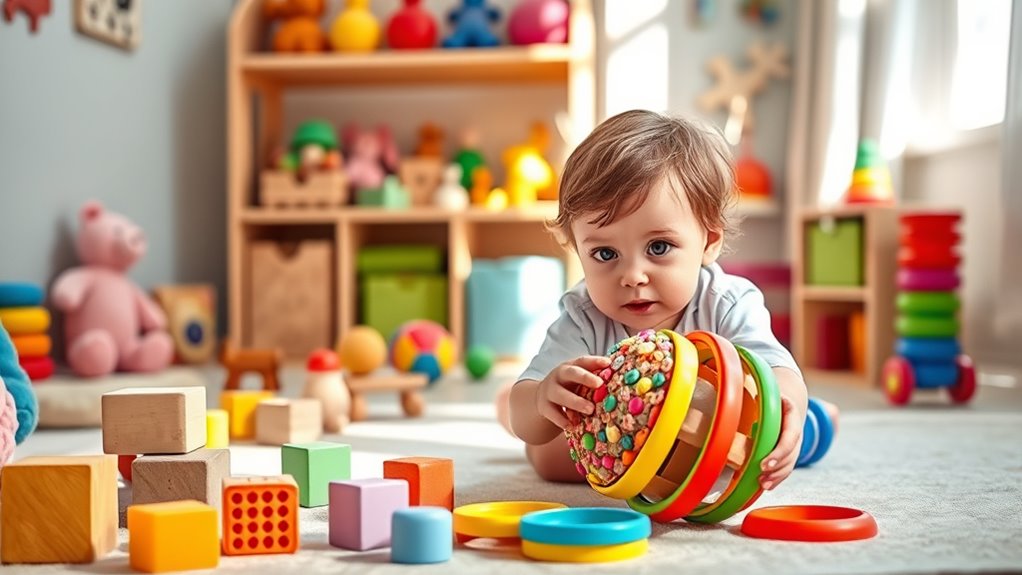
Sensorimotor toys offer numerous benefits that can greatly enhance a child’s development.
By engaging with these toys, you can help your child:
- Develop fine and gross motor skills: Grasping and manipulating different textures encourages movement and coordination.
- Foster cognitive growth: Problem-solving and imaginative play stimulate the child’s brain, sparking creativity and exploration.
- Promote sensory integration: These toys provide essential sensory input, aiding children with sensory processing difficulties by enhancing self-regulation and emotional control.
The benefits of sensory play extend beyond enjoyment; they improve focus and reduce anxiety.
This offers calming effects during overwhelming situations.
Types of Sensorimotor Toys
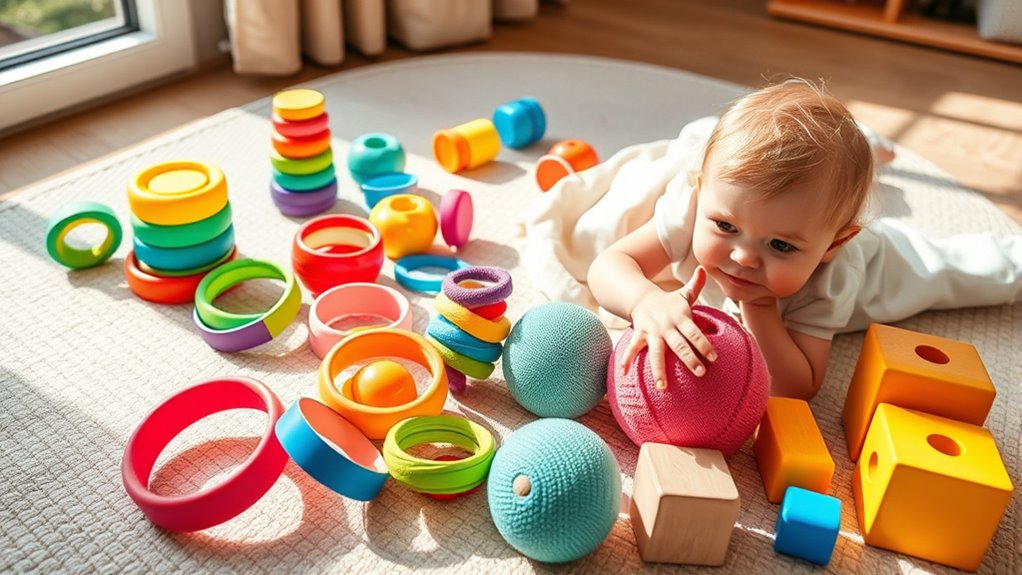
As you explore the world of sensorimotor toys, you’ll find a diverse range designed to engage your child’s senses and enhance their motor skills.
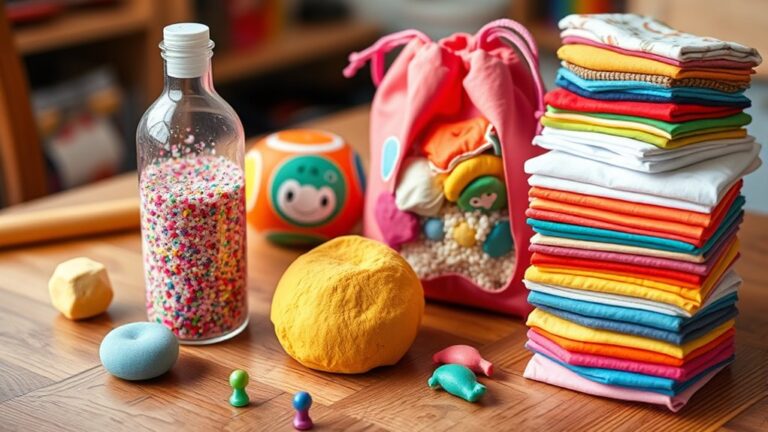
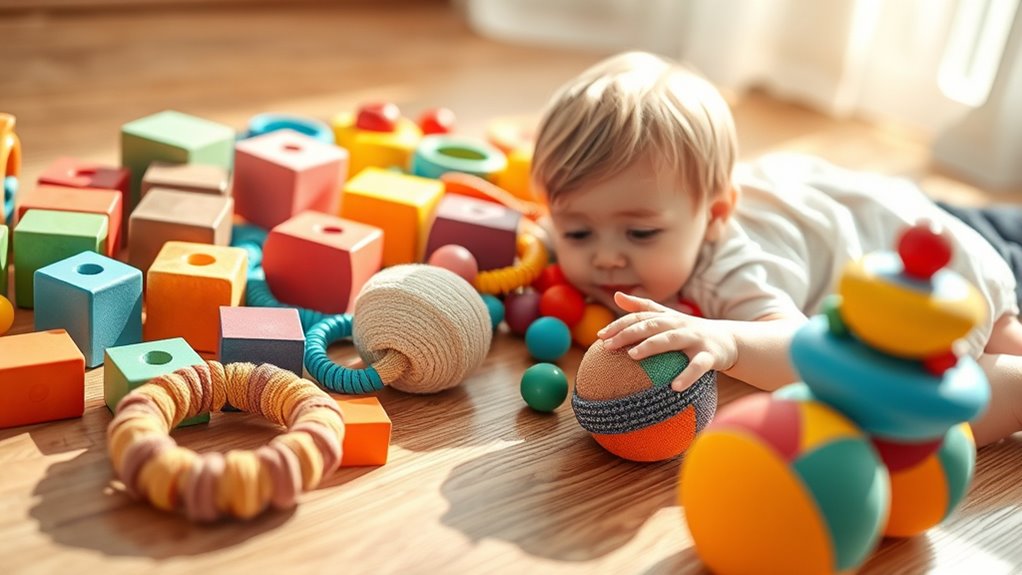
Textured balls and building blocks offer unique sensory feedback, making them perfect for tactile play. Musical instruments not only stimulate auditory senses but also encourage active participation.
Textured balls and building blocks provide engaging tactile experiences, while musical instruments foster auditory exploration and active engagement.
Fidget toys, like squishy balls, improve fine motor skills while providing calming effects for those with sensory sensitivities. Toys that involve movement, such as balance boards and rocking toys, promote gross motor development and body awareness.
Finally, sensory bins filled with materials like sand or water encourage imaginative play and tactile exploration, essential for cognitive growth and sensory integration.
These toys are pivotal in your child’s development journey.
How Sensorimotor Toys Support Development
Sensorimotor toys play a key role in enhancing your child’s cognitive skills by encouraging problem-solving and creativity during play. As they explore different textures and sounds, these toys also support emotional regulation, helping kids learn to manage their responses to sensory input. By engaging with these toys, your child develops important skills that pave the way for future learning and emotional well-being.
Cognitive Skill Enhancement
While you might not realize it, the toys your child plays with can greatly enhance their cognitive skills.
Sensorimotor toys engage your child’s curiosity and creativity, promoting essential development in several key areas:
- Problem-solving: As your child navigates challenges, they learn to think critically and find solutions.
- Fine motor skills: Manipulating these toys helps improve dexterity, vital for tasks like writing and self-care.
- Spatial awareness: Exploring their physical environment through play sharpens their ability to navigate space effectively.
Additionally, interacting with these toys supports memory development and encourages language skills as you discuss textures, colors, and actions.
This interaction expands their vocabulary and helps them communicate better.
Emotional Regulation Support
When children engage with sensorimotor toys, they not only explore different sensations but also develop essential emotional regulation skills.
These sensory toys help them process feelings in a safe environment, reducing anxiety and stress.
The calming effect of repetitive actions allows kids to manage overwhelming emotions more effectively.
Weighted or textured toys provide deep pressure stimulation, enhancing a child’s sense of security and improving focus.
By promoting physical movement and sensory exploration, these toys encourage children to express their feelings.
This leads to better communication and social interactions.
Consistent use of sensorimotor toys supports the development of coping strategies.
It helps children navigate changes and challenges with greater ease and resilience.
Real-Life Applications of Sensorimotor Toys
Many children benefit from real-life applications of sensorimotor toys, which play an essential role in their development.
These toys foster sensory exploration while enhancing emotional regulation.
Sensorimotor toys promote sensory exploration and support emotional regulation in children’s development.
Here are three ways you can see their impact:
1. Therapy Settings: Children with sensory processing disorders use textured balls and fidget tools to improve self-regulation.
This helps reduce anxiety during challenging situations.
2. Daily Routines: Incorporating squishy toys into playtime can help young children like Susie calm down and focus.
This is especially useful when they feel overwhelmed.
3. Social Interaction: Sensorimotor toys encourage group play, which allows kids to share and develop communication skills.
This ultimately strengthens their relationships.
Choosing the Right Sensorimotor Toys for Your Child
Choosing the right sensorimotor toys for your child requires careful consideration of their unique sensory preferences and developmental stage.
Observe how your child interacts with various textures, sounds, and visuals; they might seek or avoid specific stimuli.
Select age-appropriate toys that promote both fine and gross motor skills while encouraging sensory exploration.
Look for options that offer diverse experiences, such as different textures, colors, and movements, to keep your child engaged.
If your child has sensory processing differences, consult pediatric therapists for tailored advice.
Finally, prioritize safety by ensuring all toys are made from non-toxic materials and meet safety standards.
Your child’s safety and enjoyment should always come first in their play experiences.
Frequently Asked Questions
Are Sensorimotor Toys Safe for All Age Groups?
Sensorimotor toys are generally safe for various age groups, but you should always check for durability and choking hazards. Supervise younger children during play and consult experts to guarantee the toys meet your child’s needs.
How Do I Clean and Maintain Sensorimotor Toys?
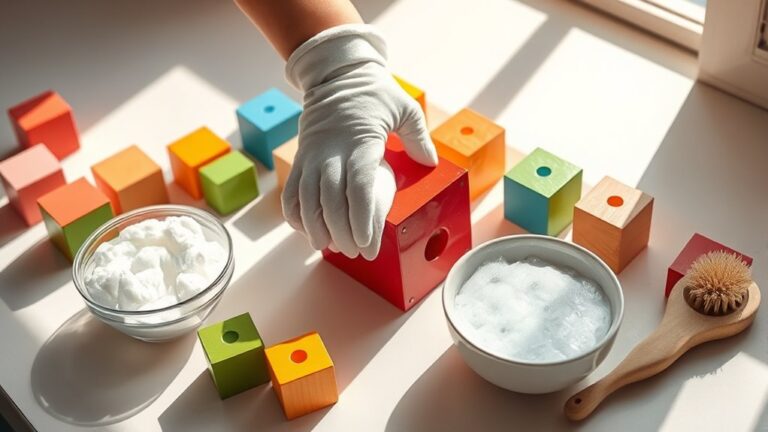
To keep those vibrant, squishy toys safe, wash them with warm soapy water and a soft cloth. Let them air dry completely, and always inspect for wear to guarantee endless fun and exploration.
Can Sensorimotor Toys Be Used for Special Needs Children?
Yes, you can definitely use sensorimotor toys for special needs children. They engage their senses, support skill development, and help regulate emotions, making playtime both enjoyable and beneficial for their growth and learning.
Where Can I Purchase High-Quality Sensorimotor Toys?
You can find high-quality sensorimotor toys at specialty retailers like Little-ish, online marketplaces such as Amazon and Etsy, or local therapy supply stores. Each option offers unique selections to enrich your child’s sensory play experience.
How Do I Introduce Sensorimotor Toys to My Child?
Start by observing your child’s interests, then choose engaging toys. Introduce a variety in a designated sensory play area, and incorporate them into daily routines. Play together, discussing sensations to enhance their understanding and enjoyment.
Conclusion
In a world filled with screens and gadgets, it’s ironic how the simplest toys can spark the most profound development.
By choosing sensorimotor toys, you’re not just picking playthings; you’re inviting exploration, creativity, and growth into your child’s life.
While they may look like mere objects, they hold the power to shape young minds in ways modern technology can only dream of.
So, let your child immerse themselves in a world of tactile wonder—after all, sometimes the best things really are the simplest.
In conclusion, sensorimotor toys are essential for child development. They encourage exploration and creativity, helping young minds grow in a hands-on way that screens simply can’t replicate.
By integrating these toys into your child’s playtime, you’re supporting their sensory and motor skills, paving the way for a brighter future. So, embrace the charm of simplicity and watch your child thrive!