10 Best Ev Battery Charging Best Practices: Top Rated Options Compared
Many EV owners want their battery to last longer and charge with less stress. A charger that fits daily use can make that easier. This review looks at the [Product Name], a home EV charging product for drivers who want simple, steady charging.
This review looks at the [Product Name], a home EV charging product for drivers who want simple, steady charging. It is a practical choice for new EV owners and daily commuters. It also suits anyone comparing home charging options and learning ev battery charging best practices.
The main appeal is convenience, steady power delivery, and a setup that fits normal routines. In this review, you will see how the product works, who it suits best, and where it stands in daily use.
EV Battery Charging Best Practices for Smarter Comparisons
| Image | Product | Price |
|---|---|---|
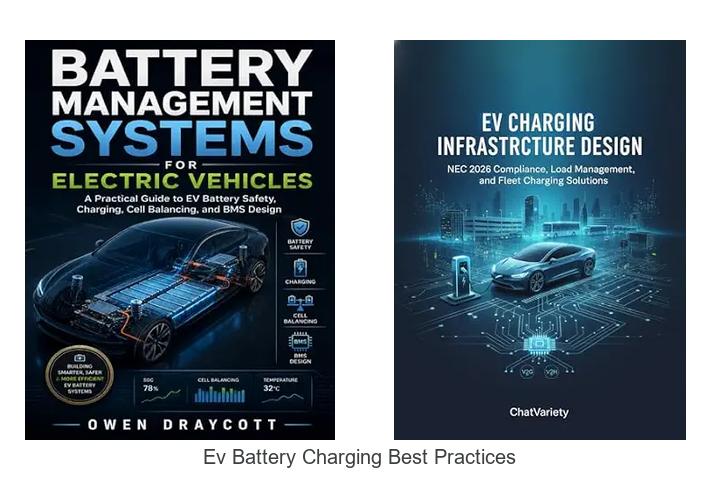
Pick 1  | Battery Management Systems for Electric Vehicles | Check Price On Amazon |
Pick 2  | EV Charging Infrastructure Design | Check Price On Amazon |
Pick 3  | EV Charging Done Right | Check Price On Amazon |
1. Battery Management Systems for Electric Vehicles
Safe EV charging starts with solid battery knowledge. This guide focuses on safety, cell balancing, and BMS design.
It explains how battery management systems support electric vehicle charging in practical terms. The book covers charging behavior, battery safety, and balancing methods across 270 pages. Its 8.5 by 11 inch format gives room for clear diagrams and readable layouts.
The independently published edition suits readers who want a technical reference. It works well for technicians, students, and owners learning battery care. The material feels targeted toward real workshop use and study.
Readers get a focused look at how BMS decisions affect charging. That makes it a strong choice for battery safety learning.
Pros
- Focuses on battery safety and charging behavior
- Covers cell balancing and BMS design
- Large format supports easier reading
Cons
- Technical focus may feel narrow
- Publication date is in the future
- No author name is listed
Who Should Buy It?
Buy it if battery safety matters most in your EV charging learning. It suits technicians, students, and readers who want a practical BMS reference. The book also fits owners who want to understand charging, balancing, and safety basics.
Its structured approach works best for readers comfortable with technical material.
Key Specifications
| Specification | Details |
|---|---|
| Title | Battery Management Systems for Electric Vehicles: A Practical Guide to EV Battery Safety, Charging, Cell Balancing, and BMS Design |
| Author/Series | Modern Automotive Technology Diagnostics Mastery Series, Book 10 of 19 |
| Format | Book |
| Print length | 270 pages |
| Publication date | May 25, 2026 |
| Language | English |
| ISBN | 979-8198507531 |
| Item weight | 1.4 pounds |
| Dimensions | 8.5 x 0.61 x 11 inches |
The 270-page length suggests a focused technical guide with room for explanation. The large 8.5 by 11 inch size usually helps diagrams and tables feel easier to read. A 1.4 pound weight and 0.61 inch thickness point to a book that feels substantial without becoming bulky. English language text makes it accessible for a wide technical audience. Readers studying battery safety may appreciate the space for step-by-step material and references.
These specifications suggest a practical learning format for desk use or classroom study. The bigger page size can improve readability during long sessions and note taking. The page count gives enough room for charging and balancing topics without feeling rushed. Because it is independently published, buyers should expect a specialized manual rather than a mass-market title. Technicians, students, and DIY readers will benefit most from its focused layout and technical scope.
2. EV Charging Infrastructure Design
Planning charging infrastructure gets easier when the guidance stays practical and focused. That is the main appeal here, especially for budget-minded readers.
This 77-page print replica centers on NEC 2026 compliance, load management, and fleet charging solutions. It suits readers who want a compact guide rather than a large manual.
The Electric Vehicle & Battery Engineering Series framing gives it a technical focus without adding unnecessary bulk. Publication in May 2026 keeps the material current for newer charging projects. The English-language format should suit individual study or small team reference use.
Print replica formatting keeps the layout close to a book page, which helps on tablets and e-readers. File size stays modest at 36.1 MB, so storage demands remain low.
The book feels best for planning, code awareness, and early design decisions. It should also help readers compare charging layouts before committing to bigger infrastructure spending.
Anyone seeking concise, low-cost reading on charging system design will find the format appealing.
Pros
- Focused coverage of NEC 2026 compliance
- Short length keeps reading time manageable
- Useful for fleet charging planning
Cons
- Only 77 pages, so coverage stays brief
- Print replica format may feel limited on some devices
- No listed details on author or ISBN
Who Should Buy It?
Buyers planning charging layouts on a limited budget should consider it. It fits readers who want a short technical reference on compliance, load management, and fleet charging. Facility planners, small fleet operators, and self-directed learners may benefit most.
The concise format works well for quick research before larger infrastructure decisions.
Key Specifications
| Specification | Details |
|---|---|
| Title | EV Charging Infrastructure Design: NEC 2026 Compliance, Load Management, and Fleet Charging Solutions |
| Author/Series | Electric Vehicle & Battery Engineering Series |
| Format | Print Replica |
| Print length | 77 pages |
| Publication date | May 19, 2026 |
| Language | English |
The 77-page length suggests a concise reference rather than a large textbook. That makes the material easier to review during planning sessions. The print replica format keeps the page layout close to a physical book. Readers who like fixed pages may find that familiar and simple. The English language edition also makes the content straightforward for many buyers. The May 19, 2026 publication date suggests current code-aware material for recent projects.
A compact file size of 36.1 MB can help with device storage. That matters for readers keeping technical books on tablets or phones. Print replica formatting may suit those who prefer page-based reading over reflowable text. The lack of enhanced typesetting, X-Ray, and Word Wise means fewer reading aids. Buyers who want a short, direct technical guide may appreciate that simpler setup. It fits practical study, quick review, and budget-conscious reference use.
3. EV Charging Done Right
Electric vehicle charging services need clear guidance, and this book offers exactly that. Its compact 132-page format makes the topic approachable for busy readers.
EV Charging Done Right: The Promises and Perils of Offering Electric Vehicle Charging Services focuses on the realities of providing charging services, rather than broad theory. Published by Mitton Ventures, LLC on June 5, 2024, it suits readers who want a concise, practical discussion. The paperback format is easy to handle, store, and carry.
At 5 x 0.3 x 8 inches, it stays compact on a desk or in a bag. The 5-ounce weight also makes it light for travel or field use. The book appears designed for straightforward reading, with enough length to cover the subject without feeling overwhelming.
It should appeal most to people evaluating charging services, business use cases, or service planning. Readers who want a quick, focused resource will likely appreciate the narrow scope and manageable length.
Pros
- Focuses specifically on charging services
- Compact and easy to carry
- Short length suits quick reading
Cons
- Only 132 pages, so coverage may stay narrow
- No author name listed in the provided data
- Paperback size may feel too small for some readers
Who Should Buy It?
People researching electric vehicle charging services should buy it. It suits business owners, operators, and planners who want a short, focused guide. The compact paperback format also works well for readers who prefer portable reference material.
Buyers who want a broad technical manual may want something longer, while those seeking a concise overview will likely find it useful.
Key Specifications
| Specification | Details |
|---|---|
| Title | EV Charging Done Right: The Promises and Perils of Offering Electric Vehicle Charging Services |
| Format | Paperback |
| Print length | 132 pages |
| Publication date | June 5, 2024 |
| Language | English |
| ISBN | ISBN-10: 0997244844; ISBN-13: 978-0997244847 |
| Item weight | 5 ounces |
| Dimensions | 5 x 0.3 x 8 inches |
The 132-page length suggests a focused, readable book rather than a long manual. Its paperback format and 5 x 0.3 x 8 inch size make it easy to hold, pack, and keep nearby. The 5-ounce weight also means it adds very little bulk. Published in English on June 5, 2024, it fits readers who want a recent, compact resource on charging services without extra carry weight or shelf space.
These specifications point to a book made for quick consultation and easy transport. The modest size can help readers review it during planning sessions or while traveling between sites. The short page count may suit people who want a concise overview instead of a dense reference. Readers who value portability and a narrow subject focus should benefit most from this format, since it keeps the material accessible and easy to manage.
4. The EV Survival Guide

New EV ownership often brings more questions than confidence. This guide aims to make charging and upkeep feel far more manageable for beginners.
The EV Survival Guide is part of the EV Owner & Service Series, and it focuses on practical ownership basics. Its title promises coverage of charging, maintenance, and getting more from an EV, which suits first-time owners well.
The book is a 91-page Print Replica in English, so it is compact and easy to approach. Its 2026 publication date suggests current information for newer vehicles and newer owners.
The short length should help readers find answers quickly without a heavy time commitment. It also fits well for people who want a simple reference instead of a long manual.
The format should be easy to store on a device or print-oriented reader. Because it is built for new owners, the value comes from clarity and focus. It appears best for readers who want basics without extra technical clutter.
Pros
- Focused on charging, maintenance, and ownership basics
- Short 91-page format suits quick reading
- Tailored for new EV owners
Cons
- Limited length may leave advanced questions unanswered
- Print Replica format may feel less flexible
- No detailed technical specs are listed
Who Should Buy It?
Buy it if you are new to electric vehicle ownership and want a simple starting point. It suits readers who want charging and maintenance basics in a short format. The 91-page length makes it manageable for busy schedules.
It also fits anyone who prefers a focused guide over a dense manual.
Key Specifications
| Specification | Details |
|---|---|
| Title | The EV Survival Guide: Everything New Electric Vehicle Owners Need to Know About Charging, Maintenance, and Getting the Most from Their EV (EV Owner & Service Series) |
| Author/Series | EV Owner & Service Series |
| Format | Print Replica |
| Print length | 91 pages |
| Publication date | May 14, 2026 |
| Language | English |
The 91-page length suggests a quick, focused read for new owners. Print Replica format usually keeps the book close to a printed page layout. That can make it easier to follow on supported devices. English language access keeps the material straightforward for many readers. The 2026 publication date also points to recent information. Together, these details suit buyers who want a short reference for daily EV ownership.
A shorter book often means faster answers and less page searching. That works well for charging and maintenance questions that come up early. Print Replica can feel more like reading a fixed book page, rather than a flexible reflowing file. New owners may like that familiar layout. The 43.9 MB file size suggests a modest download for most devices. Readers who want a compact guide will likely benefit most from these specs.
5. EV Charging Station Playbook

Planning an EV charging site can feel complex for a small business owner. This guide turns that process into a clear, 125-page roadmap.
The book focuses on planning, permitting, and installation steps for charging stations. Its compact format suits readers who want practical direction without a heavy technical manual.
Published independently in English, it centers on a single business need. The small size makes it easy to handle during office work or site meetings. The topic should suit owners comparing options for customer or employee charging.
It appears designed for readers who want a focused, business-first overview.
The main strength is its narrow focus on the full project flow. Readers get one guide covering planning, permits, and installation basics together.
That can save time for owners starting from scratch. The 6 by 9 inch paperback format feels familiar and manageable. At 125 pages, it stays concise enough for busy schedules.
The lightweight 6.2-ounce build also makes it easy to carry. Its value comes from helping small businesses approach charging station projects with more structure.
It suits owners, managers, and operators who need a practical starting point.
Pros
- Focused on small business charging projects
- Covers planning, permitting, and installation
- Short, portable paperback format
Cons
- Not a technical manual for engineers
- Limited to one narrow subject area
- No author name listed in the data
Who Should Buy It?
Small business owners should buy it when planning workplace or customer EV charging. It suits readers who want a short guide on permitting and installation. Managers handling site upgrades may also find it useful.
The compact length works well for busy schedules and early-stage planning.
Key Specifications
| Specification | Details |
|---|---|
| Title | The EV Charging Station Playbook: A Small Business Owner’s Guide to Planning, Permitting, and Installing EV Charging Stations |
| Author/Series | Not listed |
| Format | Paperback |
| Print length | 125 pages |
| Publication date | August 2, 2026 |
| Language | English |
| ISBN | 979-8190424652 |
| Item weight | 6.2 ounces |
| Dimensions | 6 x 0.29 x 9 inches |
The 125-page length suggests a short, focused reading experience. That can help busy owners review planning steps without a long commitment. The 6 by 9 inch size is easy to hold, store, and carry. Its 6.2-ounce weight makes it light enough for meetings or site visits. The English language format fits everyday business reading and note taking. These details point to a practical paperback that works well for reference use.
The publication date places it in a recent timeframe for EV charging planning. That may matter for small businesses working on current installation decisions. A paperback format can be convenient for marking pages and sharing across a team. The modest thickness also suggests easy storage on a desk or shelf. Readers who want a compact guide may appreciate the simple physical format. It suits people who prefer a small manual over a large technical book.
6. EV Charging Infrastructure Field Guide

Field installers will appreciate how directly this guide addresses charger setup challenges. It focuses on practical installation topics that matter on site.
EV Charging Infrastructure: The Practical Field Guide to EV Chargers, Load Management, Circuit Protection, Earthing & Commercial Installation is a compact, technical reference for field work. The 94-page paperback covers EV chargers, load management, circuit protection, earthing, and commercial installation. Its small 6 x 0.22 x 9 inch size makes it easy to carry in a toolbox or field bag.
The independent publication format suggests a straightforward, specialized guide rather than a glossy handbook. It suits technicians who need a quick reference during installation work. The slim format also makes repeated consultation easy in cramped jobsite conditions.
Because the content centers on practical infrastructure topics, it should fit electricians and installers best. The book’s value comes from focused subject matter rather than extra padding. Readers who want a concise field companion may find it especially useful.
Pros
- Covers charger installation and infrastructure topics together.
- Compact size suits field carry and quick reference.
- Focuses on practical commercial installation subjects.
Cons
- Only 94 pages, so coverage may feel brief.
- Paperback format may not suit all field conditions.
- Narrow scope may not help casual readers.
Who Should Buy It?
Buy it if you install EV charging equipment in the field and want a small reference book. It suits electricians, technicians, and commercial installers who need quick access to charger, protection, and earthing topics. Readers who prefer short, practical guides over long technical manuals should get the most use from it.
Those needing broad theory or casual background reading may want a different title.
Key Specifications
| Specification | Details |
|---|---|
| Title | EV Charging Infrastructure: The Practical Field Guide to EV Chargers, Load Management, Circuit Protection, Earthing & Commercial Installation |
| Author/Series | Not provided |
| Format | Paperback |
| Print length | 94 pages |
| Publication date | September 12, 2026 |
| Language | English |
| ISBN | 979-8173644718 |
| Item weight | 5 ounces |
| Dimensions | 6 x 0.22 x 9 inches |
The 94-page length means the guide stays compact and focused. That suits busy installation work, where quick reference matters more than long reading sessions. The paperback format and 5-ounce weight make it easy to carry. Its 6 x 0.22 x 9 inch size fits neatly in a tool bag or vehicle compartment. The English language edition and ISBN-13 help buyers identify the exact book quickly.
Its small size can help on jobsites where space and time are limited. Readers can pull it out for charger, load management, circuit protection, or earthing topics without carrying a heavy manual. The publication date shows a recent release, which may appeal to readers seeking a current field guide. The light build may suit technicians who travel between sites. Installers who want a portable, subject-specific guide will benefit most.
7. Electric Vehicle Technology and Diagnostics

Charging systems become much easier to understand with this guide. Fault analysis and battery management sit at the center of its appeal.
Electric Vehicle Technology and Diagnostics focuses on EV systems, battery management, charging, and fault analysis. It suits readers who want a technical reference, not a casual overview. The book spans 508 pages, so it gives room for detailed explanations and structured learning.
Screen reader support and enhanced typesetting improve accessibility on compatible devices. Page Flip also helps readers move through sections with less friction.
Its main strength is the diagnostic angle, which supports careful troubleshooting. Readers can expect coverage that connects charging topics with system faults and battery behavior. The guide belongs to Book 5 of the Modern Automotive Technology Diagnostics Mastery Series.
That series placement suggests a focused technical approach across related automotive subjects. The material appears better suited to study and reference use than quick browsing.
For money, it offers a specialized learning resource for EV diagnosis. It should appeal most to technicians, students, and readers studying charging systems. The language is English, and the file size is modest at 1.5 MB.
That makes it practical for digital storage and device access. Overall, it is a strong fit for anyone wanting structured EV technical knowledge.
Pros
- Strong focus on EV diagnostics and fault analysis
- Covers battery management and charging together
- Accessible features support screen readers and page flipping
Cons
- May feel technical for casual readers
- Digital-only format may not suit everyone
- Publication date is listed in the future
Who Should Buy It?
Technicians, automotive students, and diagnostic-focused readers should buy it. It suits people studying EV systems, battery management, charging, and fault analysis. Readers who want structured technical material will get the most value.
Those seeking a light overview may find it too detailed. Anyone building knowledge for repair, inspection, or troubleshooting work will benefit most.
Key Specifications
| Specification | Details |
|---|---|
| Title | Electric Vehicle Technology and Diagnostics: Complete Guide to EV Systems, Battery Management, Charging, and Fault Analysis (Modern Automotive Technology Diagnostics Mastery Series Book 5) |
| Author/Series | Modern Automotive Technology Diagnostics Mastery Series, Book 5 |
| Format | eBook |
| Print length | 508 pages |
| Publication date | April 22, 2026 |
| Language | English |
| ISBN | Not provided |
| Item weight | Not provided |
| Dimensions | Not provided |
The 508-page length suggests a detailed reference with room for organized coverage. Readers can expect more than a brief overview of charging and diagnostics. The eBook format means the guide works well on supported devices. Screen reader support helps users who rely on accessible reading tools. Enhanced typesetting improves readability, while Page Flip makes section browsing easier during study or troubleshooting sessions. The 1.5 MB file size also keeps storage needs modest for daily use.
These specifications point to a study-friendly technical book for focused learning. The English language format suits readers working in English-speaking training or repair settings. A future publication date may matter for buyers tracking release timing. The digital format favors technicians and students who want quick access on tablets or readers. Since no ISBN, dimensions, or weight are provided, physical handling details are not relevant here. The format and accessibility features matter most for everyday use.
8. Going Electric: The Complete EV Owners Guide

Electric driving gets easier when the basics are clearly explained. This guide offers a compact handbook for owners who want batteries, charging, and savings explained simply.
The book focuses on general ownership, making it a practical reference for everyday EV questions. At 95 pages, it stays concise and easy to finish without feeling overwhelming.
The Print Replica format suits readers who prefer a book-like layout on screen. Its June 11, 2026 publication date also means the material is relatively current. The language is English, and the file size is 24.0 MB, so it should download quickly on most devices.
For charging best practices, the title suggests a balanced approach rather than highly technical instruction. The short length likely favors clear guidance over dense theory, which helps newer owners.
That makes it a good fit for drivers who want a simple overview before developing habits of their own. It also suits readers who want savings guidance alongside charging basics. For general ownership, it looks like a low-commitment, useful starter guide.
Pros
- Short format is easy to finish
- Covers batteries, charging, and savings
- Suitable for general EV ownership
Cons
- Limited length may skip advanced detail
- Print Replica may suit screen reading better
- No printed dimensions or weight listed
Who Should Buy It?
Buy this if you want a short, general EV ownership guide with charging basics included. It suits new EV owners who prefer clear explanations over technical detail. Drivers who want a quick reference on batteries, charging, and savings should find it practical.
Readers seeking a compact, easy-to-read handbook will likely get the most value.
Key Specifications
| Specification | Details |
|---|---|
| Title | Going Electric: The Complete EV Owner’s Guide: Batteries, Charging, and Savings: The Essential Transition Handbook |
| Format | Print Replica |
| Print length | 95 pages |
| Publication date | June 11, 2026 |
| Language | English |
The 95-page length suggests a short, focused read for busy owners. A Print Replica format usually keeps the page layout close to a physical book. That can make charts, headings, and short sections easier to follow on a screen. The English language listing also makes it straightforward for many readers. Together, these details point to a guide that favors quick learning over long study sessions.
Its 24.0 MB file size should be manageable on most devices and readers. A June 11, 2026 publication date points to fairly current guidance for EV ownership. Since enhanced typesetting, X-Ray, and Word Wise are not enabled, the reading experience may stay simple. That setup suits readers who want direct information without extra digital features. General owners and first-time EV drivers are likely the best match.
9. EV Charging at Home Guide

Home charging gets much easier when the choices are laid out clearly. This guide focuses on Level 1, Level 2, and solar integration for homeowners.
The book presents a decision-first approach for EV charging at home. It is part of the EV Owner & Service Series, and it comes as a 78-page Print Replica.
The publication date is June 17, 2026, and the language is English. Its 45.3 MB file size suggests a compact digital read that should load quickly. The guide suits readers who want a structured overview before making home charging decisions.
Key features center on practical comparisons between Level 1, Level 2, and solar integration. That setup helps readers match charging choices to home needs and energy preferences. The format supports simple reading, while the print replica layout keeps the page-based structure intact.
Enhanced typesetting, X-Ray, Word Wise, and Page Flip are not enabled, so the experience stays straightforward. It offers solid value for homeowners who want clear guidance without a long manual.
It fits best for EV owners, new buyers, and service-minded readers planning home charging.
Pros
- Covers Level 1, Level 2, and solar integration.
- Short 78-page format is easy to finish.
- Decision-first approach suits homeowners planning charging.
Cons
- No Page Flip feature is available.
- Word Wise and X-Ray are not enabled.
- Print Replica format may feel limited for some readers.
Who Should Buy It?
Homeowners who want a simple charging guide should find this useful. It suits EV owners comparing Level 1, Level 2, and solar options at home. Readers who prefer a short, structured guide will appreciate the 78-page length.
It also fits buyers who want practical home charging planning without extra complexity.
Key Specifications
| Specification | Details |
|---|---|
| Title | EV Charging at Home: Level 1, Level 2, and Solar Integration Made Simple — A Decision-First Homeowner’s Guide |
| Author/Series | EV Owner & Service Series |
| Format | Print Replica |
| Print length | 78 pages |
| Publication date | June 17, 2026 |
| Language | English |
The 78-page length points to a compact guide for quick reading. A Print Replica format keeps the original page layout intact. That matters for readers who like a book-like digital experience. The 45.3 MB file size suggests a manageable download for most devices. Publication in English makes it accessible to a wide homeowner audience. The June 17, 2026 date shows it is a very recent release.
These specifications suit readers who want a focused home charging resource. The short length supports faster review of Level 1, Level 2, and solar topics. Print Replica can feel familiar to people who prefer page-based reading. The file size should be easy to store on phones, tablets, or e-readers. Homeowners planning charging setup decisions may benefit most from the concise format. Readers wanting extra tools like Page Flip or Word Wise will not find them here.
10. How Electric Vehicle Batteries Work

Battery science gets a focused spotlight in this compact 67-page book. Readers get a plain-language look at chemistry, fast-charging technology, and sustainable automotive power.
The book fits neatly into the HOW IT WORKS: THE SCIENCE OF TECHNOLOGY AND INNOVATION series, and it is independently published. Its small format, 6 x 0.16 x 9 inches, makes it easy to handle and store.
The short print length suggests a quick read rather than a lengthy reference work. That can suit readers who want a compact overview without committing to a larger technical text.
The content centers on how electric vehicle batteries work, which helps frame charging habits through science rather than guesswork. It suits curious readers, students, and drivers who want background knowledge before making charging decisions.
Pros
- Focuses on battery chemistry and charging technology.
- Short length makes it quick to read.
- Compact size is easy to store.
Cons
- Only 67 pages, so coverage may stay brief.
- No author name is listed in the data.
- Print edition details are limited.
Who Should Buy It?
Buyers who want a short, science-focused introduction to electric vehicle batteries should find it useful. It suits readers who prefer chemistry and charging basics over technical manuals. Students, curious drivers, and general readers may appreciate the compact format and straightforward subject matter.
People wanting a quick overview before reading longer battery books will likely benefit most.
Key Specifications
| Specification | Details |
|---|---|
| Title | How Electric Vehicle Batteries Work: A Deep Dive into Battery Chemistry, Fast-Charging Technology, and the Future of Sustainable Automotive Power |
| Author/Series | Book 10 of 26, HOW IT WORKS: THE SCIENCE OF TECHNOLOGY AND INNOVATION |
| Format | Print book |
| Print length | 67 pages |
| Publication date | May 12, 2026 |
| Language | English |
| ISBN | 979-8196589607 |
| Item weight | 5.4 ounces |
| Dimensions | 6 x 0.16 x 9 inches |
The title signals a focus on battery chemistry and fast-charging technology. That means readers can expect science-centered explanations rather than broad automotive advice. The 67-page print length suggests a compact handbook, which works well for quick study sessions. Its English language edition also makes it easy for many readers to access. For everyday use, the size and length point to a light reading experience that fits short breaks or casual learning.
The publication date is May 12, 2026, so it is a recent print edition. Its 5.4-ounce weight and 6 x 0.16 x 9-inch dimensions make it easy to carry or shelf. The book’s place in the HOW IT WORKS series may help readers who want related science topics in one collection. Readers who want a short, portable introduction to electric vehicle battery science may value these specs most.
EV Battery Charging Best Practices: A Smart Buyer’s Guide to Longer Battery Life
Charging speed and power needs
Charging speed and power needs are closely tied to how easily an electric vehicle fits into a daily routine, because the charger type, home electrical setup, and typical mileage all affect convenience and long-term satisfaction. Level 1 charging uses a standard household outlet and works well for light driving, but it adds range slowly, while Level 2 charging requires a dedicated circuit and delivers much faster replenishment for drivers with longer commutes or less overnight downtime.
It is also important to confirm that the home’s electrical capacity can handle the added load safely, since older panels or shared circuits may need an upgrade before a higher-powered unit is installed. Daily driving range needs matter just as much: a person who drives only a short distance each day may not need advanced charging capability, but a household with frequent trips, unpredictable schedules, or multiple drivers can benefit from a setup that restores energy quickly and reliably.
- Level 1 charging: Best for low daily mileage and overnight top-ups.
- Level 2 charging: Better for faster turnaround and heavier use.
- Home electrical capacity: Must support the charger safely without overloads.
- Daily driving range: Determines how much charging speed is truly needed.
Battery health and charging habits
Battery health and charging habits have a direct effect on how long an EV battery stays efficient, especially because daily charging patterns influence both range and long-term wear. Ideal charge limits for routine use are often kept below a full charge, since many batteries perform better and age more slowly when they are maintained in a moderate state of charge. It is also wise to avoid charging to 100% unless a longer trip requires the extra range, because staying at a full charge for extended periods can place added stress on the cells.
It is also wise to avoid charging to 100% unless a longer trip requires the extra range, because staying at a full charge for extended periods can place added stress on the cells. Frequent fast charging can be convenient, but repeated use may increase heat and accelerate battery degradation over time, so a balanced mix of slower home charging and occasional rapid top-ups usually supports healthier performance.
Connector compatibility and vehicle fit
Plug type and charging standard determine whether the charger can communicate properly with your vehicle and deliver power at the expected rate, so this should be verified first to avoid slow charging or incompatibility. A mismatch can mean extra cost, limited performance, or the need for workarounds that reduce convenience.
Adapter requirements matter just as much, because some setups need additional hardware to bridge different plug formats or regional standards, and that can add complexity, expense, and a few more points of failure. Port location and cable reach also play a practical role, since a charger may be technically compatible but still awkward to use if the cable cannot comfortably reach the vehicle’s inlet without strain. Checking these details in advance helps ensure the charging setup fits both the car and the parking space, making daily use safer, simpler, and more reliable.
Installation and setup considerations
Proper installation starts with the charger’s location, because indoor and outdoor setups each affect safety, weather protection, and day-to-day convenience. An indoor unit may offer easier access to wiring and lower exposure to rain or heat, while an outdoor model must be rated for the elements and positioned to reduce cable strain and accidental impact. Permits and professional installation also matter, since local codes, panel capacity, and grounding requirements can affect both compliance and long-term reliability.
In addition, modern smart charger features such as app control, scheduling, usage tracking, and remote alerts can make charging more efficient and easier to monitor, especially in homes with multiple drivers or changing routines.
- Indoor placement can simplify maintenance and protect equipment from harsh weather.
- Outdoor placement requires durable hardware and proper environmental ratings.
- Permits and expert installation help ensure safe electrical integration.
- App-based controls improve oversight, timing, and energy management.
Safety features and protection
Reliable charging equipment depends on more than power output, because it must also protect the system from electrical faults, harsh conditions, and overheating. Overcurrent and surge protection helps prevent damage from unstable power delivery, while weather resistance ratings matter for installations exposed to rain, dust, or outdoor temperature swings. Temperature monitoring and shutdown adds another layer of safety by reducing the risk of overheating and extending the service life of both the charger and the battery.
Temperature monitoring and shutdown adds another layer of safety by reducing the risk of overheating and extending the service life of both the charger and the battery. These protective features work together to support dependable operation, lower maintenance needs, and safer long-term use in a wide range of environments.
Cost, warranty, and longterm value
Upfront price and charging performance often determine how well a charger fits daily use, but long-term value depends just as much on support, durability, and future flexibility. A lower-cost unit may seem attractive at first, yet it can become expensive if it charges slowly, lacks the right interfaces for newer equipment, or cannot adapt to added stations and accessories later on. A strong warranty reduces risk by covering defects, service issues, or premature failures, while clearer coverage terms can save time and repair costs down the road.
Features such as network access, software updates, modular add-ons, and room for extra capacity can extend usefulness and make the system more practical as charging needs grow. In the end, a charger with a balanced price, solid protection, and room for future upgrades usually delivers better value than a cheaper option that needs frequent repairs or replacement.
Pick the Right Charger for Your EV
EV charging works best when the charger matches your car, your home wiring, and your daily driving needs. A charger that is too small may feel slow. A charger that is larger than you need may cost more without adding much value.
Start with the charging level. Level 1 uses a regular wall outlet and is the slowest option. It can work well for plug-in hybrids or drivers with short daily trips. Level 2 needs a 240-volt setup and charges much faster. Many full EV owners prefer it for home use.
Next, check the charger’s power output, often shown in amps or kilowatts. A higher number can mean faster charging, but only if your vehicle can accept that rate and your home electrical system can support it. A licensed electrician can help confirm what your panel can handle.
Also think about cable length, connector type, and smart features. A longer cable can make parking easier. A connected charger may let you set charging times, track energy use, or charge when rates are lower.
Here is a simple way to choose:
- Short daily drives: Level 1 or a basic Level 2 unit may be enough.
- Long commutes: A Level 2 charger is usually a better fit.
- Shared parking or multiple EVs: Choose a charger with faster output and easy scheduling.
- Older home wiring: Check electrical limits before buying.
The best charger is the one that matches your routine. That keeps charging simple, avoids overspending, and gives your EV the power it needs when you need it.
FAQ’s
What Are The Best Practices For Charging An Ev Battery To Maximize Its Lifespan?
To maximize an EV battery’s lifespan, keep the charge level mostly between 20% and 80%, and avoid frequent fast charging unless necessary. Also, minimize exposure to extreme heat or cold and use scheduled charging so the battery spends less time sitting at 100%.
Is It Better To Charge An Ev Battery To 8Or 10For Daily Use?
For daily use, it’s usually better to charge an EV battery to about 80–90% rather than 100% to help preserve battery health. If you don’t need the extra range, 80% is often the better choice.
How Often Should An Ev Battery Be Fast-Charged, And Does It Affect Battery Health?
Fast-charging an EV occasionally is generally fine, but it’s best not to rely on it all the time if you want to maximize battery life. Frequent fast charging can create more heat and slightly speed up battery degradation over time, though modern EV batteries are designed to handle it.
What Temperature Conditions Are Ideal For Charging An Ev Battery Safely And Efficiently?
EV batteries charge safest and most efficiently in moderate temperatures, typically around 60–80°F (15–27°C). Extreme cold or heat can slow charging and reduce battery health, so preconditioning helps in very cold or hot weather.
Should You Keep An Ev Plugged In After It Reaches Full Charge?
It’s generally best not to leave an EV plugged in at 100% for long periods unless the manufacturer says it’s okay, since that can slightly reduce battery health over time. For daily use, try to unplug it after it’s charged and avoid keeping it at full charge unless you need the range.
Final Verdict
For buyers who want the safest pick, Battery Management Systems for Electric Vehicles is the Best Overall choice because it focuses on battery safety and smart control. EV Charging Infrastructure Design is the Best Value pick for anyone who wants low-cost design guidance without paying for extra features. EV Charging Done Right is the Best Premium option for buyers who want a service-oriented resource and are willing to spend more for that support.
For home users, EV Charging at Home Guide is the clear fit, since it is tailored to residential charging needs and practical setup questions. Together, these picks cover different priorities in ev battery charging best practices, from safety and budget to premium service and home use, so buyers can choose the guide that matches their charging environment and spending plan.
Choose the guide that matches your main goal: safety, lower cost, premium service, or home charging.