Why Are Toy Poodles Easy to Train?
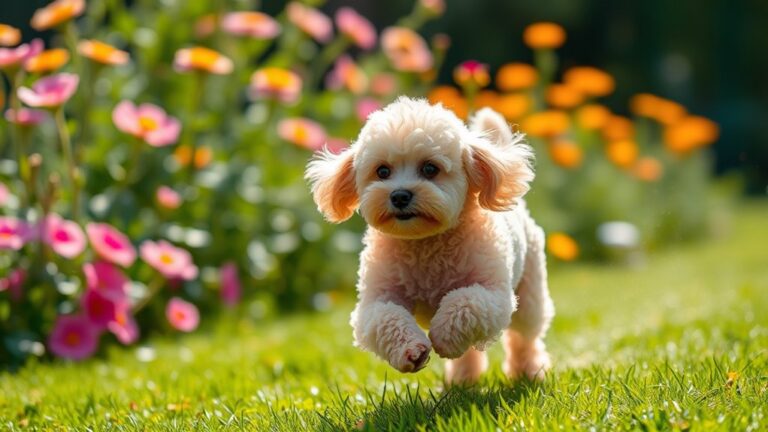
Toy Poodles are easy to train due to their remarkable intelligence and eagerness to please their owners. This combination makes them quick learners, which is a huge advantage when it comes to training.
Using positive reinforcement techniques, such as praise and treats, can make the training process enjoyable for both you and your pup.
Additionally, early socialization is key. It helps Toy Poodles adapt to different environments and prevents potential behavioral issues down the line.
Despite their small size, these little dogs thrive on consistent training and engaging activities.
To keep them focused, make sure to keep training sessions short and varied.
With these tips, you can enhance your training experience even further and build a strong bond with your Toy Poodle!
Key Takeaways
- Toy Poodles rank among the top three most trainable dog breeds due to their high intelligence.
- Their eagerness to please makes training sessions enjoyable and effective.
- They quickly learn new commands thanks to their history as water retrievers.
- Positive reinforcement techniques, like treats and praise, enhance their training responsiveness.
- Short, engaging training sessions cater to their energy levels and maintain focus.
The Intelligence of Toy Poodles
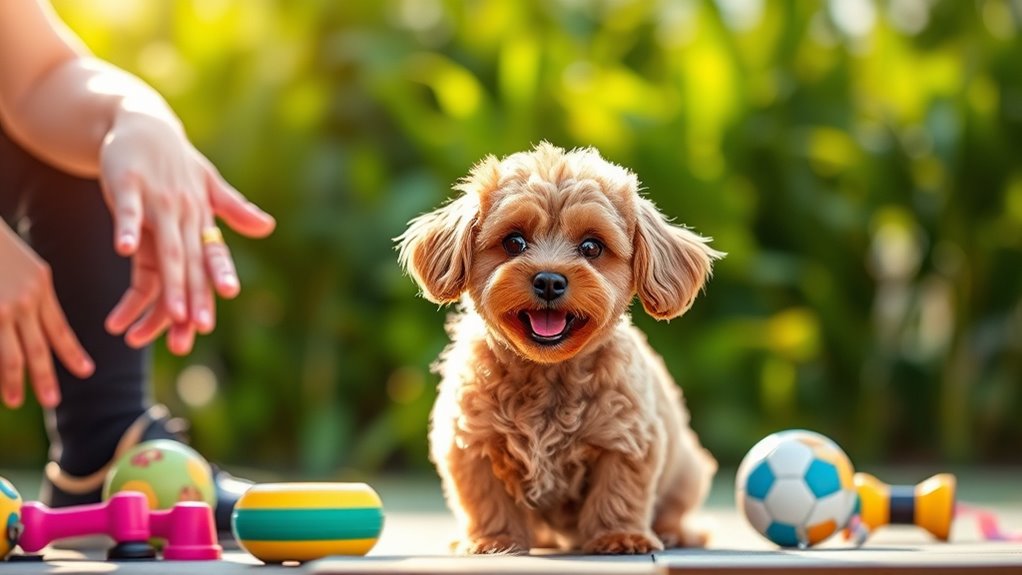
Toy Poodles are incredibly intelligent dogs, consistently ranking among the top three most trainable breeds. Their high intelligence means they learn quickly, grasping new commands with minimal repetition.
This ability stems from their history as water retrievers, where they followed complex commands. As a Toy Poodle owner, you’ll find that your puppy is enthusiastic to please, making training sessions enjoyable and effective.
Whether you’re teaching basic commands or advanced tricks, you’ll appreciate how easy it is to train your Poodle. Their natural aptitude shines in various activities, including obedience and agility.
Utilizing positive reinforcement will further enhance their learning experience, reinforcing their desire to excel and bond with you. With patience and consistency, you’ll marvel at your Toy Poodle’s capabilities.
Positive Reinforcement Techniques
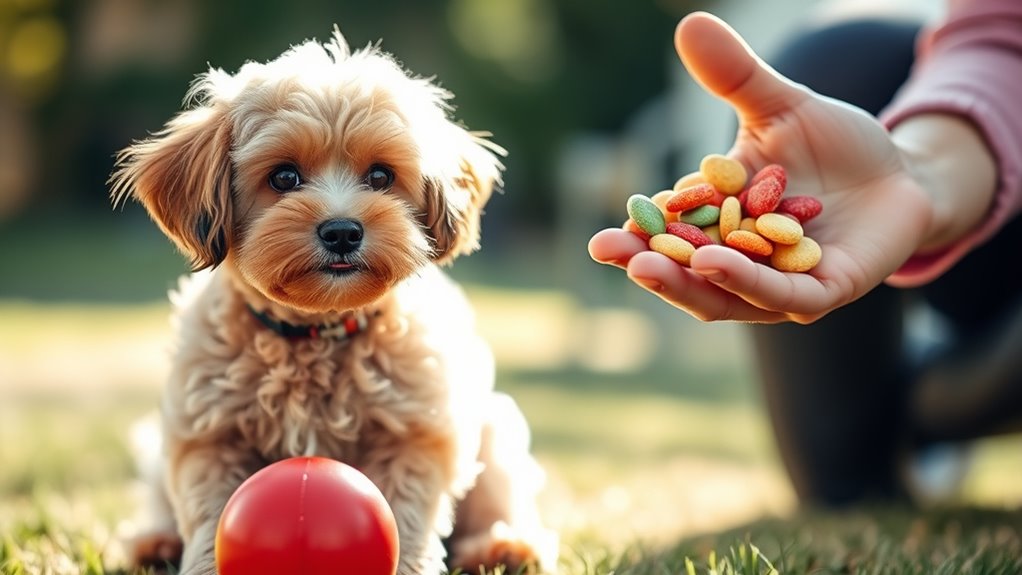
When it comes to training your Poodle, positive reinforcement techniques are crucial for maximizing their potential.
These methods work wonders because Poodles are keen to please and respond well to praise, treats, and play.
Poodles thrive on positive reinforcement, eagerly responding to praise, treats, and play during training sessions.
To guarantee effective training sessions, keep them short—around 5-10 minutes. This helps maintain your Poodle’s focus and enthusiasm.
Consider these key points for success:
- Be consistent: Reward good behavior to reinforce commands.
- Vary rewards: Use treats, verbal praise, or interactive play to keep sessions engaging.
- Build trust: Fostering a positive relationship enhances training success.
Early Socialization and Its Importance
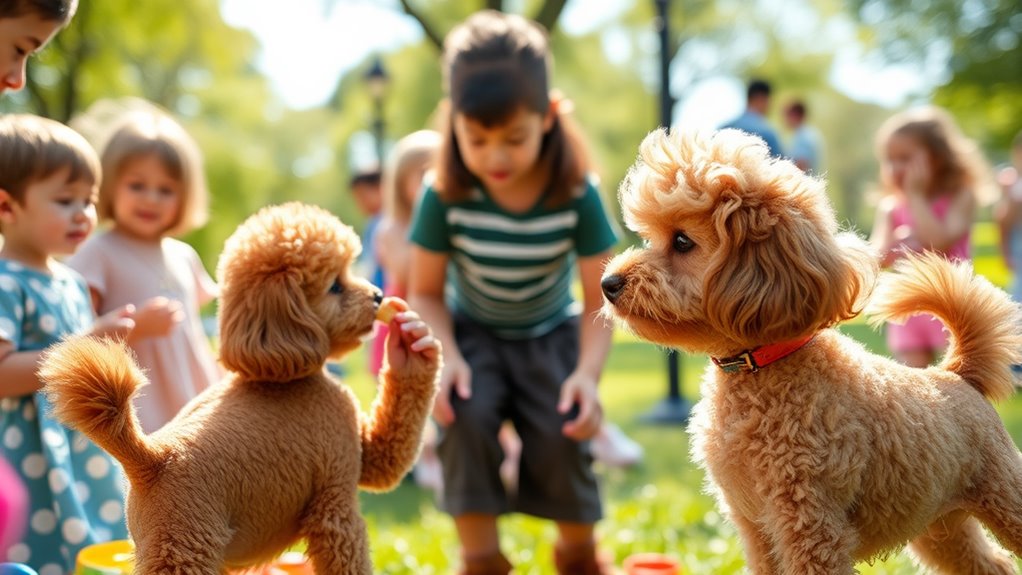
Socialization is essential for your Poodle’s development, as it shapes their confidence and adaptability in various situations.
Early socialization helps prevent behavioral issues and fear-based reactions by exposing your Toy Poodle to diverse experiences.
Puppy socialization classes provide structured interactions, allowing them to form healthy relationships with other dogs and people.
| Benefits of Early Socialization | Outcomes |
|---|---|
| Builds confidence | Reduced anxiety |
| Enhances adaptability | Comfort in unfamiliar settings |
| Promotes well-rounded behavior | Fewer behavioral issues |
| Encourages healthy relationships | Positive interactions |
Common Training Challenges and Solutions
Understanding the importance of early socialization sets the stage for addressing common training challenges you might face with your Toy Poodle.
These little Poodles can be stubborn and bored if not properly managed.
To overcome these issues, focus on:
- Consistent reinforcement of commands to prevent behavioral issues.
- Incorporating engaging activities to maintain their interest during training at home.
- Proper management of jumping up by rewarding calm greetings instead.
Size-Specific Training Considerations
Though Toy Poodles may be small, their training needs are anything but minor.
As one of the most intelligent dog breeds, Poodles excel in learning basic commands and skills. However, training can take time and patience, especially considering their high energy levels.
To keep your Poodle engaged, guarantee training sessions are short and varied; they can quickly lose interest in repetitive tasks.
It’s also essential to focus on impulse control, as Poodles respond better to structured learning environments.
Early socialization plays a key role, helping them adapt to different situations and reducing anxiety.
Engaging Activities for Mental Stimulation
To keep your Toy Poodle mentally engaged, it’s crucial to incorporate a variety of stimulating activities into their routine.
Engaging your Poodle in these activities not only prevents boredom but also enhances their adaptability and confidence.
Here are some effective ways to achieve this:
- Puzzle toys: Challenge their intellect and problem-solving skills.
- Interactive games: Foster social skills and strengthen your bond.
- Training sessions: Utilize trick training and scent work to sharpen their focus and impulse control.
Keeping things varied and fun is key! Your Poodle will thank you for it.
Frequently Asked Questions
What Age Should I Start Training My Toy Poodle?
You should start training your Toy Poodle at 8 to 10 weeks old. Early training helps with socialization, establishes routines, and strengthens your bond, making it easier for them to learn and adapt.
How Long Should Training Sessions Last?
Training sessions should last 5 to 10 minutes, like a spark igniting curiosity. Keeping it short helps you engage your Toy Poodle, making learning fun and effective while ensuring they stay enthusiastic and focused.
Can Toy Poodles Learn Advanced Tricks?
Yes, Toy Poodles can learn advanced tricks. Their intelligence and enthusiasm to please make training enjoyable. With consistent practice and positive reinforcement, you’ll find they quickly master complex commands and impress everyone around you.
Are Toy Poodles Suitable for First-Time Dog Owners?
Toy Poodles are like furry geniuses, ready to charm your socks off. Their playful spirit and affectionate nature make them perfect for first-time dog owners, turning your home into a joyful haven of cuddles and companionship!
How Do I Correct Bad Behavior in Toy Poodles?
To correct bad behavior in your Toy Poodle, stay consistent with rules, use positive reinforcement, and redirect unwanted actions. Socialize them early and keep training sessions short to maintain their interest and focus.
Conclusion
To sum up, you’ll find that toy poodles are easy to train thanks to their intelligence and willingness to please.
By using positive reinforcement, socializing them early, and addressing size-specific challenges, you can create a strong bond built on trust and understanding.
Engaging them with fun activities keeps their minds sharp, reinforcing their learning.
So, embrace these techniques, and you’ll uncover just how quickly your toy poodle can learn and thrive in your shared world.
In conclusion, training your toy poodle can be a rewarding experience due to their high intelligence and desire to please.
By implementing positive reinforcement and early socialization, you foster a trusting relationship.
Moreover, incorporating engaging activities not only enhances their training but also strengthens your bond.
With these strategies, you’ll be amazed at how swiftly your toy poodle adapts and flourishes in your life together.