10 Best Garden Fertilizer: Top Picks for Every Budget
A healthy garden starts with the right feeding routine. Many plants grow slowly when the soil lacks key nutrients, and weak blooms or yellow leaves can make care feel frustrating.
It is a fit for flower beds, vegetable patches, and general yard care. The product may help support root growth, leaf color, and overall plant health without adding extra fuss to your routine.
This review will cover how it works, who may benefit most, and what you can expect from regular use.
Best Garden Fertilizer Options Compared
| Image | Product | Price |
|---|---|---|
Pick 1  | Miracle-Gro All Purpose Plant Food | Check Price On Amazon |
Pick 2  | Miracle-Gro All Purpose Plant Food | Check Price On Amazon |
Pick 3  | Miracle-Gro Shake N Feed All Purpose Plant Food | Check Price On Amazon |
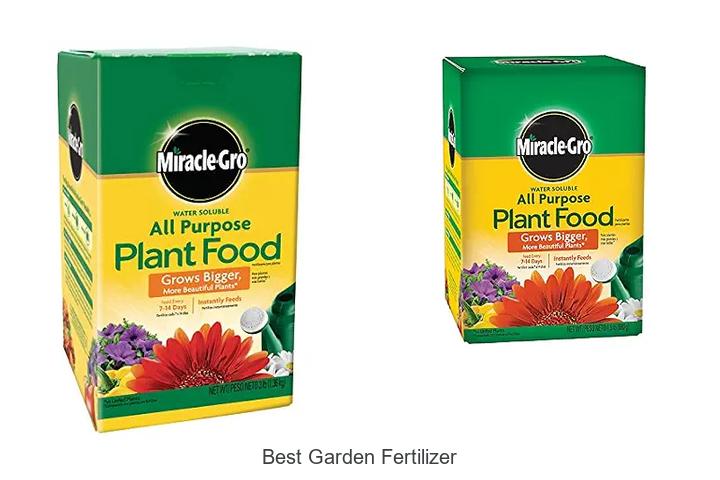
1. Miracle-Gro All Purpose Plant Food
A single fertilizer can simplify feeding across gardens, patios, and indoor spaces. Miracle-Gro Water Soluble All Purpose Plant Food is built for broad use and fast results.
It feeds roses, flowers, houseplants, vegetables, trees, and shrubs. The water-soluble powder mixes into a watering can for easy use.
Its 24-8-16 NPK blend supplies nitrogen, phosphorus, and potassium. Those nutrients support healthy growth and stronger plant development. The formula starts working instantly after application.
Indoor feeding uses 1/2 teaspoon per gallon of water. Outdoor feeding uses 1-1/2 tablespoons per 1-1/2 gallons of water.
It can also be used with the Miracle-Gro Garden Feeder. One 3-pound container covers about 1,200 square feet.
That makes it practical for larger yards and mixed planting areas. The formula suits gardeners who want one feeding solution. It also fits indoor growers who prefer simple mixing.
Overall, it offers flexible use and broad plant coverage.
Pros
- Feeds many indoor and outdoor plants
- Water-soluble formula mixes easily
- Covers a large garden area
Cons
- Requires careful measuring before use
- Not an organic fertilizer
- Needs mixing with water
Who Should Buy It?
Buyers with mixed plantings will get the most value here. It suits people feeding roses, flowers, vegetables, trees, and houseplants. Gardeners who want one fertilizer for indoors and outdoors may prefer it.
It also fits users who want simple water-mixed feeding and quick visible growth support.
Key Specifications
| Specification | Details |
|---|---|
| Title | Miracle-Gro Water Soluble All Purpose Plant Food, 3 lb. |
| Brand | Miracle-Gro |
| Form | Powder |
| NPK | 24-8-16 |
| Best For | all-purpose feeding |
| Indoor/Outdoor | Indoor and outdoor use |
| Organic | No |
| Coverage | Approximately 1,200 sq. ft. |
| Application Method | Mix with water in a watering can |
| Weight | 3 pounds |
The 24-8-16 NPK ratio shows a fertilizer built for general plant feeding. Nitrogen supports leafy growth, phosphorus helps root and bloom development, and potassium supports overall plant health. Because it is water-soluble powder, it mixes into a watering can before use. That makes feeding straightforward for indoor houseplants and outdoor beds. The 3-pound size gives enough material for repeated use across many plants and spaces.
Coverage of about 1,200 square feet makes this option practical for larger gardens. The indoor and outdoor instructions help users adjust the mix for different plant types and growing spaces. It can be used by hand or with the Miracle-Gro Garden Feeder. That flexibility suits gardeners who manage vegetables, flowers, roses, shrubs, trees, and houseplants. People wanting a simple routine may appreciate the easy dilution method.
2. Miracle-Gro All Purpose Plant Food
Feeding a wide range of plants with one simple formula is its main appeal. Miracle-Gro Water Soluble All Purpose Plant Food suits gardeners who want quick, flexible feeding indoors and outdoors. It works on roses, flowers, houseplants, vegetables, trees, and shrubs, which keeps routine care straightforward.
The powder form mixes into water, making application easy with a watering can or the Miracle-Gro Garden Feeder. Its 24-8-16 NPK mix provides nitrogen, phosphorus, and potassium for general plant growth. The formula starts working instantly, which helps plants get faster visible support compared with unfed plants.
Coverage is generous too, reaching about 600 square feet from one 1.5-pound container. That makes it a practical choice for budget-minded buyers managing mixed plantings. The instructions are simple, with separate mixing ratios for indoor and outdoor use.
Gardeners who want one all-purpose feed for many plant types will find it very convenient.
Pros
- Feeds many indoor and outdoor plants
- Simple water-soluble mixing instructions
- Covers a large garden area
Cons
- Requires mixing before every use
- Not an organic fertilizer
- Needs regular reapplication for feeding
Who Should Buy It?
Buyers with mixed indoor and outdoor plant collections should consider it. It works well for roses, flowers, vegetables, houseplants, trees, and shrubs. Gardeners who want an easy, water-soluble formula will appreciate the simple setup.
It also suits people who want broad coverage from one container. The instant-feeding approach makes it a practical everyday option for general plant care.
Key Specifications
| Specification | Details |
|---|---|
| Title | Miracle-Gro Water Soluble All Purpose Plant Food, 1.5 lb. |
| Brand | Miracle-Gro |
| Form | Powder |
| NPK | 24-8-16 |
| Best For | budget all-purpose |
| Indoor/Outdoor | Both |
| Organic | No |
| Coverage | Approximately 600 sq. ft. |
| Application Method | Watering Can |
| Weight | 1.5 pounds |
The 24-8-16 NPK ratio shows a nitrogen-heavy blend for general feeding. Nitrogen supports leafy growth, while phosphorus and potassium round out plant nutrition. Because it is water-soluble powder, the fertilizer mixes into water before use. That makes it easy to apply through a watering can indoors or outdoors. The product is meant for many plants, including flowers, vegetables, trees, shrubs, and houseplants. One container covers about 600 square feet, which helps larger gardens.
In everyday use, the water-soluble format keeps feeding flexible and quick. Indoor directions call for half a teaspoon per gallon of water. Outdoor feeding uses one and a half tablespoons per one and a half gallons of water. Those ratios make measuring straightforward for routine care. The powder form also stores easily in a small space. Gardeners with many plant types benefit most, since one formula covers a broad range of common needs.
3. Miracle-Gro Shake N Feed All Purpose Plant Food
Long-lasting feeding makes gardening simpler and steadier. Miracle-Gro Shake ‘N Feed All Purpose Plant Food supports plants for up to three months. It works above and below the soil, helping flowers, vegetables, and herbs grow stronger.
The granules contain micronutrients and natural ingredients that feed soil microbes. That supports root strength, development, and water efficiency over time. It suits indoor containers, outdoor in-ground beds, and raised beds alike.
Application is straightforward, since you shake it onto soil and work it in. Established containers need only light mixing into the top soil.
The 4.5-pound container covers up to 180 square feet. Its continuous release format fits gardeners who want less frequent feeding. It offers useful value for anyone managing mixed plant types in one garden.
Pros
- Feeds plants for up to three months
- Works for indoor and outdoor plantings
- Supports roots, soil microbes, and water efficiency
Cons
- Requires reapplication every three months
- Granules need working into soil
- Not tailored to one specific plant type
Who Should Buy It?
Gardeners who want slow-release feeding across many plant types should consider it. It suits flowers, vegetables, herbs, containers, raised beds, and in-ground gardens. People who prefer simple application and fewer feeding sessions may like it most.
The continuous release format also fits indoor plant owners seeking steady nutrition without constant mixing.
Key Specifications
| Specification | Details |
|---|---|
| Title | Miracle-Gro Shake ‘N Feed All Purpose Plant Food, 4.5 lb. |
| Brand | Miracle-Gro |
| Form | Granules |
| Feed Duration | Up to 3 months |
| Best For | Slow release |
| Indoor/Outdoor | Indoor and outdoor |
| Organic | No data |
| Coverage | Up to 180 sq. ft. |
| Application Method | Shake onto soil and work into top 1-3 inches |
| Weight | 4.5 pounds |
The granule form means the food spreads across soil evenly. Shake it onto the surface, then work it into the top one to three inches. For established containers, only light mixing is needed. It feeds for up to three months, so gardeners do not need frequent reapplication. Coverage reaches up to 180 square feet, which suits small yards, beds, or several containers. The 4.5-pound container offers a practical amount for regular home use.
These specifications point to easy setup and steady plant care. The continuous release format helps reduce feeding chores while still supplying nutrients over time. Because it works indoors and outdoors, one container can serve many growing spaces. Flowers, vegetables, and herbs all fit the intended use. The soil-working step helps the nutrients reach roots and soil microbes. Gardeners who want simple feeding with broad plant coverage will benefit most from that approach.
4. 10-10-10 All Purpose Fertilizer

Balanced feeding can simplify garden care fast. The 10-10-10 formula supports vegetables, flowers, trees, and shrubs alike. Gardenwise 10-10-10 Granular Fertilizer offers equal nitrogen, phosphorus, and potassium for steady, all-purpose nutrition.
Its slow-release design feeds plants for up to eight weeks, while quick-release nitrogen gives an early growth boost. That mix suits outdoor beds, lawns, fruit trees, evergreens, roses, and even potted plants. Fine granules spread evenly, so coverage feels straightforward and practical.
Just apply, water, and let the nutrients work gradually. The formula aims to support roots, leafy growth, and stronger plant resilience.
It works for indoor and outdoor growing, which adds flexibility for mixed plant spaces. The granular form also keeps application simple for gardeners who want less fuss. For balanced gardens that need one fertilizer for many plant types, it offers useful versatility and steady feeding.
Pros
- Balanced 10-10-10 formula suits many plant types
- Slow-release feeding lasts up to eight weeks
- Granules spread evenly for simple application
Cons
- Small package size may suit light use only
- Coverage depends on soil and plant condition
- Not a specialized formula for single crops
Who Should Buy It?
Buyers with mixed gardens will get the most value here. It suits people growing vegetables, flowers, shrubs, fruit trees, or lawns. The balanced 10-10-10 ratio works well when one feed must cover many plant types.
Gardeners who prefer granular fertilizer and slower feeding cycles will also appreciate it. Indoor plant owners can use it too, though outdoor use is the main focus.
Key Specifications
| Specification | Details |
|---|---|
| Title | 10-10-10 Plant Fertilizer Slow Release – 10 10 10 All Purpose Granular Garden Fertilizer for Vegetables, Tomato, Arborvitae, Shrubs, Rose, Flowers, Fruit, Fig Trees (1/2 Quart) |
| Brand | GARDENWISE |
| Form | Granules |
| NPK | 10-10-10 |
| Feed Duration | Up to 8 weeks |
| Best For | Balanced gardens |
| Indoor/Outdoor | Both |
| Coverage | Depends on the condition of the soil and plants |
| Application Method | Spread granules and water |
| Weight | 16 ounces |
The 10-10-10 ratio means equal nitrogen, phosphorus, and potassium. Nitrogen supports green growth, while phosphorus helps roots develop. Potassium helps plants handle stress better. In daily garden use, that balance works well for beds with many plant types. The granular form makes spreading simple across soil, lawns, and containers. Because coverage depends on plant and soil condition, gardeners can adjust use as needed.
A feed duration of up to eight weeks reduces repeated applications. That helps busy gardeners keep feeding schedules manageable across seasons. The slow-release approach gives steady nutrition, while quick-release nitrogen can support earlier growth. The 16-ounce bag suits smaller spaces, potted plants, or targeted feeding jobs. Gardeners who want one fertilizer for vegetables, shrubs, flowers, and fruit trees will benefit most from that broad use.
5. GreenView Multi-Purpose Fertilizer 10-10-10

A balanced 10-10-10 mix makes feeding simple across many garden plants. The broad coverage also suits larger spaces that need steady, even nutrition. GreenView Multi-Purpose Fertilizer uses a complete NPK formula for vegetables, flowers, trees, shrubs, and ornamental gardens.
Its granules are designed for broadcast or drop spreader application, which helps spread feed evenly over wide areas. The formula supports plant growth, root development, seed development, and soil conditioning. That makes it a practical option for gardeners who want one fertilizer for many jobs.
It is especially useful when feeding mixed beds or large yards with varied plantings. The label notes coverage can vary by plant type, so application planning matters.
For gardeners wanting a general-purpose fertilizer with broad use, it offers solid everyday coverage.
Pros
- Balanced 10-10-10 formula for many plant types
- Covers large garden areas efficiently
- Works with broadcast and drop spreaders
Cons
- Coverage varies by plant type
- Not specialized for single-crop feeding
- Granules need proper spreading equipment
Who Should Buy It?
Gardeners with large planting areas should consider it. It suits mixed beds, vegetable plots, and ornamental spaces needing one general feed. The balanced nutrient profile works well for trees, shrubs, flowers, and vegetables.
People who want simple, broad coverage from a granulated fertilizer will appreciate it most.
Key Specifications
| Specification | Details |
|---|---|
| Title | GreenView Multi-Purpose Fertilizer NPK 10-10-10, 33 lb. Covers 3300 sq. ft. |
| Brand | Greenview |
| Form | Granules |
| NPK | 10-10-10 |
| Best For | Large garden coverage |
| Indoor/Outdoor | Outdoor |
| Coverage | 10,000 sq. ft. |
| Application Method | broadcast or drop spreader |
| Weight | 16 ounces |
The 10-10-10 NPK ratio means equal parts nitrogen, phosphorus, and potassium. That balance supports general feeding across many garden plants. The granule form makes it suitable for broadcast or drop spreader use. Coverage is listed at 10,000 square feet, so it fits broad outdoor spaces well. The product is meant for vegetables, flowers, trees, shrubs, and ornamental gardens. In daily use, that means one fertilizer can handle many common garden areas without switching products constantly.
These specifications point to a general-purpose outdoor fertilizer with wide application flexibility. The balanced formulation supports plant growth, root development, seed development, and soil conditioning. Granules spread well over larger areas, which helps gardeners with mixed plantings save time. People maintaining vegetables, shrubs, or ornamental beds benefit from the shared nutrient profile. The coverage size also suits property owners who need one product for many sections of the garden. It works best when spread evenly and used according to the label.
6. Dr. Earth Organic 5 Tomato, Vegetable & Herb Fertilizer

Garden beds get a strong organic boost with this fertilizer blend. It is made for growers who want richer harvests and healthier soil. Dr.
Earth Organic 5 Tomato, Vegetable & Herb Fertilizer uses 100% organic and natural ingredients. It contains no GMOs, chicken manure, or sewage sludge.
The formula provides primary plant nutrients for vegetables and herbs. It also includes probiotic beneficial soil microbes and mycorrhizae. Those additions help improve nutrient availability and drought tolerance.
The granules feed for several months after application. That long feeding window reduces repeat fertilizing during the season. The formula releases nutrients quickly, yet keeps feeding over time.
It suits organic vegetable gardens, herbs, and tomato plants. The medium coverage works well for many home garden setups.
Users who want natural feeding and steady plant support should like it. It offers a practical option for growers focused on food quality.
Pros
- 100% organic and natural ingredient list
- Feeds plants for several months
- Includes beneficial microbes and mycorrhizae
Cons
- Granules require manual spreading
- Coverage may suit medium-sized areas best
- Designed mainly for vegetables and herbs
Who Should Buy It?
Gardeners growing organic vegetables, herbs, or tomatoes should consider this fertilizer. It fits people who prefer natural ingredients and steady feeding. Home growers wanting more nutritious and tasty harvests may appreciate the microbial and mycorrhizal blend.
It also suits medium garden areas that need simple granular application. Those avoiding GMOs, chicken manure, and sewage sludge will find it appealing.
Key Specifications
| Specification | Details |
|---|---|
| Title | Dr. Earth Organic 5 Tomato, Vegetable & Herb Fertilizer Poly Bag |
| Brand | Dr. Earth |
| Form | Granules |
| Feed Duration | Several months |
| Best For | Organic vegetables |
| Organic | Yes |
| Coverage | Medium |
| Weight | 4 pounds |
The granule form makes application straightforward across garden beds and containers. A four-pound bag gives enough material for medium coverage areas. The fertilizer is made for organic vegetables, herbs, and tomatoes. It feeds for several months, so plants get steady nutrition over time. The organic label matters for gardeners avoiding synthetic inputs. The product also contains beneficial microbes and mycorrhizae, which support soil health during normal feeding cycles.
In everyday use, these specifications point to a low-maintenance feeding routine. Granules spread easily, and the medium coverage suits many home gardens. Several months of feed duration can reduce frequent reapplication during the growing season. The organic formula and natural ingredients appeal to growers focused on cleaner harvests. The microbial and mycorrhizal content may help plants access nutrients more efficiently. That makes it a strong fit for vegetable gardeners wanting consistent soil support.
7. Southern Ag All Purpose Granular Fertilizer 10-10-10

Balanced feeding starts with a simple granular blend that suits many garden tasks. Southern Ag 10-10-10 gives citrus, flowerbeds, and vegetable spaces a steady all-purpose option.
The uniform granules spread evenly, then water moves nutrients into the soil. With equal nitrogen, phosphorus, and potassium, it supports broad plant needs without extra mixing. The formula also includes minor elements for added feeding support.
Gardeners can use it across fruit trees, roses, large shrubs, and beds. Coverage guidance is straightforward, which helps reduce guesswork during application. Vegetable gardens and flowerbeds need one cup per 25 square feet.
Roses and large shrubs call for 2 to 2.5 cups per four feet of height. Fruit trees need 2 to 4 cups per tree. It suits outdoor feeding jobs where even broadcast application works best.
Pros
- Even granular form spreads easily over planting areas.
- Works for citrus, beds, roses, and vegetables.
- Clear coverage rates simplify application planning.
Cons
- Requires watering in after application.
- Five-pound size may suit smaller projects better.
- Not formulated as a specialized crop fertilizer.
Who Should Buy It?
Gardeners with citrus trees, flowerbeds, roses, or vegetable plots should consider it. It fits people wanting one granular fertilizer for several outdoor areas. The clear broadcast method and simple coverage rates help with routine feeding.
It also suits those who prefer a standard 10-10-10 blend rather than a specialty formula.
Key Specifications
| Specification | Details |
|---|---|
| Title | Southern Ag All Purpose Granular Fertilizer 10-10-10, 5 LB Size: 5 LB |
| Brand | Southern Ag |
| Form | Granules |
| NPK | 10-10-10 |
| Best For | Citrus and beds |
| Indoor/Outdoor | Outdoor |
| Organic | No |
| Coverage | Vegetable gardens & flowerbeds 1 cup per 25 sq. ft; Roses & large shrubs 2 – 2.5 cup per 4 ft. of height; Fruit trees 2-4 cups per tree |
| Application Method | Broadcast evenly over area and water in. |
| Weight | 5 pounds |
The 10-10-10 analysis means equal parts nitrogen, phosphorus, and potassium. That balance gives a broad feeding option for many outdoor plants. The granular form makes spreading simple across beds and around trees. Because it is made for broadcast use, gardeners can apply it over larger areas without special tools. Watering it in after spreading helps move nutrients into the soil. The five-pound package suits smaller yards or targeted feeding jobs.
Coverage guidance points to practical use across different plant types. Vegetable gardens and flowerbeds need one cup per 25 square feet, which helps with planned feeding. Roses and large shrubs use a height-based measure, making shrub care easier to gauge. Fruit trees use two to four cups each, so orchard-style feeding stays manageable. Since it is outdoor and not organic, it fits gardeners seeking a standard mineral fertilizer for routine soil feeding.
8. Scotts All Purpose Flower & Vegetable Plant Food

Healthy blooms and steady harvests start with simple feeding. Scotts All Purpose Flower & Vegetable Continuous Release Plant Food gives gardens a dependable nutrient boost for many plant types. It is made for in-ground use around flowers, annuals, perennials, vegetables, tomatoes, peppers, trees, and shrubs.
The granules are sprinkled on soil, then raked into the top 1 to 3 inches. That makes application straightforward for most home gardeners.
Continuous release nitrogen feeds plants for up to two months. One 3-pound bag covers about 150 square feet, so it suits small to medium garden spaces. The formula works well for gardeners wanting one feed option for both flowers and vegetables.
Its dry granule form keeps handling simple, and the labeled application method helps reduce guesswork. It fits gardeners who want practical, steady feeding without frequent reapplication.
Pros
- Feeds flowers and vegetables with one formula
- Continuous release feeding lasts up to two months
- Simple sprinkle-and-rake application
Cons
- Made for outdoor in-ground gardens only
- Requires raking into the soil
- Coverage may be limited for larger gardens
Who Should Buy It?
Gardeners growing flowers, vegetables, tomatoes, peppers, shrubs, or trees can use it well. It suits people who want one easy plant food for in-ground beds. The continuous release feeding helps those who prefer less frequent reapplication.
It also fits homeowners managing a small to medium garden area and wanting a simple granule format.
Key Specifications
| Specification | Details |
|---|---|
| Title | Scotts All Purpose Flower & Vegetable Continuous Release Plant Food, 3 lbs. |
| Brand | Scotts |
| Form | Granules |
| Feed Duration | Up to 2 months |
| Best For | Flowers and vegetables |
| Indoor/Outdoor | Outdoor |
| Organic | No organic information provided |
| Coverage | About 150 sq. ft. |
| Application Method | Sprinkle on soil and rake into top 1-3 inches |
| Weight | 3 pounds |
The granules come in a 3-pound bag and cover about 150 square feet. That amount suits many small garden beds and mixed planting areas. The product is designed for outdoor, in-ground plants, so it fits typical yard plots rather than indoor containers. Its application method is simple: sprinkle around plants and rake it into the top 1 to 3 inches of soil. That makes feeding familiar and easy for most home gardeners.
A continuous release formula feeds plants for up to two months. That longer feeding window helps reduce frequent reapplication across flowers and vegetable beds. The formula is meant for many plant types, including annuals, perennials, tomatoes, peppers, trees, and shrubs. Because it is a dry granular food, it is easy to store and measure. Gardeners who want steady feeding and straightforward use will likely benefit most from these specifications.
9. Miracle-Gro Pour & Feed Plant Food
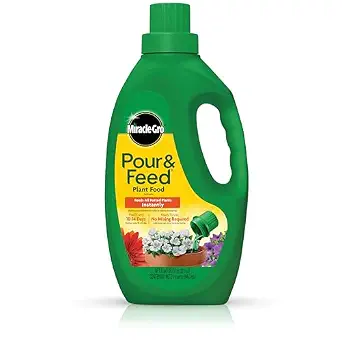
Potted plants get simple feeding with no mixing needed. Indoor and outdoor containers can be fed directly at the soil line. Miracle-Gro Pour & Feed Plant Food is a liquid fertilizer made for houseplants and flowers in pots.
Its ready-to-use format saves time and skips measuring water or filling a watering can. The liquid form spreads easily through container soil and supports quick feeding. Users can apply it every 10 to 14 days for regular plant care.
It suits indoor shelves, patios, and other container settings. The 32-fluid-ounce bottle offers enough volume for repeated use across multiple pots. Build quality is straightforward and practical, with a focus on easy handling.
Performance centers on direct feeding and convenience rather than complicated mixing steps. It suits busy plant owners who want a simple routine for container plants.
Gardeners with houseplants, flowers, or patio pots will likely appreciate the direct application method.
Pros
- Ready to use with no mixing required
- Works for indoor and outdoor container plants
- Simple direct-to-soil application
Cons
- Made mainly for potted plants, not garden beds
- Requires regular feeding every 10 to 14 days
- Liquid format may suit only small container routines
Who Should Buy It?
People with houseplants, patio pots, or container flowers should consider it. It suits anyone wanting direct feeding without mixing water or measuring fertilizer. The liquid format works well for routine care in indoor and outdoor spaces.
It is a practical choice for potted-plant owners who prefer quick, repeatable feeding.
Key Specifications
| Specification | Details |
|---|---|
| Title | Miracle-Gro Pour & Feed Plant Food, 32 fl. oz. |
| Brand | Miracle-Gro |
| Form | Liquid |
| Feed Duration | Every 10-14 days |
| Best For | Potted plants |
| Indoor/Outdoor | Indoor and outdoor use |
| Coverage | Medium |
| Application Method | Directly to the soil |
| Weight | 3 pounds |
The 32-fluid-ounce liquid bottle gives users ready-to-pour feeding for container plants. Direct-to-soil application means no watering can or mixing step is needed. That makes routine care faster for indoor shelves and outdoor patios. The medium coverage suits a moderate number of pots rather than large garden areas. Every 10 to 14 days, users can repeat feeding for steady container maintenance. The format fits casual plant care and regular home use.
These specifications point to a simple fertilizer made for convenience. Liquid form helps the feed reach potted soil quickly, which suits houseplants and flowers. Indoor and outdoor use adds flexibility for mixed plant collections. A three-pound bottle is manageable to carry and store. Because coverage is medium, it works best for people managing several containers. Gardeners who want low-effort feeding for pots will benefit most from the direct application style.
10. Miracle-Gro Organic Potting Mix

Organic container gardening gets a practical boost here. It feeds plants quickly, then keeps working for two months. Miracle-Gro Organic Outdoor Potting Mix is made for outdoor pots and container beds, giving flowers, vegetables, herbs, annuals, and perennials a supportive start.
The mix includes quick-release natural plant fertilizer and responsibly sourced peat from certified producers. That combination helps simplify planting while supporting steady growth in containers. The texture is meant for potting, so it suits root placement, watering, and everyday container care.
One 16-quart bag fills a 12-inch pot, which makes planning easy for small patio projects. It is OMRI listed, adding confidence for gardeners seeking organic-approved materials. The formula feels practical rather than specialized, which helps it suit mixed outdoor plantings.
For gardeners who want one mix for many container plants, it offers solid everyday convenience.
Pros
- Feeds plants for up to two months
- Works with many outdoor container plants
- OMRI listed for organic gardening
Cons
- Only for outdoor container use
- Single bag may not fill larger pots
- Not designed for indoor plants
Who Should Buy It?
Buyers with outdoor pots and mixed plantings should consider it. It suits gardeners growing flowers, vegetables, herbs, annuals, and perennials in containers. The organic format and quick-release natural fertilizer make it useful for simple seasonal planting.
It fits people who want one potting mix for patio, porch, or deck containers.
Key Specifications
| Specification | Details |
|---|---|
| Title | Miracle-Gro Organic Outdoor Potting Mix, 16 qt. |
| Brand | Miracle-Gro |
| Form | Potting mix |
| Feed Duration | Up to 2 months |
| Best For | Organic containers |
| Indoor/Outdoor | Outdoor |
| Organic | Yes, OMRI listed |
| Coverage | One 16 qt. bag fills one 12-inch pot |
| Application Method | Fill container partially, place plant, cover, and water thoroughly |
| Weight | 13.1 pounds |
The 16-quart size gives a clear sense of coverage for container planting. One bag fills a 12-inch pot, though root ball size can change that amount. The product is a potting mix, not a generic garden amendment, so it is meant for containers. It also carries OMRI listing and uses responsibly sourced peat. In practice, that means gardeners get an organic-listed mix designed for outdoor pots, with enough volume for small patio containers or several modest plantings.
Its outdoor-only design fits flowers, vegetables, herbs, annuals, and perennials in pots. The quick-release natural fertilizer feeds plants for up to two months, which helps newly planted containers settle in. The application method is simple: fill partly, add the plant, cover, and water thoroughly. That makes setup straightforward for home gardeners. The 13.1-pound weight is manageable for carrying and pouring, while the outdoor focus favors people maintaining decks, porches, and patios with regular container plants.
Best Garden Fertilizer: How to Choose the Right Formula for Healthier, Greener Plants
Understand your soil needs
Soil test results provide the clearest picture of what your garden actually needs, because they reveal whether the ground is already rich enough in key nutrients or missing important elements that plants rely on for steady growth. pH level compatibility matters just as much, since an incorrect balance can prevent roots from absorbing nutrients even if the fertilizer is packed with them.
It also helps to identify specific nutrient deficiencies to address, because some plots need extra nitrogen for leafy growth, while others benefit more from phosphorus or potassium for stronger roots, flowers, and fruit. Reviewing these details first makes it easier to match the fertilizer to your soil’s real conditions and avoid wasting time, money, and effort on a product that cannot solve the underlying problem.
Choose the right fertilizer type
Granular and liquid formulas affect how easily nutrients can be applied and adjusted, so it helps to match the product style to the size of the garden and the way plants are fed. Granular options usually offer steady feeding and are simpler for larger beds, while liquid versions work faster and are useful for plants that need quicker correction. Organic and synthetic formulas also differ in how they support soil health and plant response: organic types often improve long-term soil structure, while synthetic ones can deliver more immediate results with precise nutrient levels.
Organic and synthetic formulas also differ in how they support soil health and plant response: organic types often improve long-term soil structure, while synthetic ones can deliver more immediate results with precise nutrient levels. Slow-release and quick-release formulas matter just as much, because slow-release products reduce the need for frequent reapplication, whereas quick-release options are better for short-term nutrient boosts. A well-matched formula saves time, supports healthier growth, and makes it easier to keep plants nourished through changing conditions.
- Granular: Best for steady feeding and larger areas.
- Liquid: Best for fast absorption and quick plant recovery.
- Organic: Supports soil improvement over time.
- Synthetic: Delivers targeted nutrition with fast results.
- Slow-release: Reduces frequent reapplication.
- Quick-release: Works well for immediate nutrient needs.
Check npk ratios
Soil nutrition works best when each nutrient has a clear role in plant development. A fertilizer with the right balance of nitrogen, phosphorus, and potassium can support stronger growth from the ground up, especially because each element contributes differently to plant performance. Nitrogen encourages lush leaf growth, making it essential for healthy foliage and vigorous top growth. Phosphorus supports root development and helps plants produce blooms, which is especially important for flowering varieties and young transplants.
Phosphorus supports root development and helps plants produce blooms, which is especially important for flowering varieties and young transplants. Potassium strengthens overall plant health by improving resilience, supporting water regulation, and helping plants handle stress more effectively. A careful review of the NPK ratio makes it easier to match the formula to your garden’s needs, whether the goal is fuller leaves, better rooting, or long-term plant vigor.
Match fertilizer to plant types
Different plants respond to fertilizer in very different ways, so the right formula should match the areas you plan to feed. Vegetables and herbs often need a balanced blend that supports steady growth and productive harvests, while flowers and ornamentals may benefit from formulas that encourage stronger blooms and richer color. Lawns, shrubs, and trees usually require options that release nutrients more gradually, helping roots absorb what they need over time without forcing tender growth.
- Vegetables and herbs: look for even nourishment that supports foliage, roots, and harvest quality.
- Flowers and ornamentals: prioritize nutrients that help promote blossoms, color, and overall plant health.
- Lawns, shrubs, and trees: favor longer-lasting feeding that supports stronger root systems and consistent growth.
Compatibility with your garden layout matters just as much as nutrient content, since a fertilizer that serves multiple plant types can save time and reduce the need for several specialized products. By matching the formula to the crops and landscape plants in your yard, you create better results, simpler upkeep, and more predictable growth throughout the season.
Review application and safety factors
Ease of spreading or mixing plays a major role in how well a fertilizer performs, because a formula that is simple to distribute evenly helps plants receive consistent nutrition without wasted product or patchy results. A product that blends quickly or spreads smoothly also lowers the chance of user error, which can otherwise lead to uneven feeding and stressed plants. Just as important is the risk of overfertilizing, since stronger products or poorly measured applications can burn roots, damage leaves, and reduce soil health rather than improve it.
A safe and effective option should also account for pet, child, and environmental safety, with clear instructions, secure storage needs, and ingredients that are less likely to harm grass, nearby water sources, or curious animals and children. A fertilizer that balances simple application, controlled dosage, and safer handling makes garden care more reliable and far less risky.
Compare value and performance
A fertilizer’s coverage area per package determines how far one container will go, which helps you estimate value, avoid mid-season shortages, and match the product to the size of your garden. Coverage area per package matters because a formula that treats a large plot efficiently can save both time and money, while a smaller package may be better for compact beds or patio plants.
Brand reputation and user reviews are equally important, as established names and consistent feedback often reveal how well a fertilizer performs in real gardens, whether it mixes properly, and if it delivers noticeable results without unexpected issues. Together, these points help you compare value and performance more confidently and avoid a product that looks appealing but falls short in everyday use.
How to Use Fertilizer Well
Garden fertilizer works best when you use the right amount at the right time. Start by reading the label. Each product has its own mix of nutrients and its own directions.
Check what your plants need before you feed them. Leafy vegetables often want more nitrogen. Flowers and fruiting plants may need more phosphorus and potassium. A soil test can also help you spot missing nutrients.
Apply fertilizer to moist soil when you can. Dry soil can make feeding less effective and may stress roots. Spread it evenly around the plant, not right against the stem or trunk. Then water it in unless the label says not to.
Granular fertilizers usually feed over time. Liquid types work faster and suit plants that need a quick boost. Slow-release products can be a good choice for busy gardens because they feed for weeks or months.
- Use the amount listed on the package.
- Feed in the morning or late afternoon on hot days.
- Keep fertilizer off leaves unless the label says it is safe to spray.
- Store leftover product in a dry place with the lid closed.
Avoid overfeeding. Too much fertilizer can burn roots, weaken growth, or lead to lots of leaves and few flowers. More is not better. A steady feeding plan usually gives better results than a heavy dose.
For the best outcome, match the fertilizer to the plant and the season. Young plants, containers, lawns, and vegetable beds often need different products. A simple schedule and careful use can make a big difference in garden health.
FAQ’s
What Is The Best Fertilizer For A Vegetable Garden?
The best fertilizer for a vegetable garden is usually a balanced, organic option like compost or well-rotted manure, because it improves soil health and provides nutrients. For specific crops or poor soil, a balanced fertilizer such as 10-10-10 can also work well.
How Often Should You Fertilize Garden Plants?
Most garden plants should be fertilized every 4 to 6 weeks during the growing season. Always follow the fertilizer label and adjust based on the plant type and soil condition.
What Is The Difference Between Organic And Synthetic Garden Fertilizers?
Organic garden fertilizers come from natural sources like compost, manure, or bone meal and release nutrients slowly while improving soil health. Synthetic fertilizers are man-made and provide nutrients quickly, but they do not add the same long-term benefits to the soil.
Which Fertilizer Works Best For Flowers And Flowering Plants?
A balanced fertilizer with a higher middle number, like 10-20-10, often works best for flowers and flowering plants because it supports strong blooming. Slow-release or water-soluble bloom fertilizers are also good choices for steady flowering.
How Do You Choose The Right Fertilizer For Your Soil Type?
Choose a fertilizer based on a soil test, which tells you what nutrients your soil lacks and its pH level. Then match the fertilizer’s nutrient ratio and form to your soil type and the plants you’re growing.
Final Verdict
Miracle-Gro All Purpose Plant Food is the best garden fertilizer for most buyers because it works well for general feeding and also stands out as the best value pick for budget-minded gardeners. It is a practical choice for those who want one product that can support a wide range of plants without paying more for specialty formulas.
For gardeners with bigger spaces, GreenView Multi-Purpose Fertilizer 10-10-10 is the best premium option thanks to its broad coverage. Dr. Earth Organic 5 Tomato, Vegetable & Herb Fertilizer is the strongest pick for organic vegetable beds, especially for gardeners who want an organic formula for tomatoes, herbs, and other edible plants.
Choose Miracle-Gro All Purpose Plant Food for most gardens, GreenView for larger areas, and Dr. Earth for organic vegetable growing.