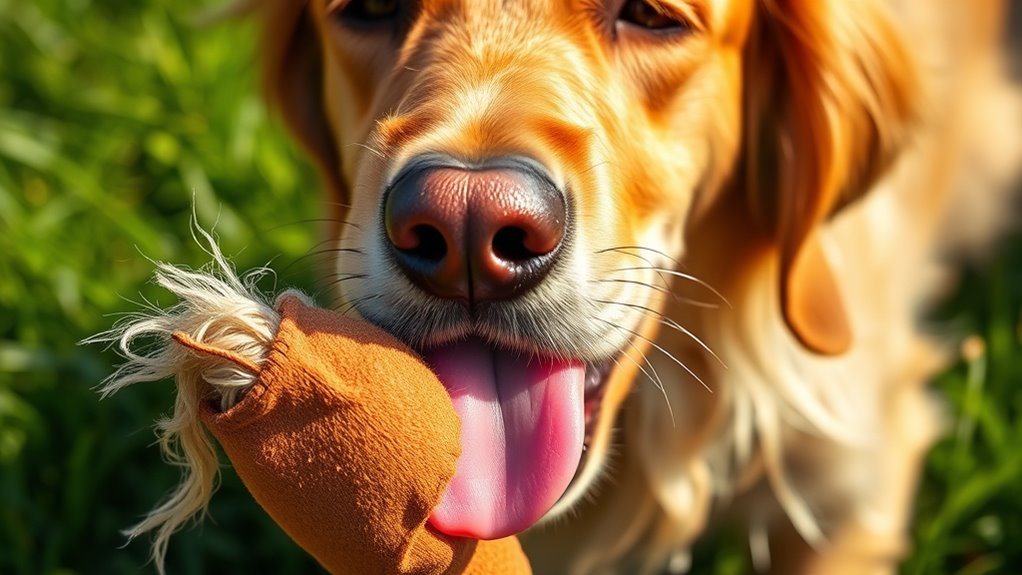
Why Does My Dog Lick His Toy?
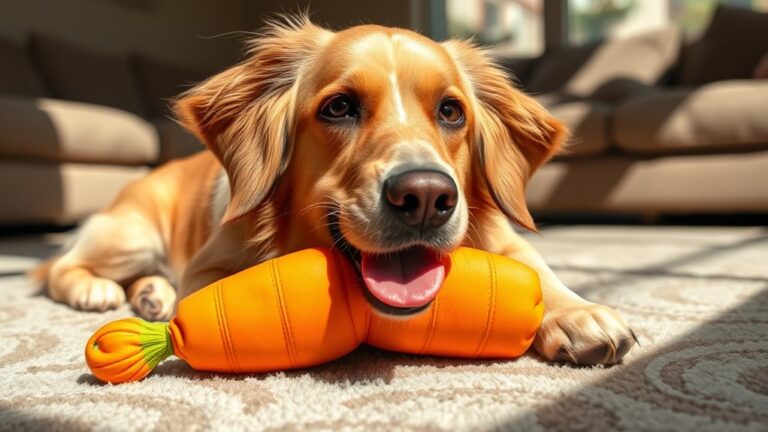
Your dog licks his toy for a few reasons.
It helps him explore scents and tastes, offering comfort, especially if he’s teething or feeling anxious.
Licking can also strengthen emotional bonds, as it’s similar to social grooming in packs.
However, if the licking seems excessive or linked to distress, it might signal health issues.
Understanding this behavior can be insightful, and there’s more to discover about how to handle it effectively.
Key Takeaways
- Dogs lick toys to gather information through taste and scent, marking them as their own and creating a sense of security.
- Licking can soothe teething puppies or relieve anxiety, providing comfort and emotional connection with their environment.
- Some toys have appealing flavors or scents that attract dogs, enhancing their licking experience.
- Excessive licking may indicate health issues or stress, so monitor for signs of distress or behavior changes.
- Providing alternative toys and engaging in new activities can help redirect excessive licking behavior in dogs.
Instincts Behind Licking Toys
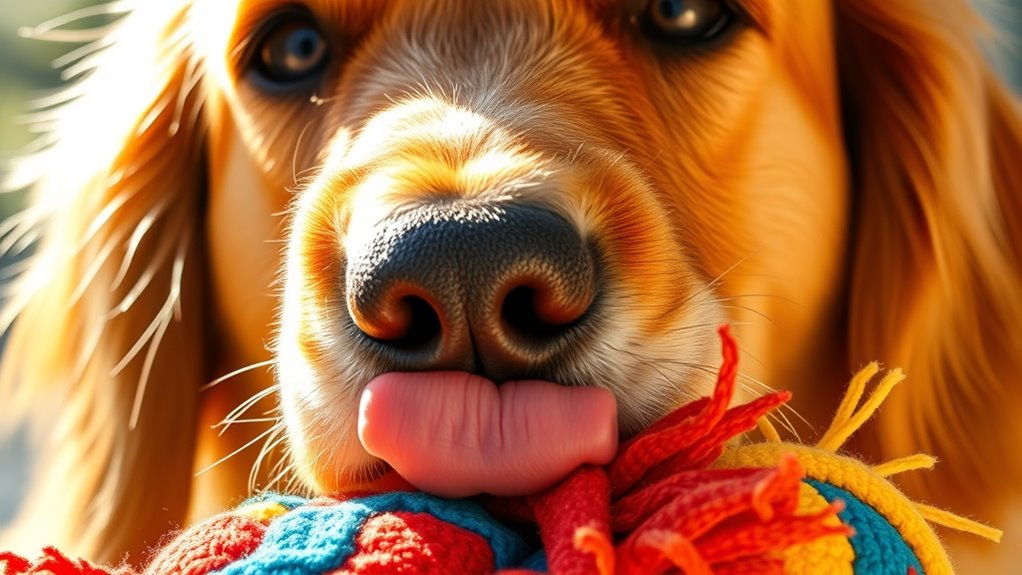
When you see your dog licking their toys, it’s not just a quirky behavior; it’s deeply rooted in instinct.
This licking serves multiple purposes, allowing your pup to gather information about their environment through taste and scent.
By licking, they mark the toy with their scent, claiming it as their own and creating a sense of safety.
Licking allows dogs to claim their toys, marking them with scent and fostering a feeling of security.
For puppies, this behavior is often instinctual as they soothe their sore gums during teething.
Additionally, some toys may have appealing flavors or smells that attract your dog, making licking an enjoyable activity.
This behavior can also signify affection, showing a bond between your dog and their toys, much like social grooming among pack members.
Emotional Connections to Toys
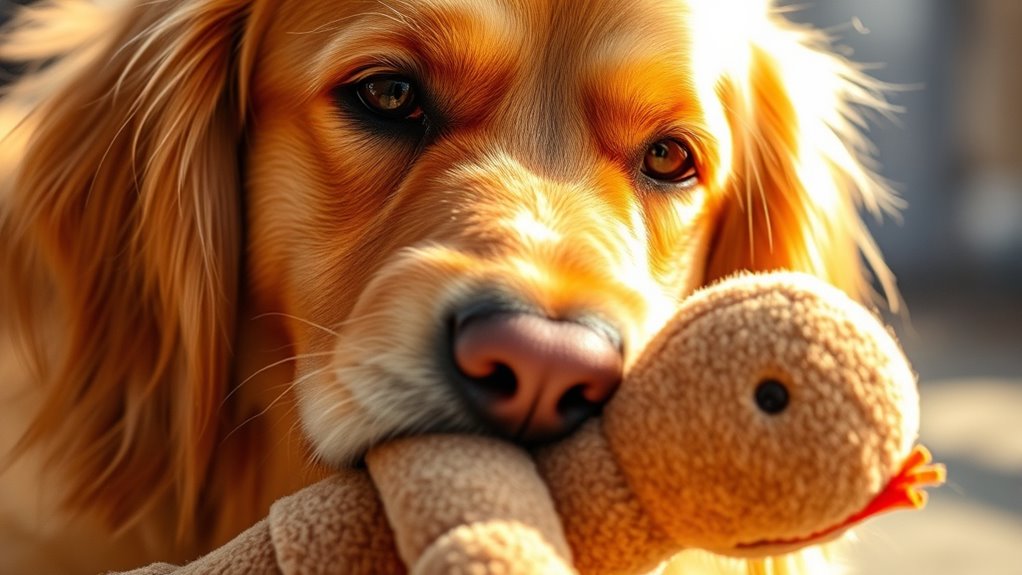
The emotional bonds dogs form with their toys reveal a fascinating aspect of their behavior.
When your dog licks their toy, it’s not just a random act; it’s a way to express affection and build an emotional connection.
This behavior mimics social grooming seen in their natural pack dynamics.
Licking provides comfort and security, especially for puppies teething or dogs dealing with stress.
Your dog may treat their toy as a companion, reinforcing their bond.
Toys with appealing scents or flavors often enhance this attachment, making them even more cherished.
Health Considerations for Licking Behavior
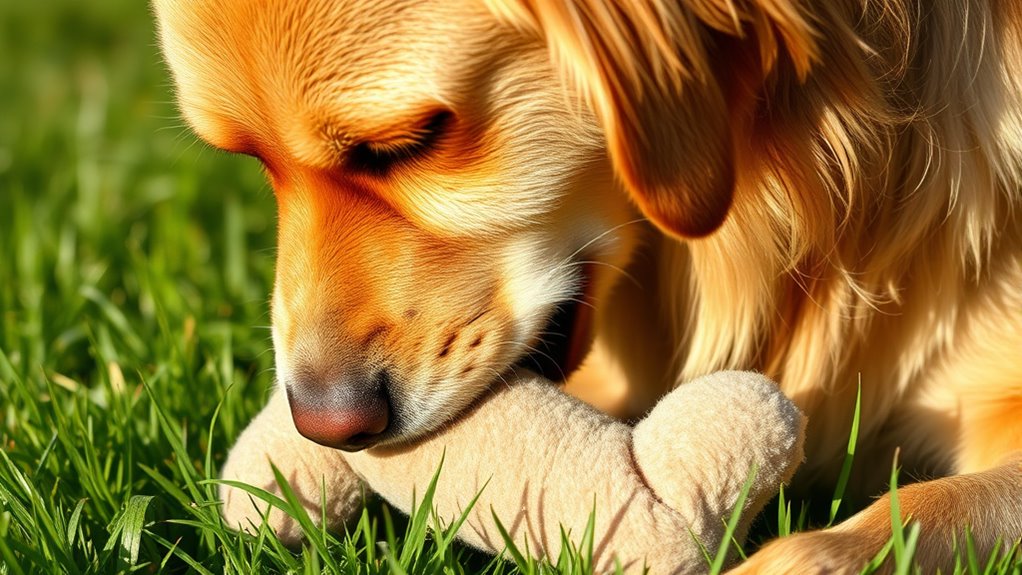
When you notice your dog excessively licking their toys, it could signal health issues like dental pain or allergies. It’s important to maintain good hygiene for their toys and monitor for any unusual behavior. If the licking becomes frantic or obsessive, a vet visit is necessary to rule out medical concerns.
Excessive Licking Indicators
Excessive licking of toys can be a red flag for potential health issues, so it’s important to pay attention to your dog’s behavior.
This behavior may signal underlying health problems like dental pain or gastrointestinal upset, which need veterinary evaluation.
Look for signs such as constant drooling or changes in overall health, as these can indicate allergies or skin irritations.
Additionally, dogs often engage in excessive licking as a self-soothing behavior to cope with stress or anxiety, particularly if they’re bored or lacking physical activity.
If your dog’s licking disrupts daily life, consult your veterinarian to rule out any medical concerns.
Being vigilant can help guarantee your pup stays healthy and happy.
Hygiene and Toy Care
Maintaining hygiene and care for your dog’s toys is essential for their health. Excessive licking and chewing can lead to bacteria and germs accumulating on the toy, which could pose health risks.
Regularly clean your dog’s toys to prevent these hygiene concerns. Keep an eye out for any signs of wear and tear; damaged toys can trap bacteria or become harmful if ingested.
Always choose toys made from safe materials, ensuring they’re free from harmful substances, as dogs may ingest particles while licking.
By observing your dog’s licking behavior, you can also identify any dental issues or discomfort.
If you notice any problems, you might want to put that toy away until you can assess the situation properly.
Medical Consultation Necessity
Observing your dog’s licking habits can reveal important insights about their health.
If your dog is licking their toys excessively, it might be a sign of an underlying issue, such as dental pain or gastrointestinal problems.
You should be especially vigilant if they’re obsessively licking, as this behavior could indicate stress or anxiety that needs professional evaluation.
Sudden changes in licking patterns are vital to note, as they may signal medical concerns that necessitate a consultation with your veterinarian.
If you notice any skin irritation, hot spots, or sores resulting from the licking, seeking veterinary advice is essential to prevent further complications.
Regular vet check-ups can help catch any health issues related to excessive licking early on, ensuring your dog’s well-being.
The Appeal of the Toy Itself
The allure of a dog toy often lies in its enticing flavors and scents, which can captivate your furry friend.
When dogs lick their toys, they’re drawn to appealing features that provide comfort and security.
Here are some reasons why your dog might be licking their toy:
- Enticing flavors: Many toys are infused with tastes that dogs love.
- Familiar scents: A toy can remind your pup of you or their environment.
- Unique textures: Textured surfaces can enhance the licking experience.
- Comforting activity: Licking can soothe anxiety and provide relief.
- Natural instincts: Dogs explore their world through taste and scent.
These factors make your dog’s toy an enjoyable source of comfort that keeps them engaged and happy.
Puppy Development and Licking
As your puppy grows, licking becomes a key part of their development. It helps them explore their world, soothes their teething gums, and fosters a sense of comfort. By licking their toys, they not only find relief but also start to bond with their surroundings and you.
Teething and Comfort
While teething can be a challenging phase for puppies, licking their toys offers them much-needed comfort and relief.
This self-soothing behavior helps alleviate the discomfort of sore and itchy gums as they lose their baby teeth.
Here are some key aspects of this behavior:
- Licking releases endorphins, promoting relaxation.
- The texture and flavor of toys make licking pleasurable.
- Healthy licking aids in the progression from teething to normal chewing habits.
- It’s a natural response that helps puppies explore their environment.
- This behavior is essential for their development and comfort.
Recognizing and supporting your puppy’s licking habits during this teething phase can make a significant difference in their well-being.
It can help them feel more secure too!
Exploring Environment Through Licking
When puppies lick their toys, they’re not just seeking comfort; they’re actively exploring their environment.
Licking allows puppies to gather information about their toys through taste and scent, helping them understand their surroundings better.
This natural behavior is essential for their development, as it marks objects with their scent, making them feel familiar and safe.
As they lick, puppies often discover appealing flavors or textures that pique their curiosity.
Additionally, licking serves as a self-soothing mechanism, releasing endorphins that promote relaxation and reduce stress.
Developing Affection and Bonding
Licking toys plays a significant role in helping puppies develop affection and bond with them, much like their interactions with mothers and littermates.
When your puppy licks their toys, they’re not just playing; they’re building a connection.
This behavior is essential for several reasons:
- It helps puppies explore and familiarize themselves with toys through taste and scent.
- Licking provides comfort during teething, soothing sore gums.
- It serves as a self-soothing behavior, releasing endorphins that promote relaxation.
- Through licking, puppies mark their toys with their scent, claiming them as familiar.
- This practice fosters a sense of security, reinforcing emotional well-being.
When to Intervene in Licking Behavior
If you notice your dog obsessively licking their toys for long periods, it’s time to intervene.
Excessive licking can indicate compulsive behavior or anxiety, especially if it lasts for hours with minimal breaks.
Watch for signs of distress, like whining or drooling, which may suggest it’s time to take action.
If this behavior results in hygiene concerns, such as excessive drooling creating a mess, it’s essential to address it promptly.
You should consult a veterinarian if the licking disrupts daily activities or seems linked to underlying health issues.
Additionally, introducing alternative toys or activities can help redirect their focus and reduce obsessive licking, especially if you’ve tried to intervene in licking behavior without success.
Frequently Asked Questions
Can Licking Toys Lead to Dental Issues in Dogs?
Yes, licking toys can lead to dental issues in dogs. It wears down tooth enamel and can cause gum irritation. Regular cleaning of toys and dental check-ups are essential to prevent these problems from developing.
Is It Normal for Puppies to Lick Toys Excessively?
Sure, your puppy’s not plotting world domination; it’s normal for them to lick toys excessively. They’re just exploring their universe and soothing sore gums. Just keep an eye out for any obsessive behavior!
How Can I Discourage My Dog From Licking Toys?
To discourage your dog from licking toys, introduce new toys regularly, engage in play, and use positive reinforcement. Monitor for patterns, clean toys often, and consult a vet if the behavior seems excessive or concerning.
Do Certain Materials Cause More Licking Behavior in Dogs?
Yes, certain materials can encourage more licking behavior in dogs. Toys made from appealing textures or flavors, like natural rubber or plush, often attract your dog’s interest, leading to increased licking as they explore.
Can Licking Toys Be a Sign of Illness in Dogs?
Is your pup’s toy now his best friend? Yes, excessive licking can signal illness. You should pay attention; it might point to dental pain, allergies, or anxiety. Regular monitoring helps keep your furry companion healthy.
Conclusion
In summary, whether your dog’s licking stems from instincts, emotional attachments, or simply a toy’s texture, it’s a natural behavior.
Monitoring your pup’s playful patterns helps guarantee their happiness and health.
If the licking becomes excessive or concerning, don’t hesitate to intervene.
Ultimately, understanding your furry friend’s fascination with their favorite toy can strengthen your bond and bring joy to your shared journey.
So, embrace the enchanting experiences of your dog’s delightful devotion!
In conclusion, recognizing why your dog licks their toys can lead to a deeper understanding of their needs and emotions.
This behavior is not just cute; it’s a natural part of their play.
By keeping an eye on their habits, you can ensure they remain happy and healthy while enhancing your connection.
So, enjoy the moments of joy and playfulness that come from your dog’s adorable quirks!