Why Does My Cat Meow After Catching a Toy?
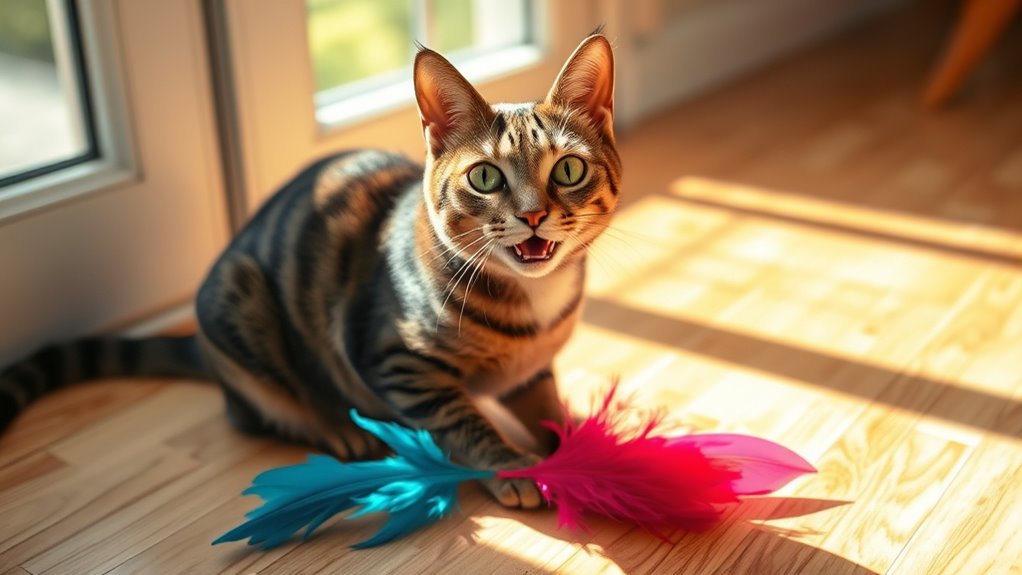
When your cat meows after catching a toy, it’s expressing excitement and showcasing its hunting instincts.
This playful behavior seeks your attention, almost like a trophy presentation. Your feline is inviting you to engage in their triumph, reinforcing your bond.
Cats also exhibit nurturing behaviors, treating toys as cherished prizes.
Understanding these meows can enhance your communication and enrich your cat’s life.
So, keep exploring to discover more about your cat’s unique behaviors and needs!
Key Takeaways
- Cats meow after catching a toy to express excitement and satisfaction, mimicking natural hunting behavior.
- Meowing serves as an invitation for interaction, enhancing the bond between the cat and owner.
- This behavior can reflect playful instincts, showcasing the cat’s success in a ‘trophy kill’ scenario.
- Carrying toys while meowing may indicate a nurturing instinct, similar to motherly behavior.
- Engaging in play and acknowledging their meows can fulfill your cat’s social and mental stimulation needs.
Seeking Attention and Affection
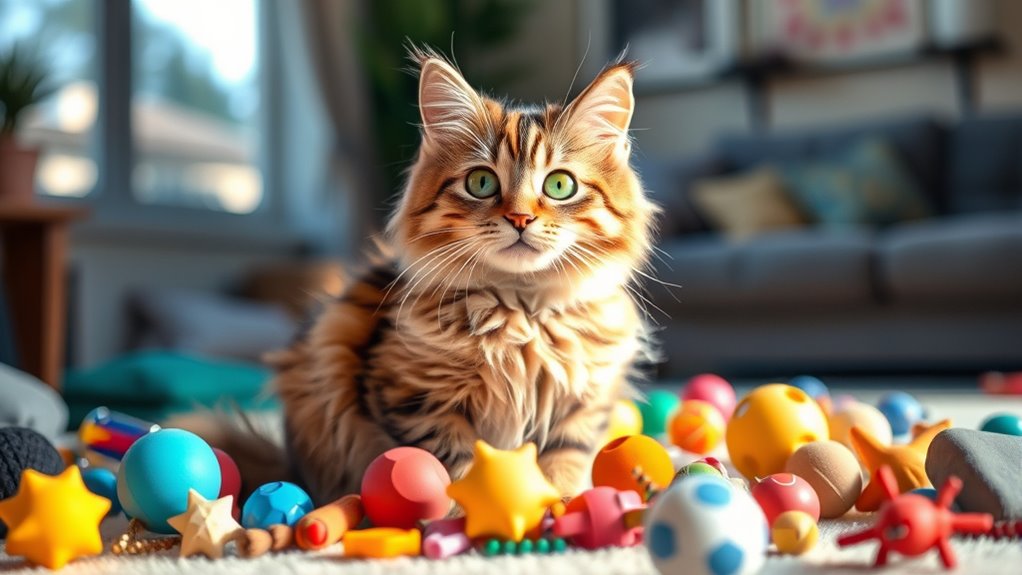
When your cat catches a toy, it often meows to signal its need for attention and affection.
This cat meowing isn’t just random; it shows your feline friend is wanting your attention.
By carrying a toy, your cat invites you to join in the fun, seeking validation much like a child would after achieving something.
Carrying a toy, your cat seeks your engagement, much like a child sharing their achievements.
If your cat’s meowing becomes frequent, it may indicate loneliness or boredom, especially if they’re often indoors.
Engaging in regular play sessions not only satisfies this need but also strengthens your bond.
So, the next time you hear that playful meow, remember it’s an invitation for interaction.
This ensures your cat stays happy, healthy, and connected with you.
Displaying Hunting Instincts
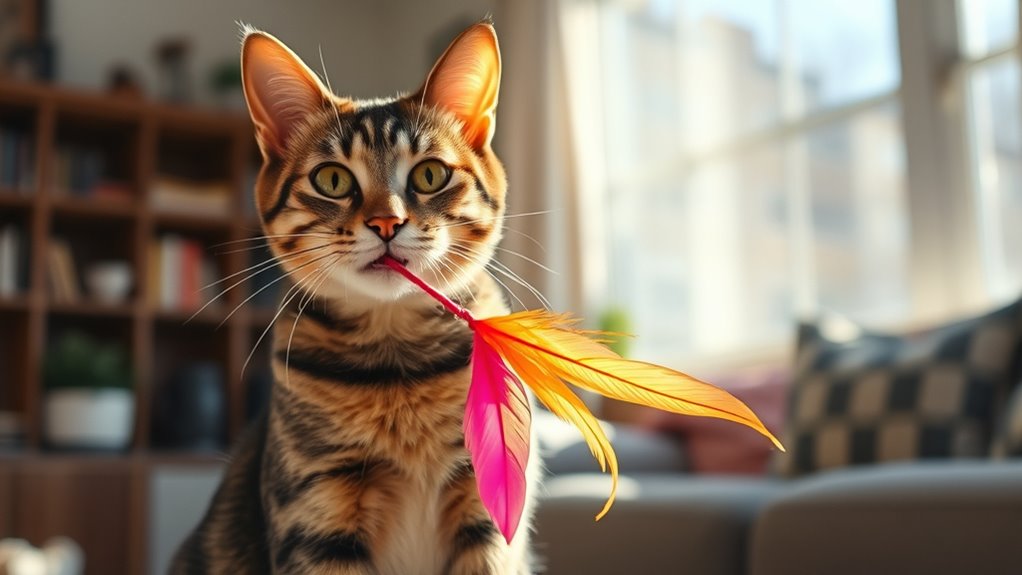
Cats often meow after catching a toy to mimic their natural hunting behavior, treating the toy as a trophy from their successful hunt.
This instinctual display showcases their hunting instincts, keeping them mentally and physically agile.
When your cat meows with a toy, it’s a signal of excitement and satisfaction, enhancing their playful experience.
Here’s a fun table to illustrate this behavior:
| Behavior | Explanation |
|---|---|
| Carrying a Toy | Shows they’ve ‘caught’ something |
| Meowing | Announces their ‘trophy kill’ |
| Playing Fetch | Reinforces hunting instincts and connection with you |
Motherly Behavior in Cats
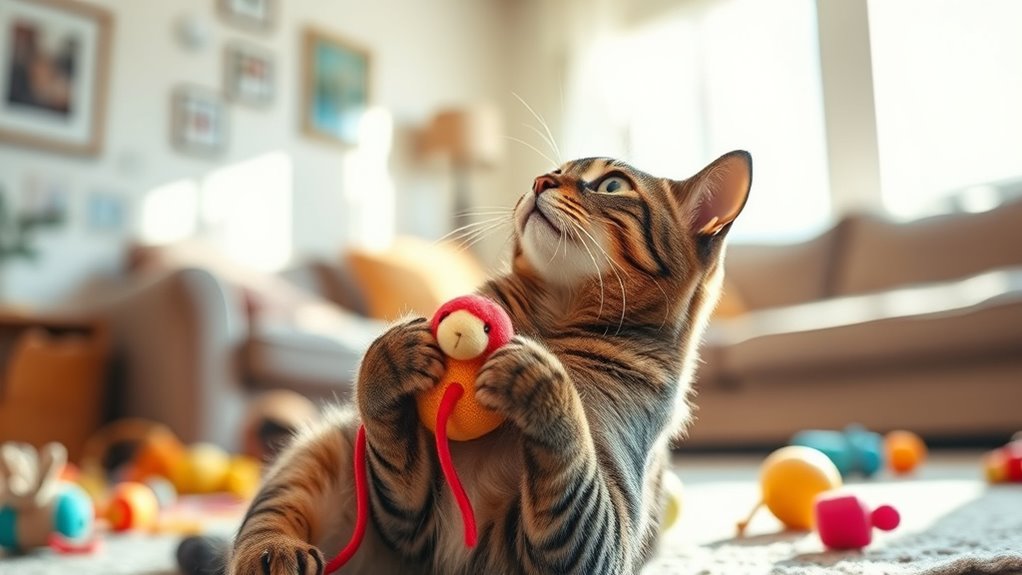
When you watch your cat interact with their toys, you might notice nurturing behaviors that reveal their motherly instincts. Even male cats can show care, challenging the idea that they don’t have parenting skills. These actions highlight how toys often serve as comfort objects, reflecting the emotional connections cats form just like we do with our childhood favorites.
Nurturing Instincts in Cats
While many people associate nurturing behaviors primarily with female cats, it’s interesting to note that both male and female felines can display surprising motherly instincts, especially towards their toys.
These behaviors often manifest in the way they carry a toy, treat it as a surrogate, and even meow after catching it.
This meowing can express joy or pride, reminiscent of a mother cat calling her kittens.
| Behavior Type | Description |
|---|---|
| Female Cats | Show nurturing behaviors even when spayed. |
| Male Cats | Exhibit protective instincts towards their toys. |
| Toy Interaction | Carry a toy as if it were a kitten. |
| Emotional Attachment | Develop strong bonds with their toys. |
| Coping Mechanism | Find comfort in nurturing their playthings. |
These instincts reveal a deeper emotional world within our feline companions.
Toys as Comfort Objects
Many felines find solace in their toys, treating them as comfort objects that fulfill their emotional needs.
When you see your cat carrying around a stuffed animal or a favorite cat toy, it’s more than just play. This behavior often stems from their nurturing instincts, where toys become surrogate kittens or companions.
Both male and female cats, even spayed females, can exhibit these motherly behaviors, showcasing their capacity for affection and attachment.
As your cat meows while toting their toy, they’re vocalizing their joy and comfort. This reinforces that these items are essential to their emotional well-being.
Embracing their toys as comfort objects helps satisfy their innate need for nurturing and companionship.
Male Cats’ Care Behaviors
Cats, regardless of gender, show surprising nurturing behaviors, especially male cats.
You might notice your male cat carrying toys in his mouth, mimicking maternal instincts. This caring behavior highlights their emotional attachments to these objects, much like children with their favorite stuffed animals.
Here are some common nurturing behaviors you might observe in male cats:
- Carrying toys as if they’re their offspring.
- Protecting toys from other pets.
- Grooming toys, showcasing affection.
- Bringing toys to you, seeking validation.
- Cuddling with toys during sleep.
These behaviors demonstrate that male cats are capable of providing care and comfort, breaking the stereotype that nurturing is solely a female trait.
Playtime and Bonding
Engaging in playtime with your cat not only satisfies their instinctual needs but also deepens your bond.
When your cat meows after catching their favorite toy, it’s a signal of excitement and an invitation for interaction.
These moments provide essential mental and physical stimulation, preventing boredom and fostering a fulfilling environment.
Here’s a quick overview of playtime benefits:
| Benefit | Description |
|---|---|
| Mental Stimulation | Engages your cat’s mind and keeps them sharp. |
| Physical Exercise | Encourages movement and maintains health. |
| Bonding | Strengthens your relationship through shared joy. |
| Encouragement | Validates your cat’s achievements. |
| Fun | Provides enjoyment for both you and your cat. |
Dealing With Repetitive or Excessive Meowing
If your cat’s meowing feels excessive, it’s important to understand what’s triggering this behavior. By enriching their environment and incorporating more interactive play, you can channel their energy and reduce vocalization. Establishing a routine can also help strengthen your bond while keeping the noise to a minimum.
Understanding Vocalization Triggers
Understanding why your cat meows excessively, especially after catching a toy, can markedly enhance your interaction with them.
This vocalization often signals a need for attention, playtime, or companionship.
When your feline friend brings you a “trophy,” they’re likely seeking your engagement.
To help manage their meowing, consider these points:
- They might feel bored and crave more interaction.
- Excessive vocalization can mimic natural hunting behavior.
- Ignoring the behavior may discourage it, but don’t neglect their needs.
- Engaging with toys and activities can reduce unnecessary meowing.
- Fulfilling their need for mental stimulation keeps them satisfied.
Environmental Enrichment Strategies
To effectively curb your cat’s repetitive meowing, it’s essential to create an enriching environment that caters to their natural instincts.
Start by providing a variety of toys that mimic prey. This can keep your cat engaged and reduce excessive vocalization.
Incorporate environmental enrichment elements like scratching posts and climbing trees to combat boredom.
A stimulating environment can also include puzzle feeders that challenge their minds.
Regularly rotating toys and introducing new ones helps maintain your cat’s interest. This prevents repetitive behaviors.
Additionally, setting up window perches allows your cat to observe outdoor activities. This enhances their mental engagement.
Interactive Play Importance
Creating an enriching environment is just the beginning.
Interactive play plays an essential role in your cat’s overall well-being and can considerably reduce excessive meowing.
Engaging with your cat through play not only satisfies their hunting instincts but also strengthens your bond.
Here’s why interactive play is crucial:
- It prevents boredom and keeps them mentally stimulated.
- Toys mimic real prey, allowing for natural behaviors.
- Regular play sessions guarantee they get enough physical exercise.
- It helps you respond to their desire for attention.
- Understanding their meowing context boosts your relationship.
Understanding Your Cat’s Unique Behavior
Cats display a fascinating array of behaviors that often leave us puzzled, particularly when they meow after catching a toy.
When you see your cat carrying toys and meowing, it’s their way of communicating excitement or presenting their ‘trophy kill’ to you.
This instinctual behavior reflects their hunting roots and signals a playful invitation for interaction.
Your cat may be seeking your attention, hoping to engage in social play.
Additionally, meowing while carrying a toy can mimic maternal instincts, as both male and female cats show nurturing behaviors.
This unique communication strengthens your bond, creating opportunities for fun and companionship, while fulfilling their need for mental stimulation.
Understanding this behavior enriches your relationship with your feline friend.
Frequently Asked Questions
Do All Cats Meow After Catching Toys?
No, not all cats meow after catching toys. Each cat has its own personality and hunting instincts, so some might vocalize while others remain silent. You’ll notice a variety of behaviors among them.
Can Meowing Indicate a Health Issue?
Yes, meowing can indicate a health issue. If your cat’s vocalizations are excessive or accompanied by other unusual behaviors, it’s essential to observe closely—something might not be right, and a vet visit could be necessary.
Is There a Difference Between Meows and Purrs?
Yes, there’s a difference. Meows communicate needs or desires, often seeking your attention, while purring indicates contentment or self-soothing. Both sounds serve distinct purposes in your cat’s interactions with you and their environment.
How Can I Encourage My Cat to Play More?
You wouldn’t want your cat to think playtime’s optional, right? Engage them daily with diverse toys, including feather wands and puzzles. Make it a fun routine, and watch their excitement grow as your bond deepens.
Do Certain Toys Trigger More Meowing?
Yes, certain toys do trigger more meowing in cats. Toys resembling prey or those that make noise excite their hunting instincts, leading to increased vocalization as they seek attention and acknowledgment for their “catch.”
Conclusion
In the symphony of your cat’s playful antics, each meow after a successful catch is a vibrant note, echoing their joy and triumph.
It’s their way of inviting you into their world, a playful dance of affection and primal instincts.
Embrace these moments as a tapestry of bonding and communication.
By tuning into your feline friend’s unique melody, you deepen your connection.
This transforms simple playtime into an enchanting adventure that both of you cherish.
So, when your cat meows after catching a toy, know that it’s their way of sharing their happiness with you.
These moments are not just about play; they’re about building a bond and understanding each other better.
Enjoy the playful exchanges and let them enrich your relationship with your furry friend!