7 Best Model Rocket Kits for Beginners to Start Your Launch Adventure
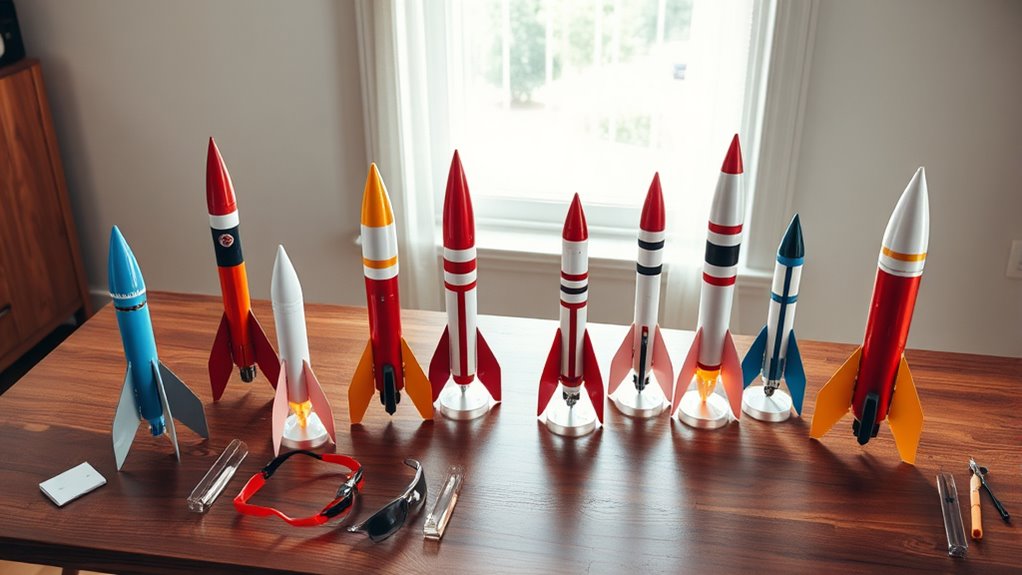
If you’re excited to kick off your rocket launching adventure, the Estes Hi-Flier kit is a fantastic option for beginners.
This kit is priced between $10 to $15, making it budget-friendly. It offers easy assembly and reliable performance with “A” size engines, perfect for those just starting out.
For those who want to aim higher, the more advanced Estes Athena and Mercury Red Stone kits are great choices.
These kits provide impressive altitudes and feature robust recovery systems.
Choosing the right kit is crucial, so take your time to explore the various options available.
There’s plenty more to consider as you embark on this thrilling journey into model rocketry!
Key Takeaways
- Consider the Estes Hi-Flier kit for a budget-friendly option, perfect for beginners and children, priced between $10 to $15.
- Look for kits with simple assembly instructions and fewer parts to ease the building process for novice builders.
- Ensure the kit is compatible with “A” size engines for initial rocketry exploration and reliable performance.
- Check for a reliable recovery system, such as streamers or parachutes, to ensure safe landings after each flight.
- Stock up on extra supplies like glue and batteries, as most kits do not include these essential components.
Top Budget-Friendly Estes Model Rocket Kits
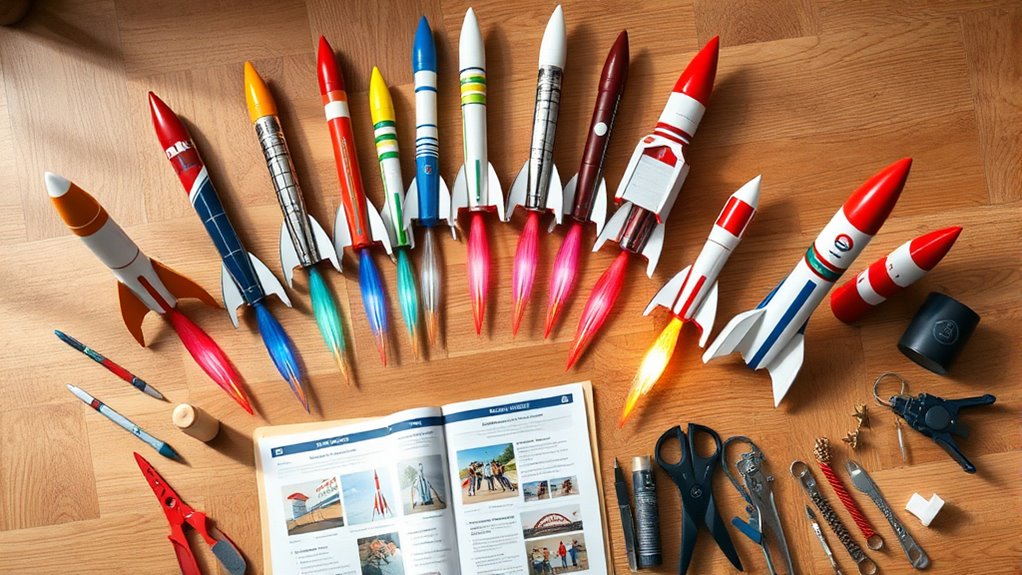
If you’re starting out in model rocketry, you’ll want to check out the Estes Hi-Flier Flying Model Rocket Kit.
Priced between $10 to $15, it’s a budget-friendly option that works best for beginners and young children enthusiastic to plunge into this exciting hobby.
The kit features easy assembly and straightforward instructions, making it perfect for novice builders.
You’ll launch it using “A” size engines, ideal for those just exploring model rocketry.
Its durable materials allow for multiple launches, giving you the chance to hone your skills without breaking the bank.
Plus, the reliable recovery system guarantees a safe landing, letting you enjoy the thrill of flight without the stress of recovery failures.
Performance-Focused Kits for Enthusiasts
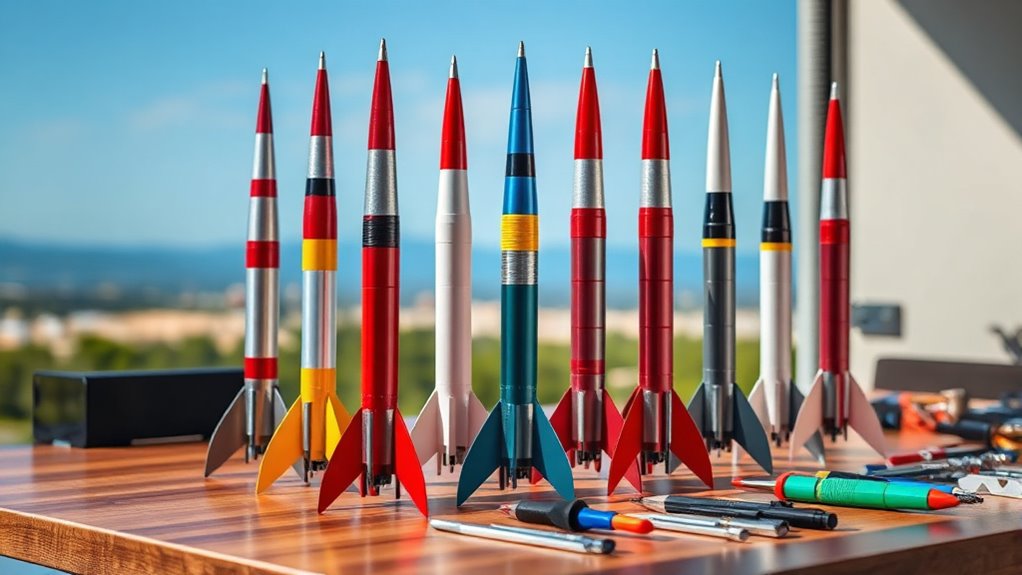
If you’re ready to take your rocket building to the next level, performance-focused kits offer advanced features and impressive design. These models can reach astonishing heights and require larger engines for maximum thrust. Keep in mind the assembly difficulty and engine compatibility to guarantee a successful launch experience.
Advanced Features and Design
For those enthusiastic to elevate their model rocketry experience, performance-focused kits offer advanced features and design that cater to enthusiasts.
Take the Estes Athena Flying Model Rocket Kit, engineered to reach over 1,600 feet with a reliable recovery streamer for safe landings.
If you prefer something larger, the Estes Big Daddy is tailored for advanced users, soaring up to 900 feet with bigger engines for enhanced performance.
The Estes Mercury Red Stone Model Kit, a detailed replica, features a parachute recovery system and achieves around 200 feet.
These kits not only allow you to explore advanced assembly techniques but also emphasize the importance of selecting compatible engine sizes to maximize your rocket’s altitude potential.
Launch Height Capabilities
Performance-focused kits not only showcase advanced features but also excel in their launch height capabilities. This makes them ideal for enthusiasts eager to push the limits of their rocketry experience.
The Estes Athena Flying Model Rocket Kit stands out, reaching impressive altitudes of over 1,600 feet—perfect for thrill-seekers.
If you’re looking for a larger launch, the Estes Big Daddy can soar up to 900 feet. It’s compatible with more powerful engines for enhanced performance.
Meanwhile, the Estes Mercury Red Stone Model Kit, while a detailed replica, achieves a solid 200 feet.
Engine Size Compatibility
Understanding engine size compatibility is vital for maximizing your rocket’s performance and ensuring a safe launch.
Estes engines are graded by letters, with “A” engines offering 1.26 to 2.50 newton-seconds of thrust. This makes them perfect for beginners and smaller rockets.
If you’re aiming for impressive heights, consider performance-focused kits like the Estes Athena. It can soar over 1,600 feet with larger engines.
The Estes Big Daddy, designed for higher performance, can reach altitudes of up to 900 feet. Using the correct engine size is essential for best results, as maximum heights vary greatly.
Advanced models, like the Estes Mercury Red Stone, also come equipped with recovery systems like parachutes. This ensures safe landings after those exhilarating high-altitude flights.
Key Considerations When Choosing a Kit
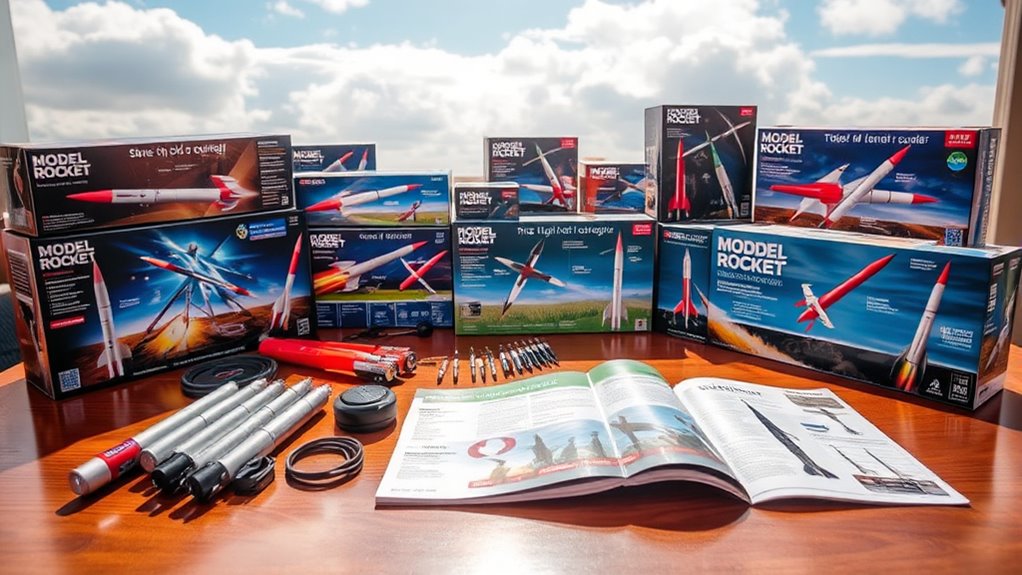
When you’re diving into the world of model rocketry, several key considerations can help you choose the right kit.
First, think about assembly difficulty—beginner-friendly kits usually have straightforward instructions and fewer parts.
Determine what type of rocket appeals to you: replicas for aesthetics or streamlined models for altitude.
Next, check engine size compatibility; different kits require various engine grades.
Finally, factor in your budget—there are affordable options around $10 to $15 or more advanced kits ranging from $25 to $50.
| Consideration | Details |
|---|---|
| Assembly Difficulty | Simple instructions, fewer parts |
| Rocket Type | Aesthetic replicas vs. altitude models |
| Budget | $10-$15 for beginners, $25-$50 for advanced |
Understanding Engine Sizes and Recovery Systems
When you choose a model rocket, understanding engine sizes is key to achieving the height you want. Different engines provide varying levels of power, so pairing the right engine with a suitable recovery system is crucial for a safe landing. You’ll want to guarantee that your rocket’s design and engine are compatible to optimize performance and enhance your flying experience.
Engine Size Categories
Choosing the right engine size for your model rocket is crucial for achieving the desired flight performance and safety.
Model rocket engines are categorized by letters, with “A” engines offering 1.26 to 2.50 newton-seconds of thrust. This makes them perfect for smaller rockets.
In contrast, “D” engines can provide up to 20.00 newton-seconds, enabling larger rockets to soar over 2,000 feet.
The engine size you choose directly influences how high your rocket can fly—ranging from about 100 feet with smaller engines to impressive altitudes with larger ones.
Always verify your engine matches your rocket design for peak performance.
Recovery System Types
Understanding the right recovery system is just as important as selecting the appropriate engine size for your model rocket.
Your choice can greatly impact the rocket’s descent and landing. For larger rockets powered by “D” engines, parachutes are ideal. They help to slow down descent and guarantee safe landings.
Lightweight models, however, benefit more from streamers, making retrieval easier.
Don’t forget about wadding; it protects your recovery devices from engine flames during launch, especially for parachute systems.
You can also cut a spill hole in your parachute to minimize drift and achieve a more controlled landing.
Importance of Compatibility
Compatibility between your model rocket’s engine size and recovery system is essential for a successful launch.
Using the right engine guarantees peak performance and safety. For example, “A” engines provide 1.26 to 2.50 newton-seconds of thrust, suitable for smaller rockets.
On the other hand, “D” engines can deliver up to 20.00 newton-seconds for larger models.
Additionally, recovery systems, such as parachutes and streamers, vary based on rocket size. Larger rockets typically benefit from parachutes, while smaller ones may use streamers.
Here’s a quick reference table to help you understand the compatibility:
| Engine Size | Thrust (Newton-seconds) | Best Recovery System | Max Height (Feet) |
|---|---|---|---|
| A | 1.26 – 2.50 | Streamer | 100 |
| B | 2.51 – 5.00 | Streamer | 500 |
| C | 5.01 – 10.00 | Parachute | 1,000 |
| D | 10.01 – 20.00 | Parachute | 2,000 |
Pricing Breakdown for Estes Model Rocket Kits
When you’re diving into the world of Estes model rocket kits, you’ll find a wide price range that caters to every budget.
Here’s a quick breakdown of what you can expect:
- Inexpensive Kits ($10 – $15): Great for beginners and budget-friendly.
- Mid-Range Kits ($15 – $25): These often include multiple rockets but may lack launch gear.
- Advanced Kits ($25 – $50): These typically include launch kits or bulk sets, saving you money on future launches.
- Complex Models: Prices vary based on features like engine compatibility and recovery systems, with more advanced models usually costing more.
Investing in a higher-priced kit can lead to better performance and durability.
This is especially true if you’re planning multiple launches.
Essential Launching and Safety Tips
To guarantee a safe and enjoyable experience with your model rocket launches, always choose an open area that’s at least the size of a soccer field. This ensures you have ample space for recovery and minimizes risks to people or property.
Choose a spacious, open area for your model rocket launches to ensure safety and minimize risks to others.
Before each launch, perform a countdown. This signals everyone nearby and prepares them for the rocket’s ascent.
Launch your rocket from the center of the open space to further reduce potential hazards. To stabilize the descent and reduce drift, consider cutting a spill hole in the parachute.
Finally, always use wadding to protect your recovery devices from engine flames. This ensures they function correctly and land safely.
Following these tips will help you enjoy your rocket-launching adventure without incident!
Frequently Asked Questions About Model Rocket Kits
After ensuring a safe launching experience, you might have some questions about choosing the right model rocket kits. Here are some frequently asked questions to guide you:
1. Which kit is best for beginners?
The Estes Hi-Flier Flying Model Rocket Kit is a great choice. It’s budget-friendly and easy to assemble, plus it offers excellent flight distance.
2. Do I need extra supplies?
Yes, most Estes kits don’t include glue or batteries. So, be sure to buy those separately.
3. What assembly level should I choose?
Opt for kits with simpler instructions and lower engine sizes. This way, you’ll have a smoother start.
4. What about recovery systems?
All Estes rockets have recovery systems like parachutes or streamers. This ensures safe landings based on size and design.
Frequently Asked Questions
What Age Is Appropriate for Kids to Start Model Rocketry?
Kids can start model rocketry around age eight. At this age, they’re usually ready for hands-on activities and can understand safety rules. You’ll enjoy launching together, fostering their curiosity and interest in science and engineering.
How Do I Maintain My Model Rocket After Launching?
You should clean the rocket’s parts, check for damage, and guarantee the recovery system’s intact after each launch. Regular maintenance keeps your rocket in top shape, enhancing performance and assuring future launches are successful.
Are There Any Environmental Concerns With Model Rocketry?
Yes, there are environmental concerns with model rocketry. You should be mindful of debris, noise pollution, and the potential impact on wildlife. Always launch in designated areas and follow local regulations to minimize harm.
Can I Customize My Model Rocket Design?
Yes, you can customize your model rocket design! You’ve got plenty of options, from paint colors to added fins or unique shapes. Just make sure your modifications still comply with safety and performance standards.
What Are the Best Locations for Launching Model Rockets?
You’ll find the perfect spots for launching model rockets in open fields, parks, or remote areas. Just avoid places with crowds or flammable structures, ensuring your launch experience is both exhilarating and safe. Enjoy the skies!
Conclusion
To summarize, diving into model rocketry is like launching a dream into the sky.
With the right kit, you’ll experience the thrill of watching your creation soar.
Whether you’re on a budget or seeking high performance, there’s a perfect option for you.
Remember to take into account engine sizes and recovery systems for a safe adventure.
So gear up, follow the safety tips, and get ready to ignite your passion for rocketry—you’re in for an exhilarating ride!
In conclusion, starting your journey in model rocketry can be an incredible experience.
With the best model rocket kits, you can find one that fits your needs and budget.
Don’t forget to consider the engine sizes and recovery systems to ensure safety during your launches.
So, are you ready to be amazed by the beauty of your rocket soaring high?
Get your kit, and let the adventure begin!