What Are Tactile Sensory Toys and How Do They Benefit Children?
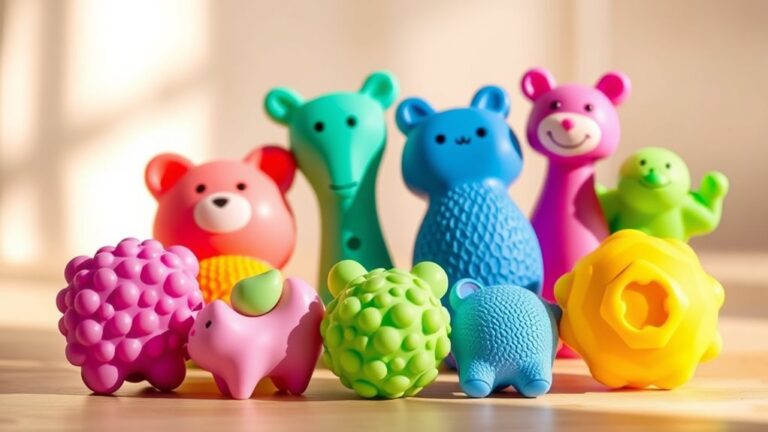
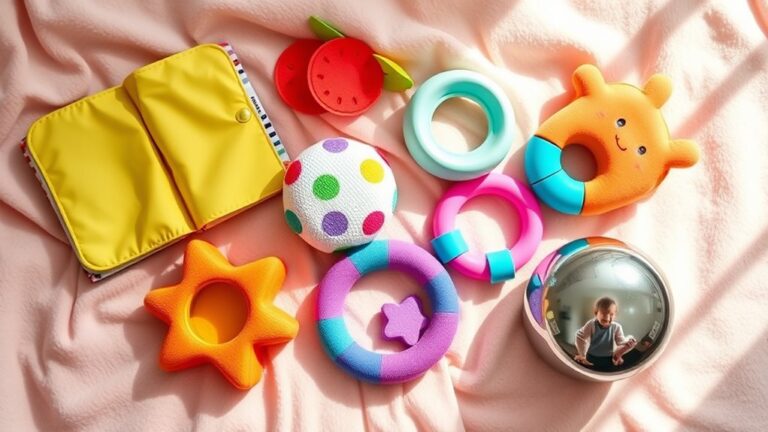
Tactile sensory toys are designed to engage your child’s sense of touch, providing a variety of textures that support their development and emotional well-being.
These toys are fantastic for improving fine motor skills and enhancing coordination. They also promote self-regulation by offering calming sensory input.
Especially beneficial for children with sensory processing differences, tactile sensory toys encourage creativity and social interaction through cooperative play.
By incorporating these toys into daily activities, you can help foster your child’s growth and resilience.
There’s so much more to discover about the benefits of tactile sensory toys!
Key Takeaways
- Tactile sensory toys engage the sense of touch, promoting sensory exploration through various textures and materials.
- They enhance fine motor skills, improving coordination and precision for everyday tasks like writing and dressing.
- These toys support emotional regulation, helping children manage anxiety and stress through calming sensory input.
- Tactile play fosters social skills by encouraging cooperative play and enhancing language development through texture descriptions.
- Regular use of tactile sensory toys boosts focus, creativity, and cognitive growth, making learning more enjoyable and effective.
Understanding Tactile Sensory Toys
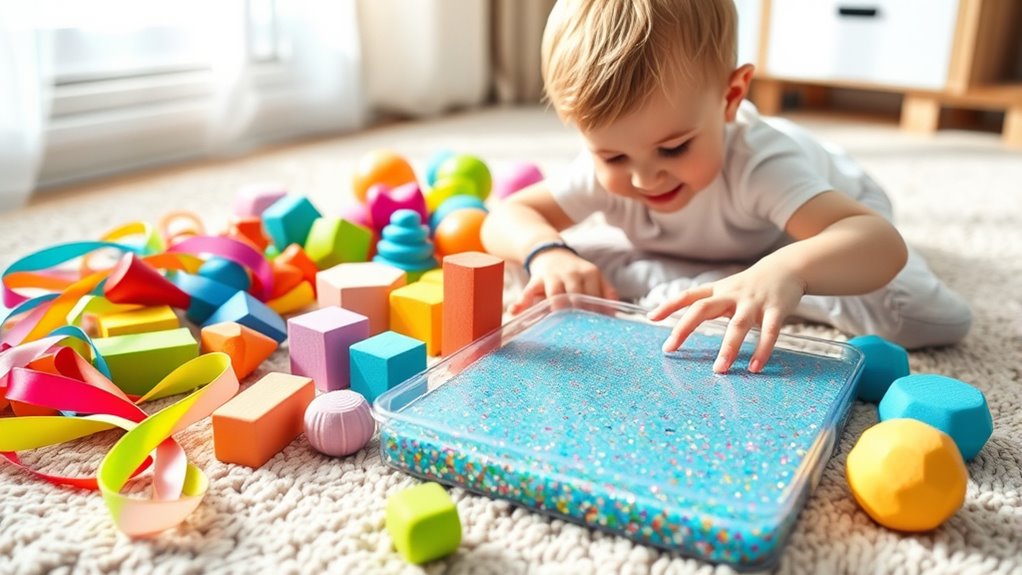
When you think about how children learn and explore, tactile sensory toys play an essential role in engaging their sense of touch.
These toys, like textured balls and fidget spinners, stimulate fine motor skills and promote sensory exploration.
For children with sensory processing differences, tactile sensory toys help manage sensory overload and support emotional regulation through soothing sensations.
Engaging with these toys fosters the development of neural pathways vital for motor coordination and cognitive growth, aligning with their developmental needs.
Additionally, as children describe their sensory experiences, they’re enhancing communication skills and expanding their vocabulary.
Importance of Tactile Exploration in Child Development
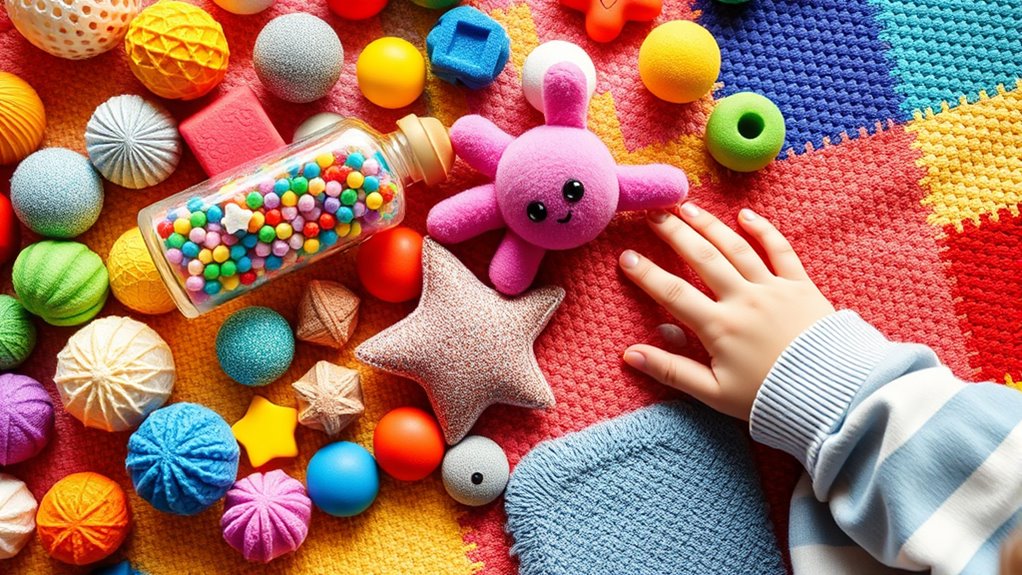
Tactile exploration is essential in child development, shaping how they interact with the world around them.
Engaging with different textures through sensory play not only enhances sensory processing but also fosters fine motor skills crucial for everyday tasks.
Exploring various textures through sensory play enriches sensory processing and develops fine motor skills vital for daily activities.
Here are some key benefits of tactile exploration:
- Stimulates brain development by creating neural pathways for problem-solving skills.
- Enhances communication skills as children learn to describe various textures.
- Supports emotional regulation, providing calming effects during sensory play.
- Promotes better understanding of their environment, boosting confidence.
Benefits of Tactile Sensory Toys for Emotional Regulation
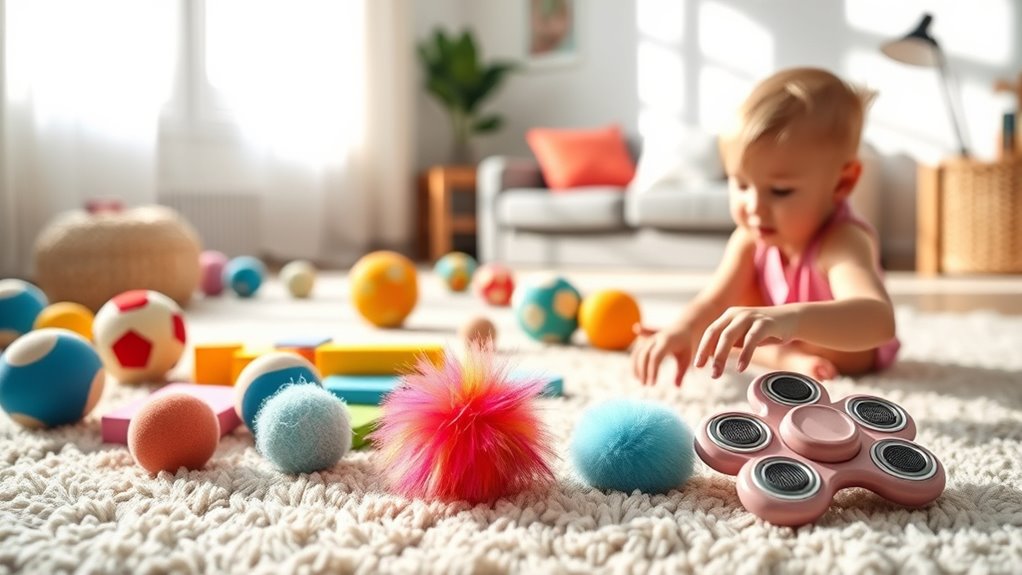
Tactile sensory toys can be your child’s secret weapon for emotional regulation. By promoting calmness and relaxation, these toys help kids become more aware of their feelings and develop effective coping strategies. Engaging with these tools not only soothes anxiety but also empowers children to handle their emotions better in everyday situations.
Promotes Calmness and Relaxation
As you explore the world of tactile sensory toys, you’ll discover how they can effectively promote calmness and relaxation in children.
These toys provide calming sensory input that helps manage anxiety and stress levels.
Engaging with textured objects activates the parasympathetic nervous system, fostering a sense of security and emotional well-being.
Consider these benefits of tactile sensory toys:
- Encourage mindfulness and focus during sensory play.
- Reduce feelings of overwhelm and promote relaxation.
- Enhance emotional regulation skills for better coping.
- Foster predictability, creating a safe environment.
These toys can truly make a difference in helping children find their calm.
Enhances Emotional Awareness
When children engage with sensory toys, they not only explore different textures but also enhance their emotional awareness.
Tactile sensory toys provide calming input, helping kids practice self-regulation during moments of anxiety and stress.
By interacting with these toys, children can express their feelings and preferences, which promotes communication skills and discussions about their emotional states.
This process allows them to identify and articulate their emotions, expanding their emotional vocabulary.
Additionally, as they learn to associate specific textures with different feelings, they build emotional resilience.
Incorporating tactile sensory toys into daily routines gives children effective coping strategies.
This empowers them to manage overwhelming emotions and navigate their emotional landscapes more confidently.
Supports Coping Strategies
While steering through the ups and downs of childhood, kids often need tools that help them cope with overwhelming emotions.
Tactile sensory toys are perfect for this, as they provide calming sensory input that aids in emotional regulation.
By engaging with these toys, children can learn to:
- Manage anxiety and emotional overwhelm
- Self-soothe and develop personal coping strategies
- Improve impulse control and focus
- Build resilience through safe outlets for nervous energy
Regular use of tactile sensory toys fosters self-awareness, allowing kids to recognize their emotional needs.
As they manipulate different textures, they enhance their ability to cope with stress.
This contributes positively to their overall development.
These toys truly empower children to navigate their feelings effectively.
Enhancing Fine Motor Skills Through Tactile Play
Fine motor skills are essential for everyday tasks, and tactile play activities can make a big difference in your child’s development. By engaging with materials like play dough and textured mats, your child practices important movements that enhance their hand strength and coordination. These playful experiences not only help meet developmental milestones but also lay the groundwork for more complex skills down the road.
Importance of Fine Motor Skills
Tactile play is essential for developing fine motor skills in children. It encourages them to engage with various textures and shapes through manipulation.
By using tactile sensory toys, you help enhance their hand strength and dexterity, which are vital for everyday tasks.
Here are some key benefits:
- Improves coordination and precision in finger movements.
- Refines grip and control for tasks like writing and buttoning clothes.
- Fosters independence in self-care tasks, boosting confidence.
- Lays the groundwork for more complex fine motor activities.
Engaging in sensory play through these toys not only encourages exploration but also builds the foundation for your child’s future abilities.
As they manipulate different materials, they’re mastering skills that will serve them throughout life.
Tactile Play Activities
Hands-on activities can greatly boost your child’s fine motor skills, making tactile play a fun and engaging way to learn.
Tactile play activities like manipulating textured materials such as play dough or kinetic sand require precise movements, enhancing hand-eye coordination.
Sensory bins filled with varied textures encourage exploration and discovery, promoting dexterity as your child scoops, pours, and sifts.
Painting with fingers or using textured stamps not only fosters creativity but also improves grip strength and control.
Playing with sensory toys, like squeeze balls or textured mats, allows your child to practice different grips essential for writing skills.
Incorporating tactile play into daily routines can notably enhance tasks like buttoning clothing or using utensils, making everyday activities easier and more enjoyable.
Developmental Milestones Achieved
Engaging with tactile sensory toys can greatly enhance your child’s developmental milestones, especially when it comes to fine motor skills.
These toys encourage sensory exploration, allowing children to manipulate various textures, which strengthens hand coordination and dexterity.
As they practice grasping, pinching, and rolling, they prepare for important tasks like writing and buttoning.
- Boosts neural development by creating new brain pathways
- Enhances problem-solving and cognitive abilities
- Fosters independence through refined skills
- Improves precision in hand movements
Regular interaction with tactile sensory toys leads to increased confidence in children, enabling them to tackle everyday tasks with ease.
This journey not only supports fine motor skills but also nurtures a sense of accomplishment and independence.
Tactile Sensory Toys for Children With Special Needs
For children with special needs, sensory play can be a powerful tool for development and emotional well-being.
Tactile sensory toys, like textured mats and fidget spinners, engage their sense of touch and promote sensory exploration.
Tactile sensory toys, such as textured mats and fidget spinners, enhance touch engagement and encourage sensory exploration.
These toys help develop fine motor skills and enhance self-regulation by providing calming sensory input, which is essential for emotional regulation.
Children with special needs can improve their social interactions and coping strategies through shared play experiences.
Research shows that tactile sensory play supports cognitive skills and communication abilities, fostering language growth as they describe different textures.
Incorporating these toys in daily activities can lead to a more balanced sensory experience.
This allows children to focus and concentrate better.
Incorporating Tactile Sensory Toys Into Daily Activities
Incorporating tactile sensory toys into daily activities can greatly enhance your child’s development and well-being.
These toys provide numerous benefits of sensory experiences that stimulate engagement and creativity.
Here are some effective ways to include them:
- Use tactile sensory toys during meal prep or arts and crafts to help your child engage with textures and improve fine motor skills.
- Introduce sensory play during homework breaks to help improve focus and reset attention.
- Designate a time for creative expression with different materials, fostering hands-on learning.
- Create calming corners at home where children can self-regulate emotions and manage stress through cooperative play.
It’s all about making learning fun and engaging!
Frequently Asked Questions
What Age Is Appropriate for Introducing Tactile Sensory Toys?
You can introduce tactile sensory toys as early as 6 months. They’re beneficial for infants, toddlers, preschoolers, and even kids up to 7 years, adapting to their developmental needs and enhancing sensory exploration and motor skills.
How Do I Choose the Right Tactile Toy for My Child?
Think of Jamie, who loves squishy textures. To choose the right tactile toy, observe your child’s reactions to various surfaces, prioritize safety with non-toxic materials, and select options that promote fine motor skills and engagement.
Are Tactile Sensory Toys Safe for Infants?
Yes, tactile sensory toys are safe for infants. They’re designed with non-toxic materials, lightweight, and free of small parts. Just supervise your child during play to guarantee a secure and enjoyable experience for them.
Can Tactile Toys Help With Anxiety in Children?
Studies show that 70% of children with anxiety benefit from sensory play. Yes, tactile toys can help reduce anxiety by providing a calming outlet, allowing you to explore textures and sensations while promoting emotional regulation.
How Often Should Children Use Tactile Sensory Toys?
You should encourage children to use tactile sensory toys several times a day, ideally in short sessions of 10-15 minutes. This approach helps maintain their focus and supports emotional regulation throughout daily activities.
Conclusion
Incorporating tactile sensory toys into your child’s playtime can transform their development like magic!
These toys not only enhance emotional regulation and fine motor skills but also promote exploration and creativity.
By making tactile play a regular part of daily activities, you’re giving your child the tools they need to thrive.
So, immerse yourself in the world of tactile sensory toys and watch your child flourish in ways you never thought possible!
Tactile sensory toys are a fantastic way to support your child’s growth.
They encourage hands-on exploration, which can significantly improve fine motor skills and emotional understanding.
With regular use, these toys can help children learn to manage their feelings and express themselves creatively.
Introduce tactile play into your daily routine and witness the incredible benefits it brings.
Your child deserves the chance to thrive, so start exploring the wonderful world of tactile sensory toys today!