5 Essential Toys for Toddlers in Occupational Therapy
For toddlers in occupational therapy, having the right toys can make a significant difference in their development.
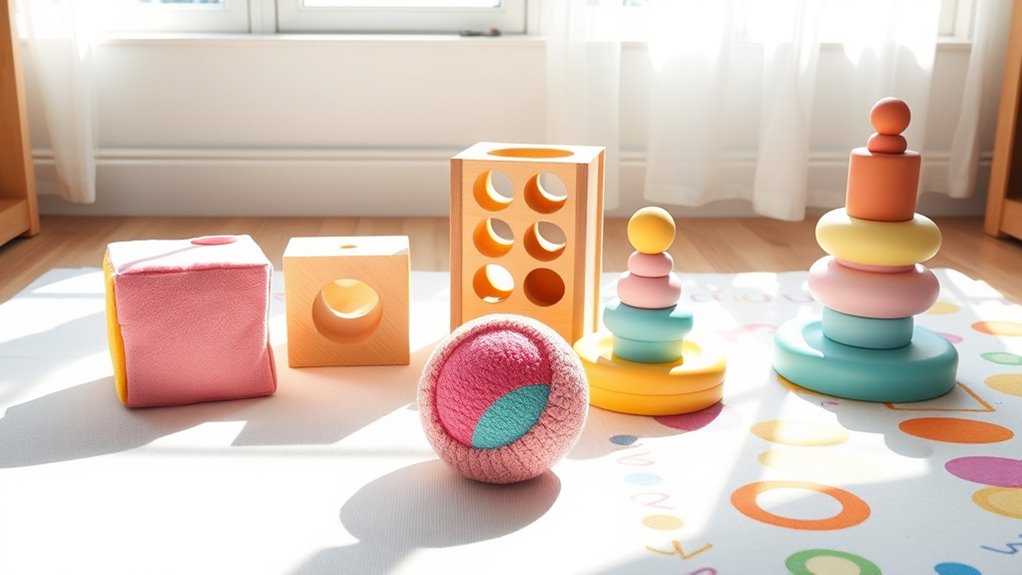
Consider stacking cubes; they allow children to build skills through play while enhancing hand-eye coordination.
The wobble/climb disk is another fantastic option, as it helps improve balance and core strength.
Lacing beads are great for fine motor skills, sparking creativity in the process.
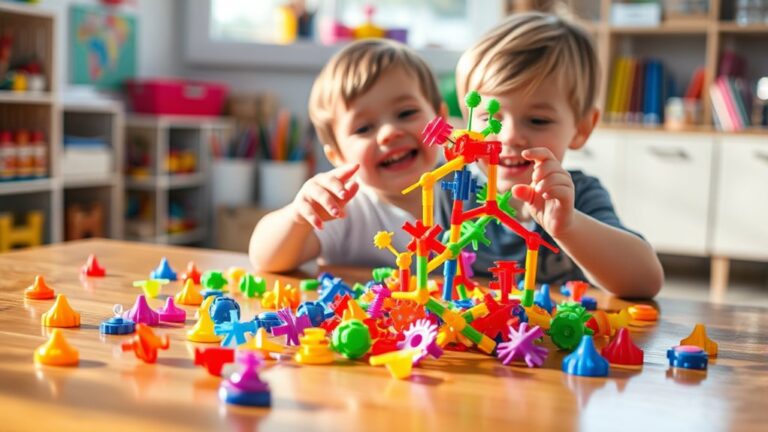
Squaregles, with their unique shapes, encourage imaginative play and problem-solving, making them a fun addition to any therapy session.
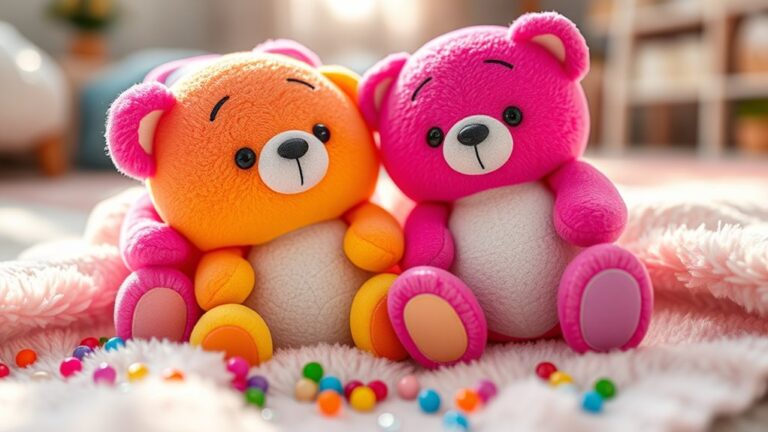
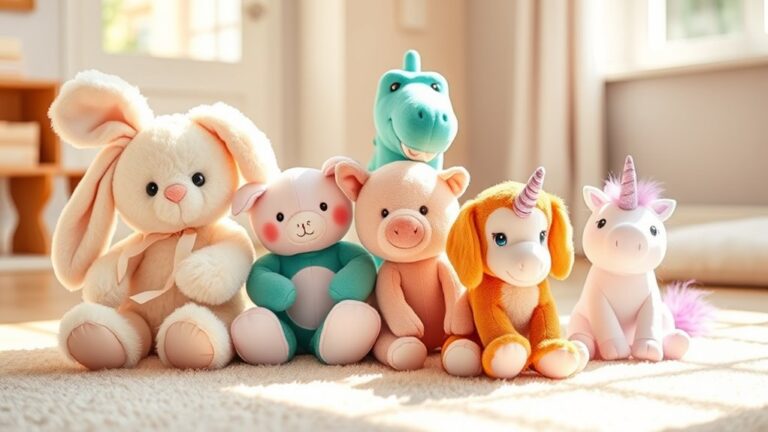
Lastly, a weighted animal provides soothing input for emotional regulation, helping children feel more grounded.
Each of these toys supports essential skill development in a fun and engaging way.
You’ll find even more insights on how they can benefit your child’s therapy journey.
Key Takeaways
- Stacking cubes enhance fine motor skills, postural stability, and cognitive development through exploration of size and shape.
- Wobble/climb disks improve balance, core strength, and bilateral coordination, making them ideal for sensory processing activities.
- Lacing beads promote fine motor development, hand-eye coordination, and creativity through threading and pattern-making activities.
- Squaregles encourage imaginative play, problem-solving, and social skills while enhancing fine motor skills through collaborative building.
- Weighted animals provide calming input for emotional regulation, deep pressure feedback, and focus enhancement during therapy sessions.
Stacking Cubes: Building Skills Through Play
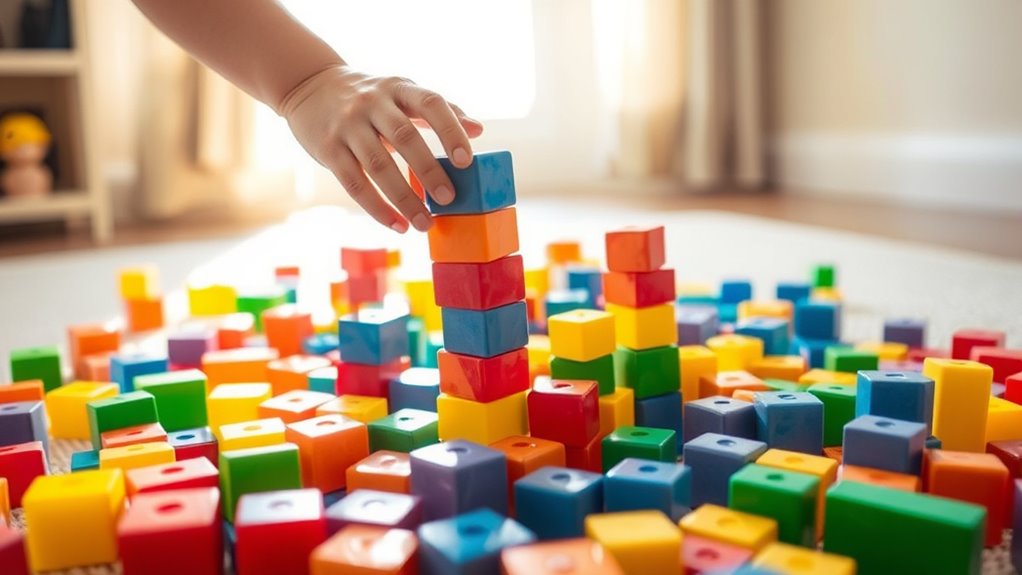
When it comes to fostering development in toddlers, stacking cubes are a must-have.
These versatile toys enhance postural stability and bilateral coordination as your little one learns to balance and stack them in various configurations.
Engaging in stacking activities promotes fine motor skills, allowing toddlers to grasp, lift, and manipulate the cubes.
Engaging in stacking activities enhances fine motor skills as toddlers learn to grasp, lift, and manipulate their cubes.
This builds hand strength and dexterity, which is super important at this stage.
Additionally, stacking cubes support cognitive development by introducing concepts of size, shape, and spatial awareness during play.
They also play a significant role in sensory integration, giving toddlers the chance to explore textures and colors.
Plus, their adaptability makes them an excellent resource for occupational therapy sessions focused on achieving developmental milestones.
You’ll see your toddler grow through play!
Wobble/Climb Disk: Enhancing Balance and Coordination
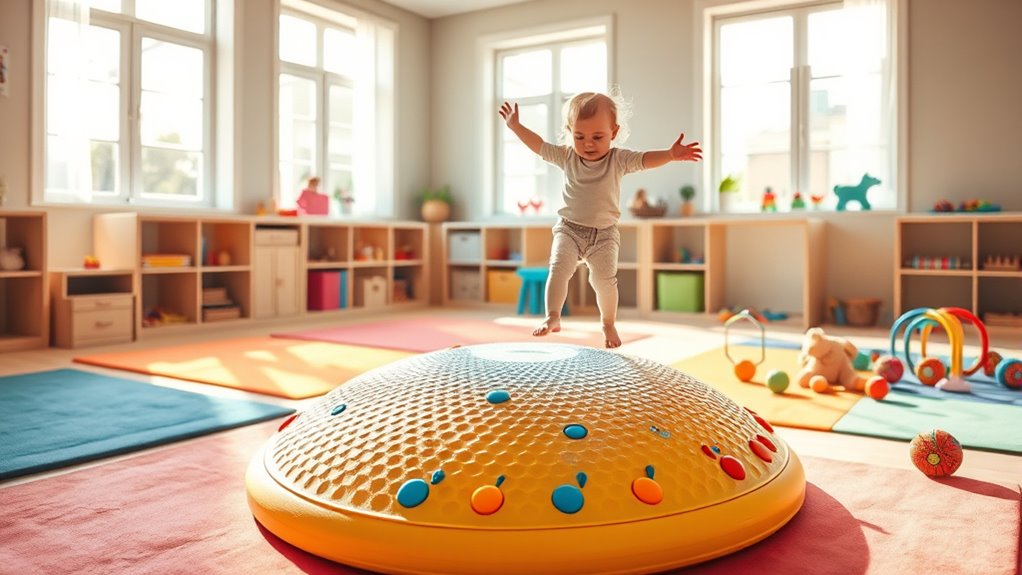
The Wobble/Climb Disk is an engaging tool that enhances balance and coordination in toddlers.
This versatile toy provides a wobbly surface that encourages your child to practice stabilizing their bodies while having fun.
Use it as a wobbly seat or a stepping stone to promote active play and engagement in various physical activities.
By incorporating the wobble/climb disk into playtime, you’re supporting core strength development, an essential aspect of gross motor skills.
It also fosters bilateral coordination, encouraging your child to use both sides of their body simultaneously.
Lightweight and portable, this toy can easily be integrated into home play or therapy sessions.
It’s a favorite among Occupational Therapists for enhancing sensory processing and overall physical development.
Lacing Beads: Fine Motor Development and Creative Play
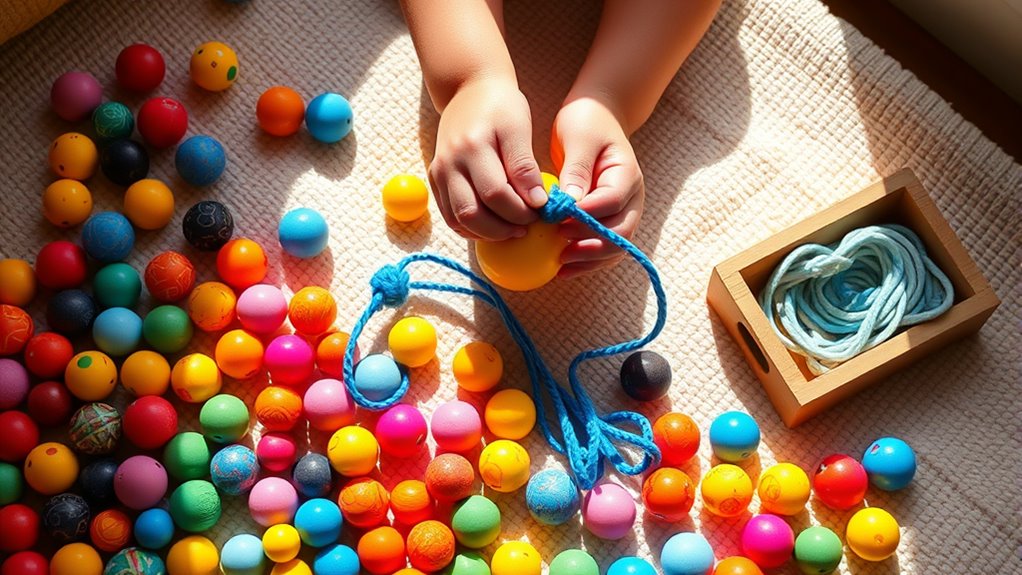
Building on the foundation of balance and coordination, lacing beads offer an exciting way to enhance fine motor skills in toddlers.
As your child manipulates and threads these vibrant beads, they’re improving their hand-eye coordination and dexterity.
The variety of shapes, sizes, and colors not only captivates their interest but also encourages sensory exploration.
Lacing beads facilitate cognitive development as toddlers learn to create patterns and sequences, boosting their problem-solving skills.
Additionally, this activity promotes bilateral coordination, as both hands work together to lace the beads.
Incorporating lacing beads into imaginative play scenarios allows your child to express their creativity while practicing essential motor skills.
It’s a perfect blend of fun and learning in one engaging activity!
Squaregles: Fostering Imagination and Creativity
While exploring the world of play, Squaregles stand out as magnetic building toys that spark toddlers’ creativity through open-ended construction.
These imaginative toys enhance fine motor development and hand-eye coordination as kids manipulate the pieces.
They also foster problem-solving and critical thinking, essential skills in occupational therapy.
Here’s a quick overview of the benefits:
| Skill Area | How Squaregles Help | Development Stage |
|---|---|---|
| Creativity | Encourages open-ended play | All developmental stages |
| Fine Motor Skills | Enhances hand-eye coordination | Early childhood |
| Problem-Solving | Challenges critical thinking | Growing toddlers |
| Social Skills | Promotes collaborative play | Group settings |
| Imaginative Play | Inspires creative building | Every playtime |
Squaregles are versatile and support various skill levels, making them a must-have in toddler play!
Weighted Animal: Calming Input for Emotional Regulation
When toddlers feel overwhelmed or anxious, weighted animals can provide the calming input they need for emotional regulation.
These cuddly companions offer deep pressure sensory feedback, helping children develop self-soothing techniques during moments of sensory overload.
Weights typically range from 2 to 5 pounds, allowing you to adjust the pressure according to your child’s needs.
Incorporating weighted animals into playtime not only promotes comfort but also enhances focus and attention, aiding the development of fine motor skills.
As a versatile therapeutic tool, these animals serve as both a comforting presence and a practical resource in occupational therapy.
Frequently Asked Questions
How Do I Choose the Right Toy for My Toddler’s Needs?
To choose the right toy for your toddler’s needs, observe their play preferences, prioritize toys that enhance fine motor skills and imaginative play, and guarantee they’re safe, durable, and suitable for their age.
Can These Toys Be Used at Home or Only in Therapy?
Absolutely, you can use these toys at home! Think of them as bridges, connecting therapy to everyday life. They’ll help your toddler explore, learn, and grow in a familiar environment, reinforcing skills with playful adventures.
What Safety Features Should I Look for in Toddler Toys?
Look for non-toxic, BPA-free materials, rounded edges, and sturdy designs. Make certain toys have no small parts to prevent choking. Check for safety certifications and choose those that are easy to clean and disinfect.
How Often Should My Child Engage With These Toys?
Your child should engage with these toys daily for at least 30 minutes, ideally in 10 to 15-minute sessions. This keeps them interested and helps develop essential skills without overwhelming them.
Are There Alternatives to These Toys for Budget-Conscious Families?
Yes, you can use homemade sensory bins, simple household items, and nature finds as affordable alternatives. DIY art supplies and community resources like libraries also offer great ways to engage your child without breaking the bank.
Conclusion
Incorporating these five essential toys into your toddler’s playtime can transform their development into a vibrant journey.
Picture your child stacking colorful cubes, each one a tiny triumph.
Or balancing on a wobble disk like a little acrobat.
As they thread lacing beads, their fingers dance with newfound dexterity.
With Squaregles, their imagination soars.
And a weighted animal offers a gentle hug when emotions swirl.
These toys aren’t just playthings; they’re stepping stones to a brighter, more balanced future.
By engaging with these toys, toddlers enhance their motor skills, emotional regulation, and creativity.
Investing in these essential toys not only supports their physical development but also provides a safe space for emotional expression.
So, let’s make playtime purposeful and watch as they thrive in their journey towards growth and balance!